

























Gjør som tusenvis av andre bokelskere
Abonner på vårt nyhetsbrev og få rabatter og inspirasjon til din neste leseopplevelse.
Ved å abonnere godtar du vår personvernerklæring.Du kan når som helst melde deg av våre nyhetsbrev.

After the collapse of communism, some thirty countries scrambled to craft democratic constitutions. Surprisingly, the constitutional model they most often chose was neither the pure parliamentary model found in most of Western Europe at the time, nor the presidential model of the Americas. Rather, it was semi-presidentialism--a rare model known more generally as the "e;French type."e; This constitutional model melded elements of pure presidentialism with those of pure parliamentarism. Specifically, semi-presidentialism combined a popularly elected head of state with a head of government responsible to a legislature. Borrowing Constitutional Designs questions the hasty adoption of semi-presidentialism by new democracies. Drawing on rich case studies of two of the most important countries for European politics in the twentieth century--Weimar Germany and the French Fifth Republic--Cindy Skach offers the first theoretically focused, and historically grounded, analysis of semi-presidentialism and democracy. She demonstrates that constitutional choice matters, because under certain conditions, semi-presidentialism structures incentives that make democratic consolidation difficult or that actually contribute to democratic collapse. She offers a new theory of constitutional design, integrating insights from law and the social sciences. In doing so, Skach challenges both democratic theory and democratic practice. This book will be welcomed not only by scholars and practitioners of constitutional law but also by those in fields such as comparative politics, European politics and history, and international and public affairs.
How and why did Europe spawn dictatorships and violence in the first half of the twentieth century, and then, after 1945 in the west and after 1989 in the east, create successful civilian societies? In this book, Volker Berghahn explains the rise and fall of the men of violence whose wars and civil wars twice devastated large areas of the European continent and Russia--until, after World War II, Europe adopted a liberal capitalist model of society that had first emerged in the United States, and the beginnings of which the Europeans had experienced in the mid-1920s. Berghahn begins by looking at how the violence perpetrated in Europe's colonial empires boomeranged into Europe, contributing to the millions of casualties on the battlefields of World War I. Next he considers the civil wars of the 1920s and the renewed rise of militarism and violence in the wake of the Great Crash of 1929. The second wave of even more massive violence crested in total war from 1939 to 1945 that killed more civilians than soldiers, and this time included the industrialized murder of millions of innocent men, women, and children in the Holocaust. However, as Berghahn concludes, the alternative vision of organizing a modern industrial society on a civilian basis--in which people peacefully consume mass-produced goods rather than being 'consumed' by mass-produced weapons--had never disappeared. With the United States emerging as the hegemonic power of the West, it was this model that finally prevailed in Western Europe after 1945 and after the end of the Cold War in Eastern Europe as well.
The classical Melnikov method provides information on the behavior of deterministic planar systems that may exhibit transitions, i.e. escapes from and captures into preferred regions of phase space. This book develops a unified treatment of deterministic and stochastic systems that extends the applicability of the Melnikov method to physically realizable stochastic planar systems with additive, state-dependent, white, colored, or dichotomous noise. The extended Melnikov method yields the novel result that motions with transitions are chaotic regardless of whether the excitation is deterministic or stochastic. It explains the role in the occurrence of transitions of the characteristics of the system and its deterministic or stochastic excitation, and is a powerful modeling and identification tool. The book is designed primarily for readers interested in applications. The level of preparation required corresponds to the equivalent of a first-year graduate course in applied mathematics. No previous exposure to dynamical systems theory or the theory of stochastic processes is required. The theoretical prerequisites and developments are presented in the first part of the book. The second part of the book is devoted to applications, ranging from physics to mechanical engineering, naval architecture, oceanography, nonlinear control, stochastic resonance, and neurophysiology.
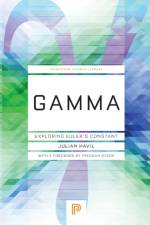
Among the many constants that appear in mathematics, I , e, and i are the most familiar. Following closely behind is y, or gamma, a constant that arises in many mathematical areas yet maintains a profound sense of mystery. In a tantalizing blend of history and mathematics, Julian Havil takes the reader on a journey through logarithms and the harmonic series, the two defining elements of gamma, toward the first account of gamma's place in mathematics. Introduced by the Swiss mathematician Leonhard Euler (1707-1783), who figures prominently in this book, gamma is defined as the limit of the sum of 1 + 1/2 + 1/3 + . . . Up to 1/n, minus the natural logarithm of n--the numerical value being 0.5772156. . . . But unlike its more celebrated colleagues I and e, the exact nature of gamma remains a mystery--we don't even know if gamma can be expressed as a fraction. Among the numerous topics that arise during this historical odyssey into fundamental mathematical ideas are the Prime Number Theorem and the most important open problem in mathematics today--the Riemann Hypothesis (though no proof of either is offered!). Sure to be popular with not only students and instructors but all math aficionados, Gamma takes us through countries, centuries, lives, and works, unfolding along the way the stories of some remarkable mathematics from some remarkable mathematicians.
Marian Smith recaptures a rich period in French musical theater when ballet and opera were intimately connected. Focusing on the age of Giselle at the Paris Opera (from the 1830s through the 1840s), Smith offers an unprecedented look at the structural and thematic relationship between the two genres. She argues that a deeper understanding of both ballet and opera--and of nineteenth-century theater-going culture in general--may be gained by examining them within the same framework instead of following the usual practice of telling their histories separately. This handsomely illustrated book ultimately provides a new portrait of the Opera during a period long celebrated for its box-office successes in both genres. Smith begins by showing how gestures were encoded in the musical language that composers used in ballet and in opera. She moves on to a wide range of topics, including the relationship between the gestures of the singers and the movements of the dancers, and the distinction between dance that represents dancing (entertainment staged within the story of the opera) and dance that represents action. Smith maintains that ballet-pantomime and opera continued to rely on each other well into the nineteenth century, even as they thrived independently. The "e;divorce"e; between the two arts occurred little by little, and may be traced through unlikely sources: controversies in the press about the changing nature of ballet-pantomime music, shifting ideas about originality, complaints about the ridiculousness of pantomime, and a little-known rehearsal score for Giselle. ?
Kierkegaard, a poet of ideals and practitioner of the indirect method, also had a direct and polemical side. He revealed this in several writings throughout his career, culminating in The Moment, his attack against the established ecclesiastical order. Kierkegaard was moved to criticize the church by his differences with Bishop Mynster, Primate of the Church of Denmark. Although Mynster saw in Kierkegaard a complement to himself and his outlook, Kierkegaard challenged Mynster to acknowledge the emptying and estheticizing of Christianity that had occurred in modern Christendom. For three years Kierkegaard was silent, waiting. When Mynster died, he was memorialized as "e;an authentic truth-witness"e; in the "e;holy chain of truth-witnesses that stretches through the ages from the days of the apostles."e; This struck Kierkegaard as blasphemous and inspired him to write a series of articles in Faedrelandet, which he followed with ten numbers of the pamphlet The Moment. This volume includes the articles from Faedrelandet, all numbers of The Moment, and several other late pieces of Kierkegaard's writing.
Kierkegaard was driven to write The Book on Adler after news spread that a Danish pastor, Adolph P. Adler, claimed to have experienced a revelation in which Christ dictated a new doctrine. Like many others, Kierkegaard was intrigued by Adler--but for different reasons than most. Over the eight years during which Kierkegaard worked on the manuscript, the phenomenon of Adler became a concern secondary to the larger question of authority. Kierkegaard revised the manuscript many times, and published a segment of it as "e;The Difference between a Genius and an Apostle"e; in Two Ethical-Religious Essays, but did not publish the work as a whole before his death. The latest integral version of The Book on Adler is included here, along with excerpts from the earlier drafts and a sampling of writing by Adler himself.
First published in 1848, Christian Discourses is a quartet of pieces written and arranged in contrasting styles. Parts One and Three, "e;The Cares of the Pagans"e; and "e;Thoughts That Wound from Behind--for Upbuilding,"e; serve as a polemical overture to Kierkegaard's collision with the established order of Christendom. Yet Parts Two and Four, "e;Joyful Notes in the Strife of Suffering"e; and "e;Discourses at the Communion on Fridays,"e; are reassuring affirmations of the joy and blessedness of Christian life in a world of adversity and suffering. Written in ordinary language, the work combines simplicity and inwardness with reflection and presents crucial Christian concepts and presuppositions with unusual clarity. Kierkegaard continued in the pattern that he began with his first pseudonymous esthetic work, Either/Or, by pairing Christian Discourses with The Crisis, an unsigned esthetic essay on contemporary Danish actress Joanne Luise Heiberg.
This is the first English-language intellectual biography of the German-Jewish philosopher Ernst Cassirer (1874-1945), a leading figure on the Weimar intellectual scene and one of the last and finest representatives of the liberal-idealist tradition. Edward Skidelsky traces the development of Cassirer's thought in its historical and intellectual setting. He presents Cassirer, the author of The Philosophy of Symbolic Forms, as a defender of the liberal ideal of culture in an increasingly fragmented world, and as someone who grappled with the opposing forces of scientific positivism and romantic vitalism. Cassirer's work can be seen, Skidelsky argues, as offering a potential resolution to the ongoing conflict between the "e;two cultures"e; of science and the humanities--and between the analytic and continental traditions in philosophy. The first comprehensive study of Cassirer in English in two decades, this book will be of great interest to analytic and continental philosophers, intellectual historians, political and cultural theorists, and historians of twentieth-century Germany.
Political parties are the defining institutions of representative democracy and the darlings of political science. Their governing and electoral functions are among the chief concerns of the field. Yet most political theorists--including democratic theorists--ignore or disparage parties as grubby arenas of ambition, obstacles to meaningful political participation and deliberation. On the Side of the Angels is a vigorous defense of the virtues of parties and partisanship, and their worth as a subject for political theory. Nancy Rosenblum's account moves between political theory and political science, and she uses resources from both fields to outline an appreciation of parties and the moral distinctiveness of partisanship. She draws from the history of political thought and identifies the main lines of opposition to parties, as well as the rare but significant moments of appreciation. Rosenblum then sets forth her own theoretical appreciation of parties and partisanship. She discusses the achievement of parties in regulating rivalries, channeling political energies, and creating the lines of division that make pluralist politics meaningful. She defends "e;partisan"e; as a political identity over the much-vaunted status of "e;independent,"e; and she considers where contemporary democracies should draw the line in banning parties. On the Side of the Angels offers an ethics of partisanship that speaks to questions of centrism, extremism, and polarization in American party politics. By rescuing parties from their status as orphans of political philosophy, Rosenblum fills a significant void in political and democratic theory.
In Thinking of Others, Ted Cohen argues that the ability to imagine oneself as another person is an indispensable human capacity--as essential to moral awareness as it is to literary appreciation--and that this talent for identification is the same as the talent for metaphor. To be able to see oneself as someone else, whether the someone else is a real person or a fictional character, is to exercise the ability to deal with metaphor and other figurative language. The underlying faculty, Cohen argues, is the same--simply the ability to think of one thing as another when it plainly is not. In an engaging style, Cohen explores this idea by examining various occasions for identifying with others, including reading fiction, enjoying sports, making moral arguments, estimating one's future self, and imagining how one appears to others. Using many literary examples, Cohen argues that we can engage with fictional characters just as intensely as we do with real people, and he looks at some of the ways literature itself takes up the question of interpersonal identification and understanding. An original meditation on the necessity of imagination to moral and aesthetic life, Thinking of Others is an important contribution to philosophy and literary theory.
A Modern Legal Ethics proposes a wholesale renovation of legal ethics, one that contributes to ethical thought generally. Daniel Markovits reinterprets the positive law governing lawyers to identify fidelity as its organizing ideal. Unlike ordinary loyalty, fidelity requires lawyers to repress their personal judgments concerning the truth and justice of their clients' claims. Next, the book asks what it is like--not psychologically but ethically--to practice law subject to the self-effacement that fidelity demands. Fidelity requires lawyers to lie and to cheat on behalf of their clients. However, an ethically profound interest in integrity gives lawyers reason to resist this characterization of their conduct. Any legal ethics adequate to the complexity of lawyers' lived experience must address the moral dilemmas immanent in this tension. The dominant approaches to legal ethics cannot. Finally, A Modern Legal Ethics reintegrates legal ethics into political philosophy in a fashion commensurate to lawyers' central place in political practice. Lawyerly fidelity supports the authority of adjudication and thus the broader project of political legitimacy. Throughout, the book rejects the casuistry that dominates contemporary applied ethics in favor of an interpretive method that may be mimicked in other areas. Moreover, because lawyers practice at the hinge of modern morals and politics, the book's interpretive insights identify--in an unusually pure and intense form--the moral and political conditions of all modernity.
Russian Orthodoxy Resurgent is the first book to fully explore the expansive and ill-understood role that Russia's ancient Christian faith has played in the fall of Soviet Communism and in the rise of Russian nationalism today. John and Carol Garrard tell the story of how the Orthodox Church's moral weight helped defeat the 1991 coup against Gorbachev launched by Communist Party hardliners. The Soviet Union disintegrated, leaving Russians searching for a usable past. The Garrards reveal how Patriarch Aleksy II--a former KGB officer and the man behind the church's successful defeat of the coup--is reconstituting a new national idea in the church's own image. In the new Russia, the former KGB who run the country--Vladimir Putin among them--proclaim the cross, not the hammer and sickle. Meanwhile, a majority of Russians now embrace the Orthodox faith with unprecedented fervor. The Garrards trace how Aleksy orchestrated this transformation, positioning his church to inherit power once held by the Communist Party and to become the dominant ethos of the military and government. They show how the revived church under Aleksy prevented mass violence during the post-Soviet turmoil, and how Aleksy astutely linked the church with the army and melded Russian patriotism and faith. Russian Orthodoxy Resurgent argues that the West must come to grips with this complex and contradictory resurgence of the Orthodox faith, because it is the hidden force behind Russia's domestic and foreign policies today.
The Corsair affair has been called the "e;most renowned controversy in Danish literary history."e; At the center is Soren Kierkegaard, whose pseudonymous Stages on Life's Way occasioned a frivolous and dishonorable review by Peder Ludvig Moller. Moller was associated with The Corsair, a publication notorious for gossip and caricature. The editor was Meir Goldschmidt, an acquaintance of Kierkegaard's and an admirer of his early work. Kierkegaard struck back at not only Moller and Goldschmidt but at the paper as a whole. The present volume contains all of the documents relevant to this dispute, plus a historical introduction that recapitulates the sequence of events surrounding the controversy. Parts I (Article) and II (Addenda) contain articles both signed by and attributed to Kierkegaard in response to the affair. A supplement includes writings pertaining to the Corsair affair by Goldschmidt and Moller, as well as unpublished pieces by Kierkegaard from his journals and papers. Although the immediate occasion was literary, for Kierkegaard the issues as well as the consequences were ethical, social, philosophical, and religious. Howard Hong argues that the most important consequence was wholly unexpected and unintended: the second phase of Kierkegaard's authorship.
In Jewish Questions, Matt Goldish introduces English readers to the history and culture of the Sephardic dispersion through an exploration of forty-three responsa--questions about Jewish law that Jews asked leading rabbis, and the rabbis' responses. The questions along with their rabbinical decisions examine all aspects of Jewish life, including business, family, religious issues, and relations between Jews and non-Jews. Taken together, the responsa constitute an extremely rich source of information about the everyday lives of Sephardic Jews. The book looks at questions asked between 1492--when the Jews were expelled from Spain--and 1750. Originating from all over the Sephardic world, the responsa discuss such diverse topics as the rules of conduct for Ottoman Jewish sea traders, the trials of an ex-husband accused of a robbery, and the rights of a sexually abused wife. Goldish provides a sizeable introduction to the history of the Sephardic diaspora and the nature of responsa literature, as well as a bibliography, historical background for each question, and short biographies of the rabbis involved. Including cases from well-known communities such as Venice, Istanbul, and Saloniki, and lesser-known Jewish enclaves such as Kastoria, Ragusa, and Nablus, Jewish Questions provides a sense of how Sephardic communities were organized, how Jews related to their neighbors, what problems threatened them and their families, and how they understood their relationship to God and the Jewish people.
When Harvard-trained sociologist Peter Moskos left the classroom to become a cop in Baltimore's Eastern District, he was thrust deep into police culture and the ways of the street--the nerve-rattling patrols, the thriving drug corners, and a world of poverty and violence that outsiders never see. In Cop in the Hood, Moskos reveals the truths he learned on the midnight shift. Through Moskos's eyes, we see police academy graduates unprepared for the realities of the street, success measured by number of arrests, and the ultimate failure of the war on drugs. In addition to telling an explosive insider's story of what it is really like to be a police officer, he makes a passionate argument for drug legalization as the only realistic way to end drug violence--and let cops once again protect and serve. In a new afterword, Moskos describes the many benefits of foot patrol--or, as he calls it, "e;policing green."e;
How does cooperation emerge among selfish individuals? When do people share resources, punish those they consider unfair, and engage in joint enterprises? These questions fascinate philosophers, biologists, and economists alike, for the "e;invisible hand"e; that should turn selfish efforts into public benefit is not always at work. The Calculus of Selfishness looks at social dilemmas where cooperative motivations are subverted and self-interest becomes self-defeating. Karl Sigmund, a pioneer in evolutionary game theory, uses simple and well-known game theory models to examine the foundations of collective action and the effects of reciprocity and reputation. Focusing on some of the best-known social and economic experiments, including games such as the Prisoner's Dilemma, Trust, Ultimatum, Snowdrift, and Public Good, Sigmund explores the conditions leading to cooperative strategies. His approach is based on evolutionary game dynamics, applied to deterministic and probabilistic models of economic interactions. Exploring basic strategic interactions among individuals guided by self-interest and caught in social traps, The Calculus of Selfishness analyzes to what extent one key facet of human nature--selfishness--can lead to cooperation.
What drives innovation? How does it contribute to the growth of firms, industries, and economies? And do intellectual property rights help or hurt innovation and growth? Uniquely combining microeconomics, macroeconomics, and theory with empirical analysis drawn from the United States and Europe, this book introduces graduate students and advanced undergraduates to the complex process of innovation. By addressing all the major dimensions of innovation in a single text, Christine Greenhalgh and Mark Rogers are able to show how outcomes at the microlevel feed through to the macro-outcomes that in turn determine personal incomes and job opportunities. In four sections, this textbook comprehensively addresses the nature of innovation and intellectual property, the microeconomics and macroeconomics of innovation, and economic policy at the firm and macroeconomic levels. Among the topics fully explored are the role of intellectual property in creating incentives to innovate; the social returns of innovation; the creation and destruction of jobs by innovation; whether more or fewer intellectual property rights would give firms better incentives to innovate; and the contentious issues surrounding international treaties on intellectual property. Clearly organized and highly readable, the book is designed to be accessible to readers without advanced economics backgrounds. Most technical materials appear in boxed inserts and appendixes, and numerous graphs and tables elucidate abstract concepts. Provides a comprehensive overview of the economic causes and effects of innovation Covers microeconomics, macroeconomics, theoretical and empirical analysis, and policy Includes up-to-date coverage of trends and policy in intellectual property and research and development Features mathematics appendix and keywords and questions to assist learning and teaching Outline lecture slides are available online
This comprehensive book provides the first unified framework for stability and dissipativity analysis and control design for nonnegative and compartmental dynamical systems, which play a key role in a wide range of fields, including engineering, thermal sciences, biology, ecology, economics, genetics, chemistry, medicine, and sociology. Using the highest standards of exposition and rigor, the authors explain these systems and advance the state of the art in their analysis and active control design. Nonnegative and Compartmental Dynamical Systems presents the most complete treatment available of system solution properties, Lyapunov stability analysis, dissipativity theory, and optimal and adaptive control for these systems, addressing continuous-time, discrete-time, and hybrid nonnegative system theory. This book is an indispensable resource for applied mathematicians, dynamical systems theorists, control theorists, and engineers, as well as for researchers and graduate students who want to understand the behavior of nonnegative and compartmental dynamical systems that arise in areas such as biomedicine, demographics, epidemiology, pharmacology, telecommunications, transportation, thermodynamics, networks, heat transfer, and power systems.
Marriage is at the center of one of today's fiercest political debates. Activists argue about how to define it, judges and legislators decide who should benefit from it, and scholars consider how the state should protect those who are denied it. Few, however, ask whether the state should have anything to do with marriage in the first place. In Untying the Knot, Tamara Metz addresses this crucial question, making a powerful argument that marriage, like religion, should be separated from the state. Rather than defining or conferring marriage, or relying on it to achieve legitimate public welfare goals, the state should create a narrow legal status that supports all intimate caregiving unions. Marriage itself should be bestowed by those best suited to give it the necessary ethical authority--religious groups and other kinds of communities. Divorcing the state from marriage is dictated by nothing less than basic commitments to freedom and equality. Tracing confusions about marriage to tensions at the heart of liberalism, Untying the Knot clarifies today's debates about marriage by identifying and explaining assumptions hidden in widely held positions and common practices. It shows that, as long as marriage and the state are linked, marriage will be a threat to liberalism and the state will be a threat to marriage. An important and timely rethinking of the relationship between marriage and the state, Untying the Knot will interest political theorists, legal scholars, policymakers, sociologists, and anyone else who cares about the fate of marriage or liberalism.
In What's Eating You? Eugene Kaplan recounts the true and harrowing tales of his adventures with parasites, and in the process introduces readers to the intimately interwoven lives of host and parasite. Kaplan has spent his life traveling the globe exploring oceans and jungles, and incidentally acquiring parasites in his gut. Here, he leads readers on an unforgettable journey into the bizarre yet oddly beautiful world of parasites. In a narrative that is by turns frightening, disgusting, and laugh-out-loud funny, Kaplan describes how drinking contaminated water can cause a three-foot-long worm to burst from your arm; how he "e;gave birth"e; to a parasite the size and thickness of a pencil while working in Israel; why you should never wave a dead snake in front of your privates; and why fleas are attracted to his wife. Kaplan tells stories about leeches feasting on soldiers in Vietnam; sea cucumbers with teeth in their anuses that seem to encourage the entry of symbiotic fish; the habits of parasites that cause dysentery, river blindness, and other horrifying diseases--and much, much more. Along the way, he explains the underlying science, including parasite evolution and host-parasite physiology. Informative, frequently lurid, and hugely entertaining, this beautifully illustrated book is a must-read for health-conscious travelers, and anyone who has ever wondered if they picked up a tapeworm from that last sushi dinner.
This is the first modern edition and first English translation of one of the earliest and most important works in the history of geography, the third-century Geographika of Eratosthenes. In this work, which for the first time described the geography of the entire inhabited world as it was then known, Eratosthenes of Kyrene (ca. 285-205 BC) invented the discipline of geography as we understand it. A polymath who served as librarian at Alexandria and tutor to the future King Ptolemy IV, Eratosthenes created the terminology of geography, probably including the word geographia itself. Building on his previous work, in which he determined the size and shape of the earth, Eratosthenes in the Geographika created a grid of parallels and meridians that linked together every place in the world: for the first time one could figure out the relationship and distance between remote localities, such as northwest Africa and the Caspian Sea. The Geographika also identified some four hundred places, more than ever before, from Thoule (probably Iceland) to Taprobane (Sri Lanka), and from well down the coast of Africa to Central Asia. This is the first collation of the more than 150 fragments of the Geographika in more than a century. Each fragment is accompanied by an English translation, a summary, and commentary. Duane W. Roller provides a rich background, including a history of the text and its reception, a biography of Eratosthenes, and a comprehensive account of ancient Greek geographical thought and of Eratosthenes' pioneering contribution to it. This edition also includes maps that show all of the known places named in the Geographika, appendixes, a bibliography, and indexes.
During the past forty years, thousands of studies have been carried out on the subject of happiness. Some have explored the levels of happiness or dissatisfaction associated with typical daily activities, such as working, seeing friends, or doing household chores. Others have tried to determine the extent to which income, family, religion, and other factors are associated with the satisfaction people feel about their lives. The Gallup organization has begun conducting global surveys of happiness, and several countries are considering publishing periodic reports on the growth or decline of happiness among their people. One nation, tiny Bhutan, has actually made "e;Gross National Happiness"e; the central aim of its domestic policy. How might happiness research affect government policy in the United States--and beyond? In The Politics of Happiness, former Harvard president Derek Bok examines how governments could use the rapidly growing research data on what makes people happy--in a variety of policy areas to increase well-being and improve the quality of life for all their citizens. Bok first describes the principal findings of happiness researchers. He considers how reliable the results appear to be and whether they deserve to be taken into account in devising government policies. Recognizing both the strengths and weaknesses of happiness research, Bok looks at the policy implications for economic growth, equality, retirement, unemployment, health care, mental health, family programs, education, and government quality, among other subjects. Timely and incisive, The Politics of Happiness sheds new light on what makes people happy and how government policy could foster greater satisfaction for all.
Conventional wisdom holds that the American military is overwhelmingly conservative and Republican, and extremely political. Our Army paints a more complex picture, demonstrating that while army officers are likely to be more conservative, rank-and-file soldiers hold political views that mirror those of the American public as a whole, and army personnel are less partisan and politically engaged than most civilians. Assumptions about political attitudes in the U.S. Army are based largely on studies focusing on the senior ranks, yet these senior officers comprise only about 6 percent of America's fighting force. Jason Dempsey provides the first random-sample survey that also covers the social and political attitudes held by enlisted men and women in the army. Uniting these findings with those from another unique survey he conducted among cadets at the United States Military Academy on the eve of the 2004 presidential election, Dempsey offers the most detailed look yet at how service members of all ranks approach politics. He shows that many West Point cadets view political conservatism as part of being an officer, raising important questions about how the army indoctrinates officers politically. But Dempsey reveals that the rank-and-file army is not nearly as homogeneous as we think--or as politically active--and that political attitudes across the ranks are undergoing a substantial shift. Our Army adds needed nuance to our understanding of a profession that seems increasingly distant from the average American.
How does the American public formulate its opinions about U.S. foreign policy and military engagement abroad? War Stories argues that the media systematically distort the information the public vitally needs to determine whether to support such initiatives, for reasons having more to do with journalists' professional interests than the merits of the policies, and that this has significant consequences for national security. Matthew Baum and Tim Groeling develop a "e;strategic bias"e; theory that explains the foreign-policy communication process as a three-way interaction among the press, political elites, and the public, each of which has distinct interests, biases, and incentives. Do media representations affect public support for the president and faithfully reflect events in times of diplomatic crisis and war? How do new media--especially Internet news and more partisan outlets--shape public opinion, and how will they alter future conflicts? In answering such questions, Baum and Groeling take an in-depth look at media coverage, elite rhetoric, and public opinion during the Iraq war and other U.S. conflicts abroad. They trace how traditional and new media select stories, how elites frame and sometimes even distort events, and how these dynamics shape public opinion over the course of a conflict. Most of us learn virtually everything we know about foreign policy from media reporting of elite opinions. In War Stories, Baum and Groeling reveal precisely what this means for the future of American foreign policy.
In Because of Race, Mica Pollock tackles a long-standing and fraught debate over racial inequalities in America's schools. Which denials of opportunity experienced by students of color should be remedied? Pollock exposes raw, real-time arguments over what inequalities of opportunity based on race in our schools look like today--and what, if anything, various Americans should do about it. Pollock encountered these debates while working at the U.S. Department of Education's Office for Civil Rights in 1999-2001. For more than two years, she listened to hundreds of parents, advocates, educators, and federal employees talk about the educational treatment of children and youth in specific schools and districts. People debated how children were spoken to, disciplined, and ignored in both segregated and desegregated districts, and how children were afforded or denied basic resources and opportunities to learn. Pollock discusses four rebuttals that greeted demands for everyday justice for students of color inside schools and districts. She explores how debates over daily opportunity provision exposed conflicting analyses of opportunity denial and harm worth remedying. Because of Race lays bare our habits of argument and offers concrete suggestions for arguing more successfully toward equal opportunity.
Unlike the 1930s, when the United States tragically failed to open its doors to Europeans fleeing Nazism, the country admitted over three million refugees during the Cold War. This dramatic reversal gave rise to intense political and cultural battles, pitting refugee advocates against determined opponents who at times successfully slowed admissions. The first comprehensive historical exploration of American refugee affairs from the midcentury to the present, Americans at the Gate explores the reasons behind the remarkable changes to American refugee policy, laws, and programs. Carl Bon Tempo looks at the Hungarian, Cuban, and Indochinese refugee crises, and he examines major pieces of legislation, including the Refugee Relief Act and the 1980 Refugee Act. He argues that the American commitment to refugees in the post-1945 era occurred not just because of foreign policy imperatives during the Cold War, but also because of particular domestic developments within the United States such as the Red Scare, the Civil Rights Movement, the rise of the Right, and partisan electoral politics. Using a wide variety of sources and documents, Americans at the Gate considers policy and law developments in connection with the organization and administration of refugee programs.Some images inside the book are unavailable due to digital copyright restrictions.
This book presents the analytic foundations to the theory of the hypoelliptic Laplacian. The hypoelliptic Laplacian, a second-order operator acting on the cotangent bundle of a compact manifold, is supposed to interpolate between the classical Laplacian and the geodesic flow. Jean-Michel Bismut and Gilles Lebeau establish the basic functional analytic properties of this operator, which is also studied from the perspective of local index theory and analytic torsion. The book shows that the hypoelliptic Laplacian provides a geometric version of the Fokker-Planck equations. The authors give the proper functional analytic setting in order to study this operator and develop a pseudodifferential calculus, which provides estimates on the hypoelliptic Laplacian's resolvent. When the deformation parameter tends to zero, the hypoelliptic Laplacian converges to the standard Hodge Laplacian of the base by a collapsing argument in which the fibers of the cotangent bundle collapse to a point. For the local index theory, small time asymptotics for the supertrace of the associated heat kernel are obtained. The Ray-Singer analytic torsion of the hypoelliptic Laplacian as well as the associated Ray-Singer metrics on the determinant of the cohomology are studied in an equivariant setting, resulting in a key comparison formula between the elliptic and hypoelliptic analytic torsions.
In The Structure of Affine Buildings, Richard Weiss gives a detailed presentation of the complete proof of the classification of Bruhat-Tits buildings first completed by Jacques Tits in 1986. The book includes numerous results about automorphisms, completions, and residues of these buildings. It also includes tables correlating the results in the locally finite case with the results of Tits's classification of absolutely simple algebraic groups defined over a local field. A companion to Weiss's The Structure of Spherical Buildings, The Structure of Affine Buildings is organized around the classification of spherical buildings and their root data as it is carried out in Tits and Weiss's Moufang Polygons.
In 2001, Kenneth Deffeyes made a grim prediction: world oil production would reach a peak within the next decade--and there was nothing anyone could do to stop it. Deffeyes's claim echoed the work of geophysicist M. King Hubbert, who in 1956 predicted that U.S. oil production would reach its highest level in the early 1970s. Though roundly criticized by oil experts and economists, Hubbert's prediction came true in 1970. In this updated edition of Hubbert's Peak, Deffeyes explains the crisis that few now deny we are headed toward. Using geology and economics, he shows how everything from the rising price of groceries to the subprime mortgage crisis has been exacerbated by the shrinking supply--and growing price--of oil. Although there is no easy solution to these problems, Deffeyes argues that the first step is understanding the trouble that we are in.
Abonner på vårt nyhetsbrev og få rabatter og inspirasjon til din neste leseopplevelse.
Ved å abonnere godtar du vår personvernerklæring.