




















Gjør som tusenvis av andre bokelskere
Abonner på vårt nyhetsbrev og få rabatter og inspirasjon til din neste leseopplevelse.
Ved å abonnere godtar du vår personvernerklæring.Du kan når som helst melde deg av våre nyhetsbrev.

Wide-ranging and ambitious, Justice combines moral philosophy and Christian ethics to develop an important theory of rights and of justice as grounded in rights. Nicholas Wolterstorff discusses what it is to have a right, and he locates rights in the respect due the worth of the rights-holder. After contending that socially-conferred rights require the existence of natural rights, he argues that no secular account of natural human rights is successful; he offers instead a theistic account. Wolterstorff prefaces his systematic account of justice as grounded in rights with an exploration of the common claim that rights-talk is inherently individualistic and possessive. He demonstrates that the idea of natural rights originated neither in the Enlightenment nor in the individualistic philosophy of the late Middle Ages, but was already employed by the canon lawyers of the twelfth century. He traces our intuitions about rights and justice back even further, to Hebrew and Christian scriptures. After extensively discussing justice in the Old Testament and the New, he goes on to show why ancient Greek and Roman philosophy could not serve as a framework for a theory of rights. Connecting rights and wrongs to God's relationship with humankind, Justice not only offers a rich and compelling philosophical account of justice, but also makes an important contribution to overcoming the present-day divide between religious discourse and human rights.
Since it was first published in 1987, Galactic Dynamics has become the most widely used advanced textbook on the structure and dynamics of galaxies and one of the most cited references in astrophysics. Now, in this extensively revised and updated edition, James Binney and Scott Tremaine describe the dramatic recent advances in this subject, making Galactic Dynamics the most authoritative introduction to galactic astrophysics available to advanced undergraduate students, graduate students, and researchers. Every part of the book has been thoroughly overhauled, and many sections have been completely rewritten. Many new topics are covered, including N-body simulation methods, black holes in stellar systems, linear stability and response theory, and galaxy formation in the cosmological context. Binney and Tremaine, two of the world's leading astrophysicists, use the tools of theoretical physics to describe how galaxies and other stellar systems work, succinctly and lucidly explaining theoretical principles and their applications to observational phenomena. They provide readers with an understanding of stellar dynamics at the level needed to reach the frontiers of the subject. This new edition of the classic text is the definitive introduction to the field. ? A complete revision and update of one of the most cited references in astrophysics Provides a comprehensive description of the dynamical structure and evolution of galaxies and other stellar systems Serves as both a graduate textbook and a resource for researchers Includes 20 color illustrations, 205 figures, and more than 200 problems Covers the gravitational N-body problem, hierarchical galaxy formation, galaxy mergers, dark matter, spiral structure, numerical simulations, orbits and chaos, equilibrium and stability of stellar systems, evolution of binary stars and star clusters, and much more Companion volume to Galactic Astronomy, the definitive book on the phenomenology of galaxies and star clusters
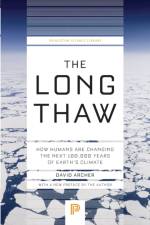
If you think that global warming means slightly hotter weather and a modest rise in sea levels that will persist only so long as fossil fuels hold out (or until we decide to stop burning them), think again. In The Long Thaw, David Archer, one of the world's leading climatologists, predicts that if we continue to emit carbon dioxide we may eventually cancel the next ice age and raise the oceans by 50 meters. The great ice sheets in Antarctica and Greenland may take more than a century to melt, and the overall change in sea level will be one hundred times what is forecast for 2100. By comparing the global warming projection for the next century to natural climate changes of the distant past, and then looking into the future far beyond the usual scientific and political horizon of the year 2100, Archer reveals the hard truths of the long-term climate forecast. Archer shows how just a few centuries of fossil-fuel use will cause not only a climate storm that will last a few hundred years, but dramatic climate changes that will last thousands. Carbon dioxide emitted today will be a problem for millennia. For the first time, humans have become major players in shaping the long-term climate. In fact, a planetwide thaw driven by humans has already begun. But despite the seriousness of the situation, Archer argues that it is still not too late to avert dangerous climate change--if humans can find a way to cooperate as never before. Revealing why carbon dioxide may be an even worse gamble in the long run than in the short, this compelling and critically important book brings the best long-term climate science to a general audience for the first time.
Modeling with Data fully explains how to execute computationally intensive analyses on very large data sets, showing readers how to determine the best methods for solving a variety of different problems, how to create and debug statistical models, and how to run an analysis and evaluate the results. Ben Klemens introduces a set of open and unlimited tools, and uses them to demonstrate data management, analysis, and simulation techniques essential for dealing with large data sets and computationally intensive procedures. He then demonstrates how to easily apply these tools to the many threads of statistical technique, including classical, Bayesian, maximum likelihood, and Monte Carlo methods. Klemens's accessible survey describes these models in a unified and nontraditional manner, providing alternative ways of looking at statistical concepts that often befuddle students. The book includes nearly one hundred sample programs of all kinds. Links to these programs will be available on this page at a later date. Modeling with Data will interest anyone looking for a comprehensive guide to these powerful statistical tools, including researchers and graduate students in the social sciences, biology, engineering, economics, and applied mathematics.
How do criminals communicate with each other? Unlike the rest of us, people planning crimes can't freely advertise their goods and services, nor can they rely on formal institutions to settle disputes and certify quality. They face uniquely intense dilemmas as they grapple with the basic problems of whom to trust, how to make themselves trusted, and how to handle information without being detected by rivals or police. In this book, one of the world's leading scholars of the mafia ranges from ancient Rome to the gangs of modern Japan, from the prisons of Western countries to terrorist and pedophile rings, to explain how despite these constraints, many criminals successfully stay in business. Diego Gambetta shows that as villains balance the lure of criminal reward against the fear of dire punishment, they are inspired to unexpected feats of subtlety and ingenuity in communication. He uncovers the logic of the often bizarre ways in which inveterate and occasional criminals solve their dilemmas, such as why the tattoos and scars etched on a criminal's body function as lines on a professional resume, why inmates resort to violence to establish their position in the prison pecking order, and why mobsters are partial to nicknames and imitate the behavior they see in mafia movies. Even deliberate self-harm and the disclosure of their crimes are strategically employed by criminals to convey important messages. By deciphering how criminals signal to each other in a lawless universe, this gruesomely entertaining and incisive book provides a quantum leap in our ability to make sense of their actions.
From uttering a prayer before boarding a plane, to exploring past lives through hypnosis, has superstition become pervasive in contemporary culture? Robert Park, the best-selling author of Voodoo Science, argues that it has. In Superstition, Park asks why people persist in superstitious convictions long after science has shown them to be ill-founded. He takes on supernatural beliefs from religion and the afterlife to New Age spiritualism and faith-based medical claims. He examines recent controversies and concludes that science is the only way we have of understanding the world. Park sides with the forces of reason in a world of continuing and, he fears, increasing superstition. Chapter by chapter, he explains how people too easily mistake pseudoscience for science. He discusses parapsychology, homeopathy, and acupuncture; he questions the existence of souls, the foundations of intelligent design, and the power of prayer; he asks for evidence of reincarnation and astral projections; and he challenges the idea of heaven. Throughout, he demonstrates how people's blind faith, and their confidence in suspect phenomena and remedies, are manipulated for political ends. Park shows that science prevails when people stop fooling themselves. Compelling and precise, Superstition takes no hostages in its quest to provoke. In shedding light on some very sensitive--and Park would say scientifically dubious--issues, the book is sure to spark discussion and controversy.
Charles Darwin's Origin of Species is one of the most widely cited books in modern science. Yet tackling this classic can be daunting for students and general readers alike because of Darwin's Victorian prose and the complexity and scope of his ideas. The "e;Origin"e; Then and Now is a unique guide to Darwin's masterwork, making it accessible to a much wider audience by deconstructing and reorganizing the Origin in a way that allows for a clear explanation of its key concepts. The Origin is examined within the historical context in which it was written, and modern examples are used to reveal how this work remains a relevant and living document for today. In this eye-opening and accessible guide, David Reznick shows how many peculiarities of the Origin can be explained by the state of science in 1859, helping readers to grasp the true scope of Darwin's departure from the mainstream thinking of his day. He reconciles Darwin's concept of species with our current concept, which has advanced in important ways since Darwin first wrote the Origin, and he demonstrates why Darwin's theory unifies the biological sciences under a single conceptual framework much as Newton did for physics. Drawing liberally from the facsimile of the first edition of the Origin, Reznick enables readers to follow along as Darwin develops his ideas. The "e;Origin"e; Then and Now is an indispensable primer for anyone seeking to understand Darwin's Origin of Species and the ways it has shaped the modern study of evolution.
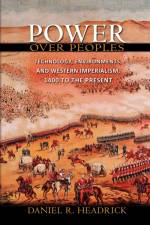
For six hundred years, the nations of Europe and North America have periodically attempted to coerce, invade, or conquer other societies. They have relied on their superior technology to do so, yet these technologies have not always guaranteed success. Power over Peoples examines Western imperialism's complex relationship with technology, from the first Portuguese ships that ventured down the coast of Africa in the 1430s to America's conflicts in the Middle East today. Why did the sailing vessels that gave the Portuguese a century-long advantage in the Indian Ocean fail to overcome Muslim galleys in the Red Sea? Why were the same weapons and methods that the Spanish used to conquer Mexico and Peru ineffective in Chile and Africa? Why didn't America's overwhelming air power assure success in Iraq and Afghanistan? In Power over Peoples, Daniel Headrick traces the evolution of Western technologies--from muskets and galleons to jet planes and smart bombs--and sheds light on the environmental and social factors that have brought victory in some cases and unforeseen defeat in others. He shows how superior technology translates into greater power over nature and sometimes even other peoples, yet how technological superiority is no guarantee of success in imperialist ventures--because the technology only delivers results in a specific environment, or because the society being attacked responds in unexpected ways. Breathtaking in scope, Power over Peoples is a revealing history of technological innovation, its promise and limitations, and its central role in the rise and fall of empire.Some images inside the book are unavailable due to digital copyright restrictions.
The best-selling field guide that "e;sets new standards"e; (New Scientist) and "e;makes all other field guides for mammals of the United States. . . and Canada obsolete"e; (Journal of Mammalogy) is now even better. Covering 20 species recognized since 2002 and including 13 new color plates, this fully revised edition of Mammals of North America illustrates all 462 known mammal species in the United States and Canada--each in beautiful color and accurate detail. With a more up-to-date species list than any other guide, improved facing-page descriptions, easier-to-read distribution maps, updated common and scientific names, and track and scat illustrations, this slim, light, and easy-to-use volume is the must-have source for identifying North American mammals.Roland Kays and Don Wilson have scoured the technical literature to pull out the key differences between similar species, and illustrated these whenever possible, making the guide useful to amateur naturalists and professional zoologists alike. Casual animal watchers will appreciate the overview of mammal diversity and the tips on identifying animals they can spy in their binoculars, while scientists will appreciate the exacting detail needed to distinguish similar species, including illustrations of shrew teeth, bat toes, and whale dorsal fins.The best-illustrated and easiest-to-use field guide to North American mammalsBeautiful and accurate color illustrations of all 462 mammals found in the United States and Canada--including 20 species recognized since 2002112 color plates--including 13 new onesKey identification information--fully revised--on facing pagesThe most current taxonomy/species listFully revised, easy-to-read range mapsIllustrations of tracks, scat, and whale and dolphin dive sequences
What does quilting have to do with electric circuit theory? The answer is just one of the fascinating ways that best-selling popular math writer Paul Nahin illustrates the deep interplay of math and physics in the world around us in his latest book of challenging mathematical puzzles, Mrs. Perkins's Electric Quilt. With his trademark combination of intriguing mathematical problems and the historical anecdotes surrounding them, Nahin invites readers on an exciting and informative exploration of some of the many ways math and physics combine to create something vastly more powerful, useful, and interesting than either is by itself. In a series of brief and largely self-contained chapters, Nahin discusses a wide range of topics in which math and physics are mutually dependent and mutually illuminating, from Newtonian gravity and Newton's laws of mechanics to ballistics, air drag, and electricity. The mathematical subjects range from algebra, trigonometry, geometry, and calculus to differential equations, Fourier series, and theoretical and Monte Carlo probability. Each chapter includes problems--some three dozen in all--that challenge readers to try their hand at applying what they have learned. Just as in his other books of mathematical puzzles, Nahin discusses the historical background of each problem, gives many examples, includes MATLAB codes, and provides complete and detailed solutions at the end. Mrs. Perkins's Electric Quilt will appeal to students interested in new math and physics applications, teachers looking for unusual examples to use in class--and anyone who enjoys popular math books.
Covering the fundamentals as well as many special topics of current interest, this is the most concise, up-to-date, and accessible graduate-level textbook on quantum mechanics available. Written by Gerald Mahan, a distinguished research physicist and author of an acclaimed textbook on many-particle physics, Quantum Mechanics in a Nutshell is the distillation of many years' teaching experience. Emphasizing the use of quantum mechanics to describe actual quantum systems such as atoms and solids, and rich with interesting applications, the book proceeds from solving for the properties of a single particle in potential; to solving for two particles (the helium atom); to addressing many-particle systems. Applications include electron gas, magnetism, and Bose-Einstein Condensation; examples are carefully chosen and worked; and each chapter has numerous homework problems, many of them original. Quantum Mechanics in a Nutshell expertly addresses traditional and modern topics, including perturbation theory, WKBJ, variational methods, angular momentum, the Dirac equation, many-particle wave functions, Casimir Force, and Bell's Theorem. And it treats many topics--such as the interactions between photons and electrons, scattering theory, and density functional theory--in exceptional depth. A valuable addition to the teaching literature, Quantum Mechanics in a Nutshell is ideally suited for a two-semester course. The most concise, up-to-date, and accessible graduate textbook on the subject Contains the ideal amount of material for a two-semester course Focuses on the description of actual quantum systems, including a range of applications Covers traditional topics, as well as those at the frontiers of research Treats in unprecedented detail topics such as photon-electron interaction, scattering theory, and density functional theory Includes numerous homework problems at the end of each chapter
Trucking Country is a social history of long-haul trucking that explores the contentious politics of free-market capitalism in post-World War II America. Shane Hamilton paints an eye-opening portrait of the rural highways of the American heartland, and in doing so explains why working-class populist voters are drawn to conservative politicians who seemingly don't represent their financial interests. Hamilton challenges the popular notion of "e;red state"e; conservatism as a devil's bargain between culturally conservative rural workers and economically conservative demagogues in the Republican Party. The roots of rural conservatism, Hamilton demonstrates, took hold long before the culture wars and free-market fanaticism of the 1990s. As Hamilton shows, truckers helped build an economic order that brought low-priced consumer goods to a greater number of Americans. They piloted the big rigs that linked America's factory farms and agribusiness food processors to suburban supermarkets across the country. Trucking Country is the gripping account of truckers whose support of post-New Deal free enterprise was so virulent that it sparked violent highway blockades in the 1970s. It's the story of "e;bandit"e; drivers who inspired country songwriters and Hollywood filmmakers to celebrate the "e;last American cowboy,"e; and of ordinary blue-collar workers who helped make possible the deregulatory policies of Jimmy Carter and Ronald Reagan and set the stage for Wal-Mart to become America's most powerful corporation in today's low-price, low-wage economy.Some images inside the book are unavailable due to digital copyright restrictions.
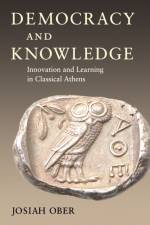
When does democracy work well, and why? Is democracy the best form of government? These questions are of supreme importance today as the United States seeks to promote its democratic values abroad. Democracy and Knowledge is the first book to look to ancient Athens to explain how and why directly democratic government by the people produces wealth, power, and security. Combining a history of Athens with contemporary theories of collective action and rational choice developed by economists and political scientists, Josiah Ober examines Athenian democracy's unique contribution to the ancient Greek city-state's remarkable success, and demonstrates the valuable lessons Athenian political practices hold for us today. He argues that the key to Athens's success lay in how the city-state managed and organized the aggregation and distribution of knowledge among its citizens. Ober explores the institutional contexts of democratic knowledge management, including the use of social networks for collecting information, publicity for building common knowledge, and open access for lowering transaction costs. He explains why a government's attempt to dam the flow of information makes democracy stumble. Democratic participation and deliberation consume state resources and social energy. Yet as Ober shows, the benefits of a well-designed democracy far outweigh its costs. Understanding how democracy can lead to prosperity and security is among the most pressing political challenges of modern times. Democracy and Knowledge reveals how ancient Greek politics can help us transcend the democratic dilemmas that confront the world today.
Reforms at Risk is the first book to closely examine what happens to sweeping and seemingly successful policy reforms after they are passed. Most books focus on the politics of reform adoption, yet as Eric Patashnik shows here, the political struggle does not end when major reforms become enacted. Why do certain highly praised policy reforms endure while others are quietly reversed or eroded away? Patashnik peers into some of the most critical arenas of domestic-policy reform--including taxes, agricultural subsidies, airline deregulation, emissions trading, welfare state reform, and reform of government procurement--to identify the factors that enable reform measures to survive. He argues that the reforms that stick destroy an existing policy subsystem and reconfigure the political dynamic. Patashnik demonstrates that sustainable reforms create positive policy feedbacks, transform institutions, and often unleash the ''creative destructiveness'' of market forces. Reforms at Risk debunks the argument that reforms inevitably fail because Congress is prey to special interests, and the book provides a more realistic portrait of the possibilities and limits of positive change in American government. It is essential reading for scholars and practitioners of U.S. politics and public policy, offering practical lessons for anyone who wants to ensure that hard-fought reform victories survive.
One of the world's most important political philosophers, Jon Elster is a leading thinker on reason and rationality and their roles in politics and public life. In this short book, he crystallizes and advances his work, bridging the gap between philosophers who use the idea of reason to assess human behavior from a normative point of view and social scientists who use the idea of rationality to explain behavior. In place of these approaches, Elster proposes a unified conceptual framework for the study of behavior. Drawing on classical moralists as well as modern scholarship, and using a wealth of historical and contemporary illustrations, Reason and Rationality marks a new development in Elster's thinking while at the same time providing a brief, elegant, and accessible introduction to his work.
The two volumes of Philosophical Essays bring together the most important essays written by one of the world's foremost philosophers of language. Scott Soames has selected thirty-one essays spanning nearly three decades of thinking about linguistic meaning and the philosophical significance of language. A judicious collection of old and new, these volumes include sixteen essays published in the 1980s and 1990s, nine published since 2000, and six new essays. The essays in Volume 1 investigate what linguistic meaning is; how the meaning of a sentence is related to the use we make of it; what we should expect from empirical theories of the meaning of the languages we speak; and how a sound theoretical grasp of the intricate relationship between meaning and use can improve the interpretation of legal texts. The essays in Volume 2 illustrate the significance of linguistic concerns for a broad range of philosophical topics--including the relationship between language and thought; the objects of belief, assertion, and other propositional attitudes; the distinction between metaphysical and epistemic possibility; the nature of necessity, actuality, and possible worlds; the necessary a posteriori and the contingent a priori; truth, vagueness, and partial definition; and skepticism about meaning and mind. The two volumes of Philosophical Essays are essential for anyone working on the philosophy of language.
In The Politics of Women's Rights in Iran, Arzoo Osanloo explores how Iranian women understand their rights. After the 1979 revolution, Iranian leaders transformed the state into an Islamic republic. At that time, the country's leaders used a renewed discourse of women's rights to symbolize a shift away from the excesses of Western liberalism. Osanloo reveals that the postrevolutionary republic blended practices of a liberal republic with Islamic principles of equality. Her ethnographic study illustrates how women's claims of rights emerge from a hybrid discourse that draws on both liberal individualism and Islamic ideals. Osanloo takes the reader on a journey through numerous sites where rights are being produced--including Qur'anic reading groups, Tehran's family court, and law offices--as she sheds light on the fluid and constructed nature of women's perceptions of rights. In doing so, Osanloo unravels simplistic dichotomies between so-called liberal, universal rights and insular, local culture. The Politics of Women's Rights in Iran casts light on a contemporary non-Western understanding of the meaning behind liberal rights, and raises questions about the misunderstood relationship between modernity and Islam.
Economists and Societies is the first book to systematically compare the profession of economics in the United States, Britain, and France, and to explain why economics, far from being a uniform science, differs in important ways among these three countries. Drawing on in-depth interviews with economists, institutional analysis, and a wealth of scholarly evidence, Marion Fourcade traces the history of economics in each country from the late nineteenth century to the present, demonstrating how each political, cultural, and institutional context gave rise to a distinct professional and disciplinary configuration. She argues that because the substance of political life varied from country to country, people's experience and understanding of the economy, and their political and intellectual battles over it, crystallized in different ways--through scientific and mercantile professionalism in the United States, public-minded elitism in Britain, and statist divisions in France. Fourcade moves past old debates about the relationship between culture and institutions in the production of expert knowledge to show that scientific and practical claims over the economy in these three societies arose from different elites with different intellectual orientations, institutional entanglements, and social purposes. Much more than a history of the economics profession, Economists and Societies is a revealing exploration of American, French, and British society and culture as seen through the lens of their respective economic institutions and the distinctive character of their economic experts.
It is widely held that Bayesian decision theory is the final word on how a rational person should make decisions. However, Leonard Savage--the inventor of Bayesian decision theory--argued that it would be ridiculous to use his theory outside the kind of small world in which it is always possible to "e;look before you leap."e; If taken seriously, this view makes Bayesian decision theory inappropriate for the large worlds of scientific discovery and macroeconomic enterprise. When is it correct to use Bayesian decision theory--and when does it need to be modified? Using a minimum of mathematics, Rational Decisions clearly explains the foundations of Bayesian decision theory and shows why Savage restricted the theory's application to small worlds. The book is a wide-ranging exploration of standard theories of choice and belief under risk and uncertainty. Ken Binmore discusses the various philosophical attitudes related to the nature of probability and offers resolutions to paradoxes believed to hinder further progress. In arguing that the Bayesian approach to knowledge is inadequate in a large world, Binmore proposes an extension to Bayesian decision theory--allowing the idea of a mixed strategy in game theory to be expanded to a larger set of what Binmore refers to as "e;muddled"e; strategies. Written by one of the world's leading game theorists, Rational Decisions is the touchstone for anyone needing a concise, accessible, and expert view on Bayesian decision making.
Providing an introduction to mathematical analysis as it applies to economic theory and econometrics, this book bridges the gap that has separated the teaching of basic mathematics for economics and the increasingly advanced mathematics demanded in economics research today. Dean Corbae, Maxwell B. Stinchcombe, and Juraj Zeman equip students with the knowledge of real and functional analysis and measure theory they need to read and do research in economic and econometric theory. Unlike other mathematics textbooks for economics, An Introduction to Mathematical Analysis for Economic Theory and Econometrics takes a unified approach to understanding basic and advanced spaces through the application of the Metric Completion Theorem. This is the concept by which, for example, the real numbers complete the rational numbers and measure spaces complete fields of measurable sets. Another of the book's unique features is its concentration on the mathematical foundations of econometrics. To illustrate difficult concepts, the authors use simple examples drawn from economic theory and econometrics. Accessible and rigorous, the book is self-contained, providing proofs of theorems and assuming only an undergraduate background in calculus and linear algebra. Begins with mathematical analysis and economic examples accessible to advanced undergraduates in order to build intuition for more complex analysis used by graduate students and researchers Takes a unified approach to understanding basic and advanced spaces of numbers through application of the Metric Completion Theorem Focuses on examples from econometrics to explain topics in measure theory
Dragonflies and Damselflies of the West is the first fully illustrated field guide to all 348 species of dragonflies and damselflies in western North America. Dragonflies and damselflies are large, stunningly beautiful insects, as readily observable as birds and butterflies. This unique guide makes identifying them easy--its compact size and user-friendly design make it the only guide you need in the field. Every species is generously illustrated with full-color photographs and a distribution map, and structural features are illustrated where they aid in-hand identification. Detailed species accounts include information on size, distribution, flight season, similar species, habitat, and natural history. Dennis Paulson's introduction provides an essential primer on the biology, natural history, and conservation of these important and fascinating insects, along with helpful tips on how to observe and photograph them. Dragonflies and Damselflies of the West is the field guide naturalists, conservationists, and dragonfly enthusiasts have been waiting for. Covers all 348 western species in detail Features a wealth of color photographs Provides a color distribution map for every species Includes helpful identification tips Serves as an essential introduction to dragonflies and their natural history
As China emerges as an international economic and military power, the world waits to see how the nation will assert itself globally. Yet, as M. Taylor Fravel shows in Strong Borders, Secure Nation, concerns that China might be prone to violent conflict over territory are overstated. The first comprehensive study of China's territorial disputes, Strong Borders, Secure Nation contends that China over the past sixty years has been more likely to compromise in these conflicts with its Asian neighbors and less likely to use force than many scholars or analysts might expect. By developing theories of cooperation and escalation in territorial disputes, Fravel explains China's willingness to either compromise or use force. When faced with internal threats to regime security, especially ethnic rebellion, China has been willing to offer concessions in exchange for assistance that strengthens the state's control over its territory and people. By contrast, China has used force to halt or reverse decline in its bargaining power in disputes with its militarily most powerful neighbors or in disputes where it has controlled none of the land being contested. Drawing on a rich array of previously unexamined Chinese language sources, Strong Borders, Secure Nation offers a compelling account of China's foreign policy on one of the most volatile issues in international relations.
How heavy is that cloud? Why can you see farther in rain than in fog? Why are the droplets on that spider web spaced apart so evenly? If you have ever asked questions like these while outdoors, and wondered how you might figure out the answers, this is a book for you. An entertaining and informative collection of fascinating puzzles from the natural world around us, A Mathematical Nature Walk will delight anyone who loves nature or math or both. John Adam presents ninety-six questions about many common natural phenomena--and a few uncommon ones--and then shows how to answer them using mostly basic mathematics. Can you weigh a pumpkin just by carefully looking at it? Why can you see farther in rain than in fog? What causes the variations in the colors of butterfly wings, bird feathers, and oil slicks? And why are large haystacks prone to spontaneous combustion? These are just a few of the questions you'll find inside. Many of the problems are illustrated with photos and drawings, and the book also has answers, a glossary of terms, and a list of some of the patterns found in nature. About a quarter of the questions can be answered with arithmetic, and many of the rest require only precalculus. But regardless of math background, readers will learn from the informal descriptions of the problems and gain a new appreciation of the beauty of nature and the mathematics that lies behind it.
Uncivil Disobedience examines the roles violence and terrorism have played in the exercise of democratic ideals in America. Jennet Kirkpatrick explores how crowds, rallying behind the principle of popular sovereignty and desiring to make law conform to justice, can disdain law and engage in violence. She exposes the hazards of democracy that arise when citizens seek to control government directly, and demonstrates the importance of laws and institutions as limitations on the will of the people. Kirkpatrick looks at some of the most explosive instances of uncivil disobedience in American history: the contemporary militia movement, Southern lynch mobs, frontier vigilantism, and militant abolitionism. She argues that the groups behind these violent episodes are often motivated by admirable democratic ideas of popular power and autonomy. Kirkpatrick shows how, in this respect, they are not so unlike the much-admired adherents of nonviolent civil disobedience, yet she reveals how those who engage in violent disobedience use these admirable democratic principles as a justification for terrorism and killing. She uses a "e;bottom-up"e; analysis of events to explain how this transformation takes place, paying close attention to what members of these groups do and how they think about the relationship between citizens and the law. Uncivil Disobedience calls for a new vision of liberal democracy where the rule of the people and the rule of law are recognized as fundamental ideals, and where neither is triumphant or transcendent.
Anyone who has been employed by an organization knows not every official workplace regulation must be followed. When management consistently overlooks such breaches, spaces emerge in which both workers and supervisors engage in officially prohibited, yet tolerated practices--gray zones. When discovered, these transgressions often provoke disapproval; when company materials are diverted in the process, these breaches are quickly labeled theft. Yet, why do gray zones persist and why are they unlikely to disappear? In Moral Gray Zones, Michel Anteby shows how these spaces function as regulating mechanisms within workplaces, fashioning workers' identity and self-esteem while allowing management to maintain control.The book provides a unique window into gray zones through its in-depth look at the manufacture and exchange of illegal goods called homers, tolerated in a French aeronautic plant. Homers such as toys for kids, cutlery for the kitchen, or lamps for homes, are made on company time with company materials for a worker's own purpose and use. Anteby relies on observations at retirees' homes, archival data, interviews, and surveys to understand how plant workers and managers make sense of this tacit practice. He argues that when patrolled, gray zones like the production of homers offer workplaces balanced opportunities for supervision as well as expression. Cautioning against the hasty judgment that gray zone practices are simply wrong, Moral Gray Zones contributes to a deeper understanding of the culture, group dynamics, and deviance found in organizations.
For more than a century, the American medical profession insisted that doctors be rigorously trained in medical science and dedicated to professional ethics. Patients revered their doctors as representatives of a sacred vocation. Do we still trust doctors with the same conviction? In Trusting Doctors, Jonathan Imber attributes the development of patients' faith in doctors to the inspiration and influence of Protestant and Catholic clergymen during the nineteenth and early twentieth centuries. He explains that as the influence of clergymen waned, and as reliance on medical technology increased, patients' trust in doctors steadily declined. Trusting Doctors discusses the emphasis that Protestant clergymen placed on the physician's vocation; the focus that Catholic moralists put on specific dilemmas faced in daily medical practice; and the loss of unchallenged authority experienced by doctors after World War II, when practitioners became valued for their technical competence rather than their personal integrity. Imber shows how the clergy gradually lost their impact in defining the physician's moral character, and how vocal critics of medicine contributed to a decline in patient confidence. The author argues that as modern medicine becomes defined by specialization, rapid medical advance, profit-driven industry, and ever more anxious patients, the future for a renewed trust in doctors will be confronted by even greater challenges. Trusting Doctors provides valuable insights into the religious underpinnings of the doctor-patient relationship and raises critical questions about the ultimate place of the medical profession in American life and culture.
Fiction, far from being the opposite of truth, is wholly bent on finding it out, and writing novels is a way to know the real world as objectively as possible. In Five Fictions in Search of Truth, Myra Jehlen develops this idea through readings of works by Flaubert, James, and Nabokov. She invokes Proust's famous search for lost memory as the exemplary literary process, which strives, whatever its materials, for a true knowledge. In Salammbo, Flaubert digs up Carthage; in The Ambassadors, James plumbs the examined life and touches at its limits; while in Lolita, Nabokov traces a search for truth that becomes a trespass. In these readings, form and style emerge as fiction's means for taking hold of reality, which is to say that they are as epistemological as they are aesthetic, each one emerging by way of the other. The aesthetic aspects of a literary work are just so many instruments for exploring a subject, and the beauty and pleasure of a work confirm the validity of its account of the world. For Flaubert, famously, a beautiful sentence was proven true by its beauty. James and Nabokov wrote on the same assumption--that form and style were at once the origin and the confirmation of a work's truth. In Five Fictions in Search of Truth, Jehlen shows, moreover, that fiction's findings are not only about the world but immanent within it. Literature works concretely, through this form, that style, this image, that word, seeking a truth that is equally concrete. Writers write--and readers read--to discover an incarnate, secular knowledge, and in doing so they enact a basic concurrence between literature and science.Some images inside the book are unavailable due to digital copyright restrictions.
Dostoevsky's Democracy offers a major reinterpretation of the life and work of the great Russian writer by closely reexamining the crucial transitional period between the early works of the 1840s and the important novels of the 1860s. Sentenced to death in 1849 for utopian socialist political activity, the 28-year-old Dostoevsky was subjected to a mock execution and then exiled to Siberia for a decade, including four years in a forced labor camp, where he experienced a crisis of belief. It has been influentially argued that the result of this crisis was a conversion to Russian Orthodoxy and reactionary politics. But Dostoevsky's Democracy challenges this view through a close investigation of Dostoevsky's Siberian decade and its most important work, the autobiographical novel Notes from the House of the Dead (1861). Nancy Ruttenburg argues that Dostoevsky's crisis was set off by his encounter with common Russians in the labor camp, an experience that led to an intense artistic meditation on what he would call Russian "e;democratism."e; By tracing the effects of this crisis, Dostoevsky's Democracy presents a new understanding of Dostoevsky's aesthetic and political development and his role in shaping Russian modernity itself, especially in relation to the preeminent political event of his time, peasant emancipation.
What fueled the Victorian passion for hair-jewelry and memorial rings? When would an everyday object metamorphose from commodity to precious relic? In Portable Property, John Plotz examines the new role played by portable objects in persuading Victorian Britons that they could travel abroad with religious sentiments, family ties, and national identity intact. In an empire defined as much by the circulation of capital as by force of arms, the challenge of preserving Englishness while living overseas became a central Victorian preoccupation, creating a pressing need for objects that could readily travel abroad as personifications of Britishness. At the same time a radically new relationship between cash value and sentimental associations arose in certain resonant mementoes--in teacups, rings, sprigs of heather, and handkerchiefs, but most of all in books. Portable Property examines how culture-bearing objects came to stand for distant people and places, creating or preserving a sense of self and community despite geographic dislocation. Victorian novels--because they themselves came to be understood as the quintessential portable property--tell the story of this change most clearly. Plotz analyzes a wide range of works, paying particular attention to George Eliot's Daniel Deronda, Anthony Trollope's Eustace Diamonds, and R. D. Blackmore's Lorna Doone. He also discusses Thomas Hardy and William Morris's vehement attack on the very notion of cultural portability. The result is a richer understanding of the role of objects in British culture at home and abroad during the Age of Empire.
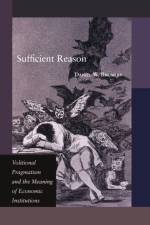
In the standard analysis of economic institutions--which include social conventions, the working rules of an economy, and entitlement regimes (property relations)--economists invoke the same theories they use when analyzing individual behavior. In this profoundly innovative book, Daniel Bromley challenges these theories, arguing instead for "e;volitional pragmatism"e; as a plausible way of thinking about the evolution of economic institutions. Economies are always in the process of becoming. Here is a theory of how they become. Bromley argues that standard economic accounts see institutions as mere constraints on otherwise autonomous individual action. Some approaches to institutional economics--particularly the "e;new"e; institutional economics--suggest that economic institutions emerge spontaneously from the voluntary interaction of economic agents as they go about pursuing their best advantage. He suggests that this approach misses the central fact that economic institutions are the explicit and intended result of authoritative agents--legislators, judges, administrative officers, heads of states, village leaders--who volitionally decide upon working rules and entitlement regimes whose very purpose is to induce behaviors (and hence plausible outcomes) that constitute the sufficient reasons for the institutional arrangements they create. Bromley's approach avoids the prescriptive consequentialism of contemporary economics and asks, instead, that we see these emergent and evolving institutions as the reasons for the individual and aggregate behavior their very adoption anticipates. These hoped-for outcomes comprise sufficient reasons for new laws, judicial decrees, and administrative rulings, which then become instrumental to the realization of desired individual behaviors and thus aggregate outcomes.
Abonner på vårt nyhetsbrev og få rabatter og inspirasjon til din neste leseopplevelse.
Ved å abonnere godtar du vår personvernerklæring.