
























Gjør som tusenvis av andre bokelskere
Abonner på vårt nyhetsbrev og få rabatter og inspirasjon til din neste leseopplevelse.
Ved å abonnere godtar du vår personvernerklæring.Du kan når som helst melde deg av våre nyhetsbrev.

Love it or hate it, celebrity is one of the dominant features of modern life--and one of the least understood. Fred Inglis sets out to correct this problem in this entertaining and enlightening social history of modern celebrity, from eighteenth-century London to today's Hollywood. Vividly written and brimming with fascinating stories of figures whose lives mark important moments in the history of celebrity, this book explains how fame has changed over the past two-and-a-half centuries. Starting with the first modern celebrities in mid-eighteenth-century London, including Samuel Johnson and the Prince Regent, the book traces the changing nature of celebrity and celebrities through the age of the Romantic hero, the European fin de siecle, and the Gilded Age in New York and Chicago. In the twentieth century, the book covers the Jazz Age, the rise of political celebrities such as Mussolini, Hitler, and Stalin, and the democratization of celebrity in the postwar decades, as actors, rock stars, and sports heroes became the leading celebrities. Arguing that celebrity is a mirror reflecting some of the worst as well as some of the best aspects of modern history itself, Inglis considers how the lives of the rich and famous provide not only entertainment but also social cohesion and, like morality plays, examples of what--and what not--to do. This book will interest anyone who is curious about the history that lies behind one of the great preoccupations of our lives.Some images inside the book are unavailable due to digital copyright restrictions.
It is taken for granted in the knowledge economy that companies must employ the most talented performers to compete and succeed. Many firms try to buy stars by luring them away from competitors. But Boris Groysberg shows what an uncertain and disastrous practice this can be. After examining the careers of more than a thousand star analysts at Wall Street investment banks, and conducting more than two hundred frank interviews, Groysberg comes to a striking conclusion: star analysts who change firms suffer an immediate and lasting decline in performance. Their earlier excellence appears to have depended heavily on their former firms' general and proprietary resources, organizational cultures, networks, and colleagues. There are a few exceptions, such as stars who move with their teams and stars who switch to better firms. Female stars also perform better after changing jobs than their male counterparts do. But most stars who switch firms turn out to be meteors, quickly losing luster in their new settings. Groysberg also explores how some Wall Street research departments are successfully growing, retaining, and deploying their own stars. Finally, the book examines how its findings apply to many other occupations, from general managers to football players. Chasing Stars offers profound insights into the fundamental nature of outstanding performance. It also offers practical guidance to individuals on how to manage their careers strategically, and to companies on how to identify, develop, and keep talent.
Hobbes's extreme political views have commanded so much attention that they have eclipsed his work on language and mind, and on reasoning, personhood, and group formation. But this work is of immense interest in itself, as Philip Pettit shows in Made with Words, and it critically shapes Hobbes's political philosophy. Pettit argues that it was Hobbes, not later thinkers like Rousseau, who invented the invention of language thesis--the idea that language is a cultural innovation that transformed the human mind. The invention, in Hobbes's story, is a double-edged sword. It enables human beings to reason, commit themselves as persons, and incorporate in groups. But it also allows them to agonize about the future and about their standing relative to one another; it takes them out of the Eden of animal silence and into a life of inescapable conflict--the state of nature. Still, if language leads into this wasteland, according to Hobbes, it can also lead out. It can enable people to establish a commonwealth where the words of law and morality have a common, enforceable sense, and where people can invoke the sanctions of an absolute sovereign to give their words to one another in credible commitment and contract. Written by one of today's leading philosophers, Made with Words is both an original reinterpretation and a clear and lively introduction to Hobbes's thought.
The unique historical relationship between capitalism and the Jews is crucial to understanding modern European and Jewish history. But the subject has been addressed less often by mainstream historians than by anti-Semites or apologists. In this book Jerry Muller, a leading historian of capitalism, separates myth from reality to explain why the Jewish experience with capitalism has been so important and complex--and so ambivalent. Drawing on economic, social, political, and intellectual history from medieval Europe through contemporary America and Israel, Capitalism and the Jews examines the ways in which thinking about capitalism and thinking about the Jews have gone hand in hand in European thought, and why anticapitalism and anti-Semitism have frequently been linked. The book explains why Jews have tended to be disproportionately successful in capitalist societies, but also why Jews have numbered among the fiercest anticapitalists and Communists. The book shows how the ancient idea that money was unproductive led from the stigmatization of usury and the Jews to the stigmatization of finance and, ultimately, in Marxism, the stigmatization of capitalism itself. Finally, the book traces how the traditional status of the Jews as a diasporic merchant minority both encouraged their economic success and made them particularly vulnerable to the ethnic nationalism of the nineteenth and twentieth centuries. Providing a fresh look at an important but frequently misunderstood subject, Capitalism and the Jews will interest anyone who wants to understand the Jewish role in the development of capitalism, the role of capitalism in the modern fate of the Jews, or the ways in which the story of capitalism and the Jews has affected the history of Europe and beyond, from the medieval period to our own.
Balancing respect for religious conviction and the values of liberal democracy is a daunting challenge for judges and lawmakers, particularly when religious groups seek exemption from laws that govern others. Should students in public schools be allowed to organize devotional Bible readings and prayers on school property? Does reciting "e;under God"e; in the Pledge of Allegiance establish a preferred religion? What does the Constitution have to say about displays of religious symbols and messages on public property? Religion and the Constitution presents a new framework for addressing these and other controversial questions that involve competing demands of fairness, liberty, and constitutional validity. In this second of two major volumes on the intersection of constitutional and religious issues in the United States, Kent Greenawalt focuses on the Constitution's Establishment Clause, which forbids government from favoring one religion over another, or religion over secularism. The author begins with a history of the clause, its underlying principles, and the Supreme Court's main decisions on establishment, and proceeds to consider specific controversies. Taking a contextual approach, Greenawalt argues that the state's treatment of religion cannot be reduced to a single formula. Calling throughout for acknowledgment of the way religion gives meaning to people's lives, Religion and the Constitution aims to accommodate the maximum expression of religious conviction that is consistent with a commitment to fairness and the public welfare.
Since it was first published in 1995, Photonic Crystals has remained the definitive text for both undergraduates and researchers on photonic band-gap materials and their use in controlling the propagation of light. This newly expanded and revised edition covers the latest developments in the field, providing the most up-to-date, concise, and comprehensive book available on these novel materials and their applications. Starting from Maxwell's equations and Fourier analysis, the authors develop the theoretical tools of photonics using principles of linear algebra and symmetry, emphasizing analogies with traditional solid-state physics and quantum theory. They then investigate the unique phenomena that take place within photonic crystals at defect sites and surfaces, from one to three dimensions. This new edition includes entirely new chapters describing important hybrid structures that use band gaps or periodicity only in some directions: periodic waveguides, photonic-crystal slabs, and photonic-crystal fibers. The authors demonstrate how the capabilities of photonic crystals to localize light can be put to work in devices such as filters and splitters. A new appendix provides an overview of computational methods for electromagnetism. Existing chapters have been considerably updated and expanded to include many new three-dimensional photonic crystals, an extensive tutorial on device design using temporal coupled-mode theory, discussions of diffraction and refraction at crystal interfaces, and more. Richly illustrated and accessibly written, Photonic Crystals is an indispensable resource for students and researchers. Extensively revised and expanded Features improved graphics throughout Includes new chapters on photonic-crystal fibers and combined index-and band-gap-guiding Provides an introduction to coupled-mode theory as a powerful tool for device design Covers many new topics, including omnidirectional reflection, anomalous refraction and diffraction, computational photonics, and much more.
Almost every country in the world has sophisticated systems to prevent banking crises. Yet such crises--and the massive financial and social damage they can cause--remain common throughout the world. Does deposit insurance encourage depositors and bankers to take excessive risks? Are banking regulations poorly designed? Or are banking regulators incompetent? Jean-Charles Rochet, one of the world's leading authorities on banking regulation, argues that the answer in each case is "e;no."e; In Why Are There So Many Banking Crises?, he makes the case that, although many banking crises are precipitated by financial deregulation and globalization, political interference often causes--and almost always exacerbates--banking crises. If, for example, political authorities are allowed to pressure banking regulators into bailing out banks that should be allowed to fail, then regulation will lack credibility and market discipline won't work. Only by insuring the independence of banking regulators, Rochet says, can market forces work and banking crises be prevented and minimized. In this important collection of essays, Rochet examines the causes of banking crises around the world in recent decades, focusing on the lender of last resort; prudential regulation and the management of risk; and solvency regulations. His proposals for reforms that could limit the frequency and severity of banking crises should interest a wide range of academic economists and those working for central and private banks and financial services authorities.
In 2004, Spain's Banco Santander purchased Britain's Abbey National Bank in a deal valued at fifteen billion dollars--an acquisition that made Santander one of the ten largest financial institutions in the world. Here, Mauro Guillen and Adrian Tschoegl tackle the question of how this once-sleepy, family-run provincial bank in a developing economy transformed itself into a financial-services group with more than sixty-six million customers on three continents. Founded 150 years ago in the Spanish port city of the same name, Santander is the only large bank in the world where three successive generations of one family have led top management and the board of directors. But Santander is fully modern. Drawing on rich data and in-depth interviews with family members and managers, Guillen and Tschoegl reveal how strategic decisions by the family and complex political, social, technological, and economic forces drove Santander's unprecedented rise to global prominence. The authors place the bank in this competitive milieu, comparing it with its rivals in Europe and America, and showing how Santander, faced with growing competition in Spain and Europe, sought growth opportunities in Latin America and elsewhere. They also address the complexities of managerial succession and family leadership, and weigh the implications of Santander's stellar rise for the consolidation of European banking. Building a Global Bank tells the fascinating story behind this powerful corporation's remarkable transformation--and of the family behind it.
Quantitative approaches to evolutionary biology traditionally consider evolutionary change in isolation from an important pressure in natural selection: the demography of coevolving populations. In Analysis of Evolutionary Processes, Fabio Dercole and Sergio Rinaldi have written the first comprehensive book on Adaptive Dynamics (AD), a quantitative modeling approach that explicitly links evolutionary changes to demographic ones. The book shows how the so-called AD canonical equation can answer questions of paramount interest in biology, engineering, and the social sciences, especially economics. After introducing the basics of evolutionary processes and classifying available modeling approaches, Dercole and Rinaldi give a detailed presentation of the derivation of the AD canonical equation, an ordinary differential equation that focuses on evolutionary processes driven by rare and small innovations. The authors then look at important features of evolutionary dynamics as viewed through the lens of AD. They present their discovery of the first chaotic evolutionary attractor, which calls into question the common view that coevolution produces exquisitely harmonious adaptations between species. And, opening up potential new lines of research by providing the first application of AD to economics, they show how AD can explain the emergence of technological variety. Analysis of Evolutionary Processes will interest anyone looking for a self-contained treatment of AD for self-study or teaching, including graduate students and researchers in mathematical and theoretical biology, applied mathematics, and theoretical economics.
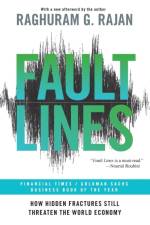
Raghuram Rajan was one of the few economists who warned of the global financial crisis before it hit. Now, as the world struggles to recover, it's tempting to blame what happened on just a few greedy bankers who took irrational risks and left the rest of us to foot the bill. In Fault Lines, Rajan argues that serious flaws in the economy are also to blame, and warns that a potentially more devastating crisis awaits us if they aren't fixed.Rajan shows how the individual choices that collectively brought about the economic meltdown--made by bankers, government officials, and ordinary homeowners--were rational responses to a flawed global financial order in which the incentives to take on risk are incredibly out of step with the dangers those risks pose. He traces the deepening fault lines in a world overly dependent on the indebted American consumer to power global economic growth and stave off global downturns. He exposes a system where America's growing inequality and thin social safety net create tremendous political pressure to encourage easy credit and keep job creation robust, no matter what the consequences to the economy's long-term health; and where the U.S. financial sector, with its skewed incentives, is the critical but unstable link between an overstimulated America and an underconsuming world.In Fault Lines, Rajan demonstrates how unequal access to education and health care in the United States puts us all in deeper financial peril, even as the economic choices of countries like Germany, Japan, and China place an undue burden on America to get its policies right. He outlines the hard choices we need to make to ensure a more stable world economy and restore lasting prosperity.
In The Great Brain Race, former U.S. News & World Report education editor Ben Wildavsky presents the first popular account of how international competition for the brightest minds is transforming the world of higher education--and why this revolution should be welcomed, not feared. Every year, nearly three million international students study outside of their home countries, a 40 percent increase since 1999. Newly created or expanded universities in China, India, and Saudi Arabia are competing with the likes of Harvard and Oxford for faculty, students, and research preeminence. Satellite campuses of Western universities are springing up from Abu Dhabi and Singapore to South Africa. Wildavsky shows that as international universities strive to become world-class, the new global education marketplace is providing more opportunities to more people than ever before. Drawing on extensive reporting in China, India, the United States, Europe, and the Middle East, Wildavsky chronicles the unprecedented international mobility of students and faculty, the rapid spread of branch campuses, the growth of for-profit universities, and the remarkable international expansion of college rankings. Some university and government officials see the rise of worldwide academic competition as a threat, going so far as to limit student mobility or thwart cross-border university expansion. But Wildavsky argues that this scholarly marketplace is creating a new global meritocracy, one in which the spread of knowledge benefits everyone--both educationally and economically.
Barack Obama, in his acclaimed campaign speech discussing the troubling complexities of race in America today, quoted William Faulkner's famous remark "e;The past isn't dead and buried. In fact, it isn't even past."e; In Not Even Past, award-winning historian Thomas Sugrue examines the paradox of race in Obama's America and how President Obama intends to deal with it. Obama's journey to the White House undoubtedly marks a watershed in the history of race in America. Yet even in what is being hailed as the post-civil rights era, racial divisions--particularly between blacks and whites--remain deeply entrenched in American life. Sugrue traces Obama's evolving understanding of race and racial inequality throughout his career, from his early days as a community organizer in Chicago, to his time as an attorney and scholar, to his spectacular rise to power as a charismatic and savvy politician, to his dramatic presidential campaign. Sugrue looks at Obama's place in the contested history of the civil rights struggle; his views about the root causes of black poverty in America; and the incredible challenges confronting his historic presidency. Does Obama's presidency signal the end of race in American life? In Not Even Past, a leading historian of civil rights, race, and urban America offers a revealing and unflinchingly honest assessment of the culture and politics of race in the age of Obama, and of our prospects for a postracial America.
For eight years the president of the United States was a born-again Christian, backed by well-organized evangelicals who often seemed intent on erasing the church-state divide. In Europe, the increasing number of radicalized Muslims is creating widespread fear that Islam is undermining Western-style liberal democracy. And even in polytheistic Asia, the development of democracy has been hindered in some countries, particularly China, by a long history in which religion was tightly linked to the state. Ian Buruma is the first writer to provide a sharp-eyed look at the tensions between religion and politics on three continents. Drawing on many contemporary and historical examples, he argues that the violent passions inspired by religion must be tamed in order to make democracy work. Comparing the United States and Europe, Buruma asks why so many Americans--and so few Europeans--see religion as a help to democracy. Turning to China and Japan, he disputes the notion that only monotheistic religions pose problems for secular politics. Finally, he reconsiders the story of radical Islam in contemporary Europe, from the case of Salman Rushdie to the murder of Theo van Gogh. Sparing no one, Buruma exposes the follies of the current culture war between defenders of "e;Western values"e; and "e;multiculturalists,"e; and explains that the creation of a democratic European Islam is not only possible, but necessary. Presenting a challenge to dogmatic believers and dogmatic secularists alike, Taming the Gods powerfully argues that religion and democracy can be compatible--but only if religious and secular authorities are kept firmly apart.
An ecosystem's complexity develops from the vast numbers of species interacting in ecological communities. The nature of these interactions, in turn, depends on environmental context. How do these components together influence an ecosystem's behavior as a whole? Can ecologists resolve an ecosystem's complexity in order to predict its response to disturbances? Resolving Ecosystem Complexity develops a framework for anticipating the ways environmental context determines the functioning of ecosystems. Oswald Schmitz addresses the critical questions of contemporary ecology: How should an ecosystem be conceptualized to blend its biotic and biophysical components? How should evolutionary ecological principles be used to derive an operational understanding of complex, adaptive ecosystems? How should the relationship between the functional biotic diversity of ecosystems and their properties be understood? Schmitz begins with the universal concept that ecosystems are comprised of species that consume resources and which are then resources for other consumers. From this, he deduces a fundamental rule or evolutionary ecological mechanism for explaining context dependency: individuals within a species trade off foraging gains against the risk of being consumed by predators. Through empirical examples, Schmitz illustrates how species use evolutionary ecological strategies to negotiate a predator-eat-predator world, and he suggests that the implications of species trade-offs are critical to making ecology a predictive science. Bridging the traditional divides between individuals, populations, and communities in ecology, Resolving Ecosystem Complexity builds a systematic foundation for thinking about natural systems.
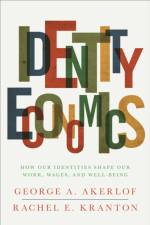
Identity Economics provides an important and compelling new way to understand human behavior, revealing how our identities--and not just economic incentives--influence our decisions. In 1995, economist Rachel Kranton wrote future Nobel Prize-winner George Akerlof a letter insisting that his most recent paper was wrong. Identity, she argued, was the missing element that would help to explain why people--facing the same economic circumstances--would make different choices. This was the beginning of a fourteen-year collaboration--and of Identity Economics. The authors explain how our conception of who we are and who we want to be may shape our economic lives more than any other factor, affecting how hard we work, and how we learn, spend, and save. Identity economics is a new way to understand people's decisions--at work, at school, and at home. With it, we can better appreciate why incentives like stock options work or don't; why some schools succeed and others don't; why some cities and towns don't invest in their futures--and much, much more. Identity Economics bridges a critical gap in the social sciences. It brings identity and norms to economics. People's notions of what is proper, and what is forbidden, and for whom, are fundamental to how hard they work, and how they learn, spend, and save. Thus people's identity--their conception of who they are, and of who they choose to be--may be the most important factor affecting their economic lives. And the limits placed by society on people's identity can also be crucial determinants of their economic well-being.
The major subdisciplines of ecology--population ecology, community ecology, ecosystem ecology, and evolutionary ecology--have diverged increasingly in recent decades. What is critically needed today is an integrated, real-world approach to ecology that reflects the interdependency of biodiversity and ecosystem functioning. From Populations to Ecosystems proposes an innovative theoretical synthesis that will enable us to advance our fundamental understanding of ecological systems and help us to respond to today's emerging global ecological crisis. Michel Loreau begins by explaining how the principles of population dynamics and ecosystem functioning can be merged. He then addresses key issues in the study of biodiversity and ecosystems, such as functional complementarity, food webs, stability and complexity, material cycling, and metacommunities. Loreau describes the most recent theoretical advances that link the properties of individual populations to the aggregate properties of communities, and the properties of functional groups or trophic levels to the functioning of whole ecosystems, placing special emphasis on the relationship between biodiversity and ecosystem functioning. Finally, he turns his attention to the controversial issue of the evolution of entire ecosystems and their properties, laying the theoretical foundations for a genuine evolutionary ecosystem ecology. From Populations to Ecosystems points the way to a much-needed synthesis in ecology, one that offers a fuller understanding of ecosystem processes in the natural world.
Some people dwell alone, many in family-based households, and an adventuresome few in communes. The Household is the first book to systematically lay bare the internal dynamics of these and other home arrangements. Legal underpinnings, social considerations, and economic constraints all influence how household participants select their homemates and govern their interactions around the hearth. Robert Ellickson applies transaction cost economics, sociological theory, and legal analysis to explore issues such as the sharing of household output, the control of domestic misconduct, and the ownership of dwelling units. Drawing on a broad range of historical and statistical sources, Ellickson contrasts family-based households with the more complex arrangements in medieval English castles, Israeli kibbutzim, and contemporary cohousing communities. He shows that most individuals, when structuring their home relationships, pursue a strategy of consorting with intimates. This, he asserts, facilitates informal coordination and tends ultimately to enhance the quality of domestic interactions. He challenges utopian critics who seek to enlarge the scale of the household and legal advocates who urge household members to rely more on written contracts and lawsuits. Ellickson argues that these commentators fail to appreciate the great advantages in the home setting of informally associating with a handful of trusted intimates. The Household is a must-read for sociologists, economists, lawyers, and anyone interested in the fundamentals of domestic life.
This lavishly illustrated guide will enable you to identify the caterpillars of nearly 700 butterflies and moths found east of the Mississippi. The more than 1,200 color photographs and two dozen line drawings include numerous exceptionally striking images. The giant silk moths, tiger moths, and many other species covered include forest pests, common garden guests, economically important species, and of course, the Mescal Worm and Mexican Jumping Bean caterpillars. Full-page species accounts cover almost 400 species, with up to six images per species including an image of the adult plus succinct text with information on distribution, seasonal activity, foodplants, and life history. These accounts are generously complemented with additional images of earlier instars, closely related species, noteworthy behaviors, and other intriguing aspects of caterpillar biology. Many caterpillars are illustrated here for the first time. Dozens of new foodplant records are presented and erroneous records are corrected. The book provides considerable information on the distribution, biology, and taxonomy of caterpillars beyond that available in other popular works on Eastern butterflies and moths. The introductory chapter covers caterpillar structure, life cycles, rearing, natural enemies, photography, and conservation. The section titled "e;Caterpillar Projects"e; will be of special interest to educators. Given the dearth of accessible guides on the identification and natural history of caterpillars, Caterpillars of Eastern North America is a must for entomologists and museum curators, forest managers, conservation biologists and others who seek a compact, easy-to-use guide to the caterpillars of this vast region. A compact guide to nearly 700 caterpillars east of the Mississippi, from forest pests to garden guests and economically important species 1,200 color photos and 24 line drawings enable easy identification Full-page species accounts with image of adult insect for almost 400 species, plus succinct text on distribution and other vital information Many caterpillars illustrated here for the first time Current information on distribution, biology, and taxonomy not found in other popular works A section geared toward educators, "e;Caterpillar Projects"e; An indispensable resource for all who seek an easy-to-use guide to the caterpillars of this vast region
This new paperback edition of Henry D. Thoreau's compelling account of Cape Cod contains the complete, definitive text of the original. Introduced by American poet and literary critic Robert Pinsky--himself a resident of Cape Cod--this volume contains some of Thoreau's most beautiful writings. In the plants, animals, topography, weather, and people of Cape Cod, Thoreau finds "e;another world"e; Encounters with the ocean dominate this book, from the fatal shipwreck of the opening chapter to his later reflections on the Pilgrims' landing and reconnaissance. Along the way, Thoreau relates the experiences of fishermen and oystermen, farmers and salvagers, lighthouse-keepers and ship captains, as well as his own intense confrontations with the sea as he travels the land's outermost margins. Chronicles of exploration, settlement, and survival on the Cape lead Thoreau to reconceive the history of New England--and to recognize the parochialism of history itself.
Henry D. Thoreau traveled to the backwoods of Maine in 1846, 1853, and 1857. Originally published in 1864, and published now with a new introduction by Paul Theroux, this volume is a powerful telling of those journeys through a rugged and largely unspoiled land. It presents Thoreau's fullest account of the wilderness. The Maine Woods is classic Thoreau: a personal story of exterior and interior discoveries in a natural setting--all conveyed in taut, masterly prose. Thoreau's evocative renderings of the life of the primitive forest--its mountains, waterways, fauna, flora, and inhabitants--are timeless and valuable on their own. But his impassioned protest against the despoilment of nature in the name of commerce and sport, which even by the 1850s threatened to deprive Americans of the "e;tonic of wildness,"e; makes The Maine Woods an especially vital book for our own time.
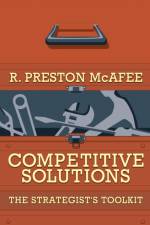
Competitive Solutions is an entertaining and wideranging introduction to successful business methods applied to a variety of real-world situations. Rejecting the one-size-fits-all premise that underlies so many guides to business strategy, Preston McAfee develops the intellectual tools and insights needed to confront many marketplace problems. Drawing on his broad experience as a consultant for major U.S. companies, as well as extensive research, McAfee emphasizes cooperation, pricing, litigation, and antitrust as vital to a firm's competitive posture--and focuses more attention on these elements than do most business strategy accounts.McAfee begins by considering strategy as successfully applied by America OnLine, an example that introduces many of the tools discussed in greater depth throughout the book. From here he moves to industry analysis: By examining the context for developing a strategy, he points out uses of positioning and differentiation that enable a firm to weaken price competition and deter rivals from stealing customers. McAfee's exploration of a product's life cycle proves an invaluable guide to positioning new technology in order to maximize the potential for future customers.In the centerpiece of the book, McAfee lays out a how-to manual for cooperation, providing tactics crucial for setting standards, lobbying the government, and fostering industry growth. Writing in a conversational manner, McAfee also addresses such deep topics as organizational design and employee compensation and incentives. More detailed discussions examine antitrust enforcement, which is an increasingly important constraint on strategy, as well as strategies for pricing, bidding, signaling, and bargaining.This book is a fascinating examination of modern business strategy and its application in many different settings. Students of business and economics--as well as executives and managers--will recognize Competitive Solutions as an indispensable resource as well as a definitive vision of the strategic firm: one in which each element of company strategy reinforces the other elements.
Once upon a time, economists saw capital account liberalization--the free and unrestricted flow of capital in and out of countries--as unambiguously good. Good for debtor states, good for the world economy. No longer. Spectacular banking and currency crises in recent decades have shattered the consensus. In this remarkably clear and pithy volume, one of Europe's leading economists examines these crises, the reforms being undertaken to prevent them, and how global financial institutions might be restructured to this end. Jean Tirole first analyzes the current views on the crises and on the reform of the international financial architecture. Reform proposals often treat the symptoms rather than the fundamentals, he argues, and sometimes fail to reconcile the objectives of setting effective financing conditions while ensuring that a country "e;owns"e; its reform program. A proper identification of market failures is essential to reformulating the mission of an institution such as the IMF, he emphasizes. Next he adapts the basic principles of corporate governance, liquidity provision, and risk management of corporations to the particulars of country borrowing. Building on a "e;dual- and common-agency perspective,"e; he revisits commonly advocated policies and considers how multilateral organizations can help debtor countries reap enhanced benefits while liberalizing their capital accounts. Based on the Paolo Baffi Lecture the author delivered at the Bank of Italy, this refreshingly accessible book is teeming with rich insights that researchers, policymakers, and students at all levels will find indispensable.
How old is prejudice against black people? Were the racist attitudes that fueled the Atlantic slave trade firmly in place 700 years before the European discovery of sub-Saharan Africa? In this groundbreaking book, David Goldenberg seeks to discover how dark-skinned peoples, especially black Africans, were portrayed in the Bible and by those who interpreted the Bible--Jews, Christians, and Muslims. Unprecedented in rigor and breadth, his investigation covers a 1,500-year period, from ancient Israel (around 800 B.C.E.) to the eighth century C.E., after the birth of Islam. By tracing the development of anti-Black sentiment during this time, Goldenberg uncovers views about race, color, and slavery that took shape over the centuries--most centrally, the belief that the biblical Ham and his descendants, the black Africans, had been cursed by God with eternal slavery. Goldenberg begins by examining a host of references to black Africans in biblical and postbiblical Jewish literature. From there he moves the inquiry from Black as an ethnic group to black as color, and early Jewish attitudes toward dark skin color. He goes on to ask when the black African first became identified as slave in the Near East, and, in a powerful culmination, discusses the resounding influence of this identification on Jewish, Christian, and Islamic thinking, noting each tradition's exegetical treatment of pertinent biblical passages. Authoritative, fluidly written, and situated at a richly illuminating nexus of images, attitudes, and history, The Curse of Ham is sure to have a profound and lasting impact on the perennial debate over the roots of racism and slavery, and on the study of early Judaism, Christianity, and Islam.
The modern state, however we conceive of it today, is based on a pattern that emerged in Europe in the period from 1100 to 1600. Inspired by a lifetime of teaching and research, On the Medieval Origins of the Modern State is a classic work on what is known about the early history of the European state. This short, clear book book explores the European state in its infancy, especially in institutional developments in the administration of justice and finance. Forewords from Charles Tilly and William Chester Jordan demonstrate the perennial importance of Joseph Strayer's book, and situate it within a contemporary context. Tilly demonstrates how Strayer's work has set the agenda for a whole generation of historical analysts, not only in medieval history but also in the comparative study of state formation. William Chester Jordan's foreword examines the scholarly and pedagogical setting within which Strayer produced his book, and how this both enhanced its accessibility and informed its focus on peculiarly English and French accomplishments in early state formation.
Where does the nation-state end and globalization begin? In Territory, Authority, Rights, one of the world's leading authorities on globalization shows how the national state made today's global era possible. Saskia Sassen argues that even while globalization is best understood as "e;denationalization,"e; it continues to be shaped, channeled, and enabled by institutions and networks originally developed with nations in mind, such as the rule of law and respect for private authority. This process of state making produced some of the capabilities enabling the global era. The difference is that these capabilities have become part of new organizing logics: actors other than nation-states deploy them for new purposes. Sassen builds her case by examining how three components of any society in any age--territory, authority, and rights--have changed in themselves and in their interrelationships across three major historical "e;assemblages"e;: the medieval, the national, and the global. The book consists of three parts. The first, "e;Assembling the National,"e; traces the emergence of territoriality in the Middle Ages and considers monarchical divinity as a precursor to sovereign secular authority. The second part, "e;Disassembling the National,"e; analyzes economic, legal, technological, and political conditions and projects that are shaping new organizing logics. The third part, "e;Assemblages of a Global Digital Age,"e; examines particular intersections of the new digital technologies with territory, authority, and rights. Sweeping in scope, rich in detail, and highly readable, Territory, Authority, Rights is a definitive new statement on globalization that will resonate throughout the social sciences.
Has globalization diluted the power of national governments to regulate their own economies? Are international governmental and nongovernmental organizations weakening the hold of nation-states on global regulatory agendas? Many observers think so. But in All Politics Is Global, Daniel Drezner argues that this view is wrong. Despite globalization, states--especially the great powers--still dominate international regulatory regimes, and the regulatory goals of states are driven by their domestic interests. As Drezner shows, state size still matters. The great powers--the United States and the European Union--remain the key players in writing global regulations, and their power is due to the size of their internal economic markets. If they agree, there will be effective global governance. If they don't agree, governance will be fragmented or ineffective. And, paradoxically, the most powerful sources of great-power preferences are the least globalized elements of their economies. Testing this revisionist model of global regulatory governance on an unusually wide variety of cases, including the Internet, finance, genetically modified organisms, and intellectual property rights, Drezner shows why there is such disparity in the strength of international regulations.
First published in 2000, Dipesh Chakrabarty's influential Provincializing Europe addresses the mythical figure of Europe that is often taken to be the original site of modernity in many histories of capitalist transition in non-Western countries. This imaginary Europe, Dipesh Chakrabarty argues, is built into the social sciences. The very idea of historicizing carries with it some peculiarly European assumptions about disenchanted space, secular time, and sovereignty. Measured against such mythical standards, capitalist transition in the third world has often seemed either incomplete or lacking. Provincializing Europe proposes that every case of transition to capitalism is a case of translation as well--a translation of existing worlds and their thought--categories into the categories and self-understandings of capitalist modernity. Now featuring a new preface in which Chakrabarty responds to his critics, this book globalizes European thought by exploring how it may be renewed both for and from the margins.
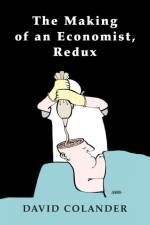
Economists seem to be everywhere in the media these days. But what exactly do today's economists do? What and how are they taught? Updating David Colander and Arjo Klamer's classic The Making of an Economist, this book shows what is happening in elite U.S. economics Ph.D. programs. By examining these programs, Colander gives a view of cutting-edge economics--and a glimpse at its likely future. And by comparing economics education today to the findings of the original book, the new book shows how much--and in what ways--the field has changed over the past two decades. The original book led to a reexamination of graduate education by the profession, and has been essential reading for prospective graduate students. Like its predecessor, The Making of an Economist, Redux is likely to provoke discussion within economics and beyond. The book includes new interviews with students at Harvard, Princeton, Stanford, MIT, Chicago, and Columbia. In these conversations, the students--the next generation of elite economists--colorfully and frankly describe what they think of their field and what graduate economics education is really like. The book concludes with reflections by Colander, Klamer, and Robert Solow. This inside look at the making of economists will interest anyone who wants to better understand the economics profession. An indispensible tool for anyone thinking about graduate education in economics, this edition is complete with colorful interviews and predictions about the future of cutting-edge economics.
In recent years, business leaders, policymakers, and inventors have complained to the media and to Congress that today's patent system stifles innovation instead of fostering it. But like the infamous patent on the peanut butter and jelly sandwich, much of the cited evidence about the patent system is pure anecdote--making realistic policy formation difficult. Is the patent system fundamentally broken, or can it be fixed with a few modest reforms? Moving beyond rhetoric, Patent Failure provides the first authoritative and comprehensive look at the economic performance of patents in forty years. James Bessen and Michael Meurer ask whether patents work well as property rights, and, if not, what institutional and legal reforms are necessary to make the patent system more effective. Patent Failure presents a wide range of empirical evidence from history, law, and economics. The book's findings are stark and conclusive. While patents do provide incentives to invest in research, development, and commercialization, for most businesses today, patents fail to provide predictable property rights. Instead, they produce costly disputes and excessive litigation that outweigh positive incentives. Only in some sectors, such as the pharmaceutical industry, do patents act as advertised, with their benefits outweighing the related costs. By showing how the patent system has fallen short in providing predictable legal boundaries, Patent Failure serves as a call for change in institutions and laws. There are no simple solutions, but Bessen and Meurer's reform proposals need to be heard. The health and competitiveness of the nation's economy depend on it.
Taxation in Colonial America examines life in the thirteen original American colonies through the revealing lens of the taxes levied on and by the colonists. Spanning the turbulent years from the founding of the Jamestown settlement to the outbreak of the American Revolution, Alvin Rabushka provides the definitive history of taxation in the colonial era, and sets it against the backdrop of enormous economic, political, and social upheaval in the colonies and Europe. Rabushka shows how the colonists strove to minimize, avoid, and evade British and local taxation, and how they used tax incentives to foster settlement. He describes the systems of public finance they created to reduce taxation, and reveals how they gained control over taxes through elected representatives in colonial legislatures. Rabushka takes a comprehensive look at the external taxes imposed on the colonists by Britain, the Netherlands, and Sweden, as well as internal direct taxes like poll and income taxes. He examines indirect taxes like duties and tonnage fees, as well as county and town taxes, church and education taxes, bounties, and other charges. He links the types and amounts of taxes with the means of payment--be it gold coins, agricultural commodities, wampum, or furs--and he compares tax systems and burdens among the colonies and with Britain. This book brings the colonial period to life in all its rich complexity, and shows how colonial attitudes toward taxation offer a unique window into the causes of the revolution.
Abonner på vårt nyhetsbrev og få rabatter og inspirasjon til din neste leseopplevelse.
Ved å abonnere godtar du vår personvernerklæring.