






















Gjør som tusenvis av andre bokelskere
Abonner på vårt nyhetsbrev og få rabatter og inspirasjon til din neste leseopplevelse.
Ved å abonnere godtar du vår personvernerklæring.Du kan når som helst melde deg av våre nyhetsbrev.

How can intense religious beliefs coexist with pluralism in America today? Examining the role of the religious imagination in contemporary religious practice and in some of the best-known works of American literature from the past fifty years, Postmodern Belief shows how belief for its own sake--a belief absent of doctrine--has become an answer to pluralism in a secular age. Amy Hungerford reveals how imaginative literature and religious practices together allow novelists, poets, and critics to express the formal elements of language in transcendent terms, conferring upon words a religious value independent of meaning. Hungerford explores the work of major American writers, including Allen Ginsberg, Don DeLillo, Cormac McCarthy, Toni Morrison, and Marilynne Robinson, and links their unique visions to the religious worlds they touch. She illustrates how Ginsberg's chant-infused 1960s poetry echoes the tongue-speaking of Charismatic Christians, how DeLillo reimagines the novel and the Latin Mass, why McCarthy's prose imitates the Bible, and why Morrison's fiction needs the supernatural. Uncovering how literature and religion conceive of a world where religious belief can escape confrontations with other worldviews, Hungerford corrects recent efforts to discard the importance of belief in understanding religious life, and argues that belief in belief itself can transform secular reading and writing into a religious act. Honoring the ways in which people talk about and practice religion, Postmodern Belief highlights the claims of the religious imagination in twentieth-century American culture.
In Marking Time, Paul Rabinow presents his most recent reflections on the anthropology of the contemporary. Drawing richly on the work of Michel Foucault, John Dewey, Niklas Luhmann, and, most interestingly, German painter Gerhard Richter, Rabinow offers a set of conceptual tools for scholars examining cutting-edge practices in the life sciences, security, new media and art practices, and other emergent phenomena. Taking up topics that include bioethics, anger and competition among molecular biologists, the lessons of the Drosophila genome, the nature of ethnographic observation in radically new settings, and the moral landscape shared by scientists and anthropologists, Rabinow shows how anthropology remains relevant to contemporary debates. By turning abstract philosophical problems into real-world explorations and offering original insights, Marking Time is a landmark contribution to the continuing re-invention of anthropology and the human sciences.
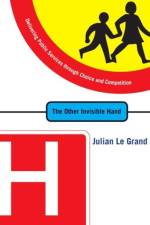
How can we ensure high-quality public services such as health care and education? Governments spend huge amounts of public money on public services such as health, education, and social care, and yet the services that are actually delivered are often low quality, inefficiently run, unresponsive to their users, and inequitable in their distribution. In this book, Julian Le Grand argues that the best solution is to offer choice to users and to encourage competition among providers. Le Grand has just completed a period as policy advisor working within the British government at the highest levels, and from this he has gained evidence to support his earlier theoretical work and has experienced the political reality of putting public policy theory into practice. He examines four ways of delivering public services: trust; targets and performance management; "e;voice"e;; and choice and competition. He argues that, although all of these have their merits, in most situations policies that rely on extending choice and competition among providers have the most potential for delivering high-quality, efficient, responsive, and equitable services. But it is important that the relevant policies be appropriately designed, and this book provides a detailed discussion of the principal features that these policies should have in the context of health care and education. It concludes with a discussion of the politics of choice.
Conflicts involving religion have returned to the forefront of international relations. And yet political scientists and policymakers have continued to assume that religion has long been privatized in the West. This secularist assumption ignores the contestation surrounding the category of the "e;secular"e; in international politics. The Politics of Secularism in International Relations shows why this thinking is flawed, and provides a powerful alternative. Elizabeth Shakman Hurd argues that secularist divisions between religion and politics are not fixed, as commonly assumed, but socially and historically constructed. Examining the philosophical and historical legacy of the secularist traditions that shape European and American approaches to global politics, she shows why this matters for contemporary international relations, and in particular for two critical relationships: the United States and Iran, and the European Union and Turkey. The Politics of Secularism in International Relations develops a new approach to religion and international relations that challenges realist, liberal, and constructivist assumptions that religion has been excluded from politics in the West. The first book to consider secularism as a form of political authority in its own right, it describes two forms of secularism and their far-reaching global consequences.
Nuclear Logics examines why some states seek nuclear weapons while others renounce them. Looking closely at nine cases in East Asia and the Middle East, Etel Solingen finds two distinct regional patterns. In East Asia, the norm since the late 1960s has been to forswear nuclear weapons, and North Korea, which makes no secret of its nuclear ambitions, is the anomaly. In the Middle East the opposite is the case, with Iran, Iraq, Israel, and Libya suspected of pursuing nuclear-weapons capabilities, with Egypt as the anomaly in recent decades. Identifying the domestic conditions underlying these divergent paths, Solingen argues that there are clear differences between states whose leaders advocate integration in the global economy and those that reject it. Among the former are countries like South Korea, Taiwan, and Japan, whose leaders have had stronger incentives to avoid the political, economic, and other costs of acquiring nuclear weapons. The latter, as in most cases in the Middle East, have had stronger incentives to exploit nuclear weapons as tools in nationalist platforms geared to helping their leaders survive in power. Solingen complements her bold argument with other logics explaining nuclear behavior, including security dilemmas, international norms and institutions, and the role of democracy and authoritarianism. Her account charts the most important frontier in understanding nuclear proliferation: grasping the relationship between internal and external political survival. Nuclear Logics is a pioneering book that is certain to provide an invaluable resource for researchers, teachers, and practitioners while reframing the policy debate surrounding nonproliferation.
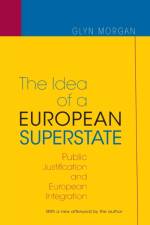
Is there a justification for European integration? The Idea of a European Superstate examines this--the most basic--question raised by the European Union. In doing so, Glyn Morgan assesses the arguments put forward by eurosceptics and their critics. In a challenge to both sides of the debate, Morgan argues in support of a European superstate. Unless Europe forms a unitary sovereign state, Europe will remain, so he maintains, weak and dependent for its security on the United States. The Idea of a European Superstate reshapes the debate on European political integration. It throws down a gauntlet to eurosceptics and euro-enthusiasts alike. While employing the arguments of contemporary political philosophy and international relations, this book is written in an accessible fashion that anyone interested in European integration can understand.
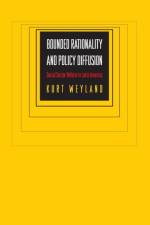
Why do very different countries often emulate the same policy model? Two years after Ronald Reagan's income-tax simplification of 1986, Brazil adopted a similar reform even though it threatened to exacerbate income disparity and jeopardize state revenues. And Chile's pension privatization of the early 1980s has spread throughout Latin America and beyond even though many poor countries that have privatized their social security systems, including Bolivia and El Salvador, lack some of the preconditions necessary to do so successfully. In a major step beyond conventional rational-choice accounts of policy decision-making, this book demonstrates that bounded--not full--rationality drives the spread of innovations across countries. When seeking solutions to domestic problems, decision-makers often consider foreign models, sometimes promoted by development institutions like the World Bank. But, as Kurt Weyland argues, policymakers apply inferential shortcuts at the risk of distortions and biases. Through an in-depth analysis of pension and health reform in Bolivia, Brazil, Costa Rica, El Salvador, and Peru, Weyland demonstrates that decision-makers are captivated by neat, bold, cognitively available models. And rather than thoroughly assessing the costs and benefits of external models, they draw excessively firm conclusions from limited data and overextrapolate from spurts of success or failure. Indications of initial success can thus trigger an upsurge of policy diffusion.
Constitutional Patriotism offers a new theory of citizenship and civic allegiance for today's culturally diverse liberal democracies. Rejecting conventional accounts of liberal nationalism and cosmopolitanism, Jan-Werner Muller argues for a form of political belonging centered on universalist norms, adapted for specific constitutional cultures. At the same time, he presents a novel approach to thinking about political belonging and the preconditions of democratic legitimacy beyond the nation-state. The book takes the development of the European Union as a case study, but its lessons apply also to the United States and other parts of the world. Muller's essay starts with an engaging historical account of the origins and spread of the concept of constitutional patriotism-the idea that political attachment ought to center on the norms and values of a liberal democratic constitution rather than a national culture or the "e;global human community."e; In a more analytical part, he then proposes a critical conception of citizenship that makes room for dissent and civil disobedience while taking seriously a polity's need for stability over time. Muller's theory of constitutional patriotism responds to the challenges of the de facto multiculturalism of today's states--with a number of concrete policy implications about immigration and the preconditions for citizenship clearly spelled out. And it asks what civic empowerment could mean in a globalizing world.
Has contemporary liberalism's devotion to individual liberty come at the expense of our society's obligations to children? Divorce is now easy to obtain, and access to everything from violent movies to sexually explicit material is zealously protected as freedom of speech. But what of the effects on the young, with their special needs and vulnerabilities? Freedom's Orphans seeks a way out of this predicament. Poised to ignite fierce debate within and beyond academia, it documents the increasing indifference of liberal theorists and jurists to what were long deemed core elements of children's welfare. Evaluating large changes in liberal political theory and jurisprudence, particularly American liberalism after the Second World War, David Tubbs argues that the expansion of rights for adults has come at a high and generally unnoticed cost. In championing new "e;lifestyle"e; freedoms, liberal theorists and jurists have ignored, forgotten, or discounted the competing interests of children. To substantiate his arguments, Tubbs reviews important currents of liberal thought, including the ideas of Isaiah Berlin, Ronald Dworkin, and Susan Moller Okin. He also analyzes three key developments in American civil liberties: the emergence of the "e;right to privacy"e; in sexual and reproductive matters; the abandonment of the traditional standard for obscenity prosecutions; and the gradual acceptance of the doctrine of "e;strict separation"e; between religion and public life.
The Hubble Space Telescope has produced the most stunning images of the cosmos humanity has ever seen. It has transformed our understanding of the universe around us, revealing new information about its age and evolution, the life cycle of stars, and the very existence of black holes, among other startling discoveries. But it took an amazing amount of work and perseverance to get the first space telescope up and running. The Universe in a Mirror tells the story of this telescope and the visionaries responsible for its extraordinary accomplishments. Robert Zimmerman takes readers behind the scenes of one of the most ambitious scientific instruments ever sent into space. After World War II, astronomer Lyman Spitzer and a handful of scientists waged a fifty-year struggle to build the first space telescope capable of seeing beyond Earth's atmospheric veil. Zimmerman shows how many of the telescope's advocates sacrificed careers and family to get it launched, and how others devoted their lives to Hubble only to have their hopes and reputations shattered when its mirror was found to be flawed. This is the story of an idea that would not die--and of the dauntless human spirit. Illustrated with striking color images, The Universe in a Mirror describes the heated battles between scientists and bureaucrats, the perseverance of astronauts to repair and maintain the telescope, and much more. Hubble, and the men and women behind it, opened a rare window onto the universe, dazzling humanity with sights never before seen. This book tells their remarkable story. A new afterword updates the reader on the May 2009 Hubble service mission and looks to the future of astronomy, including the prospect of a new space telescope to replace Hubble.
While taking a class on infinity at Stanford in the late 1980s, Ravi Kapoor discovers that he is confronting the same mathematical and philosophical dilemmas that his mathematician grandfather had faced many decades earlier--and that had landed him in jail. Charged under an obscure blasphemy law in a small New Jersey town in 1919, Vijay Sahni is challenged by a skeptical judge to defend his belief that the certainty of mathematics can be extended to all human knowledge--including religion. Together, the two men discover the power--and the fallibility--of what has long been considered the pinnacle of human certainty, Euclidean geometry. As grandfather and grandson struggle with the question of whether there can ever be absolute certainty in mathematics or life, they are forced to reconsider their fundamental beliefs and choices. Their stories hinge on their explorations of parallel developments in the study of geometry and infinity--and the mathematics throughout is as rigorous and fascinating as the narrative and characters are compelling and complex. Moving and enlightening, A Certain Ambiguity is a story about what it means to face the extent--and the limits--of human knowledge.
For twenty-five years following the Voyager mission, scientists speculated about Saturn's largest moon, a mysterious orb clouded in orange haze. Finally, in 2005, the Cassini-Huygens probe successfully parachuted down through Titan's atmosphere, all the while transmitting images and data. In the early 1980s, when the two Voyager spacecraft skimmed past Titan, Saturn's largest moon, they transmitted back enticing images of a mysterious world concealed in a seemingly impenetrable orange haze. Titan Unveiled is one of the first general interest books to reveal the startling new discoveries that have been made since the arrival of the Cassini-Huygens mission to Saturn and Titan. Ralph Lorenz and Jacqueline Mitton take readers behind the scenes of this mission. Launched in 1997, Cassini entered orbit around Saturn in summer 2004. Its formidable payload included the Huygens probe, which successfully parachuted down through Titan's atmosphere in early 2005, all the while transmitting images and data--and scientists were startled by what they saw. One of those researchers was Lorenz, who gives an insider's account of the scientific community's first close encounter with an alien landscape of liquid methane seas and turbulent orange skies. Amid the challenges and frayed nerves, new discoveries are made, including methane monsoons, equatorial sand seas, and Titan's polar hood. Lorenz and Mitton describe Titan as a world strikingly like Earth and tell how Titan may hold clues to the origins of life on our own planet and possibly to its presence on others. Generously illustrated with many stunning images, Titan Unveiled is essential reading for anyone interested in space exploration, planetary science, or astronomy. A new afterword brings readers up to date on Cassini's ongoing exploration of Titan, describing the many new discoveries made since 2006.
The impact on climate from 200 years of industrial development is an everyday fact of life, but did humankind's active involvement in climate change really begin with the industrial revolution, as commonly believed? Plows, Plagues, and Petroleum has sparked lively scientific debate since it was first published--arguing that humans have actually been changing the climate for some 8,000 years--as a result of the earlier discovery of agriculture.The "e;Ruddiman Hypothesis"e; will spark intense debate. We learn that the impact of farming on greenhouse-gas levels, thousands of years before the industrial revolution, kept our planet notably warmer than if natural climate cycles had prevailed--quite possibly forestalling a new ice age.Plows, Plagues, and Petroleum is the first book to trace the full historical sweep of human interaction with Earth's climate. Ruddiman takes us through three broad stages of human history: when nature was in control; when humans began to take control, discovering agriculture and affecting climate through carbon dioxide and methane emissions; and, finally, the more recent human impact on climate change. Along the way he raises the fascinating possibility that plagues, by depleting human populations, also affected reforestation and thus climate--as suggested by dips in greenhouse gases when major pandemics have occurred. While our massive usage of fossil fuels has certainly contributed to modern climate change, Ruddiman shows that industrial growth is only part of the picture. The book concludes by looking to the future and critiquing the impact of special interest money on the global warming debate. In the afterword, Ruddiman explores the main challenges posed to his hypothesis, and shows how recent investigations and findings ultimately strengthen the book's original claims.
Wally Broecker is one of the world's leading authorities on abrupt global climate change. More than two decades ago, he discovered the link between ocean circulation and climate change, in particular how shutdowns of the Great Ocean Conveyor--the vast network of currents that circulate water, heat, and nutrients around the globe--triggered past ice ages. Today, he is among the researchers exploring how our planet's climate system can abruptly "e;flip-flop"e; from one state to another, and who are weighing the implications for the future. In The Great Ocean Conveyor, Broecker introduces readers to the science of abrupt climate change while providing a vivid, firsthand account of the field's history and development. Could global warming cause the conveyor to shut down again, prompting another flip-flop in climate? What were the repercussions of past climate shifts? How do we know such shifts occurred? Broecker shows how Earth scientists study ancient ice cores and marine sediments to probe Earth's distant past, and how they blend scientific detective work with the latest technological advances to try to predict the future. He traces how the science has evolved over the years, from the blind alleys and wrong turns to the controversies and breathtaking discoveries. Broecker describes the men and women behind the science, and reveals how his own thinking about abrupt climate change has itself flip-flopped as new evidence has emerged. Rich with personal stories and insights, The Great Ocean Conveyor opens a tantalizing window onto how Earth science is practiced.
Early Modern Jewry boldly offers a new history of the early modern Jewish experience. From Krakow and Venice to Amsterdam and Smyrna, David Ruderman examines the historical and cultural factors unique to Jewish communities throughout Europe, and how these distinctions played out amidst the rest of society. Looking at how Jewish settlements in the early modern period were linked to one another in fascinating ways, he shows how Jews were communicating with each other and were more aware of their economic, social, and religious connections than ever before. Ruderman explores five crucial and powerful characteristics uniting Jewish communities: a mobility leading to enhanced contacts between Jews of differing backgrounds, traditions, and languages, as well as between Jews and non-Jews; a heightened sense of communal cohesion throughout all Jewish settlements that revealed the rising power of lay oligarchies; a knowledge explosion brought about by the printing press, the growing interest in Jewish books by Christian readers, an expanded curriculum of Jewish learning, and the entrance of Jewish elites into universities; a crisis of rabbinic authority expressed through active messianism, mystical prophecy, radical enthusiasm, and heresy; and the blurring of religious identities, impacting such groups as conversos, Sabbateans, individual converts to Christianity, and Christian Hebraists. In describing an early modern Jewish culture, Early Modern Jewry reconstructs a distinct epoch in history and provides essential background for understanding the modern Jewish experience.
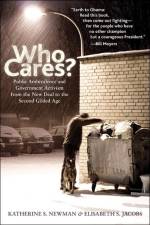
Americans like to think that they look after their own, especially in times of hardship. Particularly for the Great Depression and the Great Society eras, the collective memory is one of solidarity and compassion for the less fortunate. Who Cares? challenges this story by examining opinion polls and letters to presidents from average citizens. This evidence, some of it little known, reveals a much darker, more impatient attitude toward the poor, the unemployed, and the dispossessed during the 1930s and 1960s. Katherine Newman and Elisabeth Jacobs show that some of the social policies that Americans take for granted today suffered from declining public support just a few years after their inception. Yet Americans have been equally unenthusiastic about efforts to dismantle social programs once they are well established. Again contrary to popular belief, conservative Republicans had little public support in the 1980s and 1990s for their efforts to unravel the progressive heritage of the New Deal and the Great Society. Whether creating or rolling back such programs, leaders like Roosevelt, Johnson, Nixon, and Reagan often found themselves working against public opposition, and they left lasting legacies only by persevering despite it. Timely and surprising, Who Cares? demonstrates not that Americans are callous but that they are frequently ambivalent about public support for the poor. It also suggests that presidential leadership requires bold action, regardless of opinion polls.
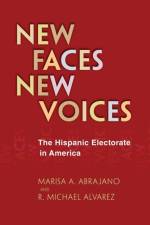
Making up 14.2 percent of the American population, Hispanics are now the largest minority group in the United States. Clearly, securing the Hispanic vote is more important to political parties than ever before. Yet, despite the current size of the Hispanic population, is there a clear Hispanic politics? Who are Hispanic voters? What are their political preferences and attitudes, and why? The first comprehensive study of Hispanic voters in the United States, New Faces, New Voices paints a complex portrait of this diverse and growing population. Examining race, politics, and comparative political behavior, Marisa Abrajano and R. Michael Alvarez counter the preconceived notion of Hispanic voters as one homogenous group. The authors discuss the concept of Hispanic political identity, taking into account the ethnic, generational, and linguistic distinctions within the Hispanic population. They compare Hispanic registration, turnout, and participation to those of non-Hispanics, consider the socioeconomic factors contributing to Hispanics' levels of political knowledge, determine what segment of the Hispanic population votes in federal elections, and explore the prospects for political relationships among Hispanics and non-Hispanics. Finally, the authors look at Hispanic opinions on social and economic issues, factoring in whether these attitudes are affected by generational status and ethnicity. A unique and nuanced perspective on the Hispanic electoral population, New Faces, New Voices is essential for understanding the political characteristics of the largest and fastest growing group of minority voters in the United States.
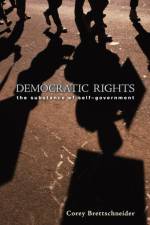
When the Supreme Court in 2003 struck down a Texas law prohibiting homosexual sodomy, it cited the right to privacy based on the guarantee of "e;substantive due process"e; embodied by the Constitution. But did the court act undemocratically by overriding the rights of the majority of voters in Texas? Scholars often point to such cases as exposing a fundamental tension between the democratic principle of majority rule and the liberal concern to protect individual rights. Democratic Rights challenges this view by showing that, in fact, democracy demands many of these rights. Corey Brettschneider argues that ideal democracy is comprised of three core values--political autonomy, equality of interests, and reciprocity--with both procedural and substantive implications. These values entitle citizens not only to procedural rights of participation (e.g., electing representatives) but also to substantive rights that a "e;pure procedural"e; democracy might not protect. What are often seen as distinctly liberal substantive rights to privacy, property, and welfare can, then, be understood within what Brettschneider terms a "e;value theory of democracy."e; Drawing on the work of John Rawls and deliberative democrats such as Jurgen Habermas, he demonstrates that such rights are essential components of--rather than constraints on--an ideal democracy. Thus, while defenders of the democratic ideal rightly seek the power of all to participate, they should also demand the rights that are the substance of self-government.
Political theorists have long been frustrated by Nietzsche's work. Although he develops profound critiques of morality, culture, and religion, it is very difficult to spell out the precise political implications of his insights. He himself never did so in any systematic way. In this book, Tamsin Shaw claims that there is a reason for this: Nietzsche's insights entail a distinctive form of political skepticism. Shaw argues that the modern political predicament, for Nietzsche, is shaped by two important historical phenomena. The first is secularization, or the erosion of religious belief, and the fragmentation of moral life that it entails. The second is the unparalleled ideological power of the modern state. The promotion of Nietzsche's own values, Shaw insists, requires resistance to state ideology. But Nietzsche cannot envisage how these values might themselves provide a stable basis for political authority; this is because secular societies, lacking recognized normative expertise, also lack a reliable mechanism for making moral insight politically effective. In grappling with this predicament, Shaw claims, Nietzsche raises profound questions about political legitimacy and political authority in the modern world.
Should a liberal democratic state permit religious schools? Should it fund them? What principles should govern these decisions in a society marked by religious and cultural pluralism? In Faith in Schools?, Ian MacMullen tackles these important questions through both political and educational theory, and he reaches some surprising and provocative conclusions. MacMullen argues that parents' desires to educate their children "e;in the faith"e; must not be allowed to deny children the opportunity for ongoing rational reflection about their values. Government should safeguard children's interests in developing as autonomous persons as well as society's interest in the education of an emerging generation of citizens. But, he writes, liberal theory does not support a strict separation of church and state in education policy. MacMullen proposes criteria to distinguish religious schools that satisfy legitimate public interests from those that do not. And he argues forcefully that governments should fund every type of school that they permit, rather than favoring upper-income parents by allowing them to buy their way out of the requirements deemed suitable for children educated at public expense. Drawing on psychological research, he proposes public funding of a broad range of religious primary schools, because they can help lay the foundations for young children's future autonomy. In secondary education, by contrast, even private religious schools ought to be obliged to provide robust exposure to the ideas of other religions, to atheism, and to nonreligious approaches to ethics.
Not since the 1960s have U.S. politicians, Republican or Democrat, campaigned on platforms defending big government, much less the use of regulation to help solve social ills. And since the late 1970s, "e;deregulation"e; has become perhaps the most ubiquitous political catchword of all. This book takes on the critics of government regulation. Providing the first major alternative to conventional arguments grounded in public choice theory, it demonstrates that regulatory government can, and on important occasions does, advance general interests. Unlike previous accounts, Regulation and Public Interests takes agencies' decision-making rules rather than legislative incentives as a central determinant of regulatory outcomes. Drawing from both political science and law, Steven Croley argues that such rules, together with agencies' larger decision-making environments, enhance agency autonomy. Agency personnel inclined to undertake regulatory initiatives that generate large but diffuse benefits (while imposing smaller but more concentrated costs) can use decision-making rules to develop socially beneficial regulations even over the objections of Congress and influential interest groups. This book thus provides a qualified defense of regulatory government. Its illustrative case studies include the development of tobacco rulemaking by the Food and Drug Administration, ozone and particulate matter rules by the Environmental Protection Agency, the Forest Service's "e;roadless"e; policy for national forests, and regulatory initiatives by the Securities and Exchange Commission and the Federal Trade Commission.
Many people think that animal liberation would require a fundamental transformation of basic beliefs. We would have to give up "e;speciesism"e; and start viewing animals as our equals, with rights and moral status. And we would have to apply these beliefs in an all-or-nothing way. But in Ethics and the Beast, Tzachi Zamir makes the radical argument that animal liberation doesn't require such radical arguments--and that liberation could be accomplished in a flexible and pragmatic way. By making a case for liberation that is based primarily on common moral intuitions and beliefs, and that therefore could attract wide understanding and support, Zamir attempts to change the terms of the liberation debate. Without defending it, Ethics and the Beast claims that speciesism is fully compatible with liberation. Even if we believe that we should favor humans when there is a pressing human need at stake, Zamir argues, that does not mean that we should allow marginal human interests to trump the life-or-death interests of animals. As minimalist as it sounds, this position generates a robust liberation program, including commitments not to eat animals, subject them to factory farming, or use them in medical research. Zamir also applies his arguments to some questions that tend to be overlooked in the liberation debate, such as whether using animals can be distinguished from exploiting them, whether liberationists should be moral vegetarians or vegans, and whether using animals for therapeutic purposes is morally blameless.
This book offers the first comprehensive introduction to wave scattering in nonstationary materials. G. F. Roach's aim is to provide an accessible, self-contained resource for newcomers to this important field of research that has applications across a broad range of areas, including radar, sonar, diagnostics in engineering and manufacturing, geophysical prospecting, and ultrasonic medicine such as sonograms. New methods in recent years have been developed to assess the structure and properties of materials and surfaces. When light, sound, or some other wave energy is directed at the material in question, "e;imperfections"e; in the resulting echo can reveal a tremendous amount of valuable diagnostic information. The mathematics behind such analysis is sophisticated and complex. However, while problems involving stationary materials are quite well understood, there is still much to learn about those in which the material is moving or changes over time. These so-called non-autonomous problems are the subject of this fascinating book. Roach develops practical strategies, techniques, and solutions for mathematicians and applied scientists working in or seeking entry into the field of modern scattering theory and its applications. Wave Scattering by Time-Dependent Perturbations is destined to become a classic in this rapidly evolving area of inquiry.
Unlike many other countries, the United States has few constitutional guarantees of social welfare rights such as income, housing, or healthcare. In part this is because many Americans believe that the courts cannot possibly enforce such guarantees. However, recent innovations in constitutional design in other countries suggest that such rights can be judicially enforced--not by increasing the power of the courts but by decreasing it. In Weak Courts, Strong Rights, Mark Tushnet uses a comparative legal perspective to show how creating weaker forms of judicial review may actually allow for stronger social welfare rights under American constitutional law. Under "e;strong-form"e; judicial review, as in the United States, judicial interpretations of the constitution are binding on other branches of government. In contrast, "e;weak-form"e; review allows the legislature and executive to reject constitutional rulings by the judiciary--as long as they do so publicly. Tushnet describes how weak-form review works in Great Britain and Canada and discusses the extent to which legislatures can be expected to enforce constitutional norms on their own. With that background, he turns to social welfare rights, explaining the connection between the "e;state action"e; or "e;horizontal effect"e; doctrine and the enforcement of social welfare rights. Tushnet then draws together the analysis of weak-form review and that of social welfare rights, explaining how weak-form review could be used to enforce those rights. He demonstrates that there is a clear judicial path--not an insurmountable judicial hurdle--to better enforcement of constitutional social welfare rights.
Topics in Commutative Ring Theory is a textbook for advanced undergraduate students as well as graduate students and mathematicians seeking an accessible introduction to this fascinating area of abstract algebra. Commutative ring theory arose more than a century ago to address questions in geometry and number theory. A commutative ring is a set-such as the integers, complex numbers, or polynomials with real coefficients--with two operations, addition and multiplication. Starting from this simple definition, John Watkins guides readers from basic concepts to Noetherian rings-one of the most important classes of commutative rings--and beyond to the frontiers of current research in the field. Each chapter includes problems that encourage active reading--routine exercises as well as problems that build technical skills and reinforce new concepts. The final chapter is devoted to new computational techniques now available through computers. Careful to avoid intimidating theorems and proofs whenever possible, Watkins emphasizes the historical roots of the subject, like the role of commutative rings in Fermat's last theorem. He leads readers into unexpected territory with discussions on rings of continuous functions and the set-theoretic foundations of mathematics. Written by an award-winning teacher, this is the first introductory textbook to require no prior knowledge of ring theory to get started. Refreshingly informal without ever sacrificing mathematical rigor, Topics in Commutative Ring Theory is an ideal resource for anyone seeking entry into this stimulating field of study.
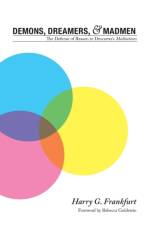
In this classic work, best-selling author Harry Frankfurt provides a compelling analysis of the question that not only lies at the heart of Descartes's Meditations, but also constitutes the central preoccupation of modern philosophy: on what basis can reason claim to provide any justification for the truth of our beliefs? Demons, Dreamers, and Madmen provides an ingenious account of Descartes's defense of reason against his own famously skeptical doubts that he might be a madman, dreaming, or, worse yet, deceived by an evil demon into believing falsely. Frankfurt's masterful and imaginative reading of Descartes's seminal work not only stands the test of time; one imagines Descartes himself nodding in agreement.
Seeds of Amazonian Plants is the first field guide to treat the extraordinary diversity of seeds and diaspores of plants commonly encountered in the Amazon and other lowland moist forests of the American tropics. This stunningly illustrated guide features an easy-to-use whole-plant approach to seed identification that provides detailed descriptions not only of the seeds but also of the habit, trunk, bark, leaves, infructescence, and fruit of Amazonian plants, as well as information about the known uses and distribution of each genus. Presenting these descriptions together with 750 full-color photos and a unique identification key, this premier field guide enables users to identify seeds of 544 genera and 131 families of plants. The most comprehensive field guide to Amazonian seeds Features 750 full-color photos that make identification easy Covers 544 genera and 131 families of Amazonian plants Describes seeds, habit, trunk, bark, leaves, infructescence, and fruit Includes unique seed identification key Compact, portable, and beautifully illustrated--the ideal field guide
Why do so many gamblers risk it all when they know the odds of winning are against them? Why do they believe dice are "e;hot"e; in a winning streak? Why do we expect heads on a coin toss after several flips have turned up tails? What's Luck Got to Do with It? takes a lively and eye-opening look at the mathematics, history, and psychology of gambling to reveal the most widely held misconceptions about luck. It exposes the hazards of feeling lucky, and uses the mathematics of predictable outcomes to show when our chances of winning are actually good. Mathematician Joseph Mazur traces the history of gambling from the earliest known archaeological evidence of dice playing among Neolithic peoples to the first systematic mathematical studies of games of chance during the Renaissance, from government-administered lotteries to the glittering seductions of grand casinos, and on to the global economic crisis brought on by financiers' trillion-dollar bets. Using plenty of engaging anecdotes, Mazur explains the mathematics behind gambling--including the laws of probability, statistics, betting against expectations, and the law of large numbers--and describes the psychological and emotional factors that entice people to put their faith in winning that ever-elusive jackpot despite its mathematical improbability. As entertaining as it is informative, What's Luck Got to Do with It? demonstrates the pervasive nature of our belief in luck and the deceptive psychology of winning and losing.Some images inside the book are unavailable due to digital copyright restrictions.
Is the world destined to suffer endless cycles of conflict and war? Can rival nations become partners and establish a lasting and stable peace? How Enemies Become Friends provides a bold and innovative account of how nations escape geopolitical competition and replace hostility with friendship. Through compelling analysis and rich historical examples that span the globe and range from the thirteenth century through the present, foreign policy expert Charles Kupchan explores how adversaries can transform enmity into amity--and he exposes prevalent myths about the causes of peace. Kupchan contends that diplomatic engagement with rivals, far from being appeasement, is critical to rapprochement between adversaries. Diplomacy, not economic interdependence, is the currency of peace; concessions and strategic accommodation promote the mutual trust needed to build an international society. The nature of regimes matters much less than commonly thought: countries, including the United States, should deal with other states based on their foreign policy behavior rather than on whether they are democracies. Kupchan demonstrates that similar social orders and similar ethnicities, races, or religions help nations achieve stable peace. He considers many historical successes and failures, including the onset of friendship between the United States and Great Britain in the early twentieth century, the Concert of Europe, which preserved peace after 1815 but collapsed following revolutions in 1848, and the remarkably close partnership of the Soviet Union and China in the 1950s, which descended into open rivalry by the 1960s. In a world where conflict among nations seems inescapable, How Enemies Become Friends offers critical insights for building lasting peace.
Climate change and justice are so closely associated that many people take it for granted that a global climate treaty should--indeed, must--directly address both issues together. But, in fact, this would be a serious mistake, one that, by dooming effective international limits on greenhouse gases, would actually make the world's poor and developing nations far worse off. This is the provocative and original argument of Climate Change Justice. Eric Posner and David Weisbach strongly favor both a climate change agreement and efforts to improve economic justice. But they make a powerful case that the best--and possibly only--way to get an effective climate treaty is to exclude measures designed to redistribute wealth or address historical wrongs against underdeveloped countries. In clear language, Climate Change Justice proposes four basic principles for designing the only kind of climate treaty that will work--a forward-looking agreement that requires every country to make greenhouse--gas reductions but still makes every country better off in its own view. This kind of treaty has the best chance of actually controlling climate change and improving the welfare of people around the world.
Abonner på vårt nyhetsbrev og få rabatter og inspirasjon til din neste leseopplevelse.
Ved å abonnere godtar du vår personvernerklæring.