


























Gjør som tusenvis av andre bokelskere
Abonner på vårt nyhetsbrev og få rabatter og inspirasjon til din neste leseopplevelse.
Ved å abonnere godtar du vår personvernerklæring.Du kan når som helst melde deg av våre nyhetsbrev.

The politics of legitimacy is central to international relations. When states perceive an international organization as legitimate, they defer to it, associate themselves with it, and invoke its symbols. Examining the United Nations Security Council, Ian Hurd demonstrates how legitimacy is created, used, and contested in international relations. The Council's authority depends on its legitimacy, and therefore its legitimation and delegitimation are of the highest importance to states. Through an examination of the politics of the Security Council, including the Iraq invasion and the negotiating history of the United Nations Charter, Hurd shows that when states use the Council's legitimacy for their own purposes, they reaffirm its stature and find themselves contributing to its authority. Case studies of the Libyan sanctions, peacekeeping efforts, and the symbolic politics of the Council demonstrate how the legitimacy of the Council shapes world politics and how legitimated authority can be transferred from states to international organizations. With authority shared between states and other institutions, the interstate system is not a realm of anarchy. Sovereignty is distributed among institutions that have power because they are perceived as legitimate. This book's innovative approach to international organizations and international relations theory lends new insight into interactions between sovereign states and the United Nations, and between legitimacy and the exercise of power in international relations.
In the 1990s, large insurance companies failed in virtually every major market, prompting a fierce and ongoing debate about how to better protect policyholders. Drawing lessons from the failures of four insurance companies, When Insurers Go Bust dramatically advances this debate by arguing that the current approach to insurance regulation should be replaced with mechanisms that replicate the governance of non-financial firms. Rather than immediately addressing the minutiae of supervision, Guillaume Plantin and Jean-Charles Rochet first identify a fundamental economic rationale for supervising the solvency of insurance companies: policyholders are the "e;bankers"e; of insurance companies. But because policyholders are too dispersed to effectively monitor insurers, it might be efficient to delegate monitoring to an institution--a prudential authority. Applying recent developments in corporate finance theory and the economic theory of organizations, the authors describe in practical terms how such authorities could be created and given the incentives to behave exactly like bankers behave toward borrowers, as "e;tough"e; claimholders.
Resolution of singularities is a powerful and frequently used tool in algebraic geometry. In this book, Janos Kollar provides a comprehensive treatment of the characteristic 0 case. He describes more than a dozen proofs for curves, many based on the original papers of Newton, Riemann, and Noether. Kollar goes back to the original sources and presents them in a modern context. He addresses three methods for surfaces, and gives a self-contained and entirely elementary proof of a strong and functorial resolution in all dimensions. Based on a series of lectures at Princeton University and written in an informal yet lucid style, this book is aimed at readers who are interested in both the historical roots of the modern methods and in a simple and transparent proof of this important theorem.
This book represents the first synthesis of the considerable body of new research into positive definite matrices. These matrices play the same role in noncommutative analysis as positive real numbers do in classical analysis. They have theoretical and computational uses across a broad spectrum of disciplines, including calculus, electrical engineering, statistics, physics, numerical analysis, quantum information theory, and geometry. Through detailed explanations and an authoritative and inspiring writing style, Rajendra Bhatia carefully develops general techniques that have wide applications in the study of such matrices. Bhatia introduces several key topics in functional analysis, operator theory, harmonic analysis, and differential geometry--all built around the central theme of positive definite matrices. He discusses positive and completely positive linear maps, and presents major theorems with simple and direct proofs. He examines matrix means and their applications, and shows how to use positive definite functions to derive operator inequalities that he and others proved in recent years. He guides the reader through the differential geometry of the manifold of positive definite matrices, and explains recent work on the geometric mean of several matrices. Positive Definite Matrices is an informative and useful reference book for mathematicians and other researchers and practitioners. The numerous exercises and notes at the end of each chapter also make it the ideal textbook for graduate-level courses.
The Supreme Court appointments process is broken, and the timing couldn't be worse--for liberals or conservatives. The Court is just one more solid conservative justice away from an ideological sea change--a hard-right turn on an array of issues that affect every American, from abortion to environmental protection. But neither those who look at this prospect with pleasure nor those who view it with horror will be able to make informed judgments about the next nominee to the Court--unless the appointments process is fixed now. In The Next Justice, Christopher Eisgruber boldly proposes a way to do just that. He describes a new and better manner of deliberating about who should serve on the Court--an approach that puts the burden on nominees to show that their judicial philosophies and politics are acceptable to senators and citizens alike. And he makes a new case for the virtue of judicial moderates. Long on partisan rancor and short on serious discussion, today's appointments process reveals little about what kind of judge a nominee might make. Eisgruber argues that the solution is to investigate how nominees would answer a basic question about the Court's role: When and why is it beneficial for judges to trump the decisions of elected officials? Through an examination of the politics and history of the Court, Eisgruber demonstrates that pursuing this question would reveal far more about nominees than do other tactics, such as investigating their views of specific precedents or the framers' intentions. Written with great clarity and energy, The Next Justice provides a welcome exit from the uninformative political theater of the current appointments process.
Labor Markets and Business Cycles integrates search and matching theory with the neoclassical growth model to better understand labor market outcomes. Robert Shimer shows analytically and quantitatively that rigid wages are important for explaining the volatile behavior of the unemployment rate in business cycles. The book focuses on the labor wedge that arises when the marginal rate of substitution between consumption and leisure does not equal the marginal product of labor. According to competitive models of the labor market, the labor wedge should be constant and equal to the labor income tax rate. But in U.S. data, the wedge is strongly countercyclical, making it seem as if recessions are periods when workers are dissuaded from working and firms are dissuaded from hiring because of an increase in the labor income tax rate. When job searches are time consuming and wages are flexible, search frictions--the cost of a job search--act like labor adjustment costs, further exacerbating inconsistencies between the competitive model and data. The book shows that wage rigidities can reconcile the search model with the data, providing a quantitatively more accurate depiction of labor markets, consumption, and investment dynamics. Developing detailed search and matching models, Labor Markets and Business Cycles will be the main reference for those interested in the intersection of labor market dynamics and business cycle research.
Econometric models are widely used in the creation and evaluation of economic policy in the public and private sectors. But these models are useful only if they adequately account for the phenomena in question, and they can be quite misleading if they do not. In response, econometricians have developed tests and other checks for model adequacy. All of these methods, however, take as given the specification of the model to be tested. In this book, John Geweke addresses the critical earlier stage of model development, the point at which potential models are inherently incomplete. Summarizing and extending recent advances in Bayesian econometrics, Geweke shows how simple modern simulation methods can complement the creative process of model formulation. These methods, which are accessible to economics PhD students as well as to practicing applied econometricians, streamline the processes of model development and specification checking. Complete with illustrations from a wide variety of applications, this is an important contribution to econometrics that will interest economists and PhD students alike.
Entrepreneurs are widely recognized for the vital contributions they make to economic growth and general welfare, yet until fairly recently entrepreneurship was not considered worthy of serious economic study. Today, progress has been made to integrate entrepreneurship into macroeconomics, but until now the entrepreneur has been almost completely excluded from microeconomics and standard theoretical models of the firm. The Microtheory of Innovative Entrepreneurship provides the framework for introducing entrepreneurship into mainstream microtheory and incorporating the activities of entrepreneurs, inventors, and managers into standard models of the firm. William Baumol distinguishes between the innovative entrepreneur, who comes up with new ideas and puts them into practice, and the replicative entrepreneur, which can be anyone who launches a new business venture, regardless of whether similar ventures already exist. Baumol puts forward a quasi-formal theoretical analysis of the innovative entrepreneur's influential role in economic life. In doing so, he opens the way to bringing innovative entrepreneurship into the accepted body of mainstream microeconomics, and offers valuable insights that can be used to design more effective policies. The Microtheory of Innovative Entrepreneurship lays the foundation for a new kind of microtheory that reflects the innovative entrepreneur's importance to economic growth and prosperity.
Recent surveys show that more than half of American entrepreneurs share ownership in their business startups rather than going it alone. Yet the media and many scholars continue to perpetuate the myth of the lone visionary who single-handedly revolutionizes the marketplace. In The Entrepreneurial Group, Martin Ruef shatters this myth, demonstrating that teams, not individuals, are the leading force behind entrepreneurial startups. This is the first book to provide an in-depth sociological analysis of entrepreneurial groups, and to put forward a theoretical framework for understanding activities and outcomes within them.
In business, as in other aspects of life, we learn and grow from the examples set by others. Imitation can lead to innovation. But in order to grow innovatively, how do businesses decide what firms to imitate? And how do they choose what practices to follow? Learning by Example takes an unprecedented look at the benchmarking initiative of a major financial institution. David Strang closely follows twenty-one teams of managers sent out to observe the practices of other companies in order to develop recommendations for change in their own organization. Through extensive interviews, surveys, and archival materials, Strang reveals that benchmarking promotes a distinctive managerial regime with potential benefits and pitfalls. He explores the organizations treated as models of best practice, the networks that surround a bank and form its reference group, the ways managers craft calls for change, and the programs implemented in the wake of vicarious learning. Strang finds that imitation does not occur through mindless conformity. Instead, managers act creatively, combining what they see in external site visits with their bank's strategic objectives, interpreted in light of their understanding of rational and progressive management. Learning by Example opens the black box of interorganizational diffusion to show how managers interpret, advocate, and implement innovations.
For any market to work properly, certain key elements are necessary: competition, pricing, rules, clearly defined offers, and easy access to information. Without these components, there would be chaos. Orderly Fashion examines how order is maintained in the different interconnected consumer, producer, and credit markets of the global fashion industry. From retailers in Sweden and the United Kingdom to producers in India and Turkey, Patrik Aspers focuses on branded garment retailers--chains such as Gap, H&M, Old Navy, Topshop, and Zara. Aspers investigates these retailers' interactions and competition in the consumer market for fashion garments, traces connections between producer and consumer markets, and demonstrates why market order is best understood through an analysis of its different forms of social construction. Emphasizing consumption rather than production, Aspers considers the larger retailers' roles as buyers in the production market of garments, and as potential objects of investment in financial markets. He shows how markets overlap and intertwine and he defines two types of markets--status markets and standard markets. In status markets, market order is related to the identities of the participating actors more than the quality of the goods, whereas in standard markets the opposite holds true. Looking at how identities, products, and values create the ordered economic markets of the global fashion business, Orderly Fashion has wide implications for all modern markets, regardless of industry.
The sociological study of economic activity has witnessed a significant resurgence. Recent texts have chronicled economic sociology's nineteenth-century origins while pointing to the importance of context and power in economic life, yet the field lacks a clear understanding of the role that concepts at different levels of abstraction play in its organization. Economic Sociology fills this critical gap by surveying the current state of the field while advancing a framework for further theoretical development. Alejandro Portes examines economic sociology's principal assumptions, key explanatory concepts, and selected research sites. He argues that economic activity is embedded in social and cultural relations, but also that power and the unintended consequences of rational purposive action must be factored in when seeking to explain or predict economic behavior. Drawing upon a wealth of examples, Portes identifies three strategic sites of research--the informal economy, ethnic enclaves, and transnational communities--and he eschews grand narratives in favor of mid-range theories that help us understand specific kinds of social action. The book shows how the meta-assumptions of economic sociology can be transformed, under certain conditions, into testable propositions, and puts forward a theoretical agenda aimed at moving the field out of its present impasse.
Free Trade Reimagined begins with a sustained criticism of the heart of the emerging world economy, the theory and practice of free trade. Roberto Mangabeira Unger does not, however, defend protectionism against free trade. Instead, he attacks and revises the terms on which the traditional debate between free traders and protectionists has been joined. Unger's intervention in this major contemporary debate serves as a point of departure for a proposal to rethink the basic ideas with which we explain economic activity. He suggests, by example as well as by theory, a way of understanding contemporary economies that is both more realistic and more revealing of hidden possibilities for transformation than are the established forms of economics. One message of the book is that we need not choose between accepting and rejecting globalization; we can have a different globalization. Traditional free trade doctrine rests on shaky empirical and theoretical ground. Unger takes a new approach to show when international trade is likely to be useful or harmful to the socially inclusive economic growth that every nation wants. Another message is that the movement of people and ideas is more important than the movement of things and money, and that freedom to change the institutions defining a market economy is just as important as freedom to exchange goods on the basis of those institutions. Free Trade Reimagined ranges broadly within and outside economics. Presenting technical issues in plain language, it appeals to the general reader. It puts a disciplined imagination in the service of rebellion against the dictatorship of no alternatives that characterizes life and thought today.
In 2004, the French government instituted a ban on the wearing of "e;conspicuous signs"e; of religious affiliation in public schools. Though the ban applies to everyone, it is aimed at Muslim girls wearing headscarves. Proponents of the law insist it upholds France's values of secular liberalism and regard the headscarf as symbolic of Islam's resistance to modernity. The Politics of the Veil is an explosive refutation of this view, one that bears important implications for us all. Joan Wallach Scott, the renowned pioneer of gender studies, argues that the law is symptomatic of France's failure to integrate its former colonial subjects as full citizens. She examines the long history of racism behind the law as well as the ideological barriers thrown up against Muslim assimilation. She emphasizes the conflicting approaches to sexuality that lie at the heart of the debate--how French supporters of the ban view sexual openness as the standard for normalcy, emancipation, and individuality, and the sexual modesty implicit in the headscarf as proof that Muslims can never become fully French. Scott maintains that the law, far from reconciling religious and ethnic differences, only exacerbates them. She shows how the insistence on homogeneity is no longer feasible for France--or the West in general--and how it creates the very "e;clash of civilizations"e; said to be at the root of these tensions. The Politics of the Veil calls for a new vision of community where common ground is found amid our differences, and where the embracing of diversity--not its suppression--is recognized as the best path to social harmony.
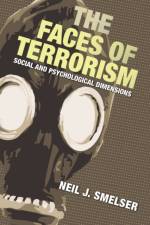
Terrorism is the most clear and present danger we confront today, yet no phenomenon is more poorly understood by policymakers, the media, and the general public. The Faces of Terrorism is the first serious interdisciplinary examination of terrorism in all its facets. What gives rise to it, who are its proponents and how do they think, and how--and why--does it work? Neil Smelser begins by tackling the fundamental problem of defining what exactly terrorism is. He shows why a precise definition has eluded us until now, and he proposes one that takes into account the full complexities of this unconventional and politically charged brand of violence. He explores the root causes and conditions of terrorism, and examines the ideologies that inspire and fuel it throughout the world. Smelser looks closely at the terrorists themselves--their recruitment, their motivations, the groups they form, their intended audiences, and their uses of the media in pursuing their agendas. He studies the target societies as well, unraveling the complicated social and psychological impacts of having to cope with the ever-present threat of a terrorist strike--and responding when one occurs. He explains what it means to live under constant threat of terrorism, and addresses the thorny domestic and foreign policy challenges this poses. Throughout, Smelser draws from the latest findings in sociology, political science, anthropology, economics, psychology, psychiatry, and history. The Faces of Terrorism provides the breadth of scope necessary to understand--and ultimately eliminate--this most pressing global threat.
In William Faulkner, Richard Godden traces how the novelist's late fiction echoes the economic and racial traumas of the South's delayed modernization in the mid-twentieth century. As the New Deal rapidly accelerated the long-term shift from tenant farming to modern agriculture, many African Americans were driven from the land and forced to migrate north. At the same time, white landowners exchanged dependency on black labor for dependency on northern capital. Combining powerful close readings of The Hamlet, Go Down, Moses, and A Fable with an examination of southern economic history from the 1930s to the 1950s, Godden shows how the novels' literary complexities--from their narrative structures down to their smallest verbal emphases--reflect and refract the period's economic complexities. By demonstrating the interrelation of literary forms and economic systems, the book describes, in effect, the poetics of an economy. Original in the way it brings together close reading and historical context, William Faulkner offers innovative interpretations of late Faulkner and makes a unique contribution to the understanding of the relation between literature and history.
American literature is typically seen as something that inspired its own conception and that sprang into being as a cultural offshoot of America's desire for national identity. But what of the vast precedent established by English literature, which was a major American import between 1750 and 1850? In The Importance of Feeling English, Leonard Tennenhouse revisits the landscape of early American literature and radically revises its features. Using the concept of transatlantic circulation, he shows how some of the first American authors--from poets such as Timothy Dwight and Philip Freneau to novelists like William Hill Brown and Charles Brockden Brown--applied their newfound perspective to pre-existing British literary models. These American "e;re-writings"e; would in turn inspire native British authors such as Jane Austen and Horace Walpole to reconsider their own ideas of subject, household, and nation. The enduring nature of these literary exchanges dramatically recasts early American literature as a literature of diaspora, Tennenhouse argues--and what made the settlers' writings distinctly and indelibly American was precisely their insistence on reproducing Englishness, on making English identity portable and adaptable. Written in an incisive and illuminating style, The Importance of Feeling English reveals the complex roots of American literature, and shows how its transatlantic movement aided and abetted the modernization of Anglophone culture at large.
Partition--the idea of separating Jews and Arabs along ethnic or national lines--is a legacy at least as old as the Zionist-Palestinian conflict. Challenging the widespread "e;separatist imagination"e; behind partition, Gil Hochberg demonstrates the ways in which works of contemporary Jewish and Arab literature reject simple notions of separatism and instead display complex configurations of identity that emphasize the presence of alterity within the self--the Jew within the Arab, and the Arab within the Jew. In Spite of Partition examines Hebrew, Arabic, and French works that are largely unknown to English readers to reveal how, far from being independent, the signifiers "e;Jew"e; and "e;Arab"e; are inseparable. In a series of original close readings, Hochberg analyzes fascinating examples of such inseparability. In the Palestinian writer Anton Shammas's Hebrew novel Arabesques, the Israeli and Palestinian protagonists are a "e;schizophrenic pair"e; who "e;have not yet decided who is the ventriloquist of whom."e; And in the Moroccan Jewish writer Albert Swissa's Hebrew novel Aqud, the Moroccan-Israeli main character's identity is uneasily located between the "e;Moroccan Muslim boy he could have been"e; and the "e;Jewish Israeli boy he has become."e; Other examples draw attention to the intricate linguistic proximity of Hebrew and Arabic, the historical link between the traumatic memories of the Jewish Holocaust and the Palestinian Nakbah, and the libidinal ties that bind Jews and Arabs despite, or even because of, their current animosity.
Rhetorical theory, the core of Roman education, taught rules of public speaking that are still influential today. But Roman rhetoric has long been regarded as having little important to say about political ideas. The State of Speech presents a forceful challenge to this view. The first book to read Roman rhetorical writing as a mode of political thought, it focuses on Rome's greatest practitioner and theorist of public speech, Cicero. Through new readings of his dialogues and treatises, Joy Connolly shows how Cicero's treatment of the Greek rhetorical tradition's central questions is shaped by his ideal of the republic and the citizen. Rhetoric, Connolly argues, sheds new light on Cicero's deepest political preoccupations: the formation of individual and communal identity, the communicative role of the body, and the "e;unmanly"e; aspects of politics, especially civility and compromise. Transcending traditional lines between rhetorical and political theory, The State of Speech is a major contribution to the current debate over the role of public speech in Roman politics. Instead of a conventional, top-down model of power, it sketches a dynamic model of authority and consent enacted through oratorical performance and examines how oratory modeled an ethics of citizenship for the masses as well as the elite. It explains how imperial Roman rhetoricians reshaped Cicero's ideal republican citizen to meet the new political conditions of autocracy, and defends Ciceronian thought as a resource for contemporary democracy.
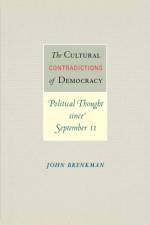
Since 9/11, American foreign policy has been guided by grand ideas like tyranny, democracy, and freedom. And yet the course of events has played havoc with the cherished assumptions of hawks and doves alike. The geo-civil war afflicting the Muslim world from Lebanon through Iraq and Afghanistan to Pakistan confronts the West with the need to articulate anew what its political ideas and ideals actually are. In The Cultural Contradictions of Democracy, John Brenkman dissects the rhetoric that has corrupted today's political discourse and abused the idea of freedom and democracy in foreign affairs. Looking back to the original assumptions and contradictions that animate democratic thought, he attempts to resuscitate the language of liberty and give political debate a fresh basis amid the present global turmoil. The Cultural Contradictions of Democracy picks apart the intellectual design and messianic ambitions of the neoconservative American foreign policy articulated by figures such as Robert Kagan and Paul Berman; it casts the same critical eye on a wide range of liberal and leftist thinkers, including Noam Chomsky and Jurgen Habermas, and probes the severe crisis that afflicts progressive political thought. Brenkman draws on the contrary visions of Hobbes, Kant, Max Weber, Hannah Arendt, and Isaiah Berlin in order to disclose the new contours of conflict in the age of geo-civil war, and to illuminate the challenges and risks of contemporary democracy.
During the tumultuous closing decades of the nineteenth century, as the prospect of democracy loomed and as intensified global economic and strategic competition reshaped the political imagination, British thinkers grappled with the question of how best to organize the empire. Many found an answer to the anxieties of the age in the idea of Greater Britain, a union of the United Kingdom and its settler colonies in Australia, Canada, New Zealand, and southern Africa. In The Idea of Greater Britain, Duncan Bell analyzes this fertile yet neglected debate, examining how a wide range of thinkers conceived of this vast "e;Anglo-Saxon"e; political community. Their proposals ranged from the fantastically ambitious--creating a globe-spanning nation-state--to the practical and mundane--reinforcing existing ties between the colonies and Britain. But all of these ideas were motivated by the disquiet generated by democracy, by challenges to British global supremacy, and by new possibilities for global cooperation and communication that anticipated today's globalization debates. Exploring attitudes toward the state, race, space, nationality, and empire, as well as highlighting the vital theoretical functions played by visions of Greece, Rome, and the United States, Bell illuminates important aspects of late-Victorian political thought and intellectual life.
During the twelfth and thirteenth centuries, great new trends of Jewish thought emerged whose widely varied representatives--Kabbalists, philosophers, and astrologers--each claimed that their particular understanding revealed the actual secret of the Torah. They presented their own readings in a coded fashion that has come to be regarded by many as the very essence of esotericism. Concealment and Revelation takes us on a fascinating journey to the depths of the esoteric imagination. Carefully tracing the rise of esotericism and its function in medieval Jewish thought, Moshe Halbertal's richly detailed historical and cultural analysis gradually builds conceptual-philosophical force to culminate in a masterful phenomenological taxonomy of esotericism and its paradoxes. Among the questions addressed: What are the internal justifications that esoteric traditions provide for their own existence, especially in the Jewish world, in which the spread of knowledge was of great importance? How do esoteric teachings coexist with the revealed tradition, and what is the relationship between the various esoteric teachings that compete with that revealed tradition? Halbertal concludes that, through the medium of the concealed, Jewish thinkers integrated into the heart of the Jewish tradition diverse cultural influences such as Aristotelianism, Neoplatonism, and Hermeticisims. And the creation of an added concealed layer, unregulated and open-ended, became the source of the most daring and radical interpretations of the tradition.
Why has shame recently displaced guilt as a dominant emotional reference in the West? After the Holocaust, survivors often reported feeling guilty for living when so many others had died, and in the 1960s psychoanalysts and psychiatrists in the United States helped make survivor guilt a defining feature of the "e;survivor syndrome."e; Yet the idea of survivor guilt has always caused trouble, largely because it appears to imply that, by unconsciously identifying with the perpetrator, victims psychically collude with power. In From Guilt to Shame, Ruth Leys has written the first genealogical-critical study of the vicissitudes of the concept of survivor guilt and the momentous but largely unrecognized significance of guilt's replacement by shame. Ultimately, Leys challenges the theoretical and empirical validity of the shame theory proposed by figures such as Silvan Tomkins, Eve Kosofsky Sedgwick, and Giorgio Agamben, demonstrating that while the notion of survivor guilt has depended on an intentionalist framework, shame theorists share a problematic commitment to interpreting the emotions, including shame, in antiintentionalist and materialist terms.
This book examines an unlikely development in modern political philosophy: the adoption by a major national government of the ideas of a living political theorist. When Jose Luis Rodriguez Zapatero became Spain's opposition leader in 2000, he pledged that if his socialist party won power he would govern Spain in accordance with the principles laid out in Philip Pettit's 1997 book Republicanism, which presented, as an alternative to liberalism and communitarianism, a theory of freedom and government based on the idea of nondomination. When Zapatero was elected President in 2004, he invited Pettit to Spain to give a major speech about his ideas. Zapatero also invited Pettit to monitor Spanish politics and deliver a kind of report card before the next election. Pettit did so, returning to Spain in 2007 to make a presentation in which he gave Zapatero's government a qualified thumbs-up for promoting republican ideals. In this book, Pettit and Jose Luis Marti provide the historical background to these unusual events, explain the principles of civic republicanism in accessible terms, present Pettit's report and his response to some of its critics, and include an extensive interview with Zapatero himself. In addition, the authors discuss what is required of a political philosophy if it is to play the sort of public role that civic republicanism has been playing in Spain. An important account of a rare and remarkable encounter between contemporary political philosophy and real-world politics, this is also a significant work of political philosophy in its own right.
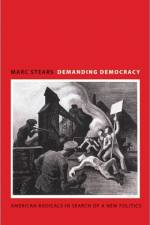
This is a major work of history and political theory that traces radical democratic thought in America across the twentieth century, seeking to recover ideas that could reenergize democratic activism today. The question of how citizens should behave as they struggle to create a more democratic society has haunted the United States throughout its history. Should citizens restrict themselves to patient persuasion or take to the streets and seek to impose change? Marc Stears argues that anyone who continues to wrestle with these questions could learn from the radical democratic tradition that was forged in the twentieth century by political activists, including progressives, trade unionists, civil rights campaigners, and members of the student New Left. These activists and their movements insisted that American campaigners for democratic change should be free to strike out in whatever ways they thought necessary, so long as their actions enhanced the political virtues of citizens and contributed to the eventual triumph of the democratic cause. Reevaluating the moral and strategic arguments, and the triumphs and excesses, of this radical democratic tradition, Stears contends that it still offers a compelling account of citizen behavior--one that is fairer, more inclusive, and more truly democratic than those advanced by political theorists today.
To many readers of The Prince, Machiavelli appears to be deeply un-Christian or even anti-Christian, a cynic who thinks rulers should use religion only to keep their subjects in check. But in Machiavelli's God, Maurizio Viroli, one of the world's leading authorities on Machiavelli, argues that Machiavelli, far from opposing Christianity, thought it was crucial to republican social and political renewal--but that first it needed to be renewed itself. And without understanding this, Viroli contends, it is impossible to comprehend Machiavelli's thought. Viroli places Machiavelli in the context of Florence's republican Christianity, which was founded on the idea that the true Christian is a citizen who serves the common good. In this tradition, God participates in human affairs, supports and rewards those who govern justly, and desires men to make the earthly city similar to the divine one. Building on this tradition, Machiavelli advocated a religion of virtue, and he believed that, without this faith, free republics could not be established, defend themselves against corruption, or survive. Viroli makes a powerful case that Machiavelli, far from being a pagan or atheist, was a prophet of a true religion of liberty, a way of moral and political living that would rediscover and pursue charity and justice. The translation of this work has been funded by SEPS - Segretariato Europeo per le Pubblicazioni Scientifiche.
Faith in the Fight tells a story of religion, soldiering, suffering, and death in the Great War. Recovering the thoughts and experiences of American troops, nurses, and aid workers through their letters, diaries, and memoirs, Jonathan Ebel describes how religion--primarily Christianity--encouraged these young men and women to fight and die, sustained them through war's chaos, and shaped their responses to the war's aftermath. The book reveals the surprising frequency with which Americans who fought viewed the war as a religious challenge that could lead to individual and national redemption. Believing in a "e;Christianity of the sword,"e; these Americans responded to the war by reasserting their religious faith and proclaiming America God-chosen and righteous in its mission. And while the war sometimes challenged these beliefs, it did not fundamentally alter them. Revising the conventional view that the war was universally disillusioning, Faith in the Fight argues that the war in fact strengthened the religious beliefs of the Americans who fought, and that it helped spark a religiously charged revival of many prewar orthodoxies during a postwar period marked by race riots, labor wars, communist witch hunts, and gender struggles. For many Americans, Ebel argues, the postwar period was actually one of "e;reillusionment."e; Demonstrating the deep connections between Christianity and Americans' experience of the First World War, Faith in the Fight encourages us to examine the religious dimensions of America's wars, past and present, and to work toward a deeper understanding of religion and violence in American history.
A Kaleidoscope of China is an advanced Chinese-language textbook that gives students a greater command of Chinese while deepening their understanding of the social and cultural issues facing China today. Geared to the unique needs of students with two or more years of instruction in modern Chinese, this book features a stimulating selection of articles and essays from major newspapers and periodicals in China, offering a revealing look at contemporary Chinese society. Topics include: buying a home versus having a child; consumer exports to America; depression; online dating; cell phones; empty-nest syndrome; fast food; the Virginia Tech massacre; medicine; the 2008 Sichuan earthquake; and global warming. Every selection is accompanied by a vocabulary list, exercises, and grammar notes. No other Chinese-language textbook so effectively helps advanced students expand their language skills while immersing them in what is truly a kaleidoscope of today's China. Teaches advanced Chinese while providing a window into contemporary China Features selections from actual Chinese newspapers and periodicals Includes vocabulary lists, exercises, and grammar notes Ideal for students with two or more years of instruction in modern Chinese
In 1901, the Tuskegee Institute, founded by Booker T. Washington, sent an expedition to the German colony of Togo in West Africa, with the purpose of transforming the region into a cotton economy similar to that of the post-Reconstruction American South. Alabama in Africa explores the politics of labor, sexuality, and race behind this endeavor, and the economic, political, and intellectual links connecting Germany, Africa, and the southern United States. The cross-fertilization of histories and practices led to the emergence of a global South, reproduced social inequities on both sides of the Atlantic, and pushed the American South and the German Empire to the forefront of modern colonialism. Zimmerman shows how the people of Togo, rather than serving as a blank slate for American and German ideologies, helped shape their region's place in the global South. He looks at the forms of resistance pioneered by African American freedpeople, Polish migrant laborers, African cotton cultivators, and other groups exploited by, but never passive victims of, the growing colonial political economy. Zimmerman reconstructs the social science of the global South formulated by such thinkers as Max Weber and W.E.B. Du Bois, and reveals how their theories continue to define contemporary race, class, and culture. Tracking the intertwined histories of Europe, Africa, and the Americas at the turn of the century, Alabama in Africa shows how the politics and economics of the segregated American South significantly reshaped other areas of the world.
Heavenly Merchandize offers a critical reexamination of religion's role in the creation of a market economy in early America. Focusing on the economic culture of New England, it views commerce through the eyes of four generations of Boston merchants, drawing upon their personal letters, diaries, business records, and sermon notes to reveal how merchants built a modern form of exchange out of profound transitions in the puritan understanding of discipline, providence, and the meaning of New England. Mark Valeri traces the careers of men like Robert Keayne, a London immigrant punished by his church for aggressive business practices; John Hull, a silversmith-turned-trader who helped to establish commercial networks in the West Indies; and Hugh Hall, one of New England's first slave traders. He explores how Boston ministers reconstituted their moral languages over the course of a century, from a scriptural discourse against many market practices to a providential worldview that justified England's commercial hegemony and legitimated the market as a divine construct. Valeri moves beyond simplistic readings that reduce commercial activity to secular mind-sets, and refutes the popular notion of an inherent affinity between puritanism and capitalism. He shows how changing ideas about what it meant to be pious and puritan informed the business practices of Boston's merchants, who filled their private notebooks with meditations on scripture and the natural order, founded and led churches, and inscribed spiritual reflections in their letters and diaries. Unprecedented in scope and rich with insights, Heavenly Merchandize illuminates the history behind the continuing American dilemma over morality and the marketplace.
Abonner på vårt nyhetsbrev og få rabatter og inspirasjon til din neste leseopplevelse.
Ved å abonnere godtar du vår personvernerklæring.