
















Gjør som tusenvis av andre bokelskere
Abonner på vårt nyhetsbrev og få rabatter og inspirasjon til din neste leseopplevelse.
Ved å abonnere godtar du vår personvernerklæring.Du kan når som helst melde deg av våre nyhetsbrev.

How did the United States go from being a country that tries to rehabilitate street criminals and prevent white-collar crime to one that harshly punishes common lawbreakers while at the same time encouraging corporate crime through a massive deregulation of business? Why do street criminals get stiff prison sentences, a practice that has led to the disaster of mass incarceration, while white-collar criminals, who arguably harm more people, get slaps on the wrist--if they are prosecuted at all? In Who Are the Criminals?, one of America's leading criminologists provides new answers to these vitally important questions by telling how the politicization of crime in the twentieth century transformed and distorted crime policymaking and led Americans to fear street crime too much and corporate crime too little. John Hagan argues that the recent history of American criminal justice can be divided into two eras--the age of Roosevelt (roughly 1933 to 1973) and the age of Reagan (1974 to 2008). A focus on rehabilitation, corporate regulation, and the social roots of crime in the earlier period was dramatically reversed in the later era. In the age of Reagan, the focus shifted to the harsh treatment of street crimes, especially drug offenses, which disproportionately affected minorities and the poor and resulted in wholesale imprisonment. At the same time, a massive deregulation of business provided new opportunities, incentives, and even rationalizations for white-collar crime--and helped cause the 2008 financial crisis and subsequent recession. The time for moving beyond Reagan-era crime policies is long overdue, Hagan argues. The understanding of crime must be reshaped and we must reconsider the relative harms and punishments of street and corporate crimes.
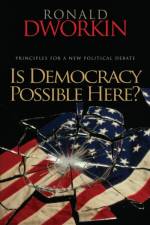
Politics in America are polarized and trivialized, perhaps as never before. In Congress, the media, and academic debate, opponents from right and left, the Red and the Blue, struggle against one another as if politics were contact sports played to the shouts of cheerleaders. The result, Ronald Dworkin writes, is a deeply depressing political culture, as ill equipped for the perennial challenge of achieving social justice as for the emerging threats of terrorism. Can the hope for change be realized? Dworkin, one the world's leading legal and political philosophers, identifies and defends core principles of personal and political morality that all citizens can share. He shows that recognizing such shared principles can make substantial political argument possible and help replace contempt with mutual respect. Only then can the full promise of democracy be realized in America and elsewhere. Dworkin lays out two core principles that citizens should share: first, that each human life is intrinsically and equally valuable and, second, that each person has an inalienable personal responsibility for identifying and realizing value in his or her own life. He then shows what fidelity to these principles would mean for human rights, the place of religion in public life, economic justice, and the character and value of democracy. Dworkin argues that liberal conclusions flow most naturally from these principles. Properly understood, they collide with the ambitions of religious conservatives, contemporary American tax and social policy, and much of the War on Terror. But his more basic aim is to convince Americans of all political stripes--as well as citizens of other nations with similar cultures--that they can and must defend their own convictions through their own interpretations of these shared values.
One of the central tenets of mainstream economics is Adam Smith's proposition that, given certain conditions, self-interested behavior by individuals leads them to the social good, almost as if orchestrated by an invisible hand. This deep insight has, over the past two centuries, been taken out of context, contorted, and used as the cornerstone of free-market orthodoxy. In Beyond the Invisible Hand, Kaushik Basu argues that mainstream economics and its conservative popularizers have misrepresented Smith's insight and hampered our understanding of how economies function, why some economies fail and some succeed, and what the nature and role of state intervention might be. Comparing this view of the invisible hand with the vision described by Kafka--in which individuals pursuing their atomistic interests, devoid of moral compunction, end up creating a world that is mean and miserable--Basu argues for collective action and the need to shift our focus from the efficient society to one that is also fair. Using analytic tools from mainstream economics, the book challenges some of the precepts and propositions of mainstream economics. It maintains that, by ignoring the role of culture and custom, traditional economics promotes the view that the current system is the only viable one, thereby serving the interests of those who do well by this system. Beyond the Invisible Hand challenges readers to fundamentally rethink the assumptions underlying modern economic thought and proves that a more equitable society is both possible and sustainable, and hence worth striving for. By scrutinizing Adam Smith's theory, this impassioned critique of contemporary mainstream economics debunks traditional beliefs regarding best economic practices, self-interest, and the social good.
On August 15, 1914, the Panama Canal officially opened for business, forever changing the face of global trade and military power, as well as the role of the United States on the world stage. The Canal's creation is often seen as an example of U.S. triumphalism, but Noel Maurer and Carlos Yu reveal a more complex story. Examining the Canal's influence on Panama, the United States, and the world, The Big Ditch deftly chronicles the economic and political history of the Canal, from Spain's earliest proposals in 1529 through the final handover of the Canal to Panama on December 31, 1999, to the present day. The authors show that the Canal produced great economic dividends for the first quarter-century following its opening, despite massive cost overruns and delays. Relying on geographical advantage and military might, the United States captured most of these benefits. By the 1970s, however, when the Carter administration negotiated the eventual turnover of the Canal back to Panama, the strategic and economic value of the Canal had disappeared. And yet, contrary to skeptics who believed it was impossible for a fledgling nation plagued by corruption to manage the Canal, when the Panamanians finally had control, they switched the Canal from a public utility to a for-profit corporation, ultimately running it better than their northern patrons. A remarkable tale, The Big Ditch offers vital lessons about the impact of large-scale infrastructure projects, American overseas interventions on institutional development, and the ability of governments to run companies effectively.
No survey can capture the breadth and depth of the anti-Americanism that has swept Europe in recent years. From ultraconservative Bavarian grandmothers to thirty-year-old socialist activists in Greece, from globalization opponents to corporate executives--Europeans are joining in an ever louder chorus of disdain for America. For the first time, anti-Americanism has become a European lingua franca. In this sweeping and provocative look at the history of European aversion to America, Andrei Markovits argues that understanding the ubiquity of anti-Americanism since September 11, 2001, requires an appreciation of such sentiments among European elites going back at least to July 4, 1776. While George W. Bush's policies have catapulted anti-Americanism into overdrive, particularly in Western Europe, Markovits argues that this loathing has long been driven not by what America does, but by what it is. Focusing on seven Western European countries big and small, he shows how antipathies toward things American embrace aspects of everyday life--such as sports, language, work, education, media, health, and law--that remain far from the purview of the Bush administration's policies. Aggravating Europeans' antipathies toward America is their alleged helplessness in the face of an Americanization that they view as inexorably befalling them. More troubling, Markovits argues, is that this anti-Americanism has cultivated a new strain of anti-Semitism. Above all, he shows that while Europeans are far apart in terms of their everyday lives and shared experiences, their not being American provides them with a powerful common identity--one that elites have already begun to harness in their quest to construct a unified Europe to rival America.
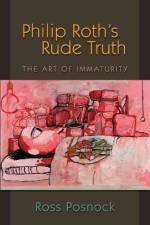
Has anyone ever worked harder and longer at being immature than Philip Roth? The novelist himself pointed out the paradox, saying that after establishing a reputation for maturity with two earnest novels, he "e;worked hard and long and diligently"e; to be frivolous--an effort that resulted in the notoriously immature Portnoy's Complaint (1969). Three-and-a-half decades and more than twenty books later, Roth is still at his serious "e;pursuit of the unserious."e; But his art of immaturity has itself matured, developing surprising links with two traditions of immaturity--an American one that includes Emerson, Melville, and Henry James, and a late twentieth-century Eastern European one that developed in reaction to totalitarianism. In Philip Roth's Rude Truth--one of the first major studies of Roth's career as a whole--Ross Posnock examines Roth's "e;mature immaturity"e; in all its depth and richness. Philip Roth's Rude Truth will force readers to reconsider the narrow categories into which Roth has often been slotted--laureate of Newark, New Jersey; junior partner in the firm Salinger, Bellow, Mailer, and Malamud; Jewish-American regionalist. In dramatic contrast to these caricatures, the Roth who emerges from Posnock's readable and intellectually vibrant study is a great cosmopolitan in the tradition of Henry James and Milan Kundera.
Genocide, mass murder, massacres. The words themselves are chilling, evoking images of the slaughter of countless innocents. What dark impulses lurk in our minds that even today can justify the eradication of thousands and even millions of unarmed human beings caught in the crossfire of political, cultural, or ethnic hostilities? This question lies at the heart of Why Not Kill Them All? Cowritten by historical sociologist Daniel Chirot and psychologist Clark McCauley, the book goes beyond exploring the motives that have provided the psychological underpinnings for genocidal killings. It offers a historical and comparative context that adds up to a causal taxonomy of genocidal events. Rather than suggesting that such horrors are the product of abnormal or criminal minds, the authors emphasize the normality of these horrors: killing by category has occurred on every continent and in every century. But genocide is much less common than the imbalance of power that makes it possible. Throughout history human societies have developed techniques aimed at limiting intergroup violence. Incorporating ethnographic, historical, and current political evidence, this book examines the mechanisms of constraint that human societies have employed to temper partisan passions and reduce carnage. Might an understanding of these mechanisms lead the world of the twenty-first century away from mass murder? Why Not Kill Them All? makes clear that there are no simple solutions, but that progress is most likely to be made through a combination of international pressures, new institutions and laws, and education. If genocide is to become a grisly relic of the past, we must fully comprehend the complex history of violent conflict and the struggle between hatred and tolerance that is waged in the human heart.
Jesus and Darwin do battle on car bumpers across America. Medallions of fish symbolizing Jesus are answered by ones of amphibians stamped "e;Darwin,"e; and stickers proclaiming "e;Jesus Loves You"e; are countered by "e;Darwin Loves You."e; The bumper sticker debate might be trivial and the pronouncement that "e;Darwin Loves You"e; may seem merely ironic, but George Levine insists that the message contains an unintended truth. In fact, he argues, we can read it straight. Darwin, Levine shows, saw a world from which his theory had banished transcendence as still lovable and enchanted, and we can see it like that too--if we look at his writings and life in a new way. Although Darwin could find sublimity even in ants or worms, the word "e;Darwinian"e; has largely been taken to signify a disenchanted world driven by chance and heartless competition. Countering the pervasive view that the facts of Darwin's world must lead to a disenchanting vision of it, Levine shows that Darwin's ideas and the language of his books offer an alternative form of enchantment, a world rich with meaning and value, and more wonderful and beautiful than ever before. Without minimizing or sentimentalizing the harsh qualities of life governed by natural selection, and without deifying Darwin, Levine makes a moving case for an enchanted secularism--a commitment to the value of the natural world and the human striving to understand it.
Chosen by Pulitzer Prize-winning poet Paul Muldoon to relaunch the prestigious Princeton Series of Contemporary Poets under his editorship, The Eternal City revives Princeton's tradition of publishing some of today's best poetry. With an epigraph from Freud comparing the mind to a landscape in which all that ever was still persists, The Eternal City offers eloquent testimony to the struggle to make sense of the present through conversation with the past. Questioning what it means to possess and to be possessed by objects and technologies, Kathleen Graber's collection brings together the elevated and the quotidian to make neighbors of Marcus Aurelius, Klaus Kinski, Walter Benjamin, and Johnny Depp. Like Aeneas, who escapes Troy carrying his father on his back, the speaker of these intellectually and emotionally ambitious poems juggles the weight of private and public history as she is transformed from settled resident to pilgrim.______ From The Eternal City:WHAT I MEANT TO SAY Kathleen Graber ? In three weeks I will be gone. Already my suitcase standsoverloaded at the door. I've packed, unpacked, & repacked it,making it tell me again & again what it couldn't hold.Some days it's easy to see the signifi cant insignificanceof everything, but today I wept all morning over the swollen,optimistic heart of my mother's favorite newscaster,which suddenly blew itself to stillness. I have tried for weeksto predict the weather on the other side of the world: I don't wantto be wet or overheated. I've taken out The Complete Shakespeare to make room for a slicker. And I've changed my mind& put it back. Soon no one will know what I mean when I speak.Last month, after graduation, a student stopped me just outsidethe University gates despite a downpour. He wanted to tell methat he loved best James Schuyler's poem for Auden. So much to remember, he recited in the rain, as the shopsbegan to close their doors around us. I thought he would livea long time. He did not. Then, a car loaded with his friendspulled up honking & he hopped in. There was no chance to linger& talk. Today I slipped into the bag between two shoes that bookwhich begins with a father digging--even though my fatherwas no farmer & planted ever only one myrtle late in his life& sat in the yard all that summer watching it grow as he died,a green tank of oxygen suspirating behind him. If the suitcasewere any larger, no one could lift it. I'm going away for a long time,but it may not be forever. There are tragedies I haven't read.Kyle, bundle up. You're right. It's hard to say simply what is true. For Kyle Booten ?
Mathematics is often thought of as the coldest expression of pure reason. But few subjects provoke hotter emotions--and inspire more love and hatred--than mathematics. And although math is frequently idealized as floating above the messiness of human life, its story is nothing if not human; often, it is all too human. Loving and Hating Mathematics is about the hidden human, emotional, and social forces that shape mathematics and affect the experiences of students and mathematicians. Written in a lively, accessible style, and filled with gripping stories and anecdotes, Loving and Hating Mathematics brings home the intense pleasures and pains of mathematical life. These stories challenge many myths, including the notions that mathematics is a solitary pursuit and a "e;young man's game,"e; the belief that mathematicians are emotionally different from other people, and even the idea that to be a great mathematician it helps to be a little bit crazy. Reuben Hersh and Vera John-Steiner tell stories of lives in math from their very beginnings through old age, including accounts of teaching and mentoring, friendships and rivalries, love affairs and marriages, and the experiences of women and minorities in a field that has traditionally been unfriendly to both. Included here are also stories of people for whom mathematics has been an immense solace during times of crisis, war, and even imprisonment--as well as of those rare individuals driven to insanity and even murder by an obsession with math. This is a book for anyone who wants to understand why the most rational of human endeavors is at the same time one of the most emotional.
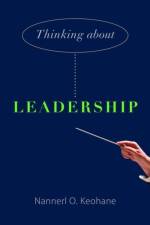
Leadership is essential to collective human endeavor, from setting and accomplishing goals for a neighborhood block association, to running a Fortune 500 company, to mobilizing the energies of a nation. Political philosophers have focused largely on how to prevent leaders from abusing their power, yet little attention has been paid to what it actually feels like to hold power, how leaders go about their work, and how they relate to the people they lead. In Thinking about Leadership, Nannerl Keohane draws on her experience as the first woman president of Duke University and former president of Wellesley College, as well as her expertise as a leading political theorist, to deepen our understanding of what leaders do, how and why they do it, and the pitfalls and challenges they face. Keohane engages readers in a series of questions that shed light on every facet of leadership. She considers the traits that make a good leader, including sound judgment, decisiveness, integrity, social skill, and intelligence; the role that gender plays in one's ability to attain and wield power; ethics and morality; the complex relationship between leaders and their followers; and the unique challenges of democratic leadership. Rich with lessons and insights from leaders and political thinkers down through the ages, including Aristotle, Queen Elizabeth I, Franklin D. Roosevelt, and Nelson Mandela, Thinking about Leadership is a must-read for current and future leaders, and for anyone concerned about our prospects for good governance.
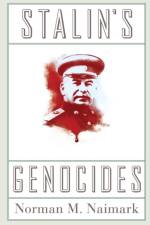
Between the early 1930s and his death in 1953, Joseph Stalin had more than a million of his own citizens executed. Millions more fell victim to forced labor, deportation, famine, bloody massacres, and detention and interrogation by Stalin's henchmen. Stalin's Genocides is the chilling story of these crimes. The book puts forward the important argument that brutal mass killings under Stalin in the 1930s were indeed acts of genocide and that the Soviet dictator himself was behind them. Norman Naimark, one of our most respected authorities on the Soviet era, challenges the widely held notion that Stalin's crimes do not constitute genocide, which the United Nations defines as the premeditated killing of a group of people because of their race, religion, or inherent national qualities. In this gripping book, Naimark explains how Stalin became a pitiless mass killer. He looks at the most consequential and harrowing episodes of Stalin's systematic destruction of his own populace--the liquidation and repression of the so-called kulaks, the Ukrainian famine, the purge of nationalities, and the Great Terror--and examines them in light of other genocides in history. In addition, Naimark compares Stalin's crimes with those of the most notorious genocidal killer of them all, Adolf Hitler.
In an America where the rich and fortunate have free rein to do as they please, can the ideal of liberty and justice for all be anything but an empty slogan? Many Americans are doubtful, and have withdrawn into apathy and cynicism. But thousands of others are not ready to give up on democracy just yet. Working outside the notice of the national media, ordinary citizens across the nation are meeting in living rooms, church basements, synagogues, and schools to identify shared concerns, select and cultivate leaders, and take action. Their goal is to hold big government and big business accountable. In this important new book, Jeffrey Stout bears witness to the successes and failures of progressive grassroots organizing, and the daunting forces now arrayed against it. Stout tells vivid stories of people fighting entrenched economic and political interests around the country. From parents and teachers striving to overcome gang violence in South Central Los Angeles, to a Latino priest north of the Rio Grande who brings his parish into a citizens' organization, to the New Orleans residents who get out the vote by taking a jazz band through streets devastated by Hurricane Katrina, Stout describes how these ordinary people conceive of citizenship, how they acquire and exercise power, and how religious ideas and institutions contribute to their successes. The most important book on organizing and grassroots democracy in a generation, Blessed Are the Organized is a passionate and hopeful account of how our endangered democratic principles can be put into action.
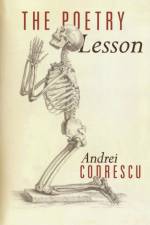
"e;Intro to Poetry Writing is always like this: a long labor, a breech birth, or, obversely, mining in the dark. You take healthy young Americans used to sunshine (aided sometimes by Xanax and Adderall), you blindfold them and lead them by the hand into a labyrinth made from bones. Then you tell them their assignment: 'Find the Grail. You have a New York minute to get it.'"e;--The Poetry Lesson The Poetry Lesson is a hilarious account of the first day of a creative writing course taught by a "e;typical fin-de-siecle salaried beatnik"e;--one with an antic imagination, an outsized personality and libido, and an endless store of entertaining literary anecdotes, reliable or otherwise. Neither a novel nor a memoir but mimicking aspects of each, The Poetry Lesson is pure Andrei Codrescu: irreverent, unconventional, brilliant, and always funny. Codrescu takes readers into the strange classroom and even stranger mind of a poet and English professor on the eve of retirement as he begins to teach his final semester of Intro to Poetry Writing. As he introduces his students to THE TOOLS OF POETRY (a list that includes a goatskin dream notebook, hypnosis, and cable TV) and THE TEN MUSES OF POETRY (mishearing, misunderstanding, mistranslating . . . ), and assigns each of them a tutelary "e;Ghost-Companion"e; poet, the teacher recalls wild tales from his coming of age as a poet in the 1960s and 1970s, even as he speculates about the lives and poetic and sexual potential of his twenty-first-century students. From arguing that Allen Ginsberg wasn't actually gay to telling about the time William Burroughs's funeral procession stopped at McDonald's, The Poetry Lesson is a thoroughly entertaining portrait of an inimitable poet, teacher, and storyteller.
Barack Obama puzzles observers. Derided by the Right as dangerous and by the Left as spineless, Obama does not fit contemporary partisan categories. Instead, his writings and speeches reflect a principled aversion to absolutes that derives from sustained engagement with American democratic thought. Reading Obama traces the origins of his ideas and establishes him as the most penetrating political thinker elected to the presidency in the past century. James T. Kloppenberg demonstrates the influences that have shaped Obama's distinctive worldview, including Nietzsche and Niebuhr, Ellison and Rawls, and recent theorists engaged in debates about feminism, critical race theory, and cultural norms. Examining Obama's views on the Constitution, slavery and the Civil War, the New Deal, and the civil rights movement, Kloppenberg shows Obama's sophisticated understanding of American history. Obama's interest in compromise, reasoned public debate, and the patient nurturing of civility is a sign of strength, not weakness, Kloppenberg argues. He locates its roots in Madison, Lincoln, and especially in the philosophical pragmatism of William James and John Dewey, which nourished generations of American progressives, black and white, female and male, through much of the twentieth century, albeit with mixed results. Reading Obama reveals the sources of Obama's commitment to democratic deliberation: the books he has read, the visionaries who have inspired him, the social movements and personal struggles that have shaped his thinking. Kloppenberg shows that Obama's positions on social justice, religion, race, family, and America's role in the world do not stem from a desire to please everyone but from deeply rooted--although currently unfashionable--convictions about how a democracy must deal with difference and conflict.
Before the nineteenth century, instrumental music was considered inferior to vocal music. Kant described wordless music as "e;more pleasure than culture,"e; and Rousseau dismissed it for its inability to convey concepts. But by the early 1800s, a dramatic shift was under way. Purely instrumental music was now being hailed as a means to knowledge and embraced precisely because of its independence from the limits of language. What had once been perceived as entertainment was heard increasingly as a vehicle of thought. Listening had become a way of knowing. Music as Thought traces the roots of this fundamental shift in attitudes toward listening in the late eighteenth and early nineteenth centuries. Focusing on responses to the symphony in the age of Beethoven, Mark Evan Bonds draws on contemporary accounts and a range of sources--philosophical, literary, political, and musical--to reveal how this music was experienced by those who heard it first. Music as Thought is a fascinating reinterpretation of the causes and effects of a revolution in listening.
A man is changed into a flea and must bring his future parents together in order to become human again. A woman convinces a river god to cure her sick son, but the remedy has mixed consequences. A young man must choose whether to be close to his wife's soul or body. And two deaf mutes transcend their physical existence in the garden of dreams. Strange and fantastical, these fairy tales of Bela Balazs (1884-1949), Hungarian writer, film critic, and famous librettist of Bluebeard's Castle, reflect his profound interest in friendship, alienation, and Taoist philosophy. Translated and introduced by Jack Zipes, one of the world's leading authorities on fairy tales, The Cloak of Dreams brings together sixteen of Balazs's unique and haunting stories. Written in 1921, these fairy tales were originally published with twenty images drawn in the Chinese style by painter Mariette Lydis, and this new edition includes a selection of Lydis's brilliant illustrations. Together, the tales and pictures accentuate the motifs and themes that run throughout Balazs's work: wandering protagonists, mysterious woods and mountains, solitude, and magical transformation. His fairy tales express our deepest desires and the hope that, even in the midst of tragedy, we can transcend our difficulties and forge our own destinies. Unusual, wondrous fairy tales that examine the world's cruelties and twists of fate, The Cloak of Dreams will entertain, startle, and intrigue.
In the year 1000, the economy of the Middle East was at least as advanced as that of Europe. But by 1800, the region had fallen dramatically behind--in living standards, technology, and economic institutions. In short, the Middle East had failed to modernize economically as the West surged ahead. What caused this long divergence? And why does the Middle East remain drastically underdeveloped compared to the West? In The Long Divergence, one of the world's leading experts on Islamic economic institutions and the economy of the Middle East provides a new answer to these long-debated questions. Timur Kuran argues that what slowed the economic development of the Middle East was not colonialism or geography, still less Muslim attitudes or some incompatibility between Islam and capitalism. Rather, starting around the tenth century, Islamic legal institutions, which had benefitted the Middle Eastern economy in the early centuries of Islam, began to act as a drag on development by slowing or blocking the emergence of central features of modern economic life--including private capital accumulation, corporations, large-scale production, and impersonal exchange. By the nineteenth century, modern economic institutions began to be transplanted to the Middle East, but its economy has not caught up. And there is no quick fix today. Low trust, rampant corruption, and weak civil societies--all characteristic of the region's economies today and all legacies of its economic history--will take generations to overcome. The Long Divergence opens up a frank and honest debate on a crucial issue that even some of the most ardent secularists in the Muslim world have hesitated to discuss.
British imperialism's favorite literary narrative might seem to be conquest. But real British conquests also generated a surprising cultural obsession with suffering, sacrifice, defeat, and melancholia. "e;There was,"e; writes John Kucich, "e;seemingly a different crucifixion scene marking the historical gateway to each colonial theater."e; In Imperial Masochism, Kucich reveals the central role masochistic forms of voluntary suffering played in late-nineteenth-century British thinking about imperial politics and class identity. Placing the colonial writers Robert Louis Stevenson, Olive Schreiner, Rudyard Kipling, and Joseph Conrad in their cultural context, Kucich shows how the ideological and psychological dynamics of empire, particularly its reorganization of class identities at the colonial periphery, depended on figurations of masochism. Drawing on recent psychoanalytic theory to define masochism in terms of narcissistic fantasies of omnipotence rather than sexual perversion, the book illuminates how masochism mediates political thought of many different kinds, not simply those that represent the social order as an opposition of mastery and submission, or an eroticized drama of power differentials. Masochism was a powerful psychosocial language that enabled colonial writers to articulate judgments about imperialism and class. The first full-length study of masochism in British colonial fiction, Imperial Masochism puts forth new readings of this literature and shows the continued relevance of psychoanalysis to historicist studies of literature and culture.
Lyric poetry has long been regarded as the intensely private, emotional expression of individuals, powerful precisely because it draws readers into personal worlds. But who, exactly, is the "e;I"e; in a lyric poem, and how is it created? In Lyric Poetry, Mutlu Blasing argues that the individual in a lyric is only a virtual entity and that lyric poetry takes its power from the public, emotional power of language itself. In the first major new theory of the lyric to be put forward in decades, Blasing proposes that lyric poetry is a public discourse deeply rooted in the mother tongue. She looks to poetic, linguistic, and psychoanalytic theory to help unravel the intricate historical processes that generate speaking subjects, and concludes that lyric forms convey both personal and communal emotional histories in language. Focusing on the work of such diverse twentieth-century American poets as T. S. Eliot, Ezra Pound, Wallace Stevens, and Anne Sexton, Blasing demonstrates the ways that the lyric "e;I"e; speaks, from first to last, as a creation of poetic language.
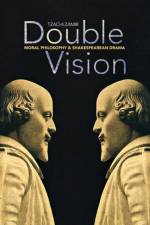
Hamlet tells Horatio that there are more things in heaven and earth than are dreamt of in his philosophy. In Double Vision, philosopher and literary critic Tzachi Zamir argues that there are more things in Hamlet than are dreamt of--or at least conceded--by most philosophers. Making an original and persuasive case for the philosophical value of literature, Zamir suggests that certain important philosophical insights can be gained only through literature. But such insights cannot be reached if literature is deployed merely as an aesthetic sugaring of a conceptual pill. Philosophical knowledge is not opposed to, but is consonant with, the literariness of literature. By focusing on the experience of reading literature as literature and not philosophy, Zamir sets a theoretical framework for a philosophically oriented literary criticism that will appeal both to philosophers and literary critics. Double Vision is concerned with the philosophical understanding induced by the aesthetic experience of literature. Literary works can function as credible philosophical arguments--not ones in which claims are conclusively demonstrated, but in which claims are made plausible. Such claims, Zamir argues, are embedded within an experiential structure that is itself a crucial dimension of knowing. Developing an account of literature's relation to knowledge, morality, and rhetoric, and advancing philosophical-literary readings of Richard III, Macbeth, Romeo and Juliet, Othello, Antony and Cleopatra, Hamlet, and King Lear, Zamir shows how his approach can open up familiar texts in surprising and rewarding ways.
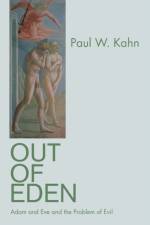
In Out of Eden, Paul W. Kahn offers a philosophical meditation on the problem of evil. He uses the Genesis story of the Fall as the starting point for a profound articulation of the human condition. Kahn shows us that evil expresses the rage of a subject who knows both that he is an image of an infinite God and that he must die. Kahn's interpretation of Genesis leads him to inquiries into a variety of modern forms of evil, including slavery, torture, and genocide. Kahn takes issue with Hannah Arendt's theory of the banality of evil, arguing that her view is an instance of the modern world's lost capacity to speak of evil. Psychological, social, and political accounts do not explain evil as much as explain it away. Focusing on the existential roots of evil rather than on the occasions for its appearance, Kahn argues that evil originates in man's flight from death. He urges us to see that the opposite of evil is not good, but love: while evil would master death, love would transcend it. Offering a unique perspective that combines political and cultural theory, law, and philosophy, Kahn here continues his project of advancing a political theology of modernity.
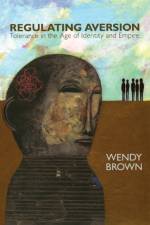
Tolerance is generally regarded as an unqualified achievement of the modern West. Emerging in early modern Europe to defuse violent religious conflict and reduce persecution, tolerance today is hailed as a key to decreasing conflict across a wide range of other dividing lines-- cultural, racial, ethnic, and sexual. But, as political theorist Wendy Brown argues in Regulating Aversion, tolerance also has dark and troubling undercurrents. Dislike, disapproval, and regulation lurk at the heart of tolerance. To tolerate is not to affirm but to conditionally allow what is unwanted or deviant. And, although presented as an alternative to violence, tolerance can play a part in justifying violence--dramatically so in the war in Iraq and the War on Terror. Wielded, especially since 9/11, as a way of distinguishing a civilized West from a barbaric Islam, tolerance is paradoxically underwriting Western imperialism. Brown's analysis of the history and contemporary life of tolerance reveals it in a startlingly unfamiliar guise. Heavy with norms and consolidating the dominance of the powerful, tolerance sustains the abjection of the tolerated and equates the intolerant with the barbaric. Examining the operation of tolerance in contexts as different as the War on Terror, campaigns for gay rights, and the Los Angeles Museum of Tolerance, Brown traces the operation of tolerance in contemporary struggles over identity, citizenship, and civilization.
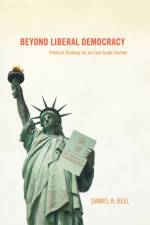
Is liberal democracy appropriate for East Asia? In this provocative book, Daniel Bell argues for morally legitimate alternatives to Western-style liberal democracy in the region. Beyond Liberal Democracy, which continues the author's influential earlier work, is divided into three parts that correspond to the three main hallmarks of liberal democracy--human rights, democracy, and capitalism. These features have been modified substantially during their transmission to East Asian societies that have been shaped by nonliberal practices and values. Bell points to the dangers of implementing Western-style models and proposes alternative justifications and practices that may be more appropriate for East Asian societies. If human rights, democracy, and capitalism are to take root and produce beneficial outcomes in East Asia, Bell argues, they must be adjusted to contemporary East Asian political and economic realities and to the values of nonliberal East Asian political traditions such as Confucianism and Legalism. Local knowledge is therefore essential for realistic and morally informed contributions to debates on political reform in the region, as well as for mutual learning and enrichment of political theories. Beyond Liberal Democracy is indispensable reading for students and scholars of political theory, Asian studies, and human rights, as well as anyone concerned about China's political and economic future and how Western governments and organizations should engage with China.
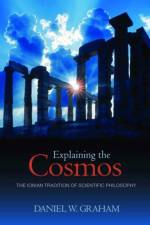
Explaining the Cosmos is a major reinterpretation of Greek scientific thought before Socrates. Focusing on the scientific tradition of philosophy, Daniel Graham argues that Presocratic philosophy is not a mere patchwork of different schools and styles of thought. Rather, there is a discernible and unified Ionian tradition that dominates Presocratic debates. Graham rejects the common interpretation of the early Ionians as "e;material monists"e; and also the view of the later Ionians as desperately trying to save scientific philosophy from Parmenides' criticisms. In Graham's view, Parmenides plays a constructive role in shaping the scientific debates of the fifth century BC. Accordingly, the history of Presocratic philosophy can be seen not as a series of dialectical failures, but rather as a series of theoretical advances that led to empirical discoveries. Indeed, the Ionian tradition can be seen as the origin of the scientific conception of the world that we still hold today.
Pessimism claims an impressive following--from Rousseau, Schopenhauer, and Nietzsche, to Freud, Camus, and Foucault. Yet "e;pessimist"e; remains a term of abuse--an accusation of a bad attitude--or the diagnosis of an unhappy psychological state. Pessimism is thought of as an exclusively negative stance that inevitably leads to resignation or despair. Even when pessimism looks like utter truth, we are told that it makes the worst of a bad situation. Bad for the individual, worse for the species--who would actually counsel pessimism? Joshua Foa Dienstag does. In Pessimism, he challenges the received wisdom about pessimism, arguing that there is an unrecognized yet coherent and vibrant pessimistic philosophical tradition. More than that, he argues that pessimistic thought may provide a critically needed alternative to the increasingly untenable progressivist ideas that have dominated thinking about politics throughout the modern period. Laying out powerful grounds for pessimism's claim that progress is not an enduring feature of human history, Dienstag argues that political theory must begin from this predicament. He persuasively shows that pessimism has been--and can again be--an energizing and even liberating philosophy, an ethic of radical possibility and not just a criticism of faith. The goal--of both the pessimistic spirit and of this fascinating account of pessimism--is not to depress us, but to edify us about our condition and to fortify us for life in a disordered and disenchanted universe.
The contemporary world is increasingly defined by dizzying flows of people and ideas. But while Western travel is associated with a pioneering spirit of discovery, the dominant image of Muslim mobility is the jihadi who travels not to learn but to destroy. Journeys to the Other Shore challenges these stereotypes by charting the common ways in which Muslim and Western travelers negotiate the dislocation of travel to unfamiliar and strange worlds. In Roxanne Euben's groundbreaking excursion across cultures, geography, history, genre, and genders, travel signifies not only a physical movement across lands and cultures, but also an imaginative journey in which wonder about those who live differently makes it possible to see the world differently. In the book we meet not only Herodotus but also Ibn Battuta, the fourteenth-century Moroccan traveler. Tocqueville's journeys are set against a five-year sojourn in nineteenth-century Paris by the Egyptian writer and translator Rifa'a Rafi' al-Tahtawi, and Montesquieu's novel Persian Letters meets with the memoir of an East African princess, Sayyida Salme. This extraordinary book shows that curiosity about the unknown, the quest to understand foreign cultures, critical distance from one's own world, and the desire to remake the foreign into the familiar are not the monopoly of any single civilization or epoch. Euben demonstrates that the fluidity of identities, cultures, and borders associated with our postcolonial, globalized world has a long history--one shaped not only by Western power but also by an Islamic ethos of travel in search of knowledge.
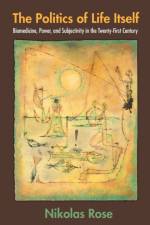
For centuries, medicine aimed to treat abnormalities. But today normality itself is open to medical modification. Equipped with a new molecular understanding of bodies and minds, and new techniques for manipulating basic life processes at the level of molecules, cells, and genes, medicine now seeks to manage human vital processes. The Politics of Life Itself offers a much-needed examination of recent developments in the life sciences and biomedicine that have led to the widespread politicization of medicine, human life, and biotechnology. Avoiding the hype of popular science and the pessimism of most social science, Nikolas Rose analyzes contemporary molecular biopolitics, examining developments in genomics, neuroscience, pharmacology, and psychopharmacology and the ways they have affected racial politics, crime control, and psychiatry. Rose analyzes the transformation of biomedicine from the practice of healing to the government of life; the new emphasis on treating disease susceptibilities rather than disease; the shift in our understanding of the patient; the emergence of new forms of medical activism; the rise of biocapital; and the mutations in biopower. He concludes that these developments have profound consequences for who we think we are, and who we want to be.
Citizenship presents two faces. Within a political community it stands for inclusion and universalism, but to outsiders, citizenship means exclusion. Because these aspects of citizenship appear spatially and jurisdictionally separate, they are usually regarded as complementary. In fact, the inclusionary and exclusionary dimensions of citizenship dramatically collide within the territory of the nation-state, creating multiple contradictions when it comes to the class of people the law calls aliens--transnational migrants with a status short of full citizenship. Examining alienage and alienage law in all of its complexities, The Citizen and the Alien explores the dilemmas of inclusion and exclusion inherent in the practices and institutions of citizenship in liberal democratic societies, especially the United States. In doing so, it offers an important new perspective on the changing meaning of citizenship in a world of highly porous borders and increasing transmigration. As a particular form of noncitizenship, alienage represents a powerful lens through which to examine the meaning of citizenship itself, argues Linda Bosniak. She uses alienage to examine the promises and limits of the "e;equal citizenship"e; ideal that animates many constitutional democracies. In the process, she shows how core features of globalization serve to shape the structure of legal and social relationships at the very heart of national societies.
Balancing respect for religious conviction and the values of liberal democracy is a daunting challenge for judges and lawmakers, particularly when religious groups seek exemption from laws that govern others. Should members of religious sects be able to use peyote in worship? Should pacifists be forced to take part in military service when there is a draft, and should this depend on whether they are religious? How can the law address the refusal of parents to provide medical care to their children--or the refusal of doctors to perform abortions? Religion and the Constitution presents a new framework for addressing these and other controversial questions that involve competing demands of fairness, liberty, and constitutional validity. In the first of two major volumes on the intersection of constitutional and religious issues in the United States, Kent Greenawalt focuses on one of the Constitution's main clauses concerning religion: the Free Exercise Clause. Beginning with a brief account of the clause's origin and a short history of the Supreme Court's leading decisions about freedom of religion, he devotes a chapter to each of the main controversies encountered by judges and lawmakers. Sensitive to each case's context in judging whether special treatment of religious claims is justified, Greenawalt argues that the state's treatment of religion cannot be reduced to a single formula. Calling throughout for religion to be taken more seriously as a force for meaning in people's lives, Religion and the Constitution aims to accommodate the maximum expression of religious conviction that is consistent with a commitment to fairness and the public welfare.
Abonner på vårt nyhetsbrev og få rabatter og inspirasjon til din neste leseopplevelse.
Ved å abonnere godtar du vår personvernerklæring.