


























Gjør som tusenvis av andre bokelskere
Abonner på vårt nyhetsbrev og få rabatter og inspirasjon til din neste leseopplevelse.
Ved å abonnere godtar du vår personvernerklæring.Du kan når som helst melde deg av våre nyhetsbrev.

What authority does international law really have for the United States? When and to what extent should the United States participate in the international legal system? This forcefully argued book by legal scholar Jeremy Rabkin provides an insightful new look at this important and much-debated question. Americans have long asked whether the United States should join forces with institutions such as the International Criminal Court and sign on to agreements like the Kyoto Protocol. Rabkin argues that the value of international agreements in such circumstances must be weighed against the threat they pose to liberties protected by strong national authority and institutions. He maintains that the protection of these liberties could be fatally weakened if we go too far in ceding authority to international institutions that might not be zealous in protecting the rights Americans deem important. Similarly, any cessation of authority might leave Americans far less attached to the resulting hybrid legal system than they now are to laws they can regard as their own. Law without Nations? traces the traditional American wariness of international law to the basic principles of American thought and the broader traditions of liberal political thought on which the American Founders drew: only a sovereign state can make and enforce law in a reliable way, so only a sovereign state can reliably protect the rights of its citizens. It then contrasts the American experience with that of the European Union, showing the difficulties that can arise from efforts to merge national legal systems with supranational schemes. In practice, international human rights law generates a cloud of rhetoric that does little to secure human rights, and in fact, is at odds with American principles, Rabkin concludes. A challenging and important contribution to the current debates about the meaning of multilateralism and international law, Law without Nations? will appeal to a broad cross-section of scholars in both the legal and political science arenas.
This book argues that many of the basic concepts that we use to describe and analyze our governmental system are out of date. Developed in large part during the Middle Ages, they fail to confront the administrative character of modern government. These concepts, which include power, discretion, democracy, legitimacy, law, rights, and property, bear the indelible imprint of this bygone era's attitudes, and Arthurian fantasies, about governance. As a result, they fail to provide us with the tools we need to understand, critique, and improve the government we actually possess. Beyond Camelot explains the causes and character of this failure, and then proposes a new conceptual framework, drawn from management science and engineering, which describes our administrative government more accurately, and identifies its weaknesses instead of merely bemoaning its modernity. This book's proposed framework envisions government as a network of connected units that are authorized by superior units and that supervise subordinate ones. Instead of using inherited, emotion-laden concepts like democracy and legitimacy to describe the relationship between these units and private citizens, it directs attention to the particular interactions between these units and the citizenry, and to the mechanisms by which government obtains its citizens' compliance. Instead of speaking about law and legal rights, it proposes that we address the way that the modern state formulates policy and secures its implementation. Instead of perpetuating outdated ideas that we no longer really believe about the sanctity of private property, it suggests that we focus on the way that resources are allocated in order to establish markets as our means of regulation. Highly readable, Beyond Camelot offers an insightful and provocative discussion of how we must transform our understanding of government to keep pace with the transformation that government itself has undergone.
Did post-Enlightenment philosophers reject the idea of original sin and hence the view that life is a quest for redemption from it? In Philosophical Myths of the Fall, Stephen Mulhall identifies and evaluates a surprising ethical-religious dimension in the work of three highly influential philosophers--Nietzsche, Heidegger, and Wittgenstein. He asks: Is the Christian idea of humanity as structurally flawed something that these three thinkers aim simply to criticize? Or do they, rather, end up by reproducing secular variants of the same mythology? Mulhall argues that each, in different ways, develops a conception of human beings as in need of redemption: in their work, we appear to be not so much capable of or prone to error and fantasy, but instead structurally perverse, living in untruth. In this respect, their work is more closely aligned to the Christian perspective than to the mainstream of the Enlightenment. However, all three thinkers explicitly reject any religious understanding of human perversity; indeed, they regard the very understanding of human beings as originally sinful as central to that from which we must be redeemed. And yet each also reproduces central elements of that understanding in his own thinking; each recounts his own myth of our Fall, and holds out his own image of redemption. The book concludes by asking whether this indebtedness to religion brings these philosophers' thinking closer to, or instead forces it further away from, the truth of the human condition.
The French government's 2004 decision to ban Islamic headscarves and other religious signs from public schools puzzled many observers, both because it seemed to infringe needlessly on religious freedom, and because it was hailed by many in France as an answer to a surprisingly wide range of social ills, from violence against females in poor suburbs to anti-Semitism. Why the French Don't Like Headscarves explains why headscarves on schoolgirls caused such a furor, and why the furor yielded this law. Making sense of the dramatic debate from his perspective as an American anthropologist in France at the time, John Bowen writes about everyday life and public events while also presenting interviews with officials and intellectuals, and analyzing French television programs and other media. Bowen argues that the focus on headscarves came from a century-old sensitivity to the public presence of religion in schools, feared links between public expressions of Islamic identity and radical Islam, and a media-driven frenzy that built support for a headscarf ban during 2003-2004. Although the defense of laicite (secularity) was cited as the law's major justification, politicians, intellectuals, and the media linked the scarves to more concrete social anxieties--about "e;communalism,"e; political Islam, and violence toward women. Written in engaging, jargon-free prose, Why the French Don't Like Headscarves is the first comprehensive and objective analysis of this subject, in any language, and it speaks to tensions between assimilation and diversity that extend well beyond France's borders.
Despite its supreme importance and the threat of its global crash, biodiversity remains poorly understood both empirically and theoretically. This ambitious book presents a new, general neutral theory to explain the origin, maintenance, and loss of biodiversity in a biogeographic context. Until now biogeography (the study of the geographic distribution of species) and biodiversity (the study of species richness and relative species abundance) have had largely disjunct intellectual histories. In this book, Stephen Hubbell develops a formal mathematical theory that unifies these two fields. When a speciation process is incorporated into Robert H. MacArthur and Edward O. Wilson's now classical theory of island biogeography, the generalized theory predicts the existence of a universal, dimensionless biodiversity number. In the theory, this fundamental biodiversity number, together with the migration or dispersal rate, completely determines the steady-state distribution of species richness and relative species abundance on local to large geographic spatial scales and short-term to evolutionary time scales. Although neutral, Hubbell's theory is nevertheless able to generate many nonobvious, testable, and remarkably accurate quantitative predictions about biodiversity and biogeography. In many ways Hubbell's theory is the ecological analog to the neutral theory of genetic drift in genetics. The unified neutral theory of biogeography and biodiversity should stimulate research in new theoretical and empirical directions by ecologists, evolutionary biologists, and biogeographers.
In 1997, the Nobel Prize-winning novelist J. M. Coetzee, invited to Princeton University to lecture on the moral status of animals, read a work of fiction about an eminent novelist, Elizabeth Costello, invited to lecture on the moral status of animals at an American college. Coetzee's lectures were published in 1999 as The Lives of Animals, and reappeared in 2003 as part of his novel Elizabeth Costello; and both lectures and novel have attracted the critical attention of a number of influential philosophers--including Peter Singer, Cora Diamond, Stanley Cavell, and John McDowell. In The Wounded Animal, Stephen Mulhall closely examines Coetzee's writings about Costello, and the ways in which philosophers have responded to them, focusing in particular on their powerful presentation of both literature and philosophy as seeking, and failing, to represent reality--in part because of reality's resistance to such projects of understanding, but also because of philosophy's unwillingness to learn from literature how best to acknowledge that resistance. In so doing, Mulhall is led to consider the relations among reason, language, and the imagination, as well as more specific ethical issues concerning the moral status of animals, the meaning of mortality, the nature of evil, and the demands of religion. The ancient quarrel between philosophy and literature here displays undiminished vigor and renewed significance.
This book gives an ambitious revisionist account of the nineteenth-century British novel and its role in the complex historical process that ultimately gave rise to modern anthropology's concept of culture and its accredited researcher, the Participant Observer. Buzard reads the great nineteenth-century novels of Charles Dickens, Charlotte Bronte, George Eliot, and others as "e;metropolitan autoethnographies"e; that began to exercise and test the ethnographic imagination decades in advance of formal modern ethnography--and that did so while focusing on Western European rather than on distant Oriental subjects. Disorienting Fiction shows how English Victorian novels appropriated and anglicized an autoethnographic mode of fiction developed early in the nineteenth century by the Irish authors of the National Tale and, most influentially, by Walter Scott. Buzard demonstrates that whereas the fiction of these non-English British subjects devoted itself to describing and defending (but also inventing) the cultural autonomy of peripheral regions, the English novels that followed them worked to imagine limited and mappable versions of English or British culture in reaction against the potential evacuation of cultural distinctiveness threatened by Britain's own commercial and imperial expansion. These latter novels attempted to forestall the self-incurred liabilities of a nation whose unprecedented reach and power tempted it to universalize and export its own customs, to treat them as simply equivalent to a globally applicable civilization. For many Victorian novelists, a nation facing the prospect of being able to go and to exercise its influence just about anywhere in the world also faced the danger of turning itself into a cultural nowhere. The complex autoethnographic work of nineteenth-century British novels was thus a labor to disorient or de-globalize British national imaginings, and novelists mobilized and freighted with new significance some basic elements of prose narrative in their efforts to write British culture into being. Sure to provoke debate, this book offers a commanding reassessment of a major moment in the history of British literature.
Why is the United States the only advanced capitalist country with no labor party? This question is one of the great enduring puzzles of American political development, and it lies at the heart of a fundamental debate about the nature of American society. Tackling this debate head-on, Robin Archer puts forward a new explanation for why there is no American labor party--an explanation that suggests that much of the conventional wisdom about "e;American exceptionalism"e; is untenable. Conventional explanations rely on comparison with Europe. Archer challenges these explanations by comparing the United States with its most similar New World counterpart--Australia. This comparison is particularly revealing, not only because the United States and Australia share many fundamental historical, political, and social characteristics, but also because Australian unions established a labor party in the late nineteenth century, just when American unions, against a common backdrop of industrial defeat and depression, came closest to doing something similar. Archer examines each of the factors that could help explain the American outcome, and his systematic comparison yields unexpected conclusions. He argues that prosperity, democracy, liberalism, and racial hostility often promoted the very changes they are said to have obstructed. And he shows that it was not these characteristics that left the United States without a labor party, but, rather, the powerful impact of repression, religion, and political sectarianism.
Bernard Williams is remembered as one of the most brilliant and original philosophers of the past fifty years. Widely respected as a moral philosopher, Williams began to write about politics in a sustained way in the early 1980s. There followed a stream of articles, lectures, and other major contributions to issues of public concern--all complemented by his many works on ethics, which have important implications for political theory. This new collection of essays, most of them previously unpublished, addresses many of the core subjects of political philosophy: justice, liberty, and equality; the nature and meaning of liberalism; toleration; power and the fear of power; democracy; and the nature of political philosophy itself. A central theme throughout is that political philosophers need to engage more directly with the realities of political life, not simply with the theories of other philosophers. Williams makes this argument in part through a searching examination of where political thinking should originate, to whom it might be addressed, and what it should deliver. Williams had intended to weave these essays into a connected narrative on political philosophy with reflections on his own experience of postwar politics. Sadly he did not live to complete it, but this book brings together many of its components. Geoffrey Hawthorn has arranged the material to resemble as closely as possible Williams's original design and vision. He has provided both an introduction to Williams's political philosophy and a bibliography of his formal and informal writings on politics. Those who know the work of Bernard Williams will find here the familiar hallmarks of his writing--originality, clarity, erudition, and wit. Those who are unfamiliar with, or unconvinced by, a philosophical approach to politics, will find this an engaging introduction. Both will encounter a thoroughly original voice in modern political theory and a searching approach to the shape and direction of liberal political thought in the past thirty-five years.
When a poet addresses a living person--whether friend or enemy, lover or sister--we recognize the expression of intimacy. But what impels poets to leap across time and space to speak to invisible listeners, seeking an ideal intimacy--George Herbert with God, Walt Whitman with a reader in the future, John Ashbery with the Renaissance painter Francesco Parmigianino? In Invisible Listeners, Helen Vendler argues that such poets must invent the language that will enact, on the page, an intimacy they lack in life. Through brilliantly insightful and gracefully written readings of these three great poets over three different centuries, Vendler maps out their relationships with their chosen listeners. For his part, Herbert revises the usual "e;vertical"e; address to God in favor of a "e;horizontal"e; one-addressing God as a friend. Whitman hovers in a sometimes erotic, sometimes quasi-religious language in conceiving the democratic camerado, who will, following Whitman's example, find his true self. And yet the camerado will be replaced, in Whitman's verse, by the ultimate invisible listener, Death. Ashbery, seeking a fellow artist who believes that art always distorts what it represents, finds he must travel to the remote past. In tones both tender and skeptical he addresses Parmigianino, whose extraordinary self-portrait in a convex mirror furnishes the poet with both a theory and a precedent for his own inventions. By creating the forms and speech of ideal intimacy, these poets set forth the possibility of a more complete and satisfactory human interchange--an ethics of relation that is uncoerced, understanding, and free.
On January 11, 2003, Illinois Governor George Ryan--a Republican on record as saying that "e;some crimes are so horrendous . . . that society has a right to demand the ultimate penalty"e;--commuted the capital sentences of all 167 prisoners on his state's death row. Critics demonized Ryan. For opponents of capital punishment, however, Ryan became an instant hero whose decision was seen as a signal moment in the "e;new abolitionist"e; politics to end killing by the state. In this compelling and timely work, Austin Sarat provides the first book-length work on executive clemency. He turns our focus from questions of guilt and innocence to the very meaning of mercy. Starting from Ryan's controversial decision, Mercy on Trial uses the lens of executive clemency in capital cases to discuss the fraught condition of mercy in American political life. Most pointedly, Sarat argues that mercy itself is on trial. Although it has always had a problematic position as a form of "e;lawful lawlessness,"e; it has come under much more intense popular pressure and criticism in recent decades. This has yielded a radical decline in the use of the power of chief executives to stop executions. From the history of capital clemency in the twentieth century to surrounding legal controversies and philosophical debates about when (if ever) mercy should be extended, Sarat examines the issue comprehensively. In the end, he acknowledges the risks associated with mercy--but, he argues, those risks are worth taking.
Universities were once largely insular institutions whose purview extended no further than the campus gates. Not anymore. Today's universities have evolved into multifaceted organizations with complex connections to government, business, and the community. This thought-provoking book by Harold Shapiro, former president of both Princeton University and the University of Michigan, and Chairman of the National Bioethics Advisory Commission under President Bill Clinton, explores the role the modern university should play as an ethical force and societal steward. Based on the 2003 Clark Kerr lectures, A Larger Sense of Purpose draws from Shapiro's twenty-five years of experience leading major research universities and takes up key topics of debate in higher education. What are the nature and objectives of a liberal education? How should universities address the increasing commercialization not only of intercollegiate sports but of education and research? What are the university's responsibilities for the moral education of students? The book begins with an expanded history of the modern research institution followed by essays on ethics, the academic curriculum, the differences between private and public higher education, the future of intellectual property rights, and the changing relationship between the nation's universities and the for-profit sector. Shapiro calls for universities to be more accountable morally as well as academically. He urges scientists not only to educate others about the potential and limitations of science but also to acknowledge the public's distress over the challenges presented by the very success of the scientific enterprise. He advocates for a more intimate connection between professional training and the liberal arts--in the hope that future doctors, lawyers, and business executives will be educated in ethics and the social sciences as well as they are in anatomy, torts, and leveraged buyouts. Candid, timely, and provocative, A Larger Sense of Purpose demands the attention of not only those in academics but of anyone who shares an interest in the soul of education.
In their personal lives, people consider it essential to separate economics and intimacy. We have, for example, a long-standing taboo against workplace romance, while we see marital love as different from prostitution because it is not a fundamentally financial exchange. In The Purchase of Intimacy, Viviana Zelizer mounts a provocative challenge to this view. Getting to the heart of one of life's greatest taboos, she shows how we all use economic activity to create, maintain, and renegotiate important ties--especially intimate ties--to other people. In everyday life, we invest intense effort and worry to strike the right balance. For example, when a wife's income equals or surpasses her husband's, how much more time should the man devote to household chores or child care? Sometimes legal disputes arise. Should the surviving partner in a same-sex relationship have received compensation for a partner's death as a result of 9/11? Through a host of compelling examples, Zelizer shows us why price is central to three key areas of intimacy: sexually tinged relations; health care by family members, friends, and professionals; and household economics. She draws both on research and materials ranging from reports on compensation to survivors of 9/11 victims to financial management Web sites and advice books for same-sex couples. From the bedroom to the courtroom, The Purchase of Intimacy opens a fascinating new window on the inner workings of the economic processes that pervade our private lives.
How we die reveals much about how we live. In this provocative book, Shai Lavi traces the history of euthanasia in the United States to show how changing attitudes toward death reflect new and troubling ways of experiencing pain, hope, and freedom. Lavi begins with the historical meaning of euthanasia as signifying an "e;easeful death."e; Over time, he shows, the term came to mean a death blessed by the grace of God, and later, medical hastening of death. Lavi illustrates these changes with compelling accounts of changes at the deathbed. He takes us from early nineteenth-century deathbeds governed by religion through the medicalization of death with the physician presiding over the deathbed, to the legalization of physician-assisted suicide. Unlike previous books, which have focused on law and technique as explanations for the rise of euthanasia, this book asks why law and technique have come to play such a central role in the way we die. What is at stake in the modern way of dying is not human progress, but rather a fundamental change in the way we experience life in the face of death, Lavi argues. In attempting to gain control over death, he maintains, we may unintentionally have ceded control to policy makers and bio-scientific enterprises.
This book is a concise, readable introduction to the Greek author Thucydides, who is widely regarded as one of the foremost historians of all time. Why does Thucydides continue to matter today? Perez Zagorin answers this question by examining Thucydides' landmark History of the Peloponnesian War, one of the great classics of Western civilization. This history, Zagorin explains, is far more than a mere chronicle of the conflict between Athens and Sparta, the two superpowers of Greece in the fifth century BCE. It is also a remarkable story of politics, decision-making, the uses of power, and the human and communal experience of war. Zagorin maintains that the work remains of permanent interest because of the exceptional intellect that Thucydides brought to the writing of history, and to the originality, penetration, and the breadth and intensity of vision that inform his narrative. The first half of Zagorin's book discusses the intellectual and historical background to Thucydides' work and its method, structure, and view of the causes of the war. The following chapters deal with Thucydides' portrayal of the Athenian leader Pericles and his account of some of the main episodes of the war, such as the revolution in Corcyra and the Athenian invasion of Sicily. The book concludes with an insightful discussion of Thucydides as a thinker and philosophic historian. Designed to introduce both students and general readers to a work that is an essential part of a liberal education, this book seeks to encourage readers to explore Thucydides--one of the world's greatest historians--for themselves.
What was it like to be poor in the Middle Ages? In the past, the answer to this question came only from institutions and individuals who gave relief to the less fortunate. This book, by one of the top scholars in the field, is the first comprehensive book to study poverty in a premodern Jewish community--from the viewpoint of both the poor and those who provided for them. Mark Cohen mines the richest body of documents available on the matter: the papers of the Cairo Geniza. These documents, located in the Geniza, a hidden chamber for discarded papers situated in a medieval synagogue in Old Cairo, were preserved largely unharmed for more than nine centuries due to an ancient custom in Judaism that prohibited the destruction of pages of sacred writing. Based on these papers, the book provides abundant testimony about how one large and important medieval Jewish community dealt with the constant presence of poverty in its midst. Building on S. D. Goitein's Mediterranean Society and inspired also by research on poverty and charity in medieval and early modern Europe, it provides a clear window onto the daily lives of the poor. It also illuminates private charity, a subject that has long been elusive to the medieval historian. In addition, Cohen's work functions as a detailed case study of an important phenomenon in human history. Cohen concludes that the relatively narrow gap between the poor and rich, and the precariousness of wealth in general, combined to make charity "e;one of the major agglutinates of Jewish associational life"e; during the medieval period.
How have American writers written about jazz, and how has jazz influenced American literature? In Fascinating Rhythm, David Yaffe explores the relationship and interplay between jazz and literature, looking at jazz musicians and the themes literature has garnered from them by appropriating the style, tones, and innovations of jazz, and demonstrating that the poetics of jazz has both been assimilated into, and deeply affected, the development of twentieth-century American literature. Yaffe explores how Jewish novelists such as Norman Mailer, J. D. Salinger, and Philip Roth engaged issues of racial, ethnic, and American authenticity by way of jazz; how Ralph Ellison's descriptions of Louis Armstrong led to a "e;neoconservative"e; movement in contemporary jazz; how poets such as Wallace Stevens, Hart Crane, Langston Hughes, and Frank O'Hara were variously inspired by the music; and how memoirs by Billie Holiday, Charles Mingus, and Miles Davis both reinforced and redeemed the red light origins of jazz. The book confronts the current jazz discourse and shows how poets and novelists can be placed in it--often with problematic results. Fascinating Rhythm stops to listen for the music, demonstrating how jazz continues to speak for the American writer.
How do the ways we argue represent a practical philosophy or a way of life? Are concepts of character and ethos pertinent to our understanding of academic debate? In this book, Amanda Anderson analyzes arguments in literary, cultural, and political theory, with special attention to the ways in which theorists understand ideals of critical distance, forms of subjective experience, and the determinants of belief and practice. Drawing on the resources of the liberal and rationalist tradition, Anderson interrogates the limits of identity politics and poststructuralism while holding to the importance of theory as a form of life. Considering high-profile trends as well as less noted patterns of argument, The Way We Argue Now addresses work in feminism, new historicism, queer theory, postcolonialism, cosmopolitanism, pragmatism, and proceduralism. The essays brought together here--lucid, precise, rigorously argued--combine pointed critique with an appreciative assessment of the productive internal contests and creative developments across these influential bodies of thought. Ultimately, The Way We Argue Now promotes a revitalized culture of argument through a richer understanding of the ways critical reason is practiced at the individual, collective, and institutional levels. Bringing to the fore the complexities of academic debate while shifting the terms by which we assess the continued influence of theory, it will appeal to readers interested in political theory, literary studies, cultural studies, gender studies, and the place of academic culture in society and politics.
In The Twilight of the Middle Class, Andrew Hoberek challenges the commonly held notion that post-World War II American fiction eschewed the economic for the psychological or the spiritual. Reading works by Ayn Rand, Ralph Ellison, Saul Bellow, Phillip Roth, Flannery O'Connor, Thomas Pynchon, Don DeLillo, and others, he shows how both the form and content of postwar fiction responded to the transformation of the American middle class from small property owners to white-collar employees. In the process, he produces "e;compelling new accounts of identity politics and postmodernism that will be of interest to anyone who reads or teaches contemporary fiction. Hoberek argues that despite the financial gains and job security enjoyed by the postwar middle class, the transition to white-collar employment paved the way for its current precarious state in a country marked by increasingly deep class divisions. Postwar fiction provided the middle class with various imaginative substitutes for its former property-owning independence, substitutes that since then have not only allowed but abetted this class's downward mobility. To read this fiction in the light of the middle-class experience is thus not only to restore the severed connections between literary and economic "e;history in the second half of the twentieth "e;century, but to explore the roots of the contemporary crisis of the middle class.
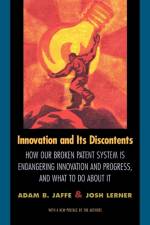
The United States patent system has become sand rather than lubricant in the wheels of American progress. Such is the premise behind this provocative and timely book by two of the nation's leading experts on patents and economic innovation. Innovation and Its Discontents tells the story of how recent changes in patenting--an institutional process that was created to nurture innovation--have wreaked havoc on innovators, businesses, and economic productivity. Jaffe and Lerner, who have spent the past two decades studying the patent system, show how legal changes initiated in the 1980s converted the system from a stimulator of innovation to a creator of litigation and uncertainty that threatens the innovation process itself. In one telling vignette, Jaffe and Lerner cite a patent litigation campaign brought by a a semi-conductor chip designer that claims control of an entire category of computer memory chips. The firm's claims are based on a modest 15-year old invention, whose scope and influenced were broadened by secretly manipulating an industry-wide cooperative standard-setting body. Such cases are largely the result of two changes in the patent climate, Jaffe and Lerner contend. First, new laws have made it easier for businesses and inventors to secure patents on products of all kinds, and second, the laws have tilted the table to favor patent holders, no matter how tenuous their claims. After analyzing the economic incentives created by the current policies, Jaffe and Lerner suggest a three-pronged solution for restoring the patent system: create incentives to motivate parties who have information about the novelty of a patent; provide multiple levels of patent review; and replace juries with judges and special masters to preside over certain aspects of infringement cases. Well-argued and engagingly written, Innovation and Its Discontents offers a fresh approach for enhancing both the nation's creativity and its economic growth.
The doctrine of "e;Islamic economics"e; entered debates over the social role of Islam in the mid-twentieth century. Since then it has pursued the goal of restructuring economies according to perceived Islamic teachings. Beyond its most visible practical achievement--the establishment of Islamic banks meant to avoid interest--it has promoted Islamic norms of economic behavior and founded redistribution systems modeled after early Islamic fiscal practices. In this bold and timely critique, Timur Kuran argues that the doctrine of Islamic economics is simplistic, incoherent, and largely irrelevant to present economic challenges. Observing that few Muslims take it seriously, he also finds that its practical applications have had no discernible effects on efficiency, growth, or poverty reduction. Why, then, has Islamic economics enjoyed any appeal at all? Kuran's answer is that the real purpose of Islamic economics has not been economic improvement but cultivation of a distinct Islamic identity to resist cultural globalization. The Islamic subeconomies that have sprung up across the Islamic world are commonly viewed as manifestations of Islamic economics. In reality, Kuran demonstrates, they emerged to meet the economic aspirations of socially marginalized groups. The Islamic enterprises that form these subeconomies provide advancement opportunities to the disadvantaged. By enhancing interpersonal trust, they also facilitate intragroup transactions. These findings raise the question of whether there exist links between Islam and economic performance. Exploring these links in relation to the long-unsettled question of why the Islamic world became underdeveloped, Kuran identifies several pertinent social mechanisms, some beneficial to economic development, others harmful.
Biology and politics have converged today across much of the industrialized world. Debates about genetically modified organisms, cloning, stem cells, animal patenting, and new reproductive technologies crowd media headlines and policy agendas. Less noticed, but no less important, are the rifts that have appeared among leading Western nations about the right way to govern innovation in genetics and biotechnology. These significant differences in law and policy, and in ethical analysis, may in a globalizing world act as obstacles to free trade, scientific inquiry, and shared understandings of human dignity. In this magisterial look at some twenty-five years of scientific and social development, Sheila Jasanoff compares the politics and policy of the life sciences in Britain, Germany, the United States, and in the European Union as a whole. She shows how public and private actors in each setting evaluated new manifestations of biotechnology and tried to reassure themselves about their safety. Three main themes emerge. First, core concepts of democratic theory, such as citizenship, deliberation, and accountability, cannot be understood satisfactorily without taking on board the politics of science and technology. Second, in all three countries, policies for the life sciences have been incorporated into "e;nation-building"e; projects that seek to reimagine what the nation stands for. Third, political culture influences democratic politics, and it works through the institutionalized ways in which citizens understand and evaluate public knowledge. These three aspects of contemporary politics, Jasanoff argues, help account not only for policy divergences but also for the perceived legitimacy of state actions.
Many Americans wish to believe that the United States, founded in religious tolerance, has gradually and naturally established a secular public sphere that is equally tolerant of all religions--or none. Culture and Redemption suggests otherwise. Tracy Fessenden contends that the uneven separation of church and state in America, far from safeguarding an arena for democratic flourishing, has functioned instead to promote particular forms of religious possibility while containing, suppressing, or excluding others. At a moment when questions about the appropriate role of religion in public life have become trenchant as never before, Culture and Redemption radically challenges conventional depictions--celebratory or damning--of America's "e;secular"e; public sphere. Examining American legal cases, children's books, sermons, and polemics together with popular and classic works of literature from the seventeenth to the twentieth centuries, Culture and Redemption shows how the vaunted secularization of American culture proceeds not as an inevitable by-product of modernity, but instead through concerted attempts to render dominant forms of Protestant identity continuous with democratic, civil identity. Fessenden shows this process to be thoroughly implicated, moreover, in practices of often-violent exclusion that go to the making of national culture: Indian removals, forced acculturations of religious and other minorities, internal and external colonizations, and exacting constructions of sex and gender. Her new readings of Emerson, Whitman, Melville, Stowe, Twain, Gilman, Fitzgerald, and others who address themselves to these dynamics in intricate and often unexpected ways advance a major reinterpretation of American writing.
Must we put passions aside when we deliberate about justice? Can we do so? The dominant views of deliberation rightly emphasize the importance of impartiality as a cornerstone of fair decision making, but they wrongly assume that impartiality means being disengaged and passionless. In Civil Passions, Sharon Krause argues that moral and political deliberation must incorporate passions, even as she insists on the value of impartiality. Drawing on resources ranging from Hume's theory of moral sentiment to recent findings in neuroscience, Civil Passions breaks new ground by providing a systematic account of how passions can generate an impartial standpoint that yields binding and compelling conclusions in politics. Krause shows that the path to genuinely impartial justice in the public sphere--and ultimately to social change and political reform--runs through moral sentiment properly construed. This new account of affective but impartial judgment calls for a politics of liberal rights and democratic contestation, and it requires us to reconceive the meaning of public reason, the nature of sound deliberation, and the authority of law. By illuminating how impartiality feels, Civil Passions offers not only a truer account of how we deliberate about justice, but one that promises to engage citizens more effectively in acting for justice.
One of the core assumptions of recent American foreign policy is that China's post-1978 policy of "e;reform and openness"e; will lead to political liberalization. This book challenges that assumption and the general relationship between economic liberalization and democratization. Moreover, it analyzes the effect of foreign direct investment (FDI) liberalization on Chinese labor politics. Market reforms and increased integration with the global economy have brought about unprecedented economic growth and social change in China during the last quarter of a century. Contagious Capitalism contends that FDI liberalization played several roles in the process of China's reforms. First, it placed competitive pressure on the state sector to produce more efficiently, thus necessitating new labor practices. Second, it allowed difficult and politically sensitive labor reforms to be extended to other parts of the economy. Third, it caused a reformulation of one of the key ideological debates of reforming socialism: the relative importance of public industry. China's growing integration with the global economy through FDI led to a new focus of debate--away from the public vs. private industry dichotomy and toward a nationalist concern for the fate of Chinese industry. In comparing China with other Eastern European and Asian economies, two important considerations come into play, the book argues: China's pattern of ownership diversification and China's mode of integration into the global economy. This book relates these two factors to the success of economic change without political liberalization and addresses the way FDI liberalization has affected relations between workers and the ruling Communist Party. Its conclusion: reform and openness in this context resulted in a strengthened Chinese state, a weakened civil society (especially labor), and a delay in political liberalization.
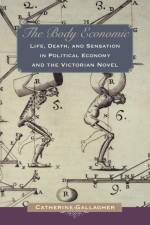
The Body Economic revises the intellectual history of nineteenth-century Britain by demonstrating that political economists and the writers who often presented themselves as their literary antagonists actually held most of their basic social assumptions in common. Catherine Gallagher demonstrates that political economists and their Romantic and early-Victorian critics jointly relocated the idea of value from the realm of transcendent spirituality to that of organic "e;life,"e; making human sensations--especially pleasure and pain--the sources and signs of that value. Classical political economy, this book shows, was not a mechanical ideology but a form of nineteenth-century organicism, which put the body and its feelings at the center of its theories, and neoclassical economics built itself even more self-consciously on physiological premises. The Body Economic explains how these shared views of life, death, and sensation helped shape and were modified by the two most important Victorian novelists: Charles Dickens and George Eliot. It reveals how political economists interacted crucially with the life sciences of the nineteenth century--especially with psychophysiology and anthropology--producing the intellectual world that nurtured not only George Eliot's realism but also turn-of-the-century literary modernism.
Realism, the dominant theory of international relations, particularly regarding security, seems compelling in part because of its claim to embody so much of Western political thought from the ancient Greeks to the present. Its main challenger, liberalism, looks to Kant and nineteenth-century economists. Despite their many insights, neither realism nor liberalism gives us adequate tools to grapple with security globalization, the liberal ascent, and the American role in their development. In reality, both realism and liberalism and their main insights were largely invented by republicans writing about republics. The main ideas of realism and liberalism are but fragments of republican security theory, whose primary claim is that security entails the simultaneous avoidance of the extremes of anarchy and hierarchy, and that the size of the space within which this is necessary has expanded due to technological change. In Daniel Deudney's reading, there is one main security tradition and its fragmentary descendants. This theory began in classical antiquity, and its pivotal early modern and Enlightenment culmination was the founding of the United States. Moving into the industrial and nuclear eras, this line of thinking becomes the basis for the claim that mutually restraining world government is now necessary for security and that political liberty cannot survive without new types of global unions. Unique in scope, depth, and timeliness, Bounding Power offers an international political theory for our fractious and perilous global village.
Utopian Generations develops a powerful interpretive matrix for understanding world literature--one that renders modernism and postcolonial African literature comprehensible in a single framework, within which neither will ever look the same. African literature has commonly been seen as representationally naive vis-a-vis modernism, and canonical modernism as reactionary vis-a-vis postcolonial literature. What brings these two bodies of work together, argues Nicholas Brown, is their disposition toward Utopia or "e;the horizon of a radical reconfiguration of social relations.? Grounded in a profound rethinking of the Hegelian Marxist tradition, this fluently written book takes as its point of departure the partial displacement during the twentieth century of capitalism's "e;internal limit"e; (classically conceived as the conflict between labor and capital) onto a geographic division of labor and wealth. Dispensing with whole genres of commonplace contemporary pieties, Brown examines works from both sides of this division to create a dialectical mapping of different modes of Utopian aesthetic practice. The theory of world literature developed in the introduction grounds the subtle and powerful readings at the heart of the book--focusing on works by James Joyce, Cheikh Hamidou Kane, Ford Madox Ford, Chinua Achebe, Wyndham Lewis, Ngugi wa Thiong'o, and Pepetela. A final chapter, arguing that this literary dialectic has reached a point of exhaustion, suggests that a radically reconceived notion of musical practice may be required to discern the Utopian desire immanent in the products of contemporary culture.
Guru English is a bold reconceptualization of the scope and meaning of cosmopolitanism, examining the language of South Asian religiosity as it has flourished both inside and outside of its original context for the past two hundred years. The book surveys a specific set of religious vocabularies from South Asia that, Aravamudan argues, launches a different kind of cosmopolitanism into global use. Using "e;Guru English"e; as a tagline for the globalizing idiom that has grown up around these religions, Aravamudan traces the diffusion and transformation of South Asian religious discourses as they shuttled between East and West through English-language use. The book demonstrates that cosmopolitanism is not just a secular Western "e;discourse that results from a disenchantment with religion, but something that can also be refashioned from South Asian religion when these materials are put into dialogue with contemporary social move-ments and literary texts. Aravamudan looks at "e;religious forms of neoclassicism, nationalism, Romanticism, postmodernism, and nuclear millenarianism, bringing together figures such as Swami Vivekananda, Sri Aurobindo, Mahatma Gandhi, and Deepak Chopra with Rudyard Kipling, James Joyce, Robert Oppenheimer, and Salman Rushdie. Guru English analyzes writers and gurus, literary texts and religious movements, and the political uses of religion alongside the literary expressions of religious teachers, showing the cosmopolitan interconnections between the Indian subcontinent, the British Empire, and the American New Age.
Edgework brings together seven of Wendy Brown's most provocative recent essays in political and cultural theory. They range from explorations of politics post-9/11 to critical reflections on the academic norms governing feminist studies and political theory. Edgework is also concerned with the intellectual and political value of critique itself. It renders contemporary the ancient jurisprudential meaning of critique as krisis, in which a tear in the fabric of justice becomes the occasion of a public sifting or thoughtfulness, the development of criteria for judgment, and the inauguration of political renewal or restoration. Each essay probes a contemporary problem--the charge of being unpatriotic for dissenting from U.S. foreign policy, the erosion of liberal democracy by neoliberal political rationality, feminism's loss of a revolutionary horizon--and seeks to grasp the intellectual impasse the problem signals as well as the political incitement it may harbor.
Abonner på vårt nyhetsbrev og få rabatter og inspirasjon til din neste leseopplevelse.
Ved å abonnere godtar du vår personvernerklæring.