




















Gjør som tusenvis av andre bokelskere
Abonner på vårt nyhetsbrev og få rabatter og inspirasjon til din neste leseopplevelse.
Ved å abonnere godtar du vår personvernerklæring.Du kan når som helst melde deg av våre nyhetsbrev.

Liberal Languages reinterprets twentieth-century liberalism as a complex set of discourses relating not only to liberty but also to welfare and community. Written by one of the world's leading experts on liberalism and ideological theory, it uses new methods of analyzing ideologies, as well as historical case studies, to present liberalism as a flexible and rich tradition whose influence has extended beyond its conventional boundaries. Michael Freeden argues that liberalism's collectivist and holistic aspirations, and its sense of change, its self-defined mission as an agent of developing civilization--and not only its deep appreciation of liberty--are central to understanding its arguments. He examines the profound political impact liberalism has made on welfare theory, on conceptions of poverty, on standards of legitimacy, and on democratic practices in the twentieth century. Through a combination of essays, historical case studies, and more theoretical chapters, Freeden investigates the transformations of liberal thought as well as the ideological boundaries they have traversed. He employs the complex theory of ideological analysis that he developed in previous works to explore in considerable detail the experimental interfaces created between liberalism and neighboring ideologies on the left and the right. The nature of liberal thought allows us to gain a better perspective on the ways ideologies present themselves, Freeden argues, not necessarily as dogmatic and alienated structures, but as that which emanates from the continuous creativity that open societies display.
Pradeep Chhibber and Ken Kollman rely on historical data spanning back to the eighteenth century from Canada, Great Britain, India, and the United States to revise our understanding of why a country's party system consists of national or regional parties. They demonstrate that the party systems in these four countries have been shaped by the authority granted to different levels of government. Departing from the conventional focus on social divisions or electoral rules in determining whether a party system will consist of national or regional parties, they argue instead that national party systems emerge when economic and political power resides with the national government. Regional parties thrive when authority in a nation-state rests with provincial or state governments. The success of political parties therefore depends on which level of government voters credit for policy outcomes. National political parties win votes during periods when political and economic authority rests with the national government, and lose votes to regional and provincial parties when political or economic authority gravitates to lower levels of government. This is the first book to establish a link between federalism and the formation of national or regional party systems in a comparative context. It places contemporary party politics in the four examined countries in historical and comparative perspectives, and provides a compelling account of long-term changes in these countries. For example, the authors discover a surprising level of voting for minor parties in the United States before the 1930s. This calls into question the widespread notion that the United States has always had a two-party system. In fact, only recently has the two-party system become predominant.
Why did President John F. Kennedy choose a strategy of confrontation during the Cuban missile crisis even though his secretary of defense stated that the presence of missiles in Cuba made no difference? Why did large numbers of Iraqi troops surrender during the Gulf War even though they had been ordered to fight and were capable of doing so? Why did Hitler declare war on the United States knowing full well the power of that country? War and Human Nature argues that new findings about the way humans are shaped by their inherited biology may help provide answers to such questions. This seminal work by former Defense Department official Stephen Peter Rosen contends that human evolutionary history has affected the way we process the information we use to make decisions. The result is that human choices and calculations may be very different from those predicted by standard models of rational behavior. This notion is particularly true in the area of war and peace, Rosen contends. Human emotional arousal affects how people learn the lessons of history. For example, stress and distress influence people's views of the future, and testosterone levels play a role in human social conflict. This thought-provoking and timely work explores the mind that has emerged from the biological sciences over the last generation. In doing so, it helps shed new light on many persistent puzzles in the study of war.
For fascination, influence, inspiration, and controversy, Dietrich Bonhoeffer's Letters and Papers from Prison is unmatched by any other book of Christian reflection written in the twentieth century. A Lutheran pastor and theologian, Bonhoeffer spent two years in Nazi prisons before being executed at age thirty-nine, just a month before the German surrender, for his role in the plot to kill Hitler. The posthumous Letters and Papers from Prison has had a tremendous impact on both Christian and secular thought since it was first published in 1951, and has helped establish Bonhoeffer's reputation as one of the most important Protestant thinkers of the twentieth century. In this, the first history of the book's remarkable global career, National Book Award-winning author Martin Marty tells how and why Letters and Papers from Prison has been read and used in such dramatically different ways, from the cold war to today. In his late letters, Bonhoeffer raised tantalizing questions about the role of Christianity and the church in an increasingly secular world. Marty tells the story of how, in the 1960s and the following decades, these provocative ideas stirred a wide range of thinkers and activists, including civil rights and antiapartheid campaigners, "e;death-of-God"e; theologians, and East German Marxists. In the process of tracing the eventful and contested history of Bonhoeffer's book, Marty provides a compelling new perspective on religious and secular life in the postwar era.
"e;I fear each passing night that I will not receive my maintenance dose of suspense, and then I will cease to exist."e;--Whatever Gets You through the Night Whatever Gets You through the Night is an irreverent and deeply funny retelling of the Arabian Nights and a wildly inspired exploration of the timeless art of storytelling. Award-winning writer Andrei Codrescu reimagines how Sheherezade saved Baghdad's virgins and her own life through a heroic feat of storytelling--one that kept the Persian king Sharyar hanging in agonizing narrative and erotic suspense for 1001 nights. For Sheherezade, the end of either suspense or curiosity means death, but Codrescu keeps both alive in this entertaining tale of how she learned to hold a king in thrall, setting with her endless invention an unsurpassable example for all storytellers across the ages. Liberated and mischievous, Codrescu's Sheherezade is as charming as she is shrewd--and so is the story Codrescu tells.
How do you draw a straight line? How do you determine if a circle is really round? These may sound like simple or even trivial mathematical problems, but to an engineer the answers can mean the difference between success and failure. How Round Is Your Circle? invites readers to explore many of the same fundamental questions that working engineers deal with every day--it's challenging, hands-on, and fun. John Bryant and Chris Sangwin illustrate how physical models are created from abstract mathematical ones. Using elementary geometry and trigonometry, they guide readers through paper-and-pencil reconstructions of mathematical problems and show them how to construct actual physical models themselves--directions included. It's an effective and entertaining way to explain how applied mathematics and engineering work together to solve problems, everything from keeping a piston aligned in its cylinder to ensuring that automotive driveshafts rotate smoothly. Intriguingly, checking the roundness of a manufactured object is trickier than one might think. When does the width of a saw blade affect an engineer's calculations--or, for that matter, the width of a physical line? When does a measurement need to be exact and when will an approximation suffice? Bryant and Sangwin tackle questions like these and enliven their discussions with many fascinating highlights from engineering history. Generously illustrated, How Round Is Your Circle? reveals some of the hidden complexities in everyday things.
Workable Sisterhood is an empirical look at sixteen HIV-positive women who have a history of drug use, conflict with the law, or a history of working in the sex trade. What makes their experience with the HIV/AIDS virus and their political participation different from their counterparts of people with HIV? Michele Tracy Berger argues that it is the influence of a phenomenon she labels "e;intersectional stigma,"e; a complex process by which women of color, already experiencing race, class, and gender oppression, are also labeled, judged, and given inferior treatment because of their status as drug users, sex workers, and HIV-positive women. The work explores the barriers of stigma in relation to political participation, and demonstrates how stigma can be effectively challenged and redirected. The majority of the women in Berger's book are women of color, in particular African Americans and Latinas. The study elaborates the process by which these women have become conscious of their social position as HIV-positive and politically active as activists, advocates, or helpers. She builds a picture of community-based political participation that challenges popular, medical, and scholarly representations of "e;crack addicted prostitutes"e; and HIV-positive women as social problems or victims, rather than as agents of social change. Berger argues that the women's development of a political identity is directly related to a process called "e;life reconstruction."e; This process includes substance- abuse treatment, the recognition of gender as a salient factor in their lives, and the use of nontraditional political resources.
When confronted with an ethical dilemma, most of us like to think we would stand up for our principles. But we are not as ethical as we think we are. In Blind Spots, leading business ethicists Max Bazerman and Ann Tenbrunsel examine the ways we overestimate our ability to do what is right and how we act unethically without meaning to. From the collapse of Enron and corruption in the tobacco industry, to sales of the defective Ford Pinto, the downfall of Bernard Madoff, and the Challenger space shuttle disaster, the authors investigate the nature of ethical failures in the business world and beyond, and illustrate how we can become more ethical, bridging the gap between who we are and who we want to be. Explaining why traditional approaches to ethics don't work, the book considers how blind spots like ethical fading--the removal of ethics from the decision--making process--have led to tragedies and scandals such as the Challenger space shuttle disaster, steroid use in Major League Baseball, the crash in the financial markets, and the energy crisis. The authors demonstrate how ethical standards shift, how we neglect to notice and act on the unethical behavior of others, and how compliance initiatives can actually promote unethical behavior. They argue that scandals will continue to emerge unless such approaches take into account the psychology of individuals faced with ethical dilemmas. Distinguishing our "e;should self"e; (the person who knows what is correct) from our "e;want self"e; (the person who ends up making decisions), the authors point out ethical sinkholes that create questionable actions. Suggesting innovative individual and group tactics for improving human judgment, Blind Spots shows us how to secure a place for ethics in our workplaces, institutions, and daily lives.
The port city of Liverpool, England, is home to one of the oldest Black communities in Britain. Its members proudly date their history back at least as far as the nineteenth century, with the global wanderings and eventual settlement of colonial African seamen. Jacqueline Nassy Brown analyzes how this worldly origin story supports an avowedly local Black politic and identity--a theme that becomes a window onto British politics of race, place, and nation, and Liverpool's own contentious origin story as a gloriously cosmopolitan port of world-historical import that was nonetheless central to British slave trading and imperialism. This ethnography also examines the rise and consequent dilemmas of Black identity. It captures the contradictions of diaspora in postcolonial Liverpool, where African and Afro-Caribbean heritages and transnational linkages with Black America both contribute to and compete with the local as a basis for authentic racial identity. Crisscrossing historical periods, rhetorical modes, and academic genres, the book focuses singularly on "e;place,"e; enabling its most radical move: its analysis of Black racial politics as enactments of English cultural premises. The insistent focus on English culture implies a further twist. Just as Blacks are racialized through appeals to their assumed Afro-Caribbean and African cultures, so too has Liverpool--an Irish, working-class city whose expansive port faces the world beyond Britain--long been beyond the pale of dominant notions of authentic Englishness. Dropping Anchor, Setting Sail studies "e;race"e; through clashing constructions of "e;Liverpool."e;
What explains the perception of Asians both as economic exemplars and as threats? America's Asia explores a discursive tradition that affiliates the East with modern efficiency, in contrast to more familiar primitivist forms of Orientalism. Colleen Lye traces the American stereotype of Asians as a "e;model minority"e; or a "e;yellow peril"e;--two aspects of what she calls "e;Asiatic racial form"e;-- to emergent responses to globalization beginning in California in the late nineteenth century, when industrialization proceeded in tandem with the nation's neocolonial expansion beyond its continental frontier. From Progressive efforts to regulate corporate monopoly to New Deal contentions with the crisis of the Great Depression, a particular racial mode of social redress explains why turn-of-the-century radicals and reformers united around Asian exclusion and why Japanese American internment during World War II was a liberal initiative. In Lye's reconstructed archive of Asian American racialization, literary naturalism and its conventions of representing capitalist abstraction provide key historiographical evidence. Arguing for the profound influence of literature on policymaking, America's Asia examines the relationship between Jack London and leading Progressive George Kennan on U.S.-Japan relations, Frank Norris and AFL leader Samuel Gompers on cheap immigrant labor, Pearl S. Buck and journalist Edgar Snow on the Popular Front in China, and John Steinbeck and left intellectual Carey McWilliams on Japanese American internment. Lye's materialist approach to the construction of race succeeds in locating racialization as part of a wider ideological pattern and in distinguishing between its different, and sometimes opposing, historical effects.
In the summer of 1991, population geneticists and evolutionary biologists proposed to archive human genetic diversity by collecting the genomes of "e;isolated indigenous populations."e; Their initiative, which became known as the Human Genome Diversity Project, generated early enthusiasm from those who believed it would enable huge advances in our understanding of human evolution. However, vocal criticism soon emerged. Physical anthropologists accused Project organizers of reimporting racist categories into science. Indigenous-rights leaders saw a "e;Vampire Project"e; that sought the blood of indigenous people but not their well-being. More than a decade later, the effort is barely off the ground. How did an initiative whose leaders included some of biology's most respected, socially conscious scientists become so stigmatized? How did these model citizen-scientists come to be viewed as potential racists, even vampires? This book argues that the long abeyance of the Diversity Project points to larger, fundamental questions about how to understand knowledge, democracy, and racism in an age when expert claims about genomes increasingly shape the possibilities for being human. Jenny Reardon demonstrates that far from being innocent tools for fighting racism, scientific ideas and practices embed consequential social and political decisions about who can define race, racism, and democracy, and for what ends. She calls for the adoption of novel conceptual tools that do not oppose science and power, truth and racist ideologies, but rather draw into focus their mutual constitution.
Why did the language of contract become the dominant metaphor for the relationship between subject and sovereign in mid-seventeenth-century England? In Wayward Contracts, Victoria Kahn takes issue with the usual explanation for the emergence of contract theory in terms of the origins of liberalism, with its notions of autonomy, liberty, and equality before the law. Drawing on literature as well as political theory, state trials as well as religious debates, Kahn argues that the sudden prominence of contract theory was part of the linguistic turn of early modern culture, when government was imagined in terms of the poetic power to bring new artifacts into existence. But this new power also brought in its wake a tremendous anxiety about the contingency of obligation and the instability of the passions that induce individuals to consent to a sovereign power. In this wide-ranging analysis of the cultural significance of contract theory, the lover and the slave, the tyrant and the regicide, the fool and the liar emerge as some of the central, if wayward, protagonists of the new theory of political obligation. The result is must reading for students and scholars of early modern literature and early modern political theory, as well as historians of political thought and of liberalism.
Knowledge, Nature, and the Good brings together some of John Cooper's most important works on ancient philosophy. In thirteen chapters that represent an ideal companion to the author's influential Reason and Emotion, Cooper addresses a wide range of topics and periods--from Hippocratic medical theory and Plato's epistemology and moral philosophy, to Aristotle's physics and metaphysics, academic scepticism, and the cosmology, moral psychology, and ethical theory of the ancient Stoics. Almost half of the pieces appear here for the first time or are presented in newly expanded, extensively revised versions. Many stand at the cutting edge of research into ancient ethics and moral psychology. Other chapters, dating from as far back as 1970, are classics of philosophical scholarship on antiquity that continue to play a prominent role in current teaching and scholarship in the field. All of the chapters are distinctive for the way that, whatever the particular topic being pursued, they attempt to understand the ancient philosophers' views in philosophical terms drawn from the ancient philosophical tradition itself (rather than from contemporary philosophy). Through engaging creatively and philosophically with the ancient texts, these essays aim to make ancient philosophical perspectives freshly available to contemporary philosophers and philosophy students, in all their fascinating inventiveness, originality, and deep philosophical merit. This book will be treasured by philosophers, classicists, students of philosophy and classics, those in other disciplines with an interest in ancient philosophy, and anyone who seeks to understand philosophy in philosophical terms.
One of the most important philosophers of recent times, Morton White has spent a career building bridges among the increasingly fragmented worlds of the humanities, social sciences, and natural sciences. From a Philosophical Point of View is a selection of White's best essays, written over a period of more than sixty years. Together these selections represent the belief that philosophers should reflect not only on mathematics and science but also on other aspects of culture, such as religion, art, history, law, education, and morality. White's essays cover the full range of his interests: studies in ethics, the theory of knowledge, and metaphysics as well as in the philosophy of culture, the history of pragmatism, and allied currents in social, political, and legal thought. The book also includes pieces on philosophers who have influenced White at different stages of his career, among them William James, John Dewey, G. E. Moore, and W. V. Quine. Throughout, White argues from a holistic standpoint against a sharp epistemological distinction between logical and physical beliefs and also against an equally sharp one between descriptive and normative beliefs. White maintains that once the philosopher abandons the dogma that the logical analysis of mathematics and physics is the essence of his subject, he frees himself to resume his traditional role as a student of the central institutions of civilization. Philosophers should function not merely as spectators of all time and existence, he argues, but as empirically minded students of culture who try to use some of their ideas for the benefit of society.
This is the first comprehensive reference published on heat equations associated with non self-adjoint uniformly elliptic operators. The author provides introductory materials for those unfamiliar with the underlying mathematics and background needed to understand the properties of heat equations. He then treats Lp properties of solutions to a wide class of heat equations that have been developed over the last fifteen years. These primarily concern the interplay of heat equations in functional analysis, spectral theory and mathematical physics. This book addresses new developments and applications of Gaussian upper bounds to spectral theory. In particular, it shows how such bounds can be used in order to prove Lp estimates for heat, Schrodinger, and wave type equations. A significant part of the results have been proved during the last decade. The book will appeal to researchers in applied mathematics and functional analysis, and to graduate students who require an introductory text to sesquilinear form techniques, semigroups generated by second order elliptic operators in divergence form, heat kernel bounds, and their applications. It will also be of value to mathematical physicists. The author supplies readers with several references for the few standard results that are stated without proofs.
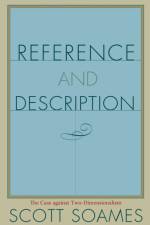
In this book, Scott Soames defends the revolution in philosophy led by Saul Kripke, Hilary Putnam, and David Kaplan against attack from those wishing to revive descriptivism in the philosophy of language, internalism in the philosophy of mind, and conceptualism in the foundations of modality. Soames explains how, in the last twenty-five years, this attack on the anti-descriptivist revolution has coalesced around a technical development called two-dimensional modal logic that seeks to reinterpret the Kripkean categories of the necessary aposteriori and the contingent apriori in ways that drain them of their far-reaching philosophical significance. Arguing against this reinterpretation, Soames shows how the descriptivist revival has been aided by puzzles and problems ushered in by the anti-descriptivist revolution, as well as by certain errors and missteps in the anti-descriptivist classics themselves. Reference and Description sorts through all this, assesses and consolidates the genuine legacy of Kripke and Kaplan, and launches a thorough and devastating critique of the two-dimensionalist revival of descriptivism. Through it all, Soames attempts to provide the outlines of a lasting, nondescriptivist perspective on meaning, and a nonconceptualist understanding of modality.
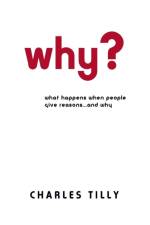
Why? is a book about the explanations we give and how we give them--a fascinating look at the way the reasons we offer every day are dictated by, and help constitute, social relationships. Written in an easy-to-read style by distinguished social historian Charles Tilly, the book explores the manner in which people claim, establish, negotiate, repair, rework, or terminate relations with others through the reasons they give. Tilly examines a number of different types of reason giving. For example, he shows how an air traffic controller would explain the near miss of two aircraft in several different ways, depending upon the intended audience: for an acquaintance at a cocktail party, he might shrug it off by saying "e;This happens all the time,"e; or offer a chatty, colloquial rendition of what transpired; for a colleague at work, he would venture a longer, more technical explanation, and for a formal report for his division head he would provide an exhaustive, detailed account. Tilly demonstrates that reasons fall into four different categories: Convention: "e;I'm sorry I spilled my coffee; I'm such a klutz."e; Narratives: "e;My friend betrayed me because she was jealous of my sister."e; Technical cause-effect accounts: "e;A short circuit in the ignition system caused the engine rotors to fail."e; Codes or workplace jargon: "e;We can't turn over the records. We're bound by statute 369."e; Tilly illustrates his topic by showing how a variety of people gave reasons for the 9/11 attacks. He also demonstrates how those who work with one sort of reason frequently convert it into another sort. For example, a doctor might understand an illness using the technical language of biochemistry, but explain it to his patient, who knows nothing of biochemistry, by using conventions and stories. Replete with sparkling anecdotes about everyday social experiences (including the author's own), Why? makes the case for stories as one of the great human inventions.
Mathematicians solve equations, or try to. But sometimes the solutions are not as interesting as the beautiful symmetric patterns that lead to them. Written in a friendly style for a general audience, Fearless Symmetry is the first popular math book to discuss these elegant and mysterious patterns and the ingenious techniques mathematicians use to uncover them. Hidden symmetries were first discovered nearly two hundred years ago by French mathematician evariste Galois. They have been used extensively in the oldest and largest branch of mathematics--number theory--for such diverse applications as acoustics, radar, and codes and ciphers. They have also been employed in the study of Fibonacci numbers and to attack well-known problems such as Fermat's Last Theorem, Pythagorean Triples, and the ever-elusive Riemann Hypothesis. Mathematicians are still devising techniques for teasing out these mysterious patterns, and their uses are limited only by the imagination. The first popular book to address representation theory and reciprocity laws, Fearless Symmetry focuses on how mathematicians solve equations and prove theorems. It discusses rules of math and why they are just as important as those in any games one might play. The book starts with basic properties of integers and permutations and reaches current research in number theory. Along the way, it takes delightful historical and philosophical digressions. Required reading for all math buffs, the book will appeal to anyone curious about popular mathematics and its myriad contributions to everyday life.
From humans to hermit crabs to deep water plankton, all living things compete for locally limiting resources. This universal truth unites three bodies of thought--economics, evolution, and history--that have developed largely in mutual isolation. Here, Geerat Vermeij undertakes a groundbreaking and provocative exploration of the facts and theories of biology, economics, and geology to show how processes common to all economic systems--competition, cooperation, adaptation, and feedback--govern evolution as surely as they do the human economy, and how historical patterns in both human and nonhuman evolution follow from this principle. Using a wealth of examples of evolutionary innovations, Vermeij argues that evolution and economics are one. Powerful consumers and producers exercise disproportionate controls on the characteristics, activities, and distribution of all life forms. Competition-driven demand by consumers, when coupled with supply-side conditions permitting economic growth, leads to adaptation and escalation among organisms. Although disruptions in production halt or reverse these processes temporarily, they amplify escalation in the long run to produce trends in all economic systems toward greater power, higher production rates, and a wider reach for economic systems and their strongest members. Despite our unprecedented power to shape our surroundings, we humans are subject to all the economic principles and historical trends that emerged at life's origin more than 3 billion years ago. Engagingly written, brilliantly argued, and sweeping in scope, Nature: An Economic History shows that the human institutions most likely to preserve opportunity and adaptability are, after all, built like successful living things.
Social network analysis is used widely in the social sciences to study interactions among people, groups, and organizations, yet until now there has been no book that shows behavioral biologists how to apply it to their work on animal populations. Exploring Animal Social Networks provides a practical guide for researchers, undergraduates, and graduate students in ecology, evolutionary biology, animal behavior, and zoology. Existing methods for studying animal social structure focus either on one animal and its interactions or on the average properties of a whole population. This book enables researchers to probe animal social structure at all levels, from the individual to the population. No prior knowledge of network theory is assumed. The authors give a step-by-step introduction to the different procedures and offer ideas for designing studies, collecting data, and interpreting results. They examine some of today's most sophisticated statistical tools for social network analysis and show how they can be used to study social interactions in animals, including cetaceans, ungulates, primates, insects, and fish. Drawing from an array of techniques, the authors explore how network structures influence individual behavior and how this in turn influences, and is influenced by, behavior at the population level. Throughout, the authors use two software packages--UCINET and NETDRAW--to illustrate how these powerful analytical tools can be applied to different animal social organizations.
In the last fifteen years, the number, size, and scope of peacekeeping missions deployed in the aftermath of civil wars have increased exponentially. From Croatia and Cambodia, to Nicaragua and Namibia, international personnel have been sent to maintain peace around the world. But does peacekeeping work? And if so, how? In Does Peacekeeping Work? Virginia Page Fortna answers these questions through the systematic analysis of civil wars that have taken place since the end of the Cold War. She compares peacekeeping and nonpeacekeeping cases, and she investigates where peacekeepers go, showing that their missions are crucial to the most severe internal conflicts in countries and regions where peace is otherwise likely to falter. Fortna demonstrates that peacekeeping is an extremely effective policy tool, dramatically reducing the risk that war will resume. Moreover, she explains that relatively small and militarily weak consent-based peacekeeping operations are often just as effective as larger, more robust enforcement missions. Fortna examines the causal mechanisms of peacekeeping, paying particular attention to the perspective of the peacekept--the belligerents themselves--on whose decisions the stability of peace depends. Based on interviews with government and rebel leaders in Sierra Leone, Mozambique, and the Chittagong Hill Tracts in Bangladesh, Does Peacekeeping Work? demonstrates specific ways in which peacekeepers alter incentives, alleviate fear and mistrust, prevent accidental escalation to war, and shape political procedures to stabilize peace.
During World War II some 120,000 Japanese Americans were forcibly removed from their homes and detained in concentration camps in several states. These Japanese Americans lost millions of dollars in property and were forced to live in so-called "e;assembly centers"e; surrounded by barbed wire fences and armed sentries. In this insightful and groundbreaking work, Brian Hayashi reevaluates the three-year ordeal of interred Japanese Americans. Using previously undiscovered documents, he examines the forces behind the U.S. government's decision to establish internment camps. His conclusion: the motives of government officials and top military brass likely transcended the standard explanations of racism, wartime hysteria, and leadership failure. Among the other surprising factors that played into the decision, Hayashi writes, were land development in the American West and plans for the American occupation of Japan. What was the long-term impact of America's actions? While many historians have explored that question, Hayashi takes a fresh look at how U.S. concentration camps affected not only their victims and American civil liberties, but also people living in locations as diverse as American Indian reservations and northeast Thailand.
In the last two centuries, agriculture has been an outstanding, if somewhat neglected, success story. Agriculture has fed an ever-growing population with an increasing variety of products at falling prices, even as it has released a growing number of workers to the rest of the economy. This book, a comprehensive history of world agriculture during this period, explains how these feats were accomplished. Feeding the World synthesizes two hundred years of agricultural development throughout the world, providing all essential data and extensive references to the literature. It covers, systematically, all the factors that have affected agricultural performance: environment, accumulation of inputs, technical progress, institutional change, commercialization, agricultural policies, and more. The last chapter discusses the contribution of agriculture to modern economic growth. The book is global in its reach and analysis, and represents a grand synthesis of an enormous topic.
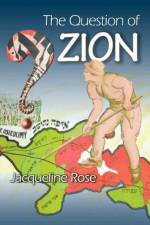
Zionism was inspired as a movement--one driven by the search for a homeland for the stateless and persecuted Jewish people. Yet it trampled the rights of the Arabs in Palestine. Today it has become so controversial that it defies understanding and trumps reasoned public debate. So argues prominent British writer Jacqueline Rose, who uses her political and psychoanalytic skills in this book to take an unprecedented look at Zionism--one of the most powerful ideologies of modern times. Rose enters the inner world of the movement and asks a new set of questions. How did Zionism take shape as an identity? And why does it seem so immutable? Analyzing the messianic fervor of Zionism, she argues that it colors Israel's most profound self-image to this day. Rose also explores the message of dissidents, who, while believing themselves the true Zionists, warned at the outset against the dangers of statehood for the Jewish people. She suggests that these dissidents were prescient in their recognition of the legitimate claims of the Palestinian Arabs. In fact, she writes, their thinking holds the knowledge the Jewish state needs today in order to transform itself. In perhaps the most provocative part of her analysis, Rose proposes that the link between the Holocaust and the founding of the Jewish state, so often used to justify Israel's policies, needs to be rethought in terms of the shame felt by the first leaders of the nation toward their own European history. For anyone concerned with the conflict in Israel-Palestine, this timely book offers a unique understanding of Zionism as an unavoidable psychic and historical force.
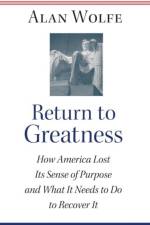
Has America, in its quest for goodness, sacrificed its sense of greatness? In this sharp-witted, historically informed book, veteran political observer Alan Wolfe argues that most Americans show greater concern with saving the country's soul than with making the nation great. Wolfe castigates both conservatives and liberals for opting for small-mindedness over greatness. Liberals, who at their best insisted on policies of national solidarity, have convinced themselves that small is beautiful, prefer multiculturalism to one nation, and are mistrustful of executive political power. Conservatives, who once embraced strong, active central government and an ideal of national citizenship, now support huge tax cuts that undermine America's future ability to undertake any ambitious, long-term project at home or abroad. No great society, in Wolfe's view, has ever been built on the cheap. Wolfe notes that neither the conservatives' call for small-scale faith-based initiatives nor the recent embrace on the left of a grassroots "e;civil society"e; can provide health care to tens of millions of uninsured Americans or ensure national security in an age of terrorism. To find better solutions, Wolfe looks back at specific moments in our national experience, when, in the face of sharp resistance, aspirations for the idea of national greatness shaped American history. He demonstrates how a bold and ambitious political agenda, championed at various times by Alexander Hamilton, John Marshall, Abraham Lincoln, and the two Roosevelts, steered the country toward periods of national strength and unity. Steeped in a colorful, panoramic reading of history, Return to Greatness offers a fresh take on American national identity and purpose. A call to action for a renewed embrace of the ideal of an activist federal government and bold policy agendas, it is sure to become a centerpiece of national debate.
This absorbing book explores the tensions within the Roman Catholic church and between the church and royal authority in France in the crucial period 1290-1321. During this time the crown tried to force churchmen to accept policies many considered inconsistent with ecclesiastical freedom and traditions--such as paying war taxes and expelling the Jews from the kingdom. William Jordan considers these issues through the eyes of one of the most important and courageous actors, the Cistercian monk, professor, abbot, and polemical writer Jacques de Therines. The result is a fresh perspective on what Jordan terms "e;the story of France in a politically terrifying period of its existence, one of unceasing strife and unending fear."e; Jacques de Therines was involved in nearly every controversy of the period: the expulsion of the Jews from France, the relocation of the papacy to Avignon, the affair of the Templars, the suppression of the "e;heresies"e; of Marguerite Porete and of the Spiritual Franciscans, and the defense of the "e;exempt"e; monastic orders' freedom from all but papal control. The stands he took were often remarkable in themselves: hostility to the expulsion of Jews and spirited defense of the Templars, for example. The book also traces the emergence of King Philip the Fair's (1285-1314) almost paranoid style of rule and its impact on church-state relations, which makes the expression of Jacques de Therines's views all the more courageous.
A Place on the Team is the inside story of how Title IX revolutionized American sports. The federal law guaranteeing women's rights in education, Title IX opened gymnasiums and playing fields to millions of young women previously locked out. Journalist Welch Suggs chronicles both the law's successes and failures-the exciting opportunities for women as well as the commercial and recruiting pressures of modern-day athletics. Enlivened with tales from Suggs's reportage, the book clears up the muddle of interpretation and opinion surrounding Title IX. It provides not only a lucid description of how courts and colleges have read (and misread) the law, but also compelling portraits of the people who made women's sports a vibrant feature of American life. What's more, the book provides the first history of the law's evolution since its passage in 1972. Suggs details thirty years of struggles for equal rights on the playing field. Schools dragged their feet, offering token efforts for women and girls, until the courts made it clear that women had to be treated on par with men. Those decisions set the stage for some of the most celebrated moments in sports, such as the Women's World Cup in soccer and the Women's Final Four in NCAA basketball. Title IX is not without its critics. Wrestlers and other male athletes say colleges have cut their teams to comply with the law, and Suggs tells their stories as well. With the chronicles of Pat Summitt, Anson Dorrance, and others who shaped women's sports, A Place on the Team is a must-read not only for sports buffs but also for parents of every young woman who enters the arena of competitive sports.
The Qualities of a Citizen traces the application of U.S. immigration and naturalization law to women from the 1870s to the late 1960s. Like no other book before, it explores how racialized, gendered, and historical anxieties shaped our current understandings of the histories of immigrant women. The book takes us from the first federal immigration restrictions against Asian prostitutes in the 1870s to the immigration "e;reform"e; measures of the late 1960s. Throughout this period, topics such as morality, family, marriage, poverty, and nationality structured historical debates over women's immigration and citizenship. At the border, women immigrants, immigration officials, social service providers, and federal judges argued the grounds on which women would be included within the nation. As interview transcripts and court documents reveal, when, where, and how women were welcomed into the country depended on their racial status, their roles in the family, and their work skills. Gender and race mattered. The book emphasizes the comparative nature of racial ideologies in which the inclusion of one group often came with the exclusion of another. It explores how U.S. officials insisted on the link between race and gender in understanding America's peculiar brand of nationalism. It also serves as a social history of the law, detailing women's experiences and strategies, successes and failures, to belong to the nation.
A dramatic shift in British and French ideas about empire unfolded in the sixty years straddling the turn of the nineteenth century. As Jennifer Pitts shows in A Turn to Empire, Adam Smith, Edmund Burke, and Jeremy Bentham were among many at the start of this period to criticize European empires as unjust as well as politically and economically disastrous for the conquering nations. By the mid-nineteenth century, however, the most prominent British and French liberal thinkers, including John Stuart Mill and Alexis de Tocqueville, vigorously supported the conquest of non-European peoples. Pitts explains that this reflected a rise in civilizational self-confidence, as theories of human progress became more triumphalist, less nuanced, and less tolerant of cultural difference. At the same time, imperial expansion abroad came to be seen as a political project that might assist the emergence of stable liberal democracies within Europe. Pitts shows that liberal thinkers usually celebrated for respecting not only human equality and liberty but also pluralism supported an inegalitarian and decidedly nonhumanitarian international politics. Yet such moments represent not a necessary feature of liberal thought but a striking departure from views shared by precisely those late-eighteenth-century thinkers whom Mill and Tocqueville saw as their forebears. Fluently written, A Turn to Empire offers a novel assessment of modern political thought and international justice, and an illuminating perspective on continuing debates over empire, intervention, and liberal political commitments.
The collapse of Britain's powerful labor movement in the last quarter century has been one of the most significant and astonishing stories in recent political history. How were the governments of Margaret Thatcher and her successors able to tame the unions? In analyzing how an entirely new industrial relations system was constructed after 1979, Howell offers a revisionist history of British trade unionism in the twentieth century. Most scholars regard Britain's industrial relations institutions as the product of a largely laissez faire system of labor relations, punctuated by occasional government interference. Howell, on the other hand, argues that the British state was the prime architect of three distinct systems of industrial relations established in the course of the twentieth century. The book contends that governments used a combination of administrative and judicial action, legislation, and a narrative of crisis to construct new forms of labor relations. Understanding the demise of the unions requires a reinterpretation of how these earlier systems were constructed, and the role of the British government in that process. Meticulously researched, Trade Unions and the State not only sheds new light on one of Thatcher's most significant achievements but also tells us a great deal about the role of the state in industrial relations.
Abonner på vårt nyhetsbrev og få rabatter og inspirasjon til din neste leseopplevelse.
Ved å abonnere godtar du vår personvernerklæring.