





















Gjør som tusenvis av andre bokelskere
Abonner på vårt nyhetsbrev og få rabatter og inspirasjon til din neste leseopplevelse.
Ved å abonnere godtar du vår personvernerklæring.Du kan når som helst melde deg av våre nyhetsbrev.

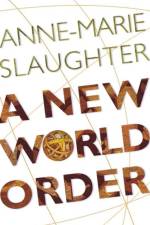
Global governance is here--but not where most people think. This book presents the far-reaching argument that not only should we have a new world order but that we already do. Anne-Marie Slaughter asks us to completely rethink how we view the political world. It's not a collection of nation states that communicate through presidents, prime ministers, foreign ministers, and the United Nations. Nor is it a clique of NGOs. It is governance through a complex global web of "e;government networks."e; Slaughter provides the most compelling and authoritative description to date of a world in which government officials--police investigators, financial regulators, even judges and legislators--exchange information and coordinate activity across national borders to tackle crime, terrorism, and the routine daily grind of international interactions. National and international judges and regulators can also work closely together to enforce international agreements more effectively than ever before. These networks, which can range from a group of constitutional judges exchanging opinions across borders to more established organizations such as the G8 or the International Association of Insurance Supervisors, make things happen--and they frequently make good things happen. But they are underappreciated and, worse, underused to address the challenges facing the world today. The modern political world, then, consists of states whose component parts are fast becoming as important as their central leadership. Slaughter not only describes these networks but also sets forth a blueprint for how they can better the world. Despite questions of democratic accountability, this new world order is not one in which some "e;world government"e; enforces global dictates. The governments we already have at home are our best hope for tackling the problems we face abroad, in a networked world order.
Nobody writes travelogues about Germany. The country spurs many anxious volumes of investigative reporting--books that worry away at the "e;German problem,"e; World War II, the legacy of the Holocaust, the Wall, reunification, and the connections between them. But not travel books, not the free-ranging and impressionistic works of literary nonfiction we associate with V. S. Naipaul and Bruce Chatwin. What is it about Germany and the travel book that puts them seemingly at odds? With one foot in the library and one on the street, Michael Gorra offers both an answer to this question and his own traveler's tale of Germany. Gorra uses Goethe's account of his Italian journey as a model for testing the traveler's response to Germany today, and he subjects the shopping arcades of contemporary German cities to the terms of Benjamin's Arcades project. He reads post-Wende Berlin through the novels of Theodor Fontane, examines the role of figurative language, and enlists W. G. Sebald as a guide to the place of fragments and digressions in travel writing. Replete with the flaneur's chance discoveries--and rich in the delights of the enduring and the ephemeral, of architecture and flood--The Bells in Their Silence offers that rare traveler's tale of Germany while testing the very limits of the travel narrative as a literary form.
This is the first comprehensive English-language collection of verse by the most celebrated Slovenian poet of modern times and one of Europe's most notable postwar poets, Edvard Kocbek (1904-1981). The selections introduce the reader to the full spectrum of Kocbek's long and distinguished career, starting with the pantheist and expressionist nature poems of his early period and continuing through the politically engaged poetry written during and after World War II, to the philosophical and metaphysical meditations of his fecund late period. Readers will be struck by the originality and freshness of Kocbek's sinewy and intense vision, rendered into fluid and idiomatic English by two experienced translators. The Slovenian texts appear on the facing pages. The opening stanza of "e;Moon with a Halo"e; ? The man beside me was killed.He had a mother who bore himand a father who made him toys,he had a brother and a playful uncleand a little girl with blond braids,he had a wooden cart and a wooden horse,a trunkful of colored dreamsand a brook where he used to fish. ?
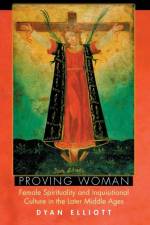
Around the year 1215, female mystics and their sacramental devotion were among orthodoxy's most sophisticated weapons in the fight against heresy. Holy women's claims to be in direct communication with God placed them in positions of unprecedented influence. Yet by the end of the Middle Ages female mystics were frequently mistrusted, derided, and in danger of their lives. The witch hunts were just around the corner. While studies of sanctity and heresy tend to be undertaken separately, Proving Woman brings these two avenues of inquiry together by associating the downward trajectory of holy women with medieval society's progressive reliance on the inquisitional procedure. Inquisition was soon used for resolving most questions of proof. It was employed for distinguishing saints and heretics; it underwrote the new emphasis on confession in both sacramental and judicial spheres; and it heralded the reintroduction of torture as a mechanism for extracting proof through confession. As women were progressively subjected to this screening, they became ensnared in the interlocking web of proofs. No aspect of female spirituality remained untouched. Since inquisition determined the need for tangible proofs, it even may have fostered the kind of excruciating illnesses and extraordinary bodily changes associated with female spirituality. In turn, the physical suffering of holy women became tacit support for all kinds of earthly suffering, even validating temporal mechanisms of justice in their most aggressive forms. The widespread adoption of inquisitional mechanisms for assessing female spirituality eventuated in a growing confusion between the saintly and heretical and the ultimate criminalization of female religious expression.
Adam Smith was a philosopher before he ever wrote about economics, yet until now there has never been a philosophical commentary on the Wealth of Nations. Samuel Fleischacker suggests that Smith's vastly influential treatise on economics can be better understood if placed in the light of his epistemology, philosophy of science, and moral theory. He lays out the relevance of these aspects of Smith's thought to specific themes in the Wealth of Nations, arguing, among other things, that Smith regards social science as an extension of common sense rather than as a discipline to be approached mathematically, that he has moral as well as pragmatic reasons for approving of capitalism, and that he has an unusually strong belief in human equality that leads him to anticipate, if not quite endorse, the modern doctrine of distributive justice. Fleischacker also places Smith's views in relation to the work of his contemporaries, especially his teacher Francis Hutcheson and friend David Hume, and draws out consequences of Smith's thought for present-day political and philosophical debates. The Companion is divided into five general sections, which can be read independently of one another. It contains an index that points to commentary on specific passages in Wealth of Nations. Written in an approachable style befitting Smith's own clear yet finely honed rhetoric, it is intended for professional philosophers and political economists as well as those coming to Smith for the first time.
What is the nature of a conceptual scheme? Are there alternative conceptual schemes? If so, are some more justifiable or correct than others? The later Wittgenstein already addresses these fundamental philosophical questions under the general rubric of "e;grammar"e; and the question of its "e;arbitrariness"e;--and does so with great subtlety. This book explores Wittgenstein's views on these questions. Part I interprets his conception of grammar as a generalized (and otherwise modified) version of Kant's transcendental idealist solution to a puzzle about necessity. It also seeks to reconcile Wittgenstein's seemingly inconsistent answers to the question of whether or not grammar is arbitrary by showing that he believed grammar to be arbitrary in one sense and non-arbitrary in another. Part II focuses on an especially central and contested feature of Wittgenstein's account: a thesis of the diversity of grammars. The author discusses this thesis in connection with the nature of formal logic, the limits of language, and the conditions of semantic understanding or access. Strongly argued and cleary written, this book will appeal not only to philosophers but also to students of the human sciences, for whom Wittgenstein's work holds great relevance.
This beautifully written book by one of the world's leading moral philosophers argues that the key to a fulfilled life is to pursue wholeheartedly what one cares about, that love is the most authoritative form of caring, and that the purest form of love is, in a complicated way, self-love. Harry Frankfurt writes that it is through caring that we infuse the world with meaning. Caring provides us with stable ambitions and concerns; it shapes the framework of aims and interests within which we lead our lives. The most basic and essential question for a person to raise about the conduct of his or her life is not what he or she should care about but what, in fact, he or she cannot help caring about. The most important form of caring, Frankfurt writes, is love, a nonvoluntary, disinterested concern for the flourishing of what is loved. Love is so important because meaningful practical reasoning must be grounded in ends that we do not seek only to attain other ends, and because it is in loving that we become bound to final ends desired for their own sakes. Frankfurt argues that the purest form of love is self-love. This sounds perverse, but self-love--as distinct from self-indulgence--is at heart a disinterested concern for whatever it is that the person loves. The most elementary form of self-love is nothing more than the desire of a person to love. Insofar as this is true, self-love is simply a commitment to finding meaning in our lives.
This book represents the most comprehensive account to date of an important but widely contested approach to ethics--intuitionism, the view that there is a plurality of moral principles, each of which we can know directly. Robert Audi casts intuitionism in a form that provides a major alternative to the more familiar ethical perspectives (utilitarian, Kantian, and Aristotelian). He introduces intuitionism in its historical context and clarifies--and improves and defends--W. D. Ross's influential formulation. Bringing Ross out from under the shadow of G. E. Moore, he puts a reconstructed version of Rossian intuitionism on the map as a full-scale, plausible contemporary theory. A major contribution of the book is its integration of Rossian intuitionism with Kantian ethics; this yields a view with advantages over other intuitionist theories (including Ross's) and over Kantian ethics taken alone. Audi proceeds to anchor Kantian intuitionism in a pluralistic theory of value, leading to an account of the perennially debated relation between the right and the good. Finally, he sets out the standards of conduct the theory affirms and shows how the theory can help guide concrete moral judgment. The Good in the Right is a self-contained original contribution, but readers interested in ethics or its history will find numerous connections with classical and contemporary literature. Written with clarity and concreteness, and with examples for every major point, it provides an ethical theory that is both intellectually cogent and plausible in application to moral problems.
Gabriel Richardson Lear presents a bold new approach to one of the enduring debates about Aristotle's Nicomachean Ethics: the controversy about whether it coherently argues that the best life for humans is one devoted to a single activity, namely philosophical contemplation. Many scholars oppose this reading because the bulk of the Ethics is devoted to various moral virtues--courage and generosity, for example--that are not in any obvious way either manifestations of philosophical contemplation or subordinated to it. They argue that Aristotle was inconsistent, and that we should not try to read the entire Ethics as an attempt to flesh out the notion that the best life aims at the "e;monistic good"e; of contemplation. In defending the unity and coherence of the Ethics, Lear argues that, in Aristotle's view, we may act for the sake of an end not just by instrumentally bringing it about but also by approximating it. She then argues that, for Aristotle, the excellent rational activity of moral virtue is an approximation of theoretical contemplation. Thus, the happiest person chooses moral virtue as an approximation of contemplation in practical life. Richardson Lear bolsters this interpretation by examining three moral virtues--courage, temperance, and greatness of soul--and the way they are fine. Elegantly written and rigorously argued, this is a major contribution to our understanding of a central issue in Aristotle's moral philosophy.
Before the twentieth century, personal debt resided on the fringes of the American economy, the province of small-time criminals and struggling merchants. By the end of the century, however, the most profitable corporations and banks in the country lent money to millions of American debtors. How did this happen? The first book to follow the history of personal debt in modern America, Debtor Nation traces the evolution of debt over the course of the twentieth century, following its transformation from fringe to mainstream--thanks to federal policy, financial innovation, and retail competition. How did banks begin making personal loans to consumers during the Great Depression? Why did the government invent mortgage-backed securities? Why was all consumer credit, not just mortgages, tax deductible until 1986? Who invented the credit card? Examining the intersection of government and business in everyday life, Louis Hyman takes the reader behind the scenes of the institutions that made modern lending possible: the halls of Congress, the boardrooms of multinationals, and the back rooms of loan sharks. America's newfound indebtedness resulted not from a culture in decline, but from changes in the larger structure of American capitalism that were created, in part, by the choices of the powerful--choices that made lending money to facilitate consumption more profitable than lending to invest in expanded production. From the origins of car financing to the creation of subprime lending, Debtor Nation presents a nuanced history of consumer credit practices in the United States and shows how little loans became big business.
Nearly all of us have studied poetry and been taught to look for the symbolic as well as literal meaning of the text. Is this the way the ancients saw poetry? In Birth of the Symbol, Peter Struck explores the ancient Greek literary critics and theorists who invented the idea of the poetic "e;symbol."e; The book notes that Aristotle and his followers did not discuss the use of poetic symbolism. Rather, a different group of Greek thinkers--the allegorists--were the first to develop the notion. Struck extensively revisits the work of the great allegorists, which has been underappreciated. He links their interest in symbolism to the importance of divination and magic in ancient times, and he demonstrates how important symbolism became when they thought about religion and philosophy. "e;They see the whole of great poetic language as deeply figurative,"e; he writes, "e;with the potential always, even in the most mundane details, to be freighted with hidden messages."e; Birth of the Symbol offers a new understanding of the role of poetry in the life of ideas in ancient Greece. Moreover, it demonstrates a connection between the way we understand poetry and the way it was understood by important thinkers in ancient times.
On the night of September 22, 1912, Franz Kafka wrote his story "e;The Judgment,"e; which came out of him "e;like a regular birth."e; This act of creation struck him as an unmistakable sign of his literary destiny. Thereafter, the search of many of his characters for the Law, for a home, for artistic fulfillment can be understood as a figure for Kafka's own search to reproduce the ecstasy of a single night. In Lambent Traces: Franz Kafka, the preeminent American critic and translator of Franz Kafka traces the implications of Kafka's literary breakthrough. Kafka's first concern was not his responsibility to his culture but to his fate as literature, which he pursued by exploring "e;the limits of the human."e; At the same time, he kept his transcendental longings sober by noting--with incomparable irony--their virtual impossibility. At times Kafka's passion for personal transcendence as a writer entered into a torturous and witty conflict with his desire for another sort of transcendence, one driven by a modern Gnosticism. This struggle prompted him continually to scrutinize different kinds of mediation, such as confessional writing, the dream, the media, the idea of marriage, skepticism, asceticism, and the imitation of death. Lambent Traces: Franz Kafka concludes with a reconstruction and critique of the approaches to Kafka by such major critics as Adorno, Gilman, and Deleuze and Guattari..
This book considers in unprecedented detail one of the most confounding questions in American racial practice: when to speak about people in racial terms. Viewing "e;race talk"e; through the lens of a California high school and district, Colormute draws on three years of ethnographic research on everyday race labeling in education. Based on the author's experiences as a teacher as well as an anthropologist, it discusses the role race plays in everyday and policy talk about such familiar topics as discipline, achievement, curriculum reform, and educational inequality. Pollock illustrates the wide variations in the way speakers use race labels. Sometimes people use them without thinking twice; at other moments they avoid them at all costs or use them only in the description of particular situations. While a major concern of everyday race talk in schools is that racial descriptions will be inaccurate or inappropriate, Pollock demonstrates that anxiously suppressing race words (being what she terms "e;colormute"e;) can also cause educators to reproduce the very racial inequities they abhor. The book assists readers in cultivating a greater understanding of the pitfalls and possibilities of everyday race talk and clarifies previously murky discussions of "e;colorblindness."e; By bridging the gap between theory and practice, Colormute will be enormously helpful in fostering ongoing conversations about dismantling racial inequality in America.
The Smoot-Hawley tariff of 1930, which raised U.S. duties on hundreds of imported goods to record levels, is America's most infamous trade law. It is often associated with--and sometimes blamed for--the onset of the Great Depression, the collapse of world trade, and the global spread of protectionism in the 1930s. Even today, the ghosts of congressmen Reed Smoot and Willis Hawley haunt anyone arguing for higher trade barriers; almost single-handedly, they made protectionism an insult rather than a compliment. In Peddling Protectionism, Douglas Irwin provides the first comprehensive history of the causes and effects of this notorious measure, explaining why it largely deserves its reputation for combining bad politics and bad economics and harming the U.S. and world economies during the Depression. In four brief, clear chapters, Irwin presents an authoritative account of the politics behind Smoot-Hawley, its economic consequences, the foreign reaction it provoked, and its aftermath and legacy. Starting as a Republican ploy to win the farm vote in the 1928 election by increasing duties on agricultural imports, the tariff quickly grew into a logrolling, pork barrel free-for-all in which duties were increased all around, regardless of the interests of consumers and exporters. After Herbert Hoover signed the bill, U.S. imports fell sharply and other countries retaliated by increasing tariffs on American goods, leading U.S. exports to shrivel as well. While Smoot-Hawley was hardly responsible for the Great Depression, Irwin argues, it contributed to a decline in world trade and provoked discrimination against U.S. exports that lasted decades. Peddling Protectionism tells a fascinating story filled with valuable lessons for trade policy today.
This book provides the first unified examination of the relationship between Radon transforms on symmetric spaces of compact type and the infinitesimal versions of two fundamental rigidity problems in Riemannian geometry. Its primary focus is the spectral rigidity problem: Can the metric of a given Riemannian symmetric space of compact type be characterized by means of the spectrum of its Laplacian? It also addresses a question rooted in the Blaschke problem: Is a Riemannian metric on a projective space whose geodesics are all closed and of the same length isometric to the canonical metric? The authors comprehensively treat the results concerning Radon transforms and the infinitesimal versions of these two problems. Their main result implies that most Grassmannians are spectrally rigid to the first order. This is particularly important, for there are still few isospectrality results for positively curved spaces and these are the first such results for symmetric spaces of compact type of rank >1. The authors exploit the theory of overdetermined partial differential equations and harmonic analysis on symmetric spaces to provide criteria for infinitesimal rigidity that apply to a large class of spaces. A substantial amount of basic material about Riemannian geometry, symmetric spaces, and Radon transforms is included in a clear and elegant presentation that will be useful to researchers and advanced students in differential geometry.
Elliptic equations of critical Sobolev growth have been the target of investigation for decades because they have proved to be of great importance in analysis, geometry, and physics. The equations studied here are of the well-known Yamabe type. They involve Schrodinger operators on the left hand side and a critical nonlinearity on the right hand side. A significant development in the study of such equations occurred in the 1980s. It was discovered that the sequence splits into a solution of the limit equation--a finite sum of bubbles--and a rest that converges strongly to zero in the Sobolev space consisting of square integrable functions whose gradient is also square integrable. This splitting is known as the integral theory for blow-up. In this book, the authors develop the pointwise theory for blow-up. They introduce new ideas and methods that lead to sharp pointwise estimates. These estimates have important applications when dealing with sharp constant problems (a case where the energy is minimal) and compactness results (a case where the energy is arbitrarily large). The authors carefully and thoroughly describe pointwise behavior when the energy is arbitrary. Intended to be as self-contained as possible, this accessible book will interest graduate students and researchers in a range of mathematical fields.
What do we owe Iraq? America is up to its neck in nation building--but the public debate, focused on getting the troops home, devotes little attention to why we are building a new Iraqi nation, what success would look like, or what principles should guide us. What We Owe Iraq sets out to shift the terms of the debate, acknowledging that we are nation building to protect ourselves while demanding that we put the interests of the people being governed--whether in Iraq, Afghanistan, Kosovo, or elsewhere--ahead of our own when we exercise power over them. Noah Feldman argues that to prevent nation building from turning into a paternalistic, colonialist charade, we urgently need a new, humbler approach. Nation builders should focus on providing security, without arrogantly claiming any special expertise in how successful nation-states should be made. Drawing on his personal experiences in Iraq as a constitutional adviser, Feldman offers enduring insights into the power dynamics between the American occupiers and the Iraqis, and tackles issues such as Iraqi elections, the prospect of successful democratization, and the way home. Elections do not end the occupier's responsibility. Unless asked to leave, we must resist the temptation of a military pullout before a legitimately elected government can maintain order and govern effectively. But elections that create a legitimate democracy are also the only way a nation builder can put itself out of business and--eventually--send its troops home. Feldman's new afterword brings the Iraq story up-to-date since the book's original publication in 2004, and asks whether the United States has acted ethically in pushing the political process in Iraq while failing to control the security situation; it also revisits the question of when, and how, to withdraw.
New Times in Modern Japan concerns the transformation of time--the reckoning of time--during Japan's Meiji period, specifically from around 1870 to 1900. Time literally changed as the archipelago synchronized with the Western imperialists' reckoning of time. The solar calendar and clock became standard timekeeping devices, and society adapted to the abstractions inherent in modern notions of time. This set off a cascade of changes that completely reconfigured how humans interacted with each other and with their environment--a process whose analysis carries implications for other non-Western societies as well. By examining topics ranging from geology, ghosts, childhood, art history, and architecture to nature as a whole, Stefan Tanaka explores how changing conceptions of time destabilized inherited knowledge and practices and ultimately facilitated the reconfiguration of the archipelago's heterogeneous communities into the liberal-capitalist nation-state, Japan. However, this revolutionary transformation--where, in the words of Lewis Mumford, "e;the clock, not the steam engine,"e; is the key mechanism of the industrial age--has received little more than a footnote in the history of Japan. This book's innovative focus on time not only shifts attention away from debates about the failure (or success) of "e;modernization"e; toward how individuals interact with the overlay of abstract concepts upon their lives; it also illuminates the roles of history as discourse and as practice in this reconfiguration of society. In doing so, it will influence discussions about modernity well beyond the borders of Japan.
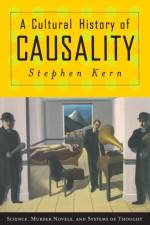
This pioneering work is the first to trace how our understanding of the causes of human behavior has changed radically over the course of European and American cultural history since 1830. Focusing on the act of murder, as documented vividly by more than a hundred novels including Crime and Punishment, An American Tragedy, The Trial, and Lolita, Stephen Kern devotes each chapter of A Cultural History of Causality to examining a specific causal factor or motive for murder--ancestry, childhood, language, sexuality, emotion, mind, society, and ideology. In addition to drawing on particular novels, each chapter considers the sciences (genetics, endocrinology, physiology, neuroscience) and systems of thought (psychoanalysis, linguistics, sociology, forensic psychiatry, and existential philosophy) most germane to each causal factor or motive. Kern identifies five shifts in thinking about causality, shifts toward increasing specificity, multiplicity, complexity, probability, and uncertainty. He argues that the more researchers learned about the causes of human behavior, the more they realized how much more there was to know and how little they knew about what they thought they knew. The book closes by considering the revolutionary impact of quantum theory, which, though it influenced novelists only marginally, shattered the model of causal understanding that had dominated Western thought since the seventeenth century. Others have addressed changing ideas about causality in specific areas, but no one has tackled a broad cultural history of this concept as does Stephen Kern in this engagingly written and lucidly argued book.
On November 4, 1979, Iranian militants stormed the United States Embassy in Tehran and took sixty-six Americans captive. Thus began the Iran Hostage Crisis, an affair that captivated the American public for 444 days and marked America's first confrontation with the forces of radical Islam. Using hundreds of recently declassified government documents, historian David Farber takes the first in-depth look at the hostage crisis, examining its lessons for America's contemporary War on Terrorism. Unlike other histories of the subject, Farber's vivid and fast-paced narrative looks beyond the day-to-day circumstances of the crisis, using the events leading up to the ordeal as a means for understanding it. The book paints a portrait of the 1970s in the United States as an era of failed expectations in a nation plagued by uncertainty and anxiety. It reveals an American government ill prepared for the fall of the Shah of Iran and unable to reckon with the Ayatollah Khomeini and his militant Islamic followers. Farber's account is filled with fresh insights regarding the central players in the crisis: Khomeini emerges as an astute strategist, single-mindedly dedicated to creating an Islamic state. The Americans' student-captors appear as less-than-organized youths, having prepared for only a symbolic sit-in with just a three-day supply of food. ABC news chief Roone Arledge, newly installed and eager for ratings, is cited as a critical catalyst in elevating the hostages to cause celebre status. Throughout the book there emerge eerie parallels to the current terrorism crisis. Then as now, Farber demonstrates, politicians failed to grasp the depth of anger that Islamic fundamentalists harbored toward the United States, and Americans dismissed threats from terrorist groups as the crusades of ineffectual madmen. Taken Hostage is a timely and revealing history of America's first engagement with terrorism and Islamic fundamentalism, one that provides a chilling reminder that the past is only prologue.
Controversial Supreme Court decisions have barred organized school prayer, but neither the Court nor public policy exclude religion from schools altogether. In this book, one of America's leading constitutional scholars asks what role religion ought to play in public schools. Kent Greenawalt explores many of the most divisive issues in educational debate, including teaching about the origins of life, sex education, and when--or whether--students can opt out of school activities for religious reasons. Using these and other case studies, Greenawalt considers how to balance the country's constitutional commitment to personal freedoms and to the separation of church and state with the vital role that religion has always played in American society. Do we risk distorting students' understanding of America's past and present by ignoring religion in public-school curricula? When does teaching about religion cross the line into the promotion of religion? Tracing the historical development of religion within public schools and considering every major Supreme Court case, Greenawalt concludes that the bans on school prayer and the teaching of creationism are justified, and that the court should more closely examine such activities as the singing of religious songs and student papers on religious topics. He also argues that students ought to be taught more about religion--both its contributions and shortcomings--especially in courses in history. To do otherwise, he writes, is to present a seriously distorted picture of society and indirectly to be other than neutral in presenting secularism and religion. Written with exemplary clarity and even-handedness, this is a major book about some of the most pressing and contentious issues in educational policy and constitutional law today.
Poems Under Saturn is the first complete English translation of the collection that announced Paul Verlaine (1844-1896) as a poet of promise and originality, one who would come to be regarded as one of the greatest of nineteenth-century writers. This new translation, by respected contemporary poet Karl Kirchwey, faithfully renders the collection's heady mix of classical learning and earthy sensuality in poems whose rhythm and rhyme represent one of the supreme accomplishments of French verse. Restoring frequently anthologized poems to the context in which they originally appeared, Poems Under Saturn testifies to the blazing talents for which Verlaine is celebrated. The poems display precocious virtuosity, mingling the attractions of the flesh with the longings of the spirit. Greek and Hindu myth give way to intimate erotic meditations and wickedly satirical society portraits, mythological landscapes alternate with gritty narratives of mid-nineteenth century Paris, visions of happiness yield to nightmarish glimpses of deep alienation, and real and imaginary characters--including Achilles, Valmiki, Charlemagne, and Spain's baleful King Philip II--all figure as the subject matter of a supremely ambitious young poet. Poems Under Saturn presents the extraordinary devotion and intense musicality of an artist for whom poetry remained the one true passion.
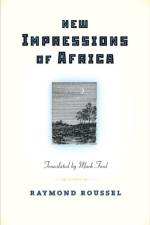
Poet, novelist, playwright, and chess enthusiast, Raymond Roussel (1877-1933) was one of the French belle epoque's most compelling literary figures. During his lifetime, Roussel's work was vociferously championed by the surrealists, but never achieved the widespread acclaim for which he yearned. New Impressions of Africa is undoubtedly Roussel's most extraordinary work. Since its publication in 1932, this weird and wonderful poem has slowly gained cult status, and its admirers have included Salvador Dali--who dubbed it the most "e;ungraspably poetic"e; work of the era--Andre Breton, Jean Cocteau, Marcel Duchamp, Michel Foucault, Kenneth Koch, and John Ashbery. Roussel began writing New Impressions of Africa in 1915 while serving in the French Army during the First World War and it took him seventeen years to complete. "e;It is hard to believe the immense amount of time composition of this kind of verse requires,"e; he later commented. Mysterious, unnerving, hilarious, haunting, both rigorously logical and dizzyingly sublime, it is truly one of the hidden masterpieces of twentieth-century modernism. This bilingual edition of New Impressions of Africa presents the original French text and the English poet Mark Ford's lucid, idiomatic translation on facing pages. It also includes an introduction outlining the poem's peculiar structure and evolution, notes explaining its literary and historical references, and the fifty-nine illustrations anonymously commissioned by Roussel, via a detective agency, from Henri-A. Zo.
School vouchers. The Pledge of Allegiance. The ban on government grants for theology students. The abundance of church and state issues brought before the Supreme Court in recent years underscores an incontrovertible truth in the American legal system: the relationship between the state and religion in this country is still fluid and changing. This, the first of two volumes by historian and legal scholar James Hitchcock, provides the first comprehensive exploration of the Supreme Court's approach to religion, offering a close look at every case, including some that scholars have ignored. Hitchcock traces the history of the way the Court has rendered important decisions involving religious liberty. Prior to World War II it issued relatively few decisions interpreting the Religious Clauses of the Constitution. Nonetheless, it addressed some very important ideas, including the 1819 Dartmouth College case, which protected private religious education from state control, and the Mormon polygamy cases, which established the principle that religious liberty was restricted by the perceived good of society. It was not until the 1940s that a revolutionary change occurred in the way the Supreme Court viewed religion. During that era, the Court steadily expanded the scope of religious liberty to include many things that were probably not intended by the framers of the Constitution, and it narrowed the permissible scope of religion in public life, barring most kinds of public aid to religious schools and forbidding almost all forms of religious expression in the public schools. This book, along with its companion volume, From "e;Higher Law"e; to "e;Sectarian Scruples,"e; offers a fresh analysis of the Court's most important decisions in constitutional doctrine. Sweeping in range, it paints a detailed picture of the changing relationship between religion and the state in American history.
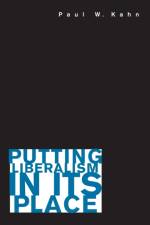
In this wide-ranging interdisciplinary work, Paul W. Kahn argues that political order is founded not on contract but on sacrifice. Because liberalism is blind to sacrifice, it is unable to explain how the modern state has brought us to both the rule of law and the edge of nuclear annihilation. We can understand this modern condition only by recognizing that any political community, even a liberal one, is bound together by faith, love, and identity. Putting Liberalism in Its Place draws on philosophy, cultural theory, American constitutional law, religious and literary studies, and political psychology to advance political theory. It makes original contributions in all these fields. Not since Charles Taylor's The Sources of the Self has there been such an ambitious and sweeping examination of the deep structure of the modern conception of the self. Kahn shows that only when we move beyond liberalism's categories of reason and interest to a Judeo-Christian concept of love can we comprehend the modern self. Love is the foundation of a world of objective meaning, one form of which is the political community. Arguing from these insights, Kahn offers a new reading of the liberalism/communitarian debate, a genealogy of American liberalism, an exploration of the romantic and the pornographic, a new theory of the will, and a refoundation of political theory on the possibility of sacrifice. Approaching politics from the perspective of sacrifice allows us to understand the character of twentieth-century politics, which combined progress in the rule of law with massive slaughter for the state. Equally important, this work speaks to the most important political conflicts in the world today. It explains why American response to September 11 has taken the form of war, and why, for the most part, Europeans have been reluctant to follow the Americans in their pursuit of a violent, sacrificial politics. Kahn shows us that the United States has maintained a vibrant politics of modernity, while Europe is moving into a postmodern form of the political that has turned away from the idea of sacrifice. Together with its companion volume, Out of Eden, Putting Liberalism in Its Place finally answers Clifford Geertz's call for a political theology of modernity.
The most widely debated conception of democracy in recent years is deliberative democracy--the idea that citizens or their representatives owe each other mutually acceptable reasons for the laws they enact. Two prominent voices in the ongoing discussion are Amy Gutmann and Dennis Thompson. In Why Deliberative Democracy?, they move the debate forward beyond their influential book, Democracy and Disagreement. What exactly is deliberative democracy? Why is it more defensible than its rivals? By offering clear answers to these timely questions, Gutmann and Thompson illuminate the theory and practice of justifying public policies in contemporary democracies. They not only develop their theory of deliberative democracy in new directions but also apply it to new practical problems. They discuss bioethics, health care, truth commissions, educational policy, and decisions to declare war. In "e;What Deliberative Democracy Means,"e; which opens this collection of essays, they provide the most accessible exposition of deliberative democracy to date. They show how deliberative democracy should play an important role even in the debates about military intervention abroad. Why Deliberative Democracy? contributes to our understanding of how democratic citizens and their representatives can make justifiable decisions for their society in the face of the fundamental disagreements that are inevitable in diverse societies. Gutmann and Thompson provide a balanced and fair-minded approach that will benefit anyone intent on giving reason and reciprocity a more prominent place in politics than power and special interests.
Offensive street speech--racist and sexist remarks that can make its targets feel both psychologically and physically threatened--is surprisingly common in our society. Many argue that this speech is so detestable that it should be banned under law. But is this an area covered by the First Amendment right to free speech? Or should it be banned? In this elegantly written book, Laura Beth Nielsen pursues the answers by probing the legal consciousness of ordinary citizens. Using a combination of field observations and in-depth, semistructured interviews, she surveys one hundred men and women, some of whom are routine targets of offensive speech, about how such speech affects their lives. Drawing on these interviews as well as an interdisciplinary body of scholarship, Nielsen argues that racist and sexist speech creates, reproduces, and reinforces existing systems of hierarchy in public places. The law works to normalize and justify offensive public interactions, she concludes, offering, in essence, a "e;license to harass."e; Nielsen relates the results of her interviews to statistical surveys that measure the impact of offensive speech on the public. Rather than arguing whether law is the appropriate remedy for offensive speech, she allows that the benefits to democracy, to community, and to society of allowing such speech may very well outweigh the burdens imposed. Nonetheless, these burdens, and the stories of the people who bear them, should not remain invisible and outside the debate.
Covenants without Swords examines an enduring tension within liberal theory: that between many liberals' professed commitment to universal equality on the one hand, and their historic support for the politics of hierarchy and empire on the other. It does so by examining the work of two extremely influential British liberals and internationalists, Gilbert Murray and Alfred Zimmern. Jeanne Morefield mounts a forceful challenge to disciplinary boundaries by arguing that this tension, on both the domestic and international levels, is best understood as frequently arising from the same, liberal reformist political aim--namely, the aim of fashioning a socially conscious liberalism that ultimately reifies putatively natural, preliberal notions of paternalistic order. Morefield also questions conventional analyses of interwar thought by resurrecting the work of Murray and Zimmern, and by linking their approaches to liberal internationalism with the ossified notion of sovereignty that continues to trouble international politics to this day. Ultimately, Morefield argues, these two thinkers' drift toward conservative and imperialist understandings of international order was the result of a more general difficulty still faced by liberals today: how to adequately define community in liberal terms without sacrificing these terms themselves. Moreover, Covenants without Swords suggests that Murray and Zimmern's work offers a cautionary historical example for the cadre of post-September 11th "e;new imperialists"e; who believe it possible to combine a liberal commitment to equality with an American Empire.
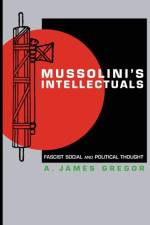
Fascism has traditionally been characterized as irrational and anti-intellectual, finding expression exclusively as a cluster of myths, emotions, instincts, and hatreds. This intellectual history of Italian Fascism--the product of four decades of work by one of the leading experts on the subject in the English-speaking world--provides an alternative account. A. James Gregor argues that Italian Fascism may have been a flawed system of belief, but it was neither more nor less irrational than other revolutionary ideologies of the twentieth century. Gregor makes this case by presenting for the first time a chronological account of the major intellectual figures of Italian Fascism, tracing how the movement's ideas evolved in response to social and political developments inside and outside of Italy. Gregor follows Fascist thought from its beginnings in socialist ideology about the time of the First World War--when Mussolini himself was a leader of revolutionary socialism--through its evolution into a separate body of thought and to its destruction in the Second World War. Along the way, Gregor offers extended accounts of some of Italian Fascism's major thinkers, including Sergio Panunzio and Ugo Spirito, Alfredo Rocco (Mussolini's Minister of Justice), and Julius Evola, a bizarre and sinister figure who has inspired much contemporary "e;neofascism."e; Gregor's account reveals the flaws and tensions that dogged Fascist thought from the beginning, but shows that if we want to come to grips with one of the most important political movements of the twentieth century, we nevertheless need to understand that Fascism had serious intellectual as well as visceral roots.
Has Europe's extraordinary postwar recovery limped to an end? It would seem so. The United Kingdom, Belgium, France, Italy, and former Soviet Bloc countries have experienced ethnic or religious disturbances, sometimes violent. Greece, Ireland, and Spain are menaced by financial crises. And the euro is in trouble. In The End of the West, David Marquand, a former member of the British Parliament, argues that Europe's problems stem from outdated perceptions of global power, and calls for a drastic change in European governance to halt the continent's slide into irrelevance. Taking a searching look at the continent's governing institutions, history, and current challenges, Marquand offers a disturbing diagnosis of Europe's ills to point the way toward a better future. Exploring the baffling contrast between postwar success and current failures, Marquand examines the rebirth of ethnic communities from Catalonia to Flanders, the rise of xenophobic populism, the democratic deficit that stymies EU governance, and the thorny questions of where Europe's borders end and what it means to be European. Marquand contends that as China, India, and other nations rise, Europe must abandon ancient notions of an enlightened West and a backward East. He calls for Europe's leaders and citizens to confront the painful issues of ethnicity, integration, and economic cohesion, and to build a democratic and federal structure. A wake-up call to those who cling to ideas of a triumphalist Europe, The End of the West shows that the continent must draw on all its reserves of intellectual and political creativity to thrive in an increasingly turbulent world, where the very language of "e;East"e; and "e;West"e; has been emptied of meaning.
Abonner på vårt nyhetsbrev og få rabatter og inspirasjon til din neste leseopplevelse.
Ved å abonnere godtar du vår personvernerklæring.