






















Gjør som tusenvis av andre bokelskere
Abonner på vårt nyhetsbrev og få rabatter og inspirasjon til din neste leseopplevelse.
Ved å abonnere godtar du vår personvernerklæring.Du kan når som helst melde deg av våre nyhetsbrev.

A Tale of Two Monasteries takes an unprecedented look at one of the great rivalries of the Middle Ages and offers it as a revealing lens through which to view the intertwined histories of medieval England and France. This is the first book to systematically compare Westminster Abbey and the abbey of Saint-Denis--two of the most important ecclesiastical institutions of the thirteenth century--and to do so through the lives and competing careers of the two men who ruled them, Richard de Ware of Westminster and Mathieu de Vendome of Saint-Denis. Esteemed historian William Jordan weaves a breathtaking narrative of the social, cultural, and political history of the period. It was an age of rebellion and crusades, of artistic and architectural innovation, of unprecedented political reform, and of frustrating international diplomacy--and Richard and Mathieu, in one way or another, played important roles in all these developments. Jordan traces their rise from obscure backgrounds to the highest ranks of political authority, Abbot Richard becoming royal treasurer of England, and Abbot Mathieu twice serving as a regent of France during the crusades. By enabling us to understand the complex relationships the abbots and their rival institutions shared with each other and with the kings and social networks that supported and exploited them, A Tale of Two Monasteries paints a vivid portrait of medieval society and politics, and of the ambitious men who influenced them so profoundly.
The Straight State is the most expansive study of the federal regulation of homosexuality yet written. Unearthing startling new evidence from the National Archives, Margot Canaday shows how the state systematically came to penalize homosexuality, giving rise to a regime of second-class citizenship that sexual minorities still live under today. Canaday looks at three key arenas of government control--immigration, the military, and welfare--and demonstrates how federal enforcement of sexual norms emerged with the rise of the modern bureaucratic state. She begins at the turn of the twentieth century when the state first stumbled upon evidence of sex and gender nonconformity, revealing how homosexuality was policed indirectly through the exclusion of sexually "e;degenerate"e; immigrants and other regulatory measures aimed at combating poverty, violence, and vice. Canaday argues that the state's gradual awareness of homosexuality intensified during the later New Deal and through the postwar period as policies were enacted that explicitly used homosexuality to define who could enter the country, serve in the military, and collect state benefits. Midcentury repression was not a sudden response to newly visible gay subcultures, Canaday demonstrates, but the culmination of a much longer and slower process of state-building during which the state came to know and to care about homosexuality across many decades. Social, political, and legal history at their most compelling, The Straight State explores how regulation transformed the regulated: in drawing boundaries around national citizenship, the state helped to define the very meaning of homosexuality in America.
Descartes's works are often treated as a unified, unchanging whole. But in Descartes's Changing Mind, Peter Machamer and J. E. McGuire argue that the philosopher's views, particularly in natural philosophy, actually change radically between his early and later works--and that any interpretation of Descartes must take account of these changes. The first comprehensive study of the most significant of these shifts, this book also provides a new picture of the development of Cartesian science, epistemology, and metaphysics. No changes in Descartes's thought are more significant than those that occur between the major works The World (1633) and Principles of Philosophy (1644). Often seen as two versions of the same natural philosophy, these works are in fact profoundly different, containing distinct conceptions of causality and epistemology. Machamer and McGuire trace the implications of these changes and others that follow from them, including Descartes's rejection of the method of abstraction as a means of acquiring knowledge, his insistence on the infinitude of God's power, and his claim that human knowledge is limited to that which enables us to grasp the workings of the world and develop scientific theories.
Volunteering improves inner character, builds community, cures poverty, and prevents crime. We've all heard this kind of empowerment talk from nonprofit and government-sponsored civic programs. But what do these programs really accomplish? In Making Volunteers, Nina Eliasoph offers an in-depth, humorous, wrenching, and at times uplifting look inside youth and adult civic programs. She reveals an urgent need for policy reforms in order to improve these organizations and shows that while volunteers learn important lessons, they are not always the lessons that empowerment programs aim to teach. With short-term funding and a dizzy mix of mandates from multiple sponsors, community programs develop a complex web of intimacy, governance, and civic life. Eliasoph describes the at-risk youth served by such programs, the college-bound volunteers who hope to feel selfless inspiration and plump up their resumes, and what happens when the two groups are expected to bond instantly through short-term projects. She looks at adult "e;plug-in"e; volunteers who, working in after-school programs and limited by time, hope to become like beloved aunties to youth. Eliasoph indicates that adult volunteers can provide grassroots support but they can also undermine the family-like warmth created by paid organizers. Exploring contradictions between the democratic rhetoric of empowerment programs and the bureaucratic hurdles that volunteers learn to navigate, the book demonstrates that empowerment projects work best with less precarious funding, more careful planning, and mandatory training, reflection, and long-term commitments from volunteers. Based on participant research inside civic and community organizations, Making Volunteers illustrates what these programs can and cannot achieve, and how to make them more effective.
To do solid academic research, college students need to look beyond the computer search engine. This short, practical book introduces students to the important components of the information-seeking process. The Elements of Library Research provides a foundation for success in any research assignment, from a freshman paper to a senior thesis. Unlike guides that describe the research process but do not explain its logic, this book focuses entirely on basic concepts, strategies, tools, and tactics for research--in both electronic and print formats. Drawing on decades of experience with undergraduates, reference librarian Mary George arms students with the critical thinking skills and procedures they need to approach any academic project with confidence. Ways to turn a topic into a research question Techniques for effective online searches How to evaluate primary and secondary sources When and how to confer with reference librarians and faculty How to avoid plagiarism Glossary of key terms, from Boolean search to peer review Checklists, timelines, and hints for successful research projects
In brute-force struggles for survival, such as the two World Wars, disorganization and divisions within an enemy alliance are to one's own advantage. However, most international security politics involve coercive diplomacy and negotiations short of all-out war. Worse Than a Monolith demonstrates that when states are engaged in coercive diplomacy--combining threats and assurances to influence the behavior of real or potential adversaries--divisions, rivalries, and lack of coordination within the opposing camp often make it more difficult to prevent the onset of conflict, to prevent existing conflicts from escalating, and to negotiate the end to those conflicts promptly. Focusing on relations between the Communist and anti-Communist alliances in Asia during the Cold War, Thomas Christensen explores how internal divisions and lack of cohesion in the two alliances complicated and undercut coercive diplomacy by sending confusing signals about strength, resolve, and intent. In the case of the Communist camp, internal mistrust and rivalries catalyzed the movement's aggressiveness in ways that we would not have expected from a more cohesive movement under Moscow's clear control. Reviewing newly available archival material, Christensen examines the instability in relations across the Asian Cold War divide, and sheds new light on the Korean and Vietnam wars. While recognizing clear differences between the Cold War and post-Cold War environments, he investigates how efforts to adjust burden-sharing roles among the United States and its Asian security partners have complicated U.S.-China security relations since the collapse of the Soviet Union.
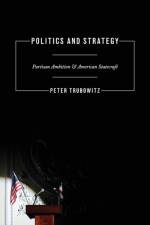
Why do some national leaders pursue ambitious grand strategies and adventuresome foreign policies while others do not? When do leaders boldly confront foreign threats and when are they less assertive? Politics and Strategy shows that grand strategies are Janus-faced: their formulation has as much to do with a leader's ability to govern at home as it does with maintaining the nation's security abroad. Drawing on the American political experience, Peter Trubowitz reveals how variations in domestic party politics and international power have led presidents from George Washington to Barack Obama to pursue strategies that differ widely in international ambition and cost. He considers why some presidents overreach in foreign affairs while others fail to do enough. Trubowitz pushes the understanding of grand strategy beyond traditional approaches that stress only international forces or domestic interests. He provides insights into how past leaders responded to cross-pressures between geopolitics and party politics, and how similar issues continue to bedevil American statecraft today. He suggests that the trade-offs shaping American leaders' foreign policy choices are not unique--analogous trade-offs confront Chinese and Russian leaders as well. Combining innovative theory and historical analysis, Politics and Strategy answers classic questions of statecraft and offers new ideas for thinking about grand strategies and the leaders who make them.
Over the past two decades, governments have delegated extensive regulatory authority to international private-sector organizations. This internationalization and privatization of rule making has been motivated not only by the economic benefits of common rules for global markets, but also by the realization that government regulators often lack the expertise and resources to deal with increasingly complex and urgent regulatory tasks. The New Global Rulers examines who writes the rules in international private organizations, as well as who wins, who loses--and why. Tim Buthe and Walter Mattli examine three powerful global private regulators: the International Accounting Standards Board, which develops financial reporting rules used by corporations in more than a hundred countries; and the International Organization for Standardization and the International Electrotechnical Commission, which account for 85 percent of all international product standards. Buthe and Mattli offer both a new framework for understanding global private regulation and detailed empirical analyses of such regulation based on multi-country, multi-industry business surveys. They find that global rule making by technical experts is highly political, and that even though rule making has shifted to the international level, domestic institutions remain crucial. Influence in this form of global private governance is not a function of the economic power of states, but of the ability of domestic standard-setters to provide timely information and speak with a single voice. Buthe and Mattli show how domestic institutions' abilities differ, particularly between the two main standardization players, the United States and Europe.
The transformation of the American South--from authoritarian to democratic rule--is the most important political development since World War II. It has re-sorted voters into parties, remapped presidential elections, and helped polarize Congress. Most important, it is the final step in America's democratization. Paths Out of Dixie illuminates this sea change by analyzing the democratization experiences of Georgia, Mississippi, and South Carolina. Robert Mickey argues that Southern states, from the 1890s until the early 1970s, constituted pockets of authoritarian rule trapped within and sustained by a federal democracy. These enclaves--devoted to cheap agricultural labor and white supremacy--were established by conservative Democrats to protect their careers and clients. From the abolition of the whites-only Democratic primary in 1944 until the national party reforms of the early 1970s, enclaves were battered and destroyed by a series of democratization pressures from inside and outside their borders. Drawing on archival research, Mickey traces how Deep South rulers--dissimilar in their internal conflict and political institutions--varied in their responses to these challenges. Ultimately, enclaves differed in their degree of violence, incorporation of African Americans, and reconciliation of Democrats with the national party. These diverse paths generated political and economic legacies that continue to reverberate today. Focusing on enclave rulers, their governance challenges, and the monumental achievements of their adversaries, Paths Out of Dixie shows how the struggles of the recent past have reshaped the South and, in so doing, America's political development.
Two trends are dramatically altering the American political landscape: growing immigration and the rising prominence of independent and nonpartisan voters. Examining partisan attachments across the four primary racial groups in the United States, this book offers the first sustained and systematic account of how race and immigration today influence the relationship that Americans have--or fail to have--with the Democratic and Republican parties. Zoltan Hajnal and Taeku Lee contend that partisanship is shaped by three factors--identity, ideology, and information--and they show that African Americans, Asian Americans, Latinos, and whites respond to these factors in distinct ways. The book explores why so many Americans--in particular, Latinos and Asians--fail to develop ties to either major party, why African Americans feel locked into a particular party, and why some white Americans are shut out by ideologically polarized party competition. Through extensive analysis, the authors demonstrate that when the Democratic and Republican parties fail to raise political awareness, to engage deeply held political convictions, or to affirm primary group attachments, nonpartisanship becomes a rationally adaptive response. By developing a model of partisanship that explicitly considers America's new racial diversity and evolving nonpartisanship, this book provides the Democratic and Republican parties and other political stakeholders with the means and motivation to more fully engage the diverse range of Americans who remain outside the partisan fray.
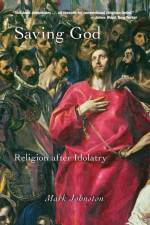
In this book, Mark Johnston argues that God needs to be saved not only from the distortions of the "e;undergraduate atheists"e; (Richard Dawkins, Christopher Hitchens, and Sam Harris) but, more importantly, from the idolatrous tendencies of religion itself. Each monotheistic religion has its characteristic ways of domesticating True Divinity, of taming God's demands so that they do not radically threaten our self-love and false righteousness. Turning the monotheistic critique of idolatry on the monotheisms themselves, Johnston shows that much in these traditions must be condemned as false and spiritually debilitating. A central claim of the book is that supernaturalism is idolatry. If this is right, everything changes; we cannot place our salvation in jeopardy by tying it essentially to the supernatural cosmologies of the ancient Near East. Remarkably, Johnston rehabilitates the ideas of the Fall and of salvation within a naturalistic framework; he then presents a conception of God that both resists idolatry and is wholly consistent with the deliverances of the natural sciences. Princeton University Press is publishing Saving God in conjunction with Johnston's forthcoming book Surviving Death, which takes up the crux of supernaturalist belief, namely, the belief in life after death.Some images inside the book are unavailable due to digital copyright restrictions.
Popular representations of third-world sex workers as sex slaves and vectors of HIV have spawned abolitionist legal reforms that are harmful and ineffective, and public health initiatives that provide only marginal protection of sex workers' rights. In this book, Prabha Kotiswaran asks how we might understand sex workers' demands that they be treated as workers. She contemplates questions of redistribution through law within the sex industry by examining the political economies and legal ethnographies of two archetypical urban sex markets in India. Kotiswaran conducted in-depth fieldwork among sex workers in Sonagachi, Kolkata's largest red-light area, and Tirupati, a temple town in southern India. Providing new insights into the lives of these women--many of whom are demanding the respect and legal protection that other workers get--Kotiswaran builds a persuasive theoretical case for recognizing these women's sexual labor. Moving beyond standard feminist discourse on prostitution, she draws on a critical genealogy of materialist feminism for its sophisticated vocabulary of female reproductive and sexual labor, and uses a legal realist approach to show why criminalization cannot succeed amid the informal social networks and economic structures of sex markets. Based on this, Kotiswaran assesses the law's redistributive potential by analyzing the possible economic consequences of partial decriminalization, complete decriminalization, and legalization. She concludes with a theory of sex work from a postcolonial materialist feminist perspective.
This book presents an important new account of Johann Gottlieb Fichte's Closed Commercial State, a major early nineteenth-century development of Rousseau and Kant's political thought. Isaac Nakhimovsky shows how Fichte reformulated Rousseau's constitutional politics and radicalized the economic implications of Kant's social contract theory with his defense of the right to work. Nakhimovsky argues that Fichte's sequel to Rousseau and Kant's writings on perpetual peace represents a pivotal moment in the intellectual history of the pacification of the West. Fichte claimed that Europe could not transform itself into a peaceful federation of constitutional republics unless economic life could be disentangled from the competitive dynamics of relations between states, and he asserted that this disentanglement required transitioning to a planned and largely self-sufficient national economy, made possible by a radical monetary policy. Fichte's ideas have resurfaced with nearly every crisis of globalization from the Napoleonic wars to the present, and his book remains a uniquely systematic and complete discussion of what John Maynard Keynes later termed "e;national self-sufficiency."e; Fichte's provocative contribution to the social contract tradition reminds us, Nakhimovsky concludes, that the combination of a liberal theory of the state with an open economy and international system is a much more contingent and precarious outcome than many recent theorists have tended to assume.
Edward T. Cone was one of the most important and influential music critics of the twentieth century. He was also a master lecturer skilled at conveying his ideas to broad audiences. Hearing and Knowing Music collects fourteen essays that Cone gave as talks in his later years and that were left unpublished at his death. Edited and introduced by Robert Morgan, these essays cover a broad range of topics, including music's position in culture, musical aesthetics, the significance of opera as an art, setting text to music, the nature of twentieth-century harmony and form, and the practice of musical analysis. Fully matching the quality and style of Cone's published writings, these essays mark a critical addition to his work, developing new ideas, such as the composer as critic; clarifying and modifying older positions, especially regarding opera and the nature of sung utterance; and adding new and often unexpected insights on composers and ideas previously discussed by Cone. In addition, there are essays, such as one on Debussy, that lead Cone into areas he had not previously examined. Hearing and Knowing Music represents the final testament of one of our most important writers on music.
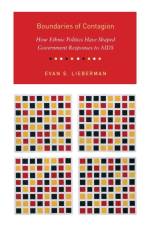
Why have governments responded to the HIV/AIDS pandemic in such different ways? During the past quarter century, international agencies and donors have disseminated vast resources and a set of best practice recommendations to policymakers around the globe. Yet the governments of developing countries in sub-Saharan Africa, Asia, Latin America, and the Caribbean continue to implement widely varying policies. Boundaries of Contagion is the first systematic, comparative analysis of the politics of HIV/AIDS. The book explores the political challenges of responding to a stigmatized condition, and identifies ethnic boundaries--the formal and informal institutions that divide societies--as a central influence on politics and policymaking. Evan Lieberman examines the ways in which risk and social competition get mapped onto well-institutionalized patterns of ethnic politics. Where strong ethnic boundaries fragment societies into groups, the politics of AIDS are more likely to involve blame and shame-avoidance tactics against segments of the population. In turn, government leaders of such countries respond far less aggressively to the epidemic. Lieberman's case studies of Brazil, South Africa, and India--three developing countries that face significant AIDS epidemics--are complemented by statistical analyses of the policy responses of Indian states and over seventy developing countries. The studies conclude that varied patterns of ethnic competition shape how governments respond to this devastating problem. The author considers the implications for governments and donors, and the increasing tendency to identify social problems in ethnic terms.
Democracy-building efforts from the early 1990s on have funneled billions of dollars into nongovernmental organizations across the developing world, with the U.S. administration of George W. Bush leading the charge since 2001. But are many such "e;civil society"e; initiatives fatally flawed? Focusing on the Palestinian West Bank and the Arab world, Barriers to Democracy mounts a powerful challenge to the core tenet of civil society initiatives: namely, that public participation in private associations necessarily yields the sort of civic engagement that, in turn, sustains effective democratic institutions. Such assertions tend to rely on evidence from states that are democratic to begin with. Here, Amaney Jamal investigates the role of civic associations in promoting democratic attitudes and behavioral patterns in contexts that are less than democratic. Jamal argues that, in state-centralized environments, associations can just as easily promote civic qualities vital to authoritarian citizenship--such as support for the regime in power. Thus, any assessment of the influence of associational life on civic life must take into account political contexts, including the relationships among associations, their leaders, and political institutions. Barriers to Democracy both builds on and critiques the multifaceted literature that has emerged since the mid-1990s on associational life and civil society. By critically examining associational life in the West Bank during the height of the Oslo Peace Process (1993-99), and extending her findings to Morocco, Egypt, and Jordan, Jamal provides vital new insights into a timely issue.
The economy is so powerful in determining the results of U.S. presidential elections that political scientists can predict winners and losers with amazing accuracy long before the campaigns start. But if it is true that "e;it's the economy, Stupid,"e; why do incumbents in good economies sometimes lose? The reason, Lynn Vavreck argues, is that what matters is not just the state of the economy but how candidates react to it. By demonstrating more precisely than ever before how candidates and their campaigns affect the economic vote, The Message Matters provides a powerful new way of understanding past elections--and predicting future ones. Vavreck examines the past sixty years of presidential elections and offers a new theory of campaigns that explains why electoral victory requires more than simply being the candidate favored by prevailing economic conditions. Using data from presidential elections since 1952, she reveals why, when, and how campaign messages make a difference--and when they can outweigh economic predictors of election outcomes. The Message Matters does more than show why candidates favored by the economy must build their campaigns around economic messages. Vavreck's theory also explains why candidates disadvantaged by the economy must try to focus their elections on noneconomic issues that meet exacting criteria--and why this is so hard to do.
Philosophical Logic is a clear and concise critical survey of nonclassical logics of philosophical interest written by one of the world's leading authorities on the subject. After giving an overview of classical logic, John Burgess introduces five central branches of nonclassical logic (temporal, modal, conditional, relevantistic, and intuitionistic), focusing on the sometimes problematic relationship between formal apparatus and intuitive motivation. Requiring minimal background and arranged to make the more technical material optional, the book offers a choice between an overview and in-depth study, and it balances the philosophical and technical aspects of the subject. The book emphasizes the relationship between models and the traditional goal of logic, the evaluation of arguments, and critically examines apparatus and assumptions that often are taken for granted. Philosophical Logic provides an unusually thorough treatment of conditional logic, unifying probabilistic and model-theoretic approaches. It underscores the variety of approaches that have been taken to relevantistic and related logics, and it stresses the problem of connecting formal systems to the motivating ideas behind intuitionistic mathematics. Each chapter ends with a brief guide to further reading. Philosophical Logic addresses students new to logic, philosophers working in other areas, and specialists in logic, providing both a sophisticated introduction and a new synthesis.
Social Structures is a book that examines how structural forms spontaneously arise from social relationships. Offering major insights into the building blocks of social life, it identifies which locally emergent structures have the capacity to grow into larger ones and shows how structural tendencies associated with smaller structures shape and constrain patterns of larger structures. The book then investigates the role such structures have played in the emergence of the modern nation-state. Bringing together the latest findings in sociology, anthropology, political science, and history, John Levi Martin traces how sets of interpersonal relationships become ordered in different ways to form structures. He looks at a range of social structures, from smaller ones like families and street gangs to larger ones such as communes and, ultimately, nation-states. He finds that the relationships best suited to forming larger structures are those that thrive in conditions of inequality; that are incomplete and as sparse as possible, and thereby avoid the problem of completion in which interacting members are required to establish too many relationships; and that abhor transitivity rather than assuming it. Social Structures argues that these "e;patronage"e; relationships, which often serve as means of loose coordination in the absence of strong states, are nevertheless the scaffolding of the social structures most distinctive to the modern state, namely the command army and the political party.
This is the first biography of the last and greatest British idealist philosopher, R. G. Collingwood (1889-1943), a man who both thought and lived at full pitch. Best known today for his philosophies of history and art, Collingwood was also a historian, archaeologist, sailor, artist, and musician. A figure of enormous energy and ambition, he took as his subject nothing less than the whole of human endeavor, and he lived in the same way, seeking to experience the complete range of human passion. In this vivid and swiftly paced narrative, Fred Inglis tells the dramatic story of a remarkable life, from Collingwood's happy Lakeland childhood to his successes at Oxford, his archaeological digs as a renowned authority on Roman Britain, his solo sailing adventures in the English Channel, his long struggle with illness, and his sometimes turbulent romantic life. In a manner unheard of today, Collingwood attempted to gather all aspects of human thought into a single theory of practical experience, and he wrote sweeping accounts of history, art, science, politics, metaphysics, and archaeology, as well as a highly regarded autobiography. Above all, he dedicated his life to arguing that history--not science--is the only source of moral and political wisdom and self-knowledge. Linking the intellectual and personal sides of Collingwood's life, and providing a rich history of his milieu, History Man also assesses Collingwood's influence on generations of scholars after his death and the renewed recognition of his importance and interest today.
Higher category theory is generally regarded as technical and forbidding, but part of it is considerably more tractable: the theory of infinity-categories, higher categories in which all higher morphisms are assumed to be invertible. In Higher Topos Theory, Jacob Lurie presents the foundations of this theory, using the language of weak Kan complexes introduced by Boardman and Vogt, and shows how existing theorems in algebraic topology can be reformulated and generalized in the theory's new language. The result is a powerful theory with applications in many areas of mathematics. The book's first five chapters give an exposition of the theory of infinity-categories that emphasizes their role as a generalization of ordinary categories. Many of the fundamental ideas from classical category theory are generalized to the infinity-categorical setting, such as limits and colimits, adjoint functors, ind-objects and pro-objects, locally accessible and presentable categories, Grothendieck fibrations, presheaves, and Yoneda's lemma. A sixth chapter presents an infinity-categorical version of the theory of Grothendieck topoi, introducing the notion of an infinity-topos, an infinity-category that resembles the infinity-category of topological spaces in the sense that it satisfies certain axioms that codify some of the basic principles of algebraic topology. A seventh and final chapter presents applications that illustrate connections between the theory of higher topoi and ideas from classical topology.
Line in the Sand details the dramatic transformation of the western U.S.-Mexico border from its creation at the end of the Mexican-American War in 1848 to the emergence of the modern boundary line in the first decades of the twentieth century. In this sweeping narrative, Rachel St. John explores how this boundary changed from a mere line on a map to a clearly marked and heavily regulated divide between the United States and Mexico. Focusing on the desert border to the west of the Rio Grande, this book explains the origins of the modern border and places the line at the center of a transnational history of expanding capitalism and state power in the late nineteenth and early twentieth centuries. Moving across local, regional, and national scales, St. John shows how government officials, Native American raiders, ranchers, railroad builders, miners, investors, immigrants, and smugglers contributed to the rise of state power on the border and developed strategies to navigate the increasingly regulated landscape. Over the border's history, the U.S. and Mexican states gradually developed an expanding array of official laws, ad hoc arrangements, government agents, and physical barriers that did not close the line, but made it a flexible barrier that restricted the movement of some people, goods, and animals without impeding others. By the 1930s, their efforts had created the foundations of the modern border control apparatus. Drawing on extensive research in U.S. and Mexican archives, Line in the Sand weaves together a transnational history of how an undistinguished strip of land became the significant and symbolic space of state power and national definition that we know today.
This is a book about the theory of the city or commonwealth, what would come to be called the state, in early modern natural law discourse. Annabel Brett takes a fresh approach by looking at this political entity from the perspective of its boundaries and those who crossed them. She begins with a classic debate from the Spanish sixteenth century over the political treatment of mendicants, showing how cosmopolitan ideals of porous boundaries could simultaneously justify the freedoms of itinerant beggars and the activities of European colonists in the Indies. She goes on to examine the boundaries of the state in multiple senses, including the fundamental barrier between human beings and animals and the limits of the state in the face of the natural lives of its subjects, as well as territorial frontiers. Drawing on a wide range of authors, Brett reveals how early modern political space was constructed from a complex dynamic of inclusion and exclusion. Throughout, she shows that early modern debates about political boundaries displayed unheralded creativity and virtuosity but were nevertheless vulnerable to innumerable paradoxes, contradictions, and loose ends. Changes of State is a major work of intellectual history that resonates with modern debates about globalization and the transformation of the nation-state.
Death and Redemption offers a fundamental reinterpretation of the role of the Gulag--the Soviet Union's vast system of forced-labor camps, internal exile, and prisons--in Soviet society. Soviet authorities undoubtedly had the means to exterminate all the prisoners who passed through the Gulag, but unlike the Nazis they did not conceive of their concentration camps as instruments of genocide. In this provocative book, Steven Barnes argues that the Gulag must be understood primarily as a penal institution where prisoners were given one final chance to reintegrate into Soviet society. Millions whom authorities deemed "e;reeducated"e; through brutal forced labor were allowed to leave. Millions more who "e;failed"e; never got out alive. Drawing on newly opened archives in Russia and Kazakhstan as well as memoirs by actual prisoners, Barnes shows how the Gulag was integral to the Soviet goal of building a utopian socialist society. He takes readers into the Gulag itself, focusing on one outpost of the Gulag system in the Karaganda region of Kazakhstan, a location that featured the full panoply of Soviet detention institutions. Barnes traces the Gulag experience from its beginnings after the 1917 Russian Revolution to its decline following the 1953 death of Stalin. Death and Redemption reveals how the Gulag defined the border between those who would reenter Soviet society and those who would be excluded through death.
Abused dogs, prisoners tortured in Guantanamo and supermax facilities, or slaves killed by the state--all are deprived of personhood through legal acts. Such deprivations have recurred throughout history, and the law sustains these terrors and banishments even as it upholds the civil order. Examining such troubling cases, The Law Is a White Dog tackles key societal questions: How does the law construct our identities? How do its rules and sanctions make or unmake persons? And how do the supposedly rational claims of the law define marginal entities, both natural and supernatural, including ghosts, dogs, slaves, terrorist suspects, and felons? Reading the language, allusions, and symbols of legal discourse, and bridging distinctions between the human and nonhuman, Colin Dayan looks at how the law disfigures individuals and animals, and how slavery, punishment, and torture create unforeseen effects in our daily lives. Moving seamlessly across genres and disciplines, Dayan considers legal practices and spiritual beliefs from medieval England, the North American colonies, and the Caribbean that have survived in our legal discourse, and she explores the civil deaths of felons and slaves through lawful repression. Tracing the legacy of slavery in the United States in the structures of the contemporary American prison system and in the administrative detention of ghostly supermax facilities, she also demonstrates how contemporary jurisprudence regarding cruel and unusual punishment prepared the way for abuses in Abu Ghraib and Guantanamo. Using conventional historical and legal sources to answer unconventional questions, The Law Is a White Dog illuminates stark truths about civil society's ability to marginalize, exclude, and dehumanize.
Over the past decade, a small revolution has taken place at some of the world's leading universities, as they have started to provide free access to undergraduate course materials--including syllabi, assignments, and lectures--to anyone with an Internet connection. Yale offers high-quality audio and video recordings of a careful selection of popular lectures, MIT supplies digital materials for nearly all of its courses, Carnegie Mellon boasts a purpose-built interactive learning environment, and some of the most selective universities in India have created a vast body of online content in order to reach more of the country's exploding student population. Although they don't offer online credit or degrees, efforts like these are beginning to open up elite institutions--and may foreshadow significant changes in the way all universities approach teaching and learning. Unlocking the Gates is one of the first books to examine this important development. Drawing on a wide range of sources, including extensive interviews with university leaders, Taylor Walsh traces the evolution of these online courseware projects and considers the impact they may have, both inside elite universities and beyond. As economic constraints and concerns over access demand more efficient and creative teaching models, these early initiatives may lead to more substantial innovations in how education is delivered and consumed--even at the best institutions. Unlocking the Gates tells an important story about this form of online learning--and what it might mean for the future of higher education.
In their earliest encounters with Asia, Europeans almost uniformly characterized the people of China and Japan as white. This was a means of describing their wealth and sophistication, their willingness to trade with the West, and their presumed capacity to become Christianized. But by the end of the seventeenth century the category of whiteness was reserved for Europeans only. When and how did Asians become "e;yellow"e; in the Western imagination? Looking at the history of racial thinking, Becoming Yellow explores the notion of yellowness and shows that this label originated not in early travel texts or objective descriptions, but in the eighteenth- and nineteenth-century scientific discourses on race. From the walls of an ancient Egyptian tomb, which depicted people of varying skin tones including yellow, to the phrase "e;yellow peril"e; at the beginning of the twentieth century in Europe and America, Michael Keevak follows the development of perceptions about race and human difference. He indicates that the conceptual relationship between East Asians and yellow skin did not begin in Chinese culture or Western readings of East Asian cultural symbols, but in anthropological and medical records that described variations in skin color. Eighteenth-century taxonomers such as Carl Linnaeus, as well as Victorian scientists and early anthropologists, assigned colors to all racial groups, and once East Asians were lumped with members of the Mongolian race, they began to be considered yellow. Demonstrating how a racial distinction took root in Europe and traveled internationally, Becoming Yellow weaves together multiple narratives to tell the complex history of a problematic term.
Where do neighborhoods come from and why do certain resources and effects--such as social capital and collective efficacy--bundle together in some neighborhoods and not in others? From the Ground Up argues that neighborhood communities emerge from neighbor networks, and shows that these social relations are unique because of particular geographic qualities. Highlighting the linked importance of geography and children to the emergence of neighborhood communities, Rick Grannis models how neighboring progresses through four stages: when geography allows individuals to be conveniently available to one another; when they have passive contacts or unintentional encounters; when they actually initiate contact; and when they engage in activities indicating trust or shared norms and values. Seamlessly integrating discussions of geography, household characteristics, and lifestyle, Grannis demonstrates that neighborhood communities exhibit dynamic processes throughout the different stages. He examines the households that relocate in order to choose their neighbors, the choices of interactions that develop, and the exchange of beliefs and influence that impact neighborhood communities over time. Grannis also introduces and explores two geographic concepts--t-communities and street islands--to capture the subtle features constraining residents' perceptions of their environment and community. Basing findings on thousands of interviews conducted through door-to-door canvassing in the Los Angeles area as well as other neighborhood communities, From the Ground Up reveals the different ways neighborhoods function and why these differences matter.
Considerably expanded to include the impact of the 2003 war in Iraq and its aftermath, this new edition of Waging Peace provides a unique insight into the critical debate on the future of peace in the Middle East. A former chief negotiator for Israel, noted scholar-diplomat Itamar Rabinovich examines the complete history of Arab-Israeli relations beginning in 1948. He then gives a vivid account of the peace processes of 1992-1996 and the more dispiriting record since then. His updated analysis on Iraq, Ehud Barak, and Ariel Sharon--and on the expanding role of the United States in the Middle East--sheds new light on the long and tumultuous history between Arabs and Jews. As Rabinovich brings the conflict into this century, he widens the scope of his proposals for achieving normalized and peaceful Arab-Israeli relations. While he considers the conflict between Israel and the Palestinians--a classic dispute between two national movements claiming the same land--Rabinovich also studies the broader political, cultural, and increasingly religious conflict between Israel and Arab nationalism and discusses the region in an international context. Rabinovich's firsthand experiences as a negotiator and an ambassador provide an extraordinary perspective on the major players involved. The result is a shrewd assessment of the past and current state of affairs, as well as a hopeful look at the possibilities for a peaceful future.
Leonhard Euler's polyhedron formula describes the structure of many objects--from soccer balls and gemstones to Buckminster Fuller's buildings and giant all-carbon molecules. Yet Euler's formula is so simple it can be explained to a child. Euler's Gem tells the illuminating story of this indispensable mathematical idea. From ancient Greek geometry to today's cutting-edge research, Euler's Gem celebrates the discovery of Euler's beloved polyhedron formula and its far-reaching impact on topology, the study of shapes. In 1750, Euler observed that any polyhedron composed of V vertices, E edges, and F faces satisfies the equation V-E+F=2. David Richeson tells how the Greeks missed the formula entirely; how Descartes almost discovered it but fell short; how nineteenth-century mathematicians widened the formula's scope in ways that Euler never envisioned by adapting it for use with doughnut shapes, smooth surfaces, and higher dimensional shapes; and how twentieth-century mathematicians discovered that every shape has its own Euler's formula. Using wonderful examples and numerous illustrations, Richeson presents the formula's many elegant and unexpected applications, such as showing why there is always some windless spot on earth, how to measure the acreage of a tree farm by counting trees, and how many crayons are needed to color any map. Filled with a who's who of brilliant mathematicians who questioned, refined, and contributed to a remarkable theorem's development, Euler's Gem will fascinate every mathematics enthusiast.
Abonner på vårt nyhetsbrev og få rabatter og inspirasjon til din neste leseopplevelse.
Ved å abonnere godtar du vår personvernerklæring.