












Gjør som tusenvis av andre bokelskere
Abonner på vårt nyhetsbrev og få rabatter og inspirasjon til din neste leseopplevelse.
Ved å abonnere godtar du vår personvernerklæring.Du kan når som helst melde deg av våre nyhetsbrev.

With the stroke of a pen at the Potsdam Conference following the Allied victory in 1945, Breslau, the largest German city east of Berlin, became the Polish city of Wroclaw. Its more than six hundred thousand inhabitants--almost all of them ethnic Germans--were expelled and replaced by Polish settlers from all parts of prewar Poland. Uprooted examines the long-term psychological and cultural consequences of forced migration in twentieth-century Europe through the experiences of Wroclaw's Polish inhabitants. In this pioneering work, Gregor Thum tells the story of how the city's new Polish settlers found themselves in a place that was not only unfamiliar to them but outright repellent given Wroclaw's Prussian-German appearance and the enormous scope of wartime destruction. The immediate consequences were an unstable society, an extremely high crime rate, rapid dilapidation of the building stock, and economic stagnation. This changed only after the city's authorities and a new intellectual elite provided Wroclaw with a Polish founding myth and reshaped the city's appearance to fit the postwar legend that it was an age-old Polish city. Thum also shows how the end of the Cold War and Poland's democratization triggered a public debate about Wroclaw's "e;amputated memory."e; Rediscovering the German past, Wroclaw's Poles reinvented their city for the second time since World War II. Uprooted traces the complex historical process by which Wroclaw's new inhabitants revitalized their city and made it their own.
The Godfather Doctrine draws clear and essential lessons from perhaps the greatest Hollywood movie ever made to illustrate America's changing geopolitical place in the world and how our country can best meet the momentous strategic challenges it faces. In the movie The Godfather, Don Corleone, head of New York's most powerful organized-crime family, is shockingly gunned down in broad daylight, leaving his sons Sonny and Michael, along with his adopted son, consigliere Tom Hagen, to chart a new course for the family. In The Godfather Doctrine, John Hulsman and Wess Mitchell show how the aging and wounded don is emblematic of cold-war American power on the decline in a new world where our enemies play by unfamiliar rules, and how the don's heirs uncannily exemplify the three leading schools of American foreign policy today. Tom, the left-of-center liberal institutionalist, thinks the old rules still apply and that negotiation is the answer. Sonny is the Bush-era neocon who shoots first and asks questions later, proving an easy target for his enemies. Only Michael, the realist, has a sure feel for the changing scene, recognizing the need for flexible combinations of soft and hard power to keep the family strong and maintain its influence and security in a dangerous and rapidly changing world. Based on Hulsman and Mitchell's groundbreaking and widely debated article, "e;Pax Corleone,"e; The Godfather Doctrine explains for everyone why Francis Ford Coppola's epic story about a Mafia dynasty holds key insights for ensuring America's survival in the twenty-first century.
Notes on Sontag is a frank, witty, and entertaining reflection on the work, influence, and personality of one of the "e;foremost interpreters of . . . our recent contemporary moment."e; Adopting Sontag's favorite form, a set of brief essays or notes that circle around a topic from different perspectives, renowned essayist Phillip Lopate considers the achievements and limitations of his tantalizing, daunting subject through what is fundamentally a conversation between two writers. Reactions to Sontag tend to be polarized, but Lopate's account of Sontag's significance to him and to the culture over which she loomed is neither hagiography nor hatchet job. Despite admiring and being inspired by her essays, he admits a persistent ambivalence about Sontag. Lopate also describes the figure she cut in person through a series of wry personal anecdotes of his encounters with her over the years. Setting out from middle-class California to invent herself as a European-style intellectual, Sontag raised the bar of critical discourse and offered up a model of a freethinking, imaginative, and sensual woman. But while crediting her successes, Lopate also looks at how her taste for aphorism and the radical high ground led her into exaggerations that could do violence to her own common sense, and how her ambition to be seen primarily as a novelist made her undervalue her brilliant essays. Honest yet sympathetic, Lopate's engaging evaluation reveals a Sontag who was both an original and very much a person of her time.
In The Medea Hypothesis, renowned paleontologist Peter Ward proposes a revolutionary and provocative vision of life's relationship with the Earth's biosphere--one that has frightening implications for our future, yet also offers hope. Using the latest discoveries from the geological record, he argues that life might be its own worst enemy. This stands in stark contrast to James Lovelock's Gaia hypothesis--the idea that life sustains habitable conditions on Earth. In answer to Gaia, which draws on the idea of the "e;good mother"e; who nurtures life, Ward invokes Medea, the mythical mother who killed her own children. Could life by its very nature threaten its own existence? According to the Medea hypothesis, it does. Ward demonstrates that all but one of the mass extinctions that have struck Earth were caused by life itself. He looks at our planet's history in a new way, revealing an Earth that is witnessing an alarming decline of diversity and biomass--a decline brought on by life's own "e;biocidal"e; tendencies. And the Medea hypothesis applies not just to our planet--its dire prognosis extends to all potential life in the universe. Yet life on Earth doesn't have to be lethal. Ward shows why, but warns that our time is running out. Breathtaking in scope, The Medea Hypothesis is certain to arouse fierce debate and radically transform our worldview. It serves as an urgent challenge to all of us to think in new ways if we hope to save ourselves from ourselves.
The future of the U.S. Supreme Court hangs in the balance like never before. Will conservatives or liberals succeed in remaking the court in their own image? In A Constitution of Many Minds, acclaimed law scholar Cass Sunstein proposes a bold new way of interpreting the Constitution, one that respects the Constitution's text and history but also refuses to view the document as frozen in time. Exploring hot-button issues ranging from presidential power to same-sex relations to gun rights, Sunstein shows how the meaning of the Constitution is reestablished in every generation as new social commitments and ideas compel us to reassess our fundamental beliefs. He focuses on three approaches to the Constitution--traditionalism, which grounds the document's meaning in long-standing social practices, not necessarily in the views of the founding generation; populism, which insists that judges should respect contemporary public opinion; and cosmopolitanism, which looks at how foreign courts address constitutional questions, and which suggests that the meaning of the Constitution turns on what other nations do. Sunstein demonstrates that in all three contexts a "e;many minds"e; argument is at work--put simply, better decisions result when many points of view are considered. He makes sense of the intense debates surrounding these approaches, revealing their strengths and weaknesses, and sketches the contexts in which each provides a legitimate basis for interpreting the Constitution today. This book illuminates the underpinnings of constitutionalism itself, and shows that ours is indeed a Constitution, not of any particular generation, but of many minds.
The first complete history of Central Eurasia from ancient times to the present day, Empires of the Silk Road represents a fundamental rethinking of the origins, history, and significance of this major world region. Christopher Beckwith describes the rise and fall of the great Central Eurasian empires, including those of the Scythians, Attila the Hun, the Turks and Tibetans, and Genghis Khan and the Mongols. In addition, he explains why the heartland of Central Eurasia led the world economically, scientifically, and artistically for many centuries despite invasions by Persians, Greeks, Arabs, Chinese, and others. In retelling the story of the Old World from the perspective of Central Eurasia, Beckwith provides a new understanding of the internal and external dynamics of the Central Eurasian states and shows how their people repeatedly revolutionized Eurasian civilization. Beckwith recounts the Indo-Europeans' migration out of Central Eurasia, their mixture with local peoples, and the resulting development of the Graeco-Roman, Persian, Indian, and Chinese civilizations; he details the basis for the thriving economy of premodern Central Eurasia, the economy's disintegration following the region's partition by the Chinese and Russians in the eighteenth and nineteenth centuries, and the damaging of Central Eurasian culture by Modernism; and he discusses the significance for world history of the partial reemergence of Central Eurasian nations after the collapse of the Soviet Union. Empires of the Silk Road places Central Eurasia within a world historical framework and demonstrates why the region is central to understanding the history of civilization.
The celebrated mathematician and philosopher Pythagoras left no writings. But what if he had and the manuscript was never found? Where would it be located? And what information would it reveal? These questions are the inspiration for the mathematical mystery novel Pythagoras' Revenge. Suspenseful and instructive, Pythagoras' Revenge weaves fact, fiction, mathematics, computer science, and ancient history into a surprising and sophisticated thriller. The intrigue begins when Jule Davidson, a young American mathematician who trolls the internet for difficult math riddles and stumbles upon a neo-Pythagorean sect searching for the promised reincarnation of Pythagoras. Across the ocean, Elmer Galway, a professor of classical history at Oxford, discovers an Arabic manuscript hinting at the existence of an ancient scroll--possibly left by Pythagoras himself. Unknown to one another, Jule and Elmer each have information that the other requires and, as they race to solve the philosophical and mathematical puzzles set before them, their paths ultimately collide. Set in 1998 with flashbacks to classical Greece, Pythagoras' Revenge investigates the confrontation between opposing views of mathematics and reality, and explores ideas from both early and cutting-edge mathematics. From academic Oxford to suburban Chicago and historic Rome, Pythagoras' Revenge is a sophisticated thriller that will grip readers from beginning to surprising end.
Despite howls for reform, the only thing separating us from another election disaster of the kind that hit Florida in 2000, and that almost struck again in Ohio in 2004, may simply be another close vote. In this lucid and lively book, Heather Gerken diagnoses what is wrong with our elections and proposes a radically new and simple solution: a Democracy Index that would rate the performance of state and local election systems. A rough equivalent to the U.S. News and World Report ranking of colleges and universities, the Index would focus on problems that matter to all voters: How long does it take to vote? How many ballots get discarded? How often do voting machines break down? And it should work for a simple reason: no one wants to be at the bottom of the list. For a process that is supposed to be all about counting, U.S. elections yield few reliable numbers about anything--least of all how well the voting system is managed. The Democracy Index would change this with a blueprint for quantifying election performance and reform results, replacing anecdotes and rhetoric with hard data and verifiable outcomes. A fresh vision of reform, this book shows how to drive improvements by creating incentives for politicians, parties, and election officials to join the cause of change and to come up with creative solutions--all without Congress issuing a single regulation. In clear and energetic terms, The Democracy Index explains how to realize the full potential of the Index while avoiding potential pitfalls. Election reform will never be the same again.
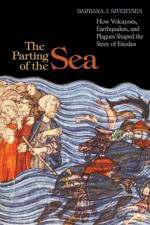
For more than four decades, biblical experts have tried to place the story of Exodus into historical context--without success. What could explain the Nile turning to blood, insects swarming the land, and the sky falling to darkness? Integrating biblical accounts with substantive archaeological evidence, The Parting of the Sea looks at how natural phenomena shaped the stories of Exodus, the Sojourn in the Wilderness, and the Israelite conquest of Canaan. Barbara Sivertsen demonstrates that the Exodus was in fact two separate exoduses both triggered by volcanic eruptions--and provides scientific explanations for the ten plagues and the parting of the Red Sea. Over time, Israelite oral tradition combined these events into the Exodus narrative known today. Skillfully unifying textual and archaeological records with details of ancient geological events, Sivertsen shows how the first exodus followed a 1628 B.C.E Minoan eruption that produced all but one of the first nine plagues. The second exodus followed an eruption of a volcano off the Aegean island of Yali almost two centuries later, creating the tenth plague of darkness and a series of tsunamis that "e;parted the sea"e; and drowned the pursuing Egyptian army. Sivertsen's brilliant account explains inconsistencies in the biblical story, fits chronologically with the conquest of Jericho, and confirms that the Israelites were in Canaan before the end of the sixteenth century B.C.E. In examining oral traditions and how these practices absorb and process geological details through storytelling, The Parting of the Sea reveals how powerful historical narratives are transformed into myth.
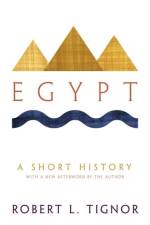
This is a sweeping, colorful, and concise narrative history of Egypt from the beginning of human settlement in the Nile River valley 5000 years ago to the present day. Accessible, authoritative, and richly illustrated, this is an ideal introduction and guide to Egypt's long, brilliant, and complex history for general readers, tourists, and anyone else who wants a better understanding of this vibrant and fascinating country, one that has played a central role in world history for millennia--and that continues to do so today. Respected historian Robert Tignor, who has lived in Egypt at different times over the course of five decades, covers all the major eras of the country's ancient, modern, and recent history. A cradle of civilization, ancient Egypt developed a unique and influential culture that featured a centralized monarchy, sophisticated art and technology, and monumental architecture in the form of pyramids and temples. But the great age of the pharaohs is just the beginning of the story and Egypt: A Short History also gives a rich account of the tumultuous history that followed--from Greek and Roman conquests, the rise of Christianity, Arab-Muslim triumph, and Egypt's incorporation into powerful Islamic empires to Napoleon's 1798 invasion, the country's absorption into the British Empire, and modern, postcolonial Egypt under Nasser, Sadat, and Mubarak. This book provides an indispensable key to Egypt in all its layers--ancient and modern, Greek and Roman, and Christian and Islamic. In a new afterword the author analyzes the recent unrest in Egypt and weighs in on what the country might look like after Mubarak.
Inside the Castle is a comprehensive social history of twentieth-century family law in the United States. Joanna Grossman and Lawrence Friedman show how vast, oceanic changes in society have reshaped and reconstituted the American family. Women and children have gained rights and powers, and novel forms of family life have emerged. The family has more or less dissolved into a collection of independent individuals with their own wants, desires, and goals. Modern family law, as always, reflects the brute social and cultural facts of family life. The story of family law in the twentieth century is complex. This was the century that said goodbye to common-law marriage and breach-of-promise lawsuits. This was the century, too, of the sexual revolution and women's liberation, of gay rights and cohabitation. Marriage lost its powerful monopoly over legitimate sexual behavior. Couples who lived together without marriage now had certain rights. Gay marriage became legal in a handful of jurisdictions. By the end of the century, no state still prohibited same-sex behavior. Children in many states could legally have two mothers or two fathers. No-fault divorce became cheap and easy. And illegitimacy lost most of its social and legal stigma. These changes were not smooth or linear--all met with resistance and provoked a certain amount of backlash. Families took many forms, some of them new and different, and though buffeted by the winds of change, the family persisted as a central institution in society. Inside the Castle tells the story of that institution, exploring the ways in which law tried to penetrate and control this most mysterious realm of personal life.
Americans have always put the past to political ends. The Union laid claim to the Revolution--so did the Confederacy. Civil rights leaders said they were the true sons of liberty--so did Southern segregationists. This book tells the story of the centuries-long struggle over the meaning of the nation's founding, including the battle waged by the Tea Party, Glenn Beck, Sarah Palin, and evangelical Christians to "e;take back America."e; Jill Lepore, Harvard historian and New Yorker staff writer, offers a careful and concerned look at American history according to the far right, from the "e;rant heard round the world,"e; which launched the Tea Party, to the Texas School Board's adoption of a social-studies curriculum that teaches that the United States was established as a Christian nation. Along the way, she provides rare insight into the eighteenth-century struggle for independence--a history of the Revolution, from the archives. Lepore traces the roots of the far right's reactionary history to the bicentennial in the 1970s, when no one could agree on what story a divided nation should tell about its unruly beginnings. Behind the Tea Party's Revolution, she argues, lies a nostalgic and even heartbreaking yearning for an imagined past--a time less troubled by ambiguity, strife, and uncertainty--a yearning for an America that never was. The Whites of Their Eyes reveals that the far right has embraced a narrative about America's founding that is not only a fable but is also, finally, a variety of fundamentalism--anti-intellectual, antihistorical, and dangerously antipluralist. In a new afterword, Lepore addresses both the recent shift in Tea Party rhetoric from the Revolution to the Constitution and the diminished role of scholars as political commentators over the last half century of public debate.
The American military base on the island of Diego Garcia is one of the most strategically important and secretive U.S. military installations outside the United States. Located near the remote center of the Indian Ocean and accessible only by military transport, the base was a little-known launch pad for the wars in Iraq and Afghanistan and may house a top-secret CIA prison where terror suspects are interrogated and tortured. But Diego Garcia harbors another dirty secret, one that has been kept from most of the world--until now. Island of Shame is the first major book to reveal the shocking truth of how the United States conspired with Britain to forcibly expel Diego Garcia's indigenous people--the Chagossians--and deport them to slums in Mauritius and the Seychelles, where most live in dire poverty to this day. Drawing on interviews with Washington insiders, military strategists, and exiled islanders, as well as hundreds of declassified documents, David Vine exposes the secret history of Diego Garcia. He chronicles the Chagossians' dramatic, unfolding story as they struggle to survive in exile and fight to return to their homeland. Tracing U.S. foreign policy from the Cold War to the war on terror, Vine shows how the United States has forged a new and pervasive kind of empire that is quietly dominating the planet with hundreds of overseas military bases. Island of Shame is an unforgettable expos of the human costs of empire and a must-read for anyone concerned about U.S. foreign policy and its consequences.The author will donate all royalties from the sale of this book to the Chagossians.
In A Necessary Engagement, the CIA's former point man on Islam makes a vigorous case for a renewal of American public diplomacy in the Muslim world. Offering a unique balance between in-depth analysis, personal memoir, and foreign policy remedies, the book injects much-needed wisdom into the public discussion of long-term U.S.-Muslim relations. Intelligence insider Emile Nakhleh argues that an engagement with the Muslim world benefits the national interest of the United States. Therefore, the next administration should discard the terrorism prism through which the country has viewed political Islam since 9/11 and focus instead on the common interests of America and mainstream Muslims. Nakhleh investigates recent U.S. policy toward Islamic nations and offers the new administration a ten-point plan for rebuilding America's relationship with the Muslim world. The author demonstrates that winning over Arabs and Muslims requires a thorough knowledge of Arab and Muslim cultures and languages within our intelligence community, as well as a long-term American commitment of personnel and resources. While the success of these efforts will be incremental and hard to measure, Nakhleh believes that the current low standing of the United States in most Arab and Muslim countries can be reversed. Stressing that effective public diplomacy must be a serious, coordinated effort pursued at the highest political levels, A Necessary Engagement charts a new course for future ties between the United States and the Islamic world.
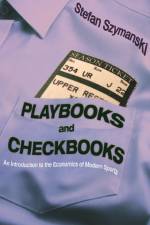
What economic rules govern sports? How does the sports business differ from other businesses? Playbooks and Checkbooks takes a fascinating step-by-step look at the fundamental economic relationships shaping modern sports. Focusing on the ways that the sports business does and does not overlap with economics, the book uncovers the core paradox at the heart of the sports industry. Unlike other businesses, the sports industry would not survive if competitors obliterated each other to extinction, financially or otherwise--without rivals there is nothing to sell. Playbooks and Checkbooks examines how this unique economic truth plays out in the sports world, both on and off the field. Noted economist Stefan Szymanski explains how modern sporting contests have evolved; how sports competitions are organized; and how economics has guided antitrust, monopoly, and cartel issues in the sporting world. Szymanski considers the motivation provided by prize money, uncovers discrepancies in players' salaries, and shows why the incentive structure for professional athletes encourages them to cheat through performance-enhancing drugs and match fixing. He also explores how changes in media broadcasting allow owners and athletes to play to a global audience, and why governments continue to publicly fund sporting events such as the Olympics, despite almost certain financial loss. Using economic tools to reveal the complex arrangements of an industry, Playbooks and Checkbooks illuminates the world of sports through economics, and the world of economics through sports.
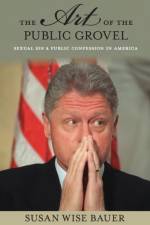
Whether you are a politician caught carrying on with an intern or a minister photographed with a prostitute, discovery does not necessarily spell the end of your public career. Admit your sins carefully, using the essential elements of an evangelical confession identified by Susan Wise Bauer in The Art of the Public Grovel, and you, like Bill Clinton, just might survive. In this fascinating and important history of public confession in modern America, Bauer explains why and how a type of confession that first arose among nineteenth-century evangelicals has today become the required form for any successful public admission of wrongdoing--even when the wrongdoer has no connection with evangelicalism and the context is thoroughly secular. She shows how Protestant revivalism, group psychotherapy, and the advent of talk TV combined to turn evangelical-style confession into a mainstream secular rite. Those who master the form--Bill Clinton, Jimmy Swaggart, David Vitter, and Ted Haggard--have a chance of surviving and even thriving, while those who don't--Ted Kennedy, Jim Bakker, Cardinal Bernard Law, Mark Foley, and Eliot Spitzer--will never really recover. Revealing the rhetoric, theology, and history that lie behind every successful public plea for forgiveness, The Art of the Public Grovel will interest anyone who has ever wondered why Clinton is still popular while Bakker fell out of public view, Ted Kennedy never got to be president, and Law moved to Rome.Some images inside the book are unavailable due to digital copyright restrictions.
Where other works of literary criticism are absorbed with the question--How to read a book?--Imagining Virginia Woolf asks a slightly different but more intriguing one: how does one read an author? Maria DiBattista answers this by undertaking an experiment in critical biography. The subject of this work is not Virginia Woolf, the person who wrote the novels, criticism, letters, and famous diary, but a different being altogether, someone or something Maria DiBattista identifies as "e;the figment of the author."e; This is the Virginia Woolf who lives intermittently in the pages of her writings and in the imagination of her readers. Drawing on Woolf's own extensive remarks on the pleasures and perils of reading, DiBattista argues that reading Woolf, in fact reading any author, involves an encounter with this imaginative figment, whose distinct, stylistic traits combine to produce that beguiling phantom--the literary personality. DiBattista reveals a writer who possessed not a single personality, but a cluster of distinct, yet complementary identities: the Sibyl of Bloomsbury, the Author, the Critic, the World Writer, and the Adventurer, the last of which, DiBattista claims, unites them all. Imagining Virginia Woolf provides an original way of reading, one that captures with variety and subtlety the personality that exists only in Woolf's works and in the minds of her readers.
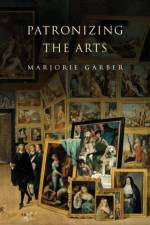
What is the role of the arts in American culture? Is art an essential element? If so, how should we support it? Today, as in the past, artists need the funding, approval, and friendship of patrons whether they are individuals, corporations, governments, or nonprofit foundations. But as Patronizing the Arts shows, these relationships can be problematic, leaving artists "e;patronized"e;--both supported with funds and personal interest, while being condescended to for vocations misperceived as play rather than serious work. In this provocative book, Marjorie Garber looks at the history of patronage, explains how patronage has elevated and damaged the arts in modern culture, and argues for the university as a serious patron of the arts. With clarity and wit, Garber supports rethinking prejudices that oppose art's role in higher education, rejects assumptions of inequality between the sciences and humanities, and points to similarities between the making of fine art and the making of good science. She examines issues of artistic and monetary value, and transactions between high and popular culture. She even asks how college sports could provide a new way of thinking about arts funding. Using vivid anecdotes and telling details, Garber calls passionately for an increased attention to the arts, not just through government and private support, but as a core aspect of higher education. Compulsively readable, Patronizing the Arts challenges all who value the survival of artistic creation both in the present and future.Some images inside the book are unavailable due to digital copyright restrictions.
Building on their important findings in The Source of the River, the authors now probe even more deeply into minority underachievement at the college level. Taming the River examines the academic and social dynamics of different ethnic groups during the first two years of college. Focusing on racial differences in academic performance, the book identifies the causes of students' divergent grades and levels of personal satisfaction with their institutions. Using survey data collected from twenty-eight selective colleges and universities, Taming the River considers all facets of student life, including who students date, what fields they major in, which sports they play, and how they perceive their own social and economic backgrounds. The book explores how black and Latino students experience pressures stemming from campus racial climate and "e;stereotype threat"e;--when students underperform because of anxieties tied to existing negative stereotypes. Describing the relationship between grade performance and stereotype threat, the book shows how this link is reinforced by institutional practices of affirmative action. The authors also indicate that when certain variables are controlled, minority students earn the same grades, express the same college satisfaction, and remain in school at the same rates as white students. A powerful look at how educational policies unfold in America's universities, Taming the River sheds light on the social and racial factors influencing student success.
This is the first fully illustrated guide to all 336 dragonfly and damselfly species of eastern North America--from the rivers of Manitoba to the Florida cypress swamps--and the companion volume to Dennis Paulson's acclaimed field guide to the dragonflies and damselflies of the West. Dragonflies and Damselflies of the East features hundreds of color photos that depict all the species found in the region, detailed line drawings to aid in-hand identification, and a color distribution map for every species--and the book's compact size and user-friendly design make it the only guide you need in the field. Species accounts describe key identification features, distribution, flight season, similar species, habitat, and natural history. Paulson's authoritative introduction offers a primer on dragonfly biology and identification, and also includes tips on how to study and photograph these stunningly beautiful insects. Illustrates all 336 eastern species Features hundreds of full-color photos Includes detailed species accounts, line drawings to aid identification, and a color distribution map for every species Offers helpful tips for the dragonfly enthusiast
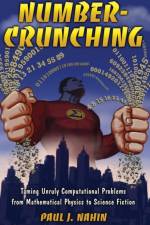
How do technicians repair broken communications cables at the bottom of the ocean without actually seeing them? What's the likelihood of plucking a needle out of a haystack the size of the Earth? And is it possible to use computers to create a universal library of everything ever written or every photo ever taken? These are just some of the intriguing questions that best-selling popular math writer Paul Nahin tackles in Number-Crunching. Through brilliant math ideas and entertaining stories, Nahin demonstrates how odd and unusual math problems can be solved by bringing together basic physics ideas and today's powerful computers. Some of the outcomes discussed are so counterintuitive they will leave readers astonished. Nahin looks at how the art of number-crunching has changed since the advent of computers, and how high-speed technology helps to solve fascinating conundrums such as the three-body, Monte Carlo, leapfrog, and gambler's ruin problems. Along the way, Nahin traverses topics that include algebra, trigonometry, geometry, calculus, number theory, differential equations, Fourier series, electronics, and computers in science fiction. He gives historical background for the problems presented, offers many examples and numerous challenges, supplies MATLAB codes for all the theories discussed, and includes detailed and complete solutions. Exploring the intimate relationship between mathematics, physics, and the tremendous power of modern computers, Number-Crunching will appeal to anyone interested in understanding how these three important fields join forces to solve today's thorniest puzzles.
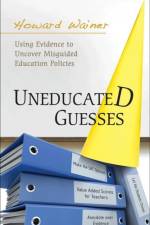
Uneducated Guesses challenges everything our policymakers thought they knew about education and education reform, from how to close the achievement gap in public schools to admission standards for top universities. In this explosive book, Howard Wainer uses statistical evidence to show why some of the most widely held beliefs in education today--and the policies that have resulted--are wrong. He shows why colleges that make the SAT optional for applicants end up with underperforming students and inflated national rankings, and why the push to substitute achievement tests for aptitude tests makes no sense. Wainer challenges the thinking behind the enormous rise of advanced placement courses in high schools, and demonstrates why assessing teachers based on how well their students perform on tests--a central pillar of recent education reforms--is woefully misguided. He explains why college rankings are often lacking in hard evidence, why essay questions on tests disadvantage women, why the most grievous errors in education testing are not made by testing organizations--and much more. No one concerned about seeing our children achieve their full potential can afford to ignore this book. With forceful storytelling, wry insight, and a wealth of real-world examples, Uneducated Guesses exposes today's educational policies to the light of empirical evidence, and offers solutions for fairer and more viable future policies.
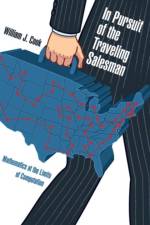
What is the shortest possible route for a traveling salesman seeking to visit each city on a list exactly once and return to his city of origin? It sounds simple enough, yet the traveling salesman problem is one of the most intensely studied puzzles in applied mathematics-and it has defied solution to this day. In this book, William Cook takes readers on a mathematical excursion, picking up the salesman's trail in the 1800s when Irish mathematician W. R. Hamilton first defined the problem, and venturing to the furthest limits of today's state-of-the-art attempts to solve it. He also explores its many important applications, from genome sequencing and designing computer processors to arranging music and hunting for planets.In Pursuit of the Traveling Salesman travels to the very threshold of our understanding about the nature of complexity, and challenges you yourself to discover the solution to this captivating mathematical problem.Some images inside the book are unavailable due to digital copyright restrictions.
During the seventeenth century, Holland created the world's most dynamic colonial empire, outcompeting the British and capturing Spanish and Portuguese colonies. Yet, in the Sino-Dutch War--Europe's first war with China--the Dutch met their match in a colorful Chinese warlord named Koxinga. Part samurai, part pirate, he led his generals to victory over the Dutch and captured one of their largest and richest colonies--Taiwan. How did he do it? Examining the strengths and weaknesses of European and Chinese military techniques during the period, Lost Colony provides a balanced new perspective on long-held assumptions about Western power, Chinese might, and the nature of war. It has traditionally been asserted that Europeans of the era possessed more advanced science, technology, and political structures than their Eastern counterparts, but historians have recently contested this view, arguing that many parts of Asia developed on pace with Europe until 1800. While Lost Colony shows that the Dutch did indeed possess a technological edge thanks to the Renaissance fort and the broadside sailing ship, that edge was neutralized by the formidable Chinese military leadership. Thanks to a rich heritage of ancient war wisdom, Koxinga and his generals outfoxed the Dutch at every turn. Exploring a period when the military balance between Europe and China was closer than at any other point in modern history, Lost Colony reassesses an important chapter in world history and offers valuable and surprising lessons for contemporary times.
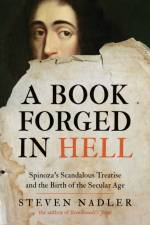
When it appeared in 1670, Baruch Spinoza's Theological-Political Treatise was denounced as the most dangerous book ever published--"e;godless,"e; "e;full of abominations,"e; "e;a book forged in hell . . . by the devil himself."e; Religious and secular authorities saw it as a threat to faith, social and political harmony, and everyday morality, and its author was almost universally regarded as a religious subversive and political radical who sought to spread atheism throughout Europe. Yet Spinoza's book has contributed as much as the Declaration of Independence or Thomas Paine's Common Sense to modern liberal, secular, and democratic thinking. In A Book Forged in Hell, Steven Nadler tells the fascinating story of this extraordinary book: its radical claims and their background in the philosophical, religious, and political tensions of the Dutch Golden Age, as well as the vitriolic reaction these ideas inspired. It is not hard to see why Spinoza's Treatise was so important or so controversial, or why the uproar it caused is one of the most significant events in European intellectual history. In the book, Spinoza became the first to argue that the Bible is not literally the word of God but rather a work of human literature; that true religion has nothing to do with theology, liturgical ceremonies, or sectarian dogma; and that religious authorities should have no role in governing a modern state. He also denied the reality of miracles and divine providence, reinterpreted the nature of prophecy, and made an eloquent plea for toleration and democracy. A vivid story of incendiary ideas and vicious backlash, A Book Forged in Hell will interest anyone who is curious about the origin of some of our most cherished modern beliefs.
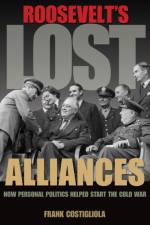
In the spring of 1945, as the Allied victory in Europe was approaching, the shape of the postwar world hinged on the personal politics and flawed personalities of Roosevelt, Churchill, and Stalin. Roosevelt's Lost Alliances captures this moment and shows how FDR crafted a winning coalition by overcoming the different habits, upbringings, sympathies, and past experiences of the three leaders. In particular, Roosevelt trained his famous charm on Stalin, lavishing respect on him, salving his insecurities, and rendering him more amenable to compromise on some matters. Yet, even as he pursued a lasting peace, FDR was alienating his own intimate circle of advisers and becoming dangerously isolated. After his death, postwar cooperation depended on Harry Truman, who, with very different sensibilities, heeded the embittered "e;Soviet experts"e; his predecessor had kept distant. A Grand Alliance was painstakingly built and carelessly lost. The Cold War was by no means inevitable. This landmark study brings to light key overlooked documents, such as the Yalta diary of Roosevelt's daughter Anna; the intimate letters of Roosevelt's de facto chief of staff, Missy LeHand; and the wiretap transcripts of estranged adviser Harry Hopkins. With a gripping narrative and subtle analysis, Roosevelt's Lost Alliances lays out a new approach to foreign relations history. Frank Costigliola highlights the interplay between national political interests and more contingent factors, such as the personalities of leaders and the culturally conditioned emotions forming their perceptions and driving their actions. Foreign relations flowed from personal politics--a lesson pertinent to historians, diplomats, and citizens alike.
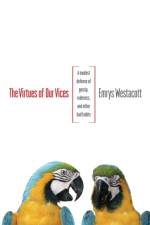
Are there times when it's right to be rude? Can we distinguish between good and bad gossip? Am I a snob if I think that NPR listeners are likely to be better informed than devotees of Fox News? Does sick humor do anyone any good? Can I think your beliefs are absurd but still respect you?In The Virtues of Our Vices, philosopher Emrys Westacott takes a fresh look at important everyday ethical questions--and comes up with surprising answers. He makes a compelling argument that some of our most common vices--rudeness, gossip, snobbery, tasteless humor, and disrespect for others' beliefs--often have hidden virtues or serve unappreciated but valuable purposes. For instance, there are times when rudeness may be necessary to help someone with a problem or to convey an important message. Gossip can foster intimacy between friends and curb abuses of power. And dubious humor can alleviate existential anxieties.Engaging, funny, and philosophically sophisticated, The Virtues of Our Vices challenges us to rethink conventional wisdom when it comes to everyday moral behavior.
From the Korean War to the current conflict in Iraq, Paying the Human Costs of War examines the ways in which the American public decides whether to support the use of military force. Contrary to the conventional view, the authors demonstrate that the public does not respond reflexively and solely to the number of casualties in a conflict. Instead, the book argues that the public makes reasoned and reasonable cost-benefit calculations for their continued support of a war based on the justifications for it and the likelihood it will succeed, along with the costs that have been suffered in casualties. Of these factors, the book finds that the most important consideration for the public is the expectation of success. If the public believes that a mission will succeed, the public will support it even if the costs are high. When the public does not expect the mission to succeed, even small costs will cause the withdrawal of support. Providing a wealth of new evidence about American attitudes toward military conflict, Paying the Human Costs of War offers insights into a controversial, timely, and ongoing national discussion.
Alexis de Tocqueville (1805-59) has long been recognized as a major political and social thinker as well as historian, but his writings also contain a wealth of little-known insights into economic life and its connection to the rest of society. In Tocqueville's Political Economy, Richard Swedberg shows that Tocqueville had a highly original and suggestive approach to economics--one that still has much to teach us today. Through careful readings of Tocqueville's two major books and many of his other writings, Swedberg lays bare Tocqueville's ingenious way of thinking about major economic phenomena. At the center of Democracy in America, Tocqueville produced a magnificent analysis of the emerging entrepreneurial economy that he found during his 1831-32 visit to the United States. More than two decades later, in The Old Regime and the Revolution, Tocqueville made the complementary argument that it was France's blocked economy and society that led to the Revolution of 1789. In between the publication of these great works, Tocqueville also produced many lesser-known writings on such topics as property, consumption, and moral factors in economic life. When examined together, Swedberg argues, these books and other writings constitute an interesting alternative model of economic thinking, as well as a major contribution to political economy that deserves a place in contemporary discussions about the social effects of economics.
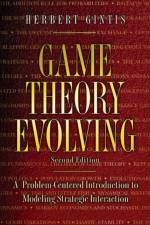
Since its original publication in 2000, Game Theory Evolving has been considered the best textbook on evolutionary game theory. This completely revised and updated second edition of Game Theory Evolving contains new material and shows students how to apply game theory to model human behavior in ways that reflect the special nature of sociality and individuality. The textbook continues its in-depth look at cooperation in teams, agent-based simulations, experimental economics, the evolution and diffusion of preferences, and the connection between biology and economics. Recognizing that students learn by doing, the textbook introduces principles through practice. Herbert Gintis exposes students to the techniques and applications of game theory through a wealth of sophisticated and surprisingly fun-to-solve problems involving human and animal behavior. The second edition includes solutions to the problems presented and information related to agent-based modeling. In addition, the textbook incorporates instruction in using mathematical software to solve complex problems. Game Theory Evolving is perfect for graduate and upper-level undergraduate economics students, and is a terrific introduction for ambitious do-it-yourselfers throughout the behavioral sciences. Revised and updated edition relevant for courses across disciplines Perfect for graduate and upper-level undergraduate economics courses Solutions to problems presented throughout Incorporates instruction in using computational software for complex problem solving Includes in-depth discussions of agent-based modeling
Abonner på vårt nyhetsbrev og få rabatter og inspirasjon til din neste leseopplevelse.
Ved å abonnere godtar du vår personvernerklæring.