











Gjør som tusenvis av andre bokelskere
Abonner på vårt nyhetsbrev og få rabatter og inspirasjon til din neste leseopplevelse.
Ved å abonnere godtar du vår personvernerklæring.Du kan når som helst melde deg av våre nyhetsbrev.

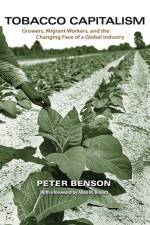
Tobacco Capitalism tells the story of the people who live and work on U.S. tobacco farms at a time when the global tobacco industry is undergoing profound changes. Against the backdrop of the antitobacco movement, the globalization and industrialization of agriculture, and intense debates over immigration, Peter Benson draws on years of field research to examine the moral and financial struggles of growers, the difficult conditions that affect Mexican migrant workers, and the complex politics of citizenship and economic decline in communities dependent on this most harmful commodity. Benson tracks the development of tobacco farming since the plantation slavery period and the formation of a powerful tobacco industry presence in North Carolina. In recent decades, tobacco companies that sent farms into crisis by aggressively switching to cheaper foreign leaf have coached growers to blame the state, public health, and aggrieved racial minorities for financial hardship and feelings of vilification. Economic globalization has exacerbated social and racial tensions in North Carolina, but the corporations that benefit have rarely been considered a key cause of harm and instability, and have now adopted social-responsibility platforms to elide liability for smoking disease. Parsing the nuances of history, power, and politics in rural America, Benson explores the cultural and ethical ambiguities of tobacco farming and offers concrete recommendations for the tobacco-control movement in the United States and worldwide.
Since the 1990s, suicide in recession-plagued Japan has soared, and rates of depression have both increased and received greater public attention. In a nation that has traditionally been uncomfortable addressing mental illness, what factors have allowed for the rising medicalization of depression and suicide? Investigating these profound changes from historical, clinical, and sociolegal perspectives, Depression in Japan explores how depression has become a national disease and entered the Japanese lexicon, how psychiatry has responded to the nation's ailing social order, and how, in a remarkable transformation, psychiatry has overcome the longstanding resistance to its intrusion in Japanese life. Questioning claims made by Japanese psychiatrists that depression hardly existed in premodern Japan, Junko Kitanaka shows that Japanese medicine did indeed have a language for talking about depression which was conceived of as an illness where psychological suffering was intimately connected to physiological and social distress. The author looks at how Japanese psychiatrists now use the discourse of depression to persuade patients that they are victims of biological and social forces beyond their control; analyzes how this language has been adopted in legal discourse surrounding "e;overwork suicide"e;; and considers how, in contrast to the West, this language curiously emphasizes the suffering of men rather than women. Examining patients' narratives, Kitanaka demonstrates how psychiatry constructs a gendering of depression, one that is closely tied to local politics and questions of legitimate social suffering. Drawing upon extensive research in psychiatric institutions in Tokyo and the surrounding region, Depression in Japan uncovers the emergence of psychiatry as a force for social transformation in Japan.
Autism has attracted a great deal of attention in recent years, thanks to dramatically increasing rates of diagnosis, extensive organizational mobilization, journalistic coverage, biomedical research, and clinical innovation. Understanding Autism, a social history of the expanding diagnostic category of this contested illness, takes a close look at the role of emotion--specifically, of parental love--in the intense and passionate work of biomedical communities investigating autism. Chloe Silverman tracks developments in autism theory and practice over the past half-century and shows how an understanding of autism has been constituted and stabilized through vital efforts of schools, gene banks, professional associations, government committees, parent networks, and treatment conferences. She examines the love and labor of parents, who play a role in developing--in conjunction with medical experts--new forms of treatment and therapy for their children. While biomedical knowledge is dispersed through an emotionally neutral, technical language that separates experts from laypeople, parental advocacy and activism call these distinctions into question. Silverman reveals how parental care has been a constant driver in the volatile field of autism research and treatment, and has served as an inspiration for scientific change. Recognizing the importance of parental knowledge and observations in treating autism, this book reveals that effective responses to the disorder demonstrate the mutual interdependence of love and science.
The Emancipation of Europe's Muslims traces how governments across Western Europe have responded to the growing presence of Muslim immigrants in their countries over the past fifty years. Drawing on hundreds of in-depth interviews with government officials and religious leaders in France, Germany, Italy, the Netherlands, the United Kingdom, Morocco, and Turkey, Jonathan Laurence challenges the widespread notion that Europe's Muslim minorities represent a threat to liberal democracy. He documents how European governments in the 1970s and 1980s excluded Islam from domestic institutions, instead inviting foreign powers like Saudi Arabia, Algeria, and Turkey to oversee the practice of Islam among immigrants in European host societies. But since the 1990s, amid rising integration problems and fears about terrorism, governments have aggressively stepped up efforts to reach out to their Muslim communities and incorporate them into the institutional, political, and cultural fabrics of European democracy.The Emancipation of Europe's Muslims places these efforts--particularly the government-led creation of Islamic councils--within a broader theoretical context and gleans insights from government interactions with groups such as trade unions and Jewish communities at previous critical junctures in European state-building. By examining how state-mosque relations in Europe are linked to the ongoing struggle for religious and political authority in the Muslim-majority world, Laurence sheds light on the geopolitical implications of a religious minority's transition from outsiders to citizens. This book offers a much-needed reassessment that foresees the continuing integration of Muslims into European civil society and politics in the coming decades.
The phenomenal growth of global pharmaceutical sales and the quest for innovation are driving an unprecedented search for human test subjects, particularly in middle- and low-income countries. Our hope for medical progress increasingly depends on the willingness of the world's poor to participate in clinical drug trials. While these experiments often provide those in need with vital and previously unattainable medical resources, the outsourcing and offshoring of trials also create new problems. In this groundbreaking book, anthropologist Adriana Petryna takes us deep into the clinical trials industry as it brings together players separated by vast economic and cultural differences. Moving between corporate and scientific offices in the United States and research and public health sites in Poland and Brazil, When Experiments Travel documents the complex ways that commercial medical science, with all its benefits and risks, is being integrated into local health systems and emerging drug markets. Providing a unique perspective on globalized clinical trials, When Experiments Travel raises central questions: Are such trials exploitative or are they social goods? How are experiments controlled and how is drug safety ensured? And do these experiments help or harm public health in the countries where they are conducted? Empirically rich and theoretically innovative, the book shows that neither the language of coercion nor that of rational choice fully captures the range of situations and value systems at work in medical experiments today. When Experiments Travel challenges conventional understandings of the ethics and politics of transnational science and changes the way we think about global medicine and the new infrastructures of our lives.
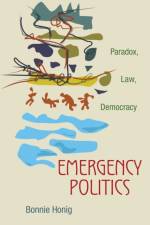
This book intervenes in contemporary debates about the threat posed to democratic life by political emergencies. Must emergency necessarily enhance and centralize top-down forms of sovereignty? Those who oppose executive branch enhancement often turn instead to law, insisting on the sovereignty of the rule of law or demanding that law rather than force be used to resolve conflicts with enemies. But are these the only options? Or are there more democratic ways to respond to invocations of emergency politics? Looking at how emergencies in the past and present have shaped the development of democracy, Bonnie Honig argues that democracies must resist emergency's pull to focus on life's necessities (food, security, and bare essentials) because these tend to privatize and isolate citizens rather than bring us together on behalf of hopeful futures. Emphasizing the connections between mere life and more life, emergence and emergency, Honig argues that emergencies call us to attend anew to a neglected paradox of democratic politics: that we need good citizens with aspirational ideals to make good politics while we need good politics to infuse citizens with idealism. Honig takes a broad approach to emergency, considering immigration politics, new rights claims, contemporary food politics and the infrastructure of consumption, and the limits of law during the Red Scare of the early twentieth century. Taking its bearings from Moses Mendelssohn, Franz Rosenzweig, and other Jewish thinkers, this is a major contribution to modern thought about the challenges and risks of democratic orientation and action in response to emergency.
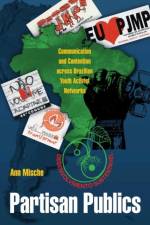
During the 1980s and 1990s, Brazil struggled to rebuild its democracy after twenty years of military dictatorship, experiencing financial crises, corruption scandals, political protest, and intense electoral contention. In the midst of this turmoil, Ann Mische argues in this remarkable book, youth activists of various stripes played a vital and unrecognized role, contributing new forms of political talk and action to Brazil's emerging democracy. Drawing upon extensive and rich ethnography as well as formal network analysis, Mische tracks the lives of young activists through intersecting political networks, including student movements, church-based activism, political parties, nongovernmental organizations, and business and professional organizations. She probes the problems and possibilities they encountered in combining partisan activism with other kinds of civic involvement. In documenting activists' struggles to develop cross-partisan publics of various kinds, Mische explores the distinct styles of communication and leadership that emerged across organizations and among individuals. Drawing on the ideas of Habermas, Gramsci, Dewey, and Machiavelli, Partisan Publics highlights political communication styles and the forms of mediation and leadership they give rise to--for democratic politics in Brazil and elsewhere. Insightful in its discussion of culture, methodology, and theory, Partisan Publics argues that partisanship can play a significant role in civic life, helping to build relations and institutions in an emerging democracy.
Scholars have long argued over whether the 1648 Peace of Westphalia, which ended more than a century of religious conflict arising from the Protestant Reformations, inaugurated the modern sovereign-state system. But they largely ignore a more fundamental question: why did the emergence of new forms of religious heterodoxy during the Reformations spark such violent upheaval and nearly topple the old political order? In this book, Daniel Nexon demonstrates that the answer lies in understanding how the mobilization of transnational religious movements intersects with--and can destabilize--imperial forms of rule. Taking a fresh look at the pivotal events of the sixteenth and seventeenth centuries--including the Schmalkaldic War, the Dutch Revolt, and the Thirty Years' War--Nexon argues that early modern "e;composite"e; political communities had more in common with empires than with modern states, and introduces a theory of imperial dynamics that explains how religious movements altered Europe's balance of power. He shows how the Reformations gave rise to crosscutting religious networks that undermined the ability of early modern European rulers to divide and contain local resistance to their authority. In doing so, the Reformations produced a series of crises in the European order and crippled the Habsburg bid for hegemony. Nexon's account of these processes provides a theoretical and analytic framework that not only challenges the way international relations scholars think about state formation and international change, but enables us to better understand global politics today.
This book is a concise philosophical meditation on Iago and the nature of evil, through the exploration of the enduring puzzle found in Shakespeare's Othello. What drives Iago to orchestrate Othello's downfall? Instead of treating Iago's lack of motive as the play's greatest weakness, The Apologetics of Evil shows how this absence of motive is the play's greatest strength. Richard Raatzsch determines that Iago does not seek a particular end or revenge for a discrete wrong; instead, Iago is governed by a passion for intriguing in itself. Raatzsch explains that this passion is a pathological version of ordinary human behavior and that Iago lacks the ability to acknowledge others; what matters most to him is the difference between himself and the rest of the world. The book opens with a portrait of Iago, and considers the nature and moral significance of the evil that he represents. Raatzsch addresses the boundaries dividing normality and pathology, conceptualizing evil as a pathological form of the good or ordinary. Seen this way, evil is conceptually dependent on the ordinary, and Iago, as a form of moral monster, is a kind of nonbeing. Therefore, his actions might be understood and defended, even if they cannot be justified. In a brief epilogue, Raatzsch argues that literature's presentation of what is monstrous or virtuous can constitute an understanding of these concepts, not merely illustrate them.
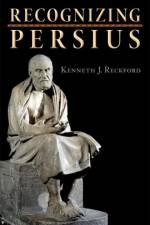
Recognizing Persius is a passionate and in-depth exploration of the libellus--or little book--of six Latin satires left by the Roman satirical writer Persius when he died in AD 62 at the age of twenty-seven. In this comprehensive and reflectively personal book, Kenneth Reckford fleshes out the primary importance of this mysterious and idiosyncratic writer. Reckford emphasizes the dramatic power and excitement of Persius's satires--works that normally would have been recited before a reclining, feasting audience. In highlighting the satires' remarkable honesty, Reckford shows how Persius converted Roman satire into a vehicle of self-exploration and self-challenge that remains relevant to readers today. The book explores the foundations of Roman satire as a performance genre: from the dinner-party recitals of Lucilius, the founder of the genre, through Horace, to Persius's more intense and inward dramatic monologues. Reckford argues that despite satire's significant public function, Persius wrote his pieces first and mainly for himself. Reckford also provides the context for Persius's life and work: his social responsibilities as a landowner; the interplay between his life, his Stoic philosophy, and his art; and finally, his incomplete struggle to become an honest and decent human being. Bringing the modern reader to a closer and more nuanced acquaintance with Persius's work, Recognizing Persius reinstates him to the ranks of the first-rate satirists, alongside Horace and Juvenal.
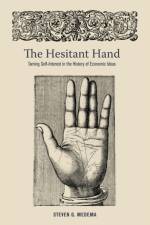
Adam Smith turned economic theory on its head in 1776 when he declared that the pursuit of self-interest mediated by the market itself--not by government--led, via an invisible hand, to the greatest possible welfare for society as a whole. The Hesitant Hand examines how subsequent economic thinkers have challenged or reaffirmed Smith's doctrine, some contending that society needs government to intervene on its behalf when the marketplace falters, others arguing that government interference ultimately benefits neither the market nor society. Steven Medema explores what has been perhaps the central controversy in modern economics from Smith to today. He traces the theory of market failure from the 1840s through the 1950s and subsequent attacks on this view by the Chicago and Virginia schools. Medema follows the debate from John Stuart Mill through the Cambridge welfare tradition of Henry Sidgwick, Alfred Marshall, and A. C. Pigou, and looks at Ronald Coase's challenge to the Cambridge approach and the rise of critiques affirming Smith's doctrine anew. He shows how, following the marginal revolution, neoclassical economists, like the preclassical theorists before Smith, believed government can mitigate the adverse consequences of self-interested behavior, yet how the backlash against this view, led by the Chicago and Virginia schools, demonstrated that self-interest can also impact government, leaving society with a choice among imperfect alternatives. The Hesitant Hand demonstrates how government's economic role continues to be bound up in questions about the effects of self-interest on the greater good.
For over a century, the Danish thinker Soren Kierkegaard (1813-55) has been at the center of a number of important discussions, concerning not only philosophy and theology, but also, more recently, fields such as social thought, psychology, and contemporary aesthetics, especially literary theory. Despite his relatively short life, Kierkegaard was an extraordinarily prolific writer, as attested to by the 26-volume Princeton University Press edition of all of his published writings. But Kierkegaard left behind nearly as much unpublished writing, most of which consists of what are called his "e;journals and notebooks."e; Kierkegaard has long been recognized as one of history's great journal keepers, but only rather small portions of his journals and notebooks are what we usually understand by the term "e;diaries."e; By far the greater part of Kierkegaard's journals and notebooks consists of reflections on a myriad of subjects--philosophical, religious, political, personal. Studying his journals and notebooks takes us into his workshop, where we can see his entire universe of thought. We can witness the genesis of his published works, to be sure--but we can also see whole galaxies of concepts, new insights, and fragments, large and small, of partially (or almost entirely) completed but unpublished works. Kierkegaard's Journals and Notebooks enables us to see the thinker in dialogue with his times and with himself. Volume 4 of this 11-volume series includes the first five of Kierkegaard's well-known "e;NB"e; journals, which contain, in addition to a great many reflections on his own life, a wealth of thoughts on theological matters, as well as on Kierkegaard's times, including political developments and the daily press. Kierkegaard wrote his journals in a two-column format, one for his initial entries and the second for the extensive marginal comments that he added later. This edition of the journals reproduces this format, includes several photographs of original manuscript pages, and contains extensive scholarly commentary on the various entries and on the history of the manuscripts being reproduced.
When can we be morally responsible for our behavior? Is it fair to blame people for actions that are determined by heredity and environment? Can we be responsible for the actions of relatives or members of our community? In this provocative book, Tamler Sommers concludes that there are no objectively correct answers to these questions. Drawing on research in anthropology, psychology, and a host of other disciplines, Sommers argues that cross-cultural variation raises serious problems for theories that propose universally applicable conditions for moral responsibility. He then develops a new way of thinking about responsibility that takes cultural diversity into account. Relative Justice is a novel and accessible contribution to the ancient debate over free will and moral responsibility. Sommers provides a thorough examination of the methodology employed by contemporary philosophers in the debate and a challenge to Western assumptions about individual autonomy and its connection to moral desert.
How do Supreme Court justices decide their cases? Do they follow their policy preferences? Or are they constrained by the law and by other political actors? The Constrained Court combines new theoretical insights and extensive data analysis to show that law and politics together shape the behavior of justices on the Supreme Court. Michael Bailey and Forrest Maltzman show how two types of constraints have influenced the decision making of the modern Court. First, Bailey and Maltzman document that important legal doctrines, such as respect for precedents, have influenced every justice since 1950. The authors find considerable variation in how these doctrines affect each justice, variation due in part to the differing experiences justices have brought to the bench. Second, Bailey and Maltzman show that justices are constrained by political factors. Justices are not isolated from what happens in the legislative and executive branches, and instead respond in predictable ways to changes in the preferences of Congress and the president. The Constrained Court shatters the myth that justices are unconstrained actors who pursue their personal policy preferences at all costs. By showing how law and politics interact in the construction of American law, this book sheds new light on the unique role that the Supreme Court plays in the constitutional order.
For over a century, the Danish thinker Soren Kierkegaard (1813-55) has been at the center of a number of important discussions, concerning not only philosophy and theology, but also, more recently, fields such as social thought, psychology, and contemporary aesthetics, especially literary theory. Despite his relatively short life, Kierkegaard was an extraordinarily prolific writer, as attested to by the 26-volume Princeton University Press edition of all of his published writings. But Kierkegaard left behind nearly as much unpublished writing, most of which consists of what are called his "e;journals and notebooks."e; Kierkegaard has long been recognized as one of history's great journal keepers, but only rather small portions of his journals and notebooks are what we usually understand by the term "e;diaries."e; By far the greater part of Kierkegaard's journals and notebooks consists of reflections on a myriad of subjects--philosophical, religious, political, personal. Studying his journals and notebooks takes us into his workshop, where we can see his entire universe of thought. We can witness the genesis of his published works, to be sure--but we can also see whole galaxies of concepts, new insights, and fragments, large and small, of partially (or almost entirely) completed but unpublished works. Kierkegaard's Journals and Notebooks enables us to see the thinker in dialogue with his times and with himself. Volume 5 of this 11-volume series includes five of Kierkegaard's important "e;NB"e; journals (Journals NB6 through NB10), covering the months from summer 1848 through early May 1849. This was a turbulent period both in the history of Denmark--which was experiencing the immediate aftermath of revolution and the fall of absolutism, a continuing war with the German states, and the replacement of the State Church with the Danish People's Church--and for Kierkegaard personally. The journals in the present volume include Kierkegaard's reactions to the political upheaval, a retrospective account of his audiences with King Christian VIII, deliberations about publishing an autobiographical explanation of his writings, and an increasingly harsh critique of the Danish Church. These journals also reflect Kierkegaard's deep concern over his collision with the satirical journal Corsair, an experience that helped radicalize his view of "e;essential Christianity"e; and caused him to ponder the meaning of martyrdom. Kierkegaard wrote his journals in a two-column format, one for his initial entries and the second for the extensive marginal comments that he added later. This edition of the journals reproduces this format, includes several photographs of original manuscript pages, and contains extensive scholarly commentary on the various entries and on the history of the manuscripts being reproduced.
Suitable for students with three or more years of modern Chinese language instruction, Anything Goes uses advanced materials to reinforce language skills and increase understanding of contemporary China in one semester. This fully revised edition provides learners with a deeper fluency in high-level Chinese vocabulary and grammar, and includes newspaper articles and critiques as well as other primary source documents, such as political speeches and legal documents. The textbook covers topics that are essential to understanding contemporary Chinese society, including changing attitudes toward women and marriage, the one-child policy, economic development, China's ethnic minorities, and debates surrounding Taiwan and Hong Kong. The lessons intentionally investigate thought-provoking and sometimes controversial issues in order to spark lively classroom discussions. This new edition incorporates suggestions and improvements from years of student and teacher feedback. With an improved, more user-friendly format, Anything Goes juxtaposes text and vocabulary on adjacent pages. Grammar explanations and exercises have also been thoroughly updated. Advanced-level Chinese language textbook Includes newspaper articles and primary source documents Thought-provoking topics on contemporary Chinese society Updated grammar explanations and exercises New user-friendly format
The Flame of Eternity provides a reexamination and new interpretation of Nietzsche's philosophy and the central role that the concepts of eternity and time, as he understood them, played in it. According to Krzysztof Michalski, Nietzsche's reflections on human life are inextricably linked to time, which in turn cannot be conceived of without eternity. Eternity is a measure of time, but also, Michalski argues, something Nietzsche viewed first and foremost as a physiological concept having to do with the body. The body ages and decays, involving us in a confrontation with our eventual death. It is in relation to this brute fact that we come to understand eternity and the finitude of time. Nietzsche argues that humanity has long regarded the impermanence of our life as an illness in need of curing. It is this "e;pathology"e; that Nietzsche called nihilism. Arguing that this insight lies at the core of Nietzsche's philosophy as a whole, Michalski seeks to explain and reinterpret Nietzsche's thought in light of it. Michalski maintains that many of Nietzsche's main ideas--including his views on love, morality (beyond good and evil), the will to power, overcoming, the suprahuman (or the overman, as it is infamously referred to), the Death of God, and the myth of the eternal return--take on new meaning and significance when viewed through the prism of eternity.
In recent years the American public has witnessed several hard-fought battles over nominees to the U.S. Supreme Court. In these heated confirmation fights, candidates' legal and political philosophies have been subject to intense scrutiny and debate. Citizens, Courts, and Confirmations examines one such fight--over the nomination of Samuel Alito--to discover how and why people formed opinions about the nominee, and to determine how the confirmation process shaped perceptions of the Supreme Court's legitimacy. Drawing on a nationally representative survey, James Gibson and Gregory Caldeira use the Alito confirmation fight as a window into public attitudes about the nation's highest court. They find that Americans know far more about the Supreme Court than many realize, that the Court enjoys a great deal of legitimacy among the American people, that attitudes toward the Court as an institution generally do not suffer from partisan or ideological polarization, and that public knowledge enhances the legitimacy accorded the Court. Yet the authors demonstrate that partisan and ideological infighting that treats the Court as just another political institution undermines the considerable public support the institution currently enjoys, and that politicized confirmation battles pose a grave threat to the basic legitimacy of the Supreme Court.
The enormous recent success of molecular developmental biology has yielded a vast amount of new information on the details of development. So much so that we risk losing sight of the underlying principles that apply to all development. To cut through this thicket, John Tyler Bonner ponders a moment in evolution when development was at its most basic--the moment when signaling between cells began. Although multicellularity arose numerous times, most of those events happened many millions of years ago. Many of the details of development that we see today, even in simple organisms, accrued over a long evolutionary timeline, and the initial events are obscured. The relatively uncomplicated and easy-to-grow cellular slime molds offer a unique opportunity to analyze development at a primitive stage and perhaps gain insight into how early multicellular development might have started. Through slime molds, Bonner seeks a picture of the first elements of communication between cells. He asks what we have learned by looking at their developmental biology, including recent advances in our molecular understanding of the process. He then asks what is the most elementary way that polarity and pattern formation can be achieved. To find the answer, he uses models, including mathematical ones, to generate insights into how cell-to-cell cooperation might have originated. Students and scholars in the blossoming field of the evolution of development, as well as evolutionary biologists generally, will be interested in what Bonner has to say about the origins of multicellular development--and thus of the astounding biological complexity we now observe--and how best to study it.
In economic situations where action entails a fixed cost, inaction is the norm. Action is taken infrequently, and adjustments are large when they occur. Interest in economic models that exhibit ''lumpy'' behavior of this kind has exploded in recent years, spurred by growing evidence that it is typical in many important economic decisions, including price setting, investment, hiring, durable goods purchases, and portfolio management. In The Economics of Inaction, leading economist Nancy Stokey shows how the tools of stochastic control can be applied to dynamic problems of decision making under uncertainty when fixed costs are present. Stokey provides a self-contained, rigorous, and clear treatment of two types of models, impulse and instantaneous control. She presents the relevant results about Brownian motion and other diffusion processes, develops methods for analyzing each type of problem, and discusses applications to price setting, investment, and durable goods purchases. This authoritative book will be essential reading for graduate students and researchers in macroeconomics.
This is a guide for instructing posthumans in living a Dada life. It is not advisable, nor was it ever, to lead a Dada life."e;-The Posthuman Dada GuideThe Posthuman Dada Guide is an impractical handbook for practical living in our posthuman world-all by way of examining the imagined 1916 chess game between Tristan Tzara, the daddy of Dada, and V. I. Lenin, the daddy of communism. This epic game at Zurich's Cafe de la Terrasse-a battle between radical visions of art and ideological revolution-lasted for a century and may still be going on, although communism appears dead and Dada stronger than ever. As the poet faces the future mass murderer over the chessboard, neither realizes that they are playing for the world. Taking the match as metaphor for two poles of twentieth- and twenty-first-century thought, politics, and life, Andrei Codrescu has created his own brilliantly Dadaesque guide to Dada-and to what it can teach us about surviving our ultraconnected present and future. Here dadaists Duchamp, Ball, and von Freytag-Loringhoven and communists Trotsky, Radek, and Zinoviev appear live in company with later incarnations, including William Burroughs, Allen Ginsberg, Gilles Deleuze, and Newt Gingrich. The Posthuman Dada Guide is arranged alphabetically for quick reference and (some) nostalgia for order, with entries such as "e;eros (women),"e; "e;internet(s),"e; and "e;war."e; Throughout, it is written in the belief "e;that posthumans lining the road to the future (which looks as if it exists, after all, even though Dada is against it) need the solace offered by the primal raw energy of Dada and its inhuman sources.
Hugo von Hofmannsthal is one of the modern era's most important writers, but his fame as Richard Strauss's pioneering collaborator on such operas as Der Rosenkavalier and Die Frau ohne Schatten has obscured his other remarkable writings: his precocious lyric poetry, inventive short fiction, keen essays, and visionary plays. The Whole Difference, which includes new translations as well as classic ones long out of print, is a fresh introduction to the enormous range of this extraordinary artist, and the most comprehensive collection of Hofmannsthal's writings in English. Selected and edited by the poet and librettist J. D. McClatchy, this collection includes early lyric poems; short prose works, including "e;The Tale of Night Six Hundred and Seventy-Two,"e; "e;A Tale of the Cavalry,"e; and the famous "e;Letter of Lord Chandos"e;; two full-length plays, The Difficult Man and The Tower; as well as the first act of The Cavalier of the Rose. From the glittering salons of imperial Vienna to the bloodied ruins of Europe after the Great War, the landscape of Hofmannsthal's world stretches across the extremes of experience. This collection reflects those extremes, including both the sparkling social comedy of "e;the difficult man"e; Hans Karl, so sensitive that he cannot choose between the two women he loves, and the haunting fictional letter to Francis Bacon in which Lord Chandos explains why he can no longer write. Complete with an introduction by McClatchy, this collection reveals an artist whose unusual subtlety and depth will enthrall readers.
The core methods in today's econometric toolkit are linear regression for statistical control, instrumental variables methods for the analysis of natural experiments, and differences-in-differences methods that exploit policy changes. In the modern experimentalist paradigm, these techniques address clear causal questions such as: Do smaller classes increase learning? Should wife batterers be arrested? How much does education raise wages? Mostly Harmless Econometrics shows how the basic tools of applied econometrics allow the data to speak. In addition to econometric essentials, Mostly Harmless Econometrics covers important new extensions--regression-discontinuity designs and quantile regression--as well as how to get standard errors right. Joshua Angrist and Jorn-Steffen Pischke explain why fancier econometric techniques are typically unnecessary and even dangerous. The applied econometric methods emphasized in this book are easy to use and relevant for many areas of contemporary social science. An irreverent review of econometric essentials A focus on tools that applied researchers use most Chapters on regression-discontinuity designs, quantile regression, and standard errors Many empirical examples A clear and concise resource with wide applications
From South Africa in the nineteenth century to Hong Kong today, nations around the world, including the United States, have turned to guestworker programs to manage migration. These temporary labor recruitment systems represented a state-brokered compromise between employers who wanted foreign workers and those who feared rising numbers of immigrants. Unlike immigrants, guestworkers couldn't settle, bring their families, or become citizens, and they had few rights. Indeed, instead of creating a manageable form of migration, guestworker programs created an especially vulnerable class of labor.Based on a vast array of sources from U.S., Jamaican, and English archives, as well as interviews, No Man's Land tells the history of the American "e;H2"e; program, the world's second oldest guestworker program. Since World War II, the H2 program has brought hundreds of thousands of mostly Jamaican men to the United States to do some of the nation's dirtiest and most dangerous farmwork for some of its biggest and most powerful agricultural corporations, companies that had the power to import and deport workers from abroad. Jamaican guestworkers occupied a no man's land between nations, protected neither by their home government nor by the United States. The workers complained, went on strike, and sued their employers in class action lawsuits, but their protests had little impact because they could be repatriated and replaced in a matter of hours.No Man's Land puts Jamaican guestworkers' experiences in the context of the global history of this fast-growing and perilous form of labor migration.
Volume 38 opens on 1 July 1802, when Jefferson is in Washington, and closes on 12 November, when he is again there. For the last week of July and all of August and September, he resides at Monticello. Frequent correspondence with his heads of department and two visits with Secretary of State James Madison, however, keep the president abreast of matters of state. Upon learning in August of the declaration of war by Mawlay Sulayman, the sultan of Morocco, much of the president's and the cabinet's attention is focused on that issue, as they struggle to balance American diplomatic efforts with reliance on the country's naval power in the Mediterranean. Jefferson terms the sultan's actions "e;palpably against reason."e; In September, he addresses the concerns of the mayor of New York City and the governor of South Carolina that free blacks expelled from Guadeloupe by the French will be landed onto American shores. Although he believes the matter will be dealt with by the states, he also instructs Secretary of the Treasury Albert Gallatin to direct custom house officers to be watchful. In late August, Jefferson is alerted that he has been touched by the "e;breath of Slander,"e; when James T. Callender's accusations appear in the Richmond Recorder and make public his relationship with Sally Hemings. The president offers no comment, and a month later returns to Washington, where he continues planning for an impending visit by his daughters.Some images inside the book are unavailable due to digital copyright restrictions.
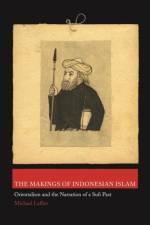
Indonesian Islam is often portrayed as being intrinsically moderate by virtue of the role that mystical Sufism played in shaping its traditions. According to Western observers--from Dutch colonial administrators and orientalist scholars to modern anthropologists such as the late Clifford Geertz--Indonesia's peaceful interpretation of Islam has been perpetually under threat from outside by more violent, intolerant Islamic traditions that were originally imposed by conquering Arab armies. The Makings of Indonesian Islam challenges this widely accepted narrative, offering a more balanced assessment of the intellectual and cultural history of the most populous Muslim nation on Earth. Michael Laffan traces how the popular image of Indonesian Islam was shaped by encounters between colonial Dutch scholars and reformist Islamic thinkers. He shows how Dutch religious preoccupations sometimes echoed Muslim concerns about the relationship between faith and the state, and how Dutch-Islamic discourse throughout the long centuries of European colonialism helped give rise to Indonesia's distinctive national and religious culture. The Makings of Indonesian Islam presents Islamic and colonial history as an integrated whole, revealing the ways our understanding of Indonesian Islam, both past and present, came to be.
Against Massacre looks at the rise of humanitarian intervention in the nineteenth century, from the fall of Napoleon to the First World War. Examining the concept from a historical perspective, Davide Rodogno explores the understudied cases of European interventions and noninterventions in the Ottoman Empire and brings a new view to this international practice for the contemporary era. While it is commonly believed that humanitarian interventions are a fairly recent development, Rodogno demonstrates that almost two centuries ago an international community, under the aegis of certain European powers, claimed a moral and political right to intervene in other states' affairs to save strangers from massacre, atrocity, or extermination. On some occasions, these powers acted to protect fellow Christians when allegedly "e;uncivilized"e; states, like the Ottoman Empire, violated a "e;right to life."e; Exploring the political, legal, and moral status, as well as European perceptions, of the Ottoman Empire, Rodogno investigates the reasons that were put forward to exclude the Ottomans from the so-called Family of Nations. He considers the claims and mixed motives of intervening states for aiding humanity, the relationship between public outcry and state action or inaction, and the bias and selectiveness of governments and campaigners. An original account of humanitarian interventions some two centuries ago, Against Massacre investigates the varied consequences of European involvement in the Ottoman Empire and the lessons that can be learned for similar actions today.
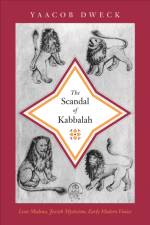
The Scandal of Kabbalah is the first book about the origins of a culture war that began in early modern Europe and continues to this day: the debate between kabbalists and their critics on the nature of Judaism and the meaning of religious tradition. From its medieval beginnings as an esoteric form of Jewish mysticism, Kabbalah spread throughout the early modern world and became a central feature of Jewish life. Scholars have long studied the revolutionary impact of Kabbalah, but, as Yaacob Dweck argues, they have misunderstood the character and timing of opposition to it. Drawing on a range of previously unexamined sources, this book tells the story of the first criticism of Kabbalah, Ari Nohem, written by Leon Modena in Venice in 1639. In this scathing indictment of Venetian Jews who had embraced Kabbalah as an authentic form of ancient esotericism, Modena proved the recent origins of Kabbalah and sought to convince his readers to return to the spiritualized rationalism of Maimonides. The Scandal of Kabbalah examines the hallmarks of Jewish modernity displayed by Modena's attack--a critical analysis of sacred texts, skepticism about religious truths, and self-consciousness about the past--and shows how these qualities and the later history of his polemic challenge conventional understandings of the relationship between Kabbalah and modernity. Dweck argues that Kabbalah was the subject of critical inquiry in the very period it came to dominate Jewish life rather than centuries later as most scholars have thought.Some images inside the book are unavailable due to digital copyright restrictions.
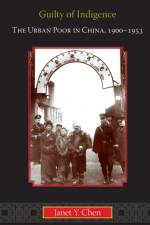
In the early twentieth century, a time of political fragmentation and social upheaval in China, poverty became the focus of an anguished national conversation about the future of the country. Investigating the lives of the urban poor in China during this critical era, Guilty of Indigence examines the solutions implemented by a nation attempting to deal with "e;society's most fundamental problem."e; Interweaving analysis of shifting social viewpoints, the evolution of poor relief institutions, and the lived experiences of the urban poor, Janet Chen explores the development of Chinese attitudes toward urban poverty and of policies intended for its alleviation. Chen concentrates on Beijing and Shanghai, two of China's most important cities, and she considers how various interventions carried a lasting influence. The advent of the workhouse, the denigration of the nonworking poor as "e;social parasites,"e; efforts to police homelessness and vagrancy--all had significant impact on the lives of people struggling to survive. Chen provides a crucially needed historical lens for understanding how beliefs about poverty intersected with shattering historical events, producing new welfare policies and institutions for the benefit of some, but to the detriment of others. Drawing on vast archival material, Guilty of Indigence deepens the historical perspective on poverty in China and reveals critical lessons about a still-pervasive social issue.Some images inside the book are unavailable due to digital copyright restrictions.
There are over 1,000 McDonald's on French soil. Two Disney theme parks have opened near Paris in the last two decades. And American-inspired vocabulary such as "e;le weekend"e; has been absorbed into the French language. But as former French president Jacques Chirac put it: "e;The U.S. finds France unbearably pretentious. And we find the U.S. unbearably hegemonic."e; Are the French fascinated or threatened by America? They Americanize yet are notorious for expressions of anti-Americanism. From McDonald's and Coca-Cola to free markets and foreign policy, this book looks closely at the conflicts and contradictions of France's relationship to American politics and culture. Richard Kuisel shows how the French have used America as both yardstick and foil to measure their own distinct national identity. They ask: how can we be modern like the Americans without becoming like them? France has charted its own path: it has welcomed America's products but rejected American policies; assailed America's "e;jungle capitalism"e; while liberalizing its own economy; attacked "e;Reaganomics'"e; while defending French social security; and protected French cinema, television, food, and language even while ingesting American pop culture. Kuisel examines France's role as an independent ally of the United States--in the reunification of Germany and in military involvement in the Persian Gulf and Bosnia--but he also considers the country's failures in influencing the Reagan, Bush, and Clinton administrations. Whether investigating France's successful information technology sector or its spurning of American expertise during the AIDS epidemic, Kuisel asks if this insistence on a French way represents a growing distance between Europe and the United States or a reaction to American globalization. Exploring cultural trends, values, public opinion, and political reality, The French Way delves into the complex relationship between two modern nations.Some images inside the book are unavailable due to digital copyright restrictions.
Abonner på vårt nyhetsbrev og få rabatter og inspirasjon til din neste leseopplevelse.
Ved å abonnere godtar du vår personvernerklæring.