

























Gjør som tusenvis av andre bokelskere
Abonner på vårt nyhetsbrev og få rabatter og inspirasjon til din neste leseopplevelse.
Ved å abonnere godtar du vår personvernerklæring.Du kan når som helst melde deg av våre nyhetsbrev.

On January 29, 2001, President George W. Bush signed an executive order creating the White House Office of Faith-Based and Community Initiatives. This action marked a key step toward institutionalizing an idea that emerged in the mid-1990s under the Clinton administration--the transfer of some social programs from government control to religious organizations. However, despite an increasingly vocal, ideologically charged national debate--a debate centered on such questions as: What are these organizations doing? How well are they doing it? Should they be supported with tax dollars?--solid answers have been few. In Saving America? Robert Wuthnow provides a wealth of up-to-date information whose absence, until now, has hindered the pursuit of answers. Assembling and analyzing new evidence from research he and others have conducted, he reveals what social support faith-based agencies are capable of providing. Among the many questions he addresses: Are congregations effective vehicles for providing broad-based social programs, or are they best at supporting their own members? How many local congregations have formal programs to assist needy families? How much money do such programs represent? How many specialized faith-based service agencies are there, and which are most effective? Are religious organizations promoting trust, love, and compassion? The answers that emerge demonstrate that American religion is helping needy families and that it is, more broadly, fostering civil society. Yet religion alone cannot save America from the broad problems it faces in providing social services to those who need them most. Elegantly written, Saving America? represents an authoritative and evenhanded benchmark of information for the current--and the coming--debate.
In politics, utopians do not have a monopoly on imagination. Even the most conservative defenses of the status quo, Raymond Geuss argues, require imaginative acts of some kind. In this collection of recent essays, including his most overtly political writing yet, Geuss explores the role of imagination in politics, particularly how imaginative constructs interact with political reality. He uses decisions about the war in Iraq to explore the peculiar ways in which politicians can be deluded and citizens can misunderstand their leaders. He also examines critically what he sees as one of the most serious delusions of western political thinking--the idea that a human society is always best conceived as a closed system obeying fixed rules. And, in essays on Don Quixote, museums, Celan's poetry, Heidegger's brother Fritz, Richard Rorty, and bourgeois philosophy, Geuss reflects on how cultural artifacts can lead us to embrace or reject conventional assumptions about the world. While paying particular attention to the relative political roles played by rule-following, utilitarian calculations of interest, and aspirations to lead a collective life of a certain kind, Geuss discusses a wide range of related issues, including the distance critics need from their political systems, the extent to which history can enlighten politics, and the possibility of utopian thinking in a world in which action retains its urgency.
The desegregation crisis in Little Rock is a landmark of American history: on September 4, 1957, after the Supreme Court struck down racial segregation in public schools, Arkansas Governor Orval Faubus called up the National Guard to surround Little Rock Central High School, preventing black students from going in. On September 25, 1957, nine black students, escorted by federal troops, gained entrance. With grace and depth, Little Rock provides fresh perspectives on the individuals, especially the activists and policymakers, involved in these dramatic events. Looking at a wide variety of evidence and sources, Karen Anderson examines American racial politics in relation to changes in youth culture, sexuality, gender relations, and economics, and she locates the conflicts of Little Rock within the larger political and historical context. Anderson considers how white groups at the time, including middle class women and the working class, shaped American race and class relations. She documents white women's political mobilizations and, exploring political resentments, sexual fears, and religious affiliations, illuminates the reasons behind segregationists' missteps and blunders. Anderson explains how the business elite in Little Rock retained power in the face of opposition, and identifies the moral failures of business leaders and moderates who sought the appearance of federal compliance rather than actual racial justice, leaving behind a legacy of white flight, poor urban schools, and institutional racism. Probing the conflicts of school desegregation in the mid-century South, Little Rock casts new light on connections between social inequality and the culture wars of modern America.Some images inside the book are unavailable due to digital copyright restrictions.
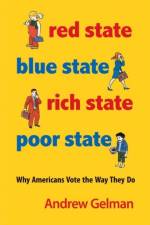
On the night of the 2000 presidential election, Americans watched on television as polling results divided the nation's map into red and blue states. Since then the color divide has become symbolic of a culture war that thrives on stereotypes--pickup-driving red-state Republicans who vote based on God, guns, and gays; and elitist blue-state Democrats woefully out of touch with heartland values. With wit and prodigious number crunching, Andrew Gelman debunks these and other political myths. This expanded edition includes new data and easy-to-read graphics explaining the 2008 election. Red State, Blue State, Rich State, Poor State is a must-read for anyone seeking to make sense of today's fractured political landscape.
Whether kids love or hate the food served there, the American school lunchroom is the stage for one of the most popular yet flawed social welfare programs in our nation's history. School Lunch Politics covers this complex and fascinating part of American culture, from its origins in early twentieth-century nutrition science, through the establishment of the National School Lunch Program in 1946, to the transformation of school meals into a poverty program during the 1970s and 1980s. Susan Levine investigates the politics and culture of food; most specifically, who decides what American children should be eating, what policies develop from those decisions, and how these policies might be better implemented. Even now, the school lunch program remains problematic, a juggling act between modern beliefs about food, nutrition science, and public welfare. Levine points to the program menus' dependence on agricultural surplus commodities more than on children's nutritional needs, and she discusses the political policy barriers that have limited the number of children receiving meals and which children were served. But she also shows why the school lunch program has outlasted almost every other twentieth-century federal welfare initiative. In the midst of privatization, federal budget cuts, and suspect nutritional guidelines where even ketchup might be categorized as a vegetable, the program remains popular and feeds children who would otherwise go hungry. As politicians and the media talk about a national obesity epidemic, School Lunch Politics is a timely arrival to the food policy debates shaping American health, welfare, and equality.Some images inside the book are unavailable due to digital copyright restrictions.
The U.S. took in more than a million immigrants per year in the late 1990s, more than at any other time in history. For humanitarian and many other reasons, this may be good news. But as George Borjas shows in Heaven's Door, it's decidedly mixed news for the American economy--and positively bad news for the country's poorest citizens. Widely regarded as the country's leading immigration economist, Borjas presents the most comprehensive, accessible, and up-to-date account yet of the economic impact of recent immigration on America. He reveals that the benefits of immigration have been greatly exaggerated and that, if we allow immigration to continue unabated and unmodified, we are supporting an astonishing transfer of wealth from the poorest people in the country, who are disproportionately minorities, to the richest. In the course of the book, Borjas carefully analyzes immigrants' skills, national origins, welfare use, economic mobility, and impact on the labor market, and he makes groundbreaking use of new data to trace current trends in ethnic segregation. He also evaluates the implications of the evidence for the type of immigration policy the that U.S. should pursue. Some of his findings are dramatic: Despite estimates that range into hundreds of billions of dollars, net annual gains from immigration are only about $8 billion. In dragging down wages, immigration currently shifts about $160 billion per year from workers to employers and users of immigrants' services. Immigrants today are less skilled than their predecessors, more likely to re-quire public assistance, and far more likely to have children who remain in poor, segregated communities. Borjas considers the moral arguments against restricting immigration and writes eloquently about his own past as an immigrant from Cuba. But he concludes that in the current economic climate--which is less conducive to mass immigration of unskilled labor than past eras--it would be fair and wise to return immigration to the levels of the 1970s (roughly 500,000 per year) and institute policies to favor more skilled immigrants.
As the world focuses on the conflict in Iraq, the most important political players in that country today are not the Sunni insurgents. Instead, they are Iraq's Shi'I majority--part of the Middle East's ninety million Shi'I Muslims who hold the key to the future of the region and the relations between Muslim and Western societies. So contends Yitzhak Nakash, one of the world's foremost experts on Shi'ism. With his characteristic verve and style, Nakash traces the role of the Shi'is in the struggle that is raging today among Muslims for the soul of Islam. He shows that in contrast to the growing militancy among Sunni groups since the 1990s, Shi'is have shifted their focus from confrontation to accommodation with the West. Constituting sixty percent of the population of Iraq, they stand squarely at the center of the U.S government's attempt to remake the Middle East and bring democracy to the region. This groundbreaking book addresses the crucial importance of Shi'is to the U.S. endeavor. Yet it also alerts readers to the strong nationalist sentiments of Shi'is, underscoring the difficult challenge that the United States faces in attempting to impose a new order in the Middle East. The book provides a comprehensive historical perspective on Shi'ism, beginning with the emergence of the movement during the seventh century, continuing through its rise as a political force since the Iranian Islamic Revolution of 1978-79, and leading up to the Iraqi elections of January 2005. Drawing extensively on Arabic sources, this comparative study highlights the reciprocal influences shaping the political development of Shi'is in Iraq, Saudi Arabia, Bahrain, and Lebanon, as well as the impact of the revival of Shi'ism on the larger Arab world. The narrative concludes with an assessment of the risks and possibilities arising from the assertion of Shi'I power in Iraq and from America's attempt to play an increasingly forceful role in the Middle East. A landmark book and a work of remarkable scholarship, Reaching for Power illuminates the Shi'a resurgence amid the shifting geopolitics of the Middle East.
America's debate over whether and how to invade Iraq clustered into civilian versus military camps. Top military officials appeared reluctant to use force, the most hawkish voices in government were civilians who had not served in uniform, and everyone was worried that the American public would not tolerate casualties in war. This book shows that this civilian-military argument--which has characterized earlier debates over Bosnia, Somalia, and Kosovo--is typical, not exceptional. Indeed, the underlying pattern has shaped U.S. foreign policy at least since 1816. The new afterword by Peter Feaver and Christopher Gelpi traces these themes through the first two years of the current Iraq war, showing how civil-military debates and concerns about sensitivity to casualties continue to shape American foreign policy in profound ways.
If you were to examine an 1816 map of the world, you would discover that half the countries represented there no longer exist. Yet since 1945, the disappearance of individual states from the world stage has become rare. State Death is the first book to systematically examine the reasons why some states die while others survive, and the remarkable decline of state death since the end of World War II. Grappling with what is a core issue of international relations, Tanisha Fazal explores two hundred years of military invasion and occupation, from eighteenth-century Poland to present-day Iraq, to derive conclusions that challenge conventional wisdom about state death. The fate of sovereign states, she reveals, is largely a matter of political geography and changing norms of conquest. Fazal shows how buffer states--those that lie between two rivals--are the most vulnerable and likely to die except in rare cases that constrain the resources or incentives of neighboring states. She argues that the United States has imposed such constraints with its global norm against conquest--an international standard that has largely prevented the violent takeover of states since 1945. State Death serves as a timely reminder that should there be a shift in U.S. power or preferences that erodes the norm against conquest, violent state death may once again become commonplace in international relations.
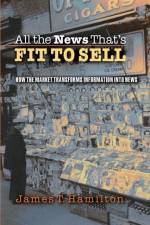
That market forces drive the news is not news. Whether a story appears in print, on television, or on the Internet depends on who is interested, its value to advertisers, the costs of assembling the details, and competitors' products. But in All the News That's Fit to Sell, economist James Hamilton shows just how this happens. Furthermore, many complaints about journalism--media bias, soft news, and pundits as celebrities--arise from the impact of this economic logic on news judgments. This is the first book to develop an economic theory of news, analyze evidence across a wide range of media markets on how incentives affect news content, and offer policy conclusions. Media bias, for instance, was long a staple of the news. Hamilton's analysis of newspapers from 1870 to 1900 reveals how nonpartisan reporting became the norm. A hundred years later, some partisan elements reemerged as, for example, evening news broadcasts tried to retain young female viewers with stories aimed at their (Democratic) political interests. Examination of story selection on the network evening news programs from 1969 to 1998 shows how cable competition, deregulation, and ownership changes encouraged a shift from hard news about politics toward more soft news about entertainers. Hamilton concludes by calling for lower costs of access to government information, a greater role for nonprofits in funding journalism, the development of norms that stress hard news reporting, and the defining of digital and Internet property rights to encourage the flow of news. Ultimately, this book shows that by more fully understanding the economics behind the news, we will be better positioned to ensure that the news serves the public good.
Life is a chancy proposition: from the movement of molecules to the age at which we die, chance plays a key role in the natural world. Traditionally, biologists have viewed the inevitable "e;noise"e; of life as an unfortunate complication. The authors of this book, however, treat random processes as a benefit. In this introduction to chance in biology, Mark Denny and Steven Gaines help readers to apply the probability theory needed to make sense of chance events--using examples from ocean waves to spiderwebs, in fields ranging from molecular mechanics to evolution. Through the application of probability theory, Denny and Gaines make predictions about how plants and animals work in a stochastic universe. Is it possible to pack a variety of ion channels into a cell membrane and have each operate at near-peak flow? Why are our arteries rubbery? The concept of a random walk provides the necessary insight. Is there an absolute upper limit to human life span? Could the sound of a cocktail party burst your eardrums? The statistics of extremes allows us to make the appropriate calculations. How long must you wait to see the detail in a moonlit landscape? Can you hear the noise of individual molecules? The authors provide answers to these and many other questions. After an introduction to the basic statistical methods to be used in this book, the authors emphasize the application of probability theory to biology rather than the details of the theory itself. Readers with an introductory background in calculus will be able to follow the reasoning, and sets of problems, together with their solutions, are offered to reinforce concepts. The use of real-world examples, numerous illustrations, and chapter summaries--all presented with clarity and wit--make for a highly accessible text. By relating the theory of probability to the understanding of form and function in living things, the authors seek to pique the reader's curiosity about statistics and provide a new perspective on the role of chance in biology.
This detailed account of the politics of opening agricultural markets explains how the institutional context of international negotiations alters the balance of interests at the domestic level to favor trade liberalization despite opposition from powerful farm groups. Historically, agriculture stands out as a sector in which countries stubbornly defend domestic programs, and agricultural issues have been the most frequent source of trade disputes in the postwar trading system. While much protection remains, agricultural trade negotiations have resulted in substantial concessions as well as negotiation collapses. Food Fights over Free Trade shows that the liberalization that has occurred has been due to the role of international institutions. Christina Davis examines the past thirty years of U.S. agricultural trade negotiations with Japan and Europe based on statistical analysis of an original dataset, case studies, and in-depth interviews with over one hundred negotiators and politicians. She shows how the use of issue linkage and international law in the negotiation structure transforms narrow interest group politics into a more broad-based decision process that considers the larger stakes of the negotiation. Even when U.S. threats and the spiraling budget costs of agricultural protection have failed to bring policy change, the agenda, rules, and procedures of trade negotiations have often provided the necessary leverage to open Japanese and European markets. This book represents a major contribution to understanding the negotiation process, agricultural politics, and the impact of international institutions on domestic politics.
Social anxiety about poverty surfaces with startling frequency in American literature. Yet, as Gavin Jones argues, poverty has been denied its due as a critical and ideological framework in its own right, despite recent interest in representations of the lower classes and the marginalized. These insights lay the groundwork for American Hungers, in which Jones uncovers a complex and controversial discourse on the poor that stretches from the antebellum era through the Depression. Reading writers such as Herman Melville, Theodore Dreiser, Edith Wharton, James Agee, and Richard Wright in their historical contexts, Jones explores why they succeeded where literary critics have fallen short. These authors acknowledged a poverty that was as aesthetically and culturally significant as it was socially and materially real. They confronted the ideological dilemmas of approaching poverty while giving language to the marginalized poor--the beggars, tramps, sharecroppers, and factory workers who form a persistent segment of American society. Far from peripheral, poverty emerges at the center of national debates about social justice, citizenship, and minority identity. And literature becomes a crucial tool to understand an economic and cultural condition that is at once urgent and elusive because it cuts across the categories of race, gender, and class by which we conventionally understand social difference. Combining social theory with literary analysis, American Hungers masterfully brings poverty into the mainstream critical idiom.
How might Hercules, the most famous of the Greek heroes, have used mathematics to complete his astonishing Twelve Labors? From conquering the Nemean Lion and cleaning out the Augean Stables, to capturing the Erymanthean Boar and entering the Underworld to defeat the three-headed dog Cerberus, Hercules and his legend are the inspiration for this book of fun and original math puzzles. While Hercules relied on superhuman strength to accomplish the Twelve Labors, Mythematics shows how math could have helped during his quest. How does Hercules defeat the Lernean Hydra and stop its heads from multiplying? Can Hercules clean the Augean Stables in a day? What is the probability that the Cretan Bull will attack the citizens of Marathon? How does Hercules deal with the terrifying Kraken? Michael Huber's inventive math problems are accompanied by short descriptions of the Twelve Labors, taken from the writings of Apollodorus, who chronicled the life of Hercules two thousand years ago. Tasks are approached from a mathematical modeling viewpoint, requiring varying levels of knowledge, from basic logic and geometry to differential and integral calculus. Mythematics provides helpful hints and complete solutions, and the appendixes include a brief history of the Hercules tale, a review of mathematics and equations, and a guide to the various disciplines of math used throughout the book. An engaging combination of ancient mythology and modern mathematics, Mythematics will enlighten and delight mathematics and classics enthusiasts alike.
What is eternity? Is it anything other than a purely abstract concept, totally unrelated to our lives? A mere hope? A frightfully uncertain horizon? Or is it a certainty, shared by priest and scientist alike, and an essential element in all human relations? In A Very Brief History of Eternity, Carlos Eire, the historian and National Book Award-winning author of Waiting for Snow in Havana, has written a brilliant history of eternity in Western culture. Tracing the idea from ancient times to the present, Eire examines the rise and fall of five different conceptions of eternity, exploring how they developed and how they have helped shape individual and collective self-understanding. A book about lived beliefs and their relationship to social and political realities, A Very Brief History of Eternity is also about unbelief, and the tangled and often rancorous relation between faith and reason. Its subject is the largest subject of all, one that has taxed minds great and small for centuries, and will forever be of human interest, intellectually, spiritually, and viscerally.
International trade has shaped the modern world, yet until now no single book has been available for both economists and general readers that traces the history of the international economy from its earliest beginnings to the present day. Power and Plenty fills this gap, providing the first full account of world trade and development over the course of the last millennium. Ronald Findlay and Kevin O'Rourke examine the successive waves of globalization and "e;deglobalization"e; that have occurred during the past thousand years, looking closely at the technological and political causes behind these long-term trends. They show how the expansion and contraction of the world economy has been directly tied to the two-way interplay of trade and geopolitics, and how war and peace have been critical determinants of international trade over the very long run. The story they tell is sweeping in scope, one that links the emergence of the Western economies with economic and political developments throughout Eurasia centuries ago. Drawing extensively upon empirical evidence and informing their systematic analysis with insights from contemporary economic theory, Findlay and O'Rourke demonstrate the close interrelationships of trade and warfare, the mutual interdependence of the world's different regions, and the crucial role these factors have played in explaining modern economic growth. Power and Plenty is a must-read for anyone seeking to understand the origins of today's international economy, the forces that continue to shape it, and the economic and political challenges confronting policymakers in the twenty-first century.
This book combines practical guidance and theoretical background for analysts using empirical techniques in competition and antitrust investigations. Peter Davis and Eliana Garces show how to integrate empirical methods, economic theory, and broad evidence about industry in order to provide high-quality, robust empirical work that is tailored to the nature and quality of data available and that can withstand expert and judicial scrutiny. Davis and Garces describe the toolbox of empirical techniques currently available, explain how to establish the weight of pieces of empirical work, and make some new theoretical contributions. The book consistently evaluates empirical techniques in light of the challenge faced by competition analysts and academics--to provide evidence that can stand up to the review of experts and judges. The book's integrated approach will help analysts clarify the assumptions underlying pieces of empirical work, evaluate those assumptions in light of industry knowledge, and guide future work aimed at understanding whether the assumptions are valid. Throughout, Davis and Garces work to expand the common ground between practitioners and academics.
Scholars and statesmen have debated the influence of international commerce on war and peace for thousands of years. Over the centuries, analysts have generally treated the questions "e;Does international commerce influence security?"e; and "e;Do trade flows influence security?"e; as synonymous. In Producing Security, Stephen Brooks maintains that such an overarching focus on the security implications of trade once made sense but no longer does. Trade is no longer the primary means of organizing international economic transactions; rather, where and how multinational corporations (MNCs) organize their international production activities is now the key integrating force of global commerce. MNC strategies have changed in a variety of fundamental ways over the past three decades, Brooks argues, resulting in an increased geographic dispersion of production across borders. The author shows that the globalization of production has led to a series of shifts in the global security environment. It has a differential effect on security relations, in part because it does not encompass all countries and industries to the same extent. The book's findings indicate that the geographic dispersion of MNC production acts as a significant force for peace among the great powers. The author concludes that there is no basis for optimism that the globalization of production will promote peace elsewhere in the world. Indeed, he finds that it has a net negative influence on security relations among developing countries.
This book presents a comprehensive theory of legal interpretation, by a leading judge and legal theorist. Currently, legal philosophers and jurists apply different theories of interpretation to constitutions, statutes, rules, wills, and contracts. Aharon Barak argues that an alternative approach--purposive interpretation--allows jurists and scholars to approach all legal texts in a similar manner while remaining sensitive to the important differences. Moreover, regardless of whether purposive interpretation amounts to a unifying theory, it would still be superior to other methods of interpretation in tackling each kind of text separately. Barak explains purposive interpretation as follows: All legal interpretation must start by establishing a range of semantic meanings for a given text, from which the legal meaning is then drawn. In purposive interpretation, the text's "e;purpose"e; is the criterion for establishing which of the semantic meanings yields the legal meaning. Establishing the ultimate purpose--and thus the legal meaning--depends on the relationship between the subjective and objective purposes; that is, between the original intent of the text's author and the intent of a reasonable author and of the legal system at the time of interpretation. This is easy to establish when the subjective and objective purposes coincide. But when they don't, the relative weight given to each purpose depends on the nature of the text. For example, subjective purpose is given substantial weight in interpreting a will; objective purpose, in interpreting a constitution. Barak develops this theory with masterful scholarship and close attention to its practical application. Throughout, he contrasts his approach with that of textualists and neotextualists such as Antonin Scalia, pragmatists such as Richard Posner, and legal philosophers such as Ronald Dworkin. This book represents a profoundly important contribution to legal scholarship and a major alternative to interpretive approaches advanced by other leading figures in the judicial world.
From Communists to Foreign Capitalists explores the intersections of two momentous changes in the late twentieth century: the fall of Communism and the rise of globalization. Delving into the economic change that accompanied these shifts in central and Eastern Europe, Nina Bandelj presents a pioneering sociological treatment of the process of foreign direct investment (FDI). She demonstrates how both investors and hosts rely on social networks, institutions, politics, and cultural understandings to make decisions about investment, employing practical rather than rational economic strategies to deal with the true uncertainty that plagues the postsocialist environment. The book explores how eleven postsocialist countries address the very idea of FDI as an integral part of their market transition. The inflows of foreign capital after the collapse of Communism resulted not from the withdrawal of states from the economy, as is commonly expected, but rather from the active involvement of postsocialist states in institutionalizing and legitimizing FDI. Using a wide array of data sources, and combining a macro-level account of national variation in the liberalization to foreign capital with a micro-level account of FDI transactions in the decade following the collapse of Communism in 1989, the book reveals how social forces not only constrain economic transformations but also make them possible. From Communists to Foreign Capitalists is a welcome addition to the growing literature on the social processes that shape economic life.
The American public has consistently declared itself less concerned with foreign affairs in the post-Cold War era, even after 9/11, than at any time since World War II. How can it be, then, that public attentiveness to U.S. foreign policy crises has increased? This book represents the first systematic attempt to explain this apparent paradox. Matthew Baum argues that the answer lies in changes to television's presentation of political information. In so doing he develops a compelling "e;byproduct"e; theory of information consumption. The information revolution has fundamentally changed the way the mass media, especially television, covers foreign policy. Traditional news has been repackaged into numerous entertainment-oriented news programs and talk shows. By transforming political issues involving scandal or violence (especially attacks against America) into entertainment, the "e;soft news"e; media have actually captured more viewers who will now follow news about foreign crises, due to its entertainment value, even if they remain uninterested in foreign policy. Baum rigorously tests his theory through content analyses of traditional and soft news media coverage of various post-WWII U.S. foreign crises and statistical analyses of public opinion surveys. The results hold key implications for the future of American politics and foreign policy. For instance, watching soft news reinforces isolationism among many inattentive Americans. Scholars, political analysts, and even politicians have tended to ignore the soft news media and politically disengaged citizens. But, as this well-written book cogently demonstrates, soft news viewers represent a largely untapped reservoir of unusually persuadable voters.
Over the last several decades, employers have increasingly replaced permanent employees with temporary workers and independent contractors to cut labor costs and enhance flexibility. Although commentators have focused largely on low-wage temporary work, the use of skilled contractors has also grown exponentially, especially in high-technology areas. Yet almost nothing is known about contracting or about the people who do it. This book seeks to break the silence. Gurus, Hired Guns, and Warm Bodies tells the story of how the market for temporary professionals operates from the perspective of the contractors who do the work, the managers who employ them, the permanent employees who work beside them, and the staffing agencies who broker deals. Based on a year of field work in three staffing agencies, life histories with over seventy contractors and studies of workers in some of America's best known firms, the book dismantles the myths of temporary employment and offers instead a grounded description of how contracting works. Engagingly written, it goes beyond rhetoric to examine why contractors leave permanent employment, why managers hire them, and how staffing agencies operate. Barley and Kunda paint a richly layered portrait of contract professionals. Readers learn how contractors find jobs, how agents negotiate, and what it is like to shoulder the risks of managing one's own "e;employability."e; The authors illustrate how the reality of flexibility often differs substantially from its promise. Viewing the knowledge economy in terms of organizations and markets is not enough, Barley and Kunda conclude. Rather, occupational communities and networks of skilled experts are what grease the skids of the high-tech, "e;matrix economy"e; where firms become way stations in the flow of expertise.
Research on the spatial aspects of economic activity has flourished over the past decade due to the emergence of new theory, new data, and an intense interest on the part of policymakers, especially in Europe but increasingly in North America and elsewhere as well. However, these efforts--collectively known as the "e;new economic geography"e;--have devoted little attention to the policy implications of the new theory. Economic Geography and Public Policy fills the gap by illustrating many new policy insights economic geography models can offer to the realm of theoretical policy analysis. Focusing primarily on trade policy, tax policy, and regional policy, Richard Baldwin and coauthors show how these models can be used to make sense of real-world situations. The book not only provides much fresh analysis but also synthesizes insights from the existing literature. The authors begin by presenting and analyzing the widest range of new economic geography models to date. From there they proceed to examine previously unaddressed welfare and policy issues including, in separate sections, trade policy (unilateral, reciprocal, and preferential), tax policy (agglomeration with taxes and public goods, tax competition and agglomeration), and regional policy (infrastructure policies and the political economy of regional subsidies). A well-organized, engaging narrative that progresses smoothly from fundamentals to more complex material, Economic Geography and Public Policy is essential reading for graduate students, researchers, and policymakers seeking new approaches to spatial policy issues.
How does mathematics enable us to send pictures from space back to Earth? Where does the bell-shaped curve come from? Why do you need only 23 people in a room for a 50/50 chance of two of them sharing the same birthday? In Strange Curves, Counting Rabbits, and Other Mathematical Explorations, Keith Ball highlights how ideas, mostly from pure math, can answer these questions and many more. Drawing on areas of mathematics from probability theory, number theory, and geometry, he explores a wide range of concepts, some more light-hearted, others central to the development of the field and used daily by mathematicians, physicists, and engineers. Each of the book's ten chapters begins by outlining key concepts and goes on to discuss, with the minimum of technical detail, the principles that underlie them. Each includes puzzles and problems of varying difficulty. While the chapters are self-contained, they also reveal the links between seemingly unrelated topics. For example, the problem of how to design codes for satellite communication gives rise to the same idea of uncertainty as the problem of screening blood samples for disease. Accessible to anyone familiar with basic calculus, this book is a treasure trove of ideas that will entertain, amuse, and bemuse students, teachers, and math lovers of all ages.
Over the past several years, privately run, publicly funded charter schools have been sold to the American public as an education alternative promising better student achievement, greater parent satisfaction, and more vibrant school communities. But are charter schools delivering on their promise? Or are they just hype as critics contend, a costly experiment that is bleeding tax dollars from public schools? In this book, Jack Buckley and Mark Schneider tackle these questions about one of the thorniest policy reforms in the nation today. Using an exceptionally rigorous research approach, the authors investigate charter schools in Washington, D.C., carefully examining school data going back more than a decade, interpreting scores of interviews with parents, students, and teachers, and meticulously measuring how charter schools perform compared to traditional public schools. Their conclusions are sobering. Buckley and Schneider show that charter-school students are not outperforming students in traditional public schools, that the quality of charter-school education varies widely from school to school, and that parent enthusiasm for charter schools starts out strong but fades over time. And they argue that while charter schools may meet the most basic test of sound public policy--they do no harm--the evidence suggests they all too often fall short of advocates' claims. With the future of charter schools--and perhaps public education as a whole--hanging in the balance, this book supports the case for holding charter schools more accountable and brings us considerably nearer to resolving this contentious debate.
Translation, before 9/11, was deemed primarily an instrument of international relations, business, education, and culture. Today it seems, more than ever, a matter of war and peace. In The Translation Zone, Emily Apter argues that the field of translation studies, habitually confined to a framework of linguistic fidelity to an original, is ripe for expansion as the basis for a new comparative literature. Organized around a series of propositions that range from the idea that nothing is translatable to the idea that everything is translatable, The Translation Zone examines the vital role of translation studies in the "e;invention"e; of comparative literature as a discipline. Apter emphasizes "e;language wars"e; (including the role of mistranslation in the art of war), linguistic incommensurability in translation studies, the tension between textual and cultural translation, the role of translation in shaping a global literary canon, the resistance to Anglophone dominance, and the impact of translation technologies on the very notion of how translation is defined. The book speaks to a range of disciplines and spans the globe. Ultimately, The Translation Zone maintains that a new comparative literature must take stock of the political impact of translation technologies on the definition of foreign or symbolic languages in the humanities, while recognizing the complexity of language politics in a world at once more monolingual and more multilingual.
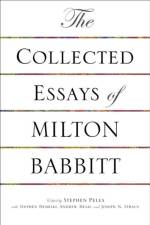
Like his compositions, Milton Babbitt's writings about music have exerted an extraordinary influence on postwar music and thinking about music. In essays and public addresses spanning fifty years, Babbitt has grappled profoundly with central questions in the composition and apprehension of music. These writings range from personal memoirs and critical reviews to closely reasoned metatheoretical speculations and technical exegesis. In the history of music theory, there has been only a small handful of figures who have produced work of comparable stature. Taken as a whole, Babbitt's writings are not only an invaluable testimony to his thinking--a priceless primary source for the intellectual and cultural history of the second half of the twentieth century--but also a remarkable achievement in their own right. Prior to this collection, Babbitt's writings were scattered through a wide variety of journals, books, and magazines--many hard to find and some unavailable--and often contained typographical errors and editorial corruptions of various kinds. This volume of almost fifty pieces gathers, corrects, and annotates virtually everything of significance that Babbitt has written. The result is complete, authoritative, and fully accessible--the definitive source of Babbitt's influential ideas.
Understanding and predicting species diversity in ecological communities is one of the great challenges in community ecology. Popular recent theory contends that the traits of species are "e;neutral"e; or unimportant to coexistence, yet abundant experimental evidence suggests that multiple species are able to coexist on the same limiting resource precisely because they differ in key traits, such as body size, diet, and resource demand. This book presents a new theory of coexistence that incorporates two important aspects of biodiversity in nature--scale and spatial variation in the supply of limiting resources. Introducing an innovative model that uses fractal geometry to describe the complex physical structure of nature, Mark Ritchie shows how species traits, particularly body size, lead to spatial patterns of resource use that allow species to coexist. He explains how this criterion for coexistence can be converted into a "e;rule"e; for how many species can be "e;packed"e; into an environment given the supply of resources and their spatial variability. He then demonstrates how this rule can be used to predict a range of patterns in ecological communities, such as body-size distributions, species-abundance distributions, and species-area relations. Ritchie illustrates how the predictions closely match data from many real communities, including those of mammalian herbivores, grasshoppers, dung beetles, and birds. This book offers a compelling alternative to "e;neutral"e; theory in community ecology, one that helps us better understand patterns of biodiversity across the Earth.
Social conventions are those arbitrary rules and norms governing the countless behaviors all of us engage in every day without necessarily thinking about them, from shaking hands when greeting someone to driving on the right side of the road. In this book, Andrei Marmor offers a pathbreaking and comprehensive philosophical analysis of conventions and the roles they play in social life and practical reason, and in doing so challenges the dominant view of social conventions first laid out by David Lewis. Marmor begins by giving a general account of the nature of conventions, explaining the differences between coordinative and constitutive conventions and between deep and surface conventions. He then applies this analysis to explain how conventions work in language, morality, and law. Marmor clearly demonstrates that many important semantic and pragmatic aspects of language assumed by many theorists to be conventional are in fact not, and that the role of conventions in the moral domain is surprisingly complex, playing mostly an auxiliary and supportive role. Importantly, he casts new light on the conventional foundations of law, arguing that the distinction between deep and surface conventions can be used to answer the prevalent objections to legal conventionalism. Social Conventions is a much-needed reappraisal of the nature of the rules that regulate virtually every aspect of human conduct.
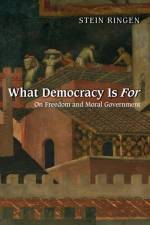
In this provocative book, Stein Ringen argues that the world's democracies are failing to live up to their ideals--the United States and Great Britain most especially. The core value of democracy, he contends, is freedom, the freedom to live a good life according to one's own choosing. Yet he shows that democracy's freedom is on the decline. Citizens are increasingly distrustful of political systems weighted by money, and they don't participate in political affairs as they once did. Ringen warns of the risks we face if this trend continues, and puts forth an ambitious proposal for democratic reforms. The issues that concern him are ones that should concern us all. They include education, poverty, the social and economic roles of families, the lack of democracy in our economic lives, and the need to rejuvenate municipal democracy. Along the way, Ringen proposes policy solutions aimed at restoring democracy, such as universal vouchers for education, substituting the principle of individual insurance for social-welfare pensions, and rethinking how we measure poverty in rich and poor countries. He calls for the revival of local democracy, a democratically grounded global economy, and the protection of political democracy from the transgressions of economic power. The way to protect democracy is not to cheer it, but to reform it. What Democracy Is For offers a bold defense of democratic ideals, grounded in real reforms.
Abonner på vårt nyhetsbrev og få rabatter og inspirasjon til din neste leseopplevelse.
Ved å abonnere godtar du vår personvernerklæring.