




















Gjør som tusenvis av andre bokelskere
Abonner på vårt nyhetsbrev og få rabatter og inspirasjon til din neste leseopplevelse.
Ved å abonnere godtar du vår personvernerklæring.Du kan når som helst melde deg av våre nyhetsbrev.

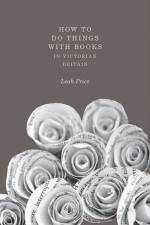
How to Do Things with Books in Victorian Britain asks how our culture came to frown on using books for any purpose other than reading. When did the coffee-table book become an object of scorn? Why did law courts forbid witnesses to kiss the Bible? What made Victorian cartoonists mock commuters who hid behind the newspaper, ladies who matched their books' binding to their dress, and servants who reduced newspapers to fish 'n' chips wrap? Shedding new light on novels by Thackeray, Dickens, the Brontes, Trollope, and Collins, as well as the urban sociology of Henry Mayhew, Leah Price also uncovers the lives and afterlives of anonymous religious tracts and household manuals. From knickknacks to wastepaper, books mattered to the Victorians in ways that cannot be explained by their printed content alone. And whether displayed, defaced, exchanged, or discarded, printed matter participated, and still participates, in a range of transactions that stretches far beyond reading. Supplementing close readings with a sensitive reconstruction of how Victorians thought and felt about books, Price offers a new model for integrating literary theory with cultural history. How to Do Things with Books in Victorian Britain reshapes our understanding of the interplay between words and objects in the nineteenth century and beyond.
Most studies of ancient Greek politics focus on formal institutions such as the political assembly and the law courts, and overlook the role that informal social practices played in the regulation of the political order. Sara Forsdyke argues, by contrast, that various forms of popular culture in ancient Greece--including festival revelry, oral storytelling, and popular forms of justice--were a vital medium for political expression and played an important role in the negotiation of relations between elites and masses, as well as masters and slaves, in the Greek city-states. Although these forms of social life are only poorly attested in the sources, Forsdyke suggests that Greek literature reveals traces of popular culture that can be further illuminated by comparison with later historical periods. By looking beyond institutional contexts, moreover, Forsdyke recovers the ways that groups that were excluded from the formal political sphere--especially women and slaves--participated in the process by which society was ordered. Forsdyke begins each chapter with an apparently marginal incident in Greek history--the worship of a dead slave by masters on Chios, the naming of Sicyon's civic divisions after lowly animals such as pigs and asses, and the riding of an adulteress on a donkey through the streets of Cyme--and shows how these episodes demonstrate the significance of informal social practices and discourses in the regulation and reproduction of the social order. The result is an original, fascinating, and enlightening new perspective on politics and popular culture in ancient Greece.
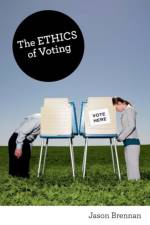
Nothing is more integral to democracy than voting. Most people believe that every citizen has the civic duty or moral obligation to vote, that any sincere vote is morally acceptable, and that buying, selling, or trading votes is inherently wrong. In this provocative book, Jason Brennan challenges our fundamental assumptions about voting, revealing why it is not a duty for most citizens--in fact, he argues, many people owe it to the rest of us not to vote. Bad choices at the polls can result in unjust laws, needless wars, and calamitous economic policies. Brennan shows why voters have duties to make informed decisions in the voting booth, to base their decisions on sound evidence for what will create the best possible policies, and to promote the common good rather than their own self-interest. They must vote well--or not vote at all. Brennan explains why voting is not necessarily the best way for citizens to exercise their civic duty, and why some citizens need to stay away from the polls to protect the democratic process from their uninformed, irrational, or immoral votes. In a democracy, every citizen has the right to vote. This book reveals why sometimes it's best if they don't. In a new afterword, "e;How to Vote Well,"e; Brennan provides a practical guidebook for making well-informed, well-reasoned choices at the polls.
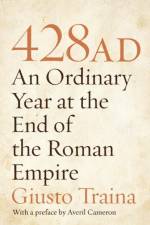
This is a sweeping tour of the Mediterranean world from the Atlantic to Persia during the last half-century of the Roman Empire. By focusing on a single year not overshadowed by an epochal event, 428 AD provides a truly fresh look at a civilization in the midst of enormous change--as Christianity takes hold in rural areas across the empire, as western Roman provinces fall away from those in the Byzantine east, and as power shifts from Rome to Constantinople. Taking readers on a journey through the region, Giusto Traina describes the empires' people, places, and events in all their simultaneous richness and variety. The result is an original snapshot of a fraying Roman world on the edge of the medieval era. The result is an original snapshot of a fraying Roman world on the edge of the medieval era. Readers meet many important figures, including the Roman general Flavius Dionysius as he encounters a delegation from Persia after the Sassanids annex Armenia; the Christian ascetic Simeon Stylites as he stands and preaches atop his column near Antioch; the eastern Roman emperor Theodosius II as he prepares to commission his legal code; and Genseric as he is elected king of the Vandals and begins to turn his people into a formidable power. We are also introduced to Pulcheria, the powerful sister of Theodosius, and Galla Placidia, the queen mother of the western empire, as well as Augustine, Pope Celestine I, and nine-year-old Roman emperor Valentinian III. Full of telling details, 428 AD illustrates the uneven march of history. As the west unravels, the east remains intact. As Christianity spreads, pagan ideas and schools persist. And, despite the presence of the forces that will eventually tear the classical world apart, Rome remains at the center, exerting a powerful unifying force over disparate peoples stretched across the Mediterranean.
Probability, Markov Chains, Queues, and Simulation provides a modern and authoritative treatment of the mathematical processes that underlie performance modeling. The detailed explanations of mathematical derivations and numerous illustrative examples make this textbook readily accessible to graduate and advanced undergraduate students taking courses in which stochastic processes play a fundamental role. The textbook is relevant to a wide variety of fields, including computer science, engineering, operations research, statistics, and mathematics. The textbook looks at the fundamentals of probability theory, from the basic concepts of set-based probability, through probability distributions, to bounds, limit theorems, and the laws of large numbers. Discrete and continuous-time Markov chains are analyzed from a theoretical and computational point of view. Topics include the Chapman-Kolmogorov equations; irreducibility; the potential, fundamental, and reachability matrices; random walk problems; reversibility; renewal processes; and the numerical computation of stationary and transient distributions. The M/M/1 queue and its extensions to more general birth-death processes are analyzed in detail, as are queues with phase-type arrival and service processes. The M/G/1 and G/M/1 queues are solved using embedded Markov chains; the busy period, residual service time, and priority scheduling are treated. Open and closed queueing networks are analyzed. The final part of the book addresses the mathematical basis of simulation. Each chapter of the textbook concludes with an extensive set of exercises. An instructor's solution manual, in which all exercises are completely worked out, is also available (to professors only). Numerous examples illuminate the mathematical theories Carefully detailed explanations of mathematical derivations guarantee a valuable pedagogical approach Each chapter concludes with an extensive set of exercises
When Oscar Wilde said he had "e;seen wallpaper which must lead a boy brought up under its influence to a life of crime,"e; his joke played on an idea that has often been taken quite seriously--both in Wilde's day and in our own. In Fateful Beauty, Douglas Mao recovers the lost intellectual, social, and literary history of the belief that the beauty--or ugliness--of the environment in which one is raised influences or even determines one's fate. Weaving together readings in literature, psychology, biology, philosophy, education, child-rearing advice, and interior design, he shows how this idea abetted a dramatic rise in attention to environment in many discourses and in many practices affecting the lives of the young between the late nineteenth century and the middle of the twentieth. Through original and detailed analyses of Wilde, Walter Pater, James Joyce, Theodore Dreiser, Rebecca West, and W. H. Auden, Mao shows that English-language writing of the period was informed in crucial but previously unrecognized ways by the possibility that beautiful environments might produce better people. He also reveals how these writers shared concerns about environment, evolution, determinism, freedom, and beauty with scientists and social theorists such as Herbert Spencer, Hermann von Helmholtz, Ivan Petrovich Pavlov, and W.H.R. Rivers. In so doing, Mao challenges conventional views of the roles of beauty and the aesthetic in art and life during this time.
In the immediate aftermath of World War II, more than a quarter million Jewish survivors of the Holocaust lived among their defeated persecutors in the chaotic society of Allied-occupied Germany. Jews, Germans, and Allies draws upon the wealth of diary and memoir literature by the people who lived through postwar reconstruction to trace the conflicting ways Jews and Germans defined their own victimization and survival, comprehended the trauma of war and genocide, and struggled to rebuild their lives. In gripping and unforgettable detail, Atina Grossmann describes Berlin in the days following Germany's surrender--the mass rape of German women by the Red Army, the liberated slave laborers and homecoming soldiers, returning political exiles, Jews emerging from hiding, and ethnic German refugees fleeing the East. She chronicles the hunger, disease, and homelessness, the fraternization with Allied occupiers, and the complexities of navigating a world where the commonplace mingled with the horrific. Grossmann untangles the stories of Jewish survivors inside and outside the displaced-persons camps of the American zone as they built families and reconstructed identities while awaiting emigration to Palestine or the United States. She examines how Germans and Jews interacted and competed for Allied favor, benefits, and victim status, and how they sought to restore normality--in work, in their relationships, and in their everyday encounters. Jews, Germans, and Allies shows how Jews were integral participants in postwar Germany and bridges the divide that still exists today between German history and Jewish studies.
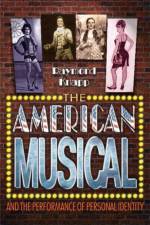
The American musical has long provided an important vehicle through which writers, performers, and audiences reimagine who they are and how they might best interact with the world around them. Musicals are especially good at this because they provide not only an opportunity for us to enact dramatic versions of alternative identities, but also the material for performing such alternatives in the real world, through songs and the characters and attitudes those songs project. This book addresses a variety of specific themes in musicals that serve this general function: fairy tale and fantasy, idealism and inspiration, gender and sexuality, and relationships, among others. It also considers three overlapping genres that are central, in quite different ways, to the projection of personal identity: operetta, movie musicals, and operatic musicals. Among the musicals discussed are Camelot, Candide; Chicago; Company; Evita; Gypsy; Into the Woods; Kiss Me, Kate; A Little Night Music; Man of La Mancha; Meet Me in St. Louis; The Merry Widow; Moulin Rouge; My Fair Lady; Passion; The Rocky Horror Picture Show; Singin' in the Rain; Stormy Weather; Sweeney Todd; and The Wizard of Oz. Complementing the author's earlier work, The American Musical and the Formation of National Identity, this book completes a two-volume thematic history of the genre, designed for general audiences and specialists alike.
This book presents a general explanation of how states develop their foreign policy. The theory stands in contrast to most approaches--which assume that states want to maximize security--by assuming that states pursue two things, or goods, through their foreign policy: change and maintenance. States, in other words, try both to change aspects of the international status quo that they don't like and maintain those aspects they do like. A state's ability to do so is largely a function of its relative capability, and since national capability is finite, a state must make trade-offs between policies designed to achieve change or maintenance. Glenn Palmer and Clifton Morgan apply their theory to cases ranging from American foreign policy since World War II to Chinese foreign policy since 1949 to the Suez Canal Crisis. The many implications bear upon specific policies such as conflict initiation, foreign aid allocation, military spending, and alliance formation. Particularly useful are the implications for foreign policy substitutability. The authors also undertake statistical analyses of a wide range of behaviors, and these generally support the theory. A Theory of Foreign Policy represents a major advance over traditional analyses of international relations. Not only do its empirical implications speak to a broader range of policies but, more importantly, the book illuminates the trade-offs decision makers face in selecting among policies to maximize utility, given a state's goals.
"e;Without authority,"e; a phrase Kierkegaard repeatedly applied to himself and his writings, is an appropriate title for this volume of five short works that in various ways deal with the concept and practice of authority. The Lily in the Field and the Bird of the Air contemplates the teaching authority of these creatures based on three different passages in the Gospels. The first of Two Ethical-Religious Essays mediates on the ethics of Jesus' martyrdom; the second contrasts the authority of the genius with that of the apostle. The remaining works--Three Discourses at the Communion on Fridays (1849), An Upbuilding Discourse (1850), and Two Discourses at the Communion on Fridays (1851)--are meditations on sin, forgiveness, and the power of love.
From the pyramids and the Parthenon to the Sydney Opera House and the Bilbao Guggenheim, this book takes readers on an eye-opening tour of the mathematics behind some of the world's most spectacular buildings. Beautifully illustrated, the book explores the milestones in elementary mathematics that enliven the understanding of these buildings and combines this with an in-depth look at their aesthetics, history, and structure. Whether using trigonometry and vectors to explain why Gothic arches are structurally superior to Roman arches, or showing how simple ruler and compass constructions can produce sophisticated architectural details, Alexander Hahn describes the points at which elementary mathematics and architecture intersect. Beginning in prehistoric times, Hahn proceeds to guide readers through the Greek, Roman, Islamic, Romanesque, Gothic, Renaissance, and modern styles. He explores the unique features of the Pantheon, the Hagia Sophia, the Great Mosque of Cordoba, the Duomo in Florence, Palladio's villas, and Saint Peter's Basilica, as well as the U.S. Capitol Building. Hahn celebrates the forms and structures of architecture made possible by mathematical achievements from Greek geometry, the Hindu-Arabic number system, two- and three-dimensional coordinate geometry, and calculus. Along the way, Hahn introduces groundbreaking architects, including Brunelleschi, Alberti, da Vinci, Bramante, Michelangelo, della Porta, Wren, Gaudi, Saarinen, Utzon, and Gehry. Rich in detail, this book takes readers on an expedition around the globe, providing a deeper understanding of the mathematical forces at play in the world's most elegant buildings.
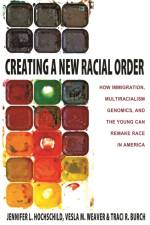
The American racial order--the beliefs, institutions, and practices that organize relationships among the nation's races and ethnicities--is undergoing its greatest transformation since the 1960s. Creating a New Racial Order takes a groundbreaking look at the reasons behind this dramatic change, and considers how different groups of Americans are being affected. Through revealing narrative and striking research, the authors show that the personal and political choices of Americans will be critical to how, and how much, racial hierarchy is redefined in decades to come. The authors outline the components that make up a racial order and examine the specific mechanisms influencing group dynamics in the United States: immigration, multiracialism, genomic science, and generational change. Cumulatively, these mechanisms increase heterogeneity within each racial or ethnic group, and decrease the distance separating groups from each other. The authors show that individuals are moving across group boundaries, that genomic science is challenging the whole concept of race, and that economic variation within groups is increasing. Above all, young adults understand and practice race differently from their elders: their formative memories are 9/11, Hurricane Katrina, and Obama's election--not civil rights marches, riots, or the early stages of immigration. Blockages could stymie or distort these changes, however, so the authors point to essential policy and political choices. Portraying a vision, not of a postracial America, but of a different racial America, Creating a New Racial Order examines how the structures of race and ethnicity are altering a nation.Some images inside the book are unavailable due to digital copyright restrictions.
The Making of Modern Liberalism is a deep and wide-ranging exploration of the origins and nature of liberalism from the Enlightenment through its triumphs and setbacks in the twentieth century and beyond. The book is the fruit of the more than four decades during which Alan Ryan, one of the world's leading political thinkers, reflected on the past of the liberal tradition-and worried about its future.This is essential reading for anyone interested in political theory or the history of liberalism.
Countries that are rich in petroleum have less democracy, less economic stability, and more frequent civil wars than countries without oil. What explains this oil curse? And can it be fixed? In this groundbreaking analysis, Michael L. Ross looks at how developing nations are shaped by their mineral wealth--and how they can turn oil from a curse into a blessing. Ross traces the oil curse to the upheaval of the 1970s, when oil prices soared and governments across the developing world seized control of their countries' oil industries. Before nationalization, the oil-rich countries looked much like the rest of the world; today, they are 50 percent more likely to be ruled by autocrats--and twice as likely to descend into civil war--than countries without oil. The Oil Curse shows why oil wealth typically creates less economic growth than it should; why it produces jobs for men but not women; and why it creates more problems in poor states than in rich ones. It also warns that the global thirst for petroleum is causing companies to drill in increasingly poor nations, which could further spread the oil curse. This landmark book explains why good geology often leads to bad governance, and how this can be changed.
In 1981, Frederick Houk Borsch returned to Princeton University, his alma mater, to serve as dean of the chapel at the Ivy League school. In Keeping Faith at Princeton, Borsch tells the story of Princeton's journey from its founding in 1746 as a college for Presbyterian ministers to the religiously diverse institution it is today. He sets this landmark narrative history against the backdrop of his own quest for spiritual illumination, first as a student at Princeton in the 1950s and later as campus minister amid the turmoil and uncertainty of 1980s America. Borsch traces how the trauma of the Depression and two world wars challenged the idea of progress through education and religion--the very idea on which Princeton was founded. Even as the numbers of students gaining access to higher education grew exponentially after World War II, student demographics at Princeton and other elite schools remained all male, predominantly white, and Protestant. Then came the 1960s. Campuses across America became battlegrounds for the antiwar movement, civil rights, and gender equality. By the dawn of the Reagan era, women and blacks were being admitted to Princeton. So were greater numbers of Jews, Catholics, and others. Borsch gives an electrifying insider's account of this era of upheaval and great promise. With warmth, clarity, and penetrating firsthand insights, Keeping Faith at Princeton demonstrates how Princeton and other major American universities learned to promote religious diversity among their students, teachers, and administrators.
Politically active individuals and organizations make huge investments of time, energy, and money to influence everything from election outcomes to congressional subcommittee hearings to local school politics, while other groups and individual citizens seem woefully underrepresented in our political system. The Unheavenly Chorus is the most comprehensive and systematic examination of political voice in America ever undertaken--and its findings are sobering. The Unheavenly Chorus is the first book to look at the political participation of individual citizens alongside the political advocacy of thousands of organized interests--membership associations such as unions, professional associations, trade associations, and citizens groups, as well as organizations like corporations, hospitals, and universities. Drawing on numerous in-depth surveys of members of the public as well as the largest database of interest organizations ever created--representing more than thirty-five thousand organizations over a twenty-five-year period--this book conclusively demonstrates that American democracy is marred by deeply ingrained and persistent class-based political inequality. The well educated and affluent are active in many ways to make their voices heard, while the less advantaged are not. This book reveals how the political voices of organized interests are even less representative than those of individuals, how political advantage is handed down across generations, how recruitment to political activity perpetuates and exaggerates existing biases, how political voice on the Internet replicates these inequalities--and more. In a true democracy, the preferences and needs of all citizens deserve equal consideration. Yet equal consideration is only possible with equal citizen voice. The Unheavenly Chorus reveals how far we really are from the democratic ideal and how hard it would be to attain it.
Today, the term "e;Jewish self-hatred"e; often denotes a treasonous brand of Jewish self-loathing, and is frequently used as a smear, such as when it is applied to politically moderate Jews who are critical of Israel. In On the Origins of Jewish Self-Hatred, Paul Reitter demonstrates that the concept of Jewish self-hatred once had decidedly positive connotations. He traces the genesis of the term to Anton Kuh, a Viennese-Jewish journalist who coined it in the aftermath of World War I, and shows how the German-Jewish philosopher Theodor Lessing came, in 1930, to write a book that popularized "e;Jewish self-hatred."e; Reitter contends that, as Kuh and Lessing used it, the concept of Jewish self-hatred described a complex and possibly redemptive way of being Jewish. Paradoxically, Jews could show the world how to get past the blight of self-hatred only by embracing their own, singularly advanced self-critical tendencies--their "e;Jewish self-hatred.? Provocative and elegantly argued, On the Origins of Jewish Self-Hatred challenges widely held notions about the history and meaning of this idea, and explains why its history is so badly misrepresented today.
During the past several decades, the international human rights movement has had a crucial hand in the struggle against totalitarian regimes, cruelties in wars, and crimes against humanity. Today, it grapples with the war against terror and subsequent abuses of government power. In The International Human Rights Movement, Aryeh Neier--a leading figure and a founder of the contemporary movement--offers a comprehensive and authoritative account of this global force, from its beginnings in the seventeenth and eighteenth centuries to its essential place in world affairs today. Neier combines analysis with personal experience, and gives a unique insider's perspective on the movement's goals, the disputes about its mission, and its rise to international importance. Discussing the movement's origins, Neier looks at the dissenters who fought for religious freedoms in seventeenth-century England and the abolitionists who opposed slavery before the Civil War era. He pays special attention to the period from the 1970s onward, and he describes the growth of the human rights movement after the Helsinki Accords, the roles played by American presidential administrations, and the astonishing Arab revolutions of 2011. Neier argues that the contemporary human rights movement was, to a large extent, an outgrowth of the Cold War, and he demonstrates how it became the driving influence in international law, institutions, and rights. Throughout, Neier highlights key figures, controversies, and organizations, including Amnesty International and Human Rights Watch, and he considers the challenges to come. Illuminating and insightful, The International Human Rights Movement is a remarkable account of a significant world movement, told by a key figure in its evolution.
Early Polemical Writings covers the young Kierkegaard's works from 1834 through 1838. His authorship begins, as it was destined to end, with polemic. Kierkegaard's first published article touches on the theme of women's emancipation, and the other articles from his student years deal with freedom of the press. Modern readers can see the seeds of Kierkegaard's future career these early pieces. In "e;From the Papers of One Still Living,"e; his review of Hans Christian Andersen's novel Only a Fiddler, Kierkegaard rejects the notion that environment is decisive in determining the fate of genius. He also puts forward his belief that each person needs a life-view or life for which and by which to live, a thought he explores further in the comic play The Battle between the Old and the New Soap-Cellars.
This volume provides the first English translation of all the known correspondence to and from Soren Kierkegaard, including a number of his letters in draft form and papers pertaining to his life and death. These fascinating documents offer new access to the character and lifework of the gifted philosopher, theologian, and psychologist. Kierkegaard speaks often and openly about his desire to correspond, and the resulting desire to write for a greater audience. He consciously recognizes letter-writing as an opportunity to practice composition. Unlike most correspondence, Kierkegaard's letters expressly "e;do not require a reply"e;--he insists on this as a principle, while he clearly and earnestly yearns for a response to his efforts. Among his other principles are purposefulness, directness, and the equality of a letter to a visit with a friend (Kierkegaard preferred the former to the latter). Perhaps more than anything else in print, Kierkegaard's Letters and Documents reveal his love affair with the written word.
Three Discourses on Imagined Occasions was the last of seven works signed by Kierkegaard and published simultaneously with an anonymously authored companion piece. Imagined Occasions both complements and stands in contrast to Kierkegaard's pseudonymously published Stages on Life's Way. The two volumes not only have a chronological relation but treat some of the same distinct themes. The first of the three discourses, "e;On the Occasion of a Confession,"e; centers on stillness, wonder, and one's search for God--in contrast to the speechmaking on erotic love in "e;In Vino Veritas,"e; part one of Stages. The second discourse, "e;On the Occasion of a Wedding,"e; complements the second part of Stages, in which Judge William delivers a panegyric on marriage. The third discourse, "e;At a Graveside,"e; sharpens the ethical and religious earnestness implicit in Stages's "e;'Guilty'/'Not Guilty'"e; and completes this collection.
While most standard economic models of international trade assume full employment, Carl Davidson and Steven Matusz have argued over the past two decades that this reliance on full-employment modeling is misleading and ill-equipped to tackle many important trade-related questions. This book brings together the authors' pioneering work in creating models that more accurately reflect the real-world connections between international trade and labor markets. The material collected here presents the theoretical and empirical foundations of equilibrium unemployment modeling, which the authors and their collaborators developed to give researchers and policymakers a more realistic picture of how international trade affects labor markets, and of how transnational differences in labor markets affect international trade. They address the shortcomings of standard models, describe the empirics that underlie equilibrium unemployment models, and illustrate how these new models can yield vital insights into the relationship between international trade and employment. This volume also includes an indispensable general introduction as well as concise section introductions that put the authors' work in context and reveal the thinking behind their ideas. Economists are only now realizing just how important these ideas are, making this book essential reading for researchers and students.
After deciding to terminate his authorship with the pseudonymous Concluding Unscientific Postscript, Kierkegaard composed reviews as a means of writing without being an author. Two Ages, here presented in a definitive English text, is simultaneously a review and a book in its own right. In it, Kierkegaard comments on the anonymously published Danish novel Two Ages, which contrasts the mentality of the age of the French Revolution with that of the subsequent epoch of rationalism. Kierkegaard commends the author's shrewdness, and his critique builds on the novel's view of the two generations. With keen prophetic insight, Kierkegaard foresees the birth of an impersonal cultural wasteland, in which the individual will either be depersonalized or obliged to find an existence rooted in "e;equality before God and equality with all men."e; This edition, like all in the series, contains substantial supplementary material, including a historical introduction, entries from Kierkegaard's journals and papers, and the preface and conclusion of the original novel.
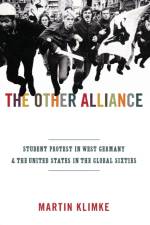
Using previously classified documents and original interviews, The Other Alliance examines the channels of cooperation between American and West German student movements throughout the 1960s and early 1970s, and the reactions these relationships provoked from the U.S. government. Revising the standard narratives of American and West German social mobilization, Martin Klimke demonstrates the strong transnational connections between New Left groups on both sides of the Atlantic. Klimke shows that the cold war partnership of the American and German governments was mirrored by a coalition of rebelling counterelites, whose common political origins and opposition to the Vietnam War played a vital role in generating dissent in the United States and Europe. American protest techniques such as the "e;sit-in"e; or "e;teach-in"e; became crucial components of the main organization driving student activism in West Germany--the German Socialist Student League--and motivated American and German student activists to construct networks against global imperialism. Klimke traces the impact that Black Power and Germany's unresolved National Socialist past had on the German student movement; he investigates how U.S. government agencies, such as the State Department's Interagency Youth Committee, advised American policymakers on confrontations with student unrest abroad; and he highlights the challenges student protesters posed to cold war alliances. Exploring the catalysts of cross-pollination between student protest movements on two continents, The Other Alliance is a pioneering work of transnational history.
A website's ranking on Google can spell the difference between success and failure for a new business. NCAA football ratings determine which schools get to play for the big money in postseason bowl games. Product ratings influence everything from the clothes we wear to the movies we select on Netflix. Ratings and rankings are everywhere, but how exactly do they work? Who's #1? offers an engaging and accessible account of how scientific rating and ranking methods are created and applied to a variety of uses. Amy Langville and Carl Meyer provide the first comprehensive overview of the mathematical algorithms and methods used to rate and rank sports teams, political candidates, products, Web pages, and more. In a series of interesting asides, Langville and Meyer provide fascinating insights into the ingenious contributions of many of the field's pioneers. They survey and compare the different methods employed today, showing why their strengths and weaknesses depend on the underlying goal, and explaining why and when a given method should be considered. Langville and Meyer also describe what can and can't be expected from the most widely used systems. The science of rating and ranking touches virtually every facet of our lives, and now you don't need to be an expert to understand how it really works. Who's #1? is the definitive introduction to the subject. It features easy-to-understand examples and interesting trivia and historical facts, and much of the required mathematics is included.
X and the City, a book of diverse and accessible math-based topics, uses basic modeling to explore a wide range of entertaining questions about urban life. How do you estimate the number of dental or doctor's offices, gas stations, restaurants, or movie theaters in a city of a given size? How can mathematics be used to maximize traffic flow through tunnels? Can you predict whether a traffic light will stay green long enough for you to cross the intersection? And what is the likelihood that your city will be hit by an asteroid? Every math problem and equation in this book tells a story and examples are explained throughout in an informal and witty style. The level of mathematics ranges from precalculus through calculus to some differential equations, and any reader with knowledge of elementary calculus will be able to follow the materials with ease. There are also some more challenging problems sprinkled in for the more advanced reader. Filled with interesting and unusual observations about how cities work, X and the City shows how mathematics undergirds and plays an important part in the metropolitan landscape.
Cells to Civilizations is the first unified account of how life transforms itself--from the production of bacteria to the emergence of complex civilizations. What are the connections between evolving microbes, an egg that develops into an infant, and a child who learns to walk and talk? Award-winning scientist Enrico Coen synthesizes the growth of living systems and creative processes, and he reveals that the four great life transformations--evolution, development, learning, and human culture--while typically understood separately, actually all revolve around shared core principles and manifest the same fundamental recipe. Coen blends provocative discussion, the latest scientific research, and colorful examples to demonstrate the links between these critical stages in the history of life. Coen tells a story rich with genes, embryos, neurons, and fascinating discoveries. He examines the development of the zebra, the adaptations of seaweed, the cave paintings of Lascaux, and the formulations of Alan Turing. He explores how dogs make predictions, how weeds tell the time of day, and how our brains distinguish a Modigliani from a Rembrandt. Locating commonalities in important findings, Coen gives readers a deeper understanding of key transformations and provides a bold portrait for how science both frames and is framed by human culture. A compelling investigation into the relationships between our biological past and cultural progress, Cells to Civilizations presents a remarkable story of living change.
The I Ching originated in China as a divination manual more than three thousand years ago. In 136 BCE the emperor declared it a Confucian classic, and in the centuries that followed, this work had a profound influence on the philosophy, religion, art, literature, politics, science, technology, and medicine of various cultures throughout East Asia. Jesuit missionaries brought knowledge of the I Ching to Europe in the seventeenth century, and the American counterculture embraced it in the 1960s. Here Richard Smith tells the extraordinary story of how this cryptic and once obscure book became one of the most widely read and extensively analyzed texts in all of world literature. In this concise history, Smith traces the evolution of the I Ching in China and throughout the world, explaining its complex structure, its manifold uses in different cultures, and its enduring appeal. He shows how the indigenous beliefs and customs of Japan, Korea, Vietnam, and Tibet "e;domesticated"e; the text, and he reflects on whether this Chinese classic can be compared to religious books such as the Bible or the Qur'an. Smith also looks at how the I Ching came to be published in dozens of languages, providing insight and inspiration to millions worldwide--including ardent admirers in the West such as Leibniz, Carl Jung, Philip K. Dick, Allen Ginsberg, Hermann Hesse, Bob Dylan, Jorge Luis Borges, and I. M. Pei. Smith offers an unparalleled biography of the most revered book in China's entire cultural tradition, and he shows us how this enigmatic ancient classic has become a truly global phenomenon.
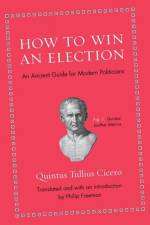
How to Win an Election is an ancient Roman guide for campaigning that is as up-to-date as tomorrow's headlines. In 64 BC when idealist Marcus Cicero, Rome's greatest orator, ran for consul (the highest office in the Republic), his practical brother Quintus decided he needed some no-nonsense advice on running a successful campaign. What follows in his short letter are timeless bits of political wisdom, from the importance of promising everything to everybody and reminding voters about the sexual scandals of your opponents to being a chameleon, putting on a good show for the masses, and constantly surrounding yourself with rabid supporters. Presented here in a lively and colorful new translation, with the Latin text on facing pages, this unashamedly pragmatic primer on the humble art of personal politicking is dead-on (Cicero won)--and as relevant today as when it was written. A little-known classic in the spirit of Machiavelli's Prince, How to Win an Election is required reading for politicians and everyone who enjoys watching them try to manipulate their way into office.
As countless love songs, movies, and self-help books attest, men and women have long sought different things. The result? Seemingly inevitable conflict. Yet we belong to the most cooperative species on the planet. Isn't there a way we can use this capacity to achieve greater harmony and equality between the sexes? In The War of the Sexes, Paul Seabright argues that there is--but first we must understand how the tension between conflict and cooperation developed in our remote evolutionary past, how it shaped the modern world, and how it still holds us back, both at home and at work. Drawing on biology, sociology, anthropology, and economics, Seabright shows that conflict between the sexes is, paradoxically, the product of cooperation. The evolutionary niche--the long dependent childhood--carved out by our ancestors requires the highest level of cooperative talent. But it also gives couples more to fight about. Men and women became experts at influencing one another to achieve their cooperative ends, but also became trapped in strategies of manipulation and deception in pursuit of sex and partnership. In early societies, economic conditions moved the balance of power in favor of men, as they cornered scarce resources for use in the sexual bargain. Today, conditions have changed beyond recognition, yet inequalities between men and women persist, as the brains, talents, and preferences we inherited from our ancestors struggle to deal with the unpredictable forces unleashed by the modern information economy. Men and women today have an unprecedented opportunity to achieve equal power and respect. But we need to understand the mixed inheritance of conflict and cooperation left to us by our primate ancestors if we are finally to escape their legacy.
Abonner på vårt nyhetsbrev og få rabatter og inspirasjon til din neste leseopplevelse.
Ved å abonnere godtar du vår personvernerklæring.