






















Gjør som tusenvis av andre bokelskere
Abonner på vårt nyhetsbrev og få rabatter og inspirasjon til din neste leseopplevelse.
Ved å abonnere godtar du vår personvernerklæring.Du kan når som helst melde deg av våre nyhetsbrev.

The right of governments to employ capital controls has always been the official orthodoxy of the International Monetary Fund, and the organization's formal rules providing this right have not changed significantly since the IMF was founded in 1945. But informally, among the staff inside the IMF, these controls became heresy in the 1980s and 1990s, prompting critics to accuse the IMF of indiscriminately encouraging the liberalization of controls and precipitating a wave of financial crises in emerging markets in the late 1990s. In Capital Ideas, Jeffrey Chwieroth explores the inner workings of the IMF to understand how its staff's thinking about capital controls changed so radically. In doing so, he also provides an important case study of how international organizations work and evolve. Drawing on original survey and archival research, extensive interviews, and scholarship from economics, politics, and sociology, Chwieroth traces the evolution of the IMF's approach to capital controls from the 1940s through spring 2009 and the first stages of the subprime credit crisis. He shows that IMF staff vigorously debated the legitimacy of capital controls and that these internal debates eventually changed the organization's behavior--despite the lack of major rule changes. He also shows that the IMF exercised a significant amount of autonomy despite the influence of member states. Normative and behavioral changes in international organizations, Chwieroth concludes, are driven not just by new rules but also by the evolving makeup, beliefs, debates, and strategic agency of their staffs.
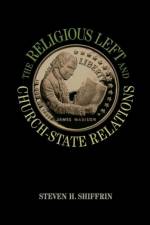
In The Religious Left and Church-State Relations, noted constitutional law scholar Steven Shiffrin argues that the religious left, not the secular left, is best equipped to lead the battle against the religious right on questions of church and state in America today. Explaining that the chosen rhetoric of secular liberals is poorly equipped to argue against religious conservatives, Shiffrin shows that all progressives, religious and secular, must appeal to broader values promoting religious liberty. He demonstrates that the separation of church and state serves to protect religions from political manipulation while tight connections between church and state compromise the integrity of religious institutions. Shiffrin discusses the pluralistic foundations of the religion clauses in the First Amendment and asserts that the clauses cannot be confined to the protection of liberty, equality, or equal liberty. He explores the constitutional framework of religious liberalism, applying it to controversial examples, including the Pledge of Allegiance, the government's use of religious symbols, the teaching of evolution in public schools, and school vouchers. Shiffrin examines how the approaches of secular liberalism toward church-state relations have been misguided philosophically and politically, and he illustrates why theological arguments hold an important democratic position--not in courtrooms or halls of government, but in the public dialogue. The book contends that the great issue of American religious politics is not whether religions should be supported at all, but how religions can best be strengthened and preserved.
Earthquake and Volcano Deformation is the first textbook to present the mechanical models of earthquake and volcanic processes, emphasizing earth-surface deformations that can be compared with observations from Global Positioning System (GPS) receivers, Interferometric Radar (InSAR), and borehole strain- and tiltmeters. Paul Segall provides the physical and mathematical fundamentals for the models used to interpret deformation measurements near active faults and volcanic centers.Segall highlights analytical methods of continuum mechanics applied to problems of active crustal deformation. Topics include elastic dislocation theory in homogeneous and layered half-spaces, crack models of faults and planar intrusions, elastic fields due to pressurized spherical and ellipsoidal magma chambers, time-dependent deformation resulting from faulting in an elastic layer overlying a viscoelastic half-space and related earthquake cycle models, poroelastic effects due to faulting and magma chamber inflation in a fluid-saturated crust, and the effects of gravity on deformation. He also explains changes in the gravitational field due to faulting and magmatic intrusion, effects of irregular surface topography and earth curvature, and modern concepts in rate- and state-dependent fault friction. This textbook presents sample calculations and compares model predictions against field data from seismic and volcanic settings from around the world.Earthquake and Volcano Deformation requires working knowledge of stress and strain, and advanced calculus. It is appropriate for advanced undergraduates and graduate students in geophysics, geology, and engineering. Professors: A supplementary Instructor's Manual is available for this book. It is restricted to teachers using the text in courses. For information on how to obtain a copy, refer to: http://press.princeton.edu/class_use/solutions.html
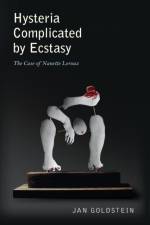
Hysteria Complicated by Ecstasy offers a rare window into the inner life of a person ordinarily inaccessible to historians: a semiliterate peasant girl who lived almost two centuries ago, in the aftermath of the French Revolution. Eighteen-year-old Nanette Leroux fell ill in 1822 with a variety of incapacitating nervous symptoms. Living near the spa at Aix-les-Bains, she became the charity patient of its medical director, Antoine Despine, who treated her with hydrotherapy and animal magnetism, as hypnosis was then called. Jan Goldstein translates, and provides a substantial introduction to, the previously unpublished manuscript recounting Nanette's strange illness--a manuscript coauthored by Despine and Alexandre Bertrand, the Paris physician who memorably diagnosed Nanette as suffering from "e;hysteria complicated by ecstasy."e; While hysteria would become a fashionable disease among urban women by the end of the nineteenth century, the case of Nanette Leroux differs sharply from this pattern in its early date and rural setting. Filled with intimate details about Nanette's behavior and extensive quotations of her utterances, the case is noteworthy for the sexual references that contemporaries did not recognize as such; for its focus on the difference between biological and social time; and for Nanette's fascination with the commodities available in the region's nascent marketplace. Goldstein's introduction brilliantly situates the text in its multiple contexts, examines it from the standpoint of early nineteenth-century medicine, and uses the insights of Foucault and Freud to craft a twenty-first-century interpretation. A compelling, multilayered account of one young woman's mental afflictions, Hysteria Complicated by Ecstasy is an extraordinary addition to the cultural and social history of psychiatry and medicine.
Mathematical models and computer simulations of complex social systems have become everyday tools in sociology. Yet until now, students had no up-to-date textbook from which to learn these techniques. Introduction to Mathematical Sociology fills this gap, providing undergraduates with a comprehensive, self-contained primer on the mathematical tools and applications that sociologists use to understand social behavior. Phillip Bonacich and Philip Lu cover all the essential mathematics, including linear algebra, graph theory, set theory, game theory, and probability. They show how to apply these mathematical tools to demography; patterns of power, influence, and friendship in social networks; Markov chains; the evolution and stability of cooperation in human groups; chaotic and complex systems; and more. Introduction to Mathematical Sociology also features numerous exercises throughout, and is accompanied by easy-to-use Mathematica-based computer simulations that students can use to examine the effects of changing parameters on model behavior. Provides an up-to-date and self-contained introduction to mathematical sociology Explains essential mathematical tools and their applications Includes numerous exercises throughout Features easy-to-use computer simulations to help students master concepts
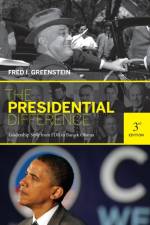
Fred I. Greenstein has long been one of our keenest observers of the modern presidency. In The Presidential Difference, he provides a fascinating and instructive account of the presidential qualities that have served well and poorly in the Oval Office, beginning with Franklin D. Roosevelt's first hundred days. He surveys each president's political skill, vision, cognitive style, organizational capacity, ability to communicate, and emotional intelligence--and argues that the last is the most important in predicting presidential success. Throughout, Greenstein offers a series of bottom-line judgments on each of his thirteen subjects as well as an overarching theory of why presidents succeed or fail. In this new edition, Greenstein assesses President George W. Bush in the wake of his two terms. The book also includes a new chapter on the leadership style of President Obama and how we can expect it to affect his presidency and legacy.
The Great American Mission traces how America's global modernization efforts during the twentieth century were a means to remake the world in its own image. David Ekbladh shows that the emerging concept of modernization combined existing development ideas from the Depression. He describes how ambitious New Deal programs like the Tennessee Valley Authority became symbols of American liberalism's ability to marshal the social sciences, state planning, civil society, and technology to produce extensive social and economic change. For proponents, it became a valuable weapon to check the influence of menacing ideologies such as Fascism and Communism. Modernization took on profound geopolitical importance as the United States grappled with these threats. After World War II, modernization remained a means to contain the growing influence of the Soviet Union. Ekbladh demonstrates how U.S.-led nation-building efforts in global hot spots, enlisting an array of nongovernmental groups and international organizations, were a basic part of American strategy in the Cold War. However, a close connection to the Vietnam War and the upheavals of the 1960s would discredit modernization. The end of the Cold War further obscured modernization's mission, but many of its assumptions regained prominence after September 11 as the United States moved to contain new threats. Using new sources and perspectives, The Great American Mission offers new and challenging interpretations of America's ideological motivations and humanitarian responsibilities abroad.
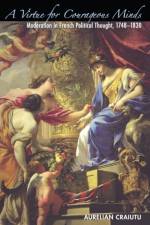
Political moderation is the touchstone of democracy, which could not function without compromise and bargaining, yet it is one of the most understudied concepts in political theory. How can we explain this striking paradox? Why do we often underestimate the virtue of moderation? Seeking to answer these questions, A Virtue for Courageous Minds examines moderation in modern French political thought and sheds light on the French Revolution and its legacy. Aurelian Craiutu begins with classical thinkers who extolled the virtues of a moderate approach to politics, such as Aristotle and Cicero. He then shows how Montesquieu inaugurated the modern rebirth of this tradition by laying the intellectual foundations for moderate government. Craiutu looks at important figures such as Jacques Necker, Madame de Stael, and Benjamin Constant, not only in the context of revolutionary France but throughout Europe. He traces how moderation evolves from an individual moral virtue into a set of institutional arrangements calculated to protect individual liberty, and he explores the deep affinity between political moderation and constitutional complexity. Craiutu demonstrates how moderation navigates between political extremes, and he challenges the common notion that moderation is an essentially conservative virtue, stressing instead its eclectic nature. Drawing on a broad range of writings in political theory, the history of political thought, philosophy, and law, A Virtue for Courageous Minds reveals how the virtue of political moderation can address the profound complexities of the world today.
In October 1962, the fate of the world hung on the American response to the discovery of Soviet nuclear missile sites in Cuba. That response was informed by hours of discussions between John F. Kennedy and his top advisers. What those advisers did not know was that President Kennedy was secretly taping their talks, providing future scholars with a rare inside look at high-level political deliberation in a moment of crisis. Talk at the Brink is the first book to examine these historic audio recordings from a sociological perspective. It reveals how conversational practices and dynamics shaped Kennedy's perception of the options available to him, thereby influencing his decisions and ultimately the outcome of the crisis. David Gibson looks not just at the positions taken by Kennedy and his advisers but how those positions were articulated, challenged, revised, and sometimes ignored. He argues that Kennedy's decisions arose from the intersection of distant events unfolding in Cuba, Moscow, and the high seas with the immediate conversational minutia of turn-taking, storytelling, argument, and justification. In particular, Gibson shows how Kennedy's group told and retold particular stories again and again, sometimes settling upon a course of action only after the most frightening consequences were omitted or actively suppressed. Talk at the Brink presents an image of Kennedy's response to the Cuban missile crisis that is sharply at odds with previous scholarship, and has important implications for our understanding of decision making, deliberation, social interaction, and historical contingency.
Despite the growth of digital media, traditional FM radio airplay still remains the essential way for musicians to achieve commercial success. Climbing the Charts examines how songs rise, or fail to rise, up the radio airplay charts. Looking at the relationships between record labels, tastemakers, and the public, Gabriel Rossman develops a clear picture of the roles of key players and the gatekeeping mechanisms in the commercial music industry. Along the way, he explores its massive inequalities, debunks many popular misconceptions about radio stations' abilities to dictate hits, and shows how a song diffuses throughout the nation to become a massive success. Contrary to the common belief that Clear Channel sees every sparrow that falls, Rossman demonstrates that corporate radio chains neither micromanage the routine decision of when to start playing a new single nor make top-down decisions to blacklist such politically inconvenient artists as the Dixie Chicks. Neither do stations imitate either ordinary peers or the so-called kingmaker radio stations who are wrongly believed to be able to make or break a single. Instead, Rossman shows that hits spread rapidly across radio because they clearly conform to an identifiable style or genre. Radio stations respond to these songs, and major labels put their money behind them through extensive marketing and promotion efforts, including the illegal yet time-honored practice of payoffs known within the industry as payola. Climbing the Charts provides a fresh take on the music industry and a model for understanding the diffusion of innovation.
Can libertarians care about social justice? In Free Market Fairness, John Tomasi argues that they can and should. Drawing simultaneously on moral insights from defenders of economic liberty such as F. A. Hayek and advocates of social justice such as John Rawls, Tomasi presents a new theory of liberal justice. This theory, free market fairness, is committed to both limited government and the material betterment of the poor. Unlike traditional libertarians, Tomasi argues that property rights are best defended not in terms of self-ownership or economic efficiency but as requirements of democratic legitimacy. At the same time, he encourages egalitarians concerned about social justice to listen more sympathetically to the claims ordinary citizens make about the importance of private economic liberty in their daily lives. In place of the familiar social democratic interpretations of social justice, Tomasi offers a "e;market democratic"e; conception of social justice: free market fairness. Tomasi argues that free market fairness, with its twin commitment to economic liberty and a fair distribution of goods and opportunities, is a morally superior account of liberal justice. Free market fairness is also a distinctively American ideal. It extends the notion, prominent in America's founding period, that protection of property and promotion of real opportunity are indivisible goals. Indeed, according to Tomasi, free market fairness is social justice, American style. Provocative and vigorously argued, Free Market Fairness offers a bold new way of thinking about politics, economics, and justice--one that will challenge readers on both the left and right.
Robert Wokler was one of the world's leading experts on Rousseau and the Enlightenment, but some of his best work was published in the form of widely scattered and difficult-to-find essays. This book collects for the first time a representative selection of his most important essays on Rousseau and the legacy of Enlightenment political thought. These essays concern many of the great themes of the age, including liberty, equality and the origins of revolution. But they also address a number of less prominent debates, including those over cosmopolitanism, the nature and social role of music and the origins of the human sciences in the Enlightenment controversy over the relationship between humans and the great apes. These essays also explore Rousseau's relationships to Rameau, Pufendorf, Voltaire and Marx; reflect on the work of important earlier scholars of the Enlightenment, including Ernst Cassirer and Isaiah Berlin; and examine the influence of the Enlightenment on the twentieth century. One of the central themes of the book is a defense of the Enlightenment against the common charge that it bears responsibility for the Terror of the French Revolution, the totalitarian regimes of the twentieth-century and the Holocaust.
How should a liberal democracy respond to hate groups and others that oppose the ideal of free and equal citizenship? The democratic state faces the hard choice of either protecting the rights of hate groups and allowing their views to spread, or banning their views and violating citizens' rights to freedoms of expression, association, and religion. Avoiding the familiar yet problematic responses to these issues, political theorist Corey Brettschneider proposes a new approach called value democracy. The theory of value democracy argues that the state should protect the right to express illiberal beliefs, but the state should also engage in democratic persuasion when it speaks through its various expressive capacities: publicly criticizing, and giving reasons to reject, hate-based or other discriminatory viewpoints. Distinguishing between two kinds of state action--expressive and coercive--Brettschneider contends that public criticism of viewpoints advocating discrimination based on race, gender, or sexual orientation should be pursued through the state's expressive capacities as speaker, educator, and spender. When the state uses its expressive capacities to promote the values of free and equal citizenship, it engages in democratic persuasion. By using democratic persuasion, the state can both respect rights and counter hateful or discriminatory viewpoints. Brettschneider extends this analysis from freedom of expression to the freedoms of religion and association, and he shows that value democracy can uphold the protection of these freedoms while promoting equality for all citizens.
The idea and practice of sacrifice play a profound role in religion, ethics, and politics. In this brief book, philosopher Moshe Halbertal explores the meaning and implications of sacrifice, developing a theory of sacrifice as an offering and examining the relationship between sacrifice, ritual, violence, and love. On Sacrifice also looks at the place of self-sacrifice within ethical life and at the complex role of sacrifice as both a noble and destructive political ideal. In the religious domain, Halbertal argues, sacrifice is an offering, a gift given in the context of a hierarchical relationship. As such it is vulnerable to rejection, a trauma at the root of both ritual and violence. An offering is also an ambiguous gesture torn between a genuine expression of gratitude and love and an instrument of exchange, a tension that haunts the practice of sacrifice. In the moral and political domains, sacrifice is tied to the idea of self-transcendence, in which an individual sacrifices his or her self-interest for the sake of higher values and commitments. While self-sacrifice has great potential moral value, it can also be used to justify the most brutal acts. Halbertal attempts to unravel the relationship between self-sacrifice and violence, arguing that misguided self-sacrifice is far more problematic than exaggerated self-love. In his exploration of the positive and negative dimensions of self-sacrifice, Halbertal also addresses the role of past sacrifice in obligating future generations and in creating a bond for political associations, and considers the function of the modern state as a sacrificial community.
The limiting of violence through state powers is one of the central projects of the modern age. Why then have recent centuries been so bloody? In Trust and Violence, acclaimed German intellectual and public figure Jan Philipp Reemtsma demonstrates that the aim of decreasing and deterring violence has gone hand in hand with the misleading idea that violence is abnormal and beyond comprehension. We would be far better off, Reemtsma argues, if we acknowledged the disturbing fact that violence is normal. At the same time, Reemtsma contends that violence cannot be fully understood without delving into the concept of trust. Not in violence, but in trust, rests the foundation of true power. Reemtsma makes his case with a wide-ranging history of ideas about violence, from ancient philosophy through Shakespeare and Schiller to Michel Foucault, and by considering specific cases of extreme violence from medieval torture to the Holocaust and beyond. In the midst of this gloomy account of human tendencies, Reemtsma shrewdly observes that even dictators have to sleep at night and cannot rely on violence alone to ensure their safety. These authoritarian leaders must trust others while, by means other than violence, they must convince others to trust them. The history of violence is therefore a history of the peculiar relationship between violence and trust, and a recognition of trust's crucial place in humanity. A broad and insightful book that touches on philosophy, sociology, and political theory, Trust and Violence sheds new, and at times disquieting, light on two integral aspects of our society.
This concise book introduces nonphysicists to the core philosophical issues surrounding the nature and structure of space and time, and is also an ideal resource for physicists interested in the conceptual foundations of space-time theory. Tim Maudlin's broad historical overview examines Aristotelian and Newtonian accounts of space and time, and traces how Galileo's conceptions of relativity and space-time led to Einstein's special and general theories of relativity. Maudlin explains special relativity with enough detail to solve concrete physical problems while presenting general relativity in more qualitative terms. Additional topics include the Twins Paradox, the physical aspects of the Lorentz-FitzGerald contraction, the constancy of the speed of light, time travel, the direction of time, and more. Introduces nonphysicists to the philosophical foundations of space-time theory Provides a broad historical overview, from Aristotle to Einstein Explains special relativity geometrically, emphasizing the intrinsic structure of space-time Covers the Twins Paradox, Galilean relativity, time travel, and more Requires only basic algebra and no formal knowledge of physics
For many, Thomas Carlyle's put-down of economics as "e;the dismal science"e; rings true--especially in the aftermath of the crash of 2008. But Diane Coyle argues that economics today is more soulful than dismal, a more practical and human science than ever before. The Soulful Science describes the remarkable creative renaissance in economics, how economic thinking is being applied to the paradoxes of everyday life. This revised edition incorporates the latest developments in the field, including the rise of behavioral finance, the failure of carbon trading, and the growing trend of government bailouts. She also discusses such major debates as the relationship between economic statistics and presidential elections, the boundary between private choice and public action, and who is to blame for today's banking crisis.
Hermann Weyl (1885-1955) was one of the twentieth century's most important mathematicians, as well as a seminal figure in the development of quantum physics and general relativity. He was also an eloquent writer with a lifelong interest in the philosophical implications of the startling new scientific developments with which he was so involved. Mind and Nature is a collection of Weyl's most important general writings on philosophy, mathematics, and physics, including pieces that have never before been published in any language or translated into English, or that have long been out of print. Complete with Peter Pesic's introduction, notes, and bibliography, these writings reveal an unjustly neglected dimension of a complex and fascinating thinker. In addition, the book includes more than twenty photographs of Weyl and his family and colleagues, many of which are previously unpublished. Included here are Weyl's exposition of his important synthesis of electromagnetism and gravitation, which Einstein at first hailed as "e;a first-class stroke of genius"e;; two little-known letters by Weyl and Einstein from 1922 that give their contrasting views on the philosophical implications of modern physics; and an essay on time that contains Weyl's argument that the past is never completed and the present is not a point. Also included are two book-length series of lectures, The Open World (1932) and Mind and Nature (1934), each a masterly exposition of Weyl's views on a range of topics from modern physics and mathematics. Finally, four retrospective essays from Weyl's last decade give his final thoughts on the interrelations among mathematics, philosophy, and physics, intertwined with reflections on the course of his rich life.
This is a major reinterpretation of ancient philosophy that recovers the long Greek and Roman tradition of philosophy as a complete way of life--and not simply an intellectual discipline. Distinguished philosopher John Cooper traces how, for many ancient thinkers, philosophy was not just to be studied or even used to solve particular practical problems. Rather, philosophy--not just ethics but even logic and physical theory--was literally to be lived. Yet there was great disagreement about how to live philosophically: philosophy was not one but many, mutually opposed, ways of life. Examining this tradition from its establishment by Socrates in the fifth century BCE through Plotinus in the third century CE and the eclipse of pagan philosophy by Christianity, Pursuits of Wisdom examines six central philosophies of living--Socratic, Aristotelian, Stoic, Epicurean, Skeptic, and the Platonist life of late antiquity. The book describes the shared assumptions that allowed these thinkers to conceive of their philosophies as ways of life, as well as the distinctive ideas that led them to widely different conclusions about the best human life. Clearing up many common misperceptions and simplifications, Cooper explains in detail the Socratic devotion to philosophical discussion about human nature, human life, and human good; the Aristotelian focus on the true place of humans within the total system of the natural world; the Stoic commitment to dutifully accepting Zeus's plans; the Epicurean pursuit of pleasure through tranquil activities that exercise perception, thought, and feeling; the Skeptical eschewal of all critical reasoning in forming their beliefs; and, finally, the late Platonist emphasis on spiritual concerns and the eternal realm of Being. Pursuits of Wisdom is essential reading for anyone interested in understanding what the great philosophers of antiquity thought was the true purpose of philosophy--and of life.
When first published in 2005, Matrix Mathematics quickly became the essential reference book for users of matrices in all branches of engineering, science, and applied mathematics. In this fully updated and expanded edition, the author brings together the latest results on matrix theory to make this the most complete, current, and easy-to-use book on matrices. Each chapter describes relevant background theory followed by specialized results. Hundreds of identities, inequalities, and matrix facts are stated clearly and rigorously with cross references, citations to the literature, and illuminating remarks. Beginning with preliminaries on sets, functions, and relations,Matrix Mathematics covers all of the major topics in matrix theory, including matrix transformations; polynomial matrices; matrix decompositions; generalized inverses; Kronecker and Schur algebra; positive-semidefinite matrices; vector and matrix norms; the matrix exponential and stability theory; and linear systems and control theory. Also included are a detailed list of symbols, a summary of notation and conventions, an extensive bibliography and author index with page references, and an exhaustive subject index. This significantly expanded edition of Matrix Mathematics features a wealth of new material on graphs, scalar identities and inequalities, alternative partial orderings, matrix pencils, finite groups, zeros of multivariable transfer functions, roots of polynomials, convex functions, and matrix norms. Covers hundreds of important and useful results on matrix theory, many never before available in any book Provides a list of symbols and a summary of conventions for easy use Includes an extensive collection of scalar identities and inequalities Features a detailed bibliography and author index with page references Includes an exhaustive subject index with cross-referencing
Noted biologist and author John Tyler Bonner has experimented with cellular slime molds for more than sixty years, and he has done more than anyone else to raise these peculiar collections of amoebae from a minor biological curiosity to a major model organism--one that is widely studied for clues to the development and evolution of all living things. Now, five decades after he published his first pioneering book on cellular slime molds, Bonner steps back from the proliferating and increasingly specialized knowledge about the organism to provide a broad, nontechnical picture of its whole biology, including its evolution, sociobiology, ecology, behavior, and development. The Social Amoebae draws the big lessons from decades of research, and shows how slime molds fit into and illuminate biology as a whole. Slime molds are very different from other organisms; they feed as individual amoebae before coming together to form a multicellular organism that has a remarkable ability to move and orient itself in its environment. Furthermore, these social amoebae display a sophisticated division of labor; within each organism, some cells form the stalk and others become the spores that will seed the next generation. In The Social Amoebae, Bonner examines all these parts together, giving a balanced, concise, and clear overview of slime mold biology, from molecules to cells to multicells, as he advances some unconventional and unexpected insights.
The cannibal has played a surprisingly important role in the history of thought--perhaps the ultimate symbol of savagery and degradation-- haunting the Western imagination since before the Age of Discovery, when Europeans first encountered genuine cannibals and related horrible stories of shipwrecked travelers eating each other. An Intellectual History of Cannibalism is the first book to systematically examine the role of the cannibal in the arguments of philosophers, from the classical period to modern disputes about such wide-ranging issues as vegetarianism and the right to private property. Catalin Avramescu shows how the cannibal is, before anything else, a theoretical creature, one whose fate sheds light on the decline of theories of natural law, the emergence of modernity, and contemporary notions about good and evil. This provocative history of ideas traces the cannibal's appearance throughout Western thought, first as a creature springing from the menagerie of natural law, later as a diabolical retort to theological dogmas about the resurrection of the body, and finally to present-day social, ethical, and political debates in which the cannibal is viewed through the lens of anthropology or invoked in the service of moral relativism. Ultimately, An Intellectual History of Cannibalism is the story of the birth of modernity and of the philosophies of culture that arose in the wake of the Enlightenment. It is a book that lays bare the darker fears and impulses that course through the Western intellectual tradition.
Between Two Worlds is an authoritative commentary on--and powerful reinterpretation of--the founding work of modern philosophy, Descartes's Meditations. Philosophers have tended to read Descartes's seminal work in an occasional way, examining its treatment of individual topics while ignoring other parts of the text. In contrast, John Carriero provides a sustained, systematic reading of the whole text, giving a detailed account of the positions against which Descartes was reacting, and revealing anew the unity, meaning, and originality of the Meditations. Carriero finds in the Meditations a nearly continuous argument against Thomistic Aristotelian ways of thinking about cognition, and shows more clearly than ever before how Descartes bridged the old world of scholasticism and the new one of mechanistic naturalism. Rather than casting Descartes's project primarily in terms of skepticism, knowledge, and certainty, Carriero focuses on fundamental disagreements between Descartes and the scholastics over the nature of understanding, the relation between the senses and the intellect, the nature of the human being, and how and to what extent God is cognized by human beings. Against this background, Carriero shows, Descartes developed his own conceptions of mind, body, and the relation between them, creating a coherent, philosophically rich project in the Meditations and setting the agenda for a century of rationalist metaphysics.
A King Travels examines the scripting and performance of festivals in Spain between 1327 and 1620, offering an unprecedented look at the different types of festivals that were held in Iberia during this crucial period of European history. Bridging the gap between the medieval and early modern eras, Teofilo Ruiz focuses on the travels and festivities of Philip II, exploring the complex relationship between power and ceremony, and offering a vibrant portrait of Spain's cultural and political life. Ruiz covers a range of festival categories: carnival, royal entries, tournaments, calendrical and noncalendrical celebrations, autos de fe, and Corpus Christi processions. He probes the ritual meanings of these events, paying special attention to the use of colors and symbols, and to the power relations articulated through these festive displays. Ruiz argues that the fluid and at times subversive character of medieval festivals gave way to highly formalized and hierarchical events reflecting a broader shift in how power was articulated in late medieval and early modern Spain. Yet Ruiz contends that these festivals, while they sought to buttress authority and instruct different social orders about hierarchies of power, also served as sites of contestation, dialogue, and resistance. A King Travels sheds new light on Iberian festive traditions and their unique role in the centralizing state in early modern Castile.
Following Japan's attack on Pearl Harbor in 1941, the U.S. government rounded up more than one hundred thousand Japanese Americans and sent them to internment camps. One of those internees was Charles Kikuchi. In thousands of diary pages, he documented his experiences in the camps, his resettlement in Chicago and drafting into the Army on the eve of Hiroshima and Nagasaki, and his postwar life as a social worker in New York City. Kikuchi's diaries bear witness to a watershed era in American race relations, and expose both the promise and the hypocrisy of American democracy. Jim and Jap Crow follows Kikuchi's personal odyssey among fellow Japanese American intellectuals, immigrant activists, Chicago School social scientists, everyday people on Chicago's South Side, and psychologically scarred veterans in the hospitals of New York. The book chronicles a remarkable moment in America's history in which interracial alliances challenged the limits of the elusive democratic ideal, and in which the nation was forced to choose between civil liberty and the fearful politics of racial hysteria. It was an era of world war and the atomic bomb, desegregation in the military but Jim and Jap Crow elsewhere in America, and a hopeful progressivism that gave way to Cold War paranoia. Jim and Jap Crow looks at Kikuchi's life and diaries as a lens through which to observe the possibilities, failures, and key conversations in a dynamic multiracial America.
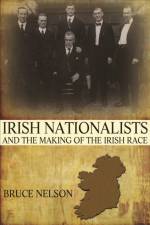
This is a book about Irish nationalism and how Irish nationalists developed their own conception of the Irish race. Bruce Nelson begins with an exploration of the discourse of race--from the nineteenth--century belief that "e;race is everything"e; to the more recent argument that there are no races. He focuses on how English observers constructed the "e;native"e; and Catholic Irish as uncivilized and savage, and on the racialization of the Irish in the nineteenth century, especially in Britain and the United States, where Irish immigrants were often portrayed in terms that had been applied mainly to enslaved Africans and their descendants. Most of the book focuses on how the Irish created their own identity--in the context of slavery and abolition, empire, and revolution. Since the Irish were a dispersed people, this process unfolded not only in Ireland, but in the United States, Britain, Australia, South Africa, and other countries. Many nationalists were determined to repudiate anything that could interfere with the goal of building a united movement aimed at achieving full independence for Ireland. But others, including men and women who are at the heart of this study, believed that the Irish struggle must create a more inclusive sense of Irish nationhood and stand for freedom everywhere. Nelson pays close attention to this argument within Irish nationalism, and to the ways it resonated with nationalists worldwide, from India to the Caribbean.
Histories investigating U.S. immigration have often portrayed America as a domestic melting pot, merging together those who arrive on its shores. Yet this is not a truly accurate depiction of the nation's complex connections to immigration. Offering a brand-new global history of the subject, Foreign Relations takes a comprehensive look at the links between American immigration and U.S. foreign relations. Donna Gabaccia examines America's relationship to immigration and its debates through the prism of the nation's changing foreign policy over the past two centuries. She shows that immigrants were not isolationists who cut ties to their countries of origin or their families. Instead, their relations to America were often in flux and dependent on government policies of the time.An innovative history of U.S. immigration, Foreign Relations casts a fresh eye on a compelling and controversial topic.
Why do we often teach English poetic meter by the Greek terms iamb and trochee? How is our understanding of English meter influenced by the history of England's sense of itself in the nineteenth century? Not an old-fashioned approach to poetry, but a dynamic, contested, and inherently nontraditional field, "e;English meter"e; concerned issues of personal and national identity, class, education, patriotism, militarism, and the development of English literature as a discipline. The Rise and Fall of Meter tells the unknown story of English meter from the late eighteenth century until just after World War I. Uncovering a vast and unexplored archive in the history of poetics, Meredith Martin shows that the history of prosody is tied to the ways Victorian England argued about its national identity. Gerard Manley Hopkins, Coventry Patmore, and Robert Bridges used meter to negotiate their relationship to England and the English language; George Saintsbury, Matthew Arnold, and Henry Newbolt worried about the rise of one metrical model among multiple competitors. The pressure to conform to a stable model, however, produced reactionary misunderstandings of English meter and the culture it stood for. This unstable relationship to poetic form influenced the prose and poems of Robert Graves, Siegfried Sassoon, Wilfred Owen, W. B. Yeats, Ezra Pound, and Alice Meynell. A significant intervention in literary history, this book argues that our contemporary understanding of the rise of modernist poetic form was crucially bound to narratives of English national culture.
Mothers of Conservatism tells the story of 1950s Southern Californian housewives who shaped the grassroots right in the two decades following World War II. Michelle Nickerson describes how red-hunting homemakers mobilized activist networks, institutions, and political consciousness in local education battles, and she introduces a generation of women who developed political styles and practices around their domestic routines. From the conservative movement's origins in the early fifties through the presidential election of 1964, Nickerson documents how women shaped conservatism from the bottom up, out of the fabric of their daily lives and into the agenda of the Republican Party.A unique history of the American conservative movement, Mothers of Conservatism shows how housewives got out of the house and discovered their political capital.
Combining literary, cultural, and political history, and based on extensive archival research, including previously unseen FBI and CIA documents, Archives of Authority argues that cultural politics--specifically America's often covert patronage of the arts--played a highly important role in the transfer of imperial authority from Britain to the United States during a critical period after World War II. Andrew Rubin argues that this transfer reshaped the postwar literary space and he shows how, during this time, new and efficient modes of cultural transmission, replication, and travel--such as radio and rapidly and globally circulated journals--completely transformed the position occupied by the postwar writer and the role of world literature. Rubin demonstrates that the nearly instantaneous translation of texts by George Orwell, Thomas Mann, W. H. Auden, Richard Wright, Mary McCarthy, and Albert Camus, among others, into interrelated journals that were sponsored by organizations such as the CIA's Congress for Cultural Freedom and circulated around the world effectively reshaped writers, critics, and intellectuals into easily recognizable, transnational figures. Their work formed a new canon of world literature that was celebrated in the United States and supposedly represented the best of contemporary thought, while less politically attractive authors were ignored or even demonized. This championing and demonizing of writers occurred in the name of anti-Communism--the new, transatlantic "e;civilizing mission"e; through which postwar cultural and literary authority emerged.
Abonner på vårt nyhetsbrev og få rabatter og inspirasjon til din neste leseopplevelse.
Ved å abonnere godtar du vår personvernerklæring.