













Gjør som tusenvis av andre bokelskere
Abonner på vårt nyhetsbrev og få rabatter og inspirasjon til din neste leseopplevelse.
Ved å abonnere godtar du vår personvernerklæring.Du kan når som helst melde deg av våre nyhetsbrev.

Conservative pundits allege that the pervasive liberalism of America's colleges and universities has detrimental effects on undergraduates, most particularly right-leaning ones. Yet not enough attention has actually been paid to young conservatives to test these claims-until now. In Becoming Right, Amy Binder and Kate Wood carefully explore who conservative students are, and how their beliefs and political activism relate to their university experiences.Rich in interviews and insight, Becoming Right illustrates that the diverse conservative movement evolving among today's college students holds important implications for the direction of American politics.
Can a country be a democracy if its government only responds to the preferences of the rich? In an ideal democracy, all citizens should have equal influence on government policy--but as this book demonstrates, America's policymakers respond almost exclusively to the preferences of the economically advantaged. Affluence and Influence definitively explores how political inequality in the United States has evolved over the last several decades and how this growing disparity has been shaped by interest groups, parties, and elections. With sharp analysis and an impressive range of data, Martin Gilens looks at thousands of proposed policy changes, and the degree of support for each among poor, middle-class, and affluent Americans. His findings are staggering: when preferences of low- or middle-income Americans diverge from those of the affluent, there is virtually no relationship between policy outcomes and the desires of less advantaged groups. In contrast, affluent Americans' preferences exhibit a substantial relationship with policy outcomes whether their preferences are shared by lower-income groups or not. Gilens shows that representational inequality is spread widely across different policy domains and time periods. Yet Gilens also shows that under specific circumstances the preferences of the middle class and, to a lesser extent, the poor, do seem to matter. In particular, impending elections--especially presidential elections--and an even partisan division in Congress mitigate representational inequality and boost responsiveness to the preferences of the broader public. At a time when economic and political inequality in the United States only continues to rise, Affluence and Influence raises important questions about whether American democracy is truly responding to the needs of all its citizens.
As China continues to transform itself, many assume that the nation will eventually move beyond communism and adopt a Western-style democracy. But could China develop a unique form of government based on its own distinct traditions? Jiang Qing--China's most original, provocative, and controversial Confucian political thinker--says yes. In this book, he sets out a vision for a Confucian constitutional order that offers a compelling alternative to both the status quo in China and to a Western-style liberal democracy. A Confucian Constitutional Order is the most detailed and systematic work on Confucian constitutionalism to date. Jiang argues against the democratic view that the consent of the people is the main source of political legitimacy. Instead, he presents a comprehensive way to achieve humane authority based on three sources of political legitimacy, and he derives and defends a proposal for a tricameral legislature that would best represent the Confucian political ideal. He also puts forward proposals for an institution that would curb the power of parliamentarians and for a symbolic monarch who would embody the historical and transgenerational identity of the state. In the latter section of the book, four leading liberal and socialist Chinese critics--Joseph Chan, Chenyang Li, Wang Shaoguang, and Bai Tongdong--critically evaluate Jiang's theories and Jiang gives detailed responses to their views. A Confucian Constitutional Order provides a new standard for evaluating political progress in China and enriches the dialogue of possibilities available to this rapidly evolving nation. This book will fascinate students and scholars of Chinese politics, and is essential reading for anyone concerned about China's political future.
Boilerplate--the fine-print terms and conditions that we become subject to when we click "e;I agree"e; online, rent an apartment, enter an employment contract, sign up for a cellphone carrier, or buy travel tickets--pervades all aspects of our modern lives. On a daily basis, most of us accept boilerplate provisions without realizing that should a dispute arise about a purchased good or service, the nonnegotiable boilerplate terms can deprive us of our right to jury trial and relieve providers of responsibility for harm. Boilerplate is the first comprehensive treatment of the problems posed by the increasing use of these terms, demonstrating how their use has degraded traditional notions of consent, agreement, and contract, and sacrificed core rights whose loss threatens the democratic order. Margaret Jane Radin examines attempts to justify the use of boilerplate provisions by claiming either that recipients freely consent to them or that economic efficiency demands them, and she finds these justifications wanting. She argues, moreover, that our courts, legislatures, and regulatory agencies have fallen short in their evaluation and oversight of the use of boilerplate clauses. To improve legal evaluation of boilerplate, Radin offers a new analytical framework, one that takes into account the nature of the rights affected, the quality of the recipient's consent, and the extent of the use of these terms. Radin goes on to offer possibilities for new methods of boilerplate evaluation and control, among them the bold suggestion that tort law rather than contract law provides a preferable analysis for some boilerplate schemes. She concludes by discussing positive steps that NGOs, legislators, regulators, courts, and scholars could take to bring about better practices.
Heavenly Mathematics traces the rich history of spherical trigonometry, revealing how the cultures of classical Greece, medieval Islam, and the modern West used this forgotten art to chart the heavens and the Earth. Once at the heart of astronomy and ocean-going navigation for two millennia, the discipline was also a mainstay of mathematics education for centuries and taught widely until the 1950s. Glen Van Brummelen explores this exquisite branch of mathematics and its role in ancient astronomy, geography, and cartography; Islamic religious rituals; celestial navigation; polyhedra; stereographic projection; and more. He conveys the sheer beauty of spherical trigonometry, providing readers with a new appreciation of its elegant proofs and often surprising conclusions. Heavenly Mathematics is illustrated throughout with stunning historical images and informative drawings and diagrams. This unique compendium also features easy-to-use appendixes as well as exercises that originally appeared in textbooks from the eighteenth to the early twentieth centuries.
With little domestic fanfare and even less attention internationally, Japan has been reinventing itself since the 1990s, dramatically changing its political economy, from one managed by regulations to one with a neoliberal orientation. Rebuilding from the economic misfortunes of its recent past, the country retains a formidable economy and its political system is healthier than at any time in its history. Japan Transformed explores the historical, political, and economic forces that led to the country's recent evolution, and looks at the consequences for Japan's citizens and global neighbors. The book examines Japanese history, illustrating the country's multiple transformations over the centuries, and then focuses on the critical and inexorable advance of economic globalization. It describes how global economic integration and urbanization destabilized Japan's postwar policy coalition, undercut the ruling Liberal Democratic Party's ability to buy votes, and paved the way for new electoral rules that emphasized competing visions of the public good. In contrast to the previous system that pitted candidates from the same party against each other, the new rules tether policymaking to the vast swath of voters in the middle of the political spectrum. Regardless of ruling party, Japan's politics, economics, and foreign policy are on a neoliberal path. Japan Transformed combines broad context and comparative analysis to provide an accurate understanding of Japan's past, present, and future.
In 1915, C. G. Jung and his psychiatrist colleague, Hans Schmid-Guisan, began a correspondence through which they hoped to codify fundamental individual differences of attention and consciousness. Their ambitious dialogue, focused on the opposition of extraversion and introversion, demonstrated the difficulty of reaching a shared awareness of differences even as it introduced concepts that would eventually enable Jung to create his landmark 1921 statement of the theory of psychological types. That theory, the basis of the widely used Myers-Briggs Type Indicator and similar personality assessment tools, continues to inform not only personality psychology but also such diverse fields as marriage and career counseling and human resource management.This correspondence reveals Jung fielding keen theoretical challenges from one of his most sensitive and perceptive colleagues, and provides a useful historical grounding for all those who work with, or are interested in, Jungian psychology and psychological typology.
What happens to a country when its skilled workers emigrate? The first book to examine the complex economic, social, and political effects of emigration on India, Diaspora, Development, and Democracy provides a conceptual framework for understanding the repercussions of international migration on migrants' home countries. Devesh Kapur finds that migration has influenced India far beyond a simplistic "e;brain drain"e;--migration's impact greatly depends on who leaves and why. The book offers new methods and empirical evidence for measuring these traits and shows how data about these characteristics link to specific outcomes. For instance, the positive selection of Indian migrants through education has strengthened India's democracy by creating a political space for previously excluded social groups. Because older Indian elites have an exit option, they are less likely to resist the loss of political power at home. Education and training abroad has played an important role in facilitating the flow of expertise to India, integrating the country into the world economy, positively shaping how India is perceived, and changing traditional conceptions of citizenship. The book highlights a paradox--while international migration is a cause and consequence of globalization, its effects on countries of origin depend largely on factors internal to those countries. A rich portrait of the Indian migrant community, Diaspora, Development, and Democracy explores the complex political and economic consequences of migration for the countries migrants leave behind.
In recent decades, scholars have argued that the Roman Republic's political culture was essentially democratic in nature, stressing the central role of the 'sovereign' people and their assemblies. Karl-J. Holkeskamp challenges this view in Reconstructing the Roman Republic, warning that this scholarly trend threatens to become the new orthodoxy, and defending the position that the republic was in fact a uniquely Roman, dominantly oligarchic and aristocratic political form. Holkeskamp offers a comprehensive, in-depth survey of the modern debate surrounding the Roman Republic. He looks at the ongoing controversy first triggered in the 1980s when the 'oligarchic orthodoxy' was called into question by the idea that the republic's political culture was a form of Greek-style democracy, and he considers the important theoretical and methodological advances of the 1960s and 1970s that prepared the ground for this debate. Holkeskamp renews and refines the 'elitist' view, showing how the republic was a unique kind of premodern city-state political culture shaped by a specific variant of a political class. He covers a host of fascinating topics, including the Roman value system; the senatorial aristocracy; competition in war and politics within this aristocracy; and the symbolic language of public rituals and ceremonies, monuments, architecture, and urban topography. Certain to inspire continued debate, Reconstructing the Roman Republic offers fresh approaches to the study of the republic while attesting to the field's enduring vitality.Some images inside the book are unavailable due to digital copyright restrictions.
Alibis of Empire presents a novel account of the origins, substance, and afterlife of late imperial ideology. Karuna Mantena challenges the idea that Victorian empire was primarily legitimated by liberal notions of progress and civilization. In fact, as the British Empire gained its farthest reach, its ideology was being dramatically transformed by a self-conscious rejection of the liberal model. The collapse of liberal imperialism enabled a new culturalism that stressed the dangers and difficulties of trying to "e;civilize"e; native peoples. And, hand in hand with this shift in thinking was a shift in practice toward models of indirect rule. As Mantena shows, the work of Victorian legal scholar Henry Maine was at the center of these momentous changes. Alibis of Empire examines how Maine's sociotheoretic model of "e;traditional"e; society laid the groundwork for the culturalist logic of late empire. In charting the movement from liberal idealism, through culturalist explanation, to retroactive alibi within nineteenth-century British imperial ideology, Alibis of Empire unearths a striking and pervasive dynamic of modern empire.
In recent years, most political theorists have agreed that shame shouldn't play any role in democratic politics because it threatens the mutual respect necessary for participation and deliberation. But Christina Tarnopolsky argues that not every kind of shame hurts democracy. In fact, she makes a powerful case that there is a form of shame essential to any critical, moderate, and self-reflexive democratic practice. Through a careful study of Plato's Gorgias, Tarnopolsky shows that contemporary conceptions of shame are far too narrow. For Plato, three kinds of shame and shaming practices were possible in democracies, and only one of these is similar to the form condemned by contemporary thinkers. Following Plato, Tarnopolsky develops an account of a different kind of shame, which she calls "e;respectful shame."e; This practice involves the painful but beneficial shaming of one's fellow citizens as part of the ongoing process of collective deliberation. And, as Tarnopolsky argues, this type of shame is just as important to contemporary democracy as it was to its ancient form. Tarnopolsky also challenges the view that the Gorgias inaugurates the problematic oppositions between emotion and reason, and rhetoric and philosophy. Instead, she shows that, for Plato, rationality and emotion belong together, and she argues that political science and democratic theory are impoverished when they relegate the study of emotions such as shame to other disciplines.
Arion's Lyre examines how Hellenistic poetic culture adapted, reinterpreted, and transformed Archaic Greek lyric through a complex process of textual, cultural, and creative reception. Looking at the ways in which the poetry of Sappho, Alcaeus, Ibycus, Anacreon, and Simonides was preserved, edited, and read by Hellenistic scholars and poets, the book shows that Archaic poets often look very different in the new social, cultural, and political setting of Hellenistic Alexandria. For example, the Alexandrian Sappho evolves from the singer of Archaic Lesbos but has distinct associations and contexts, from Ptolemaic politics and Macedonian queens to the new phenomenon of the poetry book and an Alexandrian scholarship intent on preservation and codification. A study of Hellenistic poetic culture and an interpretation of some of the Archaic poets it so lovingly preserved, Arion's Lyre is also an examination of how one poetic culture reads another--and how modern readings of ancient poetry are filtered and shaped by earlier readings.
The Symptom and the Subject takes an in-depth look at how the physical body first emerged in the West as both an object of knowledge and a mysterious part of the self. Beginning with Homer, moving through classical-era medical treatises, and closing with studies of early ethical philosophy and Euripidean tragedy, this book rewrites the traditional story of the rise of body-soul dualism in ancient Greece. Brooke Holmes demonstrates that as the body (soma) became a subject of physical inquiry, it decisively changed ancient Greek ideas about the meaning of suffering, the soul, and human nature. By undertaking a new examination of biological and medical evidence from the sixth through fourth centuries BCE, Holmes argues that it was in large part through changing interpretations of symptoms that people began to perceive the physical body with the senses and the mind. Once attributed primarily to social agents like gods and daemons, symptoms began to be explained by physicians in terms of the physical substances hidden inside the person. Imagining a daemonic space inside the person but largely below the threshold of feeling, these physicians helped to radically transform what it meant for human beings to be vulnerable, and ushered in a new ethics centered on the responsibility of taking care of the self. The Symptom and the Subject highlights with fresh importance how classical Greek discoveries made possible new and deeply influential ways of thinking about the human subject.
Though Greece is traditionally seen as an agrarian society, cattle were essential to Greek communal life, through religious sacrifice and dietary consumption. Cattle were also pivotal in mythology: gods and heroes stole cattle, expected sacrifices of cattle, and punished those who failed to provide them. The Cattle of the Sun ranges over a wealth of sources, both textual and archaeological, to explore why these animals mattered to the Greeks, how they came to be a key element in Greek thought and behavior, and how the Greeks exploited the symbolic value of cattle as a way of structuring social and economic relations. Jeremy McInerney explains that cattle's importance began with domestication and pastoralism: cattle were nurtured, bred, killed, and eaten. Practically useful and symbolically potent, cattle became social capital to be exchanged, offered to the gods, or consumed collectively. This circulation of cattle wealth structured Greek society, since dedication to the gods, sacrifice, and feasting constituted the most basic institutions of Greek life. McInerney shows that cattle contributed to the growth of sanctuaries in the Greek city-states, as well as to changes in the economic practices of the Greeks, from the Iron Age through the classical period, as a monetized, market economy developed from an earlier economy of barter and exchange. Combining a broad theoretical approach with a careful reading of sources, The Cattle of the Sun illustrates the significant position that cattle held in the culture and experiences of the Greeks.Some images inside the book are unavailable due to digital copyright restrictions.
This is the first publication in English of Pierre Briant's classic short history of Alexander the Great's conquest of the Persian empire, from the Mediterranean to Central Asia. Eschewing a conventional biographical focus, this is the only book in any language that sets the rise of Alexander's short-lived empire within the broad context of ancient Near Eastern history under Achaemenid Persian rule, as well as against Alexander's Macedonian background. As a renowned historian of both the Macedonians and the Persians, Briant is uniquely able to assess Alexander's significance from the viewpoint of both the conquerors and the conquered, and to trace what changed and what stayed the same as Alexander and the Hellenistic world gained ascendancy over Darius's Persia. After a short account of Alexander's life before his landing in Asia Minor, the book gives a brief overview of the major stages of his conquest. This background sets the stage for a series of concise thematic chapters that explore the origins and objectives of the conquest; the nature and significance of the resistance it met; the administration, defense, and exploitation of the conquered lands; the varying nature of Alexander's relations with the Macedonians, Greeks, and Persians; and the problems of succession following Alexander's death. For this translation, Briant has written a new foreword and conclusion, updated the main text and the thematic annotated bibliography, and added a substantial appendix in which he assesses the current state of scholarship on Alexander and suggests some directions for future research. More than ever, this masterful work provides an original and important perspective on Alexander and his empire.Some images inside the book are unavailable due to digital copyright restrictions.
What is it like to be a Westerner teaching political philosophy in an officially Marxist state? Why do Chinese sex workers sing karaoke with their customers? And why do some Communist Party cadres get promoted if they care for their elderly parents? In this entertaining and illuminating book, one of the few Westerners to teach at a Chinese university draws on his personal experiences to paint an unexpected portrait of a society undergoing faster and more sweeping changes than anywhere else on earth. With a storyteller's eye for detail, Daniel Bell observes the rituals, routines, and tensions of daily life in China. China's New Confucianism makes the case that as the nation retreats from communism, it is embracing a new Confucianism that offers a compelling alternative to Western liberalism. Bell provides an insider's account of Chinese culture and, along the way, debunks a variety of stereotypes. He presents the startling argument that Confucian social hierarchy can actually contribute to economic equality in China. He covers such diverse social topics as sex, sports, and the treatment of domestic workers. He considers the 2008 Olympics in Beijing, wondering whether Chinese overcompetitiveness might be tempered by Confucian civility. And he looks at education in China, showing the ways Confucianism impacts his role as a political theorist and teacher. By examining the challenges that arise as China adapts ancient values to contemporary society, China's New Confucianism enriches the dialogue of possibilities available to this rapidly evolving nation. In a new preface, Bell discusses the challenges of promoting Confucianism in China and the West.
Political conservatives have long believed that the best government is a small government. But if this were true, noted economist Jeff Madrick argues, the nation would not be experiencing stagnant wages, rising health care costs, increasing unemployment, and concentrations of wealth for a narrow elite. In this perceptive and eye-opening book, Madrick proves that an engaged government--a big government of high taxes and wise regulations--is necessary for the social and economic answers that Americans desperately need in changing times. He shows that the big governments of past eras fostered greatness and prosperity, while weak, laissez-faire governments marked periods of corruption and exploitation. The Case for Big Government considers whether the government can adjust its current policies and set the country right. Madrick explains why politics and economics should go hand in hand; why America benefits when the government actively nourishes economic growth; and why America must reject free market orthodoxy and adopt ambitious government-centered programs. He looks critically at today's politicians--at Republicans seeking to revive nineteenth-century principles, and at Democrats who are abandoning the pioneering efforts of the Great Society. Madrick paints a devastating portrait of the nation's declining social opportunities and how the economy has failed its workers. He looks critically at today's politicians and demonstrates that the government must correct itself to address these serious issues. A practical call to arms, The Case for Big Government asks for innovation, experimentation, and a willingness to fail. The book sets aside ideology and proposes bold steps to ensure the nation's vitality.
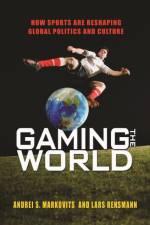
Professional sports today have truly become a global force, a common language that anyone, regardless of their nationality, can understand. Yet sports also remain distinctly local, with regional teams and the fiercely loyal local fans that follow them. This book examines the twenty-first-century phenomenon of global sports, in which professional teams and their players have become agents of globalization while at the same time fostering deep-seated and antagonistic local allegiances and spawning new forms of cultural conflict and prejudice. Andrei Markovits and Lars Rensmann take readers into the exciting global sports scene, showing how soccer, football, baseball, basketball, and hockey have given rise to a collective identity among millions of predominantly male fans in the United States, Europe, and around the rest of the world. They trace how these global--and globalizing--sports emerged from local pastimes in America, Britain, and Canada over the course of the twentieth century, and how regionalism continues to exert its divisive influence in new and potentially explosive ways. Markovits and Rensmann explore the complex interplay between the global and the local in sports today, demonstrating how sports have opened new avenues for dialogue and shared interest internationally even as they reinforce old antagonisms and create new ones. Gaming the World reveals the pervasive influence of sports on our daily lives, making all of us citizens of an increasingly cosmopolitan world while affirming our local, regional, and national identities.
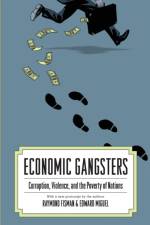
Meet the economic gangster. He's the United Nations diplomat who double-parks his Mercedes on New York City streets at rush hour because the cops can't touch him--he has diplomatic immunity. He's the Chinese smuggler who dodges tariffs by magically transforming frozen chickens into frozen turkeys. The dictator, the warlord, the unscrupulous bureaucrat who bilks the developing world of billions in aid. The calculating crook who views stealing and murder as just another part of his business strategy. And, in the wrong set of circumstances, he might just be you. In Economic Gangsters, Raymond Fisman and Edward Miguel take readers into the secretive, chaotic, and brutal worlds inhabited by these lawless and violent thugs. Join these two sleuthing economists as they follow the foreign aid money trail into the grasping hands of corrupt governments and shady underworld characters. Spend time with ingenious black marketeers as they game the international system. Follow the steep rise and fall of stock prices of companies with unseemly connections to Indonesia's former dictator. See for yourself what rainfall has to do with witch killings in Tanzania--and more. Fisman and Miguel use economics to get inside the heads of these "e;gangsters,"e; and propose solutions that can make a difference to the world's poor--including cash infusions to defuse violence in times of drought, and steering the World Bank away from aid programs most susceptible to corruption. In a new postscript, the authors look at how economists might use new tools to better understand, and fight back against, corruption and violence in the aftermath of the 2008 financial crisis. Take an entertaining walk on the dark side of global economic development with Economic Gangsters.
The Company of Strangers shows us the remarkable strangeness, and fragility, of our everyday lives. This completely revised and updated edition includes a new chapter analyzing how the rise and fall of social trust explain the unsustainable boom in the global economy over the past decade and the financial crisis that succeeded it. Drawing on insights from biology, anthropology, history, psychology, and literature, Paul Seabright explores how our evolved ability of abstract reasoning has allowed institutions like money, markets, cities, and the banking system to provide the foundations of social trust that we need in our everyday lives. Even the simple acts of buying food and clothing depend on an astonishing web of interaction that spans the globe. How did humans develop the ability to trust total strangers with providing our most basic needs?
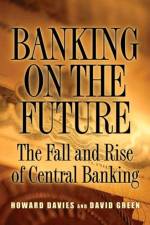
The crash of 2008 revealed that the world's central banks had failed to offset the financial imbalances that led to the crisis, and lacked the tools to respond effectively. What lessons should central banks learn from the experience, and how, in a global financial system, should cooperation between them be enhanced? Banking on the Future provides a fascinating insider's look into how central banks have evolved and why they are critical to the functioning of market economies. The book asks whether, in light of the recent economic fallout, the central banking model needs radical reform. Supported by interviews with leading central bankers from around the world, and informed by the latest academic research, Banking on the Future considers such current issues as the place of asset prices and credit growth in anti-inflation policy, the appropriate role for central banks in banking supervision, the ways in which central banks provide liquidity to markets, the efficiency and cost-effectiveness of central banks, the culture and individuals working in these institutions, as well as the particular issues facing emerging markets and Islamic finance. Howard Davies and David Green set out detailed policy recommendations, including a reformulation of monetary policy, better metrics for financial stability, closer links with regulators, and a stronger emphasis on international cooperation. Exploring a crucial sector of the global economic system, Banking on the Future offers new ideas for restoring financial strength to the foundations of central banking.
The financial crisis that began in 2007 in the United States swept the world, producing substantial bank failures and forcing unprecedented state aid for the crippled global financial system. Bringing together three leading financial economists to provide an international perspective, Balancing the Banks draws critical lessons from the causes of the crisis and proposes important regulatory reforms, including sound guidelines for the ways in which distressed banks might be dealt with in the future. While some recent policy moves go in the right direction, others, the book argues, are not sufficient to prevent another crisis. The authors show the necessity of an adaptive prudential regulatory system that can better address financial innovation. Stressing the numerous and complex challenges faced by politicians, finance professionals, and regulators, and calling for reinforced international coordination (for example, in the treatment of distressed banks), the authors put forth a number of principles to deal with issues regarding the economic incentives of financial institutions, the impact of economic shocks, and the role of political constraints. Offering a global perspective, Balancing the Banks should be read by anyone concerned with solving the current crisis and preventing another such calamity in the future.
Why is life worth living? What makes actions right or wrong? What is reality and how do we know it? The Brain and the Meaning of Life draws on research in philosophy, psychology, and neuroscience to answer some of the most pressing questions about life's nature and value. Paul Thagard argues that evidence requires the abandonment of many traditional ideas about the soul, free will, and immortality, and shows how brain science matters for fundamental issues about reality, morality, and the meaning of life. The ongoing Brain Revolution reveals how love, work, and play provide good reasons for living. Defending the superiority of evidence-based reasoning over religious faith and philosophical thought experiments, Thagard argues that minds are brains and that reality is what science can discover. Brains come to know reality through a combination of perception and reasoning. Just as important, our brains evaluate aspects of reality through emotions that can produce both good and bad decisions. Our cognitive and emotional abilities allow us to understand reality, decide effectively, act morally, and pursue the vital needs of love, work, and play. Wisdom consists of knowing what matters, why it matters, and how to achieve it. The Brain and the Meaning of Life shows how brain science helps to answer questions about the nature of mind and reality, while alleviating anxiety about the difficulty of life in a vast universe. The book integrates decades of multidisciplinary research, but its clear explanations and humor make it accessible to the general reader.
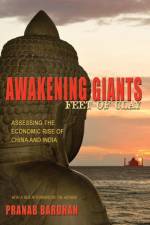
The recent economic rise of China and India has attracted a great deal of attention--and justifiably so. Together, the two countries account for one-fifth of the global economy and are projected to represent a full third of the world's income by 2025. Yet, many of the views regarding China and India's market reforms and high growth have been tendentious, exaggerated, or oversimplified. Awakening Giants, Feet of Clay scrutinizes the phenomenal rise of both nations, and demolishes the myths that have accumulated around the economic achievements of these two giants in the last quarter century. Exploring the challenges that both countries must overcome to become true leaders in the international economy, Pranab Bardhan looks beyond short-run macroeconomic issues to examine and compare China and India's major policy changes, political and economic structures, and current general performance. Bardhan investigates the two countries' economic reforms, each nation's pattern and composition of growth, and the problems afflicting their agricultural, industrial, infrastructural, and financial sectors. He considers how these factors affect China and India's poverty, inequality, and environment, how political factors shape each country's pattern of burgeoning capitalism, and how significant poverty reduction in both countries is mainly due to domestic factors--not global integration, as most would believe. He shows how authoritarianism has distorted Chinese development while democratic governance in India has been marred by severe accountability failures. Full of valuable insights, Awakening Giants, Feet of Clay provides a nuanced picture of China and India's complex political economy at a time of startling global reconfiguration and change.
In this extraordinary book, Mark Johnston sets out a new understanding of personal identity and the self, thereby providing a purely naturalistic account of surviving death. Death threatens our sense of the importance of goodness. The threat can be met if there is, as Socrates said, "e;something in death that is better for the good than for the bad."e; Yet, as Johnston shows, all existing theological conceptions of the afterlife are either incoherent or at odds with the workings of nature. These supernaturalist pictures of the rewards for goodness also obscure a striking consilience between the philosophical study of the self and an account of goodness common to Judaism, Christianity, Hinduism, and Buddhism: the good person is one who has undergone a kind of death of the self and who lives a life transformed by entering imaginatively into the lives of others, anticipating their needs and true interests. As a caretaker of humanity who finds his or her own death comparatively unimportant, the good person can see through death. But this is not all. Johnston's closely argued claims that there is no persisting self and that our identities are in a particular way "e;Protean"e; imply that the good survive death. Given the future-directed concern that defines true goodness, the good quite literally live on in the onward rush of humankind. Every time a baby is born a good person acquires a new face.
This richly textured social history recovers the voices and experiences of poor Egyptians--beggars, foundlings, the sick and maimed--giving them a history for the first time. As Mine Ener tells their fascinating stories alongside those of reformers, tourists, politicians, and philanthropists, she explores the economic, political, and colonial context that shaped poverty policy for a century and a half. While poverty and poverty relief have been extensively studied in the North American and European contexts, there has been little research done on the issue for the Middle East--and scant comprehensive presentation of the Islamic ethos that has guided charitable action in the region. Drawing on British and Egyptian archival sources, Ener documents transformations in poor relief, changing attitudes toward the public poor, the entrance of new state and private actors in the field of charity, the motivations behind their efforts, and the poor's use of programs created to help them. She also fosters a dialogue between Middle Eastern studies and those who study poverty relief elsewhere by explicitly comparing Egypt's poor relief to policies in Istanbul and also Western Europe, Russia, and North America. Heralding a new kind of research into how societies care for the destitute--and into the religious prerogatives that guide them--this book is one of the first in-depth studies of charity and philanthropy in a region whose social problems have never been of greater interest to the West.
Fraud in science is not as easy to identify as one might think. When accusations of scientific misconduct occur, truth can often be elusive, and the cause of a scientist's ethical misstep isn't always clear. On Fact and Fraud looks at actual cases in which fraud was committed or alleged, explaining what constitutes scientific misconduct and what doesn't, and providing readers with the ethical foundations needed to discern and avoid fraud wherever it may arise. In David Goodstein's varied experience--as a physicist and educator, and as vice provost at Caltech, a job in which he was responsible for investigating all allegations of scientific misconduct--a deceptively simple question has come up time and again: what constitutes fraud in science? Here, Goodstein takes us on a tour of real controversies from the front lines of science and helps readers determine for themselves whether or not fraud occurred. Cases include, among others, those of Robert A. Millikan, whose historic measurement of the electron's charge has been maligned by accusations of fraud; Martin Fleischmann and Stanley Pons and their "e;discovery"e; of cold fusion; Victor Ninov and the supposed discovery of element 118; Jan Hendrik Schon from Bell Labs and his work in semiconductors; and J. Georg Bednorz and Karl Muller's discovery of high-temperature superconductivity, a seemingly impossible accomplishment that turned out to be real. On Fact and Fraud provides a user's guide to identifying, avoiding, and preventing fraud in science, along the way offering valuable insights into how modern science is practiced.
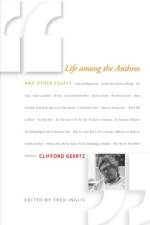
Clifford Geertz (1926-2006) was perhaps the most influential anthropologist of our time, but his influence extended far beyond his field to encompass all facets of contemporary life. Nowhere were his gifts for directness, humor, and steady revelation more evident than in the pages of the New York Review of Books, where for nearly four decades he shared his acute vision of the world in all its peculiarity. This book brings together the finest of Geertz's review essays from the New York Review along with a representative selection of later pieces written at the height of his powers, some that first appeared in periodicals such as Dissent, others never before published. This collection exemplifies Geertz's extraordinary range of concerns, beginning with his first essay for the Review in 1967, in which he reviews, with muffled hilarity, the anthropologist Bronislaw Malinowski. This book includes Geertz's unflinching meditations on Western academia's encounters with the non-Western world, and on the shifting and clashing places of societies in the world generally. Geertz writes eloquently and arrestingly about such major figures as Gandhi, Foucault, and Genet, and on topics as varied as Islam, globalization, feminism, and the failings of nationalism. Life among the Anthros and Other Essays demonstrates Geertz's uncommon wisdom and consistently keen and hopeful humor, confirming his status as one of our most important and enduring public intellectuals.
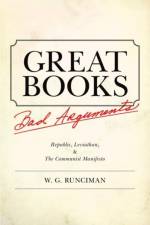
Plato's Republic, Hobbes's Leviathan, and Marx's Communist Manifesto are universally acknowledged classics of Western political thought. But how strong are the core arguments on which they base their visions of the good society that they want to bring into being? In this lively and provocative book, W. G. Runciman shows where and why they fail, even after due allowance has been made for the different historical contexts in which they wrote. Plato, Hobbes, and Marx were all passionately convinced that justice, peace, and order could be established if only their teachings were implemented and the right people put into power. But Runciman makes a powerful case to the effect that all three were irredeemably naive in their assumptions about how human societies function and evolve and how human behavior could be changed. Yet despite this, Runciman insists that Republic, Leviathan, and The Communist Manifesto remain great books. Born of righteous anger and frustration, they are masterfully eloquent pleas for better worlds--worlds that Plato, Hobbes, and Marx cannot bring themselves to admit to be unattainable.
As the birthplace of the Black Panthers and a nationwide tax revolt, California embodied a crucial motif of the postwar United States: the rise of suburbs and the decline of cities, a process in which black and white histories inextricably joined. American Babylon tells this story through Oakland and its nearby suburbs, tracing both the history of civil rights and black power politics as well as the history of suburbanization and home-owner politics. Robert Self shows that racial inequities in both New Deal and Great Society liberalism precipitated local struggles over land, jobs, taxes, and race within postwar metropolitan development. Black power and the tax revolt evolved together, in tension. American Babylon demonstrates that the history of civil rights and black liberation politics in California did not follow a southern model, but represented a long-term struggle for economic rights that began during the World War II years and continued through the rise of the Black Panthers in the late 1960s. This struggle yielded a wide-ranging and profound critique of postwar metropolitan development and its foundation of class and racial segregation. Self traces the roots of the 1978 tax revolt to the 1940s, when home owners, real estate brokers, and the federal government used racial segregation and industrial property taxes to forge a middle-class lifestyle centered on property ownership. Using the East Bay as a starting point, Robert Self gives us a richly detailed, engaging narrative that uniquely integrates the most important racial liberation struggles and class politics of postwar America.
Abonner på vårt nyhetsbrev og få rabatter og inspirasjon til din neste leseopplevelse.
Ved å abonnere godtar du vår personvernerklæring.