




















Gjør som tusenvis av andre bokelskere
Abonner på vårt nyhetsbrev og få rabatter og inspirasjon til din neste leseopplevelse.
Ved å abonnere godtar du vår personvernerklæring.Du kan når som helst melde deg av våre nyhetsbrev.

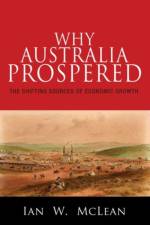
This book is the first comprehensive account of how Australia attained the world's highest living standards within a few decades of European settlement, and how the nation has sustained an enviable level of income to the present. Why Australia Prospered is a fascinating historical examination of how Australia cultivated and sustained economic growth and success. Beginning with the Aboriginal economy at the end of the eighteenth century, Ian McLean argues that Australia's remarkable prosperity across nearly two centuries was reached and maintained by several shifting factors. These included imperial policies, favorable demographic characteristics, natural resource abundance, institutional adaptability and innovation, and growth-enhancing policy responses to major economic shocks, such as war, depression, and resource discoveries. Natural resource abundance in Australia played a prominent role in some periods and faded during others, but overall, and contrary to the conventional view of economists, it was a blessing rather than a curse. McLean shows that Australia's location was not a hindrance when the international economy was centered in the North Atlantic, and became a positive influence following Asia's modernization. Participation in the world trading system, when it flourished, brought significant benefits, and during the interwar period when it did not, Australia's protection of domestic manufacturing did not significantly stall growth. McLean also considers how the country's notorious origins as a convict settlement positively influenced early productivity levels, and how British imperial policies enhanced prosperity during the colonial period. He looks at Australia's recent resource-based prosperity in historical perspective, and reveals striking elements of continuity that have underpinned the evolution of the country's economy since the nineteenth century.
Optimal tax design attempts to resolve a well-known trade-off: namely, that high taxes are bad insofar as they discourage people from working, but good to the degree that, by redistributing wealth, they help insure people against productivity shocks. Until recently, however, economic research on this question either ignored people's uncertainty about their future productivities or imposed strong and unrealistic functional form restrictions on taxes. In response to these problems, the new dynamic public finance was developed to study the design of optimal taxes given only minimal restrictions on the set of possible tax instruments, and on the nature of shocks affecting people in the economy. In this book, Narayana Kocherlakota surveys and discusses this exciting new approach to public finance. An important book for advanced PhD courses in public finance and macroeconomics, The New Dynamic Public Finance provides a formal connection between the problem of dynamic optimal taxation and dynamic principal-agent contracting theory. This connection means that the properties of solutions to principal-agent problems can be used to determine the properties of optimal tax systems. The book shows that such optimal tax systems necessarily involve asset income taxes, which may depend in sophisticated ways on current and past labor incomes. It also addresses the implications of this new approach for qualitative properties of optimal monetary policy, optimal government debt policy, and optimal bequest taxes. In addition, the book describes computational methods for approximate calculation of optimal taxes, and discusses possible paths for future research.
Portfolio risk forecasting has been and continues to be an active research field for both academics and practitioners. Almost all institutional investment management firms use quantitative models for their portfolio forecasting, and researchers have explored models' econometric foundations, relative performance, and implications for capital market behavior and asset pricing equilibrium. Portfolio Risk Analysis provides an insightful and thorough overview of financial risk modeling, with an emphasis on practical applications, empirical reality, and historical perspective. Beginning with mean-variance analysis and the capital asset pricing model, the authors give a comprehensive and detailed account of factor models, which are the key to successful risk analysis in every economic climate. Topics range from the relative merits of fundamental, statistical, and macroeconomic models, to GARCH and other time series models, to the properties of the VIX volatility index. The book covers both mainstream and alternative asset classes, and includes in-depth treatments of model integration and evaluation. Credit and liquidity risk and the uncertainty of extreme events are examined in an intuitive and rigorous way. An extensive literature review accompanies each topic. The authors complement basic modeling techniques with references to applications, empirical studies, and advanced mathematical texts. This book is essential for financial practitioners, researchers, scholars, and students who want to understand the nature of financial markets or work toward improving them.
The quality of life for ordinary Roman citizens at the height of the Roman Empire probably was better than that of any other large group of people living before the Industrial Revolution. The Roman Market Economy uses the tools of modern economics to show how trade, markets, and the Pax Romana were critical to ancient Rome's prosperity. Peter Temin, one of the world's foremost economic historians, argues that markets dominated the Roman economy. He traces how the Pax Romana encouraged trade around the Mediterranean, and how Roman law promoted commerce and banking. Temin shows that a reasonably vibrant market for wheat extended throughout the empire, and suggests that the Antonine Plague may have been responsible for turning the stable prices of the early empire into the persistent inflation of the late. He vividly describes how various markets operated in Roman times, from commodities and slaves to the buying and selling of land. Applying modern methods for evaluating economic growth to data culled from historical sources, Temin argues that Roman Italy in the second century was as prosperous as the Dutch Republic in its golden age of the seventeenth century. The Roman Market Economy reveals how economics can help us understand how the Roman Empire could have ruled seventy million people and endured for centuries.
In the past three decades, developing countries have made significant economic and social progress, from improved infant mortality rates to higher life expectancy. Yet, 1.3 billion people continue to live in extreme poverty in the developing world, leading policymakers to place a renewed emphasis on policies that could promote economic efficiency and the productivity of the poor. How should these policies be sequenced and implemented to spur growth? Would a large, front-loaded increase in public infrastructure investment yield the desired growth-promoting effect? Taking a rigorous look at this kind of investment and its outcomes, this book explores the different channels through which public capital in infrastructure may affect growth and human welfare, and develops a series of formal models for understanding how these channels operate. Bringing together a vast amount of research in one unifying framework, Pierre-Richard Agenor finds that in considering investment in infrastructure, a variety of externalities need to be factored into analytical models and introduced in policy debates. Lack of access to infrastructure not only constrains the expansion of markets and private investment, it may also hinder the achievement of health and education targets. Ease of access, conversely, promotes innovation and empowers women by allowing them to reallocate their time to productive uses. Laying a solid foundation of economic facts and ideas, Public Capital, Growth, and Welfare provides a comprehensive look at the critical role of public capital in development.
Understanding the dynamic evolution of the yield curve is critical to many financial tasks, including pricing financial assets and their derivatives, managing financial risk, allocating portfolios, structuring fiscal debt, conducting monetary policy, and valuing capital goods. Unfortunately, most yield curve models tend to be theoretically rigorous but empirically disappointing, or empirically successful but theoretically lacking. In this book, Francis Diebold and Glenn Rudebusch propose two extensions of the classic yield curve model of Nelson and Siegel that are both theoretically rigorous and empirically successful. The first extension is the dynamic Nelson-Siegel model (DNS), while the second takes this dynamic version and makes it arbitrage-free (AFNS). Diebold and Rudebusch show how these two models are just slightly different implementations of a single unified approach to dynamic yield curve modeling and forecasting. They emphasize both descriptive and efficient-markets aspects, they pay special attention to the links between the yield curve and macroeconomic fundamentals, and they show why DNS and AFNS are likely to remain of lasting appeal even as alternative arbitrage-free models are developed. Based on the Econometric and Tinbergen Institutes Lectures, Yield Curve Modeling and Forecasting contains essential tools with enhanced utility for academics, central banks, governments, and industry.
Our path of economic development has generated a growing list of environmental problems including the disposal of nuclear waste, exhaustion of natural resources, loss of biodiversity, climate change, and polluted land, air, and water. All these environmental problems raise the crucial challenge of determining what we should and should not do for future generations. It is also central to other policy debates, including, for example, the appropriate level of public debt, investment in public infrastructure, investment in education, and the level of funding for pension benefits and for research and development. Today, the judge, the citizen, the politician, and the entrepreneur are concerned with the sustainability of our development. The objective of Pricing the Planet's Future is to provide a simple framework to organize the debate on what we should do for the future. A key element of analysis by economists is the discount rate--the minimum rate of return required from an investment project to make it desirable to implement. Christian Gollier outlines the basic theory of the discount rate and the various arguments that favor using a smaller discount rate for more distant cash flows. With principles that can be applied to many policy areas, Pricing the Planet's Future offers an ideal framework for dynamic problems and decision making.
In mainstream economics, and particularly in New Keynesian macroeconomics, the booms and busts that characterize capitalism arise because of large external shocks. The combination of these shocks and the slow adjustments of wages and prices by rational agents leads to cyclical movements. In this book, Paul De Grauwe argues for a different macroeconomics model--one that works with an internal explanation of the business cycle and factors in agents' limited cognitive abilities. By creating a behavioral model that is not dependent on the prevailing concept of rationality, De Grauwe is better able to explain the fluctuations of economic activity that are an endemic feature of market economies. This new approach illustrates a richer macroeconomic dynamic that provides for a better understanding of fluctuations in output and inflation. De Grauwe shows that the behavioral model is driven by self-fulfilling waves of optimism and pessimism, or animal spirits. Booms and busts in economic activity are therefore natural outcomes of a behavioral model. The author uses this to analyze central issues in monetary policies, such as output stabilization, before extending his investigation into asset markets and more sophisticated forecasting rules. He also examines how well the theoretical predictions of the behavioral model perform when confronted with empirical data. Develops a behavioral macroeconomic model that assumes agents have limited cognitive abilities Shows how booms and busts are characteristic of market economies Explores the larger role of the central bank in the behavioral model Examines the destabilizing aspects of asset markets
Microeconomic Foundations I develops the choice, price, and general equilibrium theory topics typically found in first-year theory sequences, but in deeper and more complete mathematical form than most standard texts provide. The objective is to take the reader from acquaintance with these foundational topics to something closer to mastery of the models and results connected to them. Provides a rigorous treatment of some of the basic tools of economic modeling and reasoning, along with an assessment of the strengths and weaknesses of these tools Complements standard texts Covers choice, preference, and utility; structural properties of preferences and utility functions; basics of consumer demand; revealed preference and Afriat's Theorem; choice under uncertainty; dynamic choice; social choice and efficiency; competitive and profit-maximizing firms; expenditure minimization; demand theory (duality methods); producer and consumer surplus; aggregation; general equilibrium; efficiency and the core; GET, time, and uncertainty; and other topics Features a free web-based student's guide, which gives solutions to approximately half the problems, and a limited-access instructor's manual, which provides solutions to the rest of the problems Contains appendixes that review most of the specific mathematics employed in the book, including a from-first-principles treatment of dynamic programming
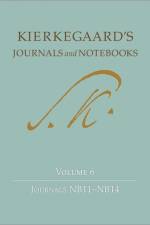
For over a century, the Danish thinker Soren Kierkegaard (1813-55) has been at the center of a number of important discussions, concerning not only philosophy and theology, but also, more recently, fields such as social thought, psychology, and contemporary aesthetics, especially literary theory. Despite his relatively short life, Kierkegaard was an extraordinarily prolific writer, as attested to by the 26-volume Princeton University Press edition of all of his published writings. But Kierkegaard left behind nearly as much unpublished writing, most of which consists of what are called his "e;journals and notebooks."e; Kierkegaard has long been recognized as one of history's great journal keepers, but only rather small portions of his journals and notebooks are what we usually understand by the term "e;diaries."e; By far the greater part of Kierkegaard's journals and notebooks consists of reflections on a myriad of subjects--philosophical, religious, political, personal. Studying his journals and notebooks takes us into his workshop, where we can see his entire universe of thought. We can witness the genesis of his published works, to be sure--but we can also see whole galaxies of concepts, new insights, and fragments, large and small, of partially (or almost entirely) completed but unpublished works. Kierkegaard's Journals and Notebooks enables us to see the thinker in dialogue with his times and with himself. Volume 6 of this 11-volume series includes four of Kierkegaard's important "e;NB"e; journals (Journals NB11 through NB14), covering the months from early May 1849 to the beginning of 1850. At this time Denmark was coming to terms with the 1848 revolution that had replaced absolutism with popular sovereignty, while the war with the German states continued, and the country pondered exactly what replacing the old State Church with the Danish People's Church would mean. In these journals Kierkegaard reflects at length on political and, especially, on ecclesiastical developments. His brooding over the ongoing effects of his fight with the satirical journal Corsair continues, and he also examines and re-examines the broader personal and religious significance of his broken engagement with Regine Olsen. These journals also contain reflections by Kierkegaard on a number of his most important works, including the two works written under his "e;new"e; pseudonym Anti-Climacus (The Sickness unto Death and Practice in Christianity) and his various attempts at autobiographical explanations of his work. And, all the while, the drumbeat of his radical critique of "e;Christendom"e; continues and escalates. Kierkegaard wrote his journals in a two-column format, one for his initial entries and the second for the extensive marginal comments that he added later. This edition of the journals reproduces this format, includes several photographs of original manuscript pages, and contains extensive scholarly commentary on the various entries and on the history of the manuscripts being reproduced.
This is the second of three volumes of posthumously collected writings of G. A. Cohen, who was one of the leading, and most progressive, figures in contemporary political philosophy. This volume brings together some of Cohen's most personal philosophical and nonphilosophical essays, many of them previously unpublished. Rich in first-person narration, insight, and humor, these pieces vividly demonstrate why Thomas Nagel described Cohen as a "e;wonderful raconteur.? The nonphilosophical highlight of the book is Cohen's remarkable account of his first trip to India, which includes unforgettable vignettes of encounters with strangers and reflections on poverty and begging. Other biographical pieces include his valedictory lecture at Oxford, in which he describes his philosophical development and offers his impressions of other philosophers, and "e;Isaiah's Marx, and Mine,"e; a tribute to his mentor Isaiah Berlin. Other essays address such topics as the truth in "e;small-c conservatism,"e; who can and can't condemn terrorists, and the essence of bullshit. A recurring theme is finding completion in relation to the world of other human beings. Engaging, perceptive, and empathetic, these writings reveal a more personal side of one of the most influential philosophers of our time.
In a culture that worships ceaseless striving, "e;settling"e; seems like giving up. But is it? On Settling defends the positive value of settling, explaining why this disdained practice is not only more realistic but more useful than an excessive ideal of striving. In fact, the book makes the case that we'd all be lost without settling--and that even to strive, one must first settle. We may admire strivers and love the ideal of striving, but who of us could get through a day without settling? Real people, confronted with a complex problem, simply make do, settling for some resolution that, while almost certainly not the best that one could find by devoting limitless time and attention to the problem, is nonetheless good enough. Robert Goodin explores the dynamics of this process. These involve taking as fixed, for now, things that we reserve the right to reopen later (nothing is fixed for good, although events might always overtake us). We settle on some things in order to concentrate better on others. At the same time we realize we may need to come back later and reconsider those decisions. From settling on and settling for, to settling down and settling in, On Settling explains why settling is useful for planning, creating trust, and strengthening the social fabric--and why settling is different from compromise and resignation. So, the next time you're faced with a thorny problem, just settle. It's no failure.
Who are computer hackers? What is free software? And what does the emergence of a community dedicated to the production of free and open source software--and to hacking as a technical, aesthetic, and moral project--reveal about the values of contemporary liberalism? Exploring the rise and political significance of the free and open source software (F/OSS) movement in the United States and Europe, Coding Freedom details the ethics behind hackers' devotion to F/OSS, the social codes that guide its production, and the political struggles through which hackers question the scope and direction of copyright and patent law. In telling the story of the F/OSS movement, the book unfolds a broader narrative involving computing, the politics of access, and intellectual property. E. Gabriella Coleman tracks the ways in which hackers collaborate and examines passionate manifestos, hacker humor, free software project governance, and festive hacker conferences. Looking at the ways that hackers sustain their productive freedom, Coleman shows that these activists, driven by a commitment to their work, reformulate key ideals including free speech, transparency, and meritocracy, and refuse restrictive intellectual protections. Coleman demonstrates how hacking, so often marginalized or misunderstood, sheds light on the continuing relevance of liberalism in online collaboration.
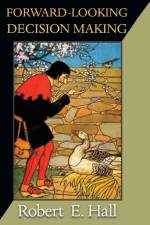
Individuals and families make key decisions that impact many aspects of financial stability and determine the future of the economy. These decisions involve balancing current sacrifice against future benefits. People have to decide how much to invest in health care, exercise, their diet, and insurance. They must decide how much debt to take on, and how much to save. And they make choices about jobs that determine employment and unemployment levels. Forward-Looking Decision Making is about modeling this individual or family-based decision making using an optimizing dynamic programming model. Robert Hall first reviews ideas about dynamic programs and introduces new ideas about numerical solutions and the representation of solved models as Markov processes. He surveys recent research on the parameters of preferences--the intertemporal elasticity of substitution, the Frisch elasticity of labor supply, and the Frisch cross-elasticity. He then examines dynamic programming models applied to health spending, long-term care insurance, employment, entrepreneurial risk-taking, and consumer debt. Linking theory with data and applying them to real-world problems, Forward-Looking Decision Making uses dynamic optimization programming models to shed light on individual behaviors and their economic implications.
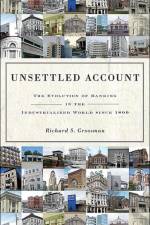
Commercial banks are among the oldest and most familiar financial institutions. When they work well, we hardly notice; when they do not, we rail against them. What are the historical forces that have shaped the modern banking system? In Unsettled Account, Richard Grossman takes the first truly comparative look at the development of commercial banking systems over the past two centuries in Western Europe, the United States, Canada, Japan, and Australia. Grossman focuses on four major elements that have contributed to banking evolution: crises, bailouts, mergers, and regulations. He explores where banking crises come from and why certain banking systems are more resistant to crises than others, how governments and financial systems respond to crises, why merger movements suddenly take off, and what motivates governments to regulate banks. Grossman reveals that many of the same components underlying the history of banking evolution are at work today. The recent subprime mortgage crisis had its origins, like many earlier banking crises, in a boom-bust economic cycle. Grossman finds that important historical elements are also at play in modern bailouts, merger movements, and regulatory reforms. Unsettled Account is a fascinating and informative must-read for anyone who wants to understand how the modern commercial banking system came to be, where it is headed, and how its development will affect global economic growth.
Music, and folk music in particular, is often embraced as a form of political expression, a vehicle for bridging or reinforcing social boundaries, and a valuable tool for movements reconfiguring the social landscape. Reds, Whites, and Blues examines the political force of folk music, not through the meaning of its lyrics, but through the concrete social activities that make up movements. Drawing from rich archival material, William Roy shows that the People's Songs movement of the 1930s and 40s, and the Civil Rights Movement of the 1950s and 60s implemented folk music's social relationships--specifically between those who sang and those who listened--in different ways, achieving different outcomes. Roy explores how the People's Songsters envisioned uniting people in song, but made little headway beyond leftist activists. In contrast, the Civil Rights Movement successfully integrated music into collective action, and used music on the picket lines, at sit-ins, on freedom rides, and in jails. Roy considers how the movement's Freedom Songs never gained commercial success, yet contributed to the wider achievements of the Civil Rights struggle. Roy also traces the history of folk music, revealing the complex debates surrounding who or what qualified as "e;folk"e; and how the music's status as racially inclusive was not always a given. Examining folk music's galvanizing and unifying power, Reds, Whites, and Blues casts new light on the relationship between cultural forms and social activity.
Many people in Great Britain and the United States can recall elderly relatives who remembered long stretches of verse learned at school decades earlier, yet most of us were never required to recite in class. Heart Beats is the first book to examine how poetry recitation came to assume a central place in past curricular programs, and to investigate when and why the once-mandatory exercise declined. Telling the story of a lost pedagogical practice and its wide-ranging effects on two sides of the Atlantic, Catherine Robson explores how recitation altered the ordinary people who committed poems to heart, and changed the worlds in which they lived. Heart Beats begins by investigating recitation's progress within British and American public educational systems over the course of the nineteenth and twentieth centuries, and weighs the factors that influenced which poems were most frequently assigned. Robson then scrutinizes the recitational fortunes of three short works that were once classroom classics: Felicia Hemans's "e;Casabianca,"e; Thomas Gray's "e;Elegy Written in a Country Churchyard,"e; and Charles Wolfe's "e;Burial of Sir John Moore after Corunna."e; To conclude, the book considers W. E. Henley's "e;Invictus"e; and Rudyard Kipling's "e;If--,"e; asking why the idea of the memorized poem arouses such different responses in the United States and Great Britain today. Focusing on vital connections between poems, individuals, and their communities, Heart Beats is an important study of the history and power of memorized poetry.
Warriors of the Cloisters tells how key cultural innovations from Central Asia revolutionized medieval Europe and gave rise to the culture of science in the West. Medieval scholars rarely performed scientific experiments, but instead contested issues in natural science, philosophy, and theology using the recursive argument method. This highly distinctive and unusual method of disputation was a core feature of medieval science, the predecessor of modern science. We know that the foundations of science were imported to Western Europe from the Islamic world, but until now the origins of such key elements of Islamic culture have been a mystery. In this provocative book, Christopher I. Beckwith traces how the recursive argument method was first developed by Buddhist scholars and was spread by them throughout ancient Central Asia. He shows how the method was adopted by Islamic Central Asian natural philosophers--most importantly by Avicenna, one of the most brilliant of all medieval thinkers--and transmitted to the West when Avicenna's works were translated into Latin in Spain in the twelfth century by the Jewish philosopher Ibn Da'ud and others. During the same period the institution of the college was also borrowed from the Islamic world. The college was where most of the disputations were held, and became the most important component of medieval Europe's newly formed universities. As Beckwith demonstrates, the Islamic college also originated in Buddhist Central Asia. Using in-depth analysis of ancient Buddhist, Classical Arabic, and Medieval Latin writings, Warriors of the Cloisters transforms our understanding of the origins of medieval scientific culture.
Isaac Newton's Chronology of Ancient Kingdoms Amended, published in 1728, one year after the great man's death, unleashed a storm of controversy. And for good reason. The book presents a drastically revised timeline for ancient civilizations, contracting Greek history by five hundred years and Egypt's by a millennium. Newton and the Origin of Civilization tells the story of how one of the most celebrated figures in the history of mathematics, optics, and mechanics came to apply his unique ways of thinking to problems of history, theology, and mythology, and of how his radical ideas produced an uproar that reverberated in Europe's learned circles throughout the eighteenth century and beyond. Jed Buchwald and Mordechai Feingold reveal the manner in which Newton strove for nearly half a century to rectify universal history by reading ancient texts through the lens of astronomy, and to create a tight theoretical system for interpreting the evolution of civilization on the basis of population dynamics. It was during Newton's earliest years at Cambridge that he developed the core of his singular method for generating and working with trustworthy knowledge, which he applied to his study of the past with the same rigor he brought to his work in physics and mathematics. Drawing extensively on Newton's unpublished papers and a host of other primary sources, Buchwald and Feingold reconcile Isaac Newton the rational scientist with Newton the natural philosopher, alchemist, theologian, and chronologist of ancient history.
It is a common article of faith that Mozart composed the most beautiful music we can know. But few of us ask why. Why does the beautiful in Mozart stand apart, as though untouched by human hands? At the same time, why does it inspire intimacy rather than distant admiration, love rather than awe? And how does Mozart's music create and sustain its buoyant and ever-renewable effects? In Mozart's Grace, Scott Burnham probes a treasury of passages from many different genres of Mozart's music, listening always for the qualities of Mozartean beauty: beauty held in suspension; beauty placed in motion; beauty as the uncanny threshold of another dimension, whether inwardly profound or outwardly transcendent; and beauty as a time-stopping, weightless suffusion that comes on like an act of grace. Throughout the book, Burnham engages musical issues such as sonority, texture, line, harmony, dissonance, and timing, and aspects of large-scale form such as thematic returns, retransitions, and endings. Vividly describing a range of musical effects, Burnham connects the ways and means of Mozart's music to other domains of human significance, including expression, intimation, interiority, innocence, melancholy, irony, and renewal. We follow Mozart from grace to grace, and discover what his music can teach us about beauty and its relation to the human spirit. The result is a newly inflected view of our perennial attraction to Mozart's music, presented in a way that will speak to musicians and music lovers alike.
Through biographies of China's most colorful and famous personalities, John Wills displays the five-thousand-year sweep of Chinese history from the legendary sage emperors to the tragedy of Tiananmen Square. This unique introduction to Chinese history and culture uses more than twenty exemplary lives--biographies of China's most colorful and famous personalities--including those of statesmen, philosophers, poets, and rulers, to provide the focus for accounts of key historical trends and periods. What emerges is a provocative rendering of China's moral landscape, featuring characters who have resonated in the historical imagination as examples of villainy, heroism, wisdom, spiritual vision, political guile, and complex combinations of all of these. Investigating both the legends and the facts surrounding these figures, Wills reveals the intense interest of the Chinese in the brilliance and in the frail complexities of their heroes. Included, for instance, is a description of the frustrations and anxieties of Confucius, who emerges as a vulnerable human being trying to restore the world to the virtue and order of the sage kings. Wills recounts and questions the wonderfully shocking stories about the seventh-century Empress Wu, an astute ruler and shaper of an increasingly centralized monarchy, who has since assumed a prominent position in the Chinese tradition's rich gallery of bad examples--because she was a woman meddling in politics. The portrayal of Mao Zedong, which touches upon this leader's earthy personality and his reckless political visions, demonstrates the tendency of the Chinese not to divorce ideology from its human context: Maoism for them is a form of "e;objective"e; Marxism, inseparable from one man's life and leadership. Each of the twenty chapters provides a many-sided exploration of a "e;slice"e; of Chinese history, engaging the general reader in a deep and personal encounter with China over the centuries and today. The biographies repeatedly mirror the moral earnestness of the Chinese, the great value they place on the ruler-minister relationship, and their struggles with tensions among practicality, moral idealism, and personal authenticity. Culminating in a reflection on China's historical direction in the aftermath of Tiananmen Square, the biographies show the modern Chinese still inspired and frustrated by a complex heritage of moral fervor and political habits and preconceptions. As absorbing as it is wide ranging, this history is written for the general public curious about China and for the student beginning to study its rich cultural heritage. This new edition highlights important figures that have emerged in China since the book's initial publication and provides updated suggestions for further reading.
The Lucky Ones uncovers the story of the Tape family in post-gold rush, racially explosive San Francisco. Mae Ngai paints a fascinating picture of how the role of immigration broker allowed patriarch Jeu Dip (Joseph Tape) to both protest and profit from discrimination, and of the Tapes as the first of a new social type--middle-class Chinese Americans. Tape family history illuminates American history. Seven-year-old Mamie attempts to integrate California schools, resulting in the landmark 1885 case Tape v. Hurley. The family's intimate involvement in the 1904 St. Louis World's Fair reveals how Chinese American brokers essentially invented Chinatown, and so Chinese culture, for American audiences. Finally, The Lucky Ones reveals aspects--timely, haunting, and hopeful--of the lasting legacy of the immigrant experience for all Americans. This expanded edition features a new preface and a selection of historical documents from the Chinese exclusion era that forms the backdrop to the Tape family's story.
This book provides an introduction to the role of diversity in complex adaptive systems. A complex system--such as an economy or a tropical ecosystem--consists of interacting adaptive entities that produce dynamic patterns and structures. Diversity plays a different role in a complex system than it does in an equilibrium system, where it often merely produces variation around the mean for performance measures. In complex adaptive systems, diversity makes fundamental contributions to system performance. Scott Page gives a concise primer on how diversity happens, how it is maintained, and how it affects complex systems. He explains how diversity underpins system level robustness, allowing for multiple responses to external shocks and internal adaptations; how it provides the seeds for large events by creating outliers that fuel tipping points; and how it drives novelty and innovation. Page looks at the different kinds of diversity--variations within and across types, and distinct community compositions and interaction structures--and covers the evolution of diversity within complex systems and the factors that determine the amount of maintained diversity within a system. Provides a concise and accessible introduction Shows how diversity underpins robustness and fuels tipping points Covers all types of diversity The essential primer on diversity in complex adaptive systems
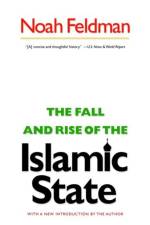
Perhaps no other Western writer has more deeply probed the bitter struggle in the Muslim world between the forces of religion and law and those of violence and lawlessness as Noah Feldman. His scholarship has defined the stakes in the Middle East today. Now, in this incisive book, Feldman tells the story behind the increasingly popular call for the establishment of the shari'a--the law of the traditional Islamic state--in the modern Muslim world. Western powers call it a threat to democracy. Islamist movements are winning elections on it. Terrorists use it to justify their crimes. What, then, is the shari'a? Given the severity of some of its provisions, why is it popular among Muslims? Can the Islamic state succeed--should it? Feldman reveals how the classical Islamic constitution governed through and was legitimated by law. He shows how executive power was balanced by the scholars who interpreted and administered the shari'a, and how this balance of power was finally destroyed by the tragically incomplete reforms of the modern era. The result has been the unchecked executive dominance that now distorts politics in so many Muslim states. Feldman argues that a modern Islamic state could provide political and legal justice to today's Muslims, but only if new institutions emerge that restore this constitutional balance of power. The Fall and Rise of the Islamic State gives us the sweeping history of the traditional Islamic constitution--its noble beginnings, its downfall, and the renewed promise it could hold for Muslims and Westerners alike. In a new introduction, Feldman discusses developments in Egypt, Tunisia, Libya, and other Muslim-majority countries since the Arab Spring and describes how Islamists must meet the challenge of balance if the new Islamic states are to succeed.
Within the realist school of international relations, a prevailing view holds that the anarchic structure of the international system invariably forces the great powers to seek security at one another's expense, dooming even peaceful nations to an unrelenting struggle for power and dominance. Rational Theory of International Politics offers a more nuanced alternative to this view, one that provides answers to the most fundamental and pressing questions of international relations. Why do states sometimes compete and wage war while at other times they cooperate and pursue peace? Does competition reflect pressures generated by the anarchic international system or rather states' own expansionist goals? Are the United States and China on a collision course to war, or is continued coexistence possible? Is peace in the Middle East even feasible? Charles Glaser puts forward a major new theory of international politics that identifies three kinds of variables that influence a state's strategy: the state's motives, specifically whether it is motivated by security concerns or "e;greed"e;; material variables, which determine its military capabilities; and information variables, most importantly what the state knows about its adversary's motives. Rational Theory of International Politics demonstrates that variation in motives can be key to the choice of strategy; that the international environment sometimes favors cooperation over competition; and that information variables can be as important as material variables in determining the strategy a state should choose.
The U.S. Food and Drug Administration is the most powerful regulatory agency in the world. How did the FDA become so influential? And how exactly does it wield its extraordinary power? Reputation and Power traces the history of FDA regulation of pharmaceuticals, revealing how the agency's organizational reputation has been the primary source of its power, yet also one of its ultimate constraints. Daniel Carpenter describes how the FDA cultivated a reputation for competence and vigilance throughout the last century, and how this organizational image has enabled the agency to regulate an industry as powerful as American pharmaceuticals while resisting efforts to curb its own authority. Carpenter explains how the FDA's reputation and power have played out among committees in Congress, and with drug companies, advocacy groups, the media, research hospitals and universities, and governments in Europe and India. He shows how FDA regulatory power has influenced the way that business, medicine, and science are conducted in the United States and worldwide. Along the way, Carpenter offers new insights into the therapeutic revolution of the 1940s and 1950s; the 1980s AIDS crisis; the advent of oral contraceptives and cancer chemotherapy; the rise of antiregulatory conservatism; and the FDA's waning influence in drug regulation today. Reputation and Power demonstrates how reputation shapes the power and behavior of government agencies, and sheds new light on how that power is used and contested.Some images inside the book are unavailable due to digital copyright restrictions.
Why the art historian's craft is a uniquely melancholy artMelancholy is not only about sadness, despair, and loss. As Renaissance artists and philosophers acknowledged long ago, it can engender a certain kind of creativity born from a deep awareness of the mutability of life and the inevitable cycle of birth and death. Drawing on psychoanalysis, philosophy, and the intellectual history of the history of art, The Melancholy Art explores the unique connections between melancholy and the art historian's craft.Though the objects art historians study are materially present in our world, the worlds from which they come are forever lost to time. In this eloquent and inspiring book, Michael Ann Holly traces how this disjunction courses through the history of art and shows how it can give rise to melancholic sentiments in historians who write about art. She confronts pivotal and vexing questions in her discipline: Why do art historians write in the first place? What kinds of psychic exchanges occur between art objects and those who write about them? What institutional and personal needs does art history serve? What is lost in historical writing about art?The Melancholy Art looks at how melancholy suffuses the work of some of the twentieth century's most powerful and poetic writers on the history of art, including Alois Riegl, Franz Wickhoff, Adrian Stokes, Michael Baxandall, Meyer Schapiro, and Jacques Derrida. A disarmingly personal meditation by one of our most distinguished art historians, this book explains why to write about art is to share in a kind of intertwined pleasure and loss that is the very essence of melancholy.
Birds of the Masai Mara is a remarkably beautiful photographic guide featuring the bird species likely to be encountered by visitors to the popular Masai Mara National Reserve in Kenya. With an eye-catching layout, easy-to-use format, and no-jargon approach, the book contains more than 300 stunning photographs covering over 200 species of birds and is accessible and informative, rather than purely identification-based. A handy, brief introduction provides visitors with background on the habitats of the national park, and the guide's habitat-based approach makes it simple to identify any bird species according to where it is found. Based on the firsthand experiences of the author, Birds of the Masai Mara is an ideal companion to all those visiting the national reserve and to bird aficionados interested in learning more about the region. The only photographic guide to focus solely on the bird species of the Masai Mara National Reserve More than 300 remarkable photographs covering over 200 species Accessible text explores bird species behavior and species etymology A brief and handy introduction examines the habitats of the Masai Mara Easy-to-use habitat-based layout makes exciting birdwatching easy
The Diffusion of Military Power examines how the financial and organizational challenges of adopting new methods of fighting wars can influence the international balance of power. Michael Horowitz argues that a state or actor wishing to adopt a military innovation must possess both the financial resources to buy or build the technology and the internal organizational capacity to accommodate any necessary changes in recruiting, training, or operations. How countries react to new innovations--and to other actors that do or don't adopt them--has profound implications for the global order and the likelihood of war. Horowitz looks at some of the most important military innovations throughout history, including the advent of the all-big-gun steel battleship, the development of aircraft carriers and nuclear weapons, and the use of suicide terror by nonstate actors. He shows how expensive innovations can favor wealthier, more powerful countries, but also how those same states often stumble when facing organizationally complicated innovations. Innovations requiring major upheavals in doctrine and organization can disadvantage the wealthiest states due to their bureaucratic inflexibility and weight the balance of power toward smaller and more nimble actors, making conflict more likely. This book provides vital insights into military innovations and their impact on U.S. foreign policy, warfare, and the distribution of power in the international system.
Wartime Kiss is a personal meditation on the haunting power of American photographs and films from World War II and the later 1940s. Starting with a stunning reinterpretation of one of the most famous photos of all time, Alfred Eisenstaedt's image of a sailor kissing a nurse in Times Square on V-J Day, Alexander Nemerov goes on to examine an array of mostly forgotten images and movie episodes--from a photo of Jimmy Stewart and Olivia de Havilland lying on a picnic blanket in the Santa Barbara hills to scenes from such films as Twelve O'Clock High and Hold Back the Dawn. Erotically charged and bearing traces of trauma even when they seem far removed from the war, these photos and scenes seem to hold out the promise of a palpable and emotional connection to those years. Through a series of fascinating stories, Nemerov reveals the surprising background of these bits of film and discovers unexpected connections between the war and Hollywood, from an obsession with aviation to Anne Frank's love of the movies. Beautifully written and illustrated, Wartime Kiss vividly evokes a world in which Margaret Bourke-White could follow a heroic assignment photographing a B-17 bombing mission over Tunis with a job in Hollywood documenting the filming of a war movie. Ultimately this is a book about history as a sensuous experience, a work as mysterious, indescribable, and affecting as a novel by W. G. Sebald.
Abonner på vårt nyhetsbrev og få rabatter og inspirasjon til din neste leseopplevelse.
Ved å abonnere godtar du vår personvernerklæring.