























Gjør som tusenvis av andre bokelskere
Abonner på vårt nyhetsbrev og få rabatter og inspirasjon til din neste leseopplevelse.
Ved å abonnere godtar du vår personvernerklæring.Du kan når som helst melde deg av våre nyhetsbrev.

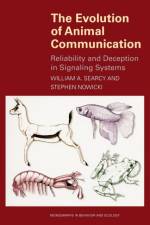
Gull chicks beg for food from their parents. Peacocks spread their tails to attract potential mates. Meerkats alert family members of the approach of predators. But are these--and other animals--sometimes dishonest? That's what William Searcy and Stephen Nowicki ask in The Evolution of Animal Communication. They take on the fascinating yet perplexing question of the dependability of animal signaling systems. The book probes such phenomena as the begging of nesting birds, alarm calls in squirrels and primates, carotenoid coloration in fish and birds, the calls of frogs and toads, and weapon displays in crustaceans. Do these signals convey accurate information about the signaler, its future behavior, or its environment? Or do they mislead receivers in a way that benefits the signaler? For example, is the begging chick really hungry as its cries indicate or is it lobbying to get more food than its brothers and sisters? Searcy and Nowicki take on these and other questions by developing clear definitions of key issues, by reviewing the most relevant empirical data and game theory models available, and by asking how well theory matches data. They find that animal communication is largely reliable--but that this basic reliability also allows the clever deceiver to flourish. Well researched and clearly written, their book provides new insight into animal communication, behavior, and evolution.
This pathbreaking work reveals the pivotal role of music--musical works and musical culture--in debates about society, self, and culture that forged European modernity through the "e;long nineteenth century."e; Michael Steinberg argues that, from the late 1700s to the early 1900s, music not only reflected but also embodied modern subjectivity as it increasingly engaged and criticized old regimes of power, belief, and representation. His purview ranges from Mozart to Mahler, and from the sacred to the secular, including opera as well as symphonic and solo instrumental music. Defining subjectivity as the experience rather than the position of the "e;I,"e; Steinberg argues that music's embodiment of subjectivity involved its apparent capacity to "e;listen"e; to itself, its past, its desires. Nineteenth-century music, in particular music from a north German Protestant sphere, inspired introspection in a way that the music and art of previous periods, notably the Catholic baroque with its emphasis on the visual, did not. The book analyzes musical subjectivity initially from Mozart through Mendelssohn, then seeks it, in its central chapter, in those aspects of Wagner that contradict his own ideological imperialism, before finally uncovering its survival in the post-Wagnerian recovery from musical and other ideologies. Engagingly written yet theoretically sophisticated, Listening to Reason represents a startlingly original corrective to cultural history's long-standing inhibition to engage with music while presenting a powerful alternative vision of the modern.Some images inside the book are unavailable due to digital copyright restrictions.
How governmental failure led to the 2008 financial crisis-and what needs to be done to avoid another similar event Behind every financial crisis lurks a "e;political bubble"e;-policy biases that foster market behaviors leading to financial instability. Rather than tilting against risky behavior, political bubbles-arising from a potent combination of beliefs, institutions, and interests-aid, abet, and amplify risk. Demonstrating how political bubbles helped create the real estate-generated financial bubble and the 2008 financial crisis, this book argues that similar government oversights in the aftermath of the crisis undermined Washington's response to the "e;popped"e; financial bubble, and shows how such patterns have occurred repeatedly throughout US history.The authors show that just as financial bubbles are an unfortunate mix of mistaken beliefs, market imperfections, and greed, political bubbles are the product of rigid ideologies, unresponsive and ineffective government institutions, and special interests. Financial market innovations-including adjustable-rate mortgages, mortgage-backed securities, and credit default swaps-become subject to legislated leniency and regulatory failure, increasing hazardous practices. The authors shed important light on the politics that blinds regulators to the economic weaknesses that create the conditions for economic bubbles and recommend simple, focused rules that should help avoid such crises in the future.The first full accounting of how politics produces financial ruptures, Political Bubbles offers timely lessons that all sectors would do well to heed.
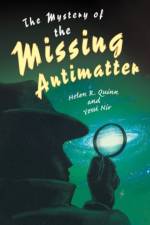
In the first fractions of a second after the Big Bang lingers a question at the heart of our very existence: why does the universe contain matter but almost no antimatter? The laws of physics tell us that equal amounts of matter and antimatter were produced in the early universe-but then something odd happened. Matter won out over antimatter; had it not, the universe today would be dark and barren.But how and when did this occur? In The Mystery of the Missing Antimatter, Helen Quinn and Yossi Nir guide readers into the very heart of this mystery-and along the way offer an exhilarating grand tour of cutting-edge physics.
The overseas basing of troops has been a central pillar of American military strategy since World War II--and a controversial one. Are these bases truly essential to protecting the United States at home and securing its interests abroad--for example in the Middle East-or do they needlessly provoke anti-Americanism and entangle us in the domestic woes of host countries? Embattled Garrisons takes up this question and examines the strategic, political, and social forces that will determine the future of American overseas basing in key regions around the world. Kent Calder traces the history of overseas bases from their beginnings in World War II through the cold war to the present day, comparing the different challenges the United States, Britain, France, and the Soviet Union have confronted. Providing the broad historical and comparative context needed to understand what is at stake in overseas basing, Calder gives detailed case studies of American bases in Japan, Italy, Turkey, the Philippines, Spain, South Korea, the Balkans, Afghanistan, and Iraq. He highlights the vulnerability of American bases to political shifts in their host nations--in emerging democracies especially--but finds that an American presence can generally be tolerated when identified with political liberation rather than imperial succession. Embattled Garrisons shows how the origins of basing relationships crucially shape long-term prospects for success, and it offers a means to assess America's prospects for a sustained global presence in the future.
Earth's climate has undergone dramatic changes over the geologic timescale. At one extreme, Earth has been glaciated from the poles to the equator for periods that may have lasted millions of years. At another, temperatures were once so warm that the Canadian Arctic was heavily forested and large dinosaurs lived on Antarctica. Paleoclimatology is the study of such changes and their causes. Studying Earth's long-term climate history gives scientists vital clues about anthropogenic global warming and how climate is affected by human endeavor. In this book, Michael Bender, an internationally recognized authority on paleoclimate, provides a concise, comprehensive, and sophisticated introduction to the subject. After briefly describing the major periods in Earth history to provide geologic context, he discusses controls on climate and how the record of past climate is determined. The heart of the book then proceeds chronologically, introducing the history of climate changes over millions of years--its patterns and major transitions, and why average global temperature has varied so much. The book ends with a discussion of the Holocene (the past 10,000 years) and by putting manmade climate change in the context of paleoclimate. The most up-to-date overview on the subject, Paleoclimate provides an ideal introduction to undergraduates, nonspecialist scientists, and general readers with a scientific background.
We are partial to people with whom we share special relationships--if someone is your child, parent, or friend, you wouldn't treat them as you would a stranger. But is partiality justified, and if so, why? Partiality presents a theory of the reasons supporting special treatment within special relationships and explores the vexing problem of how we might reconcile the moral value of these relationships with competing claims of impartial morality. Simon Keller explains that in order to understand why we give special treatment to our family and friends, we need to understand how people come to matter in their own rights. Keller first presents two main accounts of partiality: the projects view, on which reasons of partiality arise from the place that people take within our lives and our commitments, and the relationships view, on which relationships themselves contain fundamental value or reason-giving force. Keller then argues that neither view is satisfactory because neither captures the experience of acting well within special relationships. Instead, Keller defends the individuals view, on which reasons of partiality arise from the value of the individuals with whom our relationships are shared. He defends this view by saying that we must accept that two people, whether friend or stranger, can have the same value, even as their value makes different demands upon people with whom they share different relationships. Keller explores the implications of this claim within a wider understanding of morality and our relationships with groups, institutions, and countries.
Why "e;the Muslim question"e; is really about the West and its own anxieties-not IslamIn the post-9/11 West, there is no shortage of strident voices telling us that Islam is a threat to the security, values, way of life, and even existence of the United States and Europe. For better or worse, "e;the Muslim question"e; has become the great question of our time. It is a question bound up with others--about freedom of speech, terror, violence, human rights, women's dress, and sexuality. Above all, it is tied to the possibility of democracy. In this fearless, original, and surprising book, Anne Norton demolishes the notion that there is a "e;clash of civilizations"e; between the West and Islam. What is really in question, she argues, is the West's commitment to its own ideals: to democracy and the Enlightenment trinity of liberty, equality, and fraternity. In the most fundamental sense, the Muslim question is about the values not of Islamic, but of Western, civilization.Moving between the United States and Europe, Norton provides a fresh perspective on iconic controversies, from the Danish cartoon of Muhammad to the murder of Theo van Gogh. She examines the arguments of a wide range of thinkers--from John Rawls to Slavoj Zizek. And she describes vivid everyday examples of ordinary Muslims and non-Muslims who have accepted each other and built a common life together. Ultimately, Norton provides a new vision of a richer and more diverse democratic life in the West, one that makes room for Muslims rather than scapegoating them for the West's own anxieties.
We can see a theft, hear a lie, and feel a stabbing. These are morally important perceptions. But are they also moral perceptions--distinctively moral responses? In this book, Robert Audi develops an original account of moral perceptions, shows how they figure in human experience, and argues that they provide moral knowledge. He offers a theory of perception as an informative representational relation to objects and events. He describes the experiential elements in perception, illustrates moral perception in relation to everyday observations, and explains how moral perception justifies moral judgments and contributes to objectivity in ethics. Moral perception does not occur in isolation. Intuition and emotion may facilitate it, influence it, and be elicited by it. Audi explores the nature and variety of intuitions and their relation to both moral perception and emotion, providing the broadest and most refined statement to date of his widely discussed intuitionist view in ethics. He also distinguishes several kinds of moral disagreement and assesses the challenge it poses for ethical objectivism. Philosophically argued but interdisciplinary in scope and interest, Moral Perception advances our understanding of central problems in ethics, moral psychology, epistemology, and the theory of the emotions.
Marcel Proust was long the object of a cult in which the main point of reading his great novel In Search of Lost Time was to find, with its narrator, a redemptive epiphany in a pastry and a cup of lime-blossom tea. We now live in less confident times, in ways that place great strain on the assumptions and beliefs that made those earlier readings possible. This has led to a new manner of reading Proust, against the grain. In Mirages and Mad Beliefs, Christopher Prendergast argues the case differently, with the grain, on the basis that Proust himself was prey to self-doubt and found numerous, if indirect, ways of letting us know. Prendergast traces in detail the locations and forms of a quietly nondogmatic yet insistently skeptical voice that questions the redemptive aesthetic the novel is so often taken to celebrate, bringing the reader to wonder whether that aesthetic is but another instance of the mirage or the mad belief that, in other guises, figures prominently in In Search of Lost Time. In tracing the modalities of this self-pressuring voice, Prendergast ranges far and wide, across a multiplicity of ideas, themes, sources, and stylistic registers in Proust's literary thought and writing practice, attentive at every point to inflections of detail, in a sustained account of Proust the skeptic for the contemporary reader.
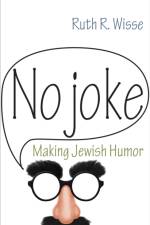
Humor is the most celebrated of all Jewish responses to modernity. In this book, Ruth Wisse evokes and applauds the genius of spontaneous Jewish joking--as well as the brilliance of comic masterworks by writers like Heinrich Heine, Sholem Aleichem, Isaac Babel, S. Y. Agnon, Isaac Bashevis Singer, and Philip Roth. At the same time, Wisse draws attention to the precarious conditions that call Jewish humor into being--and the price it may exact from its practitioners and audience. Wisse broadly traces modern Jewish humor around the world, teasing out its implications as she explores memorable and telling examples from German, Yiddish, English, Russian, and Hebrew. Among other topics, the book looks at how Jewish humor channeled Jewish learning and wordsmanship into new avenues of creativity, brought relief to liberal non-Jews in repressive societies, and enriched popular culture in the United States. Even as it invites readers to consider the pleasures and profits of Jewish humor, the book asks difficult but fascinating questions: Can the excess and extreme self-ridicule of Jewish humor go too far and backfire in the process? And is "e;leave 'em laughing"e; the wisest motto for a people that others have intended to sweep off the stage of history?
Why do some cities grow economically while others decline? Why do some show sustained economic performance while others cycle up and down? In Keys to the City, Michael Storper, one of the world's leading economic geographers, looks at why we should consider economic development issues within a regional context--at the level of the city-region--and why city economies develop unequally. Storper identifies four contexts that shape urban economic development: economic, institutional, innovational and interactional, and political. The book explores how these contexts operate and how they interact, leading to developmental success in some regions and failure in others. Demonstrating that the global economy is increasingly driven by its major cities, the keys to the city are the keys to global development. In his conclusion, Storper specifies eight rules of economic development targeted at policymakers. Keys to the City explains why economists, sociologists, and political scientists should take geography seriously.
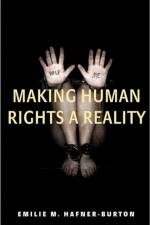
In the last six decades, one of the most striking developments in international law is the emergence of a massive body of legal norms and procedures aimed at protecting human rights. In many countries, though, there is little relationship between international law and the actual protection of human rights on the ground. Making Human Rights a Reality takes a fresh look at why it's been so hard for international law to have much impact in parts of the world where human rights are most at risk. Emilie Hafner-Burton argues that more progress is possible if human rights promoters work strategically with the group of states that have dedicated resources to human rights protection. These human rights "e;stewards"e; can focus their resources on places where the tangible benefits to human rights are greatest. Success will require setting priorities as well as engaging local stakeholders such as nongovernmental organizations and national human rights institutions. To date, promoters of international human rights law have relied too heavily on setting universal goals and procedures and not enough on assessing what actually works and setting priorities. Hafner-Burton illustrates how, with a different strategy, human rights stewards can make international law more effective and also safeguard human rights for more of the world population.
Unlike many national constitutions, which contain explicit positive rights to such things as education, a living wage, and a healthful environment, the U.S. Bill of Rights appears to contain only a long list of prohibitions on government. American constitutional rights, we are often told, protect people only from an overbearing government, but give no explicit guarantees of governmental help. Looking for Rights in All the Wrong Places argues that we have fundamentally misunderstood the American rights tradition. The United States actually has a long history of enshrining positive rights in its constitutional law, but these rights have been overlooked simply because they are not in the federal Constitution. Emily Zackin shows how they instead have been included in America's state constitutions, in large part because state governments, not the federal government, have long been primarily responsible for crafting American social policy. Although state constitutions, seemingly mired in trivial detail, can look like pale imitations of their federal counterpart, they have been sites of serious debate, reflect national concerns, and enshrine choices about fundamental values. Zackin looks in depth at the history of education, labor, and environmental reform, explaining why America's activists targeted state constitutions in their struggles for government protection from the hazards of life under capitalism. Shedding much-needed light on the variety of reasons that activists pursued the creation of new state-level rights, Looking for Rights in All the Wrong Places challenges us to rethink our most basic assumptions about the American constitutional tradition.
An intimate look at war through the lives of soldiers and their families at Fort HoodMaking War at Fort Hood offers an illuminating look at war through the daily lives of the people whose job it is to produce it. Kenneth MacLeish conducted a year of intensive fieldwork among soldiers and their families at and around the US Army's Fort Hood in central Texas. He shows how war's reach extends far beyond the battlefield into military communities where violence is as routine, boring, and normal as it is shocking and traumatic.Fort Hood is one of the largest military installations in the world, and many of the 55,000 personnel based there have served multiple tours in Iraq and Afghanistan. MacLeish provides intimate portraits of Fort Hood's soldiers and those closest to them, drawing on numerous in-depth interviews and diverse ethnographic material. He explores the exceptional position that soldiers occupy in relation to violence--not only trained to fight and kill, but placed deliberately in harm's way and offered up to die. The death and destruction of war happen to soldiers on purpose. MacLeish interweaves gripping narrative with critical theory and anthropological analysis to vividly describe this unique condition of vulnerability. Along the way, he sheds new light on the dynamics of military family life, stereotypes of veterans, what it means for civilians to say "e;thank you"e; to soldiers, and other questions about the sometimes ordinary, sometimes agonizing labor of making war.Making War at Fort Hood is the first ethnography to examine the everyday lives of the soldiers, families, and communities who personally bear the burden of America's most recent wars.
Voters today often desert a preferred candidate for a more viable second choice to avoid wasting their vote. Likewise, parties to a dispute often find themselves unable to agree on a fair division of contested goods. In Mathematics and Democracy, Steven Brams, a leading authority in the use of mathematics to design decision-making processes, shows how social-choice and game theory could make political and social institutions more democratic. Using mathematical analysis, he develops rigorous new procedures that enable voters to better express themselves and that allow disputants to divide goods more fairly. One of the procedures that Brams proposes is "e;approval voting,"e; which allows voters to vote for as many candidates as they like or consider acceptable. There is no ranking, and the candidate with the most votes wins. The voter no longer has to consider whether a vote for a preferred but less popular candidate might be wasted. In the same vein, Brams puts forward new, more equitable procedures for resolving disputes over divisible and indivisible goods.
Real Analysis is the third volume in the Princeton Lectures in Analysis, a series of four textbooks that aim to present, in an integrated manner, the core areas of analysis. Here the focus is on the development of measure and integration theory, differentiation and integration, Hilbert spaces, and Hausdorff measure and fractals. This book reflects the objective of the series as a whole: to make plain the organic unity that exists between the various parts of the subject, and to illustrate the wide applicability of ideas of analysis to other fields of mathematics and science. After setting forth the basic facts of measure theory, Lebesgue integration, and differentiation on Euclidian spaces, the authors move to the elements of Hilbert space, via the L2 theory. They next present basic illustrations of these concepts from Fourier analysis, partial differential equations, and complex analysis. The final part of the book introduces the reader to the fascinating subject of fractional-dimensional sets, including Hausdorff measure, self-replicating sets, space-filling curves, and Besicovitch sets. Each chapter has a series of exercises, from the relatively easy to the more complex, that are tied directly to the text. A substantial number of hints encourage the reader to take on even the more challenging exercises. As with the other volumes in the series, Real Analysis is accessible to students interested in such diverse disciplines as mathematics, physics, engineering, and finance, at both the undergraduate and graduate levels. Also available, the first two volumes in the Princeton Lectures in Analysis:
Kiyosi Ito's greatest contribution to probability theory may be his introduction of stochastic differential equations to explain the Kolmogorov-Feller theory of Markov processes. Starting with the geometric ideas that guided him, this book gives an account of Ito's program. The modern theory of Markov processes was initiated by A. N. Kolmogorov. However, Kolmogorov's approach was too analytic to reveal the probabilistic foundations on which it rests. In particular, it hides the central role played by the simplest Markov processes: those with independent, identically distributed increments. To remedy this defect, Ito interpreted Kolmogorov's famous forward equation as an equation that describes the integral curve of a vector field on the space of probability measures. Thus, in order to show how Ito's thinking leads to his theory of stochastic integral equations, Stroock begins with an account of integral curves on the space of probability measures and then arrives at stochastic integral equations when he moves to a pathspace setting. In the first half of the book, everything is done in the context of general independent increment processes and without explicit use of Ito's stochastic integral calculus. In the second half, the author provides a systematic development of Ito's theory of stochastic integration: first for Brownian motion and then for continuous martingales. The final chapter presents Stratonovich's variation on Ito's theme and ends with an application to the characterization of the paths on which a diffusion is supported. The book should be accessible to readers who have mastered the essentials of modern probability theory and should provide such readers with a reasonably thorough introduction to continuous-time, stochastic processes.
While there are far more women in public office today than in previous eras, women are still vastly underrepresented in this area relative to men. Conventional wisdom suggests that a key reason is because female candidates start out at a disadvantage with the public, compared to male candidates, and then face higher standards for their behavior and qualifications as they campaign. He Runs, She Runs is the first comprehensive study of these dynamics and demonstrates that the conventional wisdom is wrong. With rich contextual background and a wealth of findings, Deborah Jordan Brooks examines whether various behaviors--such as crying, acting tough, displays of anger, or knowledge gaffes--by male and female political candidates are regarded differently by the public. Refuting the idea of double standards in campaigns, Brooks's overall analysis indicates that female candidates do not get penalized disproportionately for various behaviors, nor do they face any double bind regarding femininity and toughness. Brooks also reveals that before campaigning begins, women do not start out at a disadvantage due to gender stereotypes. In fact, Brooks shows that people only make gendered assumptions about candidates who are new to politics, and those stereotypes benefit, rather than hurt, women candidates. Proving that it is no more challenging for female political candidates today to win over the public than it is for their male counterparts, He Runs, She Runs makes clear that we need to look beyond public attitudes to understand why more women are not in office.
The reputation of the financial industry could hardly be worse than it is today in the painful aftermath of the 2008 financial crisis. New York Times best-selling economist Robert Shiller is no apologist for the sins of finance--he is probably the only person to have predicted both the stock market bubble of 2000 and the real estate bubble that led up to the subprime mortgage meltdown. But in this important and timely book, Shiller argues that, rather than condemning finance, we need to reclaim it for the common good. He makes a powerful case for recognizing that finance, far from being a parasite on society, is one of the most powerful tools we have for solving our common problems and increasing the general well-being. We need more financial innovation--not less--and finance should play a larger role in helping society achieve its goals. Challenging the public and its leaders to rethink finance and its role in society, Shiller argues that finance should be defined not merely as the manipulation of money or the management of risk but as the stewardship of society's assets. He explains how people in financial careers--from CEO, investment manager, and banker to insurer, lawyer, and regulator--can and do manage, protect, and increase these assets. He describes how finance has historically contributed to the good of society through inventions such as insurance, mortgages, savings accounts, and pensions, and argues that we need to envision new ways to rechannel financial creativity to benefit society as a whole. Ultimately, Shiller shows how society can once again harness the power of finance for the greater good.
Walter Lowrie's classic, bestselling translation of Soren Kierkegaard's most important and popular books remains unmatched for its readability and literary quality. Fear and Trembling and The Sickness Unto Death established Kierkegaard as the father of existentialism and have come to define his contribution to philosophy. Lowrie's translation, first published in 1941 and later revised, was the first in English, and it has introduced hundreds of thousands of readers to Kierkegaard's thought. Kierkegaard counted Fear and Trembling and The Sickness Unto Death among "e;the most perfect books I have written,"e; and in them he introduces two terms--"e;the absurd"e; and "e;despair"e;--that have become key terms in modern thought. Fear and Trembling takes up the story of Abraham and Isaac to explore a faith that transcends the ethical, persists in the face of the absurd, and meets its reward in the return of all that the faithful one is willing to sacrifice, while The Sickness Unto Death examines the spiritual anxiety of despair. Walter Lowrie's magnificent translation of these seminal works continues to provide an ideal introduction to Kierkegaard. And, as Gordon Marino argues in a new introduction, these books are as relevant as ever in today's age of anxiety.
Rising temperatures are affecting organisms in all of Earth's biomes, but the complexity of ecological responses to climate change has hampered the development of a conceptually unified treatment of them. In a remarkably comprehensive synthesis, this book presents past, ongoing, and future ecological responses to climate change in the context of two simplifying hypotheses, facilitation and interference, arguing that biotic interactions may be the primary driver of ecological responses to climate change across all levels of biological organization. Eric Post's synthesis and analyses of ecological consequences of climate change extend from the Late Pleistocene to the present, and through the next century of projected warming. His investigation is grounded in classic themes of enduring interest in ecology, but developed around novel conceptual and mathematical models of observed and predicted dynamics. Using stability theory as a recurring theme, Post argues that the magnitude of climatic variability may be just as important as the magnitude and direction of change in determining whether populations, communities, and species persist. He urges a more refined consideration of species interactions, emphasizing important distinctions between lateral and vertical interactions and their disparate roles in shaping responses of populations, communities, and ecosystems to climate change.
Published just after the Second World War, European Literature and the Latin Middle Ages is a sweeping exploration of the remarkable continuity of European literature across time and place, from the classical era up to the early nineteenth century, and from the Italian peninsula to the British Isles. In what T. S. Eliot called a "e;magnificent"e; book, Ernst Robert Curtius establishes medieval Latin literature as the vital transition between the literature of antiquity and the vernacular literatures of later centuries. The result is nothing less than a masterful synthesis of European literature from Homer to Goethe. European Literature and the Latin Middle Ages is a monumental work of literary scholarship. In a new introduction, Colin Burrow provides critical insights into Curtius's life and ideas and highlights the distinctive importance of this wonderful book.
Which way will Egypt go now that Husni Mubarak's authoritarian regime has been swept from power? Will it become an Islamic theocracy similar to Iran? Will it embrace Western-style liberalism and democracy? Egypt after Mubarak reveals that Egypt's secularists and Islamists may yet navigate a middle path that results in a uniquely Islamic form of liberalism and, perhaps, democracy. Bruce Rutherford draws on in-depth interviews with Egyptian judges, lawyers, Islamic activists, politicians, and businesspeople. He utilizes major court rulings, political documents of the Muslim Brotherhood, and the writings of Egypt's leading contemporary Islamic thinkers. Rutherford demonstrates that, in post-Mubarak Egypt, progress toward liberalism and democracy is likely to be slow. Essential reading on a subject of global importance, this edition includes a new introduction by Rutherford that takes stock of the Arab Spring and the Muslim Brotherhood's victories in the 2011-2012 elections.
This book provides the mathematical foundations for the analysis of a class of degenerate elliptic operators defined on manifolds with corners, which arise in a variety of applications such as population genetics, mathematical finance, and economics. The results discussed in this book prove the uniqueness of the solution to the Martingale problem and therefore the existence of the associated Markov process. Charles Epstein and Rafe Mazzeo use an "e;integral kernel method"e; to develop mathematical foundations for the study of such degenerate elliptic operators and the stochastic processes they define. The precise nature of the degeneracies of the principal symbol for these operators leads to solutions of the parabolic and elliptic problems that display novel regularity properties. Dually, the adjoint operator allows for rather dramatic singularities, such as measures supported on high codimensional strata of the boundary. Epstein and Mazzeo establish the uniqueness, existence, and sharp regularity properties for solutions to the homogeneous and inhomogeneous heat equations, as well as a complete analysis of the resolvent operator acting on Holder spaces. They show that the semigroups defined by these operators have holomorphic extensions to the right half-plane. Epstein and Mazzeo also demonstrate precise asymptotic results for the long-time behavior of solutions to both the forward and backward Kolmogorov equations.
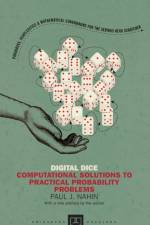
Some probability problems are so difficult that they stump the smartest mathematicians. But even the hardest of these problems can often be solved with a computer and a Monte Carlo simulation, in which a random-number generator simulates a physical process, such as a million rolls of a pair of dice. This is what Digital Dice is all about: how to get numerical answers to difficult probability problems without having to solve complicated mathematical equations. Popular-math writer Paul Nahin challenges readers to solve twenty-one difficult but fun problems, from determining the odds of coin-flipping games to figuring out the behavior of elevators. Problems build from relatively easy (deciding whether a dishwasher who breaks most of the dishes at a restaurant during a given week is clumsy or just the victim of randomness) to the very difficult (tackling branching processes of the kind that had to be solved by Manhattan Project mathematician Stanislaw Ulam). In his characteristic style, Nahin brings the problems to life with interesting and odd historical anecdotes. Readers learn, for example, not just how to determine the optimal stopping point in any selection process but that astronomer Johannes Kepler selected his second wife by interviewing eleven women. The book shows readers how to write elementary computer codes using any common programming language, and provides solutions and line-by-line walk-throughs of a MATLAB code for each problem. Digital Dice will appeal to anyone who enjoys popular math or computer science. In a new preface, Nahin wittily addresses some of the responses he received to the first edition.
Deep within galaxies like the Milky Way, astronomers have found a fascinating legacy of Einstein's general theory of relativity: supermassive black holes. Connected to the evolution of the galaxies that contain these black holes, galactic nuclei are the sites of uniquely energetic events, including quasars, stellar tidal disruptions, and the generation of gravitational waves. This textbook is the first comprehensive introduction to dynamical processes occurring in the vicinity of supermassive black holes in their galactic environment. Filling a critical gap, it is an authoritative resource for astrophysics and physics graduate students, and researchers focusing on galactic nuclei, the astrophysics of massive black holes, galactic dynamics, and gravitational wave detection. It is an ideal text for an advanced graduate-level course on galactic nuclei and as supplementary reading in graduate-level courses on high-energy astrophysics and galactic dynamics. David Merritt summarizes the theoretical work of the last three decades on the evolution of galactic nuclei, the formation of massive black holes, and the interaction between black holes and stars. He explores in depth such important topics as observations of galactic nuclei, dynamical models, weighing black holes, motion near supermassive black holes, evolution of nuclei due to gravitational encounters, loss cone theory, and binary supermassive black holes. Self-contained and up-to-date, the textbook includes a summary of the current literature and previously unpublished work by the author. For researchers working on active galactic nuclei, galaxy evolution, and the generation of gravitational waves, this book will be an essential resource.
Throughout the world, the rule against price fixing is competition law's most important and least controversial prohibition. Yet there is far less consensus than meets the eye on what constitutes price fixing, and prevalent understandings conflict with the teachings of oligopoly theory that supposedly underlie modern competition policy. Competition Policy and Price Fixing provides the needed analytical foundation. It offers a fresh, in-depth exploration of competition law's horizontal agreement requirement, presents a systematic analysis of how best to address the problem of coordinated oligopolistic price elevation, and compares the resulting direct approach to the orthodox prohibition. In doing so, Louis Kaplow elaborates the relevant benefits and costs of potential solutions, investigates how coordinated price elevation is best detected in light of the error costs associated with different types of proof, and examines appropriate sanctions. Existing literature devotes remarkably little attention to these key subjects and instead concerns itself with limiting penalties to certain sorts of interfirm communications. Challenging conventional wisdom, Kaplow shows how this circumscribed view is less well grounded in the statutes, principles, and precedents of competition law than is a more direct, functional proscription. More important, by comparison to the communications-based prohibition, he explains how the direct approach targets situations that involve both greater social harm and less risk of chilling desirable behavior--and is also easier to apply.
Demonstrating that similarities between Jewish and Christian art in the Middle Ages were more than coincidental, Cultural Exchange meticulously combines a wide range of sources to show how Jews and Christians exchanged artistic and material culture. Joseph Shatzmiller focuses on communities in northern Europe, Iberia, and other Mediterranean societies where Jews and Christians coexisted for centuries, and he synthesizes the most current research to describe the daily encounters that enabled both societies to appreciate common artistic values. Detailing the transmission of cultural sensibilities in the medieval money market and the world of Jewish money lenders, this book examines objects pawned by peasants and humble citizens, sacred relics exchanged by the clergy as security for loans, and aesthetic goods given up by the Christian well-to-do who required financial assistance. The work also explores frescoes and decorations likely painted by non-Jews in medieval and early modern Jewish homes located in Germanic lands, and the ways in which Jews hired Christian artists and craftsmen to decorate Hebrew prayer books and create liturgical objects. Conversely, Christians frequently hired Jewish craftsmen to produce liturgical objects used in Christian churches. With rich archival documentation, Cultural Exchange sheds light on the social and economic history of the creation of Jewish and Christian art, and expands the general understanding of cultural exchange in brand-new ways.Some images inside the book are unavailable due to digital copyright restrictions.
Is Confucianism a religion? If so, why do most Chinese think it isn't? From ancient Confucian temples, to nineteenth-century archives, to the testimony of people interviewed by the author throughout China over a period of more than a decade, this book traces the birth and growth of the idea of Confucianism as a world religion. The book begins at Oxford, in the late nineteenth century, when Friedrich Max Muller and James Legge classified Confucianism as a world religion in the new discourse of "e;world religions"e; and the emerging discipline of comparative religion. Anna Sun shows how that decisive moment continues to influence the understanding of Confucianism in the contemporary world, not only in the West but also in China, where the politics of Confucianism has become important to the present regime in a time of transition. Contested histories of Confucianism are vital signs of social and political change. Sun also examines the revival of Confucianism in contemporary China and the social significance of the ritual practice of Confucian temples. While the Chinese government turns to Confucianism to justify its political agenda, Confucian activists have started a movement to turn Confucianism into a religion. Confucianism as a world religion might have begun as a scholarly construction, but are we witnessing its transformation into a social and political reality? With historical analysis, extensive research, and thoughtful reflection, Confucianism as a World Religion will engage all those interested in religion and global politics at the beginning of the Chinese century.
Abonner på vårt nyhetsbrev og få rabatter og inspirasjon til din neste leseopplevelse.
Ved å abonnere godtar du vår personvernerklæring.