




















Gjør som tusenvis av andre bokelskere
Abonner på vårt nyhetsbrev og få rabatter og inspirasjon til din neste leseopplevelse.
Ved å abonnere godtar du vår personvernerklæring.Du kan når som helst melde deg av våre nyhetsbrev.

A work that "e;not only treats of irony but is irony,"e; wrote a contemporary reviewer of The Concept of Irony, with Continual Reference to Socrates. Presented here with Kierkegaard's notes of the celebrated Berlin lectures on "e;positive philosophy"e; by F.W.J. Schelling, the book is a seedbed of Kierkegaard's subsequent work, both stylistically and thematically. Part One concentrates on Socrates, the master ironist, as interpreted by Xenophon, Plato, and Aristophanes, with a word on Hegel and Hegelian categories. Part Two is a more synoptic discussion of the concept of irony in Kierkegaard's categories, with examples from other philosophers and with particular attention given to A. W. Schlegel's novel Lucinde as an epitome of romantic irony. The Concept of Irony and the Notes of Schelling's Berlin Lectures belong to the momentous year 1841, which included not only the completion of Kierkegaard's university work and his sojourn in Berlin, but also the end of his engagement to Regine Olsen and the initial writing of Either/Or.
A field guide that revolutionizes warbler identificationWarblers are among the most challenging birds to identify. They exhibit an array of seasonal plumages and have distinctive yet oft-confused calls and songs. The Warbler Guide enables you to quickly identify any of the 56 species of warblers in the United States and Canada. This groundbreaking guide features more than 1,000 stunning color photos, extensive species accounts with multiple viewing angles, and an entirely new system of vocalization analysis that helps you distinguish songs and calls.The Warbler Guide revolutionizes birdwatching, making warbler identification easier than ever before. For more information, please see the author videos on the Princeton University Press website.Covers all 56 species of warblers in the United States and CanadaVisual quick finders help you identify warblers from any angleSong and call finders make identification easy using a few simple questionsUses sonograms to teach a new system of song identification that makes it easier to understand and hear differences between similar speciesDetailed species accounts show multiple views with diagnostic points, direct comparisons of plumage and vocalizations with similar species, and complete aging and sexing descriptionsNew aids to identification include song mnemonics and icons for undertail pattern, color impression, habitat, and behaviorIncludes field exercises, flight shots, general identification strategies, and quizzesA complete, page-by-page audio companion to all of the 1,000-plus songs and calls covered by the book is available for purchase and download from the Cornell Lab of Ornithology's Macaulay Library by using the link at www.TheWarblerGuide.com
The essential photographic guide to the world's fungiThe fungi realm has been called the "e;hidden kingdom,"e; a mysterious world populated by microscopic spores, gigantic mushrooms and toadstools, and a host of other multicellular organisms ranging widely in color, size, and shape. The Kingdom of Fungi provides an intimate look at the world's astonishing variety of fungi species, from cup fungi and lichens to truffles and tooth fungi, clubs and corals, and jelly fungi and puffballs. This beautifully illustrated book features more than 800 stunning color photographs as well as a concise text that describes the biology and ecology of fungi, fungal morphology, where fungi grow, and human interactions with and uses of fungi.The Kingdom of Fungi is a feast for the senses, and the ideal reference for naturalists, researchers, and anyone interested in fungi.Reveals fungal life as never seen beforeFeatures more than 800 stunning color photosDescribes fungal biology, morphology, distribution, and usesA must-have reference book for naturalists and researchers
The life and times of one of the most provocative thinkers of the twentieth centuryWorldly Philosopher chronicles the times and writings of Albert O. Hirschman, one of the twentieth century's most original and provocative thinkers. In this gripping biography, Jeremy Adelman tells the story of a man shaped by modern horrors and hopes, a worldly intellectual who fought for and wrote in defense of the values of tolerance and change. This is the first major account of Hirschman's remarkable life, and a tale of the twentieth century as seen through the story of an astute and passionate observer. Adelman's riveting narrative traces how Hirschman's personal experiences shaped his unique intellectual perspective, and how his enduring legacy is one of hope, open-mindedness, and practical idealism.
Friedman and Schwartz's A Monetary History of the United States, 1867-1960, published in 1963, stands as one of the most influential economics books of the twentieth century. A landmark achievement, the book marshaled massive historical data and sharp analytics to support the claim that monetary policy--steady control of the money supply--matters profoundly in the management of the nation's economy, especially in navigating serious economic fluctuations. The chapter entitled "e;The Great Contraction, 1929-33"e; addressed the central economic event of the century, the Great Depression. Published as a stand-alone paperback in 1965, The Great Contraction, 1929-1933 argued that the Federal Reserve could have stemmed the severity of the Depression, but failed to exercise its role of managing the monetary system and ameliorating banking panics. The book served as a clarion call to the monetarist school of thought by emphasizing the importance of the money supply in the functioning of the economy--a concept that has come to inform the actions of central banks worldwide. This edition of the original text includes a new preface by Anna Jacobson Schwartz, as well as a new introduction by the economist Peter Bernstein. It also reprints comments from the current Federal Reserve chairman, Ben Bernanke, originally made on the occasion of Milton Friedman's 90th birthday, on the enduring influence of Friedman and Schwartz's work and vision.
The hedge fund industry has grown dramatically over the last two decades, with more than eight thousand funds now controlling close to two trillion dollars. Originally intended for the wealthy, these private investments have now attracted a much broader following that includes pension funds and retail investors. Because hedge funds are largely unregulated and shrouded in secrecy, they have developed a mystique and allure that can beguile even the most experienced investor. In Hedge Funds, Andrew Lo--one of the world's most respected financial economists--addresses the pressing need for a systematic framework for managing hedge fund investments. Arguing that hedge funds have very different risk and return characteristics than traditional investments, Lo constructs new tools for analyzing their dynamics, including measures of illiquidity exposure and performance smoothing, linear and nonlinear risk models that capture alternative betas, econometric models of hedge fund failure rates, and integrated investment processes for alternative investments. In a new chapter, he looks at how the strategies for and regulation of hedge funds have changed in the aftermath of the financial crisis.
In this pathbreaking study of the works of Plato, Aristotle, Rousseau, and Mill, Susan Moller Okin turns to the tradition of political philosophy that pervades Western culture and its institutions to understand why the gap between formal and real gender equality persists. Our philosophical heritage, Okin argues, largely rests on the assumption of the natural inequality of the sexes. Women cannot be included as equals within political theory unless its deep-rooted assumptions about the traditional family, its sex roles, and its relation to the wider world of political society are challenged. So long as this attitude pervades our institutions and behavior, the formal equality women have won has no chance of becoming substantive.
The hidden role of philanthropy in enriching America's prosperity-and the world'sPhilanthropy has long been a distinctive feature of American culture, but its crucial role in the economic well-being of the nation-and the world-has remained largely unexplored. Why Philanthropy Matters takes an in-depth look at philanthropy as an underappreciated force in capitalism, measures its critical influence on the free-market system, and demonstrates how American philanthropy could serve as a model for the productive reinvestment of wealth in other countries. Factoring in philanthropic cycles that help balance the economy, Zoltan Acs offers a richer picture of capitalism, and a more accurate backdrop for considering policies that would promote the capitalist system for the good of all.Examining the dynamics of American-style capitalism since the eighteenth century, Acs argues that philanthropy achieves three critical outcomes. It deals with the question of what to do with wealth-keep it, tax it, or give it away. It complements government in creating public goods. And, by focusing on education, science, and medicine, philanthropy has a positive effect on economic growth and productivity. Acs describes how individuals such as Benjamin Franklin, Andrew Carnegie, Bill Gates, and Oprah Winfrey have used their wealth to establish institutions and promote knowledge, and Acs shows how philanthropy has given an edge to capitalism by promoting vital forces-like university research-necessary for technological innovation, economic equality, and economic security. Philanthropy also serves as a guide for countries with less flexible capitalist institutions, and Acs makes the case for a larger, global philanthropic culture.Providing a new perspective on the development of capitalism, Why Philanthropy Matters highlights philanthropy's critical links to the economic progress, health, and future of the United States-and beyond.
In the fall of 2008, fifteen of the world's leading economists--representing the broadest spectrum of economic opinion--gathered at New Hampshire's Squam Lake. Their goal: the mapping of a long-term plan for financial regulation reform. The Squam Lake Report distills the wealth of insights from the ongoing collaboration that began at these meetings and provides a revelatory, unified, and coherent voice for fixing our troubled and damaged financial markets. As an alternative to the patchwork solutions and ideologically charged proposals that have dominated other discussions, the Squam Lake group sets forth a clear nonpartisan plan of action to transform the regulation of financial markets--not just for the current climate--but for generations to come. Arguing that there has been a conflict between financial institutions and society, these diverse experts present sound and transparent prescriptions to reduce this divide. They look at the critical holes in the existing regulatory framework for handling complex financial institutions, retirement savings, and credit default swaps. They offer ideas for new financial instruments designed to recapitalize banks without burdening taxpayers. To lower the risk that large banks will fail, the authors call for higher capital requirements as well as a systemic regulator who is part of the central bank. They collectively analyze where the financial system has failed, and how these weak points should be overhauled. Combining an immense depth of academic, private sector, and public policy experience, The Squam Lake Report contains urgent recommendations that will positively influence everyone's financial well-being--all who care about the world's economic health need to pay attention.
Although we seldom think of it, our lives are played out in a world of numbers. Such common activities as throwing baseballs, skipping rope, growing flowers, playing football, measuring savings accounts, and many others are inherently mathematical. So are more speculative problems that are simply fun to ponder in themselves--such as the best way to score Olympic events. Here Robert Banks presents a wide range of musings, both practical and entertaining, that have intrigued him and others: How tall can one grow? Why do we get stuck in traffic? Which football player would have a better chance of breaking away--a small, speedy wide receiver or a huge, slow linebacker? Can California water shortages be alleviated by towing icebergs from Antarctica? What is the fastest the 100-meter dash will ever be run? The book's twenty-four concise chapters, each centered on a real-world phenomenon, are presented in an informal and engaging manner. Banks shows how math and simple reasoning together may produce elegant models that explain everything from the federal debt to the proper technique for ski-jumping. This book, which requires of its readers only a basic understanding of high school or college math, is for anyone fascinated by the workings of mathematics in our everyday lives, as well as its applications to what may be imagined. All will be rewarded with a myriad of interesting problems and the know-how to solve them.Some images inside the book are unavailable due to digital copyright restrictions.
Many American readers like to regard Alexis de Tocqueville as an honorary American and democrat--as the young French aristocrat who came to early America and, enthralled by what he saw, proceeded to write an American book explaining democratic America to itself. Yet, as Lucien Jaume argues in this acclaimed intellectual biography, Democracy in America is best understood as a French book, written primarily for the French, and overwhelmingly concerned with France. "e;America,"e; Jaume says, "e;was merely a pretext for studying modern society and the woes of France."e; For Tocqueville, in short, America was a mirror for France, a way for Tocqueville to write indirectly about his own society, to engage French thinkers and debates, and to come to terms with France's aristocratic legacy. By taking seriously the idea that Tocqueville's French context is essential for understanding Democracy in America, Jaume provides a powerful and surprising new interpretation of Tocqueville's book as well as a fresh intellectual and psychological portrait of the author. Situating Tocqueville in the context of the crisis of authority in postrevolutionary France, Jaume shows that Tocqueville was an ambivalent promoter of democracy, a man who tried to reconcile himself to the coming wave, but who was also nostalgic for the aristocratic world in which he was rooted--and who believed that it would be necessary to preserve aristocratic values in order to protect liberty under democracy. Indeed, Jaume argues that one of Tocqueville's most important and original ideas was to recognize that democracy posed the threat of a new and hidden form of despotism.
Saadat Hasan Manto (1912-1955) was an established Urdu short story writer and a rising screenwriter in Bombay at the time of India's partition in 1947, and he is perhaps best known for the short stories he wrote following his migration to Lahore in newly formed Pakistan. Today Manto is an acknowledged master of twentieth-century Urdu literature, and his fiction serves as a lens through which the tragedy of partition is brought sharply into focus. In The Pity of Partition, Manto's life and work serve as a prism to capture the human dimension of sectarian conflict in the final decades and immediate aftermath of the British raj. Ayesha Jalal draws on Manto's stories, sketches, and essays, as well as a trove of his private letters, to present an intimate history of partition and its devastating toll. Probing the creative tension between literature and history, she charts a new way of reconnecting the histories of individuals, families, and communities in the throes of cataclysmic change. Jalal brings to life the people, locales, and events that inspired Manto's fiction, which is characterized by an eye for detail, a measure of wit and irreverence, and elements of suspense and surprise. In turn, she mines these writings for fresh insights into everyday cosmopolitanism in Bombay and Lahore, the experience and causes of partition, the postcolonial transition, and the advent of the Cold War in South Asia. The first in-depth look in English at this influential literary figure, The Pity of Partition demonstrates the revelatory power of art in times of great historical rupture.
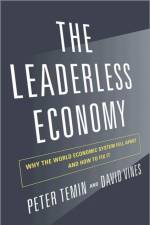
A new way to understand financial crises-and a blueprint for tomorrow's recoveryThe Leaderless Economy reveals why international financial cooperation is the only solution to today's global economic crisis. In this timely and important book, Peter Temin and David Vines argue that our current predicament is a catastrophe rivaled only by the Great Depression. Taking an in-depth look at the history of both, they explain what went wrong and why, and demonstrate why international leadership is needed to restore prosperity and prevent future crises.Temin and Vines argue that the financial collapse of the 1930s was an "e;end-of-regime crisis"e; in which the economic leader of the nineteenth century, Great Britain, found itself unable to stem international panic as countries abandoned the gold standard. They trace how John Maynard Keynes struggled for years to identify the causes of the Great Depression, and draw valuable lessons from his intellectual journey. Today we are in the midst of a similar crisis, one in which the regime that led the world economy in the twentieth century-that of the United States-is ending. Temin and Vines show how America emerged from World War II as an economic and military powerhouse, but how deregulation and a lax attitude toward international monetary flows left the nation incapable of reining in an overleveraged financial sector and powerless to contain the 2008 financial panic. Fixed exchange rates in Europe and Asia have exacerbated the problem.The Leaderless Economy provides a blueprint for how renewed international leadership can bring today's industrial nations back into financial balance--domestically and between each other.
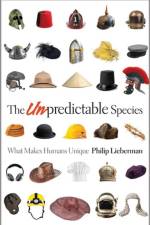
The Unpredictable Species argues that the human brain evolved in a way that enhances our cognitive flexibility and capacity for innovation and imitation. In doing so, the book challenges the central claim of evolutionary psychology that we are locked into predictable patterns of behavior that were fixed by genes, and refutes the claim that language is innate. Philip Lieberman builds his case with evidence from neuroscience, genetics, and physical anthropology, showing how our basal ganglia--structures deep within the brain whose origins predate the dinosaurs--came to play a key role in human creativity. He demonstrates how the transfer of information in these structures was enhanced by genetic mutation and evolution, giving rise to supercharged neural circuits linking activity in different parts of the brain. Human invention, expressed in different epochs and locales in the form of stone tools, digital computers, new art forms, complex civilizations--even the latest fashions--stems from these supercharged circuits. The Unpredictable Species boldly upends scientifically controversial yet popular beliefs about how our brains actually work. Along the way, this compelling book provides insights into a host of topics related to human cognition, including associative learning, epigenetics, the skills required to be a samurai, and the causes of cognitive confusion on Mount Everest and of Parkinson's disease.
For many students, calculus can be the most mystifying and frustrating course they will ever take. The Calculus Lifesaver provides students with the essential tools they need not only to learn calculus, but to excel at it. All of the material in this user-friendly study guide has been proven to get results. The book arose from Adrian Banner's popular calculus review course at Princeton University, which he developed especially for students who are motivated to earn A's but get only average grades on exams. The complete course will be available for free on the Web in a series of videotaped lectures. This study guide works as a supplement to any single-variable calculus course or textbook. Coupled with a selection of exercises, the book can also be used as a textbook in its own right. The style is informal, non-intimidating, and even entertaining, without sacrificing comprehensiveness. The author elaborates standard course material with scores of detailed examples that treat the reader to an "e;inner monologue"e;--the train of thought students should be following in order to solve the problem--providing the necessary reasoning as well as the solution. The book's emphasis is on building problem-solving skills. Examples range from easy to difficult and illustrate the in-depth presentation of theory. The Calculus Lifesaver combines ease of use and readability with the depth of content and mathematical rigor of the best calculus textbooks. It is an indispensable volume for any student seeking to master calculus. Serves as a companion to any single-variable calculus textbook Informal, entertaining, and not intimidating Informative videos that follow the book--a full forty-eight hours of Banner's Princeton calculus-review course--is available at Adrian Banner lectures More than 475 examples (ranging from easy to hard) provide step-by-step reasoning Theorems and methods justified and connections made to actual practice Difficult topics such as improper integrals and infinite series covered in detail Tried and tested by students taking freshman calculus
Few developments have had broader consequences for the public sector than the introduction of the Internet and digital technology. In this book, Darrell West discusses how new technology is altering governmental performance, the political process, and democracy itself by improving government responsiveness and increasing information available to citizens. Using multiple methods--case studies, content analysis of over 17,000 government Web sites, public and bureaucrat opinion survey data, an e-mail responsiveness test, budget data, and aggregate analysis--the author presents the most comprehensive study of electronic government ever undertaken. Among other topics, he looks at how much change has taken place in the public sector, what determines the speed and breadth of e-government adoption, and what the consequences of digital technology are for the public sector. Written in a clear and analytical manner, this book outlines the variety of factors that have restricted the ability of policy makers to make effective use of new technology. Although digital government offers the potential for revolutionary change, social, political, and economic forces constrain the scope of transformation and prevent government officials from realizing the full benefits of interactive technology.
Introduction to Modern Economic Growth is a groundbreaking text from one of today's leading economists. Daron Acemoglu gives graduate students not only the tools to analyze growth and related macroeconomic problems, but also the broad perspective needed to apply those tools to the big-picture questions of growth and divergence. And he introduces the economic and mathematical foundations of modern growth theory and macroeconomics in a rigorous but easy to follow manner. After covering the necessary background on dynamic general equilibrium and dynamic optimization, the book presents the basic workhorse models of growth and takes students to the frontier areas of growth theory, including models of human capital, endogenous technological change, technology transfer, international trade, economic development, and political economy. The book integrates these theories with data and shows how theoretical approaches can lead to better perspectives on the fundamental causes of economic growth and the wealth of nations. Innovative and authoritative, this book is likely to shape how economic growth is taught and learned for years to come. Introduces all the foundations for understanding economic growth and dynamic macroeconomic analysis Focuses on the big-picture questions of economic growth Provides mathematical foundations Presents dynamic general equilibrium Covers models such as basic Solow, neoclassical growth, and overlapping generations, as well as models of endogenous technology and international linkages Addresses frontier research areas such as international linkages, international trade, political economy, and economic development and structural change An accompanying Student Solutions Manual containing the answers to selected exercises is available (978-0-691-14163-3/$24.95). See: http://press.princeton.edu/titles/8970.html. For Professors only: To access a complete solutions manual online, email us at: acemoglusolutions@press.princeton.edu
Rough Waters explores one of the most crucial problems of the contemporary era--struggles over access to, and use of, the environment. It combines insights from anthropology, history, and environmental studies, mounting an interdisciplinary challenge to contemporary accounts of "e;globalization."e; The book focuses on The Mafia Island Marine Park, a national park in Tanzania that became the center of political conflict during its creation in the mid-1990s. The park, reflecting a new generation of internationally sponsored projects, was designed to encourage environmental conservation as well as development. Rather than excluding residents, as had been common in East Africa's mainland wildlife parks, Mafia Island was intended to represent a new type of national park that would encourage the participation of area residents and incorporate their ideas. While the park had been described in the project's general management plan as "e;for the people and by the people,"e; residents remained excluded from the most basic decisions made about the park. The book details the day-to-day tensions and alliances that arose among Mafia residents, Tanzanian government officials, and representatives of international organizations, as each group attempted to control and define the park. Walley's analysis argues that a technocentric approach to conservation and development can work to the detriment of both poorer people and the environment. It further suggests that the concept of the global may be inadequate for understanding this and other social dramas in the contemporary world.
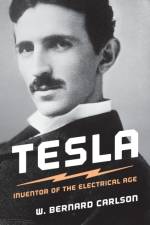
Nikola Tesla was a major contributor to the electrical revolution that transformed daily life at the turn of the twentieth century. His inventions, patents, and theoretical work formed the basis of modern AC electricity, and contributed to the development of radio and television. Like his competitor Thomas Edison, Tesla was one of America's first celebrity scientists, enjoying the company of New York high society and dazzling the likes of Mark Twain with his electrical demonstrations. An astute self-promoter and gifted showman, he cultivated a public image of the eccentric genius. Even at the end of his life when he was living in poverty, Tesla still attracted reporters to his annual birthday interview, regaling them with claims that he had invented a particle-beam weapon capable of bringing down enemy aircraft. Plenty of biographies glamorize Tesla and his eccentricities, but until now none has carefully examined what, how, and why he invented. In this groundbreaking book, W. Bernard Carlson demystifies the legendary inventor, placing him within the cultural and technological context of his time, and focusing on his inventions themselves as well as the creation and maintenance of his celebrity. Drawing on original documents from Tesla's private and public life, Carlson shows how he was an "e;idealist"e; inventor who sought the perfect experimental realization of a great idea or principle, and who skillfully sold his inventions to the public through mythmaking and illusion. This major biography sheds new light on Tesla's visionary approach to invention and the business strategies behind his most important technological breakthroughs.
The Geography of Ethnic Violence is the first among numerous distinguished books on ethnic violence to clarify the vital role of territory in explaining such conflict. Monica Toft introduces and tests a theory of ethnic violence, one that provides a compelling general explanation of not only most ethnic violence, civil wars, and terrorism but many interstate wars as well. This understanding can foster new policy initiatives with real potential to make ethnic violence either less likely or less destructive. It can also guide policymakers to solutions that endure. The book offers a distinctively powerful synthesis of comparative politics and international relations theories, as well as a striking blend of statistical and historical case study methodologies. By skillfully combining a statistical analysis of a large number of ethnic conflicts with a focused comparison of historical cases of ethnic violence and nonviolence--including four major conflicts in the former Soviet Union--it achieves a rare balance of general applicability and deep insight. Toft concludes that only by understanding how legitimacy and power interact can we hope to learn why some ethnic conflicts turn violent while others do not. Concentrated groups defending a self-defined homeland often fight to the death, while dispersed or urbanized groups almost never risk violence to redress their grievances. Clearly written and rigorously documented, this book represents a major contribution to an ongoing debate that spans a range of disciplines including international relations, comparative politics, sociology, and history.
A sweeping history of the drama, intrigue, and rivalry behind the creation of the postwar economic orderWhen turmoil strikes world monetary and financial markets, leaders invariably call for 'a new Bretton Woods' to prevent catastrophic economic disorder and defuse political conflict. The name of the remote New Hampshire town where representatives of forty-four nations gathered in July 1944, in the midst of the century's second great war, has become shorthand for enlightened globalization. The actual story surrounding the historic Bretton Woods accords, however, is full of startling drama, intrigue, and rivalry, which are vividly brought to life in Benn Steil's epic account.Upending the conventional wisdom that Bretton Woods was the product of an amiable Anglo-American collaboration, Steil shows that it was in reality part of a much more ambitious geopolitical agenda hatched within President Franklin D. Roosevelt's Treasury and aimed at eliminating Britain as an economic and political rival. At the heart of the drama were the antipodal characters of John Maynard Keynes, the renowned and revolutionary British economist, and Harry Dexter White, the dogged, self-made American technocrat. Bringing to bear new and striking archival evidence, Steil offers the most compelling portrait yet of the complex and controversial figure of White-the architect of the dollar's privileged place in the Bretton Woods monetary system, who also, very privately, admired Soviet economic planning and engaged in clandestine communications with Soviet intelligence officials and agents over many years.A remarkably deft work of storytelling that reveals how the blueprint for the postwar economic order was actually drawn, The Battle of Bretton Woods is destined to become a classic of economic and political history.
In Strange New Worlds, renowned astronomer Ray Jayawardhana brings news from the front lines of the epic quest to find planets--and alien life--beyond our solar system. Only in the past two decades, after millennia of speculation, have astronomers begun to discover planets around other stars--thousands in fact. Now they are closer than ever to unraveling distant twins of the Earth. In this book, Jayawardhana vividly recounts the stories of the scientists and the remarkable breakthroughs that have ushered in this extraordinary age of exploration. He describes the latest findings--including his own--that are challenging our view of the cosmos and casting new light on the origins and evolution of planets and planetary systems. He reveals how technology is rapidly advancing to support direct observations of Jupiter-like gas giants and super-Earths--rocky planets with several times the mass of our own planet--and how astronomers use biomarkers to seek possible life on other worlds. Strange New Worlds provides an insider's look at the cutting-edge science of today's planet hunters, our prospects for discovering alien life, and the debates and controversies at the forefront of extrasolar-planet research. In a new afterword, Jayawardhana explains some of the most recent developments as we search for the first clues of life on other planets.
Ancient Greek literature, Athenian civic ideology, and modern classical scholarship have all worked together to reinforce the idea that there were three neatly defined status groups in classical Athens--citizens, slaves, and resident foreigners. But this book--the first comprehensive account of status in ancient democratic Athens--clearly lays out the evidence for a much broader and more complex spectrum of statuses, one that has important implications for understanding Greek social and cultural history. By revealing a social and legal reality otherwise masked by Athenian ideology, Deborah Kamen illuminates the complexity of Athenian social structure, uncovers tensions between democratic ideology and practice, and contributes to larger questions about the relationship between citizenship and democracy. Each chapter is devoted to one of ten distinct status groups in classical Athens (451/0-323 BCE): chattel slaves, privileged chattel slaves, conditionally freed slaves, resident foreigners (metics), privileged metics, bastards, disenfranchised citizens, naturalized citizens, female citizens, and male citizens. Examining a wide range of literary, epigraphic, and legal evidence, as well as factors not generally considered together, such as property ownership, corporal inviolability, and religious rights, the book demonstrates the important legal and social distinctions that were drawn between various groups of individuals in Athens. At the same time, it reveals that the boundaries between these groups were less fixed and more permeable than Athenians themselves acknowledged. The book concludes by trying to explain why ancient Greek literature maintains the fiction of three status groups despite a far more complex reality.
The worldwide rise of sovereign wealth funds is emblematic of the ongoing transformation of nation-state economic prospects. Sovereign Wealth Funds maps the global footprints of these financial institutions, examining their governance and investment management, and issues of domestic and international legitimacy. Through a variety of case studies--from the China Investment Corporation to the funds of several Gulf states--the authors show that the forces propelling the adoption and development of sovereign wealth funds vary by country. The authors also show that many of these investment institutions have identifiable commonalities of form and function that match the core institutions of Western financial markets. The authors suggest that the international legitimacy of sovereign wealth funds is based on the degree to which their design and governance match Western expectations about investment management. Undercutting commonplace assumptions about the emerging world of the twenty-first century, the authors demonstrate that even small countries with large and globally oriented sovereign wealth funds are likely to play a significant role in international relations. Sovereign Wealth Funds considers how such financial organizations have altered not only the face of finance, but also the international geopolitical landscape.
From national security and social security to homeland and cyber-security, "e;security"e; has become one of the most overused words in culture and politics today. Yet it also remains one of the most undefined. What exactly are we talking about when we talk about security? In this original and timely book, John Hamilton examines the discursive versatility and semantic vagueness of security both in current and historical usage. Adopting a philological approach, he explores the fundamental ambiguity of this word, which denotes the removal of "e;concern"e; or "e;care"e; and therefore implies a condition that is either carefree or careless. Spanning texts from ancient Greek poetry to Roman Stoicism, from Augustine and Luther to Machiavelli and Hobbes, from Kant and Nietzsche to Heidegger and Carl Schmitt, Hamilton analyzes formulations of security that involve both safety and negligence, confidence and complacency, certitude and ignorance. Does security instill more fear than it assuages? Is a security purchased with freedom or human rights morally viable? How do security projects inform our expectations, desires, and anxieties? And how does the will to security relate to human finitude? Although the book makes clear that security has always been a major preoccupation of humanity, it also suggests that contemporary panics about security and the related desire to achieve perfect safety carry their own very significant risks.
During the Second World War, three prominent members of the Frankfurt School--Franz Neumann, Herbert Marcuse, and Otto Kirchheimer--worked as intelligence analysts for the Office of Strategic Services, the wartime forerunner of the CIA. This book brings together their most important intelligence reports on Nazi Germany, most of them published here for the first time. These reports provide a fresh perspective on Hitler's regime and the Second World War, and a fascinating window on Frankfurt School critical theory. They develop a detailed analysis of Nazism as a social and economic system and the role of anti-Semitism in Nazism, as well as a coherent plan for the reconstruction of postwar Germany as a democratic political system with a socialist economy. These reports played a significant role in the development of postwar Allied policy, including denazification and the preparation of the Nuremberg Trials. They also reveal how wartime intelligence analysis shaped the intellectual agendas of these three important German-Jewish scholars who fled Nazi persecution prior to the war. Secret Reports on Nazi Germany features a foreword by Raymond Geuss as well as a comprehensive general introduction by Raffaele Laudani that puts these writings in historical and intellectual context.
Many animals, including humans, acquire valuable skills and knowledge by copying others. Scientists refer to this as social learning. It is one of the most exciting and rapidly developing areas of behavioral research and sits at the interface of many academic disciplines, including biology, experimental psychology, economics, and cognitive neuroscience. Social Learning provides a comprehensive, practical guide to the research methods of this important emerging field. William Hoppitt and Kevin Laland define the mechanisms thought to underlie social learning and demonstrate how to distinguish them experimentally in the laboratory. They present techniques for detecting and quantifying social learning in nature, including statistical modeling of the spatial distribution of behavior traits. They also describe the latest theory and empirical findings on social learning strategies, and introduce readers to mathematical methods and models used in the study of cultural evolution. This book is an indispensable tool for researchers and an essential primer for students. Provides a comprehensive, practical guide to social learning research Combines theoretical and empirical approaches Describes techniques for the laboratory and the field Covers social learning mechanisms and strategies, statistical modeling techniques for field data, mathematical modeling of cultural evolution, and more
There are over a million jazz recordings, but only a few hundred tunes have been recorded repeatedly. Why did a minority of songs become jazz standards? Why do some songs--and not others--get rerecorded by many musicians? Shaping Jazz answers this question and more, exploring the underappreciated yet crucial roles played by initial production and markets--in particular, organizations and geography--in the development of early twentieth-century jazz.Damon Phillips considers why places like New York played more important roles as engines of diffusion than as the sources of standards. He demonstrates why and when certain geographical references in tune and group titles were considered more desirable. He also explains why a place like Berlin, which produced jazz abundantly from the 1920s to early 1930s, is now on jazz's historical sidelines. Phillips shows the key influences of firms in the recording industry, including how record companies and their executives affected what music was recorded, and why major companies would rerelease recordings under artistic pseudonyms. He indicates how a recording's appeal was related to the narrative around its creation, and how the identities of its firm and musicians influenced the tune's long-run popularity.Applying fascinating ideas about market emergence to a music's commercialization, Shaping Jazz offers a unique look at the origins of a groundbreaking art form.
A revealing examination of small-town lifeMore than thirty million Americans live in small, out-of-the-way places. Many of them could have joined the vast majority of Americans who live in cities and suburbs. They could live closer to more lucrative careers and convenient shopping, a wider range of educational opportunities, and more robust health care. But they have opted to live differently.In Small-Town America, we meet factory workers, shop owners, retirees, teachers, clergy, and mayors-residents who show neighborliness in small ways, but who also worry about everything from school closings and their children's futures to the ups and downs of the local economy. Drawing on more than seven hundred in-depth interviews in hundreds of towns across America and three decades of census data, Robert Wuthnow shows the fragility of community in small towns. He covers a host of topics, including the symbols and rituals of small-town life, the roles of formal and informal leaders, the social role of religious congregations, the perception of moral and economic decline, and the myriad ways residents in small towns make sense of their own lives. Wuthnow also tackles difficult issues such as class and race, abortion, homosexuality, and substance abuse.Small-Town America paints a rich panorama of individuals who reside in small communities, finding that, for many people, living in a small town is an important part of self-identity.
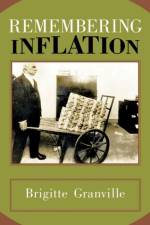
Why we need to heed the lessons of high inflationToday's global economy, with most developed nations experiencing very low inflation, seems a world apart from the "e;Great Inflation"e; that spanned the late 1960s to early 1980s. Yet, in this book, Brigitte Granville makes the case that monetary economists and policymakers need to keep the lessons learned during that period very much in mind, lest we return to them by making the same mistakes we made in the past.Granville details the advances in macroeconomic thinking that gave rise to the "e;Great Moderation"e;-a period of stable inflation and economic growth, which lasted from the mid-1980s through the most recent financial crisis. She makes the case that the central banks' management of monetary policy-hinging on expectations and credibility-brought about this period of stability, and traces the roots of this success back to the eighteenth-century foundations of modern monetary thought.Tackling fundamental questions such as the causes of inflation and its relation to unemployment and growth, the natural rate of inflation hypothesis, the fiscal theory of the price level, and the proper goals of central banks, the book aims above all to demonstrate the dangers of forgetting the role of credibility in establishing sound monetary policy. With the lessons of the past firmly in mind, Granville presents stimulating ideas and proposals about inflation-targeting principles, which provide tools for present-day monetary authorities dealing with the forces of globalization, mercantilism, and reserve accumulation.
Abonner på vårt nyhetsbrev og få rabatter og inspirasjon til din neste leseopplevelse.
Ved å abonnere godtar du vår personvernerklæring.