


















Gjør som tusenvis av andre bokelskere
Abonner på vårt nyhetsbrev og få rabatter og inspirasjon til din neste leseopplevelse.
Ved å abonnere godtar du vår personvernerklæring.Du kan når som helst melde deg av våre nyhetsbrev.

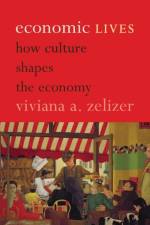
Over the past three decades, economic sociology has been revealing how culture shapes economic life even while economic facts affect social relationships. This work has transformed the field into a flourishing and increasingly influential discipline. No one has played a greater role in this development than Viviana Zelizer, one of the world's leading sociologists. Economic Lives synthesizes and extends her most important work to date, demonstrating the full breadth and range of her field-defining contributions in a single volume for the first time. Economic Lives shows how shared cultural understandings and interpersonal relations shape everyday economic activities. Far from being simple responses to narrow individual incentives and preferences, economic actions emerge, persist, and are transformed by our relations to others. Distilling three decades of research, the book offers a distinctive vision of economic activity that brings out the hidden meanings and social actions behind the supposedly impersonal worlds of production, consumption, and asset transfer. Economic Lives ranges broadly from life insurance marketing, corporate ethics, household budgets, and migrant remittances to caring labor, workplace romance, baby markets, and payments for sex. These examples demonstrate an alternative approach to explaining how we manage economic activity--as well as a different way of understanding why conventional economic theory has proved incapable of predicting or responding to recent economic crises. Providing an important perspective on the recent past and possible futures of a growing field, Economic Lives promises to be widely read and discussed.
For many Americans, the Midwest is a vast unknown. In Remaking the Heartland, Robert Wuthnow sets out to rectify this. He shows how the region has undergone extraordinary social transformations over the past half-century and proven itself surprisingly resilient in the face of such hardships as the Great Depression and the movement of residents to other parts of the country. He examines the heartland's reinvention throughout the decades and traces the social and economic factors that have helped it to survive and prosper. Wuthnow points to the critical strength of the region's social institutions established between 1870 and 1950--the market towns, farmsteads, one-room schoolhouses, townships, rural cooperatives, and manufacturing centers that have adapted with the changing times. He focuses on farmers' struggles to recover from the Great Depression well into the 1950s, the cultural redefinition and modernization of the region's image that occurred during the 1950s and 1960s, the growth of secondary and higher education, the decline of small towns, the redeployment of agribusiness, and the rapid expansion of edge cities. Drawing his arguments from extensive interviews and evidence from the towns and counties of the Midwest, Wuthnow provides a unique perspective as both an objective observer and someone who grew up there. Remaking the Heartland offers an accessible look at the humble yet strong foundations that have allowed the region to endure undiminished.
Under the energetic but confused prodding of the activist ruler Ahmad Bey, Tunisia made its first effort to institute European-inspired political and military reforms. L. Carl Brown's book on the reign of Ahmad Bey is thus a case study in modernization as well as a historical survey of Tunisia in the mid-nineteenth century. Professor Brown explains the workings of the traditional political system, an elaborate blend of Hafsid and Ottoman governmental ideas and practices. He explores the ways in which the changes imposed on Tunisia by the West made this system unworkable. Turning to the modernization movement itself, the author argues that the first phase of modernization was almost exclusively in the hands of the existing political elite, whose background, education, career pattern, and self-image he examines. This elite, working within a political climate characterized by a close interweaving of domestic and diplomatic concerns, developed an operating style described as collaborationist modernization. In addition to recapturing in a narrative history the age of Ahmad Bey and the political class over which he ruled, Professor Brown fits the Tunisian story of these years into the broader historical context of change imposed by the West on the rest of the world.Originally published in 1975.The Princeton Legacy Library uses the latest print-on-demand technology to again make available previously out-of-print books from the distinguished backlist of Princeton University Press. These editions preserve the original texts of these important books while presenting them in durable paperback and hardcover editions. The goal of the Princeton Legacy Library is to vastly increase access to the rich scholarly heritage found in the thousands of books published by Princeton University Press since its founding in 1905.
From the Soviet technical intelligentsia emerged more than three quarters of recent Politburo members, including Brezhnev, Kosygin, and Podgorny. The largest single group of dissenters, including Grigorenko, Sakharov, and Solzhenitsyn, have also been members.Originally published in 1978.The Princeton Legacy Library uses the latest print-on-demand technology to again make available previously out-of-print books from the distinguished backlist of Princeton University Press. These editions preserve the original texts of these important books while presenting them in durable paperback and hardcover editions. The goal of the Princeton Legacy Library is to vastly increase access to the rich scholarly heritage found in the thousands of books published by Princeton University Press since its founding in 1905.
Uncorked quenches our curiosity about the inner workings of one of the world's most prized beverages. Esteemed for its freshness, vitality, and sensuality, champagne is a wine of great complexity. Mysteries aplenty gush forth with the popping of that cork. Just what is that fizz? Can you judge champagne quality by how big the bubbles are, how long they last, or how they behave before they fade? And why does serving champagne in a long-stemmed flute prolong its chill and effervescence? Through lively prose and a wealth of state-of-the-art photos, this revised edition of Uncorked unlocks the door to what champagne is all about. Providing an unprecedented close-up view of the beauty in the bubbles, Gerard Liger-Belair presents images that look surprisingly like lovely flowers, geometric patterns, even galaxies as the bubbles rise through the glass and burst forth on the surface. He illustrates how bubbles form not on the glass itself but are "e;born"e; out of debris stuck on the glass wall, how they rise, and how they pop. Offering a colorful history of champagne, Liger-Belair tells us how it is made and he asks if global warming could spell champagne's demise. In a brand-new afterword, he updates the reader on new developments in the world of bubble science and delves even more deeply into the processes that give champagne its unique and beautiful character. Bubbly may tickle the nose, but Uncorked tackles what the nose and the naked eye cannot--the spectacular science that gives champagne its charm and champagne drinkers immeasurable pleasure.
The classic textbook on comparative biomechanics-revised and expandedWhy do you switch from walking to running at a specific speed? Why do tall trees rarely blow over in high winds? And why does a spore ejected into air at seventy miles per hour travel only a fraction of an inch? Comparative Biomechanics is the first and only textbook that takes a comprehensive look at the mechanical aspects of life-covering animals and plants, structure and movement, and solids and fluids. An ideal entry point into the ways living creatures interact with their immediate physical world, this revised and updated edition examines how the forms and activities of animals and plants reflect the materials available to nature, considers rules for fluid flow and structural design, and explores how organisms contend with environmental forces.Drawing on physics and mechanical engineering, Steven Vogel looks at how animals swim and fly, modes of terrestrial locomotion, organism responses to winds and water currents, circulatory and suspension-feeding systems, and the relationship between size and mechanical design. He also investigates links between the properties of biological materials-such as spider silk, jellyfish jelly, and muscle-and their structural and functional roles. Early chapters and appendices introduce relevant physical variables for quantification, and problem sets are provided at the end of each chapter. Comparative Biomechanics is useful for physical scientists and engineers seeking a guide to state-of-the-art biomechanics. For a wider audience, the textbook establishes the basic biological context for applied areas-including ergonomics, orthopedics, mechanical prosthetics, kinesiology, sports medicine, and biomimetics-and provides materials for exhibit designers at science museums.Problem sets at the ends of chaptersAppendices cover basic background informationUpdated and expanded documentation and materialsRevised figures and textIncreased coverage of friction, viscoelastic materials, surface tension, diverse modes of locomotion, and biomimetics
In The Axe and the Oath, one of the world's leading medieval historians presents a compelling picture of daily life in the Middle Ages as it was experienced by ordinary people. Writing for general readers, Robert Fossier vividly describes how these vulnerable people confronted life, from birth to death, including childhood, marriage, work, sex, food, illness, religion, and the natural world. While most histories of the period focus on the ideas and actions of the few who wielded power and stress how different medieval people were from us, Fossier concentrates on the other nine-tenths of humanity in the period and concludes that "e;medieval man is us.? Drawing on a broad range of evidence, Fossier describes how medieval men and women encountered, coped with, and understood the basic material facts of their lives. We learn how people related to agriculture, animals, the weather, the forest, and the sea; how they used alcohol and drugs; and how they buried their dead. But The Axe and the Oath is about much more than simply the material demands of life. We also learn how ordinary people experienced the social, cultural, intellectual, and spiritual aspects of medieval life, from memory and imagination to writing and the Church. The result is a sweeping new vision of the Middle Ages that will entertain and enlighten readers.
While we joke that men are from Mars and women are from Venus, our gender differences can't compare to those of many other animals. For instance, the male garden spider spontaneously dies after mating with a female more than fifty times his size. And male blanket octopuses employ a copulatory arm longer than their own bodies to mate with females that outweigh them by four orders of magnitude. Why do these gender gulfs exist?Introducing readers to important discoveries in animal behavior and evolution, Odd Couples explores some of the most extraordinary sexual differences in the animal world. Daphne Fairbairn uncovers the unique and bizarre characteristics of these remarkable species and the special strategies they use to maximize reproductive success. Fairbairn also considers humans and explains that although we are keenly aware of our own sexual differences, they are unexceptional within the vast animal world.Looking at some of the most amazing creatures on the planet, Odd Couples sheds astonishing light on what it means to be male or female in the animal kingdom.
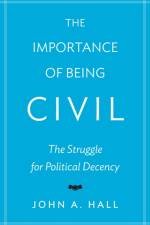
How civility has shaped and been shaped by historical and social forces, and why it is in danger todayCivility is desirable and possible, but can this fragile ideal be guaranteed? The Importance of Being Civil offers the most comprehensive look at the nature and advantages of civility throughout history and in our world today. Esteemed sociologist John Hall expands our understanding of civility as related to larger social forces-including revolution, imperialism, capitalism, nationalism, and war-and the ways that such elements limit the potential for civility.Combining wide-ranging historical and comparative evidence with social and moral theory, Hall examines how the nature of civility has fluctuated in the last three centuries, how it became lost, and how it was reestablished in the twentieth century following the two world wars. He also considers why civility is currently breaking down and what can be done to mitigate this threat.The Importance of Being Civil is a decisive and sophisticated addition to the discussion of civility in its modern cultural and historical contexts.
How a famous painting opens a window into the life, times, and philosophy of Rene DescartesIn the Louvre museum hangs a portrait that is considered the iconic image of Rene Descartes, the great seventeenth-century French philosopher. And the painter of the work? The Dutch master Frans Hals-or so it was long believed, until the work was downgraded to a copy of an original. But where is the authentic version, and who painted it? Is the man in the painting-and in its original-really Descartes?A unique combination of philosophy, biography, and art history, The Philosopher, the Priest, and the Painter investigates the remarkable individuals and circumstances behind a small portrait. Through this image-and the intersecting lives of a brilliant philosopher, a Catholic priest, and a gifted painter-Steven Nadler opens a fascinating portal into Descartes's life and times, skillfully presenting an accessible introduction to Descartes's philosophical and scientific ideas, and an illuminating tour of the volatile political and religious environment of the Dutch Golden Age. As Nadler shows, Descartes's innovative ideas about the world, about human nature and knowledge, and about philosophy itself, stirred great controversy. Philosophical and theological critics vigorously opposed his views, and civil and ecclesiastic authorities condemned his writings. Nevertheless, Descartes's thought came to dominate the philosophical world of the period, and can rightly be called the philosophy of the seventeenth century.Shedding light on a well-known image, The Philosopher, the Priest, and the Painter offers an engaging exploration of a celebrated philosopher's world and work.
Sixty-five million years ago, a comet or asteroid larger than Mount Everest slammed into the Earth, inducing an explosion equivalent to the detonation of a hundred million hydrogen bombs. Vaporized detritus blasted through the atmosphere upon impact, falling back to Earth around the globe. Disastrous environmental consequences ensued: a giant tsunami, continent-scale wildfires, darkness, and cold, followed by sweltering greenhouse heat. When conditions returned to normal, half the plant and animal genera on Earth had perished.This horrific chain of events is now widely accepted as the solution to a great scientific mystery: what caused the extinction of the dinosaurs? Walter Alvarez, one of the Berkeley scientists who discovered evidence of the impact, tells the story behind the development of the initially controversial theory. It is a saga of high adventure in remote locations, of arduous data collection and intellectual struggle, of long periods of frustration ended by sudden breakthroughs, of friendships made and lost, and of the exhilaration of discovery that forever altered our understanding of Earth's geological history.
In the graveyard of economic ideology, dead ideas still stalk the land. The recent financial crisis laid bare many of the assumptions behind market liberalism--the theory that market-based solutions are always best, regardless of the problem. For decades, their advocates dominated mainstream economics, and their influence created a system where an unthinking faith in markets led many to view speculative investments as fundamentally safe. The crisis seemed to have killed off these ideas, but they still live on in the minds of many--members of the public, commentators, politicians, economists, and even those charged with cleaning up the mess. In Zombie Economics, John Quiggin explains how these dead ideas still walk among us--and why we must find a way to kill them once and for all if we are to avoid an even bigger financial crisis in the future.Zombie Economics takes the reader through the origins, consequences, and implosion of a system of ideas whose time has come and gone. These beliefs--that deregulation had conquered the financial cycle, that markets were always the best judge of value, that policies designed to benefit the rich made everyone better off--brought us to the brink of disaster once before, and their persistent hold on many threatens to do so again. Because these ideas will never die unless there is an alternative, Zombie Economics also looks ahead at what could replace market liberalism, arguing that a simple return to traditional Keynesian economics and the politics of the welfare state will not be enough--either to kill dead ideas, or prevent future crises.
A grand tour of our dynamic home galaxyThis book offers an intimate guide to the Milky Way, taking readers on a grand tour of our home Galaxy's structure, genesis, and evolution, based on the latest astronomical findings. In engaging language, it tells how the Milky Way congealed from blobs of gas and dark matter into a spinning starry abode brimming with diverse planetary systems-some of which may be hosting myriad life forms and perhaps even other technologically communicative species.William Waller vividly describes the Milky Way as it appears in the night sky, acquainting readers with its key components and telling the history of our changing galactic perceptions. The ancients believed the Milky Way was a home for the gods. Today we know it is but one galaxy among billions of others in the observable universe. Within the Milky Way, ground-based and space-borne telescopes have revealed that our Solar System is not alone. Hundreds of other planetary systems share our tiny part of the vast Galaxy. We reside within a galactic ecosystem that is driven by the theatrics of the most massive stars as they blaze through their brilliant lives and dramatic deaths. Similarly effervescent ecosystems of hot young stars and fluorescing nebulae delineate the graceful spiral arms in our Galaxy's swirling disk. Beyond the disk, the spheroidal halo hosts the ponderous-and still mysterious-dark matter that outweighs everything else. Another dark mystery lurks deep in the heart of the Milky Way, where a supermassive black hole has produced bizarre phenomena seen at multiple wavelengths.Waller makes the case that our very existence is inextricably linked to the Galaxy that spawned us. Through this book, readers can become well-informed galactic "e;insiders"e;-ready to imagine humanity's next steps as fully engaged citizens of the Milky Way.
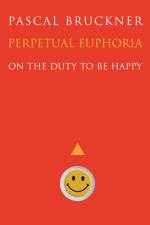
Happiness today is not just a possibility or an option but a requirement and a duty. To fail to be happy is to fail utterly. Happiness has become a religion--one whose smiley-faced god looks down in rebuke upon everyone who hasn't yet attained the blessed state of perpetual euphoria. How has a liberating principle of the Enlightenment--the right to pursue happiness--become the unavoidable and burdensome responsibility to be happy? How did we become unhappy about not being happy--and what might we do to escape this predicament? In Perpetual Euphoria, Pascal Bruckner takes up these questions with all his unconventional wit, force, and brilliance, arguing that we might be happier if we simply abandoned our mad pursuit of happiness. Gripped by the twin illusions that we are responsible for being happy or unhappy and that happiness can be produced by effort, many of us are now martyring ourselves--sacrificing our time, fortunes, health, and peace of mind--in the hope of entering an earthly paradise. Much better, Bruckner argues, would be to accept that happiness is an unbidden and fragile gift that arrives only by grace and luck. A stimulating and entertaining meditation on the unhappiness at the heart of the modern cult of happiness, Perpetual Euphoria is a book for everyone who has ever bristled at the command to "e;be happy."e;
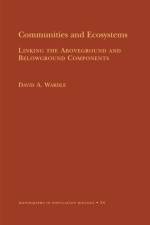
Most of the earth's terrestrial species live in the soil. These organisms, which include many thousands of species of fungi and nematodes, shape aboveground plant and animal life as well as our climate and atmosphere. Indeed, all terrestrial ecosystems consist of interdependent aboveground and belowground compartments. Despite this, aboveground and belowground ecology have been conducted largely in isolation. This book represents the first major synthesis to focus explicitly on the connections between aboveground and belowground subsystems--and their importance for community structure and ecosystem functioning. David Wardle integrates a vast body of literature from numerous fields--including population ecology, ecosystem ecology, ecophysiology, ecological theory, soil science, and global-change biology--to explain the key conceptual issues relating to how aboveground and belowground communities affect one another and the processes that each component carries out. He then applies these concepts to a host of critical questions, including the regulation and function of biodiversity as well as the consequences of human-induced global change in the form of biological invasions, extinctions, atmospheric carbon-dioxide enrichment, nitrogen deposition, land-use change, and global warming. Through ambitious theoretical synthesis and a tremendous range of examples, Wardle shows that the key biotic drivers of community and ecosystem properties involve linkages between aboveground and belowground food webs, biotic interaction, the spatial and temporal dynamics of component organisms, and, ultimately, the ecophysiological traits of those organisms that emerge as ecological drivers. His conclusions will propel theoretical and empirical work throughout ecology.
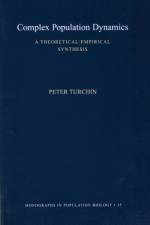
Why do organisms become extremely abundant one year and then seem to disappear a few years later? Why do population outbreaks in particular species happen more or less regularly in certain locations, but only irregularly (or never at all) in other locations? Complex population dynamics have fascinated biologists for decades. By bringing together mathematical models, statistical analyses, and field experiments, this book offers a comprehensive new synthesis of the theory of population oscillations. Peter Turchin first reviews the conceptual tools that ecologists use to investigate population oscillations, introducing population modeling and the statistical analysis of time series data. He then provides an in-depth discussion of several case studies--including the larch budmoth, southern pine beetle, red grouse, voles and lemmings, snowshoe hare, and ungulates--to develop a new analysis of the mechanisms that drive population oscillations in nature. Through such work, the author argues, ecologists can develop general laws of population dynamics that will help turn ecology into a truly quantitative and predictive science. Complex Population Dynamics integrates theoretical and empirical studies into a major new synthesis of current knowledge about population dynamics. It is also a pioneering work that sets the course for ecology's future as a predictive science.
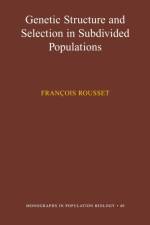
Various approaches have been developed to evaluate the consequences of spatial structure on evolution in subdivided populations. This book is both a review and new synthesis of several of these approaches, based on the theory of spatial genetic structure. Francois Rousset examines Sewall Wright's methods of analysis based on F-statistics, effective size, and diffusion approximation; coalescent arguments; William Hamilton's inclusive fitness theory; and approaches rooted in game theory and adaptive dynamics. Setting these in a framework that reveals their common features, he demonstrates how efficient tools developed within one approach can be applied to the others. Rousset not only revisits classical models but also presents new analyses of more recent topics, such as effective size in metapopulations. The book, most of which does not require fluency in advanced mathematics, includes a self-contained exposition of less easily accessible results. It is intended for advanced graduate students and researchers in evolutionary ecology and population genetics, and will also interest applied mathematicians working in probability theory as well as statisticians.
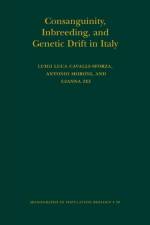
In 1951, the geneticist Luigi Luca Cavalli-Sforza was teaching in Parma when a student--a priest named Antonio Moroni--told him about rich church records of demography and marriages between relatives. After convincing the Church to open its records, Cavalli-Sforza, Moroni, and Gianna Zei embarked on a landmark study that would last fifty years and cover all of Italy. This book assembles and analyzes the team's research for the first time. Using blood testing as well as church records, the team investigated the frequency of consanguineous marriages and its use for estimating inbreeding and studying the relations between inbreeding and drift. They tested the importance of random genetic drift by studying population structure through demography of the last three centuries, using it to predict the spatial variation of frequencies of genetic markers. The authors find that drift-related genetic variation, including its stabilization by migration, is best predicted by computer simulation. They also analyze the usefulness and limits of the concept of deme for defining Mendelian populations. The genetic effect of consanguineous marriage on recessive genetic diseases and for the detection of dominance in metric characters are also studied. Ultimately bringing together the many strands of their massive project, Cavalli-Sforza, Moroni, and Zei are able to map genetic drift in all of Italy's approximately 8,000 communes and to demonstrate the relationship between each locality's drift and various ecological and demographic factors. In terms of both methods and findings, their accomplishment is tremendously important for understanding human social structure and the genetic effects of drift and inbreeding.
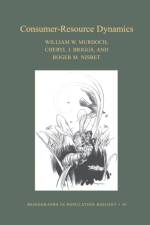
Despite often violent fluctuations in nature, species extinction is rare. California red scale, a potentially devastating pest of citrus, has been suppressed for fifty years in California to extremely low yet stable densities by its controlling parasitoid. Some larch budmoth populations undergo extreme cycles; others never cycle. In Consumer-Resource Dynamics, William Murdoch, Cherie Briggs, and Roger Nisbet use these and numerous other biological examples to lay the groundwork for a unifying theory applicable to predator-prey, parasitoid-host, and other consumer-resource interactions. Throughout, the focus is on how the properties of real organisms affect population dynamics. The core of the book synthesizes and extends the authors' own models involving insect parasitoids and their hosts, and explores in depth how consumer species compete for a dynamic resource. The emerging general consumer-resource theory accounts for how consumers respond to differences among individuals in the resource population. From here the authors move to other models of consumer-resource dynamics and population dynamics in general. Consideration of empirical examples, key concepts, and a necessary review of simple models is followed by examination of spatial processes affecting dynamics, and of implications for biological control of pest organisms. The book establishes the coherence and broad applicability of consumer-resource theory and connects it to single-species dynamics. It closes by stressing the theory's value as a hierarchy of models that allows both generality and testability in the field.
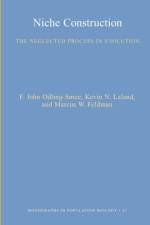
The seemingly innocent observation that the activities of organisms bring about changes in environments is so obvious that it seems an unlikely focus for a new line of thinking about evolution. Yet niche construction--as this process of organism-driven environmental modification is known--has hidden complexities. By transforming biotic and abiotic sources of natural selection in external environments, niche construction generates feedback in evolution on a scale hitherto underestimated--and in a manner that transforms the evolutionary dynamic. It also plays a critical role in ecology, supporting ecosystem engineering and influencing the flow of energy and nutrients through ecosystems. Despite this, niche construction has been given short shrift in theoretical biology, in part because it cannot be fully understood within the framework of standard evolutionary theory. Wedding evolution and ecology, this book extends evolutionary theory by formally including niche construction and ecological inheritance as additional evolutionary processes. The authors support their historic move with empirical data, theoretical population genetics, and conceptual models. They also describe new research methods capable of testing the theory. They demonstrate how their theory can resolve long-standing problems in ecology, particularly by advancing the sorely needed synthesis of ecology and evolution, and how it offers an evolutionary basis for the human sciences. Already hailed as a pioneering work by some of the world's most influential biologists, this is a rare, potentially field-changing contribution to the biological sciences.
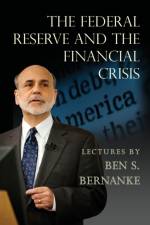
Ben Bernanke's history of the Federal Reserve and its response to the 2008 financial crisisIn 2012, Ben Bernanke, chairman of the U.S. Federal Reserve, gave a series of lectures about the Federal Reserve and the 2008 financial crisis, as part of a course at George Washington University on the role of the Federal Reserve in the economy. In this unusual event, Bernanke revealed important background and insights into the central bank's crucial actions during the worst financial crisis since the Great Depression. Taken directly from these historic talks, The Federal Reserve and the Financial Crisis offers insight into the guiding principles behind the Fed's activities and the lessons to be learned from its handling of recent economic challenges.Bernanke traces the origins of the Federal Reserve, from its inception in 1914 through the Second World War, and he looks at the Fed post-1945, when it began operating independently from other governmental departments such as the Treasury. During this time the Fed grappled with episodes of high inflation, finally tamed by then-chairman Paul Volcker. Bernanke also explores the period under his predecessor, Alan Greenspan, known as the Great Moderation. Bernanke then delves into the Fed's reaction to the recent financial crisis, focusing on the central bank's role as the lender of last resort and discussing efforts that injected liquidity into the banking system. Bernanke points out that monetary policies alone cannot revive the economy, and he describes ongoing structural and regulatory problems that need to be addressed.Providing first-hand knowledge of how problems in the financial system were handled, The Federal Reserve and the Financial Crisis will long be studied by those interested in this critical moment in history.
Of the many works he wrote during 1848, his "e;richest and most fruitful year,"e; Kierkegaard specified Practice in Christianity as "e;the most perfect and truest thing."e; In his reflections on such topics as Christ's invitation to the burdened, the imitatio Christi, the possibility of offense, and the exalted Christ, he takes as his theme the requirement of Christian ideality in the context of divine grace. Addressing clergy and laity alike, Kierkegaard asserts the need for institutional and personal admission of the accommodation of Christianity to the culture and to the individual misuse of grace. As a corrective defense, the book is an attempt to find, ideally, a basis for the established order, which would involve the order's ability to acknowledge the Christian requirement, confess its own distance from it, and resort to grace for support in its continued existence. At the same time the book can be read as the beginning of Kierkegaard's attack on Christendom. Because of the high ideality of the contents and in order to prevent the misunderstanding that he himself represented that ideality, Kierkegaard writes under a new pseudonym, Anti-Climacus.
A companion piece to The Concept of Anxiety, this work continues Soren Kierkegaard's radical and comprehensive analysis of human nature in a spectrum of possibilities of existence. Present here is a remarkable combination of the insight of the poet and the contemplation of the philosopher. In The Sickness unto Death, Kierkegaard moves beyond anxiety on the mental-emotional level to the spiritual level, where--in contact with the eternal--anxiety becomes despair. Both anxiety and despair reflect the misrelation that arises in the self when the elements of the synthesis--the infinite and the finite--do not come into proper relation to each other. Despair is a deeper expression for anxiety and is a mark of the eternal, which is intended to penetrate temporal existence.
In Philosophical Fragments the pseudonymous author Johannes Climacus explored the question: What is required in order to go beyond Socratic recollection of eternal ideas already possessed by the learner? Written as an afterword to this work, Concluding Unscientific Postscript is on one level a philosophical jest, yet on another it is Climacus's characterization of the subjective thinker's relation to the truth of Christianity. At once ironic, humorous, and polemical, this work takes on the "e;unscientific"e; form of a mimical-pathetical-dialectical compilation of ideas. Whereas the movement in the earlier pseudonymous writings is away from the aesthetic, the movement in Postscript is away from speculative thought. Kierkegaard intended Postscript to be his concluding work as an author. The subsequent "e;second authorship"e; after The Corsair Affair made Postscript the turning point in the entire authorship. Part One of the text volume examines the truth of Christianity as an objective issue, Part Two the subjective issue of what is involved for the individual in becoming a Christian, and the volume ends with an addendum in which Kierkegaard acknowledges and explains his relation to the pseudonymous authors and their writings. The second volume contains the scholarly apparatus, including a key to references and selected entries from Kierkegaard's journals and papers.
The various kinds and conditions of love are a common theme for Kierkegaard, beginning with his early Either/Or, through "e;The Diary of the Seducer"e; and Judge William's eulogy on married love, to his last work, on the changelessness of God's love. Works of Love, the midpoint in the series, is also the monumental high point, because of its penetrating, illuminating analysis of the forms and sources of love. Love as feeling and mood is distinguished from works of love, love of the lovable from love of the unlovely, preferential love from love as the royal law, love as mutual egotism from triangular love, and erotic love from self-giving love. This work is marked by Kierkegaard's Socratic awareness of the reader, both as the center of awakened understanding and as the initiator of action. Written to be read aloud, the book conveys a keenness of thought and an insightful, poetic imagination that make such an attentive approach richly rewarding. Works of Love not only serves as an excellent place to begin exploring the writings of Kierkegaard, but also rewards many rereadings.
Soren Kierkegaard, the nineteenth-century Danish philosopher rediscovered in the twentieth century, is a major influence in contemporary philosophy, religion, and literature. He regarded Either/Or as the beginning of his authorship, although he had published two earlier works on Hans Christian Andersen and irony. The pseudonymous volumes of Either/Or are the writings of a young man (I) and of Judge William (II). The ironical young man's papers include a collection of sardonic aphorisms; essays on Mozart, modern drama, and boredom; and "e;The Seducer's Diary."e; The seeming miscellany is a reflective presentation of aspects of the "e;either,"e; the esthetic view of life. Part II is an older friend's "e;or,"e; the ethical life of integrated, authentic personhood, elaborated in discussions of personal becoming and of marriage. The resolution of the "e;either/or"e; is left to the reader, for there is no Part III until the appearance of Stages on Life's Way. The poetic-reflective creations of a master stylist and imaginative impersonator, the two men write in distinctive ways appropriate to their respective positions.
If you are instructor in a course that uses Development Economics and wish to have access to the end-of-chapter problems in Development Economics, please e-mail the author at debraj.ray@nyu.edu. For more information, please go to http://www.econ.nyu.edu/user/debraj. If you are a student in the course, please do not contact the author. Please request your instructor to do so.The study of development in low-income countries is attracting more attention around the world than ever before. Yet until now there has been no comprehensive text that incorporates the huge strides made in the subject over the past decade. Development Economics does precisely that in a clear, rigorous, and elegant fashion.Debraj Ray, one of the most accomplished theorists in development economics today, presents in this book a synthesis of recent and older literature in the field and raises important questions that will help to set the agenda for future research. He covers such vital subjects as theories of economic growth, economic inequality, poverty and undernutrition, population growth, trade policy, and the markets for land, labor, and credit. A common point of view underlies the treatment of these subjects: that much of the development process can be understood by studying factors that impede the efficient and equitable functioning of markets. Diverse topics such as the new growth theory, moral hazard in land contracts, information-based theories of credit markets, and the macroeconomic implications of economic inequality come under this common methodological umbrella.The book takes the position that there is no single cause for economic progress, but that a combination of factors--among them the improvement of physical and human capital, the reduction of inequality, and institutions that enable the background flow of information essential to market performance--consistently favor development. Ray supports his arguments throughout with examples from around the world. The book assumes a knowledge of only introductory economics and explains sophisticated concepts in simple, direct language, keeping the use of mathematics to a minimum.Development Economics will be the definitive textbook in this subject for years to come. It will prove useful to researchers by showing intriguing connections among a wide variety of subjects that are rarely discussed together in the same book. And it will be an important resource for policy-makers, who increasingly find themselves dealing with complex issues of growth, inequality, poverty, and social welfare.
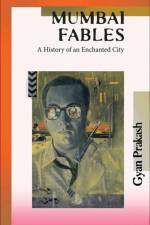
A place of spectacle and ruin, Mumbai exemplifies the cosmopolitan metropolis. It is not just a big city but also a soaring vision of modern urban life. Millions from India and beyond, of different ethnicities, languages, and religions, have washed up on its shores, bringing with them their desires and ambitions. Mumbai Fables explores the mythic inner life of this legendary city as seen by its inhabitants, journalists, planners, writers, artists, filmmakers, and political activists. In this remarkable cultural history of one of the world's most important urban centers, Gyan Prakash unearths the stories behind its fabulous history, viewing Mumbai through its turning points and kaleidoscopic ideas, comic book heroes, and famous scandals--the history behind Mumbai's stories of opportunity and oppression, of fabulous wealth and grinding poverty, of cosmopolitan desires and nativist energies. Starting from the catastrophic floods and terrorist attacks of recent years, Prakash reaches back to the sixteenth-century Portuguese conquest to reveal the stories behind Mumbai's historic journey. Examining Mumbai's role as a symbol of opportunity and reinvention, he looks at its nineteenth-century development under British rule and its twentieth-century emergence as a fabled city on the sea. Different layers of urban experience come to light as he recounts the narratives of the Nanavati murder trial and the rise and fall of the tabloid Blitz, and Mumbai's transformation from the red city of trade unions and communists into the saffron city of Hindu nationalist Shiv Sena. Starry-eyed planners and elite visionaries, cynical leaders and violent politicians of the street, land sharks and underworld dons jostle with ordinary citizens and poor immigrants as the city copes with the dashed dreams of postcolonial urban life and lurches into the seductions of globalization. Shedding light on the city's past and present, Mumbai Fables offers an unparalleled look at this extraordinary metropolis.
Presented here in a new translation, with a historical introduction by the translators, Fear and Trembling and Repetition are the most poetic and personal of Soren Kierkegaard's pseudonymous writings. Published in 1843 and written under the names Johannes de Silentio and Constantine Constantius, respectively, the books demonstrate Kierkegaard's transmutation of the personal into the lyrically religious. Each work uses as a point of departure Kierkegaard's breaking of his engagement to Regine Olsen--his sacrifice of "e;that single individual."e; From this beginning Fear and Trembling becomes an exploration of the faith that transcends the ethical, as in Abraham's willingness to sacrifice his son Isaac at God's command. This faith, which persists in the face of the absurd, is rewarded finally by the return of all that the faithful one is willing to sacrifice. Repetition discusses the most profound implications of unity of personhood and of identity within change, beginning with the ironic story of a young poet who cannot fulfill the ethical claims of his engagement because of the possible consequences of his marriage. The poet finally despairs of repetition (renewal) in the ethical sphere, as does his advisor and friend Constantius in the aesthetic sphere. The book ends with Constantius' intimation of a third kind of repetition--in the religious sphere.
Soren Kierkegaard, the nineteenth-century Danish philosopher rediscovered in the twentieth century, is a major influence in contemporary philosophy, religion, and literature. He regarded Either/Or as the beginning of his authorship, although he had published two earlier works on Hans Christian Andersen and irony. The pseudonymous volumes of Either/Or are the writings of a young man (I) and of Judge William (II). The ironical young man's papers include a collection of sardonic aphorisms; essays on Mozart, modern drama, and boredom; and "e;The Seducer's Diary."e; The seeming miscellany is a reflective presentation of aspects of the "e;either,"e; the esthetic view of life. Part II is an older friend's "e;or,"e; the ethical life of integrated, authentic personhood, elaborated in discussions of personal becoming and of marriage. The resolution of the "e;either/or"e; is left to the reader, for there is no Part III until the appearance of Stages on Life's Way. The poetic-reflective creations of a master stylist and imaginative impersonator, the two men write in distinctive ways appropriate to their respective positions.
Abonner på vårt nyhetsbrev og få rabatter og inspirasjon til din neste leseopplevelse.
Ved å abonnere godtar du vår personvernerklæring.