



















Gjør som tusenvis av andre bokelskere
Abonner på vårt nyhetsbrev og få rabatter og inspirasjon til din neste leseopplevelse.
Ved å abonnere godtar du vår personvernerklæring.Du kan når som helst melde deg av våre nyhetsbrev.

The first collection of popular reviews and essays from distinguished philosopher Bernard WilliamsBernard Williams was one of the most important philosophers of the past fifty years, but he was also a distinguished critic and essayist with an elegant style and a rare ability to communicate complex ideas to a wide public. This is the first collection of Williams's popular essays and reviews. Williams writes about a broad range of subjects, from philosophy to science, the humanities, economics, feminism, and pornography.Included are reviews of major books such as John Rawls's Theory of Justice, Richard Rorty's Consequences of Pragmatism, and Martha Nussbaum's Therapy of Desire. But many of these essays extend beyond philosophy, providing an intellectual tour through the past half century, from C. S. Lewis to Noam Chomsky. No matter the subject, readers see a first-class mind grappling with landmark books in "e;real time,"e; before critical consensus had formed and ossified.
Hard Line traces the history of Republican Party foreign policy since World War II by focusing on the conservative leaders who shaped it. Colin Dueck closely examines the political careers and foreign-policy legacies of Robert Taft, Dwight Eisenhower, Barry Goldwater, Richard Nixon, Henry Kissinger, Ronald Reagan, George H. W. Bush, and George W. Bush. He shows how Republicans shifted away from isolationism in the years leading up to World War II and oscillated between realism and idealism during and after the cold war. Yet despite these changes, Dueck argues, conservative foreign policy has been characterized by a hawkish and intense American nationalism, and presidential leadership has been the driving force behind it. What does the future hold for Republican foreign policy? Hard Line demonstrates that the answer depends on who becomes the next Republican president. Dueck challenges the popular notion that Republican foreign policy today is beholden to economic interests or neoconservative intellectuals. He shows how Republican presidents have been granted remarkably wide leeway to define their party's foreign policy in the past, and how the future of conservative foreign policy will depend on whether the next Republican president exercises the prudence, pragmatism, and care needed to implement hawkish foreign policies skillfully and successfully. Hard Line reveals how most Republican presidents since World War II have done just that, and how their accomplishments can help guide future conservative presidents.
Organized crime is spreading like a global virus as mobs take advantage of open borders to establish local franchises at will. That at least is the fear, inspired by stories of Russian mobsters in New York, Chinese triads in London, and Italian mafias throughout the West. As Federico Varese explains in this compelling and daring book, the truth is more complicated. Varese has spent years researching mafia groups in Italy, Russia, the United States, and China, and argues that mafiosi often find themselves abroad against their will, rather than through a strategic plan to colonize new territories. Once there, they do not always succeed in establishing themselves. Varese spells out the conditions that lead to their long-term success, namely sudden market expansion that is neither exploited by local rivals nor blocked by authorities. Ultimately the inability of the state to govern economic transformations gives mafias their opportunity. In a series of matched comparisons, Varese charts the attempts of the Calabrese 'Ndrangheta to move to the north of Italy, and shows how the Sicilian mafia expanded to early twentieth-century New York, but failed around the same time to find a niche in Argentina. He explains why the Russian mafia failed to penetrate Rome but succeeded in Hungary. In a pioneering chapter on China, he examines the challenges that triads from Taiwan and Hong Kong find in branching out to the mainland. Based on ground-breaking field work and filled with dramatic stories, this book is both a compelling read and a sober assessment of the risks posed by globalization and immigration for the spread of mafias.
A distinctive feature of the conflict in Northern Ireland over the past forty years has been the way Catholic and Protestant paramilitaries have policed their own communities. This has mainly involved the violent punishment of petty criminals involved in joyriding and other types of antisocial behavior. Between 1973 and 2007, more than 5,000 nonmilitary shootings and assaults were attributed to paramilitaries punishing their own people. But despite the risk of severe punishment, young petty offenders--known locally as "e;hoods"e;--continue to offend, creating a puzzle for the rational theory of criminal deterrence. Why do hoods behave in ways that invite violent punishment? In The Hoods, Heather Hamill explains why this informal system of policing and punishment developed and endured and why such harsh punishments as beatings, "e;kneecappings,"e; and exile have not stopped hoods from offending. Drawing on a variety of sources, including interviews with perpetrators and victims of this violence, the book argues that the hoods' risky offending may amount to a game in which hoods gain prestige by displaying hard-to-fake signals of toughness to each other. Violent physical punishment feeds into this signaling game, increasing the hoods' status by proving that they have committed serious offenses and can "e;manfully"e; take punishment yet remained undeterred. A rare combination of frontline research and pioneering ideas, The Hoods has important implications for our fundamental understanding of crime and punishment.
In the Indian outsourcing industry, employees are expected to be "e;dead ringers"e; for the more expensive American workers they have replaced--complete with Westernized names, accents, habits, and lifestyles that are organized around a foreign culture in a distant time zone. Dead Ringers chronicles the rise of a workforce for whom mimicry is a job requirement and a passion. In the process, the book deftly explores the complications of hybrid lives and presents a vivid portrait of a workplace where globalization carries as many downsides as advantages. Shehzad Nadeem writes that the relatively high wages in the outsourcing sector have empowered a class of cultural emulators. These young Indians indulge in American-style shopping binges at glittering malls, party at upscale nightclubs, and arrange romantic trysts at exurban cafes. But while the high-tech outsourcing industry is a matter of considerable pride for India, global corporations view the industry as a low-cost, often low-skill sector. Workers use the digital tools of the information economy not to complete technologically innovative tasks but to perform grunt work and rote customer service. Long hours and the graveyard shift lead to health problems and social estrangement. Surveillance is tight, management is overweening, and workers are caught in a cycle of hope and disappointment. Through lively ethnographic detail and subtle analysis of interviews with workers, managers, and employers, Nadeem demonstrates the culturally transformative power of globalization and its effects on the lives of the individuals at its edges.
Max Weber, widely considered a founder of sociology and the modern social sciences, visited the United States in 1904 with his wife Marianne. The trip was a turning point in Weber's life and it played a pivotal role in shaping his ideas, yet until now virtually our only source of information about the trip was Marianne Weber's faithful but not always reliable 1926 biography of her husband.Max Weber in America carefully reconstructs this important episode in Weber's career, and shows how the subsequent critical reception of Weber's work was as American a story as the trip itself. Lawrence Scaff provides new details about Weber's visit to the United States--what he did, what he saw, whom he met and why, and how these experiences profoundly influenced Weber's thought on immigration, capitalism, science and culture, Romanticism, race, diversity, Protestantism, and modernity. Scaff traces Weber's impact on the development of the social sciences in the United States following his death in 1920, examining how Weber's ideas were interpreted, translated, and disseminated by American scholars such as Talcott Parsons and Frank Knight, and how the Weberian canon, codified in America, was reintroduced into Europe after World War II. A landmark work by a leading Weber scholar, Max Weber in America will fundamentally transform our understanding of this influential thinker and his place in the history of sociology and the social sciences.
A groundbreaking account of how religion made society possibleHow did human societies scale up from tight-knit groups of hunter-gatherers to the large, anonymous, cooperative societies of today-even though anonymity is the enemy of cooperation? How did organized religions with "e;Big Gods"e;-the great monotheistic and polytheistic faiths-spread to colonize most minds in the world? In Big Gods, Ara Norenzayan makes the surprising argument that these fundamental puzzles about the origins of civilization answer each other.Sincere faith in watchful Big Gods unleashed unprecedented cooperation within ever-expanding groups, yet at the same time it introduced a new source of potential conflict between competing groups. And in some parts of the world, societies with atheist majorities-some of the most cooperative and prosperous in the world-have climbed religion's ladder, and then kicked it away.Big Gods answers fundamental questions about the origins and spread of world religions and helps us understand the rise of cooperative societies without belief in gods.
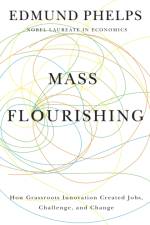
In this book, Nobel Prize-winning economist Edmund Phelps draws on a lifetime of thinking to make a sweeping new argument about what makes nations prosper--and why the sources of that prosperity are under threat today. Why did prosperity explode in some nations between the 1820s and 1960s, creating not just unprecedented material wealth but "e;flourishing"e;--meaningful work, self-expression, and personal growth for more people than ever before? Phelps makes the case that the wellspring of this flourishing was modern values such as the desire to create, explore, and meet challenges. These values fueled the grassroots dynamism that was necessary for widespread, indigenous innovation. Most innovation wasn't driven by a few isolated visionaries like Henry Ford and Steve Jobs; rather, it was driven by millions of people empowered to think of, develop, and market innumerable new products and processes, and improvements to existing ones. Mass flourishing--a combination of material well-being and the "e;good life"e; in a broader sense--was created by this mass innovation. Yet indigenous innovation and flourishing weakened decades ago. In America, evidence indicates that innovation and job satisfaction have decreased since the late 1960s, while postwar Europe has never recaptured its former dynamism. The reason, Phelps argues, is that the modern values underlying the modern economy are under threat by a resurgence of traditional, corporatist values that put the community and state over the individual. The ultimate fate of modern values is now the most pressing question for the West: will Western nations recommit themselves to modernity, grassroots dynamism, indigenous innovation, and widespread personal fulfillment, or will we go on with a narrowed innovation that limits flourishing to a few? A book of immense practical and intellectual importance, Mass Flourishing is essential reading for anyone who cares about the sources of prosperity and the future of the West.
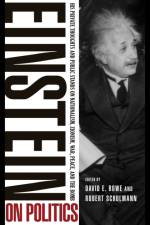
The most famous scientist of the twentieth century, Albert Einstein was also one of the century's most outspoken political activists. Deeply engaged with the events of his tumultuous times, from the two world wars and the Holocaust, to the atomic bomb and the Cold War, to the effort to establish a Jewish homeland, Einstein was a remarkably prolific political writer, someone who took courageous and often unpopular stands against nationalism, militarism, anti-Semitism, racism, and McCarthyism. In Einstein on Politics, leading Einstein scholars David Rowe and Robert Schulmann gather Einstein's most important public and private political writings and put them into historical context. The book reveals a little-known Einstein--not the ineffectual and naive idealist of popular imagination, but a principled, shrewd pragmatist whose stands on political issues reflected the depth of his humanity.Nothing encapsulates Einstein's profound involvement in twentieth-century politics like the atomic bomb. Here we read the former militant pacifist's 1939 letter to President Franklin D. Roosevelt warning that Germany might try to develop an atomic bomb. But the book also documents how Einstein tried to explain this action to Japanese pacifists after the United States used atomic weapons to destroy Hiroshima and Nagasaki, events that spurred Einstein to call for international control of nuclear technology.A vivid firsthand view of how one of the twentieth century's greatest minds responded to the greatest political challenges of his day, Einstein on Politics will forever change our picture of Einstein's public activism and private motivations.
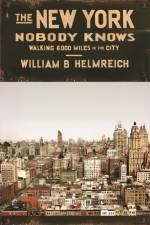
An intimate portrait of the Big AppleAs a child growing up in Manhattan, William Helmreich played a game with his father called "e;Last Stop."e; They would pick a subway line, ride it to its final destination, and explore the neighborhood. Decades later, his love for exploring the city is as strong as ever.Putting his feet to the test, he decided that the only way to truly understand New York was to walk virtually every block of all five boroughs-an astonishing 6,000 miles. His journey took him to every corner of Manhattan, Brooklyn, Queens, the Bronx, and Staten Island. Helmreich spoke with hundreds of New Yorkers from every part of the globe and all walks of life. He finds that to be a New Yorker is to struggle to understand the place and to make a life that is as highly local as it is dynamically cosmopolitan.Truly unforgettable, The New York Nobody Knows will forever change how you view the world's greatest city.
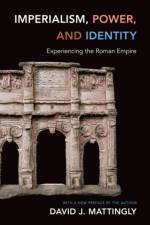
Despite what history has taught us about imperialism's destructive effects on colonial societies, many classicists continue to emphasize disproportionately the civilizing and assimilative nature of the Roman Empire and to hold a generally favorable view of Rome's impact on its subject peoples. Imperialism, Power, and Identity boldly challenges this view using insights from postcolonial studies of modern empires to offer a more nuanced understanding of Roman imperialism. Rejecting outdated notions about Romanization, David Mattingly focuses instead on the concept of identity to reveal a Roman society made up of far-flung populations whose experience of empire varied enormously. He examines the nature of power in Rome and the means by which the Roman state exploited the natural, mercantile, and human resources within its frontiers. Mattingly draws on his own archaeological work in Britain, Jordan, and North Africa and covers a broad range of topics, including sexual relations and violence; census-taking and taxation; mining and pollution; land and labor; and art and iconography. He shows how the lives of those under Rome's dominion were challenged, enhanced, or destroyed by the empire's power, and in doing so he redefines the meaning and significance of Rome in today's debates about globalization, power, and empire. Imperialism, Power, and Identity advances a new agenda for classical studies, one that views Roman rule from the perspective of the ruled and not just the rulers. In a new preface, Mattingly reflects on some of the reactions prompted by the initial publication of the book.
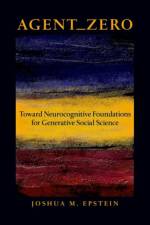
The Final Volume of the Groundbreaking Trilogy on Agent-Based ModelingIn this pioneering synthesis, Joshua Epstein introduces a new theoretical entity: Agent_Zero. This software individual, or "e;agent,"e; is endowed with distinct emotional/affective, cognitive/deliberative, and social modules. Grounded in contemporary neuroscience, these internal components interact to generate observed, often far-from-rational, individual behavior. When multiple agents of this new type move and interact spatially, they collectively generate an astonishing range of dynamics spanning the fields of social conflict, psychology, public health, law, network science, and economics.Epstein weaves a computational tapestry with threads from Plato, Hume, Darwin, Pavlov, Smith, Tolstoy, Marx, James, and Dostoevsky, among others. This transformative synthesis of social philosophy, cognitive neuroscience, and agent-based modeling will fascinate scholars and students of every stripe. Epstein's computer programs are provided in the book or on its Princeton University Press website, along with movies of his "e;computational parables.?Agent_Zero is a signal departure in what it includes (e.g., a new synthesis of neurally grounded internal modules), what it eschews (e.g., standard behavioral imitation), the phenomena it generates (from genocide to financial panic), and the modeling arsenal it offers the scientific community. For generative social science, Agent_Zero presents a groundbreaking vision and the tools to realize it.
Cities shape the lives and outlooks of billions of people, yet they have been overshadowed in contemporary political thought by nation-states, identity groups, and concepts like justice and freedom. The Spirit of Cities revives the classical idea that a city expresses its own distinctive ethos or values. In the ancient world, Athens was synonymous with democracy and Sparta represented military discipline. In this original and engaging book, Daniel Bell and Avner de-Shalit explore how this classical idea can be applied to today's cities, and they explain why philosophy and the social sciences need to rediscover the spirit of cities.Bell and de-Shalit look at nine modern cities and the prevailing ethos that distinguishes each one. The cities are Jerusalem (religion), Montreal (language), Singapore (nation building), Hong Kong (materialism), Beijing (political power), Oxford (learning), Berlin (tolerance and intolerance), Paris (romance), and New York (ambition). Bell and de-Shalit draw upon the richly varied histories of each city, as well as novels, poems, biographies, tourist guides, architectural landmarks, and the authors' own personal reflections and insights. They show how the ethos of each city is expressed in political, cultural, and economic life, and also how pride in a city's ethos can oppose the homogenizing tendencies of globalization and curb the excesses of nationalism.The Spirit of Cities is unreservedly impressionistic. Combining strolling and storytelling with cutting-edge theory, the book encourages debate and opens up new avenues of inquiry in philosophy and the social sciences. It is a must-read for lovers of cities everywhere. In a new preface, Bell and de-Shalit further develop their idea of "e;civicism,"e; the pride city dwellers feel for their city and its ethos over that of others.
This textbook offers a concise introduction to the exciting field of developmental neuroscience, a discipline concerned with the mechanisms by which complex nervous systems emerge during embryonic growth. Bridging the divide between basic and clinical research, it captures the extraordinary progress that has been achieved in the field. It provides an opportunity for students to apply and extend what they have learned in their introductory biology courses while also directing them to the primary literature. This accessible textbook is unique in that it takes an in-depth look at a small number of key model systems and signaling pathways. The book's chapters logically follow the sequence of human brain development and explain how information obtained from models such as Drosophila and zebrafish addresses topics relevant to this area. Beginning with a brief presentation of methods for studying neural development, the book provides an overview of human development, followed by an introduction to animal models. Subsequent chapters consider the molecular mechanisms of selected earlier and later events, neurogenesis, and formation of synapses. Glial cells and postembryonic maturation of the nervous system round out later chapters. The book concludes by discussing the brain basis of human intellectual disabilities viewed from a developmental perspective. Focusing on the mechanistic and functional, this textbook will be invaluable to biology majors, neuroscience students, and premedical and pre-health-professions students. An accessible introduction to nervous system development Suitable for one-semester developmental neuroscience course Thorough review of key model systems Selective coverage of topics allows professors to personalize courses Investigative reading exercises at the end of each chapter An online illustration package is available to professors
This concise, sophisticated introduction to planetary climates explains the global physical and chemical processes that determine climate on any planet or major planetary satellite--from Mercury to Neptune and even large moons such as Saturn's Titan. Although the climates of other worlds are extremely diverse, the chemical and physical processes that shape their dynamics are the same. As this book makes clear, the better we can understand how various planetary climates formed and evolved, the better we can understand Earth's climate history and future.
This completely revised and updated graduate-level textbook is an ideal introduction to gauge theories and their applications to high-energy particle physics, and takes an in-depth look at two new laws of nature--quantum chromodynamics and the electroweak theory. From quantum electrodynamics through unified theories of the interactions among leptons and quarks, Chris Quigg examines the logic and structure behind gauge theories and the experimental underpinnings of today's theories. Quigg emphasizes how we know what we know, and in the era of the Large Hadron Collider, his insightful survey of the standard model and the next great questions for particle physics makes for compelling reading. The brand-new edition shows how the electroweak theory developed in conversation with experiment. Featuring a wide-ranging treatment of electroweak symmetry breaking, the physics of the Higgs boson, and the importance of the 1-TeV scale, the book moves beyond established knowledge and investigates the path toward unified theories of strong, weak, and electromagnetic interactions. Explicit calculations and diverse exercises allow readers to derive the consequences of these theories. Extensive annotated bibliographies accompany each chapter, amplify points of conceptual or technical interest, introduce further applications, and lead readers to the research literature. Students and seasoned practitioners will profit from the text's current insights, and specialists wishing to understand gauge theories will find the book an ideal reference for self-study. Brand-new edition of a landmark text introducing gauge theories Consistent attention to how we know what we know Explicit calculations develop concepts and engage with experiment Interesting and diverse problems sharpen skills and ideas Extensive annotated bibliographies
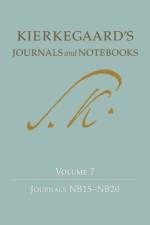
For over a century, the Danish thinker Soren Kierkegaard (1813-55) has been at the center of a number of important discussions, concerning not only philosophy and theology, but also, more recently, fields such as social thought, psychology, and contemporary aesthetics, especially literary theory. Despite his relatively short life, Kierkegaard was an extraordinarily prolific writer, as attested to by the 26-volume Princeton University Press edition of all of his published writings. But Kierkegaard left behind nearly as much unpublished writing, most of which consists of what are called his "e;journals and notebooks."e; Kierkegaard has long been recognized as one of history's great journal keepers, but only rather small portions of his journals and notebooks are what we usually understand by the term "e;diaries."e; By far the greater part of Kierkegaard's journals and notebooks consists of reflections on a myriad of subjects--philosophical, religious, political, personal. Studying his journals and notebooks takes us into his workshop, where we can see his entire universe of thought. We can witness the genesis of his published works, to be sure--but we can also see whole galaxies of concepts, new insights, and fragments, large and small, of partially (or almost entirely) completed but unpublished works. Kierkegaard's Journals and Notebooks enables us to see the thinker in dialogue with his times and with himself. Volume 7 of this 11-volume series includes six of Kierkegaard's important "e;NB"e; journals (Journals NB15 through NB20), covering the months from early January 1850 to mid-September of that year. By this time it had become clear that popular sovereignty, ushered in by the revolution of 1848 and ratified by the Danish constitution of 1849, had come to stay, and Kierkegaard now intensified his criticism of the notion that everything, even matters involving the human soul, could be decided by "e;balloting."e; He also continued to direct his barbs at the established Danish Church and its clergy (particularly Bishop J. P. Mynster and Professor H. L. Martensen), at the press, and at the attempt by modern philosophy to comprehend the incomprehensibility of faith. Kierkegaard's reading notes include entries on Augustine, the Stoics, German mystics, Luther, pietist authors, and Rousseau, while his autobiographical reflections circle around the question of which, if any, of several essays explaining his life and works he ought to publish. Perhaps unsurprisingly, Kierkegaard's more personal reflections return once again to his public feud with M. A. Goldschmidt and his broken engagement to Regine Olsen. Kierkegaard wrote his journals in a two-column format, one for his initial entries and the second for the extensive marginal comments that he added later. This edition of the journals reproduces this format, includes several photographs of original manuscript pages, and contains extensive scholarly commentary on the various entries and on the history of the manuscripts being reproduced.
This book charts how the cartographies of American literature as an institutional category have varied radically across different times and places. Arguing that American literature was consolidated as a distinctively nationalist entity only in the wake of the U.S. Civil War, Paul Giles identifies this formation as extending until the beginning of the Reagan presidency in 1981. He contrasts this with the more amorphous boundaries of American culture in the eighteenth century, and with ways in which conditions of globalization at the turn of the twenty-first century have reconfigured the parameters of the subject. In light of these fluctuating conceptions of space, Giles suggests new ways of understanding the shifting territory of American literary history. ranging from Cotton Mather to David Foster Wallace, and from Henry Wadsworth Longfellow to Zora Neale Hurston. Giles considers why European medievalism and Native American prehistory were crucial to classic nineteenth-century authors such as Emerson, Hawthorne, and Melville. He discusses how twentieth-century technological innovations, such as air travel, affected representations of the national domain in the texts of F. Scott Fitzgerald and Gertrude Stein. And he analyzes how regional projections of the South and the Pacific Northwest helped to shape the work of writers such as William Gilmore Simms, Jose Marti, Elizabeth Bishop, and William Gibson. Bringing together literary analysis, political history, and cultural geography, The Global Remapping of American Literature reorients the subject for the transnational era.
A common set of mathematical tools underlies dynamic optimization, dynamic estimation, and filtering. In Recursive Models of Dynamic Linear Economies, Lars Peter Hansen and Thomas Sargent use these tools to create a class of econometrically tractable models of prices and quantities. They present examples from microeconomics, macroeconomics, and asset pricing. The models are cast in terms of a representative consumer. While Hansen and Sargent demonstrate the analytical benefits acquired when an analysis with a representative consumer is possible, they also characterize the restrictiveness of assumptions under which a representative household justifies a purely aggregative analysis.Hansen and Sargent unite economic theory with a workable econometrics while going beyond and beneath demand and supply curves for dynamic economies. They construct and apply competitive equilibria for a class of linear-quadratic-Gaussian dynamic economies with complete markets. Their book, based on the 2012 Gorman lectures, stresses heterogeneity, aggregation, and how a common structure unites what superficially appear to be diverse applications. An appendix describes MATLAB programs that apply to the book's calculations.
In a postcolonial world, where structures of power, hierarchy, and domination operate on a global scale, writers face an ethical and aesthetic dilemma: How to write without contributing to the inscription of inequality? How to process the colonial past without reverting to a pathology of self-disgust? Can literature ever be free of the shame of the postcolonial epoch--ever be truly postcolonial? As disparities of power seem only to be increasing, such questions are more urgent than ever. In this book, Timothy Bewes argues that shame is a dominant temperament in twentieth-century literature, and the key to understanding the ethics and aesthetics of the contemporary world. Drawing on thinkers such as Jean-Paul Sartre, Frantz Fanon, Theodor Adorno, and Gilles Deleuze, Bewes argues that in literature there is an "e;event"e; of shame that brings together these ethical and aesthetic tensions. Reading works by J. M. Coetzee, Joseph Conrad, Nadine Gordimer, V. S. Naipaul, Caryl Phillips, Ngugi wa Thiong'o, and Zoe Wicomb, Bewes presents a startling theory: the practices of postcolonial literature depend upon and repeat the same structures of thought and perception that made colonialism possible in the first place. As long as those structures remain in place, literature and critical thinking will remain steeped in shame. Offering a new mode of postcolonial reading, The Event of Postcolonial Shame demands a literature and a criticism that acknowledge their own ethical deficiency without seeking absolution from it.
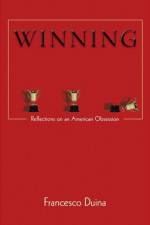
Most of us are taught from a young age to be winners and avoid being losers. But what does it mean to win or lose? And why do we care so much? Does winning make us happy? Winning undertakes an unprecedented investigation of winning and losing in American society, what we are really after as we struggle to win, our collective beliefs about winners and losers, and much more. Francesco Duina argues that victory and loss are not endpoints or final destinations but gateways to something of immense importance to us: the affirmation of our place in the world. But Duina also shows that competition is unlikely to provide us with the answers we need. Winning and losing are artificial and logically flawed concepts that put us at odds with the world around us and, ultimately, ourselves. Duina explores the social and psychological effects of the language of competition in American culture. Primarily concerned with our shared obsessions about winning and losing, Winning proposes a new mind-set for how we can pursue our dreams, and, in a more satisfying way, find our proper place in the world.
Modesty, humor, compassion, and wisdom are the traits most evident in this illuminating selection of personal papers from the Albert Einstein Archives. The illustrious physicist wrote as thoughtfully to an Ohio fifth-grader, distressed by her discovery that scientists classify humans as animals, as to a Colorado banker who asked whether Einstein believed in a personal God. Witty rhymes, an exchange with Queen Elizabeth of Belgium about fine music, and expressions of his devotion to Zionism are but some of the highlights found in this warm and enriching book.
Art today is defined by its relationship to money as never before. Prices have been driven to unprecedented heights, conventional boundaries within the art world have collapsed, and artists think ever more strategically about how to advance their careers. Art is no longer simply made, but packaged, sold, and branded. In Art of the Deal, Noah Horowitz exposes the inner workings of the contemporary art market, explaining how this unique economy came to be, how it works, and where it's headed.In a new postscript, Horowitz reflects on the evolution of the trade since the book's original release in 2011, shining light on the market's continued ascent as well as its most urgent challenges.
Isaiah Berlin's intellectual biography of Karl Marx has long been recognized as one of the best concise accounts of the life and thought of the man who had, in Berlin's words, a more "e;direct, deliberate, and powerful"e; influence on mankind than any other nineteenth-century thinker. A brilliantly lucid work of synthesis and exposition, the book introduces Marx's ideas and sets them in their context, explains why they were revolutionary in political and intellectual terms, and paints a memorable portrait of Marx's dramatic life and outsized personality. Berlin takes readers through Marx's years of adolescent rebellion and post-university communist agitation, the personal high point of the 1848 revolutions, and his later years of exile, political frustration, and intellectual effort. Critical yet sympathetic, Berlin's account illuminates a life without reproducing a legend. New features of this thoroughly revised edition include references for Berlin's quotations and allusions, Terrell Carver's assessment of the distinctiveness of Berlin's book, and a revised guide to further reading.
The first comprehensive illustrated guide to North America's vagrant birdsRare Birds of North America is the first comprehensive illustrated guide to the vagrant birds that occur throughout the United States and Canada. Featuring 275 stunning color plates, this book covers 262 species originating from three very different regions-the Old World, the New World tropics, and the world's oceans. It explains the causes of avian vagrancy and breaks down patterns of occurrence by region and season, enabling readers to see where, when, and why each species occurs in North America. Detailed species accounts describe key identification features, taxonomy, age, sex, distribution, and status.Rare Birds of North America provides unparalleled insights into vagrancy and avian migration, and will enrich the birding experience of anyone interested in finding and observing rare birds.Covers 262 species of vagrant birds found in the United States and CanadaFeatures 275 stunning color plates that depict every speciesExplains patterns of occurrence by region and seasonProvides an invaluable overview of vagrancy patterns and migrationIncludes detailed species accounts and cutting-edge identification tips
What painting can teach us-if we can really learn to see themWhat happens when we look at a painting? What do we think about? What do we imagine? How can we explain, even to ourselves, what we see or think we see? And how can art historians interpret with any seriousness what they observe? In six engaging, short narrative "e;fictions,"e; each richly illustrated in color, Daniel Arasse, one of the most brilliant art historians of our time, cleverly and gracefully guides readers through a variety of adventures in seeing, from Velazquez to Titian, Bruegel to Tintoretto.By demonstrating that we don't really see what these paintings are trying to show us, Arasse makes it clear that we need to take a closer look. In chapters that each have a different form, including a letter, an interview, and an animated conversation with a colleague, the book explores how these pictures teach us about ways of seeing across the centuries. In the process, Arasse freshly lays bare the dazzling power of painting. Fast-paced and full of humor as well as insight, this is a book for anyone who cares about really looking at, seeing, and understanding paintings.
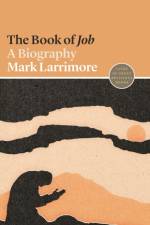
The life and times of this iconic and enduring biblical bookThe Book of Job raises stark questions about the nature and meaning of innocent suffering and the relationship of the human to the divine, yet it is also one of the Bible's most obscure and paradoxical books, one that defies interpretation even today. Mark Larrimore provides a panoramic history of this remarkable book, traversing centuries and traditions to examine how Job's trials and his challenge to God have been used and understood in diverse contexts, from commentary and liturgy to philosophy and art.Larrimore traces Job's obscure origins and his reception and use in the Midrash, burial liturgies, and folklore, and by figures such as Gregory the Great, Maimonides, John Calvin, Immanuel Kant, William Blake, Margarete Susman, and Elie Wiesel. He chronicles the many ways the Book of Job's interpreters have linked it to other biblical texts; to legends, allegory, and negative and positive theologies; as well as to their own individual and collective experiences. Larrimore revives old questions and provides illuminating new contexts for contemporary ones. Was Job a Jew or a gentile? Was his story history or fable? What is meant by the "e;patience of Job,"e; and does Job exhibit it? Why does God speak yet not engage Job's questions?Offering rare insights into this iconic and enduring book, Larrimore reveals how Job has come to be viewed as the Bible's answer to the problem of evil and the perennial question of why a God who supposedly loves justice permits bad things to happen to good people.
The "e;memorable"e; (Stephanie Burt, Yale Review) and "e;impressive"e; (Chicago Tribune) debut from a remarkable new voice in poetryAlmanac is a collection of lyrical and narrative poems that celebrate, and mourn the passing of, the world of the small family farm. But while the poems are all involved in some way with the rural Midwest, particularly with the people and land of the northwestern Illinois dairy farm where Austin Smith was born and raised, they are anything but merely regional. As the poems reflect on farm life, they open out to speak about childhood and death, the loss of tradition, the destruction of the natural world, and the severing of connections between people and the land.This collection also reflects on a long poetic apprenticeship. Smith's father is a poet himself, and Almanac is in part a meditation about the responsibility of the poet, especially the young poet, when it falls to him to speak for what is vanishing. To quote another Illinois poet, Thomas James, Smith has attempted in this book to write poems "e;clear as the glass of wine / on [his] father's table every Christmas Eve."e; By turns exhilarating and disquieting, this is a remarkable debut from a distinctive new voice in American poetry.From Almanac:THE MUMMY IN THE FREEPORT ART MUSEUMAustin SmithAmongst the masterpieces of the small-townPicassos and Van Goghs and photographsof the rural poor and busts of dead Greeksor the molds of busts donated by the ArtInstitute of Chicago to this dyingtown's little museum, there was a mummy,a real mummy, laid out in a dim-litroom by himself. I used to goto the museum just to visit him, a pharaohwho, expecting an afterlifeof beautiful virgins and infinite foodand all the riches and jewelshe'd enjoyed in earthly life,must have wondered how the hellhe'd ended up in Freeport, Illinois.And I used to go alone into that roomand stand beside his sarcophagus and say,"e;My friend, I've asked myself the same thing."e;
How The Book of Common Prayer became one of the most influential works in the English languageWhile many of us are familiar with such famous words as, "e;Dearly beloved, we are gathered together here. . ."e; or "e;Ashes to ashes, dust to dust,"e; we may not know that they originated with The Book of Common Prayer, which first appeared in 1549. Like the words of the King James Bible and Shakespeare, the language of this prayer book has saturated English culture and letters. Here Alan Jacobs tells its story. Jacobs shows how The Book of Common Prayer--from its beginnings as a means of social and political control in the England of Henry VIII to its worldwide presence today--became a venerable work whose cadences express the heart of religious life for many.The book's chief maker, Thomas Cranmer, Archbishop of Canterbury, created it as the authoritative manual of Christian worship throughout England. But as Jacobs recounts, the book has had a variable and dramatic career in the complicated history of English church politics, and has been the focus of celebrations, protests, and even jail terms. As time passed, new forms of the book were made to suit the many English-speaking nations: first in Scotland, then in the new United States, and eventually wherever the British Empire extended its arm. Over time, Cranmer's book was adapted for different preferences and purposes. Jacobs vividly demonstrates how one book became many--and how it has shaped the devotional lives of men and women across the globe.
Uneasy Alliances is a powerful challenge to how we think about the relationship between race, political parties, and American democracy. While scholars frequently claim that the need to win elections makes government officials responsive to any and all voters, Paul Frymer shows that not all groups are treated equally; politicians spend most of their time and resources on white swing voters--to the detriment of the African American community. As both parties try to attract white swing voters by distancing themselves from blacks, black voters are often ignored and left with unappealing alternatives. African Americans are thus the leading example of a "e;captured minority."e; Frymer argues that our two-party system bears much of the blame for this state of affairs. Often overlooked in current discussions of racial politics, the party system represents a genuine form of institutional racism. Frymer shows that this is no accident, for the party system was set up in part to keep African American concerns off the political agenda. Today, the party system continues to restrict the political opportunities of African American voters, as was shown most recently when Bill Clinton took pains to distance himself from African Americans in order to capture conservative votes and win the presidency. Frymer compares the position of black voters with other social groups--gays and lesbians and the Christian right, for example--who have recently found themselves similarly "e;captured."e; Rigorously argued and researched, Uneasy Alliances is a powerful challenge to how we think about the relationship between black voters, political parties, and American democracy. In a new afterword, Frymer examines the impact of Barack Obama's election on the delicate relationship between race and party politics in America.
Abonner på vårt nyhetsbrev og få rabatter og inspirasjon til din neste leseopplevelse.
Ved å abonnere godtar du vår personvernerklæring.