





















Gjør som tusenvis av andre bokelskere
Abonner på vårt nyhetsbrev og få rabatter og inspirasjon til din neste leseopplevelse.
Ved å abonnere godtar du vår personvernerklæring.Du kan når som helst melde deg av våre nyhetsbrev.

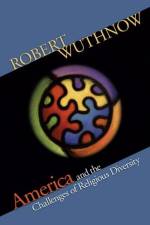
Muslims, Hindus, Buddhists, and adherents of other non-Western religions have become a significant presence in the United States in recent years. Yet many Americans continue to regard the United States as a Christian society. How are we adapting to the new diversity? Do we casually announce that we "e;respect"e; the faiths of non-Christians without understanding much about those faiths? Are we willing to do the hard work required to achieve genuine religious pluralism? Award-winning author Robert Wuthnow tackles these and other difficult questions surrounding religious diversity and does so with his characteristic rigor and style. America and the Challenges of Religious Diversity looks not only at how we have adapted to diversity in the past, but at the ways rank-and-file Americans, clergy, and other community leaders are responding today. Drawing from a new national survey and hundreds of in-depth qualitative interviews, this book is the first systematic effort to assess how well the nation is meeting the current challenges of religious and cultural diversity. The results, Wuthnow argues, are both encouraging and sobering--encouraging because most Americans do recognize the right of diverse groups to worship freely, but sobering because few Americans have bothered to learn much about religions other than their own or to engage in constructive interreligious dialogue. Wuthnow contends that responses to religious diversity are fundamentally deeper than polite discussions about civil liberties and tolerance would suggest. Rather, he writes, religious diversity strikes us at the very core of our personal and national theologies. Only by understanding this important dimension of our culture will we be able to move toward a more reflective approach to religious pluralism.
This book aims first to prove the local Langlands conjecture for GLn over a p-adic field and, second, to identify the action of the decomposition group at a prime of bad reduction on the l-adic cohomology of the "e;simple"e; Shimura varieties. These two problems go hand in hand. The results represent a major advance in algebraic number theory, finally proving the conjecture first proposed in Langlands's 1969 Washington lecture as a non-abelian generalization of local class field theory. The local Langlands conjecture for GLn(K), where K is a p-adic field, asserts the existence of a correspondence, with certain formal properties, relating n-dimensional representations of the Galois group of K with the representation theory of the locally compact group GLn(K). This book constructs a candidate for such a local Langlands correspondence on the vanishing cycles attached to the bad reduction over the integer ring of K of a certain family of Shimura varieties. And it proves that this is roughly compatible with the global Galois correspondence realized on the cohomology of the same Shimura varieties. The local Langlands conjecture is obtained as a corollary. Certain techniques developed in this book should extend to more general Shimura varieties, providing new instances of the local Langlands conjecture. Moreover, the geometry of the special fibers is strictly analogous to that of Shimura curves and can be expected to have applications to a variety of questions in number theory.
The Great Migration was the most significant event in black life since emancipation and Reconstruction. Passionately Human, No Less Divine analyzes the various ways black southerners transformed African American religion in Chicago during their Great Migration northward. A work of religious, urban, and social history, it is the first book-length analysis of the new religious practices and traditions in Chicago that were stimulated by migration and urbanization. The book illustrates how the migration launched a new sacred order among blacks in the city that reflected aspects of both Southern black religion and modern city life. This new sacred order was also largely female as African American women constituted more than 70 percent of the membership in most black Protestant churches. Ultimately, Wallace Best demonstrates how black southerners imparted a folk religious sensibility to Chicago's black churches. In doing so, they ironically recast conceptions of modern, urban African American religion in terms that signified the rural past. In the same way that working class cultural idioms such as jazz and the blues emerged in the secular arena as a means to represent black modernity, he says, African American religion in Chicago, with its negotiation between the past, the present, rural and urban, revealed African American religion in modern form.
The Reign of Terror continues to fascinate scholars as one of the bloodiest periods in French history, when the Committee of Public Safety strove to defend the first Republic from its many enemies, creating a climate of fear and suspicion in revolutionary France. R. R. Palmer's fascinating narrative follows the Committee's deputies individually and collectively, recounting and assessing their tumultuous struggles in Paris and their repressive missions in the provinces. A foreword by Isser Woloch explains why this book remains an enduring classic in French revolutionary studies.
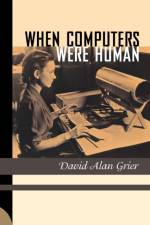
Before Palm Pilots and iPods, PCs and laptops, the term "e;computer"e; referred to the people who did scientific calculations by hand. These workers were neither calculating geniuses nor idiot savants but knowledgeable people who, in other circumstances, might have become scientists in their own right. When Computers Were Human represents the first in-depth account of this little-known, 200-year epoch in the history of science and technology. Beginning with the story of his own grandmother, who was trained as a human computer, David Alan Grier provides a poignant introduction to the wider world of women and men who did the hard computational labor of science. His grandmother's casual remark, "e;I wish I'd used my calculus,"e; hinted at a career deferred and an education forgotten, a secret life unappreciated; like many highly educated women of her generation, she studied to become a human computer because nothing else would offer her a place in the scientific world. The book begins with the return of Halley's comet in 1758 and the effort of three French astronomers to compute its orbit. It ends four cycles later, with a UNIVAC electronic computer projecting the 1986 orbit. In between, Grier tells us about the surveyors of the French Revolution, describes the calculating machines of Charles Babbage, and guides the reader through the Great Depression to marvel at the giant computing room of the Works Progress Administration. When Computers Were Human is the sad but lyrical story of workers who gladly did the hard labor of research calculation in the hope that they might be part of the scientific community. In the end, they were rewarded by a new electronic machine that took the place and the name of those who were, once, the computers.
This book proves an analogue of William Thurston's celebrated hyperbolic Dehn surgery theorem in the context of complex hyperbolic discrete groups, and then derives two main geometric consequences from it. The first is the construction of large numbers of closed real hyperbolic 3-manifolds which bound complex hyperbolic orbifolds--the only known examples of closed manifolds that simultaneously have these two kinds of geometric structures. The second is a complete understanding of the structure of complex hyperbolic reflection triangle groups in cases where the angle is small. In an accessible and straightforward manner, Richard Evan Schwartz also presents a large amount of useful information on complex hyperbolic geometry and discrete groups. Schwartz relies on elementary proofs and avoids quotations of preexisting technical material as much as possible. For this reason, this book will benefit graduate students seeking entry into this emerging area of research, as well as researchers in allied fields such as Kleinian groups and CR geometry.
In 1502, a decade of increasing tension between Muslims and Christians in Spain culminated in a royal decree that Muslims in Castile wanting to remain had to convert to Christianity. Mary Elizabeth Perry uses this event as the starting point for a remarkable exploration of how Moriscos, converted Muslims and their descendants, responded to their increasing disempowerment in sixteenth- and early-seventeenth-century Spain. Stepping beyond traditional histories that have emphasized armed conflict from the view of victors, The Handless Maiden focuses on Morisco women. Perry argues that these women's lives offer vital new insights on the experiences of Moriscos in general, and on how the politics of religion both empowers and oppresses. Drawing on archival documents, legends, and literature, Perry shows that the Moriscas carried out active resistance to cultural oppression through everyday rituals and acts. For example, they taught their children Arabic language and Islamic prayers, dietary practices, and the observation of Islamic holy days. Thus the home, not the battlefield, became the major forum for Morisco-Christian interaction. Moriscas' experiences further reveal how the Morisco presence provided a vital counter-identity for a centralizing state in early modern Spain. For readers of the twenty-first century, The Handless Maiden raises urgent questions of how we choose to use difference and historical memory.
Did America's fortieth president lead a conservative counterrevolution that left liberalism gasping for air? The answer, for both his admirers and his detractors, is often "e;yes."e; In Morning in America, Gil Troy argues that the Great Communicator was also the Great Conciliator. His pioneering and lively reassessment of Ronald Reagan's legacy takes us through the 1980s in ten year-by-year chapters, integrating the story of the Reagan presidency with stories of the decade's cultural icons and watershed moments-from personalities to popular television shows. One such watershed moment was the 1984 Los Angeles Olympics. With the trauma of Vietnam fading, the triumph of America's 1983 invasion of tiny Grenada still fresh, and a reviving economy, Americans geared up for a festival of international harmony that-spurred on by an entertainment-focused news media, corporate sponsors, and the President himself-became a celebration of the good old U.S.A. At the Games' opening, Reagan presided over a thousand-voice choir, a 750-member marching band, and a 90,000-strong teary-eyed audience singing "e;America the Beautiful!"e; while waving thousands of flags. Reagan emerges more as happy warrior than angry ideologue, as a big-picture man better at setting America's mood than implementing his program. With a vigorous Democratic opposition, Reagan's own affability, and other limiting factors, the eighties were less counterrevolutionary than many believe. Many sixties' innovations went mainstream, from civil rights to feminism. Reagan fostered a political culture centered on individualism and consumption-finding common ground between the right and the left. Written with verve, Morning in America is both a major new look at one of America's most influential modern-day presidents and the definitive story of a decade that continues to shape our times.
Principles of Laser Spectroscopy and Quantum Optics is an essential textbook for graduate students studying the interaction of optical fields with atoms. It also serves as an ideal reference text for researchers working in the fields of laser spectroscopy and quantum optics. The book provides a rigorous introduction to the prototypical problems of radiation fields interacting with two- and three-level atomic systems. It examines the interaction of radiation with both atomic vapors and condensed matter systems, the density matrix and the Bloch vector, and applications involving linear absorption and saturation spectroscopy. Other topics include hole burning, dark states, slow light, and coherent transient spectroscopy, as well as atom optics and atom interferometry. In the second half of the text, the authors consider applications in which the radiation field is quantized. Topics include spontaneous decay, optical pumping, sub-Doppler laser cooling, the Heisenberg equations of motion for atomic and field operators, and light scattering by atoms in both weak and strong external fields. The concluding chapter offers methods for creating entangled and spin-squeezed states of matter. Instructors can create a one-semester course based on this book by combining the introductory chapters with a selection of the more advanced material. A solutions manual is available to teachers. Rigorous introduction to the interaction of optical fields with atoms Applications include linear and nonlinear spectroscopy, dark states, and slow light Extensive chapter on atom optics and atom interferometry Conclusion explores entangled and spin-squeezed states of matter Solutions manual (available only to teachers)
Modular Forms and Special Cycles on Shimura Curves is a thorough study of the generating functions constructed from special cycles, both divisors and zero-cycles, on the arithmetic surface "e;M"e; attached to a Shimura curve "e;M"e; over the field of rational numbers. These generating functions are shown to be the q-expansions of modular forms and Siegel modular forms of genus two respectively, valued in the Gillet-Soule arithmetic Chow groups of "e;M"e;. The two types of generating functions are related via an arithmetic inner product formula. In addition, an analogue of the classical Siegel-Weil formula identifies the generating function for zero-cycles as the central derivative of a Siegel Eisenstein series. As an application, an arithmetic analogue of the Shimura-Waldspurger correspondence is constructed, carrying holomorphic cusp forms of weight 3/2 to classes in the Mordell-Weil group of "e;M"e;. In certain cases, the nonvanishing of this correspondence is related to the central derivative of the standard L-function for a modular form of weight 2. These results depend on a novel mixture of modular forms and arithmetic geometry and should provide a paradigm for further investigations. The proofs involve a wide range of techniques, including arithmetic intersection theory, the arithmetic adjunction formula, representation densities of quadratic forms, deformation theory of p-divisible groups, p-adic uniformization, the Weil representation, the local and global theta correspondence, and the doubling integral representation of L-functions.
This book presents a comprehensive overview of the sum rule approach to spectral analysis of orthogonal polynomials, which derives from Gabor Szego's classic 1915 theorem and its 1920 extension. Barry Simon emphasizes necessary and sufficient conditions, and provides mathematical background that until now has been available only in journals. Topics include background from the theory of meromorphic functions on hyperelliptic surfaces and the study of covering maps of the Riemann sphere with a finite number of slits removed. This allows for the first book-length treatment of orthogonal polynomials for measures supported on a finite number of intervals on the real line. In addition to the Szego and Killip-Simon theorems for orthogonal polynomials on the unit circle (OPUC) and orthogonal polynomials on the real line (OPRL), Simon covers Toda lattices, the moment problem, and Jacobi operators on the Bethe lattice. Recent work on applications of universality of the CD kernel to obtain detailed asymptotics on the fine structure of the zeros is also included. The book places special emphasis on OPRL, which makes it the essential companion volume to the author's earlier books on OPUC.
When a leaf falls on a windy day, it drifts and tumbles, tossed every which way on the breeze. This is chaos in action. In Fly Me to the Moon, Edward Belbruno shows how to harness the same principle for low-fuel space travel--or, as he puts it, "e;surfing the gravitational field."e; Belbruno devised one of the most exciting concepts now being used in space flight, that of swinging through the cosmos on the subtle fluctuations of the planets' gravitational pulls. His idea was met with skepticism until 1991, when he used it to get a stray Japanese satellite back on course to the Moon. The successful rescue represented the first application of chaos to space travel and ushered in an emerging new field. Part memoir, part scientific adventure story, Fly Me to the Moon gives a gripping insider's account of that mission and of Belbruno's personal struggles with the science establishment. Along the way, Belbruno introduces readers to recent breathtaking advances in American space exploration. He discusses ways to capture and redirect asteroids; presents new research on the origin of the Moon; weighs in on discoveries like 2003 UB313 (now named Eris), a dwarf planet detected in the far outer reaches of our solar system--and much more. Grounded in Belbruno's own rigorous theoretical research but written for a general audience, Fly Me to the Moon is for anybody who has ever felt moved by the spirit of discovery.
This book provides a solution to the ecological inference problem, which has plagued users of statistical methods for over seventy-five years: How can researchers reliably infer individual-level behavior from aggregate (ecological) data? In political science, this question arises when individual-level surveys are unavailable (for instance, local or comparative electoral politics), unreliable (racial politics), insufficient (political geography), or infeasible (political history). This ecological inference problem also confronts researchers in numerous areas of major significance in public policy, and other academic disciplines, ranging from epidemiology and marketing to sociology and quantitative history. Although many have attempted to make such cross-level inferences, scholars agree that all existing methods yield very inaccurate conclusions about the world. In this volume, Gary King lays out a unique--and reliable--solution to this venerable problem. King begins with a qualitative overview, readable even by those without a statistical background. He then unifies the apparently diverse findings in the methodological literature, so that only one aggregation problem remains to be solved. He then presents his solution, as well as empirical evaluations of the solution that include over 16,000 comparisons of his estimates from real aggregate data to the known individual-level answer. The method works in practice. King's solution to the ecological inference problem will enable empirical researchers to investigate substantive questions that have heretofore proved unanswerable, and move forward fields of inquiry in which progress has been stifled by this problem.
The Poetics of Eros in Ancient Greece offers the first comprehensive inquiry into the deity of sexual love, a power that permeated daily Greek life. Avoiding Foucault's philosophical paradigm of dominance/submission, Claude Calame uses an anthropological and linguistic approach to re-create indigenous categories of erotic love. He maintains that Eros, the joyful companion of Aphrodite, was a divine figure around which poets constructed a physiology of desire that functioned in specific ways within a network of social relations. Calame begins by showing how poetry and iconography gave a rich variety of expression to the concept of Eros, then delivers a history of the deity's roles within social and political institutions, and concludes with a discussion of an Eros-centered metaphysics. Calame's treatment of archaic and classical Greek institutions reveals Eros at work in initiation rites and celebrations, educational practices, the Dionysiac theater of tragedy and comedy, and in real and imagined spatial settings. For men, Eros functioned particularly in the symposium and the gymnasium, places where men and boys interacted and where future citizens were educated. The household was the setting where girls, brides, and adult wives learned their erotic roles--as such it provides the context for understanding female rites of passage and the problematics of sexuality in conjugal relations. Through analyses of both Greek language and practices, Calame offers a fresh, subtle reading of relations between individuals as well as a quick-paced and fascinating overview of Eros in Greek society at large.
Design pervades our lives. Everything from drafting a PowerPoint presentation to planning a state-of-the-art bridge embodies this universal human activity. But what makes a great design? In this compelling and wide-ranging look at the essence of invention, distinguished engineer and author Henry Petroski argues that, time and again, we have built success on the back of failure--not through easy imitation of success. Success through Failure shows us that making something better--by carefully anticipating and thus averting failure--is what invention and design are all about. Petroski explores the nature of invention and the character of the inventor through an unprecedented range of both everyday and extraordinary examples--illustrated lectures, child-resistant packaging for drugs, national constitutions, medical devices, the world's tallest skyscrapers, long-span bridges, and more. Stressing throughout that there is no surer road to eventual failure than modeling designs solely on past successes, he sheds new light on spectacular failures, from the destruction of the Tacoma Narrows Bridge in 1940 and the space shuttle disasters of recent decades, to the collapse of the World Trade Center in 2001. Petroski also looks at the prehistoric and ancient roots of many modern designs. The historical record, especially as embodied in failures, reveals patterns of human social behavior that have implications for large structures like bridges and vast organizations like NASA. Success through Failure--which will fascinate anyone intrigued by design, including engineers, architects, and designers themselves--concludes by speculating on when we can expect the next major bridge failure to occur, and the kind of bridge most likely to be involved.
Soviet socialism was based on paradoxes that were revealed by the peculiar experience of its collapse. To the people who lived in that system the collapse seemed both completely unexpected and completely unsurprising. At the moment of collapse it suddenly became obvious that Soviet life had always seemed simultaneously eternal and stagnating, vigorous and ailing, bleak and full of promise. Although these characteristics may appear mutually exclusive, in fact they were mutually constitutive. This book explores the paradoxes of Soviet life during the period of "e;late socialism"e; (1960s-1980s) through the eyes of the last Soviet generation. Focusing on the major transformation of the 1950s at the level of discourse, ideology, language, and ritual, Alexei Yurchak traces the emergence of multiple unanticipated meanings, communities, relations, ideals, and pursuits that this transformation subsequently enabled. His historical, anthropological, and linguistic analysis draws on rich ethnographic material from Late Socialism and the post-Soviet period. The model of Soviet socialism that emerges provides an alternative to binary accounts that describe that system as a dichotomy of official culture and unofficial culture, the state and the people, public self and private self, truth and lie--and ignore the crucial fact that, for many Soviet citizens, the fundamental values, ideals, and realities of socialism were genuinely important, although they routinely transgressed and reinterpreted the norms and rules of the socialist state.
Seven hundred years ago, executioners led a Welsh rebel named William Cragh to a wintry hill to be hanged. They placed a noose around his neck, dropped him from the gallows, and later pronounced him dead. But was he dead? While no less than nine eyewitnesses attested to his demise, Cragh later proved to be very much alive, his resurrection attributed to the saintly entreaties of the defunct Bishop Thomas de Cantilupe. The Hanged Man tells the story of this putative miracle--why it happened, what it meant, and how we know about it. The nine eyewitness accounts live on in the transcripts of de Cantilupe's canonization hearings, and these previously unexamined documents contribute not only to an enthralling mystery, but to an unprecedented glimpse into the day-to-day workings of medieval society. While unraveling the haunting tale of the hanged man, Robert Bartlett leads us deeply into the world of lords, rebels, churchmen, papal inquisitors, and other individuals living at the time of conflict and conquest in Wales. In the process, he reconstructs voices that others have failed to find. We hear from the lady of the castle where the hanged man was imprisoned, the laborer who watched the execution, the French bishop charged with investigating the case, and scores of other members of the medieval citizenry. Brimming with the intrigue of a detective novel, The Hanged Man will appeal to both scholars of medieval history and general readers alike.
Ocean Biogeochemical Dynamics provides a broad theoretical framework upon which graduate students and upper-level undergraduates can formulate an understanding of the processes that control the mean concentration and distribution of biologically utilized elements and compounds in the ocean. Though it is written as a textbook, it will also be of interest to more advanced scientists as a wide-ranging synthesis of our present understanding of ocean biogeochemical processes. The first two chapters of the book provide an introductory overview of biogeochemical and physical oceanography. The next four chapters concentrate on processes at the air-sea interface, the production of organic matter in the upper ocean, the remineralization of organic matter in the water column, and the processing of organic matter in the sediments. The focus of these chapters is on analyzing the cycles of organic carbon, oxygen, and nutrients. The next three chapters round out the authors' coverage of ocean biogeochemical cycles with discussions of silica, dissolved inorganic carbon and alkalinity, and CaCO3. The final chapter discusses applications of ocean biogeochemistry to our understanding of the role of the ocean carbon cycle in interannual to decadal variability, paleoclimatology, and the anthropogenic carbon budget. The problem sets included at the end of each chapter encourage students to ask critical questions in this exciting new field. While much of the approach is mathematical, the math is at a level that should be accessible to students with a year or two of college level mathematics and/or physics.
What's so special about music? We experience it internally, yet at the same time it is highly social. Music engages our cognitive/affective and sensory systems. We use music to communicate with one another--and even with other species--the things that we cannot express through language. Music is both ancient and ever evolving. Without music, our world is missing something essential.In Reflections on the Musical Mind, Jay Schulkin offers a social and behavioral neuroscientific explanation of why music matters. His aim is not to provide a grand, unifying theory. Instead, the book guides the reader through the relevant scientific evidence that links neuroscience, music, and meaning. Schulkin considers how music evolved in humans and birds, how music is experienced in relation to aesthetics and mathematics, the role of memory in musical expression, the role of music in child and social development, and the embodied experience of music through dance. He concludes with reflections on music and well-being. Reflections on the Musical Mind is a unique and valuable tour through the current research on the neuroscience of music.
Condensed Matter in a Nutshell is the most concise, accessible, and self-contained introduction to this exciting and cutting-edge area of modern physics. This premier textbook covers all the standard topics, including crystal structures, energy bands, phonons, optical properties, ferroelectricity, superconductivity, and magnetism. It includes in-depth discussions of transport theory, nanoscience, and semiconductors, and also features the latest experimental advances in this fast-developing field, such as high-temperature superconductivity, the quantum Hall effect, graphene, nanotubes, localization, Hubbard models, density functional theory, phonon focusing, and Kapitza resistance. Rich in detail and full of examples and problems, this textbook is the complete resource for a two-semester graduate course in condensed matter and material physics. Covers standard topics like crystal structures, energy bands, and phonons Features the latest advances like high-temperature superconductivity and more Full of instructive examples and challenging problems Solutions manual (available only to teachers)
Most Chinese-language textbooks today cater to beginners and intermediate-level students, but virtually none address the unique needs of advanced students seeking to expand or reinforce their language skills in one semester. Readings in Contemporary Chinese Cinema fills this gap through the use of critically acclaimed Chinese films to teach students Chinese while also broadening their knowledge about China. The authors have carefully chosen ten movies produced in recent decades by filmmakers from mainland China, Taiwan, and Hong Kong. Set broadly within the twentieth century, these classic films are representative of both urban and rural life, and vividly depict the diversity of perspectives that comprise contemporary Chinese society. The authors provide an informative synopsis and critique of each movie, and include selections of movie dialogue that allow students to practice and build proficiency. The comprehensive lessons are supplemented with exercises, sentence-pattern examples, English-language glossaries, and extensive vocabulary lists. There are also discussion questions that can be used in conjunction with screenings of the films. Readings in Contemporary Chinese Cinema is designed for students with three or more years of college-level instruction in modern Chinese, and can be used alone or as a sequel to Anything Goes: An Advanced Reader of Modern Chinese. It has been proven effective at Princeton University and in the Princeton in Beijing program, and is ideal for those returning from study abroad in China.
Gamma-ray bursts are the brightest--and, until recently, among the least understood--cosmic events in the universe. Discovered by chance during the cold war, these evanescent high-energy explosions confounded astronomers for decades. But a rapid series of startling breakthroughs beginning in 1997 revealed that the majority of gamma-ray bursts are caused by the explosions of young and massive stars in the vast star-forming cauldrons of distant galaxies. New findings also point to very different origins for some events, serving to complicate but enrich our understanding of the exotic and violent universe. What Are Gamma-Ray Bursts? is a succinct introduction to this fast-growing subject, written by an astrophysicist who is at the forefront of today's research into these incredible cosmic phenomena. Joshua Bloom gives readers a concise and accessible overview of gamma-ray bursts and the theoretical framework that physicists have developed to make sense of complex observations across the electromagnetic spectrum. He traces the history of remarkable discoveries that led to our current understanding of gamma-ray bursts, and reveals the decisive role these phenomena could play in the grand pursuits of twenty-first century astrophysics, from studying gravity waves and unveiling the growth of stars and galaxies after the big bang to surmising the ultimate fate of the universe itself. What Are Gamma-Ray Bursts? is an essential primer to this exciting frontier of scientific inquiry, and a must-read for anyone seeking to keep pace with cutting-edge developments in physics today.
Why does corporate governance--front page news with the collapse of Enron, WorldCom, and Parmalat--vary so dramatically around the world? This book explains how politics shapes corporate governance--how managers, shareholders, and workers jockey for advantage in setting the rules by which companies are run, and for whom they are run. It combines a clear theoretical model on this political interaction, with statistical evidence from thirty-nine countries of Europe, Asia, Africa, and North and South America and detailed narratives of country cases. This book differs sharply from most treatments by explaining differences in minority shareholder protections and ownership concentration among countries in terms of the interaction of economic preferences and political institutions. It explores in particular the crucial role of pension plans and financial intermediaries in shaping political preferences for different rules of corporate governance. The countries examined sort into two distinct groups: diffuse shareholding by external investors who pick a board that monitors the managers, and concentrated blockholding by insiders who monitor managers directly. Examining the political coalitions that form among or across management, owners, and workers, the authors find that certain coalitions encourage policies that promote diffuse shareholding, while other coalitions yield blockholding-oriented policies. Political institutions influence the probability of one coalition defeating another.
Dealer banks--that is, large banks that deal in securities and derivatives, such as J. P. Morgan and Goldman Sachs--are of a size and complexity that sharply distinguish them from typical commercial banks. When they fail, as we saw in the global financial crisis, they pose significant risks to our financial system and the world economy. How Big Banks Fail and What to Do about It examines how these banks collapse and how we can prevent the need to bail them out. In sharp, clinical detail, Darrell Duffie walks readers step-by-step through the mechanics of large-bank failures. He identifies where the cracks first appear when a dealer bank is weakened by severe trading losses, and demonstrates how the bank's relationships with its customers and business partners abruptly change when its solvency is threatened. As others seek to reduce their exposure to the dealer bank, the bank is forced to signal its strength by using up its slim stock of remaining liquid capital. Duffie shows how the key mechanisms in a dealer bank's collapse--such as Lehman Brothers' failure in 2008--derive from special institutional frameworks and regulations that influence the flight of short-term secured creditors, hedge-fund clients, derivatives counterparties, and most devastatingly, the loss of clearing and settlement services. How Big Banks Fail and What to Do about It reveals why today's regulatory and institutional frameworks for mitigating large-bank failures don't address the special risks to our financial system that are posed by dealer banks, and outlines the improvements in regulations and market institutions that are needed to address these systemic risks.
The efficiency, safety, and soundness of financial markets depend on the operation of core infrastructure--exchanges, central counter-parties, and central securities depositories. How these institutions are governed critically affects their performance. Yet, despite their importance, there is little certainty, still less a global consensus, about their governance. Running the World's Markets examines how markets are, and should be, run. Utilizing a wide variety of arguments and examples from throughout the world, Ruben Lee identifies and evaluates the similarities and differences between exchanges, central counter-parties, and central securities depositories. Drawing on knowledge and experience from various disciplines, including business, economics, finance, law, politics, and regulation, Lee employs a range of methodologies to tackle different goals. Conceptual analysis is used to examine theoretical issues, survey evidence to describe key aspects of how market infrastructure institutions are governed and regulated globally, and case studies to detail the particular situations and decisions at specific institutions. The combination of these approaches provides a unique and rich foundation for evaluating the complex issues raised. Lee analyzes efficient forms of governance, how regulatory powers should be allocated, and whether regulatory intervention in governance is desirable. He presents guidelines for identifying the optimal governance model for any market infrastructure institution within the context of its specific environment. Running the World's Markets provides a definitive and peerless reference for how to govern and regulate financial markets.
This book provides readers with the skills they need to write computer codes that simulate convection, internal gravity waves, and magnetic field generation in the interiors and atmospheres of rotating planets and stars. Using a teaching method perfected in the classroom, Gary Glatzmaier begins by offering a step-by-step guide on how to design codes for simulating nonlinear time-dependent thermal convection in a two-dimensional box using Fourier expansions in the horizontal direction and finite differences in the vertical direction. He then describes how to implement more efficient and accurate numerical methods and more realistic geometries in two and three dimensions. In the third part of the book, Glatzmaier demonstrates how to incorporate more sophisticated physics, including the effects of magnetic field, density stratification, and rotation. Featuring numerous exercises throughout, this is an ideal textbook for students and an essential resource for researchers. Describes how to create codes that simulate the internal dynamics of planets and stars Builds on basic concepts and simple methods Shows how to improve the efficiency and accuracy of the numerical methods Describes more relevant geometries and boundary conditions Demonstrates how to incorporate more sophisticated physics
Power to the People examines the varied but interconnected relationships between energy consumption and economic development in Europe over the last five centuries. It describes how the traditional energy economy of medieval and early modern Europe was marked by stable or falling per capita energy consumption, and how the First Industrial Revolution in the eighteenth century--fueled by coal and steam engines--redrew the economic, social, and geopolitical map of Europe and the world. The Second Industrial Revolution continued this energy expansion and social transformation through the use of oil and electricity, but after 1970 Europe entered a new stage in which energy consumption has stabilized. This book challenges the view that the outsourcing of heavy industry overseas is the cause, arguing that a Third Industrial Revolution driven by new information and communication technologies has played a major stabilizing role. Power to the People offers new perspectives on the challenges posed today by climate change and peak oil, demonstrating that although the path of modern economic development has vastly increased our energy use, it has not been a story of ever-rising and continuous consumption. The book sheds light on the often lengthy and complex changes needed for new energy systems to emerge, the role of energy resources in economic growth, and the importance of energy efficiency in promoting growth and reducing future energy demand.
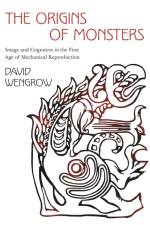
It has often been claimed that "e;monsters"e;--supernatural creatures with bodies composed from multiple species--play a significant part in the thought and imagery of all people from all times. The Origins of Monsters advances an alternative view. Composite figurations are intriguingly rare and isolated in the art of the prehistoric era. Instead it was with the rise of cities, elites, and cosmopolitan trade networks that "e;monsters"e; became widespread features of visual production in the ancient world. Showing how these fantastic images originated and how they were transmitted, David Wengrow identifies patterns in the records of human image-making and embarks on a search for connections between mind and culture. Wengrow asks: Can cognitive science explain the potency of such images? Does evolutionary psychology hold a key to understanding the transmission of symbols? How is our making and perception of images influenced by institutions and technologies? Wengrow considers the work of art in the first age of mechanical reproduction, which he locates in the Middle East, where urban life began. Comparing the development and spread of fantastic imagery across a range of prehistoric and ancient societies, including Mesopotamia, Egypt, Greece, and China, he explores how the visual imagination has been shaped by a complex mixture of historical and universal factors. Examining the reasons behind the dissemination of monstrous imagery in ancient states and empires, The Origins of Monsters sheds light on the relationship between culture and cognition.
The Color of Success tells of the astonishing transformation of Asians in the United States from the "e;yellow peril"e; to "e;model minorities"e;--peoples distinct from the white majority but lauded as well-assimilated, upwardly mobile, and exemplars of traditional family values--in the middle decades of the twentieth century. As Ellen Wu shows, liberals argued for the acceptance of these immigrant communities into the national fold, charging that the failure of America to live in accordance with its democratic ideals endangered the country's aspirations to world leadership. Weaving together myriad perspectives, Wu provides an unprecedented view of racial reform and the contradictions of national belonging in the civil rights era. She highlights the contests for power and authority within Japanese and Chinese America alongside the designs of those external to these populations, including government officials, social scientists, journalists, and others. And she demonstrates that the invention of the model minority took place in multiple arenas, such as battles over zoot suiters leaving wartime internment camps, the juvenile delinquency panic of the 1950s, Hawaii statehood, and the African American freedom movement. Together, these illuminate the impact of foreign relations on the domestic racial order and how the nation accepted Asians as legitimate citizens while continuing to perceive them as indelible outsiders. By charting the emergence of the model minority stereotype, The Color of Success reveals that this far-reaching, politically charged process continues to have profound implications for how Americans understand race, opportunity, and nationhood.
Since its initial publication in 1965, The Secular City has been hailed as a classic for its nuanced exploration of the relationships among the rise of urban civilization, the decline of hierarchical, institutional religion, and the place of the secular within society. Now, half a century later, this international best seller remains as relevant as when it first appeared. The book's arguments--that secularity has a positive effect on institutions, that the city can be a space where people of all faiths fulfill their potential, and that God is present in both the secular and formal religious realms--still resonate with readers of all backgrounds. For this brand-new edition, Harvey Cox provides a substantial and updated introduction. He reflects on the book's initial stunning success in an age of political and religious upheaval and makes the case for its enduring relevance at a time when the debates that The Secular City helped ignite have caught fire once again.
Abonner på vårt nyhetsbrev og få rabatter og inspirasjon til din neste leseopplevelse.
Ved å abonnere godtar du vår personvernerklæring.