





















Gjør som tusenvis av andre bokelskere
Abonner på vårt nyhetsbrev og få rabatter og inspirasjon til din neste leseopplevelse.
Ved å abonnere godtar du vår personvernerklæring.Du kan når som helst melde deg av våre nyhetsbrev.

The inside story of the epic quest to solve the mystery of dark matterThe ordinary atoms that make up the known universe-from our bodies and the air we breathe to the planets and stars-constitute only 5 percent of all matter and energy in the cosmos. The rest is known as dark matter and dark energy, because their precise identities are unknown. The Cosmic Cocktail is the inside story of the epic quest to solve one of the most compelling enigmas of modern science-what is the universe made of?-told by one of today's foremost pioneers in the study of dark matter.Blending cutting-edge science with her own behind-the-scenes insights as a leading researcher in the field, acclaimed theoretical physicist Katherine Freese recounts the hunt for dark matter, from the discoveries of visionary scientists like Fritz Zwicky-the Swiss astronomer who coined the term "e;dark matter"e; in 1933-to the deluge of data today from underground laboratories, satellites in space, and the Large Hadron Collider. Theorists contend that dark matter consists of fundamental particles known as WIMPs, or weakly interacting massive particles. Billions of them pass through our bodies every second without us even realizing it, yet their gravitational pull is capable of whirling stars and gas at breakneck speeds around the centers of galaxies, and bending light from distant bright objects. Freese describes the larger-than-life characters and clashing personalities behind the race to identify these elusive particles.Many cosmologists believe we are on the verge of solving the mystery. The Cosmic Cocktail provides the foundation needed to fully fathom this epochal moment in humankind's quest to understand the universe.
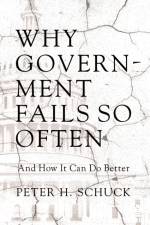
How government can implement more successful policies, more oftenFrom healthcare to workplace and campus conduct, the federal government is taking on ever more responsibility for managing our lives. At the same time, Americans have never been more disaffected with Washington, seeing it as an intrusive, incompetent, wasteful giant. Ineffective policies are caused by deep structural factors regardless of which party is in charge, bringing our government into ever-worsening disrepute. Understanding why government fails so often-and how it might become more effective-is a vital responsibility of citizenship.In this book, lawyer and political scientist Peter Schuck provides a wide range of examples and an enormous body of evidence to explain why so many domestic policies go awry-and how to right the foundering ship of state. An urgent call for reform, Why Government Fails So Often is essential reading for anyone curious about why government is in such a disgraceful state and how it can do better.
What people get out of social media-and how businesses can get more out of itAlmost no one had heard of social media a decade ago, but today websites such as Facebook, Twitter, and LinkedIn have more than 1 billion users and account for almost 25 percent of Internet use. Practically overnight, social media seems indispensable to our lives-from friendship and dating to news and business.What makes social media so different from traditional media? Answering that question is the key to making social media work for any business, argues Miko?aj Piskorski, one of the world's leading experts on the business of social media. In A Social Strategy, he provides the most convincing answer yet, one backed by original research, data, and case studies from companies such as Nike and American Express.Drawing on his analysis of proprietary data from social media sites, Piskorski argues that the secret of successful ones is that they allow people to fulfill social needs that either can't be met offline or can be met only at much greater cost. This insight provides the key to how companies can leverage social platforms to create a sustainable competitive advantage. Companies need to help people interact with each other before they will promote products to their friends or help companies in other ways. Done right, a company's social media should benefit customers and the firm. Piskorski calls this "e;a social strategy,"e; and he describes how companies such as Yelp and Zynga have done it.Groundbreaking and important, A Social Strategy provides not only a story- and data-driven explanation for the explosion of social media but also an invaluable, concrete road map for any company that wants to tap the marketing potential of this remarkable phenomenon.
The rise, fall, and modern resurgence of an enigmatic book revered by yoga enthusiasts around the worldConsisting of fewer than two hundred verses written in an obscure if not impenetrable language and style, Patanjali's Yoga Sutra is today extolled by the yoga establishment as a perennial classic and guide to yoga practice. As David Gordon White demonstrates in this groundbreaking study, both of these assumptions are incorrect. Virtually forgotten in India for hundreds of years and maligned when it was first discovered in the West, the Yoga Sutra has been elevated to its present iconic status-and translated into more than forty languages-only in the course of the past forty years.White retraces the strange and circuitous journey of this confounding work from its ancient origins down through its heyday in the seventh through eleventh centuries, its gradual fall into obscurity, and its modern resurgence since the nineteenth century. First introduced to the West by the British Orientalist Henry Thomas Colebrooke, the Yoga Sutra was revived largely in Europe and America, and predominantly in English. White brings to life the improbable cast of characters whose interpretations-and misappropriations-of the Yoga Sutra led to its revered place in popular culture today. Tracing the remarkable trajectory of this enigmatic work, White's exhaustively researched book also demonstrates why the yoga of India's past bears little resemblance to the yoga practiced today.
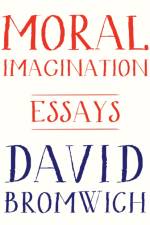
Compelling essays from one of today's most esteemed cultural criticsSpanning many historical and literary contexts, Moral Imagination brings together a dozen recent essays by one of America's premier cultural critics. David Bromwich explores the importance of imagination and sympathy to suggest how these faculties may illuminate the motives of human action and the reality of justice. These wide-ranging essays address thinkers and topics from Gandhi and Martin Luther King on nonviolent resistance, to the dangers of identity politics, to the psychology of the heroes of classic American literature.Bromwich demonstrates that moral imagination allows us to judge the right and wrong of actions apart from any benefit to ourselves, and he argues that this ability is an innate individual strength, rather than a socially conditioned habit. Political topics addressed here include Edmund Burke and Richard Price's efforts to define patriotism in the first year of the French Revolution, Abraham Lincoln's principled work of persuasion against slavery in the 1850s, the erosion of privacy in America under the influence of social media, and the use of euphemism to shade and anesthetize reactions to the global war on terror. Throughout, Bromwich considers the relationship between language and power, and the insights language may offer into the corruptions of power.Moral Imagination captures the singular voice of one of the most forceful thinkers working in America today.
Is the Internet democratizing American politics? Do political Web sites and blogs mobilize inactive citizens and make the public sphere more inclusive? The Myth of Digital Democracy reveals that, contrary to popular belief, the Internet has done little to broaden political discourse but in fact empowers a small set of elites--some new, but most familiar. Matthew Hindman argues that, though hundreds of thousands of Americans blog about politics, blogs receive only a miniscule portion of Web traffic, and most blog readership goes to a handful of mainstream, highly educated professionals. He shows how, despite the wealth of independent Web sites, online news audiences are concentrated on the top twenty outlets, and online organizing and fund-raising are dominated by a few powerful interest groups. Hindman tracks nearly three million Web pages, analyzing how their links are structured, how citizens search for political content, and how leading search engines like Google and Yahoo! funnel traffic to popular outlets. He finds that while the Internet has increased some forms of political participation and transformed the way interest groups and candidates organize, mobilize, and raise funds, elites still strongly shape how political material on the Web is presented and accessed. The Myth of Digital Democracy. debunks popular notions about political discourse in the digital age, revealing how the Internet has neither diminished the audience share of corporate media nor given greater voice to ordinary citizens.
Today the United States has one of the highest poverty rates among the world's rich industrial democracies. The Failed Welfare Revolution shows us that things might have turned out differently. During the 1960s and 1970s, policymakers in three presidential administrations tried to replace the nation's existing welfare system with a revolutionary program to guarantee Americans basic economic security. Surprisingly from today's vantage point, guaranteed income plans received broad bipartisan support in the 1960s. One proposal, President Nixon's Family Assistance Plan, nearly passed into law in the 1970s, and President Carter advanced a similar bill a few years later. The failure of these proposals marked the federal government's last direct effort to alleviate poverty among the least advantaged and, ironically, sowed the seeds of conservative welfare reform strategies under President Reagan and beyond. This episode has largely vanished from America's collective memory. Here, Brian Steensland tells the whole story for the first time--from why such an unlikely policy idea first developed to the factors that sealed its fate. His account, based on extensive original research in presidential archives, draws on mainstream social science perspectives that emphasize the influence of powerful stakeholder groups and policymaking institutions. But Steensland also shows that some of the most potent obstacles to guaranteed income plans were cultural. Most centrally, by challenging Americans' longstanding distinction between the "e;deserving"e; and "e;undeserving"e; poor, the plans threatened the nation's cultural, political, and economic status quo.
Reviving the Invisible Hand is an uncompromising call for a global return to a classical liberal economic order, free of interference from governments and international organizations. Arguing for a revival of the invisible hand of free international trade and global capital, eminent economist Deepak Lal vigorously defends the view that statist attempts to ameliorate the impact of markets threaten global economic progress and stability. And in an unusual move, he not only defends globalization economically, but also answers the cultural and moral objections of antiglobalizers. Taking a broad cross-cultural and interdisciplinary approach, Lal argues that there are two groups opposed to globalization: cultural nationalists who oppose not capitalism but Westernization, and "e;new dirigistes"e; who oppose not Westernization but capitalism. In response, Lal contends that capitalism doesn't have to lead to Westernization, as the examples of Japan, China, and India show, and that "e;new dirigiste"e; complaints have more to do with the demoralization of their societies than with the capitalist instruments of prosperity. Lal bases his case on a historical account of the rise of capitalism and globalization in the first two liberal international economic orders: the nineteenth-century British, and the post-World War II American. Arguing that the "e;new dirigisme"e; is the thin edge of a wedge that could return the world to excessive economic intervention by states and international organizations, Lal does not shrink from controversial stands such as advocating the abolishment of these organizations and defending the existence of child labor in the Third World.
Why stable banking systems are so rareWhy are banking systems unstable in so many countries-but not in others? The United States has had twelve systemic banking crises since 1840, while Canada has had none. The banking systems of Mexico and Brazil have not only been crisis prone but have provided miniscule amounts of credit to business enterprises and households.Analyzing the political and banking history of the United Kingdom, the United States, Canada, Mexico, and Brazil through several centuries, Fragile by Design demonstrates that chronic banking crises and scarce credit are not accidents. Calomiris and Haber combine political history and economics to examine how coalitions of politicians, bankers, and other interest groups form, why they endure, and how they generate policies that determine who gets to be a banker, who has access to credit, and who pays for bank bailouts and rescues.Fragile by Design is a revealing exploration of the ways that politics inevitably intrudes into bank regulation.
Shaping Race Policy investigates one of the most serious policy challenges facing the United States today: the stubborn persistence of racial inequality in the post-civil rights era. Unlike other books on the topic, it is comparative, examining American developments alongside parallel histories of race policy in Great Britain and France. Focusing on on two key policy areas, welfare and employment, the book asks why America has had such uneven success at incorporating African Americans and other minorities into the full benefits of citizenship. Robert Lieberman explores the historical roots of racial incorporation in these policy areas over the course of the twentieth century and explains both the relative success of antidiscrimination policy and the failure of the American welfare state to address racial inequality. He chronicles the rise and resilience of affirmative action, including commentary on the recent University of Michigan affirmative action cases decided by the Supreme Court. He also shows how nominally color-blind policies can have racially biased effects, and challenges the common wisdom that color-blind policies are morally and politically superior and that race-conscious policies are merely second best. Shaping Race Policy has two innovative features that distinguish it from other works in the area. First, it is comparative, examining American developments alongside parallel histories of race policy in Great Britain and France. Second, its argument merges ideas and institutions, which are usually considered separate and competing factors, into a comprehensive and integrated explanatory approach. The book highlights the importance of two factors--America's distinctive political institutions and the characteristic American tension between race consciousness and color blindness--in accounting for the curious pattern of success and failure in American race policy.
Spatial patterns of movement are fundamental to the ecology of animal populations, influencing their social organization, mating systems, demography, and the spatial distribution of prey and competitors. However, our ability to understand the causes and consequences of animal home range patterns has been limited by the descriptive nature of the statistical models used to analyze them. In Mechanistic Home Range Analysis, Paul Moorcroft and Mark Lewis develop a radically new framework for studying animal home range patterns based on the analysis of correlated random work models for individual movement behavior. They use this framework to develop a series of mechanistic home range models for carnivore populations. The authors' analysis illustrates how, in contrast to traditional statistical home range models that merely describe pattern, mechanistic home range models can be used to discover the underlying ecological determinants of home range patterns observed in populations, make accurate predictions about how spatial distributions of home ranges will change following environmental or demographic disturbance, and analyze the functional significance of the movement strategies of individuals that give rise to observed patterns of space use. By providing researchers and graduate students of ecology and wildlife biology with a more illuminating way to analyze animal movement, Mechanistic Home Range Analysis will be an indispensable reference for years to come.
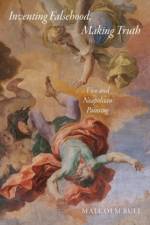
Can painting transform philosophy? In Inventing Falsehood, Making Truth, Malcolm Bull looks at Neapolitan art around 1700 through the eyes of the philosopher Giambattista Vico. Surrounded by extravagant examples of late Baroque painting by artists like Luca Giordano and Francesco Solimena, Vico concluded that human truth was a product of the imagination. Truth was not something that could be observed: instead, it was something made in the way that paintings were made--through the exercise of fantasy. Juxtaposing paintings and texts, Bull presents the masterpieces of late Baroque painting in early eighteenth-century Naples from an entirely new perspective. Revealing the close connections between the arguments of the philosophers and the arguments of the painters, he shows how Vico drew on both in his influential philosophy of history, The New Science. Bull suggests that painting can serve not just as an illustration for philosophical arguments, but also as the model for them--that painting itself has sometimes been a form of epistemological experiment, and that, perhaps surprisingly, the Neapolitan Baroque may have been one of the routes through which modern consciousness was formed.
Aquatic Photosynthesis is a comprehensive guide to understanding the evolution and ecology of photosynthesis in aquatic environments. This second edition, thoroughly revised to bring it up to date, describes how one of the most fundamental metabolic processes evolved and transformed the surface chemistry of the Earth. The book focuses on recent biochemical and biophysical advances and the molecular biological techniques that have made them possible. In ten chapters that are self-contained but that build upon information presented earlier, the book starts with a reductionist, biophysical description of the photosynthetic reactions. It then moves through biochemical and molecular biological patterns in aquatic photoautotrophs, physiological and ecological principles, and global biogeochemical cycles. The book considers applications to ecology, and refers to historical developments. It can be used as a primary text in a lecture course, or as a supplemental text in a survey course such as biological oceanography, limnology, or biogeochemistry.
This is the most comprehensive and up-to-date book on the increasingly important and controversial subject of race relations in Brazil. North American scholars of race relations frequently turn to Brazil for comparisons, since its history has many key similarities to that of the United States. Brazilians have commonly compared themselves with North Americans, and have traditionally argued that race relations in Brazil are far more harmonious because the country encourages race mixture rather than formal or informal segregation. More recently, however, scholars have challenged this national myth, seeking to show that race relations are characterized by exclusion, not inclusion, and that fair-skinned Brazilians continue to be privileged and hold a disproportionate share of wealth and power. In this sociological and demographic study, Edward Telles seeks to understand the reality of race in Brazil and how well it squares with these traditional and revisionist views of race relations. He shows that both schools have it partly right--that there is far more miscegenation in Brazil than in the United States--but that exclusion remains a serious problem. He blends his demographic analysis with ethnographic fieldwork, history, and political theory to try to "e;understand"e; the enigma of Brazilian race relations--how inclusiveness can coexist with exclusiveness. The book also seeks to understand some of the political pathologies of buying too readily into unexamined ideas about race relations. In the end, Telles contends, the traditional myth that Brazil had harmonious race relations compared with the United States encouraged the government to do almost nothing to address its shortcomings.
What drug provides Americans with the greatest pleasure and the greatest pain? The answer, hands down, is alcohol. The pain comes not only from drunk driving and lost lives but also addiction, family strife, crime, violence, poor health, and squandered human potential. Young and old, drinkers and abstainers alike, all are affected. Every American is paying for alcohol abuse. Paying the Tab, the first comprehensive analysis of this complex policy issue, calls for broadening our approach to curbing destructive drinking. Over the last few decades, efforts to reduce the societal costs--curbing youth drinking and cracking down on drunk driving--have been somewhat effective, but woefully incomplete. In fact, American policymakers have ignored the influence of the supply side of the equation. Beer and liquor are far cheaper and more readily available today than in the 1950s and 1960s. Philip Cook's well-researched and engaging account chronicles the history of our attempts to "e;legislate morality,"e; the overlooked lessons from Prohibition, and the rise of Alcoholics Anonymous. He provides a thorough account of the scientific evidence that has accumulated over the last twenty-five years of economic and public-health research, which demonstrates that higher alcohol excise taxes and other supply restrictions are effective and underutilized policy tools that can cut abuse while preserving the pleasures of moderate consumption. Paying the Tab makes a powerful case for a policy course correction. Alcohol is too cheap, and it's costing all of us.
On War is the most significant attempt in Western history to understand war, both in its internal dynamics and as an instrument of policy. Since the work's first appearance in 1832, it has been read throughout the world, and has stimulated generations of soldiers, statesmen, and intellectuals.
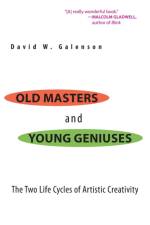
When in their lives do great artists produce their greatest art? Do they strive for creative perfection throughout decades of painstaking and frustrating experimentation, or do they achieve it confidently and decisively, through meticulous planning that yields masterpieces early in their lives? By examining the careers not only of great painters but also of important sculptors, poets, novelists, and movie directors, Old Masters and Young Geniuses offers a profound new understanding of artistic creativity. Using a wide range of evidence, David Galenson demonstrates that there are two fundamentally different approaches to innovation, and that each is associated with a distinct pattern of discovery over a lifetime. Experimental innovators work by trial and error, and arrive at their major contributions gradually, late in life. In contrast, conceptual innovators make sudden breakthroughs by formulating new ideas, usually at an early age. Galenson shows why such artists as Michelangelo, Rembrandt, Cezanne, Jackson Pollock, Virginia Woolf, Robert Frost, and Alfred Hitchcock were experimental old masters, and why Vermeer, van Gogh, Picasso, Herman Melville, James Joyce, Sylvia Plath, and Orson Welles were conceptual young geniuses. He also explains how this changes our understanding of art and its past. Experimental innovators seek, and conceptual innovators find. By illuminating the differences between them, this pioneering book provides vivid new insights into the mysterious processes of human creativity.
What makes a country attractive to foreign investors? To what extent do conditions of governance and politics matter? This book provides the most systematic exploration to date of these crucial questions at the nexus of politics and economics. Using quantitative data and interviews with investment promotion agencies, investment location consultants, political risk insurers, and decision makers at multinational corporations, Nathan Jensen arrives at a surprising conclusion: Countries may be competing for international capital, but government fiscal policy--both taxation and spending--has little impact on multinationals' investment decisions. Although government policy has a limited ability to determine patterns of foreign direct investment (FDI) inflows, political institutions are central to explaining why some countries are more successful in attracting international capital. First, democratic institutions lower political risks for multinational corporations. Indeed, they lead to massive amounts of foreign direct investment. Second, politically federal institutions, in contrast to fiscally federal institutions, lower political risks for multinationals and allow host countries to attract higher levels of FDI inflows. Third, the International Monetary Fund, often cited as a catalyst for promoting foreign investment, actually deters multinationals from investment in countries under IMF programs. Even after controlling for the factors that lead countries to seek IMF support, IMF agreements are associated with much lower levels of FDI inflows.
Math-the application of reasonable logic to reasonable assumptions-usually produces reasonable results. But sometimes math generates astonishing paradoxes-conclusions that seem completely unreasonable or just plain impossible but that are nevertheless demonstrably true. Did you know that a losing sports team can become a winning one by adding worse players than its opponents? Or that the thirteenth of the month is more likely to be a Friday than any other day? Or that cones can roll unaided uphill? In Nonplussed!-a delightfully eclectic collection of paradoxes from many different areas of math-popular-math writer Julian Havil reveals the math that shows the truth of these and many other unbelievable ideas.Nonplussed! pays special attention to problems from probability and statistics, areas where intuition can easily be wrong. These problems include the vagaries of tennis scoring, what can be deduced from tossing a needle, and disadvantageous games that form winning combinations. Other chapters address everything from the historically important Torricelli's Trumpet to the mind-warping implications of objects that live on high dimensions. Readers learn about the colorful history and people associated with many of these problems in addition to their mathematical proofs.Nonplussed! will appeal to anyone with a calculus background who enjoys popular math books or puzzles.
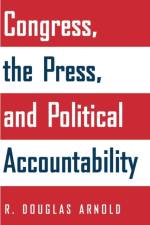
Congress, the Press, and Political Accountability is the first large-scale examination of how local media outlets cover members of the United States Congress. Douglas Arnold asks: do local newspapers provide the information citizens need in order to hold representatives accountable for their actions in office? In contrast with previous studies, which largely focused on the campaign period, he tests various hypotheses about the causes and consequences of media coverage by exploring coverage during an entire congressional session. Using three samples of local newspapers from across the country, Arnold analyzes all coverage over a two-year period--every news story, editorial, opinion column, letter, and list. First he investigates how twenty-five newspapers covered twenty-five local representatives; and next, how competing newspapers in six cities covered their corresponding legislators. Examination of an even larger sample, sixty-seven newspapers and 187 representatives, shows why some newspapers cover legislators more thoroughly than do other papers. Arnold then links the coverage data with a large public opinion survey to show that the volume of coverage affects citizens' awareness of representatives and challengers. The results show enormous variation in coverage. Some newspapers cover legislators frequently, thoroughly, and accessibly. Others--some of them famous for their national coverage--largely ignore local representatives. The analysis also confirms that only those incumbents or challengers in the most competitive races, and those who command huge sums of money, receive extensive coverage.
The Shape of the Signifier is a critique of recent theory--primarily literary but also cultural and political. Bringing together previously unconnected strands of Michaels's thought--from "e;Against Theory"e; to Our America--it anatomizes what's fundamentally at stake when we think of literature in terms of the experience of the reader rather than the intention of the author, and when we substitute the question of who people are for the question of what they believe. With signature virtuosity, Michaels shows how the replacement of ideological difference (we believe different things) with identitarian difference (we speak different languages, we have different bodies and different histories) organizes the thinking of writers from Richard Rorty to Octavia Butler to Samuel Huntington to Kathy Acker. He then examines how this shift produces the narrative logic of texts ranging from Toni Morrison's Beloved to Michael Hardt and Toni Negri's Empire. As with everything Michaels writes, The Shape of the Signifier is sure to leave controversy and debate in its wake.
Through moving interviews with five ordinary people who rescued Jews during the Holocaust, Kristen Monroe casts new light on a question at the heart of ethics: Why do people risk their lives for strangers and what drives such moral choice? Monroe's analysis points not to traditional explanations--such as religion or reason--but to identity. The rescuers' perceptions of themselves in relation to others made their extraordinary acts spontaneous and left the rescuers no choice but to act. To turn away Jews was, for them, literally unimaginable. In the words of one German Czech rescuer, "e;The hand of compassion was faster than the calculus of reason."e; At the heart of this unusual book are interviews with the rescuers, complex human beings from all parts of the Third Reich and all walks of life: Margot, a wealthy German who saved Jews while in exile in Holland; Otto, a German living in Prague who saved more than 100 Jews and provides surprising information about the plot to kill Hitler; John, a Dutchman on the Gestapo's "e;Most Wanted List"e;; Irene, a Polish student who hid eighteen Jews in the home of the German major for whom she was keeping house; and Knud, a Danish wartime policeman who took part in the extraordinary rescue of 85 percent of his country's Jews. We listen as the rescuers themselves tell the stories of their lives and their efforts to save Jews. Monroe's analysis of these stories draws on philosophy, ethics, and political psychology to suggest why and how identity constrains our choices, both cognitively and ethically. Her work offers a powerful counterpoint to conventional arguments about rational choice and a valuable addition to the literature on ethics and moral psychology. It is a dramatic illumination of the power of identity to shape our most basic political acts, including our treatment of others. But always Monroe returns us to the rescuers, to their strong voices, reminding us that the Holocaust need not have happened and revealing the minds of the ethically exemplary as they negotiated the moral quicksand that was the Holocaust.
Does your dog know when you've had a bad day? Can your cat tell that the coffee pot you left on might start a fire? Could a chimpanzee be trained to program your computer? In this provocative book, noted animal expert Clive Wynne debunks some commonly held notions about our furry friends. It may be romantic to ascribe human qualities to critters, he argues, but it's not very realistic. While animals are by no means dumb, they don't think the same way we do. Contrary to what many popular television shows would have us believe, animals have neither the "e;theory-of-mind"e; capabilities that humans have (that is, they are not conscious of what others are thinking) nor the capacity for higher-level reasoning. So, in Wynne's view, when Fido greets your arrival by nudging your leg, he's more apt to be asking for dinner than commiserating with your job stress. That's not to say that animals don't possess remarkable abilities--and Do Animals Think? explores countless examples: there's the honeybee, which not only remembers where it found food but communicates this information to its hivemates through an elaborate dance. And how about the sonar-guided bat, which locates flying insects in the dark of night and devours lunch on the wing? Engagingly written, Do Animals Think? takes aim at the work of such renowned animal rights advocates as Peter Singer and Jane Goodall for falsely humanizing animals. Far from impoverishing our view of the animal kingdom, however, it underscores how the world is richer for having such a diversity of minds--be they of the animal or human variety.
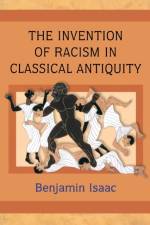
There was racism in the ancient world, after all. This groundbreaking book refutes the common belief that the ancient Greeks and Romans harbored "e;ethnic and cultural,"e; but not racial, prejudice. It does so by comprehensively tracing the intellectual origins of racism back to classical antiquity. Benjamin Isaac's systematic analysis of ancient social prejudices and stereotypes reveals that some of those represent prototypes of racism--or proto-racism--which in turn inspired the early modern authors who developed the more familiar racist ideas. He considers the literature from classical Greece to late antiquity in a quest for the various forms of the discriminatory stereotypes and social hatred that have played such an important role in recent history and continue to do so in modern society. Magisterial in scope and scholarship, and engagingly written, The Invention of Racism in Classical Antiquity further suggests that an understanding of ancient attitudes toward other peoples sheds light not only on Greco-Roman imperialism and the ideology of enslavement (and the concomitant integration or non-integration) of foreigners in those societies, but also on the disintegration of the Roman Empire and on more recent imperialism as well. The first part considers general themes in the history of discrimination; the second provides a detailed analysis of proto-racism and prejudices toward particular groups of foreigners in the Greco-Roman world. The last chapter concerns Jews in the ancient world, thus placing anti-Semitism in a broader context.
In 1854, American Presbyterian missionaries arrived in Egypt as part of a larger Anglo-American Protestant movement aiming for worldwide evangelization. Protected by British imperial power, and later by mounting American global influence, their enterprise flourished during the next century. American Evangelicals in Egypt follows the ongoing and often unexpected transformations initiated by missionary activities between the mid-nineteenth century and 1967--when the Six-Day Arab-Israeli War uprooted the Americans in Egypt. Heather Sharkey uses Arabic and English sources to shed light on the many facets of missionary encounters with Egyptians. These occurred through institutions, such as schools and hospitals, and through literacy programs and rural development projects that anticipated later efforts of NGOs. To Egyptian Muslims and Coptic Christians, missionaries presented new models for civic participation and for women's roles in collective worship and community life. At the same time, missionary efforts to convert Muslims and reform Copts stimulated new forms of Egyptian social activism and prompted nationalists to enact laws restricting missionary activities. Faced by Islamic strictures and customs regarding apostasy and conversion, and by expectations regarding the proper structure of Christian-Muslim relations, missionaries in Egypt set off debates about religious liberty that reverberate even today. Ultimately, the missionary experience in Egypt led to reconsiderations of mission policy and evangelism in ways that had long-term repercussions for the culture of American Protestantism.
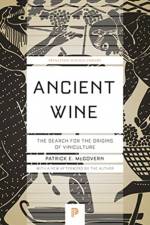
The history of civilization is, in many ways, the history of wine. This book is the first comprehensive and up-to-date account of the earliest stages of vinicultural history and prehistory, which extends back into the Neolithic period and beyond. Elegantly written and richly illustrated, Ancient Wine opens up whole new chapters in the fascinating story of wine and the vine by drawing upon recent archaeological discoveries, molecular and DNA sleuthing, and the texts and art of long-forgotten peoples. Patrick McGovern takes us on a personal odyssey back to the beginnings of this consequential beverage when early hominids probably enjoyed a wild grape wine. We follow the course of human ingenuity in domesticating the Eurasian vine and learning how to make and preserve wine some 7,000 years ago. Early winemakers must have marveled at the seemingly miraculous process of fermentation. From success to success, viniculture stretched out its tentacles and entwined itself with one culture after another (whether Egyptian, Iranian, Israelite, or Greek) and laid the foundation for civilization itself. As medicine, social lubricant, mind-altering substance, and highly valued commodity, wine became the focus of religious cults, pharmacopoeias, cuisines, economies, and society. As an evocative symbol of blood, it was used in temple ceremonies and occupies the heart of the Eucharist. Kings celebrated their victories with wine and made certain that they had plenty for the afterlife. (Among the colorful examples in the book is McGovern's famous chemical reconstruction of the funerary feast--and mixed beverage--of "e;King Midas."e;) Some peoples truly became "e;wine cultures.? When we sip a glass of wine today, we recapitulate this dynamic history in which a single grape species was harnessed to yield an almost infinite range of tastes and bouquets. Ancient Wine is a book that wine lovers and archaeological sleuths alike will raise their glasses to.
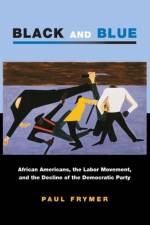
In the 1930s, fewer than one in one hundred U.S. labor union members were African American. By 1980, the figure was more than one in five. Black and Blue explores the politics and history that led to this dramatic integration of organized labor. In the process, the book tells a broader story about how the Democratic Party unintentionally sowed the seeds of labor's decline. The labor and civil rights movements are the cornerstones of the Democratic Party, but for much of the twentieth century these movements worked independently of one another. Paul Frymer argues that as Democrats passed separate legislation to promote labor rights and racial equality they split the issues of class and race into two sets of institutions, neither of which had enough authority to integrate the labor movement. From this division, the courts became the leading enforcers of workplace civil rights, threatening unions with bankruptcy if they resisted integration. The courts' previously unappreciated power, however, was also a problem: in diversifying unions, judges and lawyers enfeebled them financially, thus democratizing through destruction. Sharply delineating the double-edged sword of state and legal power, Black and Blue chronicles an achievement that was as problematic as it was remarkable, and that demonstrates the deficiencies of race- and class-based understandings of labor, equality, and power in America.
E-mails proposing an "e;urgent business relationship"e; help make fraud Nigeria's largest source of foreign revenue after oil. But scams are also a central part of Nigeria's domestic cultural landscape. Corruption is so widespread in Nigeria that its citizens call it simply "e;the Nigerian factor."e; Willing or unwilling participants in corruption at every turn, Nigerians are deeply ambivalent about it--resigning themselves to it, justifying it, or complaining about it. They are painfully aware of the damage corruption does to their country and see themselves as their own worst enemies, but they have been unable to stop it. A Culture of Corruption is a profound and sympathetic attempt to understand the dilemmas average Nigerians face every day as they try to get ahead--or just survive--in a society riddled with corruption. Drawing on firsthand experience, Daniel Jordan Smith paints a vivid portrait of Nigerian corruption--of nationwide fuel shortages in Africa's oil-producing giant, Internet cafes where the young launch their e-mail scams, checkpoints where drivers must bribe police, bogus organizations that siphon development aid, and houses painted with the fraud-preventive words "e;not for sale."e; This is a country where "e;419"e;--the number of an antifraud statute--has become an inescapable part of the culture, and so universal as a metaphor for deception that even a betrayed lover can say, "e;He played me 419."e; It is impossible to comprehend Nigeria today--from vigilantism and resurgent ethnic nationalism to rising Pentecostalism and accusations of witchcraft and cannibalism--without understanding the role played by corruption and popular reactions to it.Some images inside the book are unavailable due to digital copyright restrictions.
The first two chapters of this book offer a modern, self-contained exposition of the elementary theory of triangulated categories and their quotients. The simple, elegant presentation of these known results makes these chapters eminently suitable as a text for graduate students. The remainder of the book is devoted to new research, providing, among other material, some remarkable improvements on Brown's classical representability theorem. In addition, the author introduces a class of triangulated categories"e;--the "e;well generated triangulated categories"e;--and studies their properties. This exercise is particularly worthwhile in that many examples of triangulated categories are well generated, and the book proves several powerful theorems for this broad class. These chapters will interest researchers in the fields of algebra, algebraic geometry, homotopy theory, and mathematical physics.
Why do baby sharks, hyenas, and pelicans kill their siblings? Why do beetles and mice commit infanticide? Why are twins and birth defects more common in older human mothers? A Natural History of Families concisely examines what behavioral ecologists have discovered about family dynamics and what these insights might tell us about human biology and behavior. Scott Forbes's engaging account describes an uneasy union among family members in which rivalry for resources often has dramatic and even fatal consequences. In nature, parents invest resources and control the allocation of resources among their offspring to perpetuate their genetic lineage. Those families sometimes function as cooperative units, the nepotistic and loving havens we choose to identify with. In the natural world, however, dysfunctional familial behavior is disarmingly commonplace. While explaining why infanticide, fratricide, and other seemingly antisocial behaviors are necessary, Forbes also uncovers several surprising applications to humans. Here the conflict begins in the moments following conception as embryos struggle to wrest control of pregnancy from the mother, and to wring more nourishment from her than she can spare, thus triggering morning sickness, diabetes, and high blood pressure. Mothers, in return, often spontaneously abort embryos with severe genetic defects, allowing for prenatal quality control of offspring. Using a broad sweep of entertaining examples culled from the world of animals and humans, A Natural History of Families is a lively introduction to the behavioral ecology of the family.
Abonner på vårt nyhetsbrev og få rabatter og inspirasjon til din neste leseopplevelse.
Ved å abonnere godtar du vår personvernerklæring.