



















Gjør som tusenvis av andre bokelskere
Abonner på vårt nyhetsbrev og få rabatter og inspirasjon til din neste leseopplevelse.
Ved å abonnere godtar du vår personvernerklæring.Du kan når som helst melde deg av våre nyhetsbrev.

Conflicting claims about culture are a familiar refrain of political life in the contemporary world. On one side, majorities seek to fashion the state in their own image, while on the other, cultural minorities press for greater recognition and accommodation. Theories of liberal democracy are at odds about the merits of these competing claims. Multicultural liberals hold that particular minority rights are a requirement of justice conceived of in a broadly liberal fashion. Critics, in turn, have questioned the motivations, coherence, and normative validity of such defenses of multiculturalism. In Equal Recognition, Alan Patten reasserts the case in favor of liberal multiculturalism by developing a new ethical defense of minority rights.Patten seeks to restate the case for liberal multiculturalism in a form that is responsive to the major concerns of critics. He describes a new, nonessentialist account of culture, and he rehabilitates and reconceptualizes the idea of liberal neutrality and uses this idea to develop a distinctive normative argument for minority rights. The book elaborates and applies its core theoretical framework by exploring several important contexts in which minority rights have been considered, including debates about language rights, secession, and immigrant integration.Demonstrating that traditional, nonmulticultural versions of liberalism are unsatisfactory, Equal Recognition will engage readers interested in connections among liberal democracy, nationalism, and current multicultural issues.
Many policymakers, journalists, and scholars insist that U.S. hegemony is essential for warding off global chaos. Good-Bye Hegemony! argues that hegemony is a fiction propagated to support a large defense establishment, justify American claims to world leadership, and buttress the self-esteem of voters. It is also contrary to American interests and the global order. Simon Reich and Richard Ned Lebow argue that hegemony should instead find expression in agenda setting, economic custodianship, and the sponsorship of global initiatives. Today, these functions are diffused through the system, with European countries, China, and lesser powers making important contributions. In contrast, the United States has often been a source of political and economic instability.Rejecting the focus on power common to American realists and liberals, the authors offer a novel analysis of influence. In the process, they differentiate influence from power and power from material resources. Their analysis shows why the United States, the greatest power the world has ever seen, is increasingly incapable of translating its power into influence. Reich and Lebow use their analysis to formulate a more realistic place for America in world affairs.
States are more likely to engage in risky and destabilizing actions such as military buildups and preemptive strikes if they believe their adversaries pose a tangible threat. Yet despite the crucial importance of this issue, we don't know enough about how states and their leaders draw inferences about their adversaries' long-term intentions. Knowing the Adversary draws on a wealth of historical archival evidence to shed new light on how world leaders and intelligence organizations actually make these assessments.Keren Yarhi-Milo examines three cases: Britain's assessments of Nazi Germany's intentions in the 1930s, America's assessments of the Soviet Union's intentions during the Carter administration, and the Reagan administration's assessments of Soviet intentions near the end of the Cold War. She advances a new theoretical framework-called selective attention-that emphasizes organizational dynamics, personal diplomatic interactions, and cognitive and affective factors. Yarhi-Milo finds that decision makers don't pay as much attention to those aspects of state behavior that major theories of international politics claim they do. Instead, they tend to determine the intentions of adversaries on the basis of preexisting beliefs, theories, and personal impressions. Yarhi-Milo also shows how intelligence organizations rely on very different indicators than decision makers, focusing more on changes in the military capabilities of adversaries.Knowing the Adversary provides a clearer picture of the historical validity of existing theories, and broadens our understanding of the important role that diplomacy plays in international security.
How mandated disclosure took over the regulatory landscape-and why it failedPerhaps no kind of regulation is more common or less useful than mandated disclosure-requiring one party to a transaction to give the other information. It is the iTunes terms you assent to, the doctor's consent form you sign, the pile of papers you get with your mortgage. Reading the terms, the form, and the papers is supposed to equip you to choose your purchase, your treatment, and your loan well. More Than You Wanted to Know surveys the evidence and finds that mandated disclosure rarely works. But how could it? Who reads these disclosures? Who understands them? Who uses them to make better choices?Omri Ben-Shahar and Carl Schneider put the regulatory problem in human terms. Most people find disclosures complex, obscure, and dull. Most people make choices by stripping information away, not layering it on. Most people find they can safely ignore most disclosures and that they lack the literacy to analyze them anyway. And so many disclosures are mandated that nobody could heed them all. Nor can all this be changed by simpler forms in plainer English, since complex things cannot be made simple by better writing. Furthermore, disclosure is a lawmakers' panacea, so they keep issuing new mandates and expanding old ones, often instead of taking on the hard work of writing regulations with bite.Timely and provocative, More Than You Wanted to Know takes on the form of regulation we encounter daily and asks why we must encounter it at all.
How tort, contract, and restitution law can be reformed to better serve the social goodLawyers, judges, and scholars have long debated whether incentives in tort, contract, and restitution law effectively promote the welfare of society. If these incentives were ideal, tort law would reduce the cost and frequency of accidents, contract law would lubricate transactions, and restitution law would encourage people to benefit others. Unfortunately, the incentives in these laws lead to too many injuries, too little contractual cooperation, and too few unrequested benefits. Getting Incentives Right explains how law might better serve the social good.In tort law, Robert Cooter and Ariel Porat propose that all foreseeable risks should be included when setting standards of care and awarding damages. Failure to do so causes accidents that better legal incentives would avoid. In contract law, they show that making a promise often causes the person who receives it to change behavior and undermine the cooperation between the parties. They recommend several solutions, including a novel contract called "e;anti-insurance."e; In restitution law, people who convey unrequested benefits to others are seldom entitled to compensation. Restitution law should compensate them more than it currently does, so that they will provide more unrequested benefits. In these three areas of law, Getting Incentives Right demonstrates that better law can promote the well-being of people by providing better incentives for the private regulation of conduct.
Making War and Building Peace examines how well United Nations peacekeeping missions work after civil war. Statistically analyzing all civil wars since 1945, the book compares peace processes that had UN involvement to those that didn't. Michael Doyle and Nicholas Sambanis argue that each mission must be designed to fit the conflict, with the right authority and adequate resources. UN missions can be effective by supporting new actors committed to the peace, building governing institutions, and monitoring and policing implementation of peace settlements. But the UN is not good at intervening in ongoing wars. If the conflict is controlled by spoilers or if the parties are not ready to make peace, the UN cannot play an effective enforcement role. It can, however, offer its technical expertise in multidimensional peacekeeping operations that follow enforcement missions undertaken by states or regional organizations such as NATO. Finding that UN missions are most effective in the first few years after the end of war, and that economic development is the best way to decrease the risk of new fighting in the long run, the authors also argue that the UN's role in launching development projects after civil war should be expanded.
If classical Lie groups preserve bilinear vector norms, what Lie groups preserve trilinear, quadrilinear, and higher order invariants? Answering this question from a fresh and original perspective, Predrag Cvitanovic takes the reader on the amazing, four-thousand-diagram journey through the theory of Lie groups. This book is the first to systematically develop, explain, and apply diagrammatic projection operators to construct all semi-simple Lie algebras, both classical and exceptional. The invariant tensors are presented in a somewhat unconventional, but in recent years widely used, "e;birdtracks"e; notation inspired by the Feynman diagrams of quantum field theory. Notably, invariant tensor diagrams replace algebraic reasoning in carrying out all group-theoretic computations. The diagrammatic approach is particularly effective in evaluating complicated coefficients and group weights, and revealing symmetries hidden by conventional algebraic or index notations. The book covers most topics needed in applications from this new perspective: permutations, Young projection operators, spinorial representations, Casimir operators, and Dynkin indices. Beyond this well-traveled territory, more exotic vistas open up, such as "e;negative dimensional"e; relations between various groups and their representations. The most intriguing result of classifying primitive invariants is the emergence of all exceptional Lie groups in a single family, and the attendant pattern of exceptional and classical Lie groups, the so-called Magic Triangle. Written in a lively and personable style, the book is aimed at researchers and graduate students in theoretical physics and mathematics.
In the wake of Hurricane Katrina, many questioned whether the large number of political appointees in the Federal Emergency Management Agency contributed to the agency's poor handling of the catastrophe, ultimately costing hundreds of lives and causing immeasurable pain and suffering. The Politics of Presidential Appointments examines in depth how and why presidents use political appointees and how their choices impact government performance--for better or worse. One way presidents can influence the permanent bureaucracy is by filling key posts with people who are sympathetic to their policy goals. But if the president's appointees lack competence and an agency fails in its mission--as with Katrina--the president is accused of employing his friends and allies to the detriment of the public. Through case studies and cutting-edge analysis, David Lewis takes a fascinating look at presidential appointments dating back to the 1960s to learn which jobs went to appointees, which agencies were more likely to have appointees, how the use of appointees varied by administration, and how it affected agency performance. He argues that presidents politicize even when it hurts performance--and often with support from Congress--because they need agencies to be responsive to presidential direction. He shows how agency missions and personnel--and whether they line up with the president's vision--determine which agencies presidents target with appointees, and he sheds new light on the important role patronage plays in appointment decisions.
Could the best thing about religion be the heresies it spawns? Leading intellectuals in interwar Europe thought so. They believed that they lived in a world made derelict by God's absence and the interruption of his call. In response, they helped resurrect gnosticism and pantheism, the two most potent challenges to the monotheistic tradition. In God Interrupted, Benjamin Lazier tracks the ensuing debates about the divine across confessions and disciplines. He also traces the surprising afterlives of these debates in postwar arguments about the environment, neoconservative politics, and heretical forms of Jewish identity. In lively, elegant prose, the book reorients the intellectual history of the era. God Interrupted also provides novel accounts of three German-Jewish thinkers whose ideas, seminal to fields typically regarded as wildly unrelated, had common origins in debates about heresy between the wars. Hans Jonas developed a philosophy of biology that inspired European Greens and bioethicists the world over. Leo Strauss became one of the most important and controversial political theorists of the twentieth century. Gershom Scholem, the eminent scholar of religion, radically recast what it means to be a Jew. Together they help us see how talk about God was adapted for talk about nature, politics, technology, and art. They alert us to the abiding salience of the divine to Europeans between the wars and beyond--even among those for whom God was long missing or dead.
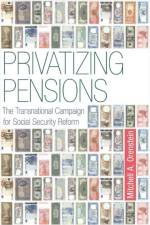
To what extent do international organizations, global policy networks, and transnational policy entrepreneurs influence domestic policy makers? Have we entered a new phase of globalization that, unbeknownst to most citizens, shapes policies that used to be the sole domain of domestic politics? Privatizing Pensions reveals how international institutions--such as the World Bank, USAID, and other transnational policy actors--have played a seminal role in the development, diffusion, and implementation of new pension reforms that are transforming the postwar social contract in more than thirty countries worldwide, including the United States. Mitchell Orenstein shows how transnational actors have driven change in a policy area once thought to be beyond reform in many countries, and how they have done so by deploying their unique resources and legitimacy to promote new ideas, recruit disciples worldwide, and provide a broad range of technical assistance to government reformers over the long term. He demonstrates that while domestic decision makers may retain veto power over these reforms--which replace traditional social security with individual pension savings accounts--transnational policy makers play the role of "e;proposal actors,"e; shaping the information, preferences, and resources of their domestic clients. Privatizing Pensions argues that even the most quintessentially domestic areas of policy have been thoroughly globalized, and that these international influences must be better understood.
On October 23, 1956, a popular uprising against Soviet rule swept through Hungary like a force of nature, only to be mercilessly crushed by Soviet tanks twelve days later. Only now, fifty years after those harrowing events, can the full story be told. This book is a powerful eyewitness account and a gripping history of the uprising in Hungary that heralded the future liberation of Eastern Europe. Paul Lendvai was a young journalist covering politics in Hungary when the uprising broke out. He knew the government officials and revolutionaries involved. He was on the front lines of the student protests and the bloody street fights and he saw the revolutionary government smashed by the Red Army. In this riveting, deeply personal, and often irreverent book, Lendvai weaves his own experiences with in-depth reportage to unravel the complex chain of events leading up to and including the uprising, its brutal suppression, and its far-reaching political repercussions in Hungary and neighboring Eastern Bloc countries. He draws upon exclusive interviews with Russian and former KGB officials, survivors of the Soviet backlash, and relatives of those executed. He reveals new evidence from closed tribunals and documents kept secret in Soviet and Hungarian archives. Lendvai's breathtaking narrative shows how the uprising, while tragic, delivered a stunning blow to Communism that helped to ultimately bring about its demise. One Day That Shook the Communist World is the best account of these unprecedented events.
The first book to use the world's most popular sport to test economic theories and document novel human behaviorA wealth of research in recent decades has seen the economic approach to human behavior extended over many areas previously considered to belong to sociology, political science, law, and other fields. Research has also shown that economics can provide insight into many aspects of sports, including soccer. Beautiful Game Theory is the first book that uses soccer to test economic theories and document novel human behavior.In this brilliant and entertaining book, Ignacio Palacios-Huerta illuminates economics through the world's most popular sport. He offers unique and often startling insights into game theory and microeconomics, covering topics such as mixed strategies, discrimination, incentives, and human preferences. He also looks at finance, experimental economics, behavioral economics, and neuroeconomics. Soccer provides rich data sets and environments that shed light on universal economic principles in interesting and useful ways.Essential reading for students, researchers, and sports enthusiasts, Beautiful Game Theory is the first book to show what soccer can do for economics.
A groundbreaking history of the last days of the French empire in AfricaAs the French public debates its present diversity and its colonial past, few remember that between 1946 and 1960 the inhabitants of French colonies possessed the rights of French citizens. Moreover, they did not have to conform to the French civil code that regulated marriage and inheritance. One could, in principle, be a citizen and different too. Citizenship between Empire and Nation examines momentous changes in notions of citizenship, sovereignty, nation, state, and empire in a time of acute uncertainty about the future of a world that had earlier been divided into colonial empires.Frederick Cooper explains how African political leaders at the end of World War II strove to abolish the entrenched distinction between colonial "e;subject"e; and "e;citizen."e; They then used their new status to claim social, economic, and political equality with other French citizens, in the face of resistance from defenders of a colonial order. Africans balanced their quest for equality with a desire to express an African political personality. They hoped to combine a degree of autonomy with participation in a larger, Franco-African ensemble. French leaders, trying to hold on to a large French polity, debated how much autonomy and how much equality they could concede. Both sides looked to versions of federalism as alternatives to empire and the nation-state. The French government had to confront the high costs of an empire of citizens, while Africans could not agree with French leaders or among themselves on how to balance their contradictory imperatives. Cooper shows how both France and its former colonies backed into more "e;national"e; conceptions of the state than either had sought.
Why Islam is more political and fundamentalist than other religionsWhy does Islam play a larger role in contemporary politics than other religions? Is there something about the Islamic heritage that makes Muslims more likely than adherents of other faiths to invoke it in their political life? If so, what is it? Ancient Religions, Modern Politics seeks to answer these questions by examining the roles of Islam, Hinduism, and Christianity in modern political life, placing special emphasis on the relevance-or irrelevance-of their heritages to today's social and political concerns.Michael Cook takes an in-depth, comparative look at political identity, social values, attitudes to warfare, views about the role of religion in various cultural domains, and conceptions of the polity. In all these fields he finds that the Islamic heritage offers richer resources for those engaged in current politics than either the Hindu or the Christian heritages. He uses this finding to explain the fact that, despite the existence of Hindu and Christian counterparts to some aspects of Islamism, the phenomenon as a whole is unique in the world today. The book also shows that fundamentalism-in the sense of a determination to return to the original sources of the religion-is politically more adaptive for Muslims than it is for Hindus or Christians.A sweeping comparative analysis by one of the world's leading scholars of premodern Islam, Ancient Religions, Modern Politics sheds important light on the relationship between the foundational texts of these three great religious traditions and the politics of their followers today.
Most classical authors and modern historians depict the ancient Greek world as essentially stable and even static, once the so-called colonization movement came to an end. But Robert Garland argues that the Greeks were highly mobile, that their movement was essential to the survival, success, and sheer sustainability of their society, and that this wandering became a defining characteristic of their culture. Addressing a neglected but essential subject, Wandering Greeks focuses on the diaspora of tens of thousands of people between about 700 and 325 BCE, demonstrating the degree to which Greeks were liable to be forced to leave their homes due to political upheaval, oppression, poverty, warfare, or simply a desire to better themselves.Attempting to enter into the mind-set of these wanderers, the book provides an insightful and sympathetic account of what it meant for ancient Greeks to part from everyone and everything they held dear, to start a new life elsewhere-or even to become homeless, living on the open road or on the high seas with no end to their journey in sight. Each chapter identifies a specific kind of "e;wanderer,"e; including the overseas settler, the deportee, the evacuee, the asylum-seeker, the fugitive, the economic migrant, and the itinerant, and the book also addresses repatriation and the idea of the "e;portable polis."e; The result is a vivid and unique portrait of ancient Greece as a culture of displaced persons.
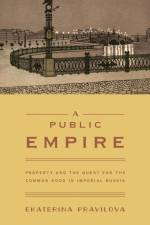
"e;Property rights"e; and "e;Russia"e; do not usually belong in the same sentence. Rather, our general image of the nation is of insecurity of private ownership and defenselessness in the face of the state. Many scholars have attributed Russia's long-term development problems to a failure to advance property rights for the modern age and blamed Russian intellectuals for their indifference to the issues of ownership. A Public Empire refutes this widely shared conventional wisdom and analyzes the emergence of Russian property regimes from the time of Catherine the Great through World War I and the revolutions of 1917. Most importantly, A Public Empire shows the emergence of the new practices of owning "e;public things"e; in imperial Russia and the attempts of Russian intellectuals to reconcile the security of property with the ideals of the common good.The book analyzes how the belief that certain objects-rivers, forests, minerals, historical monuments, icons, and Russian literary classics-should accede to some kind of public status developed in Russia in the mid-nineteenth century. Professional experts and liberal politicians advocated for a property reform that aimed at exempting public things from private ownership, while the tsars and the imperial government employed the rhetoric of protecting the sanctity of private property and resisted attempts at its limitation.Exploring the Russian ways of thinking about property, A Public Empire looks at problems of state reform and the formation of civil society, which, as the book argues, should be rethought as a process of constructing "e;the public"e; through the reform of property rights.
American philanthropy today expands knowledge, champions social movements, defines active citizenship, influences policymaking, and addresses humanitarian crises. How did philanthropy become such a powerful and integral force in American society? Philanthropy in America is the first book to explore in depth the twentieth-century growth of this unique phenomenon. Ranging from the influential large-scale foundations established by tycoons such as John D. Rockefeller, Sr., and the mass mobilization of small donors by the Red Cross and March of Dimes, to the recent social advocacy of individuals like Bill Gates and George Soros, respected historian Olivier Zunz chronicles the tight connections between private giving and public affairs, and shows how this union has enlarged democracy and shaped history.Demonstrating that America has cultivated and relied on philanthropy more than any other country, Philanthropy in America examines how giving for the betterment of all became embedded in the fabric of the nation's civic democracy.
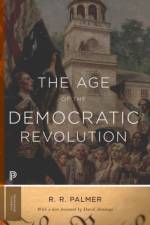
For the Western world, the period from 1760 to 1800 was the great revolutionary era in which the outlines of the modern democratic state came into being. Here for the first time in one volume is R. R. Palmer's magisterial account of this incendiary age. Palmer argues that the American, French, and Polish revolutions-and the movements for political change in Britain, Ireland, Holland, and elsewhere-were manifestations of similar political ideas, needs, and conflicts. Palmer traces the clash between an older form of society, marked by legalized social rank and hereditary or self-perpetuating elites, and a new form of society that placed a greater value on social mobility and legal equality.Featuring a new foreword by David Armitage, this Princeton Classics edition of The Age of the Democratic Revolution introduces a new generation of readers to this enduring work of political history.
This book traces the origins of the "e;illegal alien"e; in American law and society, explaining why and how illegal migration became the central problem in U.S. immigration policy-a process that profoundly shaped ideas and practices about citizenship, race, and state authority in the twentieth century. Mae Ngai offers a close reading of the legal regime of restriction that commenced in the 1920s-its statutory architecture, judicial genealogies, administrative enforcement, differential treatment of European and non-European migrants, and long-term effects. She shows that immigration restriction, particularly national-origin and numerical quotas, remapped America both by creating new categories of racial difference and by emphasizing as never before the nation's contiguous land borders and their patrol.Some images inside the book are unavailable due to digital copyright restrictions.
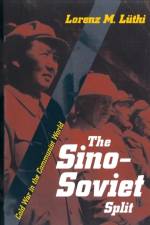
A decade after the Soviet Union and the People's Republic of China established their formidable alliance in 1950, escalating public disagreements between them broke the international communist movement apart. In The Sino-Soviet Split, Lorenz Luthi tells the story of this rupture, which became one of the defining events of the Cold War. Identifying the primary role of disputes over Marxist-Leninist ideology, Luthi traces their devastating impact in sowing conflict between the two nations in the areas of economic development, party relations, and foreign policy. The source of this estrangement was Mao Zedong's ideological radicalization at a time when Soviet leaders, mainly Nikita Khrushchev, became committed to more pragmatic domestic and foreign policies. Using a wide array of archival and documentary sources from three continents, Luthi presents a richly detailed account of Sino-Soviet political relations in the 1950s and 1960s. He explores how Sino-Soviet relations were linked to Chinese domestic politics and to Mao's struggles with internal political rivals. Furthermore, Luthi argues, the Sino-Soviet split had far-reaching consequences for the socialist camp and its connections to the nonaligned movement, the global Cold War, and the Vietnam War. The Sino-Soviet Split provides a meticulous and cogent analysis of a major political fallout between two global powers, opening new areas of research for anyone interested in the history of international relations in the socialist world.
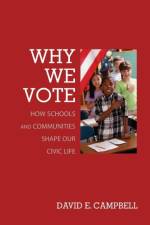
Why do more people vote--or get involved in other civic and political activities--in some communities than in others? Why We Vote demonstrates that our communities shape our civic and political engagement, and that schools are especially significant communities for fostering strong civic norms. Much of the research on political participation has found that levels of participation are higher in diverse communities where issues important to voters are hotly contested. In this well-argued book, David Campbell finds support for this view, but also shows that homogenous communities often have very high levels of civic participation despite a lack of political conflict. Campbell maintains that this sense of civic duty springs not only from one's current social environment, but also from one's early influences. The degree to which people feel a sense of civic obligation stems, in part, from their adolescent experience. Being raised and thus socialized in a community with strong civic norms leads people to be civically engaged in adulthood. Campbell demonstrates how the civic norms within one's high school impact individuals' civic involvement--even a decade and a half after those individuals have graduated. Efforts within America's high schools to enhance young people's sense of civic responsibility could have a participatory payoff in years to come, the book concludes; thus schools would do well to focus more attention on building civic norms among their students.
How to better manage systemic risks in a globalized worldThe Butterfly Defect addresses the widening gap between the new systemic risks generated by globalization and their effective management. It shows how the dynamics of turbo-charged globalization has the potential and power to destabilize our societies. Drawing on the latest insights from a wide variety of disciplines, Ian Goldin and Mike Mariathasan provide practical guidance for how governments, businesses, and individuals can better manage globalization and risk.Goldin and Mariathasan demonstrate that systemic risk issues are now endemic everywhere-in supply chains, pandemics, infrastructure, ecology and climate change, economics, and politics. Unless we address these concerns, they will lead to greater protectionism, xenophobia, nationalism, and, inevitably, deglobalization, rising inequality, conflict, and slower growth.The Butterfly Defect shows that mitigating uncertainty and risk in an interconnected world is an essential task for our future.
Britain is home to fifteen species of breeding birds of prey, from the hedgerow-hopping Sparrowhawk to the breathtaking White-tailed Eagle. In this handsomely illustrated book, acclaimed British filmmaker and naturalist David Cobham offers unique and deeply personal insights into Britain's birds of prey and how they are faring today. He delves into the history of these magnificent birds and talks in depth with the scientists and conservationists who are striving to safeguard them. In doing so, he profiles the writers, poets and filmmakers who have done so much to change the public's perception of birds of prey. There are success stories-five birds of prey that were extinct have become reestablished with viable populations-but persecution is still rife. Featuring drawings by famed wildlife artist Bruce Pearson, this book reveals why we must cherish and celebrate our birds of prey, and why we neglect them at our peril.
Recent years have seen a growing number of activists, scholars, and even policymakers claiming that the global economy is unfair and unjust, particularly to developing countries and the poor within them. But what would a fair or just global economy look like? Economic Justice in an Unfair World seeks to answer that question by presenting a bold and provocative argument that emphasizes economic relations among states.The book provides a market-oriented focus, arguing that a just international economy would be one that is inclusive, participatory, and welfare-enhancing for all states. Rejecting radical redistribution schemes between rich and poor, Ethan Kapstein asserts that a politically feasible approach to international economic justice would emphasize free trade and limited flows of foreign assistance in order to help countries exercise their comparative advantage.Kapstein also addresses justice in labor, migration, and investment, in each case defending an approach that concentrates on nation-states and their unique social compacts. Clearly written for all those with a stake in contemporary debates over poverty reduction and development, the book provides a breakthrough analysis of what the international community can reasonably do to build a global economy that works to the advantage of every nation.
World Out of Balance is the most comprehensive analysis to date of the constraints on the United States' use of power in pursuit of its security interests. Stephen Brooks and William Wohlforth overturn conventional wisdom by showing that in a unipolar system, where the United States is dominant in the scales of world power, the constraints featured in international relations theory are generally inapplicable. In fact, the authors argue that the U.S. will not soon lose its leadership position; rather, it stands before a twenty-year window of opportunity for reshaping the international system. Although American primacy in the world is unprecedented, analysts routinely stress the limited utility of such preeminence. The authors examine arguments from each of the main international relations theories--realism, institutionalism, constructivism, and liberalism. They also cover the four established external constraints on U.S. security policy--international institutions, economic interdependence, legitimacy, and balancing. The prevailing view is that these external constraints conspire to undermine the value of U.S. primacy, greatly restricting the range of security policies the country can pursue. Brooks and Wohlforth show that, in actuality, the international environment does not tightly constrain U.S. security policy. World Out of Balance underscores the need for an entirely new research agenda to better understand the contours of international politics and the United States' place in the world order.
From the cleric-led Iranian revolution to the rise of the Taliban in Afghanistan, many people have been surprised by what they see as the modern reemergence of an antimodern phenomenon. This book helps account for the increasingly visible public role of traditionally educated Muslim religious scholars (the `ulama) across contemporary Muslim societies. Muhammad Qasim Zaman describes the transformations the centuries-old culture and tradition of the `ulama have undergone in the modern era--transformations that underlie the new religious and political activism of these scholars. In doing so, it provides a new foundation for the comparative study of Islam, politics, and religious change in the contemporary world. While focusing primarily on Pakistan, Zaman takes a broad approach that considers the Taliban and the `ulama of Iran, Egypt, Saudi Arabia, India, and the southern Philippines. He shows how their religious and political discourses have evolved in often unexpected but mutually reinforcing ways to redefine and enlarge the roles the `ulama play in society. Their discourses are informed by a longstanding religious tradition, of which they see themselves as the custodians. But these discourses are equally shaped by--and contribute in significant ways to--contemporary debates in the Muslim public sphere. This book offers the first sustained comparative perspective on the `ulama and their increasingly crucial religious and political activism. It shows how issues of religious authority are debated in contemporary Islam, how Islamic law and tradition are continuously negotiated in a rapidly changing world, and how the `ulama both react to and shape larger Islamic social trends. Introducing previously unexamined facets of religious and political thought in modern Islam, it clarifies the complex processes of religious change unfolding in the contemporary Muslim world and goes a long way toward explaining their vast social and political ramifications.
An entertaining look at the origins of mathematical symbolsWhile all of us regularly use basic math symbols such as those for plus, minus, and equals, few of us know that many of these symbols weren't available before the sixteenth century. What did mathematicians rely on for their work before then? And how did mathematical notations evolve into what we know today? In Enlightening Symbols, popular math writer Joseph Mazur explains the fascinating history behind the development of our mathematical notation system. He shows how symbols were used initially, how one symbol replaced another over time, and how written math was conveyed before and after symbols became widely adopted.Traversing mathematical history and the foundations of numerals in different cultures, Mazur looks at how historians have disagreed over the origins of the numerical system for the past two centuries. He follows the transfigurations of algebra from a rhetorical style to a symbolic one, demonstrating that most algebra before the sixteenth century was written in prose or in verse employing the written names of numerals. Mazur also investigates the subconscious and psychological effects that mathematical symbols have had on mathematical thought, moods, meaning, communication, and comprehension. He considers how these symbols influence us (through similarity, association, identity, resemblance, and repeated imagery), how they lead to new ideas by subconscious associations, how they make connections between experience and the unknown, and how they contribute to the communication of basic mathematics.From words to abbreviations to symbols, this book shows how math evolved to the familiar forms we use today.
Lessons Learned gives unprecedented access to the university president's office, providing a unique set of reflections on the challenges involved in leading both research universities and liberal arts colleges. In this landmark book, William Bowen, former president of Princeton University and of the Andrew W. Mellon Foundation, and coauthor of the acclaimed best-seller The Shape of the River, takes readers behind closed faculty-room doors to discuss how today's colleges and universities serve their age-old missions. With extraordinary candor, clarity, and good humor, Bowen shares the sometimes-hard lessons he learned about working with trustees, faculty, and campus groups; building an effective administrative team; deciding when to speak out on big issues and when to insist on institutional restraint; managing dissent; cultivating alumni and raising funds; setting academic priorities; fostering inclusiveness; eventually deciding when and how to leave the president's office; and much more. Drawing on more than four decades of experience, Bowen demonstrates how his greatest lessons often arose from the missteps he made along the way, and how, when it comes to university governance, there are important general principles but often no single right answer. Full of compelling stories, insights, and practical wisdom, Lessons Learned frames the questions that leaders of higher education will continue to confront at a complex moment in history.
A concise history of medieval ScandinaviaChristianity and European-style monarchy-the cross and the scepter-were introduced to Scandinavia in the tenth century, a development that was to have profound implications for all of Europe. Cross and Scepter is a concise history of the Scandinavian kingdoms from the age of the Vikings to the Reformation, written by Scandinavia's leading medieval historian. Sverre Bagge shows how the rise of the three kingdoms not only changed the face of Scandinavia, but also helped make the territorial state the standard political unit in Western Europe. He describes Scandinavia's momentous conversion to Christianity and the creation of church and monarchy there, and traces how these events transformed Scandinavian law and justice, military and administrative organization, social structure, political culture, and the division of power among the king, aristocracy, and common people. Bagge sheds important new light on the reception of Christianity and European learning in Scandinavia, and on Scandinavian history writing, philosophy, political thought, and courtly culture. He looks at the reception of European impulses and their adaptation to Scandinavian conditions, and examines the relationship of the three kingdoms to each other and the rest of Europe, paying special attention to the inter-Scandinavian unions and their consequences for the concept of government and the division of power.Cross and Scepter provides an essential introduction to Scandinavian medieval history for scholars and general readers alike, offering vital new insights into state formation and cultural change in Europe.
Why the marginalized story of Byzantium has much to teach us about Western historyFor many of us, Byzantium remains "e;byzantine"e;-obscure, marginal, difficult. Despite the efforts of some recent historians, prejudices still deform popular and scholarly understanding of the Byzantine civilization, often reducing it to a poor relation of Rome and the rest of the classical world. In this book, renowned historian Averil Cameron presents an original and personal view of the challenges and questions facing historians of Byzantium today.The book explores five major themes, all subjects of controversy. "e;Absence"e; asks why Byzantium is routinely passed over, ignored, or relegated to a sphere of its own. "e;Empire"e; reinserts Byzantium into modern debates about empire, and discusses the nature of its system and its remarkable longevity. "e;Hellenism"e; confronts the question of the "e;Greekness"e; of Byzantium, and of the place of Byzantium in modern Greek consciousness. "e;The Realms of Gold"e; asks what lessons can be drawn from Byzantine visual art, and "e;The Very Model of Orthodoxy"e; challenges existing views of Byzantine Christianity.Throughout, the book addresses misconceptions about Byzantium, suggests why it is so important to integrate the civilization into wider histories, and lays out why Byzantium should be central to ongoing debates about the relationships between West and East, Christianity and Islam, Catholicism and Eastern Orthodoxy, and the ancient and medieval periods. The result is a forthright and compelling call to reconsider the place of Byzantium in Western history and imagination.
Abonner på vårt nyhetsbrev og få rabatter og inspirasjon til din neste leseopplevelse.
Ved å abonnere godtar du vår personvernerklæring.