

























Gjør som tusenvis av andre bokelskere
Abonner på vårt nyhetsbrev og få rabatter og inspirasjon til din neste leseopplevelse.
Ved å abonnere godtar du vår personvernerklæring.Du kan når som helst melde deg av våre nyhetsbrev.

Discoverers of the Universe tells the gripping story of William Herschel, the brilliant, fiercely ambitious, emotionally complex musician and composer who became court astronomer to Britain's King George III, and of William's sister, Caroline, who assisted him in his observations of the night sky and became an accomplished astronomer in her own right. Together, they transformed our view of the universe from the unchanging, mechanical creation of Newton's clockmaker god to the ever-evolving, incredibly dynamic cosmos that it truly is. William was in his forties when his amateur observations using a homemade telescope led to his discovery of Uranus, and an invitation to King George's court. He coined the term "e;asteroid,"e; discovered infrared radiation, was the first to realize that our solar system is moving through space, discovered 2,500 nebulae that form the basis of the catalog astronomers use today, and was unrivalled as a telescope builder. Caroline shared William's passion for astronomy, recording his observations during night watches and organizing his papers for publication. She was the first salaried woman astronomer in history, a pioneer who herself discovered nine comets and became a role model for women in the sciences. Written by the world's premier expert on the Herschels, Discoverers of the Universe traces William and Caroline's many extraordinary contributions to astronomy, shedding new light on their productive but complicated relationship, and setting their scientific achievements in the context of their personal struggles, larger-than-life ambitions, bitter disappointments, and astonishing triumphs.
What happens when a naive intern is granted unfettered access to people's most private thoughts and actions? Stephen Thorpe lands a coveted internship at Ubatoo, an Internet empire that provides its users with popular online services, from a search engine and e-mail, to social networking. When Stephen's boss asks him to work on a project with the American Coalition for Civil Liberties, Stephen innocently obliges, believing he is mining Ubatoo's vast databases to protect people unfairly targeted in the name of national security. But nothing is as it seems. Suspicious individuals surface, doing all they can to access Ubatoo's wealth of confidential information. This need not require technical wizardry-simply knowing how to manipulate a well-intentioned intern may be enough. The Silicon Jungle is a cautionary fictional tale of data mining's promise and peril. Baluja raises ethical questions about contemporary technological innovations, and how minute details can be routinely pieced together into rich profiles that reveal our habits, goals, and secret desires-all ready to be exploited.
All too often government lacks the skill, the will, and the wallet to meet its missions. Schools fall short of the mark while roads and bridges fall into disrepair. Health care costs too much and delivers too little. Budgets bleed red ink as the cost of services citizens want outstrips the taxes they are willing to pay. Collaborative Governance is the first book to offer solutions by demonstrating how government at every level can engage the private sector to overcome seemingly insurmountable problems and achieve public goals more effectively. John Donahue and Richard Zeckhauser show how the public sector can harness private expertise to bolster productivity, capture information, and augment resources. The authors explain how private engagement in public missions--rightly structured and skillfully managed--is not so much an alternative to government as the way smart government ought to operate. The key is to carefully and strategically grant discretion to private entities, whether for-profit or nonprofit, in ways that simultaneously motivate and empower them to create public value. Drawing on a host of real-world examples-including charter schools, job training, and the resurrection of New York's Central Park--they show how, when, and why collaboration works, and also under what circumstances it doesn't. Collaborative Governance reveals how the collaborative approach can be used to tap the resourcefulness and entrepreneurship of the private sector, and improvise fresh, flexible solutions to today's most pressing public challenges.
What is morality? Where does it come from? And why do most of us heed its call most of the time? In Braintrust, neurophilosophy pioneer Patricia Churchland argues that morality originates in the biology of the brain. She describes the "e;neurobiological platform of bonding"e; that, modified by evolutionary pressures and cultural values, has led to human styles of moral behavior. The result is a provocative genealogy of morals that asks us to reevaluate the priority given to religion, absolute rules, and pure reason in accounting for the basis of morality. Moral values, Churchland argues, are rooted in a behavior common to all mammals--the caring for offspring. The evolved structure, processes, and chemistry of the brain incline humans to strive not only for self-preservation but for the well-being of allied selves--first offspring, then mates, kin, and so on, in wider and wider "e;caring"e; circles. Separation and exclusion cause pain, and the company of loved ones causes pleasure; responding to feelings of social pain and pleasure, brains adjust their circuitry to local customs. In this way, caring is apportioned, conscience molded, and moral intuitions instilled. A key part of the story is oxytocin, an ancient body-and-brain molecule that, by decreasing the stress response, allows humans to develop the trust in one another necessary for the development of close-knit ties, social institutions, and morality. A major new account of what really makes us moral, Braintrust challenges us to reconsider the origins of some of our most cherished values.
Why are elite jewelers reluctant to sell turquoise, despite strong demand? Why did leading investment bankers shun junk bonds for years, despite potential profits? Status Signals is the first major sociological examination of how concerns about status affect market competition. Starting from the basic premise that status pervades the ties producers form in the marketplace, Joel Podolny shows how anxieties about status influence whom a producer does (or does not) accept as a partner, the price a producer can charge, the ease with which a producer enters a market, how the producer's inventions are received, and, ultimately, the market segments the producer can (and should) enter. To achieve desired status, firms must offer more than strong past performance and product quality--they must also send out and manage social and cultural signals. Through detailed analyses of market competition across a broad array of industries--including investment banking, wine, semiconductors, shipping, and venture capital--Podolny demonstrates the pervasive impact of status. Along the way, he shows how corporate strategists, tempted by the profits of a market that would negatively affect their status, consider not only whether to enter the market but also whether they can alter the public's perception of the market. Podolny also examines the different ways in which a firm can have status. Wal-Mart, for example, has low status among the rich as a place to shop, but high status among the rich as a place to invest. Status Signals provides a systematic understanding of market dynamics that have--until now--not been fully appreciated.
Why have states throughout history regularly underestimated dangers to their survival? Why have some states been able to mobilize their material resources effectively to balance against threats, while others have not been able to do so? The phenomenon of "e;underbalancing"e; is a common but woefully underexamined behavior in international politics. Underbalancing occurs when states fail to recognize dangerous threats, choose not to react to them, or respond in paltry and imprudent ways. It is a response that directly contradicts the core prediction of structural realism's balance-of-power theory--that states motivated to survive as autonomous entities are coherent actors that, when confronted by dangerous threats, act to restore the disrupted balance by creating alliances or increasing their military capabilities, or, in some cases, a combination of both. Consistent with the new wave of neoclassical realist research, Unanswered Threats offers a theory of underbalancing based on four domestic-level variables--elite consensus, elite cohesion, social cohesion, and regime/government vulnerability--that channel, mediate, and redirect policy responses to external pressures and incentives. The theory yields five causal schemes for underbalancing behavior, which are tested against the cases of interwar Britain and France, France from 1877 to 1913, and the War of the Triple Alliance (1864-1870) that pitted tiny Paraguay against Brazil, Argentina, and Uruguay. Randall Schweller concludes that those most likely to underbalance are incoherent, fragmented states whose elites are constrained by political considerations.
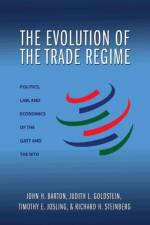
The Evolution of the Trade Regime offers a comprehensive political-economic history of the development of the world's multilateral trade institutions, the General Agreement on Tariffs and Trade (GATT) and its successor, the World Trade Organization (WTO). While other books confine themselves to describing contemporary GATT/WTO legal rules or analyzing their economic logic, this is the first to explain the logic and development behind these rules. The book begins by examining the institutions' rules, principles, practices, and norms from their genesis in the early postwar period to the present. It evaluates the extent to which changes in these institutional attributes have helped maintain or rebuild domestic constituencies for open markets. The book considers these questions by looking at the political, legal, and economic foundations of the trade regime from many angles. The authors conclude that throughout most of GATT/WTO history, power politics fundamentally shaped the creation and evolution of the GATT/WTO system. Yet in recent years, many aspects of the trade regime have failed to keep pace with shifts in underlying material interests and ideas, and the challenges presented by expanding membership and preferential trade agreements.
Over the past century, opinion polls have come to pervade American politics. Despite their shortcomings, the notion prevails that polls broadly represent public sentiment. But do they? In Silent Voices, Adam Berinsky presents a provocative argument that the very process of collecting information on public preferences through surveys may bias our picture of those preferences. In particular, he focuses on the many respondents who say they "e;don't know"e; when asked for their views on the political issues of the day. Using opinion poll data collected over the past forty years, Berinsky takes an increasingly technical area of research--public opinion--and synthesizes recent findings in a coherent and accessible manner while building on this with his own findings. He moves from an in-depth treatment of how citizens approach the survey interview, to a discussion of how individuals come to form and then to express opinions on political matters in the context of such an interview, to an examination of public opinion in three broad policy areas--race, social welfare, and war. He concludes that "e;don't know"e; responses are often the result of a systematic process that serves to exclude particular interests from the realm of recognized public opinion. Thus surveys may then echo the inegalitarian shortcomings of other forms of political participation and even introduce new problems altogether.
The two volumes of Philosophical Essays bring together the most important essays written by one of the world's foremost philosophers of language. Scott Soames has selected thirty-one essays spanning nearly three decades of thinking about linguistic meaning and the philosophical significance of language. A judicious collection of old and new, these volumes include sixteen essays published in the 1980s and 1990s, nine published since 2000, and six new essays. The essays in Volume 1 investigate what linguistic meaning is; how the meaning of a sentence is related to the use we make of it; what we should expect from empirical theories of the meaning of the languages we speak; and how a sound theoretical grasp of the intricate relationship between meaning and use can improve the interpretation of legal texts. The essays in Volume 2 illustrate the significance of linguistic concerns for a broad range of philosophical topics--including the relationship between language and thought; the objects of belief, assertion, and other propositional attitudes; the distinction between metaphysical and epistemic possibility; the nature of necessity, actuality, and possible worlds; the necessary a posteriori and the contingent a priori; truth, vagueness, and partial definition; and skepticism about meaning and mind. The two volumes of Philosophical Essays are essential for anyone working on the philosophy of language.
Democracies often go to war but almost never against each other. Indeed, "e;the democratic peace"e; has become a catchphrase among scholars and even U.S. Presidents. But why do democracies avoid fighting each other? Reliable Partners offers the first systematic and definitive explanation. Examining decades of research and speculation on the subject and testing this against the history of relations between democracies over the last two centuries, Charles Lipson concludes that constitutional democracies have a "e;contracting advantage"e;--a unique ability to settle conflicts with each other by durable agreements. In so doing he forcefully counters realist claims that a regime's character is irrelevant to war and peace. Lipson argues that because democracies are confident their bargains will stick, they can negotiate effective settlements with each other rather than incur the great costs of war. Why are democracies more reliable partners? Because their politics are uniquely open to outside scrutiny and facilitate long-term commitments. They cannot easily bluff, deceive, or launch surprise attacks. While this transparency weakens their bargaining position, it also makes their promises more credible--and more durable, for democracies are generally stable. Their leaders are constrained by constitutional rules, independent officials, and the political costs of abandoning public commitments. All this allows for solid bargains between democracies. When democracies contemplate breaking their agreements, their open debate gives partners advance notice and a chance to protect themselves. Hence agreements among democracies are less risky than those with nondemocratic states. Setting rigorous analysis in friendly, vigorous prose, Reliable Partners resolves longstanding questions about the democratic peace and highlights important new findings about democracies in world politics, from rivalries to alliances. Above all, it shows conclusively that democracies are uniquely adapted to seal enduring bargains with each other and thus avoid the blight of war.
Nowhere has the divide between advocates and critics of globalization been more striking than in debates over free trade and the environment. And yet the literature on the subject is high on rhetoric and low on results. This book is the first to systematically investigate the subject using both economic theory and empirical analysis. Brian Copeland and Scott Taylor establish a powerful theoretical framework for examining the impact of international trade on local pollution levels, and use it to offer a uniquely integrated treatment of the links between economic growth, liberalized trade, and the environment. The results will surprise many. The authors set out the two leading theories linking international trade to environmental outcomes, develop the empirical implications, and examine their validity using data on measured sulfur dioxide concentrations from over 100 cities worldwide during the period from 1971 to 1986. The empirical results are provocative. For an average country in the sample, free trade is good for the environment. There is little evidence that developing countries will specialize in pollution-intensive products with further trade. In fact, the results suggest just the opposite: free trade will shift pollution-intensive goods production from poor countries with lax regulation to rich countries with tight regulation, thereby lowering world pollution. The results also suggest that pollution declines amid economic growth fueled by economy-wide technological progress but rises when growth is fueled by capital accumulation alone. Lucidly argued and authoritatively written, this book will provide students and researchers of international trade and environmental economics a more reliable way of thinking about this contentious issue, and the methodological tools with which to do so.
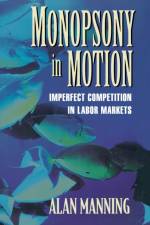
What happens if an employer cuts wages by one cent? Much of labor economics is built on the assumption that all the workers will quit immediately. Here, Alan Manning mounts a systematic challenge to the standard model of perfect competition. Monopsony in Motion stands apart by analyzing labor markets from the real-world perspective that employers have significant market (or monopsony) power over their workers. Arguing that this power derives from frictions in the labor market that make it time-consuming and costly for workers to change jobs, Manning re-examines much of labor economics based on this alternative and equally plausible assumption. The book addresses the theoretical implications of monopsony and presents a wealth of empirical evidence. Our understanding of the distribution of wages, unemployment, and human capital can all be improved by recognizing that employers have some monopsony power over their workers. Also considered are policy issues including the minimum wage, equal pay legislation, and caps on working hours. In a monopsonistic labor market, concludes Manning, the "e;free"e; market can no longer be sustained as an ideal and labor economists need to be more open-minded in their evaluation of labor market policies. Monopsony in Motion will represent for some a new fundamental text in the advanced study of labor economics, and for others, an invaluable alternative perspective that henceforth must be taken into account in any serious consideration of the subject.
Much of the evolutionary biology that has grabbed headlines in recent years has sprung from the efforts of sociobiologists and evolutionary psychologists to explain sexual features and behavior--even differences between how men and women think--as evolutionary adaptations. They have looked to the forces of natural selection to explain everything from the mimicry of male mockingbirds to female orgasms among humans. In this controversial book, Richard Francis argues that the utility of this approach is greatly exaggerated. He proposes instead a powerful alternative rooted in the latest findings in evolutionary biology as well as research on the workings of our brains, genes, and hormones. Exploring various sexual phenomena, Francis exposes fundamental defects in sociobiology and evolutionary psychology, which he traces to their misguided emphasis on "e;why"e; questions at the expense of "e;how"e; questions. Francis contends that this preoccupation with "e;why"e; questions (such as, "e;Why won't men ask for directions"e;?) results in a paranoiac mindset and distorted evolutionary explanations. His alternative framework entails a broader conception of what constitutes an evolutionary explanation, one in which both evolutionary history, as embodied in the tree of life, and developmental processes are brought to the foreground. This alternative framework is also better grounded in basic biology. Deeply learned, consistently persuasive, and always engaging, this book is a welcome antidote to simplistic sociobiological exegeses of animal and human behavior.
Religious intolerance, so terrible and deadly in its recent manifestations, is nothing new. In fact, until after the eighteenth century, Christianity was perhaps the most intolerant of all the great world religions. How Christian Europe and the West went from this extreme to their present universal belief in religious toleration is the momentous story fully told for the first time in this timely and important book by a leading historian of early modern Europe. Perez Zagorin takes readers to a time when both the Catholic Church and the main new Protestant denominations embraced a policy of endorsing religious persecution, coercing unity, and, with the state's help, mercilessly crushing dissent and heresy. This position had its roots in certain intellectual and religious traditions, which Zagorin traces before showing how out of the same traditions came the beginnings of pluralism in the West. Here we see how sixteenth- and seventeenth-century thinkers--writing from religious, theological, and philosophical perspectives--contributed far more than did political expediency or the growth of religious skepticism to advance the cause of toleration. Reading these thinkers--from Erasmus and Sir Thomas More to John Milton and John Locke, among others--Zagorin brings to light a common, if unexpected, thread: concern for the spiritual welfare of religion itself weighed more in the defense of toleration than did any secular or pragmatic arguments. His book--which ranges from England through the Netherlands, the post-1685 Huguenot Diaspora, and the American Colonies--also exposes a close connection between toleration and religious freedom. A far-reaching and incisive discussion of the major writers, thinkers, and controversies responsible for the emergence of religious tolerance in Western society--from the Enlightenment through the United Nations' Universal Declaration of Human Rights--this original and richly nuanced work constitutes an essential chapter in the intellectual history of the modern world.
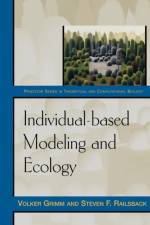
Individual-based models are an exciting and widely used new tool for ecology. These computational models allow scientists to explore the mechanisms through which population and ecosystem ecology arises from how individuals interact with each other and their environment. This book provides the first in-depth treatment of individual-based modeling and its use to develop theoretical understanding of how ecological systems work, an approach the authors call "e;individual-based ecology.? Grimm and Railsback start with a general primer on modeling: how to design models that are as simple as possible while still allowing specific problems to be solved, and how to move efficiently through a cycle of pattern-oriented model design, implementation, and analysis. Next, they address the problems of theory and conceptual framework for individual-based ecology: What is "e;theory"e;? That is, how do we develop reusable models of how system dynamics arise from characteristics of individuals? What conceptual framework do we use when the classical differential equation framework no longer applies? An extensive review illustrates the ecological problems that have been addressed with individual-based models. The authors then identify how the mechanics of building and using individual-based models differ from those of traditional science, and provide guidance on formulating, programming, and analyzing models. This book will be helpful to ecologists interested in modeling, and to other scientists interested in agent-based modeling.
Tony Gwynn is the greatest hitter in the history of baseball. That's the conclusion of this engaging and provocative analysis of baseball's all-time best hitters. Michael Schell challenges the traditional list of all-time hitters, which places Ty Cobb first, Gwynn 16th, and includes just 8 players whose prime came after 1960. Schell argues that the raw batting averages used as the list's basis should be adjusted to take into account that hitters played in different eras, with different rules, and in different ballparks. He makes those adjustments and produces a new list of the best 100 hitters that will spark debate among baseball fans and statisticians everywhere. Schell combines the two qualifications essential for a book like this. He is a professional statistician--applying his skills to cancer research--and he has an encyclopedic knowledge of baseball. He has wondered how to rank hitters since he was a boy growing up as a passionate Cincinnati Reds fan. Over the years, he has analyzed the most important factors, including the relative difficulty of hitting in different ballparks, the length of hitters' careers, the talent pool that players are drawn from, and changes in the game that raised or lowered major-league batting averages (the introduction of the designated hitter and changes in the height and location of the pitcher's mound, for example). Schell's study finally levels the playing field, giving new credit to hitters who played in adverse conditions and downgrading others who faced fewer obstacles. His final ranking of players differs dramatically from the traditional list. Gwynn, for example, bumps Cobb to 2nd place, Rod Carew rises from 28th to 3rd, Babe Ruth drops from 9th to 16th, and Willie Mays comes from off the list to rank 13th. Schell's list also gives relatively more credit to modern players, containing 39 whose best days were after 1960. Using a fun, conversational style, the book presents a feast of stories and statistics about players, ballparks, and teams--all arranged so that calculations can be skipped by general readers but consulted by statisticians eager to follow Schell's methods or introduce their students to such basic concepts as mean, histogram, standard deviation, p-value, and regression. Baseball's All-Time Best Hitters will shake up how baseball fans view the greatest heroes of America's national pastime.
They are voices that have been silent for centuries: those of captives and refugees, widows and orphans, the blind and infirm, and the underclass of the "e;working poor."e; Now, for the first time, the voices of the poor in the Middle Ages come to life in this moving book by historian Mark Cohen. A companion to Cohen's other volume, Poverty and Charity in the Jewish Community of Medieval Egypt, the book presents more than ninety letters, alms lists, donor lists, and other related documents from the Geniza, a hidden chamber for discarded papers, situated inside a wall in a Cairo synagogue. Cohen has translated these documents, providing the historical context for each. In the past, most of what we knew of the poor in the Middle Ages came from records and observations compiled by their literate social superiors, from tax collectors to the inquisitor's clerk, from criminal judges to the benefactors of the helpless, from makers of Islamic waqf deeds to authors of Arabic chronicles, and in Judaism, from Rabbis who wrote responsa to compilers of Jewish-law codes. What distinguishes this book is that it contains the voices of the poor themselves, found in documents heretofore largely ignored. Because an ancient custom in Judaism prohibited the destruction of pages of sacred writing, the documents were preserved, largely unharmed, for as many as nine centuries. The Voice of the Poor in the Middle Ages provides access to the attitudes and philanthropic activities of the charitable, alongside the dramatic writings of the poor themselves, whether penned in their own hands or dictated to a scribe or family member. The book also allows a rare glimpse into the women of the Middle Ages, as well as into the world of private charity--an area long elusive to the medieval historian. For researchers and students alike, this book will be an invaluable social history source for years to come.
As the preeminent international development agency for the past sixty years, the World Bank has attracted equal amounts of criticism and praise. Critics are especially quick to decry the World Bank's hypocrisy--the pervasive gaps between the organization's talk, decisions, and actions. In the wake of the Paul Wolfowitz leadership scandal in May 2006, perceptions of hypocrisy have exacted a heavy toll on the Bank's authority and fueled strong demands for wide-scale reform. Yet what exactly does the hypocrisy of the World Bank look like, and what or who causes it? In Hypocrisy Trap, Catherine Weaver explores how the characteristics of change in a complex international organization make hypocrisy difficult to resolve, especially after its exposure becomes a critical threat to the organization's legitimacy and survival. Using a rich sociological model and several years of field research, Weaver delves into the political and cultural worlds within and outside of the Bank to uncover the tensions that incite and perpetuate organized hypocrisy. She examines the sources and dynamics of hypocrisy in the critical cases of the Bank's governance and anticorruption agenda, and its recent Strategic Compact reorganization. The first book to unravel the puzzle of organized hypocrisy in relation to reform at the World Bank, Hypocrisy Trap ultimately enriches our understanding of culture, behavior, and change in international organizations.Some images inside the book are unavailable due to digital copyright restrictions.
The question of what causes war has concerned statesmen since the time of Thucydides. The Steps to War utilizes new data on militarized interstate disputes from 1816 to 2001 to identify the factors that increase the probability that a crisis will escalate to war. In this book, Paul Senese and John Vasquez test one of the major behavioral explanations of war--the steps to war--by identifying the various factors that put two states at risk for war. Focusing on the era of classic international politics from 1816 to 1945, the Cold War, and the post-Cold War period, they look at the roles of territorial disputes, alliances, rivalry, and arms races and show how the likelihood of war increases significantly as these risk factors are combined. Senese and Vasquez argue that war is more likely in the presence of these factors because they increase threat perception and put both sides into a security dilemma. The Steps to War calls into question certain prevailing realist beliefs, like peace through strength, demonstrating how threatening to use force and engaging in power politics is more likely to lead to war than to peace.
Ideally suited to upper-undergraduate and graduate students, Analyzing the Global Political Economy critically assesses the convergence between IPE, comparative political economy, and economics. Andrew Walter and Gautam Sen show that a careful engagement with economics is essential for understanding both contemporary IPE and for analyzing the global political economy. The authors also argue that the deployment of more advanced economic theories should not detract from the continuing importance for IPE of key concepts from political science and international relations. IPE students with little or no background in economics will therefore find this book useful, and economics students interested in political economy will be alerted to the comparative strengths of political science and other social science disciplines. A concise look at the foundations of analysis in the political economy of global trade, money, finance, and investment Suitable for upper-undergraduate and graduate students with some or no economic background Techniques and findings from a range of academic disciplines, including international relations, political science, economics, sociology, and history Further reading and useful weblinks including a range of relevant data sources, listed in each chapter
This book explores important aspects of Markov and hidden Markov processes and the applications of these ideas to various problems in computational biology. The book starts from first principles, so that no previous knowledge of probability is necessary. However, the work is rigorous and mathematical, making it useful to engineers and mathematicians, even those not interested in biological applications. A range of exercises is provided, including drills to familiarize the reader with concepts and more advanced problems that require deep thinking about the theory. Biological applications are taken from post-genomic biology, especially genomics and proteomics.The topics examined include standard material such as the Perron-Frobenius theorem, transient and recurrent states, hitting probabilities and hitting times, maximum likelihood estimation, the Viterbi algorithm, and the Baum-Welch algorithm. The book contains discussions of extremely useful topics not usually seen at the basic level, such as ergodicity of Markov processes, Markov Chain Monte Carlo (MCMC), information theory, and large deviation theory for both i.i.d and Markov processes. The book also presents state-of-the-art realization theory for hidden Markov models. Among biological applications, it offers an in-depth look at the BLAST (Basic Local Alignment Search Technique) algorithm, including a comprehensive explanation of the underlying theory. Other applications such as profile hidden Markov models are also explored.
The Presidency in the Era of 24-Hour News examines how changes in the news media since the golden age of television--when three major networks held a near monopoly on the news people saw in the United States--have altered the way presidents communicate with the public and garner popular support. How did Bill Clinton manage to maintain high approval ratings during the Monica Lewinsky scandal? Why has the Iraq war mired George Bush in the lowest approval ratings of his presidency? Jeffrey Cohen reveals how the decline of government regulation and the growth of Internet and cable news outlets have made news organizations more competitive, resulting in decreased coverage of the president in the traditional news media and an increasingly negative tone in the coverage that does occur. He traces the dwindling of public trust in the news and shows how people pay less attention to it than they once did. Cohen argues that the news media's influence over public opinion has decreased considerably as a result, and so has the president's ability to influence the public through the news media. This has prompted a sea change in presidential leadership style. Engaging the public less to mobilize broad support, presidents increasingly cultivate special-interest groups that often already back the White House's agenda. This book carries far-reaching implications for the future of presidential governance and American democracy in the era of new media.
It is sometimes said that the most segregated time of the week in the United States is Sunday morning. Even as workplaces and public institutions such as the military have become racially integrated, racial separation in Christian religious congregations is the norm. And yet some congregations remain stubbornly, racially mixed. People of the Dream is the most complete study of this phenomenon ever undertaken. Author Michael Emerson explores such questions as: how do racially mixed congregations come together? How are they sustained? Who attends them, how did they get there, and what are their experiences? Engagingly written, the book enters the worlds of these congregations through national surveys and in-depth studies of those attending racially mixed churches. Data for the book was collected over seven years by the author and his research team. It includes more than 2,500 telephone interviews, hundreds of written surveys, and extensive visits to mixed-race congregations throughout the United States. People of the Dream argues that multiracial congregations are bridge organizations that gather and facilitate cross-racial friendships, disproportionately housing people who have substantially more racially diverse social networks than do other Americans. The book concludes that multiracial congregations and the people in them may be harbingers of racial change to come in the United States.
Tradition and the Formation of the Talmud offers a new perspective on perhaps the most important religious text of the Jewish tradition. It is widely recognized that the creators of the Talmud innovatively interpreted and changed the older traditions on which they drew. Nevertheless, it has been assumed that the ancient rabbis were committed to maintaining continuity with the past. Moulie Vidas argues on the contrary that structural features of the Talmud were designed to produce a discontinuity with tradition, and that this discontinuity was part and parcel of the rabbis' self-conception. Both this self-conception and these structural features were part of a debate within and beyond the Jewish community about the transmission of tradition.Focusing on the Babylonian Talmud, produced in the rabbinic academies of late ancient Mesopotamia, Vidas analyzes key passages to show how the Talmud's creators contrasted their own voice with that of their predecessors. He also examines Zoroastrian, Christian, and mystical Jewish sources to reconstruct the debates and wide-ranging conversations that shaped the Talmud's literary and intellectual character.
This book provides an accessible introduction to the principles and tools for modeling, analyzing, and synthesizing biomolecular systems. It begins with modeling tools such as reaction-rate equations, reduced-order models, stochastic models, and specific models of important core processes. It then describes in detail the control and dynamical systems tools used to analyze these models. These include tools for analyzing stability of equilibria, limit cycles, robustness, and parameter uncertainty. Modeling and analysis techniques are then applied to design examples from both natural systems and synthetic biomolecular circuits. In addition, this comprehensive book addresses the problem of modular composition of synthetic circuits, the tools for analyzing the extent of modularity, and the design techniques for ensuring modular behavior. It also looks at design trade-offs, focusing on perturbations due to noise and competition for shared cellular resources.Featuring numerous exercises and illustrations throughout, Biomolecular Feedback Systems is the ideal textbook for advanced undergraduates and graduate students. For researchers, it can also serve as a self-contained reference on the feedback control techniques that can be applied to biomolecular systems.Provides a user-friendly introduction to essential concepts, tools, and applicationsCovers the most commonly used modeling methodsAddresses the modular design problem for biomolecular systemsUses design examples from both natural systems and synthetic circuitsSolutions manual (available only to professors at press.princeton.edu)An online illustration package is available to professors at press.princeton.edu
First Step is an elementary Chinese textbook for students with no previous background in the language. Focusing on the basics of modern Chinese phonetics and grammatical structure, the book uses everyday topics to help students establish a solid foundation in the Chinese language.The textbook, which includes color illustrations, contains thirty lessons, each of which can be covered in a week's worth of classes. Each lesson features a lively dialogue or a short essay, representing a real-life situation, which is then followed by vocabulary lists and grammar notes. Explanatory notes on Chinese culture and customs are also provided. The companion workbook for First Step is sold separately and includes comprehensive exercises and character writing sheets with information on the stroke orders of newly introduced characters. Free online audio files, accessible on smartphones, tablets, and laptops, allow students to listen to First Step dialogues and practice their pronunciation at their leisure. This vital audio supplement gives students the chance to learn Chinese intonation with greater accuracy.First Step provides students with the necessary tools to begin practical daily communication in Chinese.Emphasis is on basic grammar structure and principlesTextbook features both traditional and simplified characters, pinyin, and English translationPerforated workbook (which is sold separately) facilitates easy handling of homeworkFree audio recordings of dialogues and other content available onlineAppropriate for college and high school students
Inside "e;Paradise Lost"e; opens up new readings and ways of reading Milton's epic poem by mapping out the intricacies of its narrative and symbolic designs and by revealing and exploring the deeply allusive texture of its verse. David Quint's comprehensive study demonstrates how systematic patterns of allusion and keywords give structure and coherence both to individual books of Paradise Lost and to the overarching relationship among its books and episodes. Looking at poems within the poem, Quint provides new interpretations as he takes readers through the major subjects of Paradise Lost-its relationship to epic tradition and the Bible, its cosmology and politics, and its dramas of human choice.Quint shows how Milton radically revises the epic tradition and the Genesis story itself by arguing that it is better to create than destroy, by telling the reader to make love, not war, and by appearing to ratify Adam's decision to fall and die with his wife. The Milton of this Paradise Lost is a Christian humanist who believes in the power and freedom of human moral agency. As this indispensable guide and reference takes us inside the poetry of Milton's masterpiece, Paradise Lost reveals itself in new formal configurations and unsuspected levels of meaning and design.
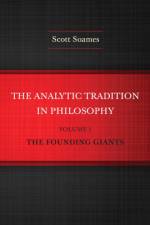
This is the first of five volumes of a definitive history of analytic philosophy from the invention of modern logic in 1879 to the end of the twentieth century. Scott Soames, a leading philosopher of language and historian of analytic philosophy, provides the fullest and most detailed account of the analytic tradition yet published, one that is unmatched in its chronological range, topics covered, and depth of treatment. Focusing on the major milestones and distinguishing them from the dead ends, Soames gives a seminal account of where the analytic tradition has been and where it appears to be heading.Volume 1 examines the initial phase of the analytic tradition through the major contributions of three of its four founding giants-Gottlob Frege, Bertrand Russell, and G. E. Moore. Soames describes and analyzes their work in logic, the philosophy of mathematics, epistemology, metaphysics, ethics, and the philosophy of language. He explains how by about 1920 their efforts had made logic, language, and mathematics central to philosophy in an unprecedented way. But although logic, language, and mathematics were now seen as powerful tools to attain traditional ends, they did not yet define philosophy. As volume 1 comes to a close, that was all about to change with the advent of the fourth founding giant, Ludwig Wittgenstein, and the 1922 English publication of his Tractatus, which ushered in a "e;linguistic turn"e; in philosophy that was to last for decades.
In this collection of recent and unpublished essays, leading analytic philosopher Scott Soames traces milestones in his field from its beginnings in Britain and Germany in the late nineteenth and early twentieth century, through its subsequent growth in the United States, up to its present as the world's most vigorous philosophical tradition. The central essay chronicles how analytic philosophy developed in the United States out of American pragmatism, the impact of European visitors and immigrants, the midcentury transformation of the Harvard philosophy department, and the rapid spread of the analytic approach that followed. Another essay explains the methodology guiding analytic philosophy, from the logicism of Frege and Russell through Wittgenstein's linguistic turn and Carnap's vision of replacing metaphysics with philosophy of science. Further essays review advances in logic and the philosophy of mathematics that laid the foundation for a rigorous, scientific study of language, meaning, and information. Other essays discuss W.V.O. Quine, David K. Lewis, Saul Kripke, the Frege-Russell analysis of quantification, Russell's attempt to eliminate sets with his "e;no class theory,"e; and the Quine-Carnap dispute over meaning and ontology. The collection then turns to topics at the frontier of philosophy of language. The final essays, combining philosophy of language and law, advance a sophisticated originalist theory of interpretation and apply it to U.S. constitutional rulings about due process.
An essential introduction to the philosophy of biologyThis is a concise, comprehensive, and accessible introduction to the philosophy of biology written by a leading authority on the subject. Geared to philosophers, biologists, and students of both, the book provides sophisticated and innovative coverage of the central topics and many of the latest developments in the field. Emphasizing connections between biological theories and other areas of philosophy, and carefully explaining both philosophical and biological terms, Peter Godfrey-Smith discusses the relation between philosophy and science; examines the role of laws, mechanistic explanation, and idealized models in biological theories; describes evolution by natural selection; and assesses attempts to extend Darwin's mechanism to explain changes in ideas, culture, and other phenomena. Further topics include functions and teleology, individuality and organisms, species, the tree of life, and human nature. The book closes with detailed, cutting-edge treatments of the evolution of cooperation, of information in biology, and of the role of communication in living systems at all scales.Authoritative and up-to-date, this is an essential guide for anyone interested in the important philosophical issues raised by the biological sciences.
Abonner på vårt nyhetsbrev og få rabatter og inspirasjon til din neste leseopplevelse.
Ved å abonnere godtar du vår personvernerklæring.