

















Gjør som tusenvis av andre bokelskere
Abonner på vårt nyhetsbrev og få rabatter og inspirasjon til din neste leseopplevelse.
Ved å abonnere godtar du vår personvernerklæring.Du kan når som helst melde deg av våre nyhetsbrev.

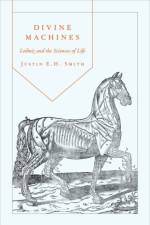
Though it did not yet exist as a discrete field of scientific inquiry, biology was at the heart of many of the most important debates in seventeenth-century philosophy. Nowhere is this more apparent than in the work of G. W. Leibniz. In Divine Machines, Justin Smith offers the first in-depth examination of Leibniz's deep and complex engagement with the empirical life sciences of his day, in areas as diverse as medicine, physiology, taxonomy, generation theory, and paleontology. He shows how these wide-ranging pursuits were not only central to Leibniz's philosophical interests, but often provided the insights that led to some of his best-known philosophical doctrines. Presenting the clearest picture yet of the scope of Leibniz's theoretical interest in the life sciences, Divine Machines takes seriously the philosopher's own repeated claims that the world must be understood in fundamentally biological terms. Here Smith reveals a thinker who was immersed in the sciences of life, and looked to the living world for answers to vexing metaphysical problems. He casts Leibniz's philosophy in an entirely new light, demonstrating how it radically departed from the prevailing models of mechanical philosophy and had an enduring influence on the history and development of the life sciences. Along the way, Smith provides a fascinating glimpse into early modern debates about the nature and origins of organic life, and into how philosophers such as Leibniz engaged with the scientific dilemmas of their era.
We think of the Enlightenment as an era dominated by ideas of progress, production, and industry--not an era that favored the lax and indolent individual. But was the Enlightenment only about the unceasing improvement of self and society? The Pursuit of Laziness examines moral, political, and economic treatises of the period, and reveals that crucial eighteenth-century texts did find value in idleness and nonproductivity. Fleshing out Enlightenment thinking in the works of Denis Diderot, Joseph Joubert, Pierre de Marivaux, Jean-Jacques Rousseau, and Jean-Simeon Chardin, this book explores idleness in all its guises, and illustrates that laziness existed, not as a vice of the wretched, but as an exemplar of modernity and a resistance to beliefs about virtue and utility. Whether in the dawdlings of Marivaux's journalist who delayed and procrastinated or in the subjects of Chardin's paintings who delighted in suspended, playful time, Pierre Saint-Amand shows how eighteenth-century works provided a strong argument for laziness. Rousseau abandoned his previous defense of labor to pursue reverie and botanical walks, Diderot emphasized a parasitic strategy of resisting work in order to liberate time, and Joubert's little-known posthumous Notebooks radically opposed the central philosophy of the Enlightenment in a quest to infinitely postpone work. Unsettling the stubborn view of the eighteenth century as an age of frenetic industriousness and labor, The Pursuit of Laziness plumbs the texts and images of the time and uncovers deliberate yearnings for slowness and recreation.Some images inside the book are unavailable due to digital copyright restrictions.
This is a concise introduction to current philosophical debates about truth. Combining philosophical and technical material, the book is organized around, but not limited to, the view known as deflationism. In clear language, Burgess and Burgess cover a wide range of issues, including the nature of truth, the status of truth-value gaps, the relationship between truth and meaning, relativism and pluralism about truth, and semantic paradoxes from Alfred Tarski to Saul Kripke and beyond. The book provides a rich picture of contemporary philosophical theorizing about truth, one that will be essential reading for philosophy students as well as philosophers specializing in other areas.
In a fascinating "e;urban biography,"e; Michael Hamm tells the story of one of Europe's most diverse cities and its distinctive mix of Ukrainian, Polish, Russian, and Jewish inhabitants. A splendid urban center in medieval times, Kiev became a major metropolis in late Imperial Russia, and is now the capital of independent Ukraine. After a concise account of Kiev's early history, Hamm focuses on the city's dramatic growth in the nineteenth and early twentieth centuries. The first historian to analyze how each of Kiev's ethnic groups contributed to the vitality of the city's culture, he also examines the violent conflicts that developed among them. In vivid detail, he shows why Kiev came to be known for its "e;abundance of revolutionaries"e; and its anti-Semitic violence.
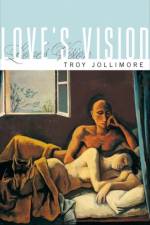
Love often seems uncontrollable and irrational, but we just as frequently appear to have reasons for loving the people we do. In Love's Vision, Troy Jollimore offers a new way of understanding love that accommodates both of these facts, arguing that love is guided by reason even as it resists and sometimes eludes rationality. At the same time, he reconsiders love's moral status, acknowledging its moral dangers while arguing that it is, at heart, a moral phenomenon--an emotion that demands empathy and calls us away from excessive self-concern. Love is revealed as neither wholly moral nor deeply immoral, neither purely rational nor profoundly irrational. Rather, as Diotima says in Plato's Symposium, love is "e;something in between."e; Jollimore makes his case by proposing a "e;vision"e; view of love, according to which loving is a way of seeing that involves bestowing charitable attention on a loved one. This view recognizes the truth in the cliche "e;love is blind,"e; but holds that love's blindness does not undermine the idea that love is guided by reason. Reasons play an important role in love even if they rest on facts that are not themselves rationally justifiable. Filled with illuminating examples from literature, Love's Vision is an original examination of a subject of vital philosophical and human concern.
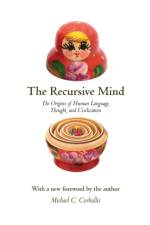
The Recursive Mind challenges the commonly held notion that language is what makes us uniquely human. In this compelling book, Michael Corballis argues that what distinguishes us in the animal kingdom is our capacity for recursion: the ability to embed our thoughts within other thoughts. "e;I think, therefore I am,"e; is an example of recursive thought, because the thinker has inserted himself into his thought. Recursion enables us to conceive of our own minds and the minds of others. It also gives us the power of mental "e;time travel"e;--the ability to insert past experiences, or imagined future ones, into present consciousness. Drawing on neuroscience, psychology, animal behavior, anthropology, and archaeology, Corballis demonstrates how these recursive structures led to the emergence of language and speech, which ultimately enabled us to share our thoughts, plan with others, and reshape our environment to better reflect our creative imaginations. He shows how the recursive mind was critical to survival in the harsh conditions of the Pleistocene epoch, and how it evolved to foster social cohesion. He traces how language itself adapted to recursive thinking, first through manual gestures, then later, with the emergence of Homo sapiens, vocally. Toolmaking and manufacture arose, and the application of recursive principles to these activities in turn led to the complexities of human civilization, the extinction of fellow large-brained hominins like the Neandertals, and our species' supremacy over the physical world.Some images inside the book are unavailable due to digital copyright restrictions.
The Big Problem of Small Change offers the first credible and analytically sound explanation of how a problem that dogged monetary authorities for hundreds of years was finally solved. Two leading economists, Thomas Sargent and Francois Velde, examine the evolution of Western European economies through the lens of one of the classic problems of monetary history--the recurring scarcity and depreciation of small change. Through penetrating and clearly worded analysis, they tell the story of how monetary technologies, doctrines, and practices evolved from 1300 to 1850; of how the "e;standard formula"e; was devised to address an age-old dilemma without causing inflation. One big problem had long plagued commodity money (that is, money literally worth its weight in gold): governments were hard-pressed to provide a steady supply of small change because of its high costs of production. The ensuing shortages hampered trade and, paradoxically, resulted in inflation and depreciation of small change. After centuries of technological progress that limited counterfeiting, in the nineteenth century governments replaced the small change in use until then with fiat money (money not literally equal to the value claimed for it)--ensuring a secure flow of small change. But this was not all. By solving this problem, suggest Sargent and Velde, modern European states laid the intellectual and practical basis for the diverse forms of money that make the world go round today. This keenly argued, richly imaginative, and attractively illustrated study presents a comprehensive history and theory of small change. The authors skillfully convey the intuition that underlies their rigorous analysis. All those intrigued by monetary history will recognize this book for the standard that it is.
This book provides a comprehensive and up-to-date introduction to Hodge theory-one of the central and most vibrant areas of contemporary mathematics-from leading specialists on the subject. The topics range from the basic topology of algebraic varieties to the study of variations of mixed Hodge structure and the Hodge theory of maps. Of particular interest is the study of algebraic cycles, including the Hodge and Bloch-Beilinson Conjectures. Based on lectures delivered at the 2010 Summer School on Hodge Theory at the ICTP in Trieste, Italy, the book is intended for a broad group of students and researchers. The exposition is as accessible as possible and doesn't require a deep background. At the same time, the book presents some topics at the forefront of current research.The book is divided between introductory and advanced lectures. The introductory lectures address Kahler manifolds, variations of Hodge structure, mixed Hodge structures, the Hodge theory of maps, period domains and period mappings, algebraic cycles (up to and including the Bloch-Beilinson conjecture) and Chow groups, sheaf cohomology, and a new treatment of Grothendieck's algebraic de Rham theorem. The advanced lectures address a Hodge-theoretic perspective on Shimura varieties, the spread philosophy in the study of algebraic cycles, absolute Hodge classes (including a new, self-contained proof of Deligne's theorem on absolute Hodge cycles), and variation of mixed Hodge structures.The contributors include Patrick Brosnan, James Carlson, Eduardo Cattani, Francois Charles, Mark Andrea de Cataldo, Fouad El Zein, Mark L. Green, Phillip A. Griffiths, Matt Kerr, Le Dung Trang, Luca Migliorini, Jacob P. Murre, Christian Schnell, and Loring W. Tu.
G. A. Cohen was one of the most gifted, influential, and progressive voices in contemporary political philosophy. At the time of his death in 2009, he had plans to bring together a number of his most significant papers. This is the first of three volumes to realize those plans. Drawing on three decades of work, it contains previously uncollected articles that have shaped many of the central debates in political philosophy, as well as papers published here for the first time. In these pieces, Cohen asks what egalitarians have most reason to equalize, he considers the relationship between freedom and property, and he reflects upon ideal theory and political practice. Included here are classic essays such as "e;Equality of What?"e; and "e;Capitalism, Freedom, and the Proletariat,"e; along with more recent contributions such as "e;Fairness and Legitimacy in Justice,"e; "e;Freedom and Money,"e; and the previously unpublished "e;How to Do Political Philosophy."e; On ample display throughout are the clarity, rigor, conviction, and wit for which Cohen was renowned. Together, these essays demonstrate how his work provides a powerful account of liberty and equality to the left of Ronald Dworkin, John Rawls, Amartya Sen, and Isaiah Berlin.
The 526 documents printed in this volume run from 28 November 1813 to 30 September 1814. During this period Jefferson reviews the extant sources on the 1765 Stamp Act crisis to aid William Wirt, a Patrick Henry scholar; records his largely positive impressions of George Washington; and updates a reading list for law students that he had initially drawn up forty years earlier. In the spring of 1814 Jefferson becomes a trustee of the Albemarle Academy, the earliest direct ancestor of the University of Virginia. He is soon actively involved in planning for its establishment, helping to draft rules for governance of the academy's trustees and propose funding options, and he lays out an expansive vision for its future as an institution of higher learning. Jefferson also exchanges ideas on collegiate education with such respected scholars as Thomas Cooper and Jose Correa da Serra. Jefferson's wide-ranging correspondence includes a temperate response to a lengthy letter from Miles King urging the retired president to reflect on his personal religion, and a diplomatic but noncommittal reply to a proposal by Edward Coles that the author of the Declaration of Independence employ his prestige to help abolish slavery. Having learned of the British destruction late in August 1814 of the public buildings in Washington, Jefferson offers his massive book collection as a replacement for the Library of Congress. The nucleus for one of the world's great public libraries is formed early in 1815 when the nation purchases Jefferson's 6,707 volumes.Some images inside the book are unavailable due to digital copyright restrictions.
A global history of the climate catastrophe caused by the Tambora eruptionWhen Indonesia's Mount Tambora erupted in 1815, it unleashed the most destructive wave of extreme weather the world has witnessed in thousands of years. The volcano's massive sulfate dust cloud enveloped the Earth, cooling temperatures and disrupting major weather systems for more than three years. Communities worldwide endured famine, disease, and civil unrest on a catastrophic scale.Here, Gillen D'Arcy Wood traces Tambora's global and historical reach: how the volcano's three-year climate change regime initiated the first worldwide cholera pandemic, expanded opium markets in China, and plunged the United States into its first economic depression. Bringing the history of this planetary emergency to life, Tambora sheds light on the fragile interdependence of climate and human societies to offer a cautionary tale about the potential tragic impacts of drastic climate change in our own century.
A lively collection of fun and challenging problems in ancient Egyptian mathThe mathematics of ancient Egypt was fundamentally different from our math today. Contrary to what people might think, it wasn't a primitive forerunner of modern mathematics. In fact, it can't be understood using our current computational methods. Count Like an Egyptian provides a fun, hands-on introduction to the intuitive and often-surprising art of ancient Egyptian math. David Reimer guides you step-by-step through addition, subtraction, multiplication, and more. He even shows you how fractions and decimals may have been calculated-they technically didn't exist in the land of the pharaohs. You'll be counting like an Egyptian in no time, and along the way you'll learn firsthand how mathematics is an expression of the culture that uses it, and why there's more to math than rote memorization and bewildering abstraction.Reimer takes you on a lively and entertaining tour of the ancient Egyptian world, providing rich historical details and amusing anecdotes as he presents a host of mathematical problems drawn from different eras of the Egyptian past. Each of these problems is like a tantalizing puzzle, often with a beautiful and elegant solution. As you solve them, you'll be immersed in many facets of Egyptian life, from hieroglyphs and pyramid building to agriculture, religion, and even bread baking and beer brewing.Fully illustrated in color throughout, Count Like an Egyptian also teaches you some Babylonian computation-the precursor to our modern system-and compares ancient Egyptian mathematics to today's math, letting you decide for yourself which is better.
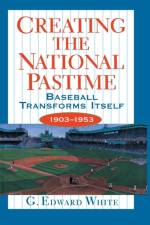
At a time when many baseball fans wish for the game to return to a purer past, G. Edward White shows how seemingly irrational business decisions, inspired in part by the self-interest of the owners but also by their nostalgia for the game, transformed baseball into the national pastime. Not simply a professional sport, baseball has been treated as a focus of childhood rituals and an emblem of American individuality and fair play throughout much of the twentieth century. It started out, however, as a marginal urban sport associated with drinking and gambling. White describes its progression to an almost mythic status as an idyllic game, popular among people of all ages and classes. He then recounts the owner's efforts, often supported by the legal system, to preserve this image. Baseball grew up in the midst of urban industrialization during the Progressive Era, and the emerging steel and concrete baseball parks encapsulated feelings of neighborliness and associations with the rural leisure of bygone times. According to White, these nostalgic themes, together with personal financial concerns, guided owners toward practices that in retrospect appear unfair to players and detrimental to the progress of the game. Reserve clauses, blacklisting, and limiting franchise territories, for example, were meant to keep a consistent roster of players on a team, build fan loyalty, and maintain the game's local flavor. These practices also violated anti-trust laws and significantly restricted the economic power of the players. Owners vigorously fought against innovations, ranging from the night games and radio broadcasts to the inclusion of African-American players. Nonetheless, the image of baseball as a spirited civic endeavor persisted, even in the face of outright corruption, as witnessed in the courts' leniency toward the participants in the Black Sox scandal of 1919. White's story of baseball is intertwined with changes in technology and business in America and with changing attitudes toward race and ethnicity. The time is fast approaching, he concludes, when we must consider whether baseball is still regarded as the national pastime and whether protecting its image is worth the effort.
How the works of Jane Austen show that game theory is present in all human behaviorGame theory-the study of how people make choices while interacting with others-is one of the most popular technical approaches in social science today. But as Michael Chwe reveals in his insightful new book, Jane Austen explored game theory's core ideas in her six novels roughly two hundred years ago-over a century before its mathematical development during the Cold War. Jane Austen, Game Theorist shows how this beloved writer theorized choice and preferences, prized strategic thinking, and analyzed why superiors are often strategically clueless about inferiors. Exploring a diverse range of literature and folktales, this book illustrates the wide relevance of game theory and how, fundamentally, we are all strategic thinkers.
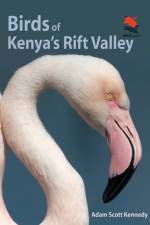
Kenya's Rift Valley includes four major national parks--Lake Nakuru, Lake Bogoria, Mount Longonot, and Hell's Gate--as well as many smaller areas that are outstanding for wildlife. Birds of Kenya's Rift Valley features the 320 bird species that are most likely to be encountered on safari in this world-famous region, which runs from Lake Baringo in the north to Lake Magadi in the south. Featuring over 500 stunning color photos, this beautiful guide breaks new ground with its eye-catching layout and easy-to-use format. The book follows a habitat-based approach and provides interesting information about the ecology and behaviors of each species. Birds of Kenya's Rift Valley avoids technical jargon in the species descriptions, which makes the guide easily accessible to anyone. With it, you will be identifying birds in no time.Stunning photos of 320 bird speciesMajor plumage variations depictedJargon-free textHelpful notes on what to look and listen for, behavior, and why some birds are so named
Game theory is central to understanding human behavior and relevant to all of the behavioral sciences-from biology and economics, to anthropology and political science. However, as The Bounds of Reason demonstrates, game theory alone cannot fully explain human behavior and should instead complement other key concepts championed by the behavioral disciplines. Herbert Gintis shows that just as game theory without broader social theory is merely technical bravado, so social theory without game theory is a handicapped enterprise. This edition has been thoroughly revised and updated.Reinvigorating game theory, The Bounds of Reason offers innovative thinking for the behavioral sciences.
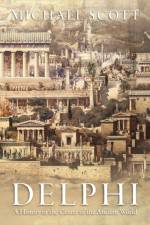
A comprehensive narrative history of the ancient world's center, from its founding to its modern rediscoveryThe oracle and sanctuary of the Greek god Apollo at Delphi were known as the "e;omphalos"e;-the "e;center"e; or "e;navel"e;-of the ancient world for more than 1,000 years. Individuals, city leaders, and kings came from all over the Mediterranean and beyond to consult Delphi's oracular priestess; to set up monuments to the gods; and to take part in competitions.In this richly illustrated account, Michael Scott covers the history and nature of Delphi, from the literary and archaeological evidence surrounding the site, to its rise as a center of worship, to the constant appeal of the oracle despite her cryptic prophecies. He describes how Delphi became a contested sacred site for Greeks and Romans and a storehouse for the treasures of rival city-states and foreign kings. He also examines the eventual decline of the site and how its meaning and importance have continued to be reshaped.A unique window into the center of the ancient world, Delphi will appeal to general readers, tourists, students, and specialists.
John Milnor, best known for his work in differential topology, K-theory, and dynamical systems, is one of only three mathematicians to have won the Fields medal, the Abel prize, and the Wolf prize, and is the only one to have received all three of the Leroy P. Steele prizes. In honor of his eightieth birthday, this book gathers together surveys and papers inspired by Milnor's work, from distinguished experts examining not only holomorphic dynamics in one and several variables, but also differential geometry, entropy theory, and combinatorial group theory. The book contains the last paper written by William Thurston, as well as a short paper by John Milnor himself. Introductory sections put the papers in mathematical and historical perspective, color figures are included, and an index facilitates browsing. This collection will be useful to students and researchers for decades to come. The contributors are Marco Abate, Marco Arizzi, Alexander Blokh, Thierry Bousch, Xavier Buff, Serge Cantat, Tao Chen, Robert Devaney, Alexandre Dezotti, Tien-Cuong Dinh, Romain Dujardin, Hugo Garcia-Compean, William Goldman, Rotislav Grigorchuk, John Hubbard, Yunping Jiang, Linda Keen, Jan Kiwi, Genadi Levin, Daniel Meyer, John Milnor, Carlos Moreira, Vincente Munoz, Viet-Anh Nguyen, Lex Oversteegen, Ricardo Perez-Marco, Ross Ptacek, Jasmin Raissy, Pascale Roesch, Roberto Santos-Silva, Dierk Schleicher, Nessim Sibony, Daniel Smania, Tan Lei, William Thurston, Vladlen Timorin, Sebastian van Strien, and Alberto Verjovsky.
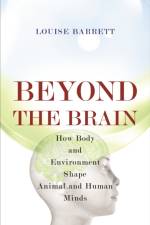
When a chimpanzee stockpiles rocks as weapons or when a frog sends out mating calls, we might easily assume these animals know their own motivations--that they use the same psychological mechanisms that we do. But as Beyond the Brain indicates, this is a dangerous assumption because animals have different evolutionary trajectories, ecological niches, and physical attributes. How do these differences influence animal thinking and behavior? Removing our human-centered spectacles, Louise Barrett investigates the mind and brain and offers an alternative approach for understanding animal and human cognition. Drawing on examples from animal behavior, comparative psychology, robotics, artificial life, developmental psychology, and cognitive science, Barrett provides remarkable new insights into how animals and humans depend on their bodies and environment--not just their brains--to behave intelligently. Barrett begins with an overview of human cognitive adaptations and how these color our views of other species, brains, and minds. Considering when it is worth having a big brain--or indeed having a brain at all--she investigates exactly what brains are good at. Showing that the brain's evolutionary function guides action in the world, she looks at how physical structure contributes to cognitive processes, and she demonstrates how these processes employ materials and resources in specific environments. Arguing that thinking and behavior constitute a property of the whole organism, not just the brain, Beyond the Brain illustrates how the body, brain, and cognition are tied to the wider world.
The essential guide for identifying the bumble bees of North AmericaMore than ever before, there is widespread interest in studying bumble bees and the critical role they play in our ecosystems. Bumble Bees of North America is the first comprehensive guide to North American bumble bees to be published in more than a century. Richly illustrated with color photographs, diagrams, range maps, and graphs of seasonal activity patterns, this guide allows amateur and professional naturalists to identify all 46 bumble bee species found north of Mexico and to understand their ecology and changing geographic distributions.The book draws on the latest molecular research, shows the enormous color variation within species, and guides readers through the many confusing convergences between species. It draws on a large repository of data from museum collections and presents state-of-the-art results on evolutionary relationships, distributions, and ecological roles. Illustrated keys allow identification of color morphs and social castes.A landmark publication, Bumble Bees of North America sets the standard for guides and the study of these important insects.The best guide yet to the 46 recognized bumble bee species in North America north of MexicoUp-to-date taxonomy includes previously unpublished resultsDetailed distribution mapsExtensive keys identify the many color patterns of species
The definitive biography of the legendary "e;first citizen of Athens"e;Pericles has the rare distinction of giving his name to an entire period of history, embodying what has often been taken as the golden age of the ancient Greek world. "e;Periclean"e; Athens witnessed tumultuous political and military events, and achievements of the highest order in philosophy, drama, poetry, oratory, and architecture. Pericles of Athens is the first book in decades to reassess the life and legacy of one of the greatest generals, orators, and statesmen of the classical world. In this compelling critical biography, Vincent Azoulay takes a fresh look at both the classical and modern reception of Pericles, recognizing his achievements as well as his failings. From Thucydides and Plutarch to Voltaire and Hegel, ancient and modern authors have questioned Pericles's relationship with democracy and Athenian society. This is the enigma that Azoulay investigates in this groundbreaking book. Pericles of Athens offers a balanced look at the complex life and afterlife of the legendary "e;first citizen of Athens."e;
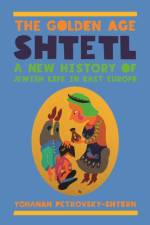
A major history of the shtetl's golden ageThe shtetl was home to two-thirds of East Europe's Jews in the eighteenth and nineteenth centuries, yet it has long been one of the most neglected and misunderstood chapters of the Jewish experience. This book provides the first grassroots social, economic, and cultural history of the shtetl. Challenging popular misconceptions of the shtetl as an isolated, ramshackle Jewish village stricken by poverty and pogroms, Yohanan Petrovsky-Shtern argues that, in its heyday from the 1790s to the 1840s, the shtetl was a thriving Jewish community as vibrant as any in Europe.Petrovsky-Shtern brings this golden age to life, looking at dozens of shtetls and drawing on a wealth of never-before-used archival material. Illustrated throughout with rare archival photographs and artwork, this nuanced history casts the shtetl in an altogether new light, revealing how its golden age continues to shape the collective memory of the Jewish people today.
This is an eagerly awaited collection of new poems from the author of Tom Thomson in Purgatory, which won the National Book Critics Circle Award and was hailed by the New York Times as a "e;snappy, entertaining book."e; A triumphant follow-up to that acclaimed debut, At Lake Scugog demonstrates why the San Francisco Chronicle has called Troy Jollimore "e;a new and exciting voice in American poetry."e; Jollimore is a professional philosopher, and in witty and profound ways his formally playful poems dramatize philosophical subjects--especially the individual's relation to the larger world, and the permeable, constantly shifting border between "e;inner"e; and "e;outer."e; For instance, the speaker of "e;The Solipsist,"e; suspecting that the entire world "e;lives inside of your skull,"e; wonders "e;why / God would make ear and eye / to face outward, not in."e; And Tom Thomson--a character who also appeared in Jollimore's first book--finds himself journeying like an astronaut through the far reaches of the space that fills his head, an experience that prompts him to ask that a doorbell be installed "e;on the inside,"e; so that he can warn the world before "e;intruding on't."e;______ From At Lake Scugog:LOBSTERS Troy Jollimore ? tend to cluster in prime numbers, sub-oceanic bundles of bug consciousnesssubmerged in waking slumber, plunged in pitsof murk-black water. They have coalesced out of the pitch and grime and salt suspendedwithin that atmospheric gloom. Their skinis colorless below. But when exposedto air, they start to radiate bright green, then, soon, a siren red that wails: I'm dead.The meat inside, though, is as white as teeth,or the hard-boiled egg that comes to mindwhen one cracks that crisp shell and digs beneath. Caress the toothy claw-edge of its pincerand you will know the single, simple thoughtthat populates its mind. The lobster trap is eleganceitself: one moving part: the thing that's caught.
The ultimate must-have guide for identifying migrant raptors, Hawks at a Distance is the first volume to focus on distant raptors as they are truly seen in the field. Jerry Liguori, a leading expert on North American raptors, factors in new information and approaches for identifying twenty-nine species of raptor in various lighting situations and settings. The field guide's nineteen full-color portraits, 558 color photos, and 896 black-and-white images portray shapes and plumages for each species from all angles. Useful flight identification criteria are provided and the accompanying text discusses all aspects of in-flight hawk identification, including flight style and behavior. Concentrating on features that are genuinely observable at a distance, this concise and practical field guide is ideal for any aspiring or experienced hawk enthusiast. The first guide to focus on distant raptors as they are viewed in the field New information and approaches for identifying distant raptors Illustrates twenty-nine species in various lighting situations and settings 558 color photos and 896 black-and-white images depicting plumage and shape characteristics All aspects of in-flight hawk identification, including flight style and behavior
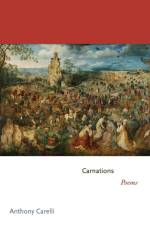
In Anthony Carelli's remarkable debut, Carnations, the poems attempt to reanimate dead metaphors as blossoms: wild and lovely but also fleeting, mortal, and averse to the touch. Here, the poems are carnations, not only flowers, but also body-making words. Nodding to influences as varied as George Herbert, Francis Ponge, Fernando Pessoa, and D. H. Lawrence, Carelli asserts that the poet's materials--words, objects, phenomena--are sacred, wilting in the moment, yet perennially renewed. Often taking titles from a biblical vocabulary, Carnations reminds us that unremarkable places and events--a game of Frisbee in a winter park, workers stacking panes in a glass factory, or the daily opening of a cafe--can, in a blink, be new. A short walk home is briefly transformed into a cathedral, and the work-worn body becomes a dancer, a prophet, a muse.______ From Carnations:THE PROPHETS Anthony Carelli ? A river. And if not the river nearby, then a dream of a river. Nothing happens that doesn't happen along a river, however humble the water may be. Take Rowan Creek, the trickle struggling to lug its mirroring across Poynette, wherein, suspended, so gentle and shallow, I learned to walk, bobbing at my father's knees. Later, whenever we tried to meander on our inner tubes, we'd get lodged on the bottom. Seth, remember, no matter how we'd kick and shove off, we'd just get lodged again? At most an afternoon would carry us a hundred feet toward the willows. We'd piss ourselves on purpose just to feel the spirits of our warmth haloing out. And once, two bald men on the footbridge, bowing in the sky, stared down at us without a word.
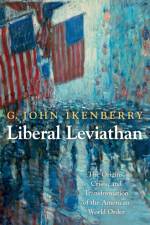
In the second half of the twentieth century, the United States engaged in the most ambitious and far-reaching liberal order building the world had yet seen. This liberal international order has been one of the most successful in history in providing security and prosperity to more people. But in the last decade, the American-led order has been troubled. Some argue that the Bush administration, with its war on terror, invasion of Iraq, and unilateral orientation, undermined this liberal order. Others argue that we are witnessing the end of the American era. Liberal Leviathan engages these debates. G. John Ikenberry argues that the crisis that besets the American-led order is a crisis of authority. A political struggle has been ignited over the distribution of roles, rights, and authority within the liberal international order. But the deeper logic of liberal order remains alive and well. The forces that have triggered this crisis--the rise of non-Western states such as China, contested norms of sovereignty, and the deepening of economic and security interdependence--have resulted from the successful functioning and expansion of the postwar liberal order, not its breakdown. The liberal international order has encountered crises in the past and evolved as a result. It will do so again. Ikenberry provides the most systematic statement yet about the theory and practice of the liberal international order, and a forceful message for policymakers, scholars, and general readers about why America must renegotiate its relationship with the rest of the world and pursue a more enlightened strategy--that of the liberal leviathan.
In the wake of the global financial crisis that began in 2007, faith in the rationality of markets has lost ground to a new faith in their irrationality. The problem, Roman Frydman and Michael Goldberg argue, is that both the rational and behavioral theories of the market rest on the same fatal assumption--that markets act mechanically and economic change is fully predictable. In Beyond Mechanical Markets, Frydman and Goldberg show how the failure to abandon this assumption hinders our understanding of how markets work, why price swings help allocate capital to worthy companies, and what role government can and can't play. The financial crisis, Frydman and Goldberg argue, was made more likely, if not inevitable, by contemporary economic theory, yet its core tenets remain unchanged today. In response, the authors show how imperfect knowledge economics, an approach they pioneered, provides a better understanding of markets and the financial crisis. Frydman and Goldberg deliver a withering critique of the widely accepted view that the boom in equity prices that ended in 2007 was a bubble fueled by herd psychology. They argue, instead, that price swings are driven by individuals' ever-imperfect interpretations of the significance of economic fundamentals for future prices and risk. Because swings are at the heart of a dynamic economy, reforms should aim only to curb their excesses. Showing why we are being dangerously led astray by thinking of markets as predictably rational or irrational, Beyond Mechanical Markets presents a powerful challenge to conventional economic wisdom that we can't afford to ignore.
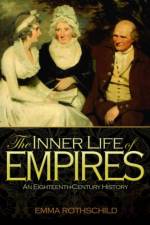
They were abolitionists, speculators, slave owners, government officials, and occasional politicians. They were observers of the anxieties and dramas of empire. And they were from one family. The Inner Life of Empires tells the intimate history of the Johnstones--four sisters and seven brothers who lived in Scotland and around the globe in the fast-changing eighteenth century. Piecing together their voyages, marriages, debts, and lawsuits, and examining their ideas, sentiments, and values, renowned historian Emma Rothschild illuminates a tumultuous period that created the modern economy, the British Empire, and the philosophical Enlightenment. One of the sisters joined a rebel army, was imprisoned in Edinburgh Castle, and escaped in disguise in 1746. Her younger brother was a close friend of Adam Smith and David Hume. Another brother was fluent in Persian and Bengali, and married to a celebrated poet. He was the owner of a slave known only as "e;Bell or Belinda,"e; who journeyed from Calcutta to Virginia, was accused in Scotland of infanticide, and was the last person judged to be a slave by a court in the British isles. In Grenada, India, Jamaica, and Florida, the Johnstones embodied the connections between European, American, and Asian empires. Their family history offers insights into a time when distinctions between the public and private, home and overseas, and slavery and servitude were in constant flux. Based on multiple archives, documents, and letters, The Inner Life of Empires looks at one family's complex story to describe the origins of the modern political, economic, and intellectual world.
When Mustafa Kemal Atatrk became the first president of Turkey in 1923, he set about transforming his country into a secular republic where nationalism sanctified by science--and by the personality cult Atatrk created around himself--would reign supreme as the new religion. This book provides the first in-depth look at the intellectual life of the Turkish Republic's founder. In doing so, it frames him within the historical context of the turbulent age in which he lived, and explores the uneasy transition from the late Ottoman imperial order to the modern Turkish state through his life and ideas. Shedding light on one of the most complex and enigmatic statesmen of the modern era, M. Skr Hanioglu takes readers from Atatrk's youth as a Muslim boy in the volatile ethnic cauldron of Macedonia, to his education in nonreligious and military schools, to his embrace of Turkish nationalism and the modernizing Young Turks movement. Who was this figure who sought glory as an ambitious young officer in World War I, defied the victorious Allies intent on partitioning the Turkish heartland, and defeated the last sultan? Hanioglu charts Atatrk's intellectual and ideological development at every stage of his life, demonstrating how he was profoundly influenced by the new ideas that were circulating in the sprawling Ottoman realm. He shows how Atatrk drew on a unique mix of scientism, materialism, social Darwinism, positivism, and other theories to fashion a grand utopian framework on which to build his new nation.
The world's leading economies are facing not just one but many crises. The financial meltdown may not be over, climate change threatens major global disruption, economic inequality has reached extremes not seen for a century, and government and business are widely distrusted. At the same time, many people regret the consumerism and social corrosion of modern life. What these crises have in common, Diane Coyle argues, is a reckless disregard for the future--especially in the way the economy is run. How can we achieve the financial growth we need today without sacrificing a decent future for our children, our societies, and our planet? How can we realize what Coyle calls "e;the Economics of Enough"e;? Running the economy for tomorrow as well as today will require a wide range of policy changes. The top priority must be ensuring that we get a true picture of long-term economic prospects, with the development of official statistics on national wealth in its broadest sense, including natural and human resources. Saving and investment will need to be encouraged over current consumption. Above all, governments will need to engage citizens in a process of debate about the difficult choices that lie ahead and rebuild a shared commitment to the future of our societies. Creating a sustainable economy--having enough to be happy without cheating the future--won't be easy. But The Economics of Enough starts a profoundly important conversation about how we can begin--and the first steps we need to take.
Abonner på vårt nyhetsbrev og få rabatter og inspirasjon til din neste leseopplevelse.
Ved å abonnere godtar du vår personvernerklæring.