

























Gjør som tusenvis av andre bokelskere
Abonner på vårt nyhetsbrev og få rabatter og inspirasjon til din neste leseopplevelse.
Ved å abonnere godtar du vår personvernerklæring.Du kan når som helst melde deg av våre nyhetsbrev.

In the 1990s Richard B. Alley and his colleagues made headlines with the discovery that the last ice age came to an abrupt end over a period of only three years. In The Two-Mile Time Machine, Alley tells the fascinating history of global climate changes as revealed by reading the annual rings of ice from cores drilled in Greenland. He explains that humans have experienced an unusually temperate climate compared to the wild fluctuations that characterized most of prehistory. He warns that our comfortable environment could come to an end in a matter of years and tells us what we need to know in order to understand and perhaps overcome climate changes in the future.In a new preface, the author weighs in on whether our understanding of global climate change has altered in the years since the book was first published, what the latest research tells us, and what he is working on next.
How can developing countries grow their economies? Most answers to this question center on what the rich world should or shouldn't do for the poor world. In The Quest for Prosperity, Justin Yifu Lin-the first non-Westerner to be chief economist of the World Bank-focuses on what developing nations can do to help themselves. Lin examines how the countries that have succeeded in developing their own economies have actually done it. Interwoven with insights, observations, and stories from Lin's travels as chief economist of the World Bank and his reflections on China's rise, this book provides a road map and hope for those countries engaged in their own quest for prosperity.
A haunting, beautifully illustrated memorial to this iconic extinct birdAt the start of the nineteenth century, Passenger Pigeons were perhaps the most abundant birds on the planet, numbering literally in the billions. The flocks were so large and so dense that they blackened the skies, even blotting out the sun for days at a stretch. Yet by the end of the century, the most common bird in North America had vanished from the wild. In 1914, the last known representative of her species, Martha, died in a cage at the Cincinnati Zoo.This stunningly illustrated book tells the astonishing story of North America's Passenger Pigeon, a bird species that-like the Tyrannosaur, the Mammoth, and the Dodo-has become one of the great icons of extinction. Errol Fuller describes how these fast, agile, and handsomely plumaged birds were immortalized by the ornithologist and painter John James Audubon, and captured the imagination of writers such as James Fenimore Cooper, Henry David Thoreau, and Mark Twain. He shows how widespread deforestation, the demand for cheap and plentiful pigeon meat, and the indiscriminate killing of Passenger Pigeons for sport led to their catastrophic decline. Fuller provides an evocative memorial to a bird species that was once so important to the ecology of North America, and reminds us of just how fragile the natural world can be.Published in the centennial year of Martha's death, The Passenger Pigeon features rare archival images as well as haunting photos of live birds.
A groundbreaking approach to mergers and acquisitionsIt is widely accepted that a large proportion of acquisition strategies fail to deliver the expected value. Globalizing markets characterized by growing uncertainty, together with the advent of new competitors, are further complicating the task of valuing acquisitions. Too often, managers rely on flawed valuation models or their intuition and experience when making risky investment decisions, exposing their companies to potentially costly pitfalls. Playing at Acquisitions provides managers with a powerful methodology for designing and executing successful acquisition strategies. The book tackles the myriad executive biases that infect decision making at every stage of the acquisition process, and the inadequacy of current valuation approaches to help mitigate these biases and more realistically represent value in uncertain environments.Bringing together the latest advances in behavioral finance, real option valuation, and game theory, this unique playbook explains how to express acquisition strategies as sets of real options, explicitly introducing uncertainty and future optionality into acquisition strategy design. It shows how to incorporate the competitive dynamics that exist in different acquisition contexts, acknowledge and even embrace uncertainty, identify the value of the real options embedded in targets, and more.Rooted in economic theory and featuring numerous real-world case studies, Playing at Acquisitions will enhance the ability of CEOs and their teams to derive value from their acquisition strategies, and is also an ideal resource for researchers and MBAs.
The most comprehensive account of the mathematician's life and workJohn Napier (1550-1617) is celebrated today as the man who invented logarithms-an enormous intellectual achievement that would soon lead to the development of their mechanical equivalent in the slide rule: the two would serve humanity as the principal means of calculation until the mid-1970s. Yet, despite Napier's pioneering efforts, his life and work have not attracted detailed modern scrutiny. John Napier is the first contemporary biography to take an in-depth look at the multiple facets of Napier's story: his privileged position as the eighth Laird of Merchiston and the son of influential Scottish landowners; his reputation as a magician who dabbled in alchemy; his interest in agriculture; his involvement with a notorious outlaw; his staunch anti-Catholic beliefs; his interactions with such peers as Henry Briggs, Johannes Kepler, and Tycho Brahe; and, most notably, his estimable mathematical legacy.Julian Havil explores Napier's original development of logarithms, the motivations for his approach, and the reasons behind certain adjustments to them. Napier's inventive mathematical ideas also include formulas for solving spherical triangles, "e;Napier's Bones"e; (a more basic but extremely popular alternative device for calculation), and the use of decimal notation for fractions and binary arithmetic. Havil also considers Napier's study of the Book of Revelation, which led to his prediction of the Apocalypse in his first book, A Plaine Discovery of the Whole Revelation of St. John-the work for which Napier believed he would be most remembered.John Napier assesses one man's life and the lasting influence of his advancements on the mathematical sciences and beyond.
The general assumption that social policy should be utilitarian--that society should be organized to yield the greatest level of welfare--leads inexorably to increased government interventions. Historically, however, the science of economics has advocated limits to these interventions for utilitarian reasons and because of the assumption that people know what is best for themselves. But more recently, behavioral economics has focused on biases and inconsistencies in individual behavior. Based on these developments, governments now prescribe the foods we eat, the apartments we rent, and the composition of our financial portfolios. The Tyranny of Utility takes on this rise of paternalism and its dangers for individual freedoms, and examines how developments in economics and the social sciences are leading to greater government intrusion in our private lives. Gilles Saint-Paul posits that the utilitarian foundations of individual freedom promoted by traditional economics are fundamentally flawed. When combined with developments in social science that view the individual as incapable of making rational and responsible choices, utilitarianism seems to logically call for greater governmental intervention in our lives. Arguing that this cannot be defended on purely instrumental grounds, Saint-Paul calls for individual liberty to be restored as a central value in our society. Exploring how behavioral economics is contributing to the excessive rise of paternalistic interventions, The Tyranny of Utility presents a controversial challenge to the prevailing currents in economic and political discourse.
In the global economy, linguistic diversity influences economic and political development as well as public policies in positive and negative ways. It leads to financial costs, communication barriers, divisions in national unity, and, in some extreme cases, conflicts and war--but it also produces benefits related to group and individual identity. What are the specific advantages and disadvantages of linguistic diversity and how does it influence social and economic progress? This book examines linguistic diversity as a global social phenomenon and considers what degree of linguistic variety might result in the greatest economic good. Victor Ginsburgh and Shlomo Weber look at linguistic proximity between groups and between languages. They describe and use simple economic, linguistic, and statistical tools to measure diversity's impact on growth, development, trade, the quality of institutions, translation issues, voting patterns in multinational competitions, and the likelihood and intensity of civil conflicts. They address the choosing of core languages in a multilingual community, such as the European Union, and argue that although too many official languages might harm cohesiveness, efficiency, and communication, reducing their number brings about alienation and disenfranchisement of groups. Demonstrating that the value and drawbacks of linguistic diversity are universal, How Many Languages Do We Need? suggests ways for designing appropriate linguistic policies for today's multilingual world.
The concept of general equilibrium, one of the central components of economic theory, explains the behavior of supply, demand, and prices by showing that supply and demand exist in balance through pricing mechanisms. The mathematical tools and properties for this theory have developed over time to accommodate and incorporate developments in economic theory, from multiple markets and economic agents to theories of production. Yves Balasko offers an extensive, up-to-date look at the standard theory of general equilibrium, to which he has been a major contributor. This book explains how the equilibrium manifold approach can be usefully applied to the general equilibrium model, from basic consumer theory and exchange economies to models with private ownership of production. Balasko examines properties of the standard general equilibrium model that are beyond traditional existence and optimality. He applies the theory of smooth manifolds and mappings to the multiplicity of equilibrium solutions and related discontinuities of market prices. The economic concepts and differential topology methods presented in this book are accessible, clear, and relevant, and no prior knowledge of economic theory is necessary. General Equilibrium Theory of Value offers a comprehensive foundation for the most current models of economic theory and is ideally suited for graduate economics students, advanced undergraduates in mathematics, and researchers in the field.
Today's wine industry is characterized by regional differences not only in the wines themselves but also in the business models by which these wines are produced, marketed, and distributed. In Old World countries such as France, Spain, and Italy, small family vineyards and cooperative wineries abound. In New World regions like the United States and Australia, the industry is dominated by a handful of very large producers. This is the first book to trace the economic and historical forces that gave rise to very distinctive regional approaches to creating wine. James Simpson shows how the wine industry was transformed in the decades leading up to the First World War. Population growth, rising wages, and the railways all contributed to soaring European consumption even as many vineyards were decimated by the vine disease phylloxera. At the same time, new technologies led to a major shift in production away from Europe's traditional winemaking regions. Small family producers in Europe developed institutions such as regional appellations and cooperatives to protect their commercial interests as large integrated companies built new markets in America and elsewhere. Simpson examines how Old and New World producers employed diverging strategies to adapt to the changing global wine industry. Creating Wine includes chapters on Europe's cheap commodity wine industry; the markets for sherry, port, claret, and champagne; and the new wine industries in California, Australia, and Argentina.
States of Credit provides the first comprehensive look at the joint development of representative assemblies and public borrowing in Europe during the medieval and early modern eras. In this pioneering book, David Stasavage argues that unique advances in political representation allowed certain European states to gain early and advantageous access to credit, but the emergence of an active form of political representation itself depended on two underlying factors: compact geography and a strong mercantile presence. Stasavage shows that active representative assemblies were more likely to be sustained in geographically small polities. These assemblies, dominated by mercantile groups that lent to governments, were in turn more likely to preserve access to credit. Given these conditions, smaller European city-states, such as Genoa and Cologne, had an advantage over larger territorial states, including France and Castile, because mercantile elites structured political institutions in order to effectively monitor public credit. While creditor oversight of public funds became an asset for city-states in need of finance, Stasavage suggests that the long-run implications were more ambiguous. City-states with the best access to credit often had the most closed and oligarchic systems of representation, hindering their ability to accept new economic innovations. This eventually transformed certain city-states from economic dynamos into rentier republics. Exploring the links between representation and debt in medieval and early modern Europe, States of Credit contributes to broad debates about state formation and Europe's economic rise.
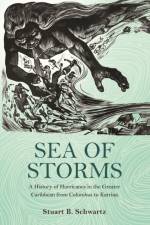
A panoramic social history of hurricanes in the CaribbeanThe diverse cultures of the Caribbean have been shaped as much by hurricanes as they have by diplomacy, commerce, or the legacy of colonial rule. In this panoramic work of social history, Stuart Schwartz examines how Caribbean societies have responded to the dangers of hurricanes, and how these destructive storms have influenced the region's history, from the rise of plantations, to slavery and its abolition, to migrations, racial conflict, and war.Taking readers from the voyages of Columbus to the devastation of Hurricane Katrina, Schwartz looks at the ethical, political, and economic challenges that hurricanes posed to the Caribbean's indigenous populations and the different European peoples who ventured to the New World to exploit its riches. He describes how the United States provided the model for responding to environmental threats when it emerged as a major power and began to exert its influence over the Caribbean in the nineteenth century, and how the region's governments came to assume greater responsibilities for prevention and relief, efforts that by the end of the twentieth century were being questioned by free-market neoliberals. Schwartz sheds light on catastrophes like Katrina by framing them within a long and contentious history of human interaction with the natural world.Spanning more than five centuries and drawing on extensive archival research in Europe and the Americas, Sea of Storms emphasizes the continuing role of race, social inequality, and economic ideology in the shaping of our responses to natural disaster.Some images inside the book are unavailable due to digital copyright restrictions.
A provocative look at how cowardice has been understood from ancient times to the presentCoward. It's a grave insult, likely to provoke anger, shame, even violence. But what exactly is cowardice? When terrorists are called cowards, does it mean the same as when the term is applied to soldiers? And what, if anything, does cowardice have to do with the rest of us? Bringing together sources from court-martial cases to literary and film classics such as Dante's Inferno, The Red Badge of Courage, and The Thin Red Line, Cowardice recounts the great harm that both cowards and the fear of seeming cowardly have done, and traces the idea of cowardice's power to its evolutionary roots. But Chris Walsh also shows that this power has faded, most dramatically on the battlefield. Misconduct that earlier might have been punished as cowardice has more recently often been treated medically, as an adverse reaction to trauma, and Walsh explores a parallel therapeutic shift that reaches beyond war, into the realms of politics, crime, philosophy, religion, and love.Yet, as Walsh indicates, the therapeutic has not altogether triumphed-contempt for cowardice endures, and he argues that such contempt can be a good thing. Courage attracts much more of our attention, but rigorously understanding cowardice may be more morally useful, for it requires us to think critically about our duties and our fears, and it helps us to act ethically when fear and duty conflict.Richly illustrated and filled with fascinating stories and insights, Cowardice is the first sustained analysis of a neglected but profound and pervasive feature of human experience.
An authoritative one-volume history of the origins and development of American higher educationThis book tells the compelling saga of American higher education from the founding of Harvard College in 1636 to the outbreak of World War II. The most in-depth and authoritative history of the subject available, The History of American Higher Education traces how colleges and universities were shaped by the shifting influences of culture, the emergence of new career opportunities, and the unrelenting advancement of knowledge.Roger Geiger, arguably today's leading historian of American higher education, vividly describes how colonial colleges developed a unified yet diverse educational tradition capable of weathering the social upheaval of the Revolution as well as the evangelical fervor of the Second Great Awakening. He shows how the character of college education in different regions diverged significantly in the years leading up to the Civil War-for example, the state universities of the antebellum South were dominated by the sons of planters and their culture-and how higher education was later revolutionized by the land-grant movement, the growth of academic professionalism, and the transformation of campus life by students. By the beginning of the Second World War, the standard American university had taken shape, setting the stage for the postwar education boom.Breathtaking in scope and rich in narrative detail, The History of American Higher Education is the most comprehensive single-volume history of the origins and development of of higher education in the United States.
How FBI surveillance influenced African American writingFew institutions seem more opposed than African American literature and J. Edgar Hoover's white-bread Federal Bureau of Investigation. But behind the scenes the FBI's hostility to black protest was energized by fear of and respect for black writing. Drawing on nearly 14,000 pages of newly released FBI files, F.B. Eyes exposes the Bureau's intimate policing of five decades of African American poems, plays, essays, and novels. Starting in 1919, year one of Harlem's renaissance and Hoover's career at the Bureau, secretive FBI "e;ghostreaders"e; monitored the latest developments in African American letters. By the time of Hoover's death in 1972, these ghostreaders knew enough to simulate a sinister black literature of their own. The official aim behind the Bureau's close reading was to anticipate political unrest. Yet, as William J. Maxwell reveals, FBI surveillance came to influence the creation and public reception of African American literature in the heart of the twentieth century.Taking his title from Richard Wright's poem "e;The FB Eye Blues,"e; Maxwell details how the FBI threatened the international travels of African American writers and prepared to jail dozens of them in times of national emergency. All the same, he shows that the Bureau's paranoid style could prompt insightful criticism from Hoover's ghostreaders and creative replies from their literary targets. For authors such as Claude McKay, James Baldwin, and Sonia Sanchez, the suspicion that government spy-critics tracked their every word inspired rewarding stylistic experiments as well as disabling self-censorship.Illuminating both the serious harms of state surveillance and the ways in which imaginative writing can withstand and exploit it, F.B. Eyes is a groundbreaking account of a long-hidden dimension of African American literature.
A novel that uses calculus to help you survive a zombie apocalypseHow can calculus help you survive the zombie apocalypse? Colin Adams, humor columnist for the Mathematical Intelligencer and one of today's most outlandish and entertaining popular math writers, demonstrates how in this zombie adventure novel.Zombies and Calculus is the account of Craig Williams, a math professor at a small liberal arts college in New England, who, in the middle of a calculus class, finds himself suddenly confronted by a late-arriving student whose hunger is not for knowledge. As the zombie virus spreads and civilization crumbles, Williams uses calculus to help his small band of survivors defeat the hordes of the undead. Along the way, readers learn how to avoid being eaten by taking advantage of the fact that zombies always point their tangent vector toward their target, and how to use exponential growth to determine the rate at which the virus is spreading. Williams also covers topics such as logistic growth, gravitational acceleration, predator-prey models, pursuit problems, the physics of combat, and more. With the aid of his story, you too can survive the zombie onslaught.Featuring easy-to-use appendixes that explain the book's mathematics in greater detail, Zombies and Calculus is suitable both for those who have only recently gotten the calculus bug, as well as for those whose disease has advanced to the multivariable stage.
The life and times of India's most famous spiritual and literary masterpieceThe Bhagavad Gita, perhaps the most famous of all Indian scriptures, is universally regarded as one of the world's spiritual and literary masterpieces. Richard Davis tells the story of this venerable and enduring book, from its origins in ancient India to its reception today as a spiritual classic that has been translated into more than seventy-five languages. The Gita opens on the eve of a mighty battle, when the warrior Arjuna is overwhelmed by despair and refuses to fight. He turns to his charioteer, Krishna, who counsels him on why he must. In the dialogue that follows, Arjuna comes to realize that the true battle is for his own soul.Davis highlights the place of this legendary dialogue in classical Indian culture, and then examines how it has lived on in diverse settings and contexts. He looks at the medieval devotional traditions surrounding the divine character of Krishna and traces how the Gita traveled from India to the West, where it found admirers in such figures as Ralph Waldo Emerson, Henry David Thoreau, J. Robert Oppenheimer, and Aldous Huxley. Davis explores how Indian nationalists like Mahatma Gandhi and Swami Vivekananda used the Gita in their fight against colonial rule, and how contemporary interpreters reanimate and perform this classical work for audiences today.An essential biography of a timeless masterpiece, this book is an ideal introduction to the Gita and its insights into the struggle for self-mastery that we all must wage.
An enchanting collection that introduces the author and activist Naomi Mitchison to a new generation of readersThe Fourth Pig, originally published in 1936, is a wide-ranging and fascinating collection of fairy tales, poems, and ballads. Droll and sad, spirited and apprehensive, The Fourth Pig reflects the hopes and forebodings of its era but also resonates with those of today. It is a testament to the talents of Naomi Mitchison (1897-1999), who was an irrepressible phenomenon-a significant Scottish political activist as well as a prolific author. Mitchison's work, exemplified by the tales in this superb new edition, is stamped with her characteristic sharp wit, magical invention, and vivid political and social consciousness.Mitchison rewrites well-known stories such as "e;Hansel and Gretel"e; and "e;The Little Mermaid,"e; and she picks up the tune of a ballad with admiring fidelity to form, as in "e;Mairi MacLean and the Fairy Man."e; Her experimental approach is encapsulated in the title story, which is a dark departure from "e;The Three Little Pigs."e; And in the play Kate Crackernuts, the author dramatizes in charms and songs a struggle against the subterranean powers of fairies who abduct humans for their pleasure. Marina Warner, the celebrated scholar of fairy tales and fiction author, provides an insightful introduction that reveals why Mitchison's writing remains significant.The Fourth Pig is a literary rediscovery, a pleasure that will reawaken interest in a remarkable writer and personality.
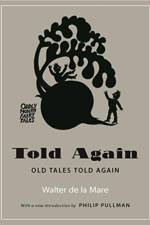
An enchanting retelling of nineteen fairy tales, introduced by popular fantasy writer Philip PullmanOriginally published in 1927, Told Again is an enchanting collection of elegant fairy tales, showcasing the formidable talents of a writer who used magical realism before the term had even been invented. Walter de la Mare (1873-1956) was one of the most celebrated writers of children's literature during the first half of the twentieth century-so much so that W. H. Auden edited a selection of his poems and British children could recite de la Mare's verses by heart. His abundant literary gifts can be savored once more in this new edition. With marvelous black and white illustrations by A. H. Watson, this volume includes a splendid introduction by Philip Pullman, the contemporary master of fantasy literature.The significance of the nineteen adapted classics in Told Again lies in de la Mare's poetic insights and graceful prose, which-as Pullman indicates in his introduction-soften and sweeten the originals, making these tales appropriate for younger readers. In "e;The Four Brothers,"e; the siblings allow the princess to choose her own husband rather than argue over her; and in "e;Rapunzel,"e; de la Mare discreetly leaves out details of the prince's tortured, blind search for his love. Familiar stories, such as "e;Little Red Riding-Hood,"e; "e;Rumplestiltskin,"e; and "e;The Sleeping Beauty"e; are also made new through de la Mare's expansive, descriptive, and lyrical prose. Pullman covers important details about de la Mare's life and captures the stylistic intention behind the rewriting of these wonderful favorites.Reviving the work of a writer who exemplified a romantic vision and imagination, Told Again is a remarkable retelling of fairy tales touched by mystery and magic.
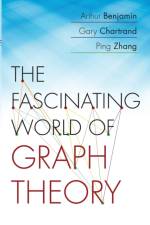
The history, formulas, and most famous puzzles of graph theoryGraph theory goes back several centuries and revolves around the study of graphs-mathematical structures showing relations between objects. With applications in biology, computer science, transportation science, and other areas, graph theory encompasses some of the most beautiful formulas in mathematics-and some of its most famous problems. The Fascinating World of Graph Theory explores the questions and puzzles that have been studied, and often solved, through graph theory. This book looks at graph theory's development and the vibrant individuals responsible for the field's growth. Introducing fundamental concepts, the authors explore a diverse plethora of classic problems such as the Lights Out Puzzle, and each chapter contains math exercises for readers to savor. An eye-opening journey into the world of graphs, The Fascinating World of Graph Theory offers exciting problem-solving possibilities for mathematics and beyond.
Why your political views are more self-serving than you thinkWhen it comes to politics, we often perceive our own beliefs as fair and socially beneficial, while seeing opposing views as merely self-serving. But in fact most political views are governed by self-interest, even if we usually don't realize it. Challenging our fiercely held notions about what motivates us politically, this book explores how self-interest divides the public on a host of hot-button issues, from abortion and the legalization of marijuana to same-sex marriage, immigration, affirmative action, and income redistribution.Expanding the notion of interests beyond simple economics, Jason Weeden and Robert Kurzban look at how people's interests clash when it comes to their sex lives, social status, family, and friends. Drawing on a wealth of data, they demonstrate how different groups form distinctive bundles of political positions that often stray far from what we typically think of as liberal or conservative. They show how we engage in unconscious rationalization to justify our political positions, portraying our own views as wise, benevolent, and principled while casting our opponents' views as thoughtless and greedy.While many books on politics seek to provide partisans with new ways to feel good about their own side, The Hidden Agenda of the Political Mind illuminates the hidden drivers of our politics, even if it's a picture neither side will find flattering.
For most of the vast span of human history, economic growth was all but nonexistent. Then, about two centuries ago, some nations began to emerge from this epoch of economic stagnation, experiencing sustained economic growth that led to significant increases in standards of living and profoundly altered the level and distribution of wealth, population, education, and health across the globe. The question ever since has been--why? This is the first book to put forward a unified theory of economic growth that accounts for the entire growth process, from the dawn of civilization to today. Oded Galor, who founded the field of unified growth theory, identifies the historical and prehistorical forces behind the differential transition timing from stagnation to growth and the emergence of income disparity around the world. Galor shows how the interaction between technological progress and population ultimately raised the importance of education in coping with the rapidly changing technological environment, brought about significant reduction in fertility rates, and enabled some economies to devote greater resources toward a steady increase in per capita income, paving the way for sustained economic growth. Presents a unified theory of economic growth from the dawn of civilization to today Explains the worldwide disparities in living standards and population we see today Provides a comprehensive overview of the three phases of the development process Analyzes the Malthusian theory and its empirical support Examines theories of demographic transition and their empirical significance Explores the interaction between economic development and human evolution
The Poverty of Clio challenges the hold that cliometrics--an approach to economic history that employs the analytical tools of economists--has exerted on the study of our economic past. In this provocative book, Francesco Boldizzoni calls for the reconstruction of economic history, one in which history and the social sciences are brought to bear on economics, and not the other way around. Boldizzoni questions the appeal of economics over history--which he identifies as a distinctly American attitude--exposing its errors and hidden ideologies, and revealing how it fails to explain economic behavior itself. He shows how the misguided reliance on economic reasoning to interpret history has come at the expense of insights from the humanities and has led to a rejection of valuable past historical research. Developing a better alternative to new institutional economics and the rational choice approach, Boldizzoni builds on the extraordinary accomplishments of twentieth-century European historians and social thinkers to offer fresh ideas for the renewal of the field. Economic history needs to rediscover the true relationship between economy and culture, and promote an authentic alliance with the social sciences, starting with sociology and anthropology. It must resume its dialogue with the humanities, but without shrinking away from theory when constructing its models. The Poverty of Clio demonstrates why history must exert its own creative power on economics.
Why do humans, uniquely among animals, cooperate in large numbers to advance projects for the common good? Contrary to the conventional wisdom in biology and economics, this generous and civic-minded behavior is widespread and cannot be explained simply by far-sighted self-interest or a desire to help close genealogical kin. In A Cooperative Species, Samuel Bowles and Herbert Gintis--pioneers in the new experimental and evolutionary science of human behavior--show that the central issue is not why selfish people act generously, but instead how genetic and cultural evolution has produced a species in which substantial numbers make sacrifices to uphold ethical norms and to help even total strangers. The authors describe how, for thousands of generations, cooperation with fellow group members has been essential to survival. Groups that created institutions to protect the civic-minded from exploitation by the selfish flourished and prevailed in conflicts with less cooperative groups. Key to this process was the evolution of social emotions such as shame and guilt, and our capacity to internalize social norms so that acting ethically became a personal goal rather than simply a prudent way to avoid punishment. Using experimental, archaeological, genetic, and ethnographic data to calibrate models of the coevolution of genes and culture as well as prehistoric warfare and other forms of group competition, A Cooperative Species provides a compelling and novel account of how humans came to be moral and cooperative.
Variations in the foreign exchange market influence all aspects of the world economy, and understanding these dynamics is one of the great challenges of international economics. This book provides a new, comprehensive, and in-depth examination of the standard theories and latest research in exchange-rate economics. Covering a vast swath of theoretical and empirical work, the book explores established theories of exchange-rate determination using macroeconomic fundamentals, and presents unique microbased approaches that combine the insights of microstructure models with the macroeconomic forces driving currency trading.Macroeconomic models have long assumed that agents--households, firms, financial institutions, and central banks--all have the same information about the structure of the economy and therefore hold the same expectations and uncertainties regarding foreign currency returns. Microbased models, however, look at how heterogeneous information influences the trading decisions of agents and becomes embedded in exchange rates. Replicating key features of actual currency markets, these microbased models generate a rich array of empirical predictions concerning trading patterns and exchange-rate dynamics that are strongly supported by data. The models also show how changing macroeconomic conditions exert an influence on short-term exchange-rate dynamics via their impact on currency trading.Designed for graduate courses in international macroeconomics, international finance, and finance, and as a go-to reference for researchers in international economics, Exchange-Rate Dynamics guides readers through a range of literature on exchange-rate determination, offering fresh insights for further reading and research.Comprehensive and in-depth examination of the latest research in exchange-rate economics Outlines theoretical and empirical research across the spectrum of modeling approaches Presents new results on the importance of currency trading in exchange-rate determination Provides new perspectives on long-standing puzzles in exchange-rate economics End-of-chapter questions cement key ideas
The most comprehensive and user-friendly field guide to the trees of western North AmericaCovering 630 species, more than any comparable field guide, Trees of Western North America is the most comprehensive, best illustrated, and easiest-to-use book of its kind. Presenting all the native and naturalized trees of the western United States and Canada as far east as the Great Plains, the book features superior descriptions; thousands of meticulous color paintings by David More that illustrate important visual details; range maps that provide a thumbnail view of distribution for each native species; "e;Quick ID"e; summaries; a user-friendly layout; scientific and common names; the latest taxonomy; information on the most recently naturalized species; a key to leaves; and an introduction to tree identification, forest ecology, and plant classification and structure. The easy-to-read descriptions present details of size, shape, growth habit, bark, leaves, flowers, fruit, flowering and fruiting times, habitat, and range. Using a broad definition of a tree, the book covers many small, overlooked species normally thought of as shrubs, as well as treelike forms of cacti and yuccas. With its unmatched combination of breadth and depth, this is an essential guide for every tree lover.The most comprehensive, best illustrated, and easiest-to-use field guide to the trees of western North AmericaCovers 630 species, more than any comparable guide, including all the native and naturalized trees of the United States and Canada as far east as the Great PlainsFeatures specially commissioned artwork, detailed descriptions, range maps for native species, up-to-date taxonomy and names, and much, much moreAn essential guide for every tree lover
The most comprehensive full-color guide to the beetles of eastern North AmericaBeetles of Eastern North America is a landmark book-the most comprehensive full-color guide to the remarkably diverse and beautiful beetles of the United States and Canada east of the Mississippi River. It is the first color-illustrated guide to cover 1,406 species in all 115 families that occur in the region-and the first new in-depth guide to the region in more than forty years. Lavishly illustrated with over 1,500 stunning color images by some of the best insect photographers in North America, the book features an engaging and authoritative text by noted beetle expert Arthur Evans.Extensive introductory sections provide essential information on beetle anatomy, reproduction, development, natural history, behavior, and conservation. Also included are tips on where and when to find beetles; how to photograph, collect, and rear beetles; and how to contribute to research. Each family and species account presents concise and easy-to-understand information on identification, natural history, collecting, and geographic range. Organized by family, the book also includes an illustrated key to the most common beetle families, with 31 drawings that aid identification, and features current information on distribution, biology, and taxonomy not found in other guides.An unmatched guide to the rich variety of eastern North American beetles, this is an essential book for amateur naturalists, nature photographers, insect enthusiasts, students, and professional entomologists and other biologists.Provides the only comprehensive, authoritative, and accessible full-color treatment of the region's beetlesCovers 1,406 species in all 115 families east of the Mississippi RiverFeatures more than 1,500 stunning color images from top photographersPresents concise information on identification, natural history, collecting, and geographic range for each species and familyIncludes an illustrated key to the most common beetle families
Based on archival research and interviews with leading participants in the movement, Masters of the Universe traces the ascendancy of neoliberalism from the academy of interwar Europe to supremacy under Reagan and Thatcher and in the decades since. Daniel Stedman Jones argues that there was nothing inevitable about the victory of free-market politics. Far from being the story of the simple triumph of right-wing ideas, the neoliberal breakthrough was contingent on the economic crises of the 1970s and the acceptance of the need for new policies by the political left. This edition includes a new foreword in which the author addresses the relationship between intellectual history and the history of politics and policy.Fascinating, important, and timely, this is a book for anyone who wants to understand the history behind the Anglo-American love affair with the free market, as well as the origins of the current economic crisis.
John Locke's theory of personal identity underlies all modern discussion of the nature of persons and selves-yet it is widely thought to be wrong. In this book, Galen Strawson argues that in fact it is Locke's critics who are wrong, and that the famous objections to his theory are invalid. Indeed, far from refuting Locke, they illustrate his fundamental point.Strawson argues that the root error is to take Locke's use of the word "e;person"e; as merely a term for a standard persisting thing, like "e;human being."e; In actuality, Locke uses "e;person"e; primarily as a forensic or legal term geared specifically to questions about praise and blame, punishment and reward. This point is familiar to some philosophers, but its full consequences have not been worked out, partly because of a further error about what Locke means by the word "e;conscious."e; When Locke claims that your personal identity is a matter of the actions that you are conscious of, he means the actions that you experience as your own in some fundamental and immediate manner.Clearly and vigorously argued, this is an important contribution both to the history of philosophy and to the contemporary philosophy of personal identity.
International justice has become a crucial part of the ongoing political debates about the future of shattered societies like Bosnia, Kosovo, Rwanda, Cambodia, and Chile. Why do our governments sometimes display such striking idealism in the face of war crimes and atrocities abroad, and at other times cynically abandon the pursuit of international justice altogether? Why today does justice seem so slow to come for war crimes victims in the Balkans? In this book, Gary Bass offers an unprecedented look at the politics behind international war crimes tribunals, combining analysis with investigative reporting and a broad historical perspective. The Nuremberg trials powerfully demonstrated how effective war crimes tribunals can be. But there have been many other important tribunals that have not been as successful, and which have been largely left out of today's debates about international justice. This timely book brings them in, using primary documents to examine the aftermath of the Napoleonic Wars, World War I, the Armenian genocide, World War II, and the recent wars in the former Yugoslavia. Bass explains that bringing war criminals to justice can be a military ordeal, a source of endless legal frustration, as well as a diplomatic nightmare. The book takes readers behind the scenes to see vividly how leaders like David Lloyd George, Winston Churchill, Franklin Roosevelt, and Bill Clinton have wrestled with these agonizing moral dilemmas. The book asks how law and international politics interact, and how power can be made to serve the cause of justice. Bass brings new archival research to bear on such events as the prosecution of the Armenian genocide, presenting surprising episodes that add to the historical record. His sections on the former Yugoslavia tell--with important new discoveries--the secret story of the politicking behind the prosecution of war crimes in Bosnia, drawing on interviews with senior White House officials, key diplomats, and chief prosecutors at the war crimes tribunal for the former Yugoslavia. Bass concludes that despite the obstacles, legalistic justice for war criminals is nonetheless worth pursuing. His arguments will interest anyone concerned about human rights and the pursuit of idealism in international politics.
In Philosophy of Law, Andrei Marmor provides a comprehensive analysis of contemporary debates about the fundamental nature of law-an issue that has been at the heart of legal philosophy for centuries. What the law is seems to be a matter of fact, but this fact has normative significance: it tells people what they ought to do. Marmor argues that the myriad questions raised by the factual and normative features of law actually depend on the possibility of reduction-whether the legal domain can be explained in terms of something else, more foundational in nature.In addition to exploring the major issues in contemporary legal thought, Philosophy of Law provides a critical analysis of the people and ideas that have dominated the field in past centuries. It will be essential reading for anyone curious about the nature of law.
Abonner på vårt nyhetsbrev og få rabatter og inspirasjon til din neste leseopplevelse.
Ved å abonnere godtar du vår personvernerklæring.