
























Gjør som tusenvis av andre bokelskere
Abonner på vårt nyhetsbrev og få rabatter og inspirasjon til din neste leseopplevelse.
Ved å abonnere godtar du vår personvernerklæring.Du kan når som helst melde deg av våre nyhetsbrev.

A comparative look at evangelical churches across the U.S.-Canada border that reveals deep political differencesIt is now a common refrain among liberals that Christian Right pastors and television pundits have hijacked evangelical Christianity for partisan gain. The Politics of Evangelical Identity challenges this notion, arguing that the hijacking metaphor paints a fundamentally distorted picture of how evangelical churches have become politicized. The book reveals how the powerful coalition between evangelicals and the Republican Party is not merely a creation of political elites who have framed conservative issues in religious language, but is anchored in the lives of local congregations.Drawing on her groundbreaking research at evangelical churches near the U.S. border with Canada-two in Buffalo, New York, and two in Hamilton, Ontario-Lydia Bean compares how American and Canadian evangelicals talk about politics in congregational settings. While Canadian evangelicals share the same theology and conservative moral attitudes as their American counterparts, their politics are quite different. On the U.S. side of the border, political conservatism is woven into the very fabric of everyday religious practice. Bean shows how subtle partisan cues emerge in small group interactions as members define how "e;we Christians"e; should relate to others in the broader civic arena, while liberals are cast in the role of adversaries. She explains how the most explicit partisan cues come not from clergy but rather from lay opinion leaders who help their less politically engaged peers to link evangelical identity to conservative politics.The Politics of Evangelical Identity demonstrates how deep the ties remain between political conservatism and evangelical Christianity in America.
A Palestinian-Israeli poet declares a new state whose language, "e;Homelandic,"e; is a combination of Arabic and Hebrew. A Jewish-Israeli author imagines a "e;language plague"e; that infects young Hebrew speakers with old world accents, and sends the narrator in search of his Arabic heritage. In Poetic Trespass, Lital Levy brings together such startling visions to offer the first in-depth study of the relationship between Hebrew and Arabic in the literature and culture of Israel/Palestine. More than that, she presents a captivating portrait of the literary imagination's power to transgress political boundaries and transform ideas about language and belonging.Blending history and literature, Poetic Trespass traces the interwoven life of Arabic and Hebrew in Israel/Palestine from the turn of the twentieth century to the present, exposing the two languages' intimate entanglements in contemporary works of prose, poetry, film, and visual art by both Palestinian and Jewish citizens of Israel. In a context where intense political and social pressures work to identify Jews with Hebrew and Palestinians with Arabic, Levy finds writers who have boldly crossed over this divide to create literature in the language of their "e;other,"e; as well as writers who bring the two languages into dialogue to rewrite them from within.Exploring such acts of poetic trespass, Levy introduces new readings of canonical and lesser-known authors, including Emile Habiby, Hayyim Nahman Bialik, Anton Shammas, Saul Tchernichowsky, Samir Naqqash, Ronit Matalon, Salman Masalha, A. B. Yehoshua, and Almog Behar. By revealing uncommon visions of what it means to write in Arabic and Hebrew, Poetic Trespass will change the way we understand literature and culture in the shadow of the Israeli-Palestinian conflict.Some images inside the book are unavailable due to digital copyright restrictions.
This engaging book spans three centuries to provide the first full account of the long and diverse history of genius in France. Exploring a wide range of examples from literature, philosophy, and history, as well as medicine, psychology, and journalism, Ann Jefferson examines the ways in which the idea of genius has been ceaselessly reflected on and redefined through its uses in these different contexts. She traces its varying fortunes through the madness and imposture with which genius is often associated, and through the observations of those who determine its presence in others.Jefferson considers the modern beginnings of genius in eighteenth-century aesthetics and the works of philosophes such as Diderot. She then investigates the nineteenth-century notion of national and collective genius, the self-appointed role of Romantic poets as misunderstood geniuses, the recurrent obsession with failed genius in the realist novels of writers like Balzac and Zola, the contested category of female genius, and the medical literature that viewed genius as a form of pathology. She shows how twentieth-century views of genius narrowed through its association with IQ and child prodigies, and she discusses the different ways major theorists-including Sartre, Barthes, Derrida, and Kristeva-have repudiated and subsequently revived the concept.Rich in narrative detail, Genius in France brings a fresh approach to French intellectual and cultural history, and to the burgeoning field of genius studies.
In Grimm Legacies, esteemed literary scholar Jack Zipes explores the legacy of the Brothers Grimm in Europe and North America, from the nineteenth century to the present. Zipes reveals how the Grimms came to play a pivotal and unusual role in the evolution of Western folklore and in the history of the most significant cultural genre in the world-the fairy tale.Folklorists Jacob and Wilhelm Grimm sought to discover and preserve a rich abundance of stories emanating from an oral tradition, and encouraged friends, colleagues, and strangers to gather and share these tales. As a result, hundreds of thousands of wonderful folk and fairy tales poured into books throughout Europe and have kept coming. Zipes looks at the transformation of the Grimms' tales into children's literature, the Americanization of the tales, the "e;Grimm"e; aspects of contemporary tales, and the tales' utopian impulses. He shows that the Grimms were not the first scholars to turn their attention to folk tales, but were vital in expanding readership and setting the high standards for folk-tale collecting that continue through the current era. Zipes concludes with a look at contemporary adaptations of the tales and raises questions about authenticity, target audience, and consumerism.With erudition and verve, Grimm Legacies examines the lasting universal influence of two brothers and their collected tales on today's storytelling world.
A radically new way of thinking about form and context in literature, politics, and beyondForms offers a powerful new answer to one of the most pressing problems facing literary, critical, and cultural studies today-how to connect form to political, social, and historical context. Caroline Levine argues that forms organize not only works of art but also political life-and our attempts to know both art and politics. Inescapable and frequently troubling, forms shape every aspect of our experience. Yet, forms don't impose their order in any simple way. Multiple shapes, patterns, and arrangements, overlapping and colliding, generate complex and unpredictable social landscapes that challenge and unsettle conventional analytic models in literary and cultural studies.Borrowing the concept of "e;affordances"e; from design theory, this book investigates the specific ways that four major forms-wholes, rhythms, hierarchies, and networks-have structured culture, politics, and scholarly knowledge across periods, and it proposes exciting new ways of linking formalism to historicism and literature to politics. Levine rereads both formalist and antiformalist theorists, including Cleanth Brooks, Michel Foucault, Jacques Ranciere, Mary Poovey, and Judith Butler, and she offers engaging accounts of a wide range of objects, from medieval convents and modern theme parks to Sophocles's Antigone and the television series The Wire.The result is a radically new way of thinking about form for the next generation and essential reading for scholars and students across the humanities who must wrestle with the problem of form and context.
This fast-paced book by Yale professors Michael Graetz and Ian Shapiro unravels the following mystery: How is it that the estate tax, which has been on the books continuously since 1916 and is paid by only the wealthiest two percent of Americans, was repealed in 2001 with broad bipartisan support? The mystery is all the more striking because the repeal was not done in the dead of night, like a congressional pay raise. It came at the end of a multiyear populist campaign launched by a few individuals, and was heralded by its supporters as a signal achievement for Americans who are committed to the work ethic and the American Dream. Graetz and Shapiro conducted wide-ranging interviews with the relevant players: members of congress, senators, staffers from the key committees and the Bush White House, civil servants, think tank and interest group representatives, and many others. The result is a unique portrait of American politics as viewed through the lens of the death tax repeal saga. Graetz and Shapiro brilliantly illuminate the repeal campaign's many fascinating and unexpected turns--particularly the odd end result whereby the repeal is slated to self-destruct a decade after its passage. They show that the stakes in this fight are exceedingly high; the very survival of the long standing American consensus on progressive taxation is being threatened. Graetz and Shapiro's rich narrative reads more like a political drama than a conventional work of scholarship. Yet every page is suffused by their intimate knowledge of the history of the tax code, the transformation of American conservatism over the past three decades, and the wider political implications of battles over tax policy.
This is the first complete, one-volume English translation of the ancient Chinese text Xunzi, one of the most extensive, sophisticated, and elegant works in the tradition of Confucian thought. Through essays, poetry, dialogues, and anecdotes, the Xunzi articulates a Confucian perspective on ethics, politics, warfare, language, psychology, human nature, ritual, and music, among other topics. Aimed at general readers and students of Chinese thought, Eric Hutton's translation makes the full text of this important work more accessible in English than ever before.Named for its purported author, the Xunzi (literally, "e;Master Xun"e;) has long been neglected compared to works such as the Analects of Confucius and the Mencius. Yet interest in the Xunzi has grown in recent decades, and the text presents a much more systematic vision of the Confucian ideal than the fragmented sayings of Confucius and Mencius. In one famous, explicit contrast to them, the Xunzi argues that human nature is bad. However, it also allows that people can become good through rituals and institutions established by earlier sages. Indeed, the main purpose of the Xunzi is to urge people to become as good as possible, both for their own sakes and for the sake of peace and order in the world.In this edition, key terms are consistently translated to aid understanding and line numbers are provided for easy reference. Other features include a concise introduction, a timeline of early Chinese history, a list of important names and terms, cross-references, brief explanatory notes, a bibliography, and an index.
This textbook provides a unique and thorough look at the application of chemical biomarkers to aquatic ecosystems. Defining a chemical biomarker as a compound that can be linked to particular sources of organic matter identified in the sediment record, the book indicates that the application of these biomarkers for an understanding of aquatic ecosystems consists of a biogeochemical approach that has been quite successful but underused. This book offers a wide-ranging guide to the broad diversity of these chemical biomarkers, is the first to be structured around the compounds themselves, and examines them in a connected and comprehensive way. This timely book is appropriate for advanced undergraduate and graduate students seeking training in this area; researchers in biochemistry, organic geochemistry, and biogeochemistry; researchers working on aspects of organic cycling in aquatic ecosystems; and paleoceanographers, petroleum geologists, and ecologists. Provides a guide to the broad diversity of chemical biomarkers in aquatic environments The first textbook to be structured around the compounds themselves Describes the structure, biochemical synthesis, analysis, and reactivity of each class of biomarkers Offers a selection of relevant applications to aquatic systems, including lakes, rivers, estuaries, oceans, and paleoenvironments Demonstrates the utility of using organic molecules as tracers of processes occurring in aquatic ecosystems, both modern and ancient
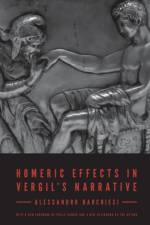
The study of Homeric imitations in Vergil has one of the longest traditions in Western culture, starting from the very moment the Aeneid was circulated. Homeric Effects in Vergil's Narrative is the first English translation of one of the most important and influential modern studies in this tradition. In this revised and expanded edition, Alessandro Barchiesi advances innovative approaches even as he recuperates significant earlier interpretations, from Servius to G. N. Knauer.Approaching Homeric allusions in the Aeneid as "e;narrative effects"e; rather than glimpses of the creative mind of the author at work, Homeric Effects in Vergil's Narrative demonstrates how these allusions generate hesitations and questions, as well as insights and guidance, and how they participate in the creation of narrative meaning. The book also examines how layers of competing interpretations in Homer are relevant to the Aeneid, revealing again the richness of the Homeric tradition as a component of meaning in the Aeneid. Finally, Homeric Effects in Vergil's Narrative goes beyond previous studies of the Aeneid by distinguishing between two forms of Homeric intertextuality: reusing a text as an individual model or as a generic matrix.For this edition, a new chapter has been added, and in a new afterword the author puts the book in the context of changes in the study of Latin literature and intertextuality.A masterful work of classical scholarship, Homeric Effects in Vergil's Narrative also has valuable insights for the wider study of imitation, allusion, intertextuality, epic, and literary theory.
A revolutionary account of the ancient Greek economyThis comprehensive introduction to the ancient Greek economy revolutionizes our understanding of the subject and its possibilities. Alain Bresson is one of the world's leading authorities in the field, and he is helping to redefine it. Here he combines a thorough knowledge of ancient sources with innovative new approaches grounded in recent economic historiography to provide a detailed picture of the Greek economy between the last century of the Archaic Age and the closing of the Hellenistic period. Focusing on the city-state, which he sees as the most important economic institution in the Greek world, Bresson addresses all of the city-states rather than only Athens.An expanded and updated English edition of an acclaimed work originally published in French, the book offers a groundbreaking new theoretical framework for studying the economy of ancient Greece; presents a masterful survey and analysis of the most important economic institutions, resources, and other factors; and addresses some major historiographical debates. Among the many topics covered are climate, demography, transportation, agricultural production, market institutions, money and credit, taxes, exchange, long-distance trade, and economic growth.The result is an unparalleled demonstration that, unlike just a generation ago, it is possible today to study the ancient Greek economy as an economy and not merely as a secondary aspect of social or political history. This is essential reading for students, historians of antiquity, and economic historians of all periods.
In recent years, Roman political thought has attracted increased attention as intellectual historians and political theorists have explored the influence of the Roman republic on major thinkers from the Renaissance to the Enlightenment. Held up as a "e;third way"e; between liberalism and communitarianism, neo-Roman republicanism promises useful, persuasive accounts of civic virtue, justice, civility, and the ties that bind citizens. But republican revivalists, embedded in modern liberal, democratic, and constitutional concerns, almost never engage closely with Roman texts. The Life of Roman Republicanism takes up that challenge.With an original combination of close reading and political theory, Joy Connolly argues that Cicero, Sallust, and Horace inspire fresh thinking about central concerns of contemporary political thought and action. These include the role of conflict in the political community, especially as it emerges from class differences; the necessity of recognition for an equal and just society; the corporeal and passionate aspects of civic experience; citizens' interdependence on one another for senses of selfhood; and the uses and dangers of self-sovereignty and fantasy. Putting classicists and political theorists in dialogue, the book also addresses a range of modern thinkers, including Kant, Hannah Arendt, Stanley Cavell, and Philip Pettit. Together, Connolly's readings construct a new civic ethos of advocacy, self-criticism, embodied awareness, imagination, and irony.
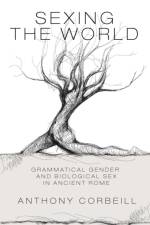
From the moment a child in ancient Rome began to speak Latin, the surrounding world became populated with objects possessing grammatical gender-masculine eyes (oculi), feminine trees (arbores), neuter bodies (corpora). Sexing the World surveys the many ways in which grammatical gender enabled Latin speakers to organize aspects of their society into sexual categories, and how this identification of grammatical gender with biological sex affected Roman perceptions of Latin poetry, divine power, and the human hermaphrodite.Beginning with the ancient grammarians, Anthony Corbeill examines how these scholars used the gender of nouns to identify the sex of the object being signified, regardless of whether that object was animate or inanimate. This informed the Roman poets who, for a time, changed at whim the grammatical gender for words as seemingly lifeless as "e;dust"e; (pulvis) or "e;tree bark"e; (cortex). Corbeill then applies the idea of fluid grammatical gender to the basic tenets of Roman religion and state politics. He looks at how the ancients tended to construct Rome's earliest divinities as related male and female pairs, a tendency that waned in later periods. An analogous change characterized the dual-sexed hermaphrodite, whose sacred and political significance declined as the republican government became an autocracy. Throughout, Corbeill shows that the fluid boundaries of sex and gender became increasingly fixed into opposing and exclusive categories.Sexing the World contributes to our understanding of the power of language to shape human perception.
Don't Blame Us traces the reorientation of modern liberalism and the Democratic Party away from their roots in labor union halls of northern cities to white-collar professionals in postindustrial high-tech suburbs, and casts new light on the importance of suburban liberalism in modern American political culture. Focusing on the suburbs along the high-tech corridor of Route 128 around Boston, Lily Geismer challenges conventional scholarly assessments of Massachusetts exceptionalism, the decline of liberalism, and suburban politics in the wake of the rise of the New Right and the Reagan Revolution in the 1970s and 1980s. Although only a small portion of the population, knowledge professionals in Massachusetts and elsewhere have come to wield tremendous political leverage and power. By probing the possibilities and limitations of these suburban liberals, this rich and nuanced account shows that-far from being an exception to national trends-the suburbs of Massachusetts offer a model for understanding national political realignment and suburban politics in the second half of the twentieth century.
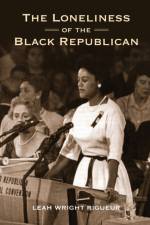
The story of black conservatives in the Republican Party from the New Deal to Ronald ReaganCovering more than four decades of American social and political history, The Loneliness of the Black Republican examines the ideas and actions of black Republican activists, officials, and politicians, from the era of the New Deal to Ronald Reagan's presidential ascent in 1980. Their unique stories reveal African Americans fighting for an alternative economic and civil rights movement-even as the Republican Party appeared increasingly hostile to that very idea. Black party members attempted to influence the direction of conservatism-not to destroy it, but rather to expand the ideology to include black needs and interests.As racial minorities in their political party and as political minorities within their community, black Republicans occupied an irreconcilable position-they were shunned by African American communities and subordinated by the GOP. In response, black Republicans vocally, and at times viciously, critiqued members of their race and party, in an effort to shape the attitudes and public images of black citizens and the GOP. And yet, there was also a measure of irony to black Republicans' "e;loneliness"e;: at various points, factions of the Republican Party, such as the Nixon administration, instituted some of the policies and programs offered by black party members. What's more, black Republican initiatives, such as the fair housing legislation of senator Edward Brooke, sometimes garnered support from outside the Republican Party, especially among the black press, Democratic officials, and constituents of all races. Moving beyond traditional liberalism and conservatism, black Republicans sought to address African American racial experiences in a distinctly Republican way.The Loneliness of the Black Republican provides a new understanding of the interaction between African Americans and the Republican Party, and the seemingly incongruous intersection of civil rights and American conservatism.
A groundbreaking exploration of Garveyism's global influence during the interwar years and beyondJamaican activist Marcus Garvey (1887-1940) organized the Universal Negro Improvement Association in Harlem in 1917. By the early 1920s, his program of African liberation and racial uplift had attracted millions of supporters, both in the United States and abroad. The Age of Garvey presents an expansive global history of the movement that came to be known as Garveyism. Offering a groundbreaking new interpretation of global black politics between the First and Second World Wars, Adam Ewing charts Garveyism's emergence, its remarkable global transmission, and its influence in the responses among African descendants to white supremacy and colonial rule in Africa, the Caribbean, and the United States.Delving into the organizing work and political approach of Garvey and his followers, Ewing shows that Garveyism emerged from a rich tradition of pan-African politics that had established, by the First World War, lines of communication among black intellectuals on both sides of the Atlantic. Garvey's legacy was to reengineer this tradition as a vibrant and multifaceted mass politics. Ewing looks at the people who enabled Garveyism's global spread, including labor activists in the Caribbean and Central America, community organizers in the urban and rural United States, millennial religious revivalists in central and southern Africa, welfare associations and independent church activists in Malawi and Zambia, and an emerging generation of Kikuyu leadership in central Kenya. Moving away from the images of quixotic business schemes and repatriation efforts, The Age of Garvey demonstrates the consequences of Garveyism's international presence and provides a dynamic and unified framework for understanding the movement, during the interwar years and beyond.
How high energy consumption transformed postwar Phoenix and deepened inequalities in the American SouthwestIn 1940, Phoenix was a small, agricultural city of sixty-five thousand, and the Navajo Reservation was an open landscape of scattered sheepherders. Forty years later, Phoenix had blossomed into a metropolis of 1.5 million people and the territory of the Navajo Nation was home to two of the largest strip mines in the world. Five coal-burning power plants surrounded the reservation, generating electricity for export to Phoenix, Los Angeles, and other cities. Exploring the postwar developments of these two very different landscapes, Power Lines tells the story of the far-reaching environmental and social inequalities of metropolitan growth, and the roots of the contemporary coal-fueled climate change crisis.Andrew Needham explains how inexpensive electricity became a requirement for modern life in Phoenix-driving assembly lines and cooling the oppressive heat. Navajo officials initially hoped energy development would improve their lands too, but as ash piles marked their landscape, air pollution filled the skies, and almost half of Navajo households remained without electricity, many Navajos came to view power lines as a sign of their subordination in the Southwest. Drawing together urban, environmental, and American Indian history, Needham demonstrates how power lines created unequal connections between distant landscapes and how environmental changes associated with suburbanization reached far beyond the metropolitan frontier. Needham also offers a new account of postwar inequality, arguing that residents of the metropolitan periphery suffered similar patterns of marginalization as those faced in America's inner cities.Telling how coal from Indian lands became the fuel of modernity in the Southwest, Power Lines explores the dramatic effects that this energy system has had on the people and environment of the region.
How ideas, individuals, and political traditions from Weimar Germany molded the global postwar orderThe Weimar Century reveals the origins of two dramatic events: Germany's post-World War II transformation from a racist dictatorship to a liberal democracy, and the ideological genesis of the Cold War. Blending intellectual, political, and international histories, Udi Greenberg shows that the foundations of Germany's reconstruction lay in the country's first democratic experiment, the Weimar Republic (1918-33). He traces the paths of five crucial German emigres who participated in Weimar's intense political debates, spent the Nazi era in the United States, and then rebuilt Europe after a devastating war. Examining the unexpected stories of these diverse individuals-Protestant political thinker Carl J. Friedrich, Socialist theorist Ernst Fraenkel, Catholic publicist Waldemar Gurian, liberal lawyer Karl Loewenstein, and international relations theorist Hans Morgenthau-Greenberg uncovers the intellectual and political forces that forged Germany's democracy after dictatorship, war, and occupation.In restructuring German thought and politics, these emigres also shaped the currents of the early Cold War. Having borne witness to Weimar's political clashes and violent upheavals, they called on democratic regimes to permanently mobilize their citizens and resources in global struggle against their Communist enemies. In the process, they gained entry to the highest levels of American power, serving as top-level advisors to American occupation authorities in Germany and Korea, consultants for the State Department in Latin America, and leaders in universities and philanthropic foundations across Europe and the United States. Their ideas became integral to American global hegemony.From interwar Germany to the dawn of the American century, The Weimar Century sheds light on the crucial ideas, individuals, and politics that made the trans-Atlantic postwar order.
Josephine Roche (1886-1976) was a progressive activist, New Deal policymaker, and businesswoman. As a pro-labor and feminist member of Franklin D. Roosevelt's administration, she shaped the founding legislation of the U.S. welfare state and generated the national conversation about health-care policy that Americans are still having today. In this gripping biography, Robyn Muncy offers Roche's persistent progressivism as evidence for surprising continuities among the Progressive Era, the New Deal, and the Great Society.Muncy explains that Roche became the second-highest-ranking woman in the New Deal government after running a Colorado coal company in partnership with coal miners themselves. Once in office, Roche developed a national health plan that was stymied by World War II but enacted piecemeal during the postwar period, culminating in Medicare and Medicaid in the 1960s. By then, Roche directed the United Mine Workers of America Welfare and Retirement Fund, an initiative aimed at bolstering the labor movement, advancing managed health care, and reorganizing medicine to facilitate national health insurance, one of Roche's unrealized dreams.In Relentless Reformer, Muncy uses Roche's dramatic life story-from her stint as Denver's first policewoman in 1912 to her fight against a murderous labor union official in 1972-as a unique vantage point from which to examine the challenges that women have faced in public life and to reassess the meaning and trajectory of progressive reform.
An economic way of thinking about the gender issues confronting women around the worldGender matters in economics-for even with today's technology, fertility choices, market opportunities, and improved social norms, economic outcomes for women remain markedly worse than for men. Drawing on insights from feminism, postmodernism, psychology, evolutionary biology, Marxism, and politics, this textbook provides a rigorous economic look at issues confronting women throughout the world-including nonmarket scenarios, such as marriage, family, fertility choice, and bargaining within households, as well as market areas, like those pertaining to labor and credit markets and globalization.Mukesh Eswaran examines how women's behavioral responses in economic situations and their bargaining power within the household differ from those of men. Eswaran then delves into the far-reaching consequences of these differences in both market and nonmarket domains. The author considers how women may be discriminated against in labor and credit markets, how their family and market circumstances interact, and how globalization has influenced their lives. Eswaran also investigates how women have been empowered through access to education, credit, healthcare, and birth control; changes in ownership laws; the acquisition of suffrage; and political representation. Throughout, Eswaran applies sound economic analysis and new modeling approaches, and each chapter concludes with exercises and discussion questions.This textbook gives readers the necessary tools for thinking about gender from an economic perspective.Addresses economic issues for women throughout the world, in both developed and developing countriesLooks at both market and nonmarket domainsRequires only a background in basic economic principlesIncludes the most recent research on the economics of gender in a range of areasConcludes each chapter with exercises and discussion questions
Aristotle's moral philosophy is a pillar of Western ethical thought. It bequeathed to the world an emphasis on virtues and vices, happiness as well-being or a life well lived, and rationally motivated action as a mean between extremes. Its influence was felt well beyond antiquity into the Middle Ages, particularly through the writings of St. Thomas Aquinas. In the past century, with the rise of virtue theory in moral philosophy, Aristotle's ethics has been revived as a source of insight and interest. While most attention has traditionally focused on Aristotle's famous Nicomachean Ethics, there are several other works written by or attributed to Aristotle that illuminate his ethics: the Eudemian Ethics, the Magna Moralia, and Virtues and Vices.This book brings together all four of these important texts, in thoroughly revised versions of the translations found in the authoritative complete works universally recognized as the standard English edition. Edited and introduced by two of the world's leading scholars of ancient philosophy, this is an essential volume for anyone interested in the ethical thought of one of the most important philosophers in the Western tradition.
Why are men, like other primate males, usually the aggressors and risk takers? Why do women typically have fewer sexual partners? In Why Sex Matters, Bobbi Low ranges from ancient Rome to modern America, from the Amazon to the Arctic, and from single-celled organisms to international politics, to show that these and many other questions about human behavior largely come down to evolution and sex. More precisely, as she shows in this uniquely comprehensive and accessible survey of behavioral and evolutionary ecology, they come down to the basic principle that all organisms evolved to maximize their reproductive success and seek resources to do so, but that sometimes cooperation and collaboration are the most effective ways to succeed.This newly revised edition has been thoroughly updated to include the latest research and reflect exciting changes in the field, including how our evolutionary past continues to affect our ecological present.
As commercial and military spacecraft become more important to the world's economy and defense, and as new scientific and exploratory missions are launched into space, the need for a single comprehensive resource on spacecraft charging becomes increasingly critical. Fundamentals of Spacecraft Charging is the first and only textbook to bring together all the necessary concepts and equations for a complete understanding of the subject. Written by one of the field's leading authorities, this essential reference enables readers to fully grasp the newest ideas and underlying physical mechanisms related to the electrostatic charging of spacecraft in the space environment. Assuming that readers may have little or no background in this area, this complete textbook covers all aspects of the field. The coverage is detailed and thorough, and topics range from secondary and backscattered electrons, spacecraft charging in Maxwellian plasmas, effective mitigation techniques, and potential wells and barriers to operational anomalies, meteors, and neutral gas release. Significant equations are derived from first principles, and abundant examples, exercises, figures, illustrations, and tables are furnished to facilitate comprehension. Fundamentals of Spacecraft Charging is the definitive reference on the physics of spacecraft charging and is suitable for advanced undergraduates, graduate-level students, and professional space researchers.Some images inside the book are unavailable due to digital copyright restrictions.
This textbook introduces undergraduate students to engineering dynamics using an innovative approach that is at once accessible and comprehensive. Combining the strengths of both beginner and advanced dynamics texts, this book has students solving dynamics problems from the very start and gradually guides them from the basics to increasingly more challenging topics without ever sacrificing rigor. Engineering Dynamics spans the full range of mechanics problems, from one-dimensional particle kinematics to three-dimensional rigid-body dynamics, including an introduction to Lagrange's and Kane's methods. It skillfully blends an easy-to-read, conversational style with careful attention to the physics and mathematics of engineering dynamics, and emphasizes the formal systematic notation students need to solve problems correctly and succeed in more advanced courses. This richly illustrated textbook features numerous real-world examples and problems, incorporating a wide range of difficulty; ample use of MATLAB for solving problems; helpful tutorials; suggestions for further reading; and detailed appendixes. Provides an accessible yet rigorous introduction to engineering dynamics Uses an explicit vector-based notation to facilitate understanding Professors: A supplementary Instructor's Manual is available for this book. It is restricted to teachers using the text in courses. For information on how to obtain a copy, refer to: http://press.princeton.edu/class_use/solutions.html
This is a comprehensive and richly illustrated textbook on the astrophysics of the interstellar and intergalactic medium--the gas and dust, as well as the electromagnetic radiation, cosmic rays, and magnetic and gravitational fields, present between the stars in a galaxy and also between galaxies themselves. Topics include radiative processes across the electromagnetic spectrum; radiative transfer; ionization; heating and cooling; astrochemistry; interstellar dust; fluid dynamics, including ionization fronts and shock waves; cosmic rays; distribution and evolution of the interstellar medium; and star formation. While it is assumed that the reader has a background in undergraduate-level physics, including some prior exposure to atomic and molecular physics, statistical mechanics, and electromagnetism, the first six chapters of the book include a review of the basic physics that is used in later chapters. This graduate-level textbook includes references for further reading, and serves as an invaluable resource for working astrophysicists. Essential textbook on the physics of the interstellar and intergalactic medium Based on a course taught by the author for more than twenty years at Princeton University Covers radiative processes, fluid dynamics, cosmic rays, astrochemistry, interstellar dust, and more Discusses the physical state and distribution of the ionized, atomic, and molecular phases of the interstellar medium Reviews diagnostics using emission and absorption lines Features color illustrations and detailed reference materials in appendices Instructor's manual with problems and solutions (available only to teachers)
This undergraduate textbook offers a unique introduction to steady flight and performance for fixed-wing aircraft from a twenty-first-century flight systems perspective. Emphasizing the interplay between mathematics and engineering, it fully explains the fundamentals of aircraft flight and develops the basic algebraic equations needed to obtain the conditions for gliding flight, level flight, climbing and descending flight, and turning flight. It covers every aspect of flight performance, including maximum and minimum air speed, maximum climb rate, minimum turn radius, flight ceiling, maximum range, and maximum endurance. Steady Aircraft Flight and Performance features in-depth case studies of an executive jet and a general aviation propeller-driven aircraft, and uses MATLAB to compute and illustrate numerous flight performance measures and flight envelopes for each. Requiring only sophomore-level calculus and physics, it also includes a section on translational flight dynamics that makes a clear connection between steady flight and flight dynamics, thereby providing a bridge to further study. Offers the best introduction to steady aircraft flight and performance Provides a comprehensive treatment of the full range of steady flight conditions Covers steady flight performance and flight envelopes, including maximum and minimum air speed, maximum climb rate, minimum turn radius, and flight ceiling Uses mathematics and engineering to explain aircraft flight Features case studies of actual aircraft, illustrated using MATLAB Seamlessly bridges steady flight and translational flight dynamics
An undergraduate textbook devoted exclusively to relationships between mathematics and art, Viewpoints is ideally suited for math-for-liberal-arts courses and mathematics courses for fine arts majors. The textbook contains a wide variety of classroom-tested activities and problems, a series of essays by contemporary artists written especially for the book, and a plethora of pedagogical and learning opportunities for instructors and students. Viewpoints focuses on two mathematical areas: perspective related to drawing man-made forms and fractal geometry related to drawing natural forms. Investigating facets of the three-dimensional world in order to understand mathematical concepts behind the art, the textbook explores art topics including comic, anamorphic, and classical art, as well as photography, while presenting such mathematical ideas as proportion, ratio, self-similarity, exponents, and logarithms. Straightforward problems and rewarding solutions empower students to make accurate, sophisticated drawings. Personal essays and short biographies by contemporary artists are interspersed between chapters and are accompanied by images of their work. These fine artists--who include mathematicians and scientists--examine how mathematics influences their art. Accessible to students of all levels, Viewpoints encourages experimentation and collaboration, and captures the essence of artistic and mathematical creation and discovery. Classroom-tested activities and problem solving Accessible problems that move beyond regular art school curriculum Multiple solutions of varying difficulty and applicability Appropriate for students of all mathematics and art levels Original and exclusive essays by contemporary artists Forthcoming: Instructor's manual (available only to teachers)
How trade imbalances spurred on the global financial crisis and why we aren't out of trouble yetChina's economic growth is sputtering, the Euro is under threat, and the United States is combating serious trade disadvantages. Another Great Depression? Not quite. Noted economist and China expert Michael Pettis argues instead that we are undergoing a critical rebalancing of the world economies. Debunking popular misconceptions, Pettis shows that severe trade imbalances spurred on the recent financial crisis and were the result of unfortunate policies that distorted the savings and consumption patterns of certain nations. Pettis examines the reasons behind these destabilizing policies, and he predicts severe economic dislocations that will have long-lasting effects.Demonstrating how economic policies can carry negative repercussions the world over, The Great Rebalancing sheds urgent light on our globally linked economic future.
A unique "e;moneyball"e; look at the 2012 U.S. presidential contest between Barack Obama and Mitt Romney"e;Game changer."e; We heard it so many times during the 2012 U.S. presidential election. But what actually made a difference in the contest-and what was just hype? In this groundbreaking book, John Sides and Lynn Vavreck tell the dramatic story of the election-with a big difference. Using an unusual "e;moneyball"e; approach and drawing on extensive quantitative data, they look beyond the anecdote, folklore, and conventional wisdom that often pass for election analysis to separate what was truly important from what was irrelevant. The Gamble combines this data with the best social science research and colorful on-the-ground reporting, providing the most accurate and precise account of the election yet written-and the only book of its kind.In a new preface, the authors reflect on the place of The Gamble in the tradition of presidential election studies, its reception to date, and possible paths for future social science research.
Originally published in 1964, The Struggle for Equality presents an incisive and vivid look at the abolitionist movement and the legal basis it provided to the civil rights movement of the 1960s. Pulitzer Prize-winning historian James McPherson explores the role played by rights activists during and after the Civil War, and their evolution from despised fanatics into influential spokespersons for the radical wing of the Republican Party. Asserting that it was not the abolitionists who failed to instill principles of equality, but rather the American people who refused to follow their leadership, McPherson raises questions about the obstacles that have long hindered American reform movements.This new Princeton Classics edition marks the fiftieth anniversary of the book's initial publication and includes a new preface by the author.
This landmark book probes Muslims' attitudes toward Jews and Judaism as a special case of their view of other religious minorities in predominantly Muslim societies. With authority, sympathy and wit, Bernard Lewis demolishes two competing stereotypes: the Islamophobic picture of the fanatical Muslim warrior, sword in one hand and Qur'an in the other, and the overly romanticized depiction of Muslim societies as interfaith utopias.Featuring a new introduction by Mark R. Cohen, this Princeton Classics edition sets the Judaeo-Islamic tradition against a vivid background of Jewish and Islamic history. For those wishing a concise overview of the long period of Jewish-Muslim relations, The Jews of Islam remains an essential starting point.
Abonner på vårt nyhetsbrev og få rabatter og inspirasjon til din neste leseopplevelse.
Ved å abonnere godtar du vår personvernerklæring.