















Gjør som tusenvis av andre bokelskere
Abonner på vårt nyhetsbrev og få rabatter og inspirasjon til din neste leseopplevelse.
Ved å abonnere godtar du vår personvernerklæring.Du kan når som helst melde deg av våre nyhetsbrev.

Incentives can be found everywhere--in schools, businesses, factories, and government--influencing people's choices about almost everything, from financial decisions and tobacco use to exercise and child rearing. So long as people have a choice, incentives seem innocuous. But Strings Attached demonstrates that when incentives are viewed as a kind of power rather than as a form of exchange, many ethical questions arise: How do incentives affect character and institutional culture? Can incentives be manipulative or exploitative, even if people are free to refuse them? What are the responsibilities of the powerful in using incentives? Ruth Grant shows that, like all other forms of power, incentives can be subject to abuse, and she identifies their legitimate and illegitimate uses. Grant offers a history of the growth of incentives in early twentieth-century America, identifies standards for judging incentives, and examines incentives in four areas--plea bargaining, recruiting medical research subjects, International Monetary Fund loan conditions, and motivating students. In every case, the analysis of incentives in terms of power yields strikingly different and more complex judgments than an analysis that views incentives as trades, in which the desired behavior is freely exchanged for the incentives offered. Challenging the role and function of incentives in a democracy, Strings Attached questions whether the penchant for constant incentivizing undermines active, autonomous citizenship. Readers of this book are sure to view the ethics of incentives in a new light.
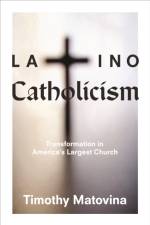
Most histories of Catholicism in the United States focus on the experience of Euro-American Catholics, whose views on social issues have dominated public debates. Latino Catholicism provides a comprehensive overview of the Latino Catholic experience in America from the sixteenth century to today, and offers the most in-depth examination to date of the important ways the U.S. Catholic Church, its evolving Latino majority, and American culture are mutually transforming one another.In Latino Catholicism, Timothy Matovina highlights the vital contributions of Latinos to American religious and social life, demonstrating in particular how their engagement with the U.S. cultural milieu is the most significant factor behind their ecclesial and societal impact.
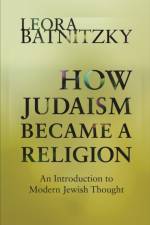
Is Judaism a religion, a culture, a nationality--or a mixture of all of these? In How Judaism Became a Religion, Leora Batnitzky boldly argues that this question more than any other has driven modern Jewish thought since the eighteenth century. This wide-ranging and lucid introduction tells the story of how Judaism came to be defined as a religion in the modern period--and why Jewish thinkers have fought as well as championed this idea. Ever since the Enlightenment, Jewish thinkers have debated whether and how Judaism--largely a religion of practice and public adherence to law--can fit into a modern, Protestant conception of religion as an individual and private matter of belief or faith. Batnitzky makes the novel argument that it is this clash between the modern category of religion and Judaism that is responsible for much of the creative tension in modern Jewish thought. Tracing how the idea of Jewish religion has been defended and resisted from the eighteenth century to today, the book discusses many of the major Jewish thinkers of the past three centuries, including Moses Mendelssohn, Abraham Geiger, Hermann Cohen, Martin Buber, Zvi Yehuda Kook, Theodor Herzl, and Mordecai Kaplan. At the same time, it tells the story of modern orthodoxy, the German-Jewish renaissance, Jewish religion after the Holocaust, the emergence of the Jewish individual, the birth of Jewish nationalism, and Jewish religion in America. More than an introduction, How Judaism Became a Religion presents a compelling new perspective on the history of modern Jewish thought.
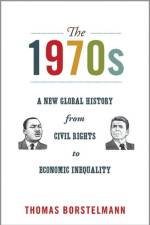
The 1970s looks at an iconic decade when the cultural left and economic right came to the fore in American society and the world at large. While many have seen the 1970s as simply a period of failures epitomized by Watergate, inflation, the oil crisis, global unrest, and disillusionment with military efforts in Vietnam, Thomas Borstelmann creates a new framework for understanding the period and its legacy. He demonstrates how the 1970s increased social inclusiveness and, at the same time, encouraged commitments to the free market and wariness of government. As a result, American culture and much of the rest of the world became more--and less--equal. Borstelmann explores how the 1970s forged the contours of contemporary America. Military, political, and economic crises undercut citizens' confidence in government. Free market enthusiasm led to lower taxes, a volunteer army, individual 401(k) retirement plans, free agency in sports, deregulated airlines, and expansions in gambling and pornography. At the same time, the movement for civil rights grew, promoting changes for women, gays, immigrants, and the disabled. And developments were not limited to the United States. Many countries gave up colonial and racial hierarchies to develop a new formal commitment to human rights, while economic deregulation spread to other parts of the world, from Chile and the United Kingdom to China. Placing a tempestuous political culture within a global perspective, The 1970s shows that the decade wrought irrevocable transformations upon American society and the broader world that continue to resonate today.Some images inside the book are unavailable due to digital copyright restrictions.
"e;We know that it matters crucially to be able to say who we are, why we are here, and where we are going,"e; Peter Brooks writes in Enigmas of Identity. Many of us are also uncomfortably aware that we cannot provide a convincing account of our identity to others or even ourselves. Despite or because of that failure, we keep searching for identity, making it up, trying to authenticate it, and inventing excuses for our unpersuasive stories about it. This wide-ranging book draws on literature, law, and psychoanalysis to examine important aspects of the emergence of identity as a peculiarly modern preoccupation. In particular, the book addresses the social, legal, and personal anxieties provoked by the rise of individualism and selfhood in modern culture. Paying special attention to Rousseau, Freud, and Proust, Brooks also looks at the intersection of individual life stories with the law, and considers the creation of an introspective project that culminates in psychoanalysis. Elegant and provocative, Enigmas of Identity offers new insights into the questions and clues about who we think we are.
Sustained growth depends on innovation, whether it's cutting-edge software from Silicon Valley, an improved assembly line in Sichuan, or a new export market for Swaziland's leather. Developing a new idea requires money, which poses a problem of trust. The innovator must trust the investor with his idea and the investor must trust the innovator with her money. Robert Cooter and Hans-Bernd Schafer call this the "e;double trust dilemma of development."e; Nowhere is this problem more acute than in poorer nations, where the failure to solve it results in stagnant economies. In Solomon's Knot, Cooter and Schafer propose a legal theory of economic growth that details how effective property, contract, and business laws help to unite capital and ideas. They also demonstrate why ineffective private and business laws are the root cause of the poverty of nations in today's world. Without the legal institutions that allow innovation and entrepreneurship to thrive, other attempts to spur economic growth are destined to fail.
A passionate lifelong fan of the Sherlock Holmes adventures, Pulitzer Prize-winning critic Michael Dirda is a member of The Baker Street Irregulars-the most famous and romantic of all Sherlockian groups. Combining memoir and appreciation, On Conan Doyle is a highly engaging personal introduction to Holmes's creator, as well as a rare insider's account of the curiously delightful activities and playful scholarship of The Baker Street Irregulars.On Conan Doyle is a much-needed celebration of Arthur Conan Doyle's genius for every kind of storytelling.
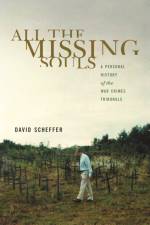
Within days of Madeleine Albright's confirmation as U.S. ambassador to the United Nations in 1993, she instructed David Scheffer to spearhead the historic mission to create a war crimes tribunal for the former Yugoslavia. As senior adviser to Albright and then as President Clinton's ambassador-at-large for war crimes issues, Scheffer was at the forefront of the efforts that led to criminal tribunals for the Balkans, Rwanda, Sierra Leone, and Cambodia, and that resulted in the creation of the permanent International Criminal Court. All the Missing Souls is Scheffer's gripping insider's account of the international gamble to prosecute those responsible for genocide, war crimes, and crimes against humanity, and to redress some of the bloodiest human rights atrocities in our time. Scheffer reveals the truth behind Washington's failures during the 1994 Rwandan genocide and the 1995 Srebrenica massacre, the anemic hunt for notorious war criminals, how American exceptionalism undercut his diplomacy, and the perilous quests for accountability in Kosovo and Cambodia. He takes readers from the killing fields of Sierra Leone to the political back rooms of the U.N. Security Council, providing candid portraits of major figures such as Madeleine Albright, Anthony Lake, Richard Goldstone, Louise Arbour, Samuel "e;Sandy"e; Berger, Richard Holbrooke, and Wesley Clark, among others. A stirring personal account of an important historical chapter, All the Missing Souls provides new insights into the continuing struggle for international justice.
In Reinventing Discovery, Michael Nielsen argues that we are living at the dawn of the most dramatic change in science in more than 300 years. This change is being driven by powerful new cognitive tools, enabled by the internet, which are greatly accelerating scientific discovery. There are many books about how the internet is changing business or the workplace or government. But this is the first book about something much more fundamental: how the internet is transforming the nature of our collective intelligence and how we understand the world. Reinventing Discovery tells the exciting story of an unprecedented new era of networked science. We learn, for example, how mathematicians in the Polymath Project are spontaneously coming together to collaborate online, tackling and rapidly demolishing previously unsolved problems. We learn how 250,000 amateur astronomers are working together in a project called Galaxy Zoo to understand the large-scale structure of the Universe, and how they are making astonishing discoveries, including an entirely new kind of galaxy. These efforts are just a small part of the larger story told in this book--the story of how scientists are using the internet to dramatically expand our problem-solving ability and increase our combined brainpower. This is a book for anyone who wants to understand how the online world is revolutionizing scientific discovery today--and why the revolution is just beginning.
A comprehensive treatment of visual ecologyVisual ecology is the study of how animals use visual systems to meet their ecological needs, how these systems have evolved, and how they are specialized for particular visual tasks. Visual Ecology provides the first up-to-date synthesis of the field to appear in more than three decades. Featuring some 225 illustrations, including more than 140 in color, spread throughout the text, this comprehensive and accessible book begins by discussing the basic properties of light and the optical environment. It then looks at how photoreceptors intercept light and convert it to usable biological signals, how the pigments and cells of vision vary among animals, and how the properties of these components affect a given receptor's sensitivity to light. The book goes on to examine how eyes and photoreceptors become specialized for an array of visual tasks, such as navigation, evading prey, mate choice, and communication.A timely and much-needed resource for students and researchers alike, Visual Ecology also includes a glossary and a wealth of examples drawn from the full diversity of visual systems.The most up-to-date overview of visual ecology availableFeatures some 225 illustrations, including more than 140 in color, spread throughout the textGuides readers from the basic physics of light to the role of visual systems in animal behaviorIncludes a glossary and a wealth of real-world examples
Most of us know there is a payoff to looking good, and in the quest for beauty we spend countless hours and billions of dollars on personal grooming, cosmetics, and plastic surgery. But how much better off are the better looking? Based on the evidence, quite a lot. The first book to seriously measure the advantages of beauty, Beauty Pays demonstrates how society favors the beautiful and how better-looking people experience startling but undeniable benefits in all aspects of life. Noted economist Daniel Hamermesh shows that the attractive are more likely to be employed, work more productively and profitably, receive more substantial pay, obtain loan approvals, negotiate loans with better terms, and have more handsome and highly educated spouses. Hamermesh explains why this happens and what it means for the beautiful--and the not-so-beautiful--among us. Exploring whether a universal standard of beauty exists, Hamermesh illustrates how attractive workers make more money, how these amounts differ by gender, and how looks are valued differently based on profession. He considers whether extra pay for good-looking people represents discrimination, and, if so, who is discriminating. Hamermesh investigates the commodification of beauty in dating and how this influences the search for intelligent or high-earning mates, and even examines whether government programs should aid the ugly. He also discusses whether the economic benefits of beauty will persist into the foreseeable future and what the "e;looks-challenged"e; can do to overcome their disadvantage. Reflecting on a sensitive issue that touches everyone, Beauty Pays proves that beauty's rewards are anything but superficial.
This book shows how current and recent market prices convey information about the probability distributions that govern future prices. Moving beyond purely theoretical models, Stephen Taylor applies methods supported by empirical research of equity and foreign exchange markets to show how daily and more frequent asset prices, and the prices of option contracts, can be used to construct and assess predictions about future prices, their volatility, and their probability distributions. Stephen Taylor provides a comprehensive introduction to the dynamic behavior of asset prices, relying on finance theory and statistical evidence. He uses stochastic processes to define mathematical models for price dynamics, but with less mathematics than in alternative texts. The key topics covered include random walk tests, trading rules, ARCH models, stochastic volatility models, high-frequency datasets, and the information that option prices imply about volatility and distributions. Asset Price Dynamics, Volatility, and Prediction is ideal for students of economics, finance, and mathematics who are studying financial econometrics, and will enable researchers to identify and apply appropriate models and methods. It will likewise be a valuable resource for quantitative analysts, fund managers, risk managers, and investors who seek realistic expectations about future asset prices and the risks to which they are exposed.
Scientology is one of the wealthiest and most powerful new religions to emerge in the past century. To its detractors, L. Ron Hubbard's space-age mysticism is a moneymaking scam and sinister brainwashing cult. But to its adherents, it is humanity's brightest hope. Few religious movements have been subject to public scrutiny like Scientology, yet much of what is written about the church is sensationalist and inaccurate. Here for the first time is the story of Scientology's protracted and turbulent journey to recognition as a religion in the postwar American landscape. Hugh Urban tells the real story of Scientology from its cold war-era beginnings in the 1950s to its prominence today as the religion of Hollywood's celebrity elite. Urban paints a vivid portrait of Hubbard, the enigmatic founder who once commanded his own private fleet and an intelligence apparatus rivaling that of the U.S. government. One FBI agent described him as "e;a mental case,"e; but to his followers he is the man who "e;solved the riddle of the human mind."e; Urban details Scientology's decades-long war with the IRS, which ended with the church winning tax-exempt status as a religion; the rancorous cult wars of the 1970s and 1980s; as well as the latest challenges confronting Scientology, from attacks by the Internet group Anonymous to the church's efforts to suppress the online dissemination of its esoteric teachings. The Church of Scientology demonstrates how Scientology has reflected the broader anxieties and obsessions of postwar America, and raises profound questions about how religion is defined and who gets to define it.
This book reflects on Western humanity's efforts to escape from history and its terrors--from the existential condition and natural disasters to the endless succession of wars and other man-made catastrophes. Drawing on historical episodes ranging from antiquity to the recent past, and combining them with literary examples and personal reflections, Teofilo Ruiz explores the embrace of religious experiences, the pursuit of worldly success and pleasures, and the quest for beauty and knowledge as three primary responses to the individual and collective nightmares of history. The result is a profound meditation on how men and women in Western society sought (and still seek) to make meaning of the world and its disturbing history. In chapters that range widely across Western history and culture, The Terror of History takes up religion, the material world, and the world of art and knowledge. "e;Religion and the World to Come"e; examines orthodox and heterodox forms of spirituality, apocalyptic movements, mysticism, supernatural beliefs, and many forms of esotericism, including magic, alchemy, astrology, and witchcraft. "e;The World of Matter and the Senses"e; considers material riches, festivals and carnivals, sports, sex, and utopian communities. Finally, "e;The Lure of Beauty and Knowledge"e; looks at cultural productions of all sorts, from art to scholarship. Combining astonishing historical breadth with a personal and accessible narrative style, The Terror of History is a moving testimony to the incredibly diverse ways humans have sought to cope with their frightening history.
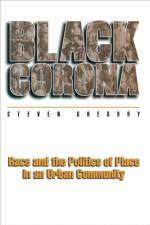
In Black Corona, Steven Gregory examines political culture and activism in an African-American neighborhood in New York City. Using historical and ethnographic research, he challenges the view that black urban communities are "e;socially disorganized."e; Gregory demonstrates instead how working-class and middle-class African Americans construct and negotiate complex and deeply historical political identities and institutions through struggles over the built environment and neighborhood quality of life. With its emphasis on the lived experiences of African Americans, Black Corona provides a fresh and innovative contribution to the study of the dynamic interplay of race, class, and space in contemporary urban communities. It questions the accuracy of the widely used trope of the dysfunctional "e;black ghetto,"e; which, the author asserts, has often been deployed to depoliticize issues of racial and economic inequality in the United States. By contrast, Gregory argues that the urban experience of African Americans is more diverse than is generally acknowledged and that it is only by attending to the history and politics of black identity and community life that we can come to appreciate this complexity. This is the first modern ethnography to focus on black working-class and middle-class life and politics. Unlike books that enumerate the ways in which black communities have been rendered powerless by urban political processes and by changing urban economies, Black Corona demonstrates the range of ways in which African Americans continue to organize and struggle for social justice and community empowerment. Although it discusses the experiences of one community, its implications resonate far more widely.Some images inside the book are unavailable due to digital copyright restrictions.
This volume presents the most important portions of Erwin Goodenough's classic thirteen-volume work, a magisterial attempt to encompass human spiritual history in general through the study of Jewish symbols in particular. Revealing that the Jewish religion of the period was much more varied and complex than the extant Talmudic literature would lead us to believe, Goodenough offered evidence for the existence of a Hellenistic-Jewish mystic mythology far closer to the Qabbalah than to rabbinical Judaism.Originally published in 1989.The Princeton Legacy Library uses the latest print-on-demand technology to again make available previously out-of-print books from the distinguished backlist of Princeton University Press. These editions preserve the original texts of these important books while presenting them in durable paperback and hardcover editions. The goal of the Princeton Legacy Library is to vastly increase access to the rich scholarly heritage found in the thousands of books published by Princeton University Press since its founding in 1905.
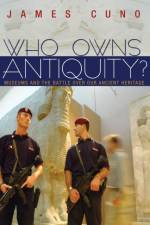
Whether antiquities should be returned to the countries where they were found is one of the most urgent and controversial issues in the art world today, and it has pitted museums, private collectors, and dealers against source countries, archaeologists, and academics. Maintaining that the acquisition of undocumented antiquities by museums encourages the looting of archaeological sites, countries such as Italy, Greece, Egypt, Turkey, and China have claimed ancient artifacts as state property, called for their return from museums around the world, and passed laws against their future export. But in Who Owns Antiquity?, one of the world's leading museum directors vigorously challenges this nationalistic position, arguing that it is damaging and often disingenuous. "e;Antiquities,"e; James Cuno argues, "e;are the cultural property of all humankind,"e; "e;evidence of the world's ancient past and not that of a particular modern nation. They comprise antiquity, and antiquity knows no borders."e; Cuno argues that nationalistic retention and reclamation policies impede common access to this common heritage and encourage a dubious and dangerous politicization of antiquities--and of culture itself. Antiquities need to be protected from looting but also from nationalistic identity politics. To do this, Cuno calls for measures to broaden rather than restrict international access to antiquities. He advocates restoration of the system under which source countries would share newly discovered artifacts in exchange for archaeological help, and he argues that museums should again be allowed reasonable ways to acquire undocumented antiquities. Cuno explains how partage broadened access to our ancient heritage and helped create national museums in Cairo, Baghdad, and Kabul. The first extended defense of the side of museums in the struggle over antiquities, Who Owns Antiquity? is sure to be as important as it is controversial.Some images inside the book are unavailable due to digital copyright restrictions.
An accessible undergraduate textbook on the essential math concepts used in the life sciencesThe life sciences deal with a vast array of problems at different spatial, temporal, and organizational scales. The mathematics necessary to describe, model, and analyze these problems is similarly diverse, incorporating quantitative techniques that are rarely taught in standard undergraduate courses. This textbook provides an accessible introduction to these critical mathematical concepts, linking them to biological observation and theory while also presenting the computational tools needed to address problems not readily investigated using mathematics alone.Proven in the classroom and requiring only a background in high school math, Mathematics for the Life Sciences doesn't just focus on calculus as do most other textbooks on the subject. It covers deterministic methods and those that incorporate uncertainty, problems in discrete and continuous time, probability, graphing and data analysis, matrix modeling, difference equations, differential equations, and much more. The book uses MATLAB throughout, explaining how to use it, write code, and connect models to data in examples chosen from across the life sciences.Provides undergraduate life science students with a succinct overview of major mathematical concepts that are essential for modern biologyCovers all the major quantitative concepts that national reports have identified as the ideal components of an entry-level course for life science studentsProvides good background for the MCAT, which now includes data-based and statistical reasoningExplicitly links data and math modelingIncludes end-of-chapter homework problems, end-of-unit student projects, and select answers to homework problemsUses MATLAB throughout, and MATLAB m-files with an R supplement are available onlinePrepares students to read with comprehension the growing quantitative literature across the life sciencesA solutions manual for professors and an illustration package is available
Jung's landmark seminar sessions on dream interpretation and its historyFrom 1936 to 1941, C. G. Jung gave a four-part seminar series in Zurich on children's dreams and the historical literature on dream interpretation. This book completes the two-part publication of this landmark seminar, presenting the sessions devoted to dream interpretation and its history. Here we witness Jung as both clinician and teacher: impatient and sometimes authoritarian but also witty, wise, and intellectually daring, a man who, though brilliant, could be vulnerable, uncertain, and humbled by life's mysteries. These sessions open a window on Jungian dream interpretation in practice, as Jung examines a long dream series from the Renaissance physician Girolamo Cardano. They also provide the best example of group supervision by Jung the educator. Presented here in an inspired English translation commissioned by the Philemon Foundation, these sessions reveal Jung as an impassioned teacher in dialogue with his students as he developed and refined the discipline of analytical psychology.An invaluable document of perhaps the most important psychologist of the twentieth century at work, this splendid book is the fullest representation of Jung's interpretations of dream literatures, filling a critical gap in his collected works.
The Theory of Taxation and Public Economics presents a unified conceptual framework for analyzing taxation--the first to be systematically developed in several decades. An original treatment of the subject rather than a textbook synthesis, the book contains new analysis that generates novel results, including some that overturn long-standing conventional wisdom. This fresh approach should change thinking, research, and teaching for decades to come. Building on the work of James Mirrlees, Anthony Atkinson and Joseph Stiglitz, and subsequent researchers, and in the spirit of classics by A. C. Pigou, William Vickrey, and Richard Musgrave, this book steps back from particular lines of inquiry to consider the field as a whole, including the relationships among different fiscal instruments. Louis Kaplow puts forward a framework that makes it possible to rigorously examine both distributive and distortionary effects of particular policies despite their complex interactions with others. To do so, various reforms--ranging from commodity or estate and gift taxation to regulation and public goods provision--are combined with a distributively offsetting adjustment to the income tax. The resulting distribution-neutral reform package holds much constant while leaving in play the distinctive effects of the policy instrument under consideration. By applying this common methodology to disparate subjects, The Theory of Taxation and Public Economics produces significant cross-fertilization and yields solutions to previously intractable problems.
This stunningly illustrated book from acclaimed birder and photographer Richard Crossley revolutionizes field guide design by providing the first real-life approach to identification. Whether you are a beginner, expert, or anywhere in between, The Crossley ID Guide will vastly improve your ability to identify birds. Unlike other guides, which provide isolated individual photographs or illustrations, this is the first book to feature large, lifelike scenes for each species. These scenes--640 in all--are composed from more than 10,000 of the author's images showing birds in a wide range of views--near and far, from different angles, in various plumages and behaviors, including flight, and in the habitat in which they live. These beautiful compositions show how a bird's appearance changes with distance, and give equal emphasis to characteristics experts use to identify birds: size, structure and shape, behavior, probability, and color. This is the first book to convey all of these features visually--in a single image--and to reinforce them with accurate, concise text. Each scene provides a wealth of detailed visual information that invites and rewards careful study, but the most important identification features can be grasped instantly by anyone. By making identification easier, more accurate, and more fun than ever before, The Crossley ID Guide will completely redefine how its users look at birds. Essential for all birders, it also promises to make new birders of many people who have despaired of using traditional guides. Revolutionary. This book changes field guide design to make you a better birder A picture says a thousand words. The most comprehensive guide: 640 stunning scenes created from 10,000 of the author's photographs Reality birding. Lifelike in-focus scenes show birds in their habitats, from near and far, and in all plumages and behaviors Teaching and reference. The first book to accurately portray all the key identification characteristics: size, shape, behavior, probability, and color Practice makes perfect. An interactive learning experience to sharpen and test field identification skills Bird like the experts. The first book to simplify birding and help you understand how to bird like the best An interactive website--www.crossleybirds.com--includes expanded captions for the plates and species updates
Many ideas about poverty and discrimination are nothing more than politically driven assertions unsupported by evidence. And even politically neutral studies that do try to assess evidence are often simply unreliable. In Poverty and Discrimination, economist Kevin Lang cuts through the vast literature on poverty and discrimination to determine what we actually know and how we know it. Using rigorous statistical analysis and economic thinking to judge what the best research is and which theories match the evidence, this book clears the ground for students, social scientists, and policymakers who want to understand--and help reduce--poverty and discrimination. It evaluates how well antipoverty and antidiscrimination policies and programs have worked--and whether they have sometimes actually made the problems worse. And it provides new insights about the causes of, and possible solutions to, poverty and discrimination. The book begins by asking, "e;Who is poor?"e; and by giving a brief history of poverty and poverty policy in the United States in the twentieth century, including the Welfare Reform Act of 1996. Among the topics covered are the changing definition of poverty, the relation between economic growth and poverty, and the effects of labor markets, education, family composition, and concentrated poverty. The book then evaluates the evidence on racial discrimination in areas such as education, employment, and criminal justice, as well as sex discrimination in the labor market, and assesses the effectiveness of antidiscrimination policies. Throughout, the book is grounded in the conviction that we must have much better empirical knowledge of poverty and discrimination if we hope to reduce them.
Do women participate in and influence meetings equally with men? Does gender shape how a meeting is run and whose voices are heard? The Silent Sex shows how the gender composition and rules of a deliberative body dramatically affect who speaks, how the group interacts, the kinds of issues the group takes up, whose voices prevail, and what the group ultimately decides. It argues that efforts to improve the representation of women will fall short unless they address institutional rules that impede women's voices.Using groundbreaking experimental research supplemented with analysis of school boards, Christopher Karpowitz and Tali Mendelberg demonstrate how the effects of rules depend on women's numbers, so that small numbers are not fatal with a consensus process, but consensus is not always beneficial when there are large numbers of women. Men and women enter deliberative settings facing different expectations about their influence and authority. Karpowitz and Mendelberg reveal how the wrong institutional rules can exacerbate women's deficit of authority while the right rules can close it, and, in the process, establish more cooperative norms of group behavior and more generous policies for the disadvantaged. Rules and numbers have far-reaching implications for the representation of women and their interests.Bringing clarity and insight to one of today's most contentious debates, The Silent Sex provides important new findings on ways to bring women's voices into the conversation on matters of common concern.
How U.S. senators were chosen prior to the Seventeenth Amendment-and the consequences of Constitutional reformFrom 1789 to 1913, U.S. senators were not directly elected by the people-instead the Constitution mandated that they be chosen by state legislators. This radically changed in 1913, when the Seventeenth Amendment to the Constitution was ratified, giving the public a direct vote. Electing the Senate investigates the electoral connections among constituents, state legislators, political parties, and U.S. senators during the age of indirect elections. Wendy Schiller and Charles Stewart find that even though parties controlled the partisan affiliation of the winning candidate for Senate, they had much less control over the universe of candidates who competed for votes in Senate elections and the parties did not always succeed in resolving internal conflict among their rank and file. Party politics, money, and personal ambition dominated the election process, in a system originally designed to insulate the Senate from public pressure.Electing the Senate uses an original data set of all the roll call votes cast by state legislators for U.S. senators from 1871 to 1913 and all state legislators who served during this time. Newspaper and biographical accounts uncover vivid stories of the political maneuvering, corruption, and partisanship-played out by elite political actors, from elected officials, to party machine bosses, to wealthy business owners-that dominated the indirect Senate elections process. Electing the Senate raises important questions about the effectiveness of Constitutional reforms, such as the Seventeenth Amendment, that promised to produce a more responsive and accountable government.
In 2005, twelve cartoons mocking the prophet Mohammed appeared in the Danish newspaper Jyllands-Posten, igniting a political firestorm over demands by some Muslims that the claims of their religious faith take precedence over freedom of expression. Given the explosive reaction from Middle Eastern governments, Muslim clerics, and some Danish politicians, the stage was set for a backlash against Muslims in Denmark. But no such backlash occurred.Paradoxes of Liberal Democracy shows how the majority of ordinary Danish citizens provided a solid wall of support for the rights of their country's growing Muslim minority, drawing a sharp distinction between Muslim immigrants and Islamic fundamentalists and supporting the civil rights of Muslim immigrants as fully as those of fellow Danes-for example, Christian fundamentalists. Building on randomized experiments conducted as part of large, nationally representative opinion surveys, Paradoxes of Liberal Democracy also demonstrates how the moral covenant underpinning the welfare state simultaneously promotes equal treatment for some Muslim immigrants and opens the door to discrimination against others.Revealing the strength of Denmark's commitment to democratic values, Paradoxes of Liberal Democracy underlines the challenges of inclusion but offers hope to those seeking to reconcile the secular values of liberal democracy and the religious faith of Muslim immigrants in Europe.
How religion and race-not nationalism-shaped early encounters between Zionists and Arabs in PalestineAs the Israeli-Palestinian conflict persists, aspiring peacemakers continue to search for the precise territorial dividing line that will satisfy both Israeli and Palestinian nationalist demands. The prevailing view assumes that this struggle is nothing more than a dispute over real estate. Defining Neighbors boldly challenges this view, shedding new light on how Zionists and Arabs understood each other in the earliest years of Zionist settlement in Palestine and suggesting that the current singular focus on boundaries misses key elements of the conflict.Drawing on archival documents as well as newspapers and other print media from the final decades of Ottoman rule, Jonathan Gribetz argues that Zionists and Arabs in pre-World War I Palestine and the broader Middle East did not think of one another or interpret each other's actions primarily in terms of territory or nationalism. Rather, they tended to view their neighbors in religious terms-as Jews, Christians, or Muslims-or as members of "e;scientifically"e; defined races-Jewish, Arab, Semitic, or otherwise. Gribetz shows how these communities perceived one another, not as strangers vying for possession of a land that each regarded as exclusively their own, but rather as deeply familiar, if at times mythologized or distorted, others. Overturning conventional wisdom about the origins of the Israeli-Palestinian conflict, Gribetz demonstrates how the seemingly intractable nationalist contest in Israel and Palestine was, at its start, conceived of in very different terms.Courageous and deeply compelling, Defining Neighbors is a landmark book that fundamentally recasts our understanding of the modern Jewish-Arab encounter and of the Middle East conflict today.
An in-depth examination of the economic and social transition from slavery to capitalism during ReconstructionAt the center of the upheavals brought by emancipation in the American South was the economic and social transition from slavery to modern capitalism. In Between Slavery and Capitalism, Martin Ruef examines how this institutional change affected individuals, organizations, and communities in the late nineteenth century, as blacks and whites alike learned to navigate the shoals between two different economic worlds. Analyzing trajectories among average Southerners, this is perhaps the most extensive sociological treatment of the transition from slavery since W.E.B. Du Bois's Black Reconstruction in America.In the aftermath of the Civil War, uncertainty was a pervasive feature of life in the South, affecting the economic behavior and social status of former slaves, Freedmen's Bureau agents, planters, merchants, and politicians, among others. Emancipation brought fundamental questions: How should emancipated slaves be reimbursed in wage contracts? What occupations and class positions would be open to blacks and whites? What forms of agricultural tenure could persist? And what paths to economic growth would be viable? To understand the escalating uncertainty of the postbellum era, Ruef draws on a wide range of qualitative and quantitative data, including several thousand interviews with former slaves, letters, labor contracts, memoirs, survey responses, census records, and credit reports.Through a resolutely comparative approach, Between Slavery and Capitalism identifies profound changes between the economic institutions of the Old and New South and sheds new light on how the legacy of emancipation continues to affect political discourse and race and class relations today.
Constituents often fail to hold their representatives accountable for federal spending decisions-even though those very choices have a pervasive influence on American life. Why does this happen? Breaking new ground in the study of representation, The Impression of Influence demonstrates how legislators skillfully inform constituents with strategic communication and how this facilitates or undermines accountability. Using a massive collection of Congressional texts and innovative experiments and methods, the book shows how legislators create an impression of influence through credit claiming messages.Anticipating constituents' reactions, legislators claim credit for programs that elicit a positive response, making constituents believe their legislator is effectively representing their district. This spurs legislators to create and defend projects popular with their constituents. Yet legislators claim credit for much more-they announce projects long before they begin, deceptively imply they deserve credit for expenditures they had little role in securing, and boast about minuscule projects. Unfortunately, legislators get away with seeking credit broadly because constituents evaluate the actions that are reported, rather than the size of the expenditures.The Impression of Influence raises critical questions about how citizens hold their political representatives accountable and when deception is allowable in a democracy.
In July 2010, Terry Jones, the pastor of a small fundamentalist church in Florida, announced plans to burn two hundred Qur'ans on the anniversary of the September 11 attacks. Though he ended up canceling the stunt in the face of widespread public backlash, his threat sparked violent protests across the Muslim world that left at least twenty people dead. In Terrified, Christopher Bail demonstrates how the beliefs of fanatics like Jones are inspired by a rapidly expanding network of anti-Muslim organizations that exert profound influence on American understanding of Islam.Bail traces how the anti-Muslim narrative of the political fringe has captivated large segments of the American media, government, and general public, validating the views of extremists who argue that the United States is at war with Islam and marginalizing mainstream Muslim-Americans who are uniquely positioned to discredit such claims. Drawing on cultural sociology, social network theory, and social psychology, he shows how anti-Muslim organizations gained visibility in the public sphere, commandeered a sense of legitimacy, and redefined the contours of contemporary debate, shifting it ever outward toward the fringe. Bail illustrates his pioneering theoretical argument through a big-data analysis of more than one hundred organizations struggling to shape public discourse about Islam, tracing their impact on hundreds of thousands of newspaper articles, television transcripts, legislative debates, and social media messages produced since the September 11 attacks. The book also features in-depth interviews with the leaders of these organizations, providing a rare look at how anti-Muslim organizations entered the American mainstream.
Once known for slum-like conditions in its immigrant and working-class neighborhoods, New York City's downtown now features luxury housing, chic boutiques and hotels, and, most notably, a vibrant nightlife culture. While a burgeoning bar scene can be viewed as a positive sign of urban transformation, tensions lurk beneath, reflecting the social conflicts within postindustrial cities. Upscaling Downtown examines the perspectives and actions of disparate social groups who have been affected by or played a role in the nightlife of the Lower East Side, East Village, and Bowery. Using the social world of bars as windows into understanding urban development, Richard Ocejo argues that the gentrifying neighborhoods of postindustrial cities are increasingly influenced by upscale commercial projects, causing significant conflicts for the people involved.Ocejo explores what community institutions, such as neighborhood bars, gain or lose amid gentrification. He considers why residents continue unsuccessfully to protest the arrival of new bars, how new bar owners produce a nightlife culture that attracts visitors rather than locals, and how government actors, including elected officials and the police, regulate and encourage nightlife culture. By focusing on commercial newcomers and the residents who protest local changes, Ocejo illustrates the contested and dynamic process of neighborhood growth.Delving into the social ecosystem of one emblematic section of Manhattan, Upscaling Downtown sheds fresh light on the tensions and consequences of urban progress.
Abonner på vårt nyhetsbrev og få rabatter og inspirasjon til din neste leseopplevelse.
Ved å abonnere godtar du vår personvernerklæring.