























Gjør som tusenvis av andre bokelskere
Abonner på vårt nyhetsbrev og få rabatter og inspirasjon til din neste leseopplevelse.
Ved å abonnere godtar du vår personvernerklæring.Du kan når som helst melde deg av våre nyhetsbrev.

The remarkable properties of the numbers one through nineIn Single Digits, Marc Chamberland takes readers on a fascinating exploration of small numbers, from one to nine, looking at their history, applications, and connections to various areas of mathematics, including number theory, geometry, chaos theory, numerical analysis, and mathematical physics. For instance, why do eight perfect card shuffles leave a standard deck of cards unchanged? And, are there really "e;six degrees of separation"e; between all pairs of people? Chamberland explores these questions and covers vast numerical territory, such as illustrating the ways that the number three connects to chaos theory, the number of guards needed to protect an art gallery, problematic election results and so much more. The book's short sections can be read independently and digested in bite-sized chunks-especially good for learning about the Ham Sandwich Theorem and the Pizza Theorem. Appealing to high school and college students, professional mathematicians, and those mesmerized by patterns, this book shows that single digits offer a plethora of possibilities that readers can count on.
The marvelous microbes that made life on Earth possible and support our very existenceFor almost four billion years, microbes had the primordial oceans all to themselves. The stewards of Earth, these organisms transformed the chemistry of our planet to make it habitable for plants, animals, and us. Life's Engines takes readers deep into the microscopic world to explore how these marvelous creatures made life on Earth possible-and how human life today would cease to exist without them.Paul Falkowski looks "e;under the hood"e; of microbes to find the engines of life, the actual working parts that do the biochemical heavy lifting for every living organism on Earth. With insight and humor, he explains how these miniature engines are built-and how they have been appropriated by and assembled like Lego sets within every creature that walks, swims, or flies. Falkowski shows how evolution works to maintain this core machinery of life, and how we and other animals are veritable conglomerations of microbes.A vibrantly entertaining book about the microbes that support our very existence, Life's Engines will inspire wonder about these elegantly complex nanomachines that have driven life since its origin. It also issues a timely warning about the dangers of tinkering with that machinery to make it more "e;efficient"e; at meeting the ever-growing demands of humans in the coming century.
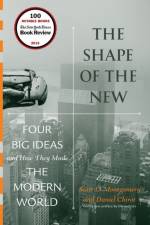
This panoramic book tells the story of how revolutionary ideas from the Enlightenment about freedom, equality, evolution, and democracy have reverberated through modern history and shaped the world as we know it today.A testament to the enduring power of ideas, The Shape of the New offers unforgettable portraits of Adam Smith, Thomas Jefferson, Alexander Hamilton, Charles Darwin, and Karl Marxheirs of the Enlightenment who embodied its highest ideals about progressand shows how their thoughts, over time and in the hands of their followers and opponents, transformed the very nature of our beliefs, institutions, economies, and politics. Yet these ideas also hold contradictions. They have been used in the service of brutal systems such as slavery and colonialism, been appropriated and twisted by monsters like Stalin and Hitler, and provoked reactions against the Enlightenment's legacy by Islamic Salafists and the Christian Religious Right.The Shape of the New argues that it is impossible to understand the ideological and political conflicts of our own time without familiarizing ourselves with the history and internal tensions of these world-changing ideas. With passion and conviction, it exhorts us to recognize the central importance of these ideas as historical forces and pillars of the Western humanistic tradition. It makes the case that to read the works of the great thinkers is to gain invaluable insights into the ideas that have shaped how we think and what we believe.
A step-by-step illustrated introduction to the astounding mathematics of symmetryThis lavishly illustrated book provides a hands-on, step-by-step introduction to the intriguing mathematics of symmetry. Instead of breaking up patterns into blocks-a sort of potato-stamp method-Frank Farris offers a completely new waveform approach that enables you to create an endless variety of rosettes, friezes, and wallpaper patterns: dazzling art images where the beauty of nature meets the precision of mathematics.Featuring more than 100 stunning color illustrations and requiring only a modest background in math, Creating Symmetry begins by addressing the enigma of a simple curve, whose curious symmetry seems unexplained by its formula. Farris describes how complex numbers unlock the mystery, and how they lead to the next steps on an engaging path to constructing waveforms. He explains how to devise waveforms for each of the 17 possible wallpaper types, and then guides you through a host of other fascinating topics in symmetry, such as color-reversing patterns, three-color patterns, polyhedral symmetry, and hyperbolic symmetry. Along the way, Farris demonstrates how to marry waveforms with photographic images to construct beautiful symmetry patterns as he gradually familiarizes you with more advanced mathematics, including group theory, functional analysis, and partial differential equations. As you progress through the book, you'll learn how to create breathtaking art images of your own.Fun, accessible, and challenging, Creating Symmetry features numerous examples and exercises throughout, as well as engaging discussions of the history behind the mathematics presented in the book.
Tantalizing math puzzles and cooking recipes that show how mathematical thinking is like the culinary artsTie on your apron and step into Jim Henle's kitchen as he demonstrates how two equally savory pursuits-cooking and mathematics-have more in common than you realize. A tasty dish for gourmets of popular math, The Proof and the Pudding offers a witty and flavorful blend of mathematical treats and gastronomic delights that reveal how life in the mathematical world is tantalizingly similar to life in the kitchen.Take a tricky Sudoku puzzle and a cake that fell. Henle shows you that the best way to deal with cooking disasters is also the best way to solve math problems. Or take an L-shaped billiard table and a sudden desire for Italian potstickers. He explains how preferring geometry over algebra (or algebra over geometry) is just like preferring a California roll to chicken tikka masala. Do you want to know why playfulness is rampant in math and cooking? Or how to turn stinky cheese into an awesome ice cream treat? It's all here: original math and original recipes plus the mathematical equivalents of vegetarianism, Asian fusion, and celebrity chefs.Pleasurable and lighthearted, The Proof and the Pudding is a feast for the intellect as well as the palate.
In The Globalization of Inequality, distinguished economist and policymaker Franois Bourguignon examines the complex and paradoxical links between a vibrant world economy that has raised the living standard of over half a billion people in emerging nations such as China, India, and Brazil, and the exponentially increasing inequality within countries. Exploring globalizations role in the evolution of inequality, Bourguignon takes an original and truly international approach to the decrease in inequality between nations, the increase in inequality within nations, and the policies that might moderate inequalitys negative effects.Demonstrating that in a globalized world it becomes harder to separate out the factors leading to domestic or international inequality, Bourguignon examines each trend through a variety of sources, and looks at how these inequalities sometimes balance each other out or reinforce one another. Factoring in the most recent economic crisis, Bourguignon investigates why inequality in some countries has dropped back to levels that have not existed for several decades, and he asks if these should be considered in the context of globalization or if they are in fact specific to individual nations. Ultimately, Bourguignon argues that it will be up to countries in the developed and developing world to implement better policies, even though globalization limits the scope for some potential redistributive instruments.An informed and original contribution to the current debates about inequality, this book will be essential reading for anyone who is interested in the future of the world economy.
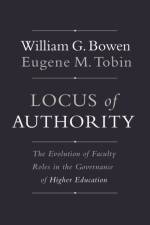
Why colleges and universities should change their governance systems-and what could happen if they don'tDo higher education institutions have what it takes to reform effectively from within? Locus of Authority argues that every issue facing today's colleges and universities, from stagnant degree completion rates to worrisome cost increases, is exacerbated by a century-old system of governance that desperately requires change. While prior studies have focused on boards of trustees and presidents, few have looked at the place of faculty within the governance system. Bowen and Tobin explore whether departments remain the best ways through which to organize decision making and if the concepts of academic freedom and shared governance need to be sharpened and redefined. Using case studies of four very different institutions, the authors demonstrate that college and university governance has capably adjusted to the necessities of the moment and governance norms and policies should be assessed in the context of historical events. They also demonstrate that successful reform depends on the artful consideration of technological, financial, and cultural developments. Locus of Authority shows that the consequences of not addressing college and university governance are more than the nation can afford.
How the right business practices lead to the best resultsWe do business in a results-oriented world. Our focus on growth is laudable for its clarity, but one of its downsides is that firms can lose sight of the process: how business gets done and the individuals or employees through whom results are achieved. This leads to compromised decisions and unethical behavior. It is not just what we accomplish that matters but also how we accomplish it.In The Process Matters, Joel Brockner shows that managers have to do more than just meet targets and goals. They have to reach those ends in the right ways-with input, consistency, and accountability-if they want to effectively lead and manage in their organizations. Brockner discusses what goes into the right process, how it leads to better outcomes, why it is easier said than done, and how to overcome obstacles along the way.Brockner demonstrates that a high-quality process often costs little and may not even require a great deal of time. In light of these facts, he considers the puzzling question of why good business practice doesn't happen more often. Brockner draws from various real-life workplace examples-from Jay Leno's departure (twice) from his TV show, to the improvement of shooting accuracy in the U.S. Navy, to the surprising results of layoffs in Canada. He also factors in a wide swath of studies to examine such issues as the importance of perceived fairness in the process, the management of organizational change, and the encouragement of a strong sense of self in those involved in decisions-in short, the ways that managers can bring out the best in their people.Relevant to anyone who is in a managerial position-from the CEO on down-The Process Matters proves that seemingly simple differences in process can go a long way.
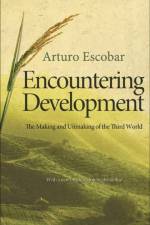
How did the industrialized nations of North America and Europe come to be seen as the appropriate models for post-World War II societies in Asia, Africa, and Latin America? How did the postwar discourse on development actually create the so-called Third World? And what will happen when development ideology collapses? To answer these questions, Arturo Escobar shows how development policies became mechanisms of control that were just as pervasive and effective as their colonial counterparts. The development apparatus generated categories powerful enough to shape the thinking even of its occasional critics while poverty and hunger became widespread. "e;Development"e; was not even partially "e;deconstructed"e; until the 1980s, when new tools for analyzing the representation of social reality were applied to specific "e;Third World"e; cases. Here Escobar deploys these new techniques in a provocative analysis of development discourse and practice in general, concluding with a discussion of alternative visions for a postdevelopment era. Escobar emphasizes the role of economists in development discourse--his case study of Colombia demonstrates that the economization of food resulted in ambitious plans, and more hunger. To depict the production of knowledge and power in other development fields, the author shows how peasants, women, and nature became objects of knowledge and targets of power under the "e;gaze of experts."e; In a substantial new introduction, Escobar reviews debates on globalization and postdevelopment since the book's original publication in 1995 and argues that the concept of postdevelopment needs to be redefined to meet today's significantly new conditions. He then calls for the development of a field of "e;pluriversal studies,"e; which he illustrates with examples from recent Latin American movements.
Mary Dudziak's Exporting American Dreams tells the little-known story of Thurgood Marshall's work with Kenyan leaders as they fought with the British for independence in the early 1960s. Not long after he led the legal team in Brown v. Board of Education, Marshall aided Kenya's constitutional negotiations, as adversaries battled over rights and land--not with weapons, but with legal arguments. Set in the context of Marshall's civil rights work in the United States, this transnational history sheds light on legal reform and social change in the midst of violent upheavals in Africa and America. While the struggle for rights on both continents played out on a global stage, it was a deeply personal journey for Marshall. Even as his belief in the equalizing power of law was challenged during his career as a Supreme Court justice, and in Kenya the new government sacrificed the rights he cherished, Kenya's founding moment remained for him a time and place when all things had seemed possible.
The best-selling author of Why the West Rules-for Now examines the evolution and future of human values Most people in the world today think democracy and gender equality are good, and that violence and wealth inequality are bad. But most people who lived during the 10,000 years before the nineteenth century thought just the opposite. Drawing on archaeology, anthropology, biology, and history, Ian Morris explains why. Fundamental long-term changes in values, Morris argues, are driven by the most basic force of all: energy. Humans have found three main ways to get the energy they need-from foraging, farming, and fossil fuels. Each energy source sets strict limits on what kinds of societies can succeed, and each kind of society rewards specific values. But if our fossil-fuel world favors democratic, open societies, the ongoing revolution in energy capture means that our most cherished values are very likely to turn out not to be useful any more. Foragers, Farmers, and Fossil Fuels offers a compelling new argument about the evolution of human values, one that has far-reaching implications for how we understand the past-and for what might happen next. Originating as the Tanner Lectures delivered at Princeton University, the book includes challenging responses by classicist Richard Seaford, historian of China Jonathan Spence, philosopher Christine Korsgaard, and novelist Margaret Atwood.
The story of GDP and why we need a better measurement of growthIn one lifetime, GDP, or Gross Domestic Product, has ballooned from a narrow economic tool into a global article of faith. As The Little Big Number demonstrates, this spells trouble. While economies and cultures measure their performance by it, GDP only measures output. It ignores central facts such as quality, costs, or purpose. Sustainability and quality of life are overlooked. Losses don't count. The world can no longer afford GDP rule-GDP ignores real development. Dirk Philipsen demonstrates how the history of GDP reveals unique opportunities to fashion smarter goals and measures. The Little Big Number explores a possible roadmap for a future that advances quality of life rather than indiscriminate growth.
The connections between modern physics and medical technologyMany remarkable medical technologies, diagnostic tools, and treatment methods have emerged as a result of modern physics discoveries in the last century-including X-rays, radiation treatment, laser surgery, high-resolution ultrasound scans, computerized tomography (CT) scans, and magnetic resonance imaging. This undergraduate-level textbook describes the fundamental physical principles underlying these technological advances, emphasizing their applications to the practice of modern medicine.Intended for science and engineering students with one year of introductory physics background, this textbook presents the medical applications of fundamental principles of physics to students who are considering careers in medical physics, biophysics, medicine, or nuclear engineering. It also serves as an excellent reference for advanced students, as well as medical and health researchers, practitioners, and technicians who are interested in developing the background required to understand the changing landscape of medical science. Practice exercises are included and solutions are available separately in an instructor's manual.Complete discussion of the fundamental physical principles underlying modern medicineAccessible exploration of the physics encountered in a typical visit to a doctorPractice exercises are included and solutions are provided in a separate instructor's manual (available to professors)A companion website (modernphysicsinmedicine.com) presents supplementary materials
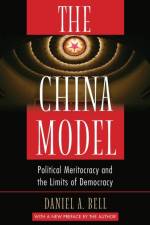
Westerners tend to divide the political world into "e;good"e; democracies and "e;bad"e; authoritarian regimes. But the Chinese political model does not fit neatly in either category. Over the past three decades, China has evolved a political system that can best be described as "e;political meritocracy."e; The China Model seeks to understand the ideals and the reality of this unique political system. How do the ideals of political meritocracy set the standard for evaluating political progress (and regress) in China? How can China avoid the disadvantages of political meritocracy? And how can political meritocracy best be combined with democracy? Daniel Bell answers these questions and more.Opening with a critique of "e;one person, one vote"e; as a way of choosing top leaders, Bell argues that Chinese-style political meritocracy can help to remedy the key flaws of electoral democracy. He discusses the advantages and pitfalls of political meritocracy, distinguishes between different ways of combining meritocracy and democracy, and argues that China has evolved a model of democratic meritocracy that is morally desirable and politically stable. Bell summarizes and evaluates the "e;China model"e;meritocracy at the top, experimentation in the middle, and democracy at the bottomand its implications for the rest of the world.A timely and original book that will stir up interest and debate, The China Model looks at a political system that not only has had a long history in China, but could prove to be the most important political development of the twenty-first century.
How two extraordinary women crossed the Victorian class divide to put Christian teachings into practice in the slums of East LondonNellie Dowell was a match factory girl in Victorian London who spent her early years consigned to orphanages and hospitals. Muriel Lester, the daughter of a wealthy shipbuilder, longed to be free of the burden of money and possessions. Together, these unlikely soulmates sought to remake the world according to their own utopian vision of Christ's teachings. The Match Girl and the Heiress paints an unforgettable portrait of their late-nineteenth-century girlhoods of wealth and want, and their daring twentieth-century experiments in ethical living in a world torn apart by war, imperialism, and industrial capitalism.In this captivating book, Seth Koven chronicles how each traveled the globe-Nellie as a spinster proletarian laborer, Muriel as a well-heeled tourist and revered Christian peacemaker, anticolonial activist, and humanitarian. Koven vividly describes how their lives crossed in the slums of East London, where they inaugurated a grassroots revolution that took the Sermon on the Mount as a guide to achieving economic and social justice for the dispossessed. Koven shows how they devoted themselves to Kingsley Hall-Gandhi's London home in 1931 and Britain's first "e;people's house"e; founded on the Christian principles of social sharing, pacifism, and reconciliation-and sheds light on the intimacies and inequalities of their loving yet complicated relationship.The Match Girl and the Heiress probes the inner lives of these two extraordinary women against the panoramic backdrop of shop-floor labor politics, global capitalism, counterculture spirituality, and pacifist feminism to expose the wounds of poverty and neglect that Christian love could never heal.
Derived from the colorful traditions of vaudeville, burlesque, revue, and operetta, the musical has blossomed into America's most popular form of theater. Scott McMillin has developed a fresh aesthetic theory of this underrated art form, exploring the musical as a type of drama deserving the kind of critical and theoretical regard given to Chekhov or opera. Until recently, the musical has been considered either an "e;integrated"e; form of theater or an inferior sibling of opera. McMillin demonstrates that neither of these views is accurate, and that the musical holds true to the disjunctive and irreverent forms of popular entertainment from which it arose a century ago. Critics and composers have long held the musical to the standards applied to opera, asserting that each piece should work together to create a seamless drama. But McMillin argues that the musical is a different form of theater, requiring the suspension of the plot for song. The musical's success lies not in the smoothness of unity, but in the crackle of difference. While disparate, the dancing, music, dialogue, and songs combine to explore different aspects of the action and the characters. Discussing composers and writers such as Rodgers and Hammerstein, Stephen Sondheim, Kander and Ebb, Leonard Bernstein, and Jerome Kern, The Musical as Drama describes the continuity of this distinctively American dramatic genre, from the shows of the 1920s and 1930s to the musicals of today.
This book provides a comprehensive overview of the history of ideas about the sun and the stars, from antiquity to modern times. Two theoretical astrophysicists who have been active in the field since the early 1960s tell the story in fluent prose. About half of the book covers most of the theoretical research done from 1940 to the close of the twentieth century, a large body of work that has to date been little explored by historians. The first chapter, which outlines the period from about 3000 B.C. to 1700 A.D., shows that at every stage in history human beings have had a particular understanding of the sun and stars, and that this has continually evolved over the centuries. Next the authors systematically address the immense mass of observations astronomy accumulated from the early seventeenth century to the early twentieth. The remaining four chapters examine the history of the field from the physicists perspective, the emphasis being on theoretical work from the mid-1840s to the late 1990s--from thermodynamics to quantum mechanics, from nuclear physics and magnetohydrodynamics to the remarkable advances through to the late 1960s, and finally, to more recent theoretical work. Intended mainly for students and teachers of astronomy, this book will also be a useful reference for practicing astronomers and scientifically curious general readers.
Contrary to popular belief--and despite the expulsion, emigration, or death of many German mathematicians--substantial mathematics was produced in Germany during 1933-1945. In this landmark social history of the mathematics community in Nazi Germany, Sanford Segal examines how the Nazi years affected the personal and academic lives of those German mathematicians who continued to work in Germany. The effects of the Nazi regime on the lives of mathematicians ranged from limitations on foreign contact to power struggles that rattled entire institutions, from changed work patterns to military draft, deportation, and death. Based on extensive archival research, Mathematicians under the Nazis shows how these mathematicians, variously motivated, reacted to the period's intense political pressures. It details the consequences of their actions on their colleagues and on the practice and organs of German mathematics, including its curricula, institutions, and journals. Throughout, Segal's focus is on the biographies of individuals, including mathematicians who resisted the injection of ideology into their profession, some who worked in concentration camps, and others (such as Ludwig Bieberbach) who used the "e;Aryanization"e; of their profession to further their own agendas. Some of the figures are no longer well known; others still tower over the field. All lived lives complicated by Nazi power. Presenting a wealth of previously unavailable information, this book is a large contribution to the history of mathematics--as well as a unique view of what it was like to live and work in Nazi Germany.
In this classic work, acclaimed Shakespeare critic C. L. Barber argues that Elizabethan seasonal festivals such as May Day and Twelfth Night are the key to understanding Shakespeare's comedies. Brilliantly interweaving anthropology, social history, and literary criticism, Barber traces the inward journey--psychological, bodily, spiritual--of the comedies: from confusion, raucous laughter, aching desire, and aggression, to harmony. Revealing the interplay between social custom and dramatic form, the book shows how the Elizabethan antithesis between everyday and holiday comes to life in the comedies' combination of seriousness and levity. "e;I have been led into an exploration of the way the social form of Elizabethan holidays contributed to the dramatic form of festive comedy. To relate this drama to holiday has proved to be the most effective way to describe its character. And this historical interplay between social and artistic form has an interest of its own: we can see here, with more clarity of outline and detail than is usually possible, how art develops underlying configurations in the social life of a culture."e;--C. L. Barber, in the Introduction This new edition includes a foreword by Stephen Greenblatt, who discusses Barber's influence on later scholars and the recent critical disagreements that Barber has inspired, showing that Shakespeare's Festive Comedy is as vital today as when it was originally published.
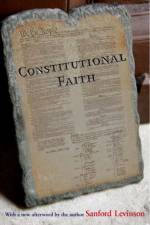
This book examines the "e;constitutional faith"e; that has, since 1788, been a central component of American "e;civil religion."e; By taking seriously the parallel between wholehearted acceptance of the Constitution and religious faith, Sanford Levinson opens up a host of intriguing questions about what it means to be American. While some view the Constitution as the central component of an American religion that serves to unite the social order, Levinson maintains that its sacred role can result in conflict, fragmentation, and even war. To Levinson, the Constitution's value lies in the realm of the discourse it sustains: a uniquely American form of political rhetoric that allows citizens to grapple with every important public issue imaginable. In a new afterword, Levinson looks at the deepening of constitutional worship and attributes the current widespread frustrations with the government to the static nature of the Constitution.
This book provides a sweeping, up-to-date, and boldly critical account of the financial crises that rocked East Asia and other parts of the world beginning with the collapse of the Thai baht in 1997. Retracing the story of Asia's "e;Crisis Five"e;--Indonesia, Malaysia, South Korea, the Philippines, and Thailand--Padma Desai argues that the region's imprudently fast-paced opening to the free flow of capital was pushed by determined advocates, official and private, in the global economy's U.S.-led developed center. Turmoil ensued in these peripheral economies, the Russian ruble faltered, and Brazil was eventually hit. The inequitable center-periphery relationship also extended to the policy measures that the crisis-swept economies implemented under International Monetary Fund bailouts, which intensified the downturns induced by the panic-driven outflows of short-term capital. Financial Crisis, Contagion, and Containment examines crisis origin and resolution in a comparative perspective by combing empirical evidence from the most robust economies to the least. Why is the U.S. relatively successful at weathering economic ups and downs? Why is Japan stuck in policy paralysis? Why is the European Central Bank unable to achieve both inflation control and stable growth? How can emerging markets avoid turbulence amid free-flowing speculative capital from private lenders of the developed center? Engaging and nontechnical yet deeply insightful, this book appears at a time when the continuing turmoil in Argentina has revived policy debates for avoiding and addressing financial crises in emerging market economies.
The Amazon is not what it seems. As Hugh Raffles shows us in this captivating and innovative book, the world's last great wilderness has been transformed again and again by human activity. In Amazonia brings to life an Amazon whose allure and reality lie as much, or more, in what people have made of it as in what nature has wrought. It casts new light on centuries of encounter while describing the dramatic remaking of a sweeping landscape by residents of one small community in the Brazilian Amazon. Combining richly textured ethnographic research and lively historical analysis, Raffles weaves a fascinating story that changes our understanding of this region and challenges us to rethink what we mean by "e;nature."e; Raffles draws from a wide range of material to demonstrate--in contrast to the tendency to downplay human agency in the Amazon--that the region is an outcome of the intimately intertwined histories of humans and nonhumans. He moves between a detailed narrative that analyzes the production of scientific knowledge about Amazonia over the centuries and an absorbing account of the extraordinary transformations to the fluvial landscape carried out over the past forty years by the inhabitants of Igarape Guariba, four hours downstream from the nearest city. Engagingly written, theoretically inventive, and vividly illustrated, the book introduces a diverse range of characters--from sixteenth-century explorers and their native rivals to nineteenth-century naturalists and contemporary ecologists, logging company executives, and river-traders. A natural history of a different kind, In Amazonia shows how humans, animals, rivers, and forests all participate in the making of a region that remains today at the center of debates in environmental politics.
Why have American policies failed to reduce the racial inequalities still pervasive throughout the nation? Has President Barack Obama defined new political approaches to race that might spur unity and progress? Still a House Divided examines the enduring divisions of American racial politics and how these conflicts have been shaped by distinct political alliances and their competing race policies. Combining deep historical knowledge with a detailed exploration of such issues as housing, employment, criminal justice, multiracial census categories, immigration, voting in majority-minority districts, and school vouchers, Desmond King and Rogers Smith assess the significance of President Obama's election to the White House and the prospects for achieving constructive racial policies for America's future. Offering a fresh perspective on the networks of governing institutions, political groups, and political actors that influence the structure of American racial politics, King and Smith identify three distinct periods of opposing racial policy coalitions in American history. The authors investigate how today's alliances pit color-blind and race-conscious approaches against one another, contributing to political polarization and distorted policymaking. Contending that President Obama has so far inadequately confronted partisan divisions over race, the authors call for all sides to recognize the need for a balance of policy measures if America is to ever cease being a nation divided. Presenting a powerful account of American political alliances and their contending racial agendas, Still a House Divided sheds light on a policy path vital to the country's future.
This book develops a general analysis and synthesis framework for impulsive and hybrid dynamical systems. Such a framework is imperative for modern complex engineering systems that involve interacting continuous-time and discrete-time dynamics with multiple modes of operation that place stringent demands on controller design and require implementation of increasing complexity--whether advanced high-performance tactical fighter aircraft and space vehicles, variable-cycle gas turbine engines, or air and ground transportation systems. Impulsive and Hybrid Dynamical Systems goes beyond similar treatments by developing invariant set stability theorems, partial stability, Lagrange stability, boundedness, ultimate boundedness, dissipativity theory, vector dissipativity theory, energy-based hybrid control, optimal control, disturbance rejection control, and robust control for nonlinear impulsive and hybrid dynamical systems. A major contribution to mathematical system theory and control system theory, this book is written from a system-theoretic point of view with the highest standards of exposition and rigor. It is intended for graduate students, researchers, and practitioners of engineering and applied mathematics as well as computer scientists, physicists, and other scientists who seek a fundamental understanding of the rich dynamical behavior of impulsive and hybrid dynamical systems.
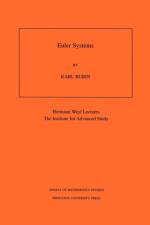
One of the most exciting new subjects in Algebraic Number Theory and Arithmetic Algebraic Geometry is the theory of Euler systems. Euler systems are special collections of cohomology classes attached to p-adic Galois representations. Introduced by Victor Kolyvagin in the late 1980s in order to bound Selmer groups attached to p-adic representations, Euler systems have since been used to solve several key problems. These include certain cases of the Birch and Swinnerton-Dyer Conjecture and the Main Conjecture of Iwasawa Theory. Because Selmer groups play a central role in Arithmetic Algebraic Geometry, Euler systems should be a powerful tool in the future development of the field. Here, in the first book to appear on the subject, Karl Rubin presents a self-contained development of the theory of Euler systems. Rubin first reviews and develops the necessary facts from Galois cohomology. He then introduces Euler systems, states the main theorems, and develops examples and applications. The remainder of the book is devoted to the proofs of the main theorems as well as some further speculations. The book assumes a solid background in algebraic Number Theory, and is suitable as an advanced graduate text. As a research monograph it will also prove useful to number theorists and researchers in Arithmetic Algebraic Geometry.
Trains pull into a railroad station and must wait for each other before leaving again in order to let passengers change trains. How do mathematicians then calculate a railroad timetable that accurately reflects their comings and goings? One approach is to use max-plus algebra, a framework used to model Discrete Event Systems, which are well suited to describe the ordering and timing of events. This is the first textbook on max-plus algebra, providing a concise and self-contained introduction to the topic. Applications of max-plus algebra abound in the world around us. Traffic systems, computer communication systems, production lines, and flows in networks are all based on discrete even systems, and thus can be conveniently described and analyzed by means of max-plus algebra. The book consists of an introduction and thirteen chapters in three parts. Part One explores the introduction of max-plus algebra and of system descriptions based upon it. Part Two deals with a real application, namely the design of timetables for railway networks. Part Three examines various extensions, such as stochastic systems and min-max-plus systems. The text is suitable for last-year undergraduates in mathematics, and each chapter provides exercises, notes, and a reference section.
Genomic signal processing (GSP) can be defined as the analysis, processing, and use of genomic signals to gain biological knowledge, and the translation of that knowledge into systems-based applications that can be used to diagnose and treat genetic diseases. Situated at the crossroads of engineering, biology, mathematics, statistics, and computer science, GSP requires the development of both nonlinear dynamical models that adequately represent genomic regulation, and diagnostic and therapeutic tools based on these models. This book facilitates these developments by providing rigorous mathematical definitions and propositions for the main elements of GSP and by paying attention to the validity of models relative to the data. Ilya Shmulevich and Edward Dougherty cover real-world situations and explain their mathematical modeling in relation to systems biology and systems medicine. Genomic Signal Processing makes a major contribution to computational biology, systems biology, and translational genomics by providing a self-contained explanation of the fundamental mathematical issues facing researchers in four areas: classification, clustering, network modeling, and network intervention.
In 1920, Pierre Fatou expressed the conjecture that--except for special cases--all critical points of a rational map of the Riemann sphere tend to periodic orbits under iteration. This conjecture remains the main open problem in the dynamics of iterated maps. For the logistic family x- ax(1-x), it can be interpreted to mean that for a dense set of parameters "e;a,"e; an attracting periodic orbit exists. The same question appears naturally in science, where the logistic family is used to construct models in physics, ecology, and economics. In this book, Jacek Graczyk and Grzegorz Swiatek provide a rigorous proof of the Real Fatou Conjecture. In spite of the apparently elementary nature of the problem, its solution requires advanced tools of complex analysis. The authors have written a self-contained and complete version of the argument, accessible to someone with no knowledge of complex dynamics and only basic familiarity with interval maps. The book will thus be useful to specialists in real dynamics as well as to graduate students.
Many parallels between complex dynamics and hyperbolic geometry have emerged in the past decade. Building on work of Sullivan and Thurston, this book gives a unified treatment of the construction of fixed-points for renormalization and the construction of hyperbolic 3- manifolds fibering over the circle. Both subjects are studied via geometric limits and rigidity. This approach shows open hyperbolic manifolds are inflexible, and yields quantitative counterparts to Mostow rigidity. In complex dynamics, it motivates the construction of towers of quadratic-like maps, and leads to a quantitative proof of convergence of renormalization.
No state has voted Republican more consistently or widely or for longer than Kansas. To understand red state politics, Kansas is the place. It is also the place to understand red state religion. The Kansas Board of Education has repeatedly challenged the teaching of evolution, Kansas voters overwhelmingly passed a constitutional ban on gay marriage, the state is a hotbed of antiabortion protest--and churches have been involved in all of these efforts. Yet in 1867 suffragist Lucy Stone could plausibly proclaim that, in the cause of universal suffrage, "e;Kansas leads the world!"e; How did Kansas go from being a progressive state to one of the most conservative? In Red State Religion, Robert Wuthnow tells the story of religiously motivated political activism in Kansas from territorial days to the present. He examines how faith mixed with politics as both ordinary Kansans and leaders such as John Brown, Carrie Nation, William Allen White, and Dwight Eisenhower struggled over the pivotal issues of their times, from slavery and Prohibition to populism and anti-communism. Beyond providing surprising new explanations of why Kansas became a conservative stronghold, the book sheds new light on the role of religion in red states across the Midwest and the United States. Contrary to recent influential accounts, Wuthnow argues that Kansas conservatism is largely pragmatic, not ideological, and that religion in the state has less to do with politics and contentious moral activism than with relationships between neighbors, friends, and fellow churchgoers. This is an important book for anyone who wants to understand the role of religion in American political conservatism.
Abonner på vårt nyhetsbrev og få rabatter og inspirasjon til din neste leseopplevelse.
Ved å abonnere godtar du vår personvernerklæring.