










Gjør som tusenvis av andre bokelskere
Abonner på vårt nyhetsbrev og få rabatter og inspirasjon til din neste leseopplevelse.
Ved å abonnere godtar du vår personvernerklæring.Du kan når som helst melde deg av våre nyhetsbrev.

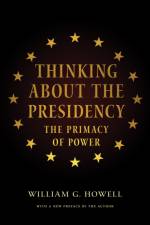
How the search for power defines the American presidential officeAll American presidents, past and present, have cared deeply about power-acquiring, protecting, and expanding it. While individual presidents obviously have other concerns, such as shaping policy or building a legacy, the primacy of power considerations-exacerbated by expectations of the presidency and the inadequacy of explicit powers in the Constitution-sets presidents apart from other political actors. Thinking about the Presidency explores presidents' preoccupation with power. Distinguished presidential scholar William Howell looks at the key aspects of executive power-political and constitutional origins, philosophical underpinnings, manifestations in contemporary political life, implications for political reform, and looming influences over the standards to which we hold those individuals elected to America's highest office.Howell shows that an appetite for power may not inform the original motivations of those who seek to become president. Rather, this need is built into the office of the presidency itself-and quickly takes hold of whoever bears the title of Chief Executive. In order to understand the modern presidency, and the degrees to which a president succeeds or fails, the acquisition, protection, and expansion of power in a president's political life must be recognized-in policy tools and legislative strategies, the posture taken before the American public, and the disregard shown to those who would counsel modesty and deference within the White House.Thinking about the Presidency assesses how the search for and defense of presidential powers informs nearly every decision made by the leader of the nation. In a new preface, Howell reflects on presidential power during the presidency of Barack Obama.
The name Erasmus of Rotterdam conjures up a golden age of scholarly integrity and the disinterested pursuit of knowledge, when learning could command public admiration without the need for authorial self-promotion. Lisa Jardine, however, shows that Erasmus self-consciously created his own reputation as the central figure of the European intellectual world. Erasmus himself-the historical as opposed to the figural individual-was a brilliant, maverick innovator, who achieved little formal academic recognition in his own lifetime. What Jardine offers here is not only a fascinating study of Erasmus but also a bold account of a key moment in Western history, a time when it first became possible to believe in the existence of something that could be designated "e;European thought."e;
In the early 1960s, American conservatives seemed to have fallen on hard times. McCarthyism was on the run, and movements on the political left were grabbing headlines. The media lampooned John Birchers's accusations that Dwight Eisenhower was a communist puppet. Mainstream America snickered at warnings by California Congressman James B. Utt that "e;barefooted Africans"e; were training in Georgia to help the United Nations take over the country. Yet, in Utt's home district of Orange County, thousands of middle-class suburbanites proceeded to organize a powerful conservative movement that would land Ronald Reagan in the White House and redefine the spectrum of acceptable politics into the next century. Suburban Warriors introduces us to these people: women hosting coffee klatches for Barry Goldwater in their tract houses; members of anticommunist reading groups organizing against sex education; pro-life Democrats gradually drawn into conservative circles; and new arrivals finding work in defense companies and a sense of community in Orange County's mushrooming evangelical churches. We learn what motivated them and how they interpreted their political activity. Lisa McGirr shows that their movement was not one of marginal people suffering from status anxiety, but rather one formed by successful entrepreneurial types with modern lifestyles and bright futures. She describes how these suburban pioneers created new political and social philosophies anchored in a fusion of Christian fundamentalism, xenophobic nationalism, and western libertarianism. While introducing these rank-and-file activists, McGirr chronicles Orange County's rise from "e;nut country"e; to political vanguard. Through this history, she traces the evolution of the New Right from a virulent anticommunist, anti-establishment fringe to a broad national movement nourished by evangelical Protestantism. Her original contribution to the social history of politics broadens-and often upsets-our understanding of the deep and tenacious roots of popular conservatism in America.
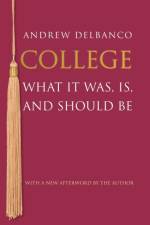
As the commercialization of American higher education accelerates, more and more students are coming to college with the narrow aim of obtaining a preprofessional credential. The traditional four-year college experience-an exploratory time for students to discover their passions and test ideas and values with the help of teachers and peers-is in danger of becoming a thing of the past.In College, prominent cultural critic Andrew Delbanco offers a trenchant defense of such an education, and warns that it is becoming a privilege reserved for the relatively rich. In describing what a true college education should be, he demonstrates why making it available to as many young people as possible remains central to America's democratic promise.In a brisk and vivid historical narrative, Delbanco explains how the idea of college arose in the colonial period from the Puritan idea of the gathered church, how it struggled to survive in the nineteenth century in the shadow of the new research universities, and how, in the twentieth century, it slowly opened its doors to women, minorities, and students from low-income families. He describes the unique strengths of America's colleges in our era of globalization and, while recognizing the growing centrality of science, technology, and vocational subjects in the curriculum, he mounts a vigorous defense of a broadly humanistic education for all. Acknowledging the serious financial, intellectual, and ethical challenges that all colleges face today, Delbanco considers what is at stake in the urgent effort to protect these venerable institutions for future generations.In a new afterword, Delbanco responds to recent developments-both ominous and promising-in the changing landscape of higher education.
A gripping account of U.S.-Russian relations since the end of the Soviet UnionThe Limits of Partnership is a riveting narrative about U.S.-Russian relations from the Soviet collapse through the Ukraine crisis and the difficult challenges ahead. It reflects the unique perspective of an insider who is also recognized as a leading expert on this troubled relationship. American presidents have repeatedly attempted to forge a strong and productive partnership only to be held hostage to the deep mistrust born of the Cold War. For the United States, Russia remains a priority because of its nuclear weapons arsenal, its strategic location bordering Europe and Asia, and its ability to support-or thwart-American interests. Why has it been so difficult to move the relationship forward? What are the prospects for doing so in the future? Is the effort doomed to fail again and again? What are the risks of a new Cold War?Angela Stent served as an adviser on Russia under Bill Clinton and George W. Bush, and maintains dialogues with key policymakers in both countries. Here, she argues that the same contentious issues-terrorism, missile defense, Iran, nuclear proliferation, Afghanistan, the former Soviet space, the greater Middle East-have been in every president's inbox, Democrat and Republican alike, since the collapse of the USSR. Stent vividly describes how Clinton and Bush sought inroads with Russia and staked much on their personal ties to Boris Yeltsin and Vladimir Putin-only to leave office with relations at a low point-and how Barack Obama managed to restore ties only to see them undermined by a Putin regime resentful of American dominance and determined to restore Russia's great power status.The Limits of Partnership calls for a fundamental reassessment of the principles and practices that drive U.S.-Russian relations, and offers a path forward to meet the urgent challenges facing both countries.This edition includes a new chapter in which Stent provides her insights about dramatic recent developments in U.S.-Russian relations, particularly the annexation of Crimea, war in Ukraine, and the end of the Obama Reset.
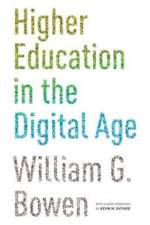
How online learning could help control the exploding cost of higher educationTwo of the most visible and important trends in higher education today are its exploding costs and the rapid expansion of online learning. Could the growth in online courses slow the rising cost of college and help solve the crisis of affordability? In this short and incisive book, William G. Bowen, one of the foremost experts on the intersection of education and economics, explains why, despite his earlier skepticism, he now believes technology has the potential to help rein in costs without negatively affecting student learning. As a former president of Princeton University, an economist, and author of many books on education, including the acclaimed bestseller The Shape of the River, Bowen speaks with unique expertise on the subject.Surveying the dizzying array of new technology-based teaching and learning initiatives, including the highly publicized emergence of "e;massive open online courses"e; (MOOCs), Bowen argues that such technologies could transform traditional higher education-allowing it at last to curb rising costs by increasing productivity, while preserving quality and protecting core values. But the challenges, which are organizational and philosophical as much as technological, are daunting. They include providing hard evidence of whether online education is cost-effective in various settings, rethinking the governance and decision-making structures of higher education, and developing customizable technological platforms. Yet, Bowen remains optimistic that the potential payoff is great.Based on the 2012 Tanner Lectures on Human Values, delivered at Stanford University, the book includes responses from Stanford president John Hennessy, Harvard University psychologist Howard Gardner, Columbia University literature professor Andrew Delbanco, and Coursera cofounder Daphne Koller.
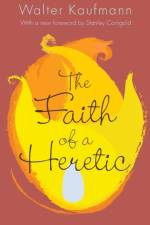
Originally published in 1959, The Faith of a Heretic is the most personal statement of the beliefs of Nietzsche biographer and translator Walter Kaufmann. A first-rate philosopher in his own right, Kaufmann here provides the fullest account of his views on religion. Although he considered himself a heretic, he was not immune to the wellsprings and impulses from which religion originates, declaring it among the most vital and radical expressions of the human mind. Beginning with an autobiographical prologue that traces his evolution from religious believer to "e;heretic,"e; the book touches on theology, organized religion, morality, suffering, and death-all examined from the perspective of a "e;quest for honesty."e; Kaufmann also subjects philosophy's faith in truth, reason, and absolute morality to the same heretical treatment. The resulting exploration of the faiths of a nonbeliever in a secular age is as fresh and challenging as when it was first published.In a new foreword, Stanley Corngold vividly describes the intellectual and biographical milieu of Kaufmann's provocative book.
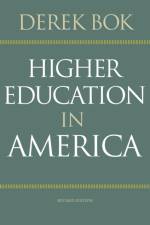
A sweeping assessment of the state of higher education today from former Harvard president Derek BokHigher Education in America is a landmark work--a comprehensive and authoritative analysis of the current condition of our colleges and universities from former Harvard president Derek Bok, one of the nation's most respected education experts. Sweepingly ambitious in scope, this is a deeply informed and balanced assessment of the many strengths as well as the weaknesses of American higher education today. At a time when colleges and universities have never been more important to the lives and opportunities of students or to the progress and prosperity of the nation, Bok provides a thorough examination of the entire system, public and private, from community colleges and small liberal arts colleges to great universities with their research programs and their medical, law, and business schools. Drawing on the most reliable studies and data, he determines which criticisms of higher education are unfounded or exaggerated, which are issues of genuine concern, and what can be done to improve matters.Some of the subjects considered are long-standing, such as debates over the undergraduate curriculum and concerns over rising college costs. Others are more recent, such as the rise of for-profit institutions and massive open online courses (MOOCs). Additional topics include the quality of undergraduate education, the stagnating levels of college graduation, the problems of university governance, the strengths and weaknesses of graduate and professional education, the environment for research, and the benefits and drawbacks of the pervasive competition among American colleges and universities.Offering a rare survey and evaluation of American higher education as a whole, this book provides a solid basis for a fresh public discussion about what the system is doing right, what it needs to do better, and how the next quarter century could be made a period of progress rather than decline.
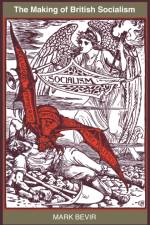
The Making of British Socialism provides a new interpretation of the emergence of British socialism in the late nineteenth century, demonstrating that it was not a working-class movement demanding state action, but a creative campaign of political hope promoting social justice, personal transformation, and radical democracy. Mark Bevir shows that British socialists responded to the dilemmas of economics and faith against a background of diverse traditions, melding new economic theories opposed to capitalism with new theologies which argued that people were bound in divine fellowship. Bevir utilizes an impressive range of sources to illuminate a number of historical questions: Why did the British Marxists follow a Tory aristocrat who dressed in a frock coat and top hat? Did the Fabians develop a new economic theory? What was the role of Christian theology and idealist philosophy in shaping socialist ideas? He explores debates about capitalism, revolution, the simple life, sexual relations, and utopian communities. He gives detailed accounts of the Marxists, Fabians, and ethical socialists, including famous authors such as William Morris and George Bernard Shaw. And he locates these socialists among a wide cast of colorful characters, including Karl Marx, Henry Thoreau, Leo Tolstoy, and Oscar Wilde. By showing how socialism combined established traditions and new ideas in order to respond to the changing world of the late nineteenth century, The Making of British Socialism turns aside long-held assumptions about the origins of a major movement.
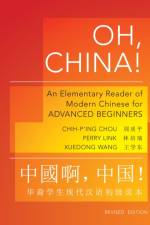
Oh, China! meets the needs of advanced beginners or "e;heritage learners"e; who already speak some Chinese but require instruction in reading and writing fundamentals before moving to the intermediate level. In this fully revised edition, state-of-the-art lessons go over the basics of standard Mandarin pronunciation and introduce students to Chinese characters. The textbook moves at a faster pace than those designed for absolute beginners and allows students to rapidly develop strong foundations in grammar and vocabulary. It contains topics that are especially relevant to heritage learners, such as growing up in a bilingual, bicultural environment, and exposes students to essential issues for understanding contemporary China today, including economic development and political relations with Taiwan. This essential of Chinese language learning contains updated lessons, grammar notes, and exercises, and its new user-friendly format juxtaposes text and vocabulary on adjacent pages. Updated and revised edition Designed for advanced beginners who already speak some Chinese Offers strong foundations in pronunciation, characters, and grammar Covers topics relevant to heritage speakers and contemporary Chinese society Single volume user-friendly format
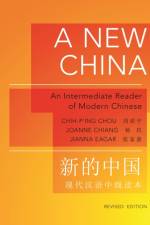
Originally published in 1999, A New China has become a standard textbook for intermediate Chinese language learning. This completely revised edition reflects China's dramatic developments in the last decade and consolidates the previous two-volume set into one volume for easy student use. Written from the perspective of a foreign student who has just arrived in China, the textbook provides the most up-to-date lessons and learning materials about the changing face of China. The first half of the book follows the life of an exchange student experiencing Beijing for the first time. Chinese language students are guided step-by-step through the stages of arriving at the airport, going through customs, and adjusting to Chinese university dormitories. The revised edition includes new lessons on daily life, such as doing laundry and getting a haircut, as well as visiting the zoo, night markets, and the Great Wall. Later lessons discuss recent social and political issues in China, including divorce, Beijing traffic, and the college entrance examination. A New China provides detailed grammar explanations, extensive vocabulary lists, and homework exercises. Single-volume, user-friendly format New lessons and vocabulary reflecting daily living in China Includes China's recent social and political issues Detailed grammar explanations, vocabulary lists, and homework exercises Uses both traditional and simplified characters
Italy is a country of free political institutions, yet it has become a nation of servile courtesans, with Silvio Berlusconi as their prince. This is the controversial argument that Italian political philosopher and noted Machiavelli biographer Maurizio Viroli puts forward in The Liberty of Servants. Drawing upon the classical republican conception of liberty, Viroli shows that a people can be unfree even though they are not oppressed. This condition of unfreedom arises as a consequence of being subject to the arbitrary or enormous power of men like Berlusconi, who presides over Italy with his control of government and the media, immense wealth, and infamous lack of self-restraint. Challenging our most cherished notions about liberty, Viroli argues that even if a power like Berlusconi's has been established in the most legitimate manner and people are not denied their basic rights, the mere existence of such power makes those subject to it unfree. Most Italians, following the lead of their elites, lack the minimal moral qualities of free people, such as respect for the Constitution, the willingness to obey laws, and the readiness to discharge civic duties. As Viroli demonstrates, they exhibit instead the characteristics of servility, including flattery, blind devotion to powerful men, an inclination to lie, obsession with appearances, imitation, buffoonery, acquiescence, and docility. Accompanying these traits is a marked arrogance that is apparent among not only politicians but also ordinary citizens.
An up-to-date and comparative look at immigration in Europe, the United States, and CanadaStrangers No More is the first book to compare immigrant integration across key Western countries. Focusing on low-status newcomers and their children, it examines how they are making their way in four critical European countries-France, Germany, Great Britain, and the Netherlands-and, across the Atlantic, in the United States and Canada. This systematic, data-rich comparison reveals their progress and the barriers they face in an array of institutions-from labor markets and neighborhoods to educational and political systems-and considers the controversial questions of religion, race, identity, and intermarriage.Richard Alba and Nancy Foner shed new light on questions at the heart of concerns about immigration. They analyze why immigrant religion is a more significant divide in Western Europe than in the United States, where race is a more severe obstacle. They look at why, despite fears in Europe about the rise of immigrant ghettoes, residential segregation is much less of a problem for immigrant minorities there than in the United States. They explore why everywhere, growing economic inequality and the proliferation of precarious, low-wage jobs pose dilemmas for the second generation. They also evaluate perspectives often proposed to explain the success of immigrant integration in certain countries, including nationally specific models, the political economy, and the histories of Canada and the United States as settler societies.Strangers No More delves into issues of pivotal importance for the present and future of Western societies, where immigrants and their children form ever-larger shares of the population.
The first compact field guide to offshore sea life of the West CoastTwo-thirds of our planet lies out of sight of land, just offshore beyond the horizon. What wildlife might you find out there? And how might you identify what you see? This Offshore Sea Life ID Guide, designed for quick use on day trips off the West Coast, helps you put a name to what you see, from whales and dolphins to albatrosses, turtles, and even flyingfish. Carefully crafted color plates show species as they typically appear at sea, and expert text highlights identification features. This user-friendly field guide is essential for anyone going out on a whale-watching or birding trip, and provides a handy gateway to the wonders of the ocean.First state-of-the-art pocket guide to offshore sea lifeOver 300 photos used to create composite platesIncludes whales, dolphins, sea lions, birds, sharks, turtles, flyingfish, and moreAccessible and informative text reveals what to look forGreat for beginners and experts alike
The Antarctic Dive Guide is the first and only dive guide to the seventh continent, until recently the exclusive realm of scientific and military divers. Today, however, the icy waters of Antarctica have become the extreme destination for recreational divers wishing to explore beyond the conventional and observe the strange marine life that abounds below the surface. This book is packed with information about the history of diving in Antarctica and its wildlife, and features stunning underwater photography.The Antarctic Dive Guide covers 31 key dive sites on the Antarctic Peninsula and South Georgia and includes maps and detailed guidance on how best to explore each site. Essential information is also provided on how to choose and prepare for travel to this remote region, and diving techniques for subzero waters. This book is an indispensable resource for anyone considering diving in Antarctica, and an exciting read for anyone interested in this little-explored underwater world.This fully revised and updated third edition:Covers 4 new dive sitesFeatures revised and updated information for the other 27 sites coveredIncludes new sections on the Sea Leopard Project and natural product chemistry from Antarctic marine organisms
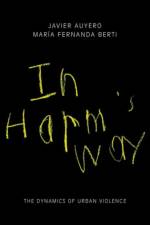
A harrowing look at violence among Argentina's urban poorArquitecto Tucci, a neighborhood in Buenos Aires, is a place where crushing poverty and violent crime are everyday realities. Homicides-often involving young people-continue to skyrocket, and in the emergency room there, victims of shootings or knifings are an all-too-common sight. In Harm's Way takes a harrowing look at daily life in Arquitecto Tucci, examining the sources, uses, and forms of interpersonal violence among the urban poor at the very margins of Argentine society.Drawing on more than two years of immersive fieldwork, sociologist Javier Auyero and Maria Berti, an elementary school teacher in the neighborhood, provide a powerful and disarmingly intimate account of what it is like to live under the constant threat of violence. They argue that being physically aggressive becomes a habitual way of acting in poor and marginalized communities, and that violence is routine and carries across various domains of public and private life. Auyero and Berti trace how different types of violence-be it criminal, drug related, sexual, or domestic-overlap, intersect, and blur together. They show how the state is complicit in the production of harm, and describe the routines and relationships that residents, particularly children, establish to cope with and respond to the constant risk that besieges them and their loved ones.Provocative, eye-opening, and extraordinarily moving, In Harm's Way is destined to become a classic work on violence at the urban margins.
Americans are taught to believe that upward mobility is possible for anyone who is willing to work hard, regardless of their social status, yet it is often those from affluent backgrounds who land the best jobs. Pedigree takes readers behind the closed doors of top-tier investment banks, consulting firms, and law firms to reveal the truth about who really gets hired for the nations highest-paying entry-level jobs, who doesnt, and why.Drawing on scores of in-depth interviews as well as firsthand observation of hiring practices at some of Americas most prestigious firms, Lauren Rivera shows how, at every step of the hiring process, the ways that employers define and evaluate merit are strongly skewed to favor job applicants from economically privileged backgrounds. She reveals how decision makers draw from ideas about talentwhat it is, what best signals it, and who does (and does not) have itthat are deeply rooted in social class. Displaying the "e;right stuff"e; that elite employers are looking for entails considerable amounts of economic, social, and cultural resources on the part of the applicants and their parents.Challenging our most cherished beliefs about college as a great equalizer and the job market as a level playing field, Pedigree exposes the class biases built into American notions about the best and the brightest, and shows how social status plays a significant role in determining who reaches the top of the economic ladder.
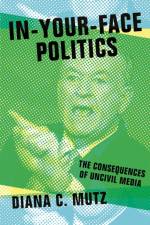
How political incivility broadcast in close-up by the media affects public opinionAmericans are disgusted with watching politicians screaming and yelling at one another on television. But does all the noise really make a difference? Drawing on numerous studies, Diana Mutz provides the first comprehensive look at the consequences of in-your-face politics. Her book contradicts the conventional wisdom by documenting both the benefits and the drawbacks of in-your-face media."e;In-your-face"e; politics refers to both the level of incivility and the up-close and personal way that we experience political conflict on television. Just as actual physical closeness intensifies people's emotional reactions to others, the appearance of closeness on a video screen has similar effects. We tend to keep our distance from those with whom we disagree. Modern media, however, puts those we dislike in our faces in a way that intensifies our negative reactions. Mutz finds that incivility is particularly detrimental to facilitating respect for oppositional political viewpoints and to citizens' levels of trust in politicians and the political process. On the positive side, incivility and close-up camera perspectives contribute to making politics more physiologically arousing and entertaining to viewers. This encourages more attention to political programs, stimulates recall of the content, and encourages people to relay content to others.In the end, In-Your-Face Politics demonstrates why political incivility is not easily dismissed as a disservice to democracy-it may even be a necessity in an age with so much competition for citizens' attention.
The first comprehensive history of sex education around the worldToo Hot to Handle is the first truly international history of sex education. As Jonathan Zimmerman shows, the controversial subject began in the West and spread steadily around the world over the past century. As people crossed borders, however, they joined hands to block sex education from most of their classrooms. Examining key players who supported and opposed the sex education movement, Zimmerman takes a close look at one of the most debated and divisive hallmarks of modern schooling.In the early 1900s, the United States pioneered sex education to protect citizens from venereal disease. But the American approach came under fire after World War II from European countries, which valued individual rights and pleasures over social goals and outcomes. In the so-called Third World, sex education developed in response to the deadly crisis of HIV/AIDS. By the early 2000s, nearly every country in the world addressed sex in its official school curriculum. Still, Zimmerman demonstrates that sex education never won a sustained foothold: parents and religious leaders rejected the subject as an intrusion on their authority, while teachers and principals worried that it would undermine their own tenuous powers. Despite the overall liberalization of sexual attitudes, opposition to sex education increased as the century unfolded. Into the present, it remains a subject without a home.Too Hot to Handle presents the stormy development and dilemmas of school-based sex education in the modern world.
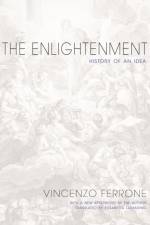
A compelling reevaluation of the Enlightenment from one of its leading historiansIn this concise and powerful book, one of the world's leading historians of the Enlightenment provides a bracing and clarifying new interpretation of this watershed period. Arguing that philosophical and historical interpretations of the era have long been hopelessly confused, Vincenzo Ferrone makes the case that it is only by separating these views and taking an approach grounded in social and cultural history that we can begin to grasp what the Enlightenment was-and why it is still relevant today. Ferrone explains why the Enlightenment was a profound and wide-ranging cultural revolution that reshaped Western identity, reformed politics through the invention of human rights, and redefined knowledge by creating a critical culture. These new ways of thinking gave birth to new values that spread throughout society and changed how everyday life was lived and understood. Featuring an illuminating afterword describing how his argument challenges the work of Anglophone interpreters including Jonathan Israel, The Enlightenment provides a fascinating reevaluation of the true nature and legacy of one of the most important and contested periods in Western history.The translation of this work has been funded by SEPS-Segretariato Europeo per le Pubblicazioni Scientifiche.
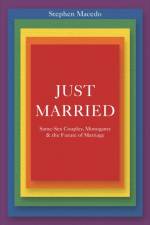
The case for marriage equality and monogamy in a democratic societyThe institution of marriage stands at a critical juncture. As gay marriage equality gains acceptance in law and public opinion, questions abound regarding marriage's future. Will same-sex marriage lead to more radical marriage reform? Should it? Antonin Scalia and many others on the right warn of a slippery slope from same-sex marriage toward polygamy, adult incest, and the dissolution of marriage as we know it. Equally, many academics, activists, and intellectuals on the left contend that there is no place for monogamous marriage as a special status defined by law. Just Married demonstrates that both sides are wrong: the same principles of democratic justice that demand marriage equality for same-sex couples also lend support to monogamous marriage.Stephen Macedo displays the groundlessness of arguments against same-sex marriage and defends marriage as a public institution against those who would eliminate its special status or supplant it with private arrangements. Arguing that monogamy reflects and cultivates our most basic democratic values, Macedo opposes the legal recognition of polygamy, but agrees with progressives that public policies should do more to support nontraditional caring and caregiving relationships. Throughout, Macedo explores the meaning of contemporary marriage and the reasons for its fragility and its enduring significance. His defense of reformed marriage against slippery slope alarmists on the right, and radical critics of marriage on the left, vindicates the justice and common sense of the emerging consensus.Casting new light on today's debates over the future of marriage, Just Married lays the groundwork for a stronger institution.
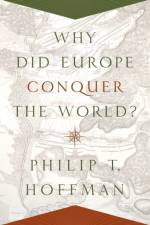
The startling economic and political answers behind Europe's historical dominanceBetween 1492 and 1914, Europeans conquered 84 percent of the globe. But why did Europe establish global dominance, when for centuries the Chinese, Japanese, Ottomans, and South Asians were far more advanced? In Why Did Europe Conquer the World?, Philip Hoffman demonstrates that conventional explanations-such as geography, epidemic disease, and the Industrial Revolution-fail to provide answers. Arguing instead for the pivotal role of economic and political history, Hoffman shows that if certain variables had been different, Europe would have been eclipsed, and another power could have become master of the world. Hoffman sheds light on the two millennia of economic, political, and historical changes that set European states on a distinctive path of development, military rivalry, and war. This resulted in astonishingly rapid growth in Europe's military sector, and produced an insurmountable lead in gunpowder technology. The consequences determined which states established colonial empires or ran the slave trade, and even which economies were the first to industrialize. Debunking traditional arguments, Why Did Europe Conquer the World? reveals the startling reasons behind Europe's historic global supremacy.
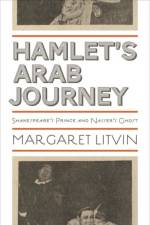
For the past five decades, Arab intellectuals have seen themselves in Shakespeare's Hamlet: their times "e;out of joint,"e; their political hopes frustrated by a corrupt older generation. Hamlet's Arab Journey traces the uses of Hamlet in Arabic theatre and political rhetoric, and asks how Shakespeare's play developed into a musical with a happy ending in 1901 and grew to become the most obsessively quoted literary work in Arab politics today. Explaining the Arab Hamlet tradition, Margaret Litvin also illuminates the "e;to be or not to be"e; politics that have turned Shakespeare's tragedy into the essential Arab political text, cited by Arab liberals, nationalists, and Islamists alike. On the Arab stage, Hamlet has been an operetta hero, a firebrand revolutionary, and a muzzled dissident. Analyzing productions from Egypt, Syria, Iraq, Jordan, and Kuwait, Litvin follows the distinct phases of Hamlet's naturalization as an Arab. Her fine-grained theatre history uses personal interviews as well as scripts and videos, reviews, and detailed comparisons with French and Russian Hamlets. The result shows Arab theatre in a new light. Litvin identifies the French source of the earliest Arabic Hamlet, shows the outsize influence of Soviet and East European Shakespeare, and explores the deep cultural link between Egypt's Gamal Abdel Nasser and the ghost of Hamlet's father. Documenting how global sources and models helped nurture a distinct Arab Hamlet tradition, Hamlet's Arab Journey represents a new approach to the study of international Shakespeare appropriation.Some images inside the book are unavailable due to digital copyright restrictions.
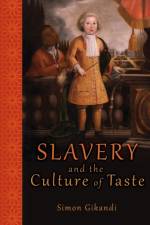
It would be easy to assume that, in the eighteenth century, slavery and the culture of taste--the world of politeness, manners, and aesthetics--existed as separate and unequal domains, unrelated in the spheres of social life. But to the contrary, Slavery and the Culture of Taste demonstrates that these two areas of modernity were surprisingly entwined. Ranging across Britain, the antebellum South, and the West Indies, and examining vast archives, including portraits, period paintings, personal narratives, and diaries, Simon Gikandi illustrates how the violence and ugliness of enslavement actually shaped theories of taste, notions of beauty, and practices of high culture, and how slavery's impurity informed and haunted the rarified customs of the time. Gikandi focuses on the ways that the enslavement of Africans and the profits derived from this exploitation enabled the moment of taste in European--mainly British--life, leading to a transformation of bourgeois ideas regarding freedom and selfhood. He explores how these connections played out in the immense fortunes made in the West Indies sugar colonies, supporting the lavish lives of English barons and altering the ideals that defined middle-class subjects. Discussing how the ownership of slaves turned the American planter class into a new aristocracy, Gikandi engages with the slaves' own response to the strange interplay of modern notions of freedom and the realities of bondage, and he emphasizes the aesthetic and cultural processes developed by slaves to create spaces of freedom outside the regimen of enforced labor and truncated leisure. Through a close look at the eighteenth century's many remarkable documents and artworks, Slavery and the Culture of Taste sets forth the tensions and contradictions entangling a brutal practice and the distinctions of civility.
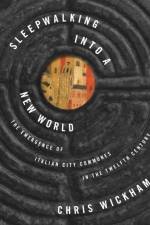
A bold new history of the rise of the medieval Italian communeAmid the disintegration of the Kingdom of Italy in the eleventh and twelfth centuries, a new form of collective government-the commune-arose in the cities of northern and central Italy. Sleepwalking into a New World takes a bold new look at how these autonomous city-states came about, and fundamentally alters our understanding of one of the most important political and cultural innovations of the medieval world.Chris Wickham provides richly textured portraits of three cities-Milan, Pisa, and Rome-and sets them against a vibrant backcloth of other towns. He argues that, in all but a few cases, the elites of these cities and towns developed one of the first nonmonarchical forms of government in medieval Europe, unaware that they were creating something altogether new. Wickham makes clear that the Italian city commune was by no means a democracy in the modern sense, but that it was so novel that outsiders did not know what to make of it. He describes how, as the old order unraveled, the communes emerged, governed by consular elites "e;chosen by the people,"e; and subject to neither emperor nor king. They regularly fought each other, yet they grew organized and confident enough to ally together to defeat Frederick Barbarossa, the German emperor, at the Battle of Legnano in 1176.Sleepwalking into a New World reveals how the development of the autonomous city-state took place, which would in the end make possible the robust civic culture of the Renaissance.
According to the dominant tradition of literary criticism, the novel is the form par excellence of the private individual. Empty Houses challenges this consensus by reexamining the genre's development from the mid-nineteenth to the mid-twentieth century and exploring what has until now seemed an anomaly--the frustrated theatrical ambitions of major novelists. Offering new interpretations of the careers of William Makepeace Thackeray, George Eliot, Henry James, James Joyce, and James Baldwin--writers known for mapping ever-narrower interior geographies--this book argues that the genre's inward-looking tendency has been misunderstood. Delving into the critical role of the theater in the origins of the novel of interiority, David Kurnick reinterprets the novel as a record of dissatisfaction with inwardness and an injunction to rethink human identity in radically collective and social terms. Exploring neglected texts in order to reread canonical ones, Kurnick shows that the theatrical ambitions of major novelists had crucial formal and ideological effects on their masterworks. Investigating a key stretch of each of these novelistic careers, he establishes the theatrical genealogy of some of the signal techniques of narrative interiority. In the process he illustrates how the novel is marked by a hunger for palpable collectivity, and argues that the genre's discontents have been a shaping force in its evolution. A groundbreaking rereading of the novel, Empty Houses provides new ways to consider the novelistic imagination.
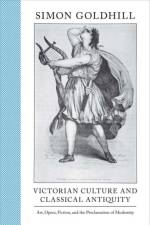
How did the Victorians engage with the ancient world? Victorian Culture and Classical Antiquity is a brilliant exploration of how the ancient worlds of Greece and Rome influenced Victorian culture. Through Victorian art, opera, and novels, Simon Goldhill examines how sexuality and desire, the politics of culture, and the role of religion in society were considered and debated through the Victorian obsession with antiquity. Looking at Victorian art, Goldhill demonstrates how desire and sexuality, particularly anxieties about male desire, were represented and communicated through classical imagery. Probing into operas of the period, Goldhill addresses ideas of citizenship, nationalism, and cultural politics. And through fiction--specifically nineteenth-century novels about the Roman Empire--he discusses religion and the fierce battles over the church as Christianity began to lose dominance over the progressive stance of Victorian science and investigation. Rediscovering some great forgotten works and reframing some more familiar ones, the book offers extraordinary insights into how the Victorian sense of antiquity and our sense of the Victorians came into being. With a wide range of examples and stories, Victorian Culture and Classical Antiquity demonstrates how interest in the classical past shaped nineteenth-century self-expression, giving antiquity a unique place in Victorian culture.
From the dawn of writing in Sumer to the sunset of the Islamic empire, Founding Gods, Inventing Nations traces four thousand years of speculation on the origins of civilization. Investigating a vast range of primary sources, some of which are translated here for the first time, and focusing on the dynamic influence of the Greek, Roman, and Arab conquests of the Near East, William McCants looks at the ways the conquerors and those they conquered reshaped their myths of civilization's origins in response to the social and political consequences of empire. The Greek and Roman conquests brought with them a learned culture that competed with that of native elites. The conquering Arabs, in contrast, had no learned culture, which led to three hundred years of Muslim competition over the cultural orientation of Islam, a contest reflected in the culture myths of that time. What we know today as Islamic culture is the product of this contest, whose protagonists drew heavily on the lore of non-Arab and pagan antiquity. McCants argues that authors in all three periods did not write about civilization's origins solely out of pure antiquarian interest--they also sought to address the social and political tensions of the day. The strategies they employed and the postcolonial dilemmas they confronted provide invaluable context for understanding how authors today use myth and history to locate themselves in the confusing aftermath of empire.
Volume Eight of the project documenting Thomas Jefferson's last years presents 591 documents dated from 1 October 1814 to 31 August 1815. Jefferson is overjoyed by American victories late in the War of 1812 and highly interested in the treaty negotiations that ultimately end the conflict. Following Congress's decision to purchase his library, he oversees the counting, packing, and transportation of his books to Washington. Jefferson uses most of the funds from the sale to pay old debts but spends some of the proceeds on new titles. He resigns from the presidency of the American Philosophical Society, revises draft chapters of Louis H. Girardin's history of Virginia, and advises William Wirt on revolutionary-era Stamp Act resolutions. Jefferson criticizes those who discuss politics from the pulpit, and he drafts a bill to transform the Albemarle Academy into Central College. Monticello visitors Francis W. Gilmer, Francis C. Gray, and George Ticknor describe the mountaintop and its inhabitants, and Gray's visit leads to an exchange with Jefferson about how many generations of white interbreeding it takes to clear Negro blood. Finally, although death takes his nephew Peter Carr and brother Randolph Jefferson, the marriage of his grandson Thomas Jefferson Randolph is a continuing source of great happiness.Some images inside the book are unavailable due to digital copyright restrictions.
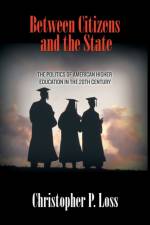
This book tracks the dramatic outcomes of the federal government's growing involvement in higher education between World War I and the 1970s, and the conservative backlash against that involvement from the 1980s onward. Using cutting-edge analysis, Christopher Loss recovers higher education's central importance to the larger social and political history of the United States in the twentieth century, and chronicles its transformation into a key mediating institution between citizens and the state. Framed around the three major federal higher education policies of the twentieth century--the 1944 GI Bill, the 1958 National Defense Education Act, and the 1965 Higher Education Act--the book charts the federal government's various efforts to deploy education to ready citizens for the national, bureaucratized, and increasingly global world in which they lived. Loss details the myriad ways in which academic leaders and students shaped, and were shaped by, the state's shifting political agenda as it moved from a preoccupation with economic security during the Great Depression, to national security during World War II and the Cold War, to securing the rights of African Americans, women, and other previously marginalized groups during the 1960s and '70s. Along the way, Loss reappraises the origins of higher education's current-day diversity regime, the growth of identity group politics, and the privatization of citizenship at the close of the twentieth century. At a time when people's faith in government and higher education is being sorely tested, this book sheds new light on the close relations between American higher education and politics.
Abonner på vårt nyhetsbrev og få rabatter og inspirasjon til din neste leseopplevelse.
Ved å abonnere godtar du vår personvernerklæring.