



























Gjør som tusenvis av andre bokelskere
Abonner på vårt nyhetsbrev og få rabatter og inspirasjon til din neste leseopplevelse.
Ved å abonnere godtar du vår personvernerklæring.Du kan når som helst melde deg av våre nyhetsbrev.

Atmospheric chemistry is one of the fastest growing fields in the earth sciences. Until now, however, there has been no book designed to help students capture the essence of the subject in a brief course of study. Daniel Jacob, a leading researcher and teacher in the field, addresses that problem by presenting the first textbook on atmospheric chemistry for a one-semester course. Based on the approach he developed in his class at Harvard, Jacob introduces students in clear and concise chapters to the fundamentals as well as the latest ideas and findings in the field. Jacob's aim is to show students how to use basic principles of physics and chemistry to describe a complex system such as the atmosphere. He also seeks to give students an overview of the current state of research and the work that led to this point. Jacob begins with atmospheric structure, design of simple models, atmospheric transport, and the continuity equation, and continues with geochemical cycles, the greenhouse effect, aerosols, stratospheric ozone, the oxidizing power of the atmosphere, smog, and acid rain. Each chapter concludes with a problem set based on recent scientific literature. This is a novel approach to problem-set writing, and one that successfully introduces students to the prevailing issues. This is a major contribution to a growing area of study and will be welcomed enthusiastically by students and teachers alike.
From the names of cruise lines and bookstores to an Australian ranch and a nudist camp outside of Atlanta, the word serendipity--that happy blend of wisdom and luck by which something is discovered not quite by accident--is today ubiquitous. This book traces the word's eventful history from its 1754 coinage into the twentieth century--chronicling along the way much of what we now call the natural and social sciences. The book charts where the term went, with whom it resided, and how it fared. We cross oceans and academic specialties and meet those people, both famous and now obscure, who have used and abused serendipity. We encounter a linguistic sage, walk down the illustrious halls of the Harvard Medical School, attend the (serendipitous) birth of penicillin, and meet someone who "e;manages serendipity"e; for the U.S. Navy. The story of serendipity is fascinating; that of The Travels and Adventures of Serendipity, equally so. Written in the 1950s by already-eminent sociologist Robert Merton and Elinor Barber, the book--though occasionally and most tantalizingly cited--was intentionally never published. This is all the more curious because it so remarkably anticipated subsequent battles over research and funding--many of which centered on the role of serendipity in science. Finally, shortly after his ninety-first birthday, following Barber's death and preceding his own by but a little, Merton agreed to expand and publish this major work. Beautifully written, the book is permeated by the prodigious intellectual curiosity and generosity that characterized Merton's influential On the Shoulders of Giants. Absolutely entertaining as the history of a word, the book is also tremendously important to all who value the miracle of intellectual discovery. It represents Merton's lifelong protest against that rhetoric of science that defines discovery as anything other than a messy blend of inspiration, perspiration, error, and happy chance--anything other than serendipity.
Humanity's love affair with mathematics and mysticism reached a critical juncture, legend has it, on the back of a turtle in ancient China. As Clifford Pickover briefly recounts in this enthralling book, the most comprehensive in decades on magic squares, Emperor Yu was supposedly strolling along the Yellow River one day around 2200 B.C. when he spotted the creature: its shell had a series of dots within squares. To Yu's amazement, each row of squares contained fifteen dots, as did the columns and diagonals. When he added any two cells opposite along a line through the center square, like 2 and 8, he always arrived at 10. The turtle, unwitting inspirer of the ''Yu'' square, went on to a life of courtly comfort and fame. Pickover explains why Chinese emperors, Babylonian astrologer-priests, prehistoric cave people in France, and ancient Mayans of the Yucatan were convinced that magic squares--arrays filled with numbers or letters in certain arrangements--held the secret of the universe. Since the dawn of civilization, he writes, humans have invoked such patterns to ward off evil and bring good fortune. Yet who would have guessed that in the twenty-first century, mathematicians would be studying magic squares so immense and in so many dimensions that the objects defy ordinary human contemplation and visualization? Readers are treated to a colorful history of magic squares and similar structures, their construction, and classification along with a remarkable variety of newly discovered objects ranging from ornate inlaid magic cubes to hypercubes. Illustrated examples occur throughout, with some patterns from the author's own experiments. The tesseracts, circles, spheres, and stars that he presents perfectly convey the age-old devotion of the math-minded to this Zenlike quest. Number lovers, puzzle aficionados, and math enthusiasts will treasure this rich and lively encyclopedia of one of the few areas of mathematics where the contributions of even nonspecialists count.
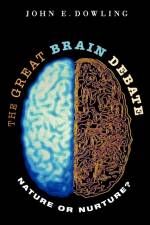
Whether our personality, intelligence, and behavior are more likely to be shaped by our environment or our genetic coding is not simply an idle question for today's researchers. There are tremendous consequences to understanding the crucial role that environment and genes each play. How we raise and educate our children, how we treat various mental diseases or conditions, how we care for our elderly--these are just some of the issues that can be informed by a better understanding of brain development. In The Great Brain Debate, the eminent neuroscience researcher John Dowling looks at these and other important issues. The work that is being done on the connection between the brain and vision, as well as the ways in which our brains help us learn new languages, are particularly revealing. From this groundbreaking new research, Dowling explains startling new insights into how the brain functions and how it can (or cannot) be molded and changed. By studying the brain across the spectrum of our lives, from infancy through adulthood and into old age, Dowling shows the ways in which both nature and nurture play key roles over the course of a human lifetime.
How can property rights be protected and contracts be enforced in countries where the rule of law is ineffective or absent? How can firms from advanced market economies do business in such circumstances? In Lawlessness and Economics, Avinash Dixit examines the theory of private institutions that transcend or supplement weak economic governance from the state. In much of the world and through much of history, private mechanisms--such as long-term relationships, arbitration, social networks to disseminate information and norms to impose sanctions, and for-profit enforcement services--have grown up in place of formal, state-governed institutions. Even in countries with strong legal systems, many of these mechanisms continue under the shadow of the law. Numerous case studies and empirical investigations have demonstrated the variety, importance, and merits, and drawbacks of such institutions. This book builds on these studies and constructs a toolkit of theoretical models to analyze them. The models shed new conceptual light on the different modes of governance, and deepen our understanding of the interaction of the alternative institutions with each other and with the government's law. For example, one model explains the limit on the size of social networks and illuminates problems in the transition to more formal legal systems as economies grow beyond this limit. Other models explain why for-profit enforcement is inefficient. The models also help us understand why state law dovetails with some non-state institutions and collides with others. This can help less-developed countries and transition economies devise better processes for the introduction or reform of their formal legal systems.
The United States Supreme Court's 1954 landmark decision, Brown v. Board of Education, set into motion a process of desegregation that would eventually transform American public schools. This book provides a comprehensive and up-to-date assessment of how Brown's most visible effect--contact between students of different racial groups--has changed over the fifty years since the decision. Using both published and unpublished data on school enrollments from across the country, Charles Clotfelter uses measures of interracial contact, racial isolation, and segregation to chronicle the changes. He goes beyond previous studies by drawing on heretofore unanalyzed enrollment data covering the first decade after Brown, calculating segregation for metropolitan areas rather than just school districts, accounting for private schools, presenting recent information on segregation within schools, and measuring segregation in college enrollment. Two main conclusions emerge. First, interracial contact in American schools and colleges increased markedly over the period, with the most dramatic changes occurring in the previously segregated South. Second, despite this change, four main factors prevented even larger increases: white reluctance to accept racially mixed schools, the multiplicity of options for avoiding such schools, the willingness of local officials to accommodate the wishes of reluctant whites, and the eventual loss of will on the part of those who had been the strongest protagonists in the push for desegregation. Thus decreases in segregation within districts were partially offset by growing disparities between districts and by selected increases in private school enrollment.
Many textbooks on differential equations are written to be interesting to the teacher rather than the student. Introduction to Differential Equations with Dynamical Systems is directed toward students. This concise and up-to-date textbook addresses the challenges that undergraduate mathematics, engineering, and science students experience during a first course on differential equations. And, while covering all the standard parts of the subject, the book emphasizes linear constant coefficient equations and applications, including the topics essential to engineering students. Stephen Campbell and Richard Haberman--using carefully worded derivations, elementary explanations, and examples, exercises, and figures rather than theorems and proofs--have written a book that makes learning and teaching differential equations easier and more relevant. The book also presents elementary dynamical systems in a unique and flexible way that is suitable for all courses, regardless of length.
The ability to conceptualize an economic problem verbally, to formulate it as a mathematical model, and then represent the mathematics in software so that the model can be solved on a computer is a crucial skill for economists. Computational Economics contains well-known models--and some brand-new ones--designed to help students move from verbal to mathematical to computational representations in economic modeling. The authors' focus, however, is not just on solving the models, but also on developing the ability to modify them to reflect one's interest and point of view. The result is a book that enables students to be creative in developing models that are relevant to the economic problems of their times. Unlike other computational economics textbooks, this book is organized around economic topics, among them macroeconomics, microeconomics, and finance. The authors employ various software systems--including MATLAB, Mathematica, GAMS, the nonlinear programming solver in Excel, and the database systems in Access--to enable students to use the most advantageous system. The book progresses from relatively simple models to more complex ones, and includes appendices on the ins and outs of running each program. The book is intended for use by advanced undergraduates and professional economists and even, as a first exposure to computational economics, by graduate students. Organized by economic topics Progresses from simple to more complex models Includes instructions on numerous software systems Encourages customization and creativity
From the Internet to networks of friendship, disease transmission, and even terrorism, the concept--and the reality--of networks has come to pervade modern society. But what exactly is a network? What different types of networks are there? Why are they interesting, and what can they tell us? In recent years, scientists from a range of fields--including mathematics, physics, computer science, sociology, and biology--have been pursuing these questions and building a new "e;science of networks."e; This book brings together for the first time a set of seminal articles representing research from across these disciplines. It is an ideal sourcebook for the key research in this fast-growing field. The book is organized into four sections, each preceded by an editors' introduction summarizing its contents and general theme. The first section sets the stage by discussing some of the historical antecedents of contemporary research in the area. From there the book moves to the empirical side of the science of networks before turning to the foundational modeling ideas that have been the focus of much subsequent activity. The book closes by taking the reader to the cutting edge of network science--the relationship between network structure and system dynamics. From network robustness to the spread of disease, this section offers a potpourri of topics on this rapidly expanding frontier of the new science.
Computational physics is a rapidly growing subfield of computational science, in large part because computers can solve previously intractable problems or simulate natural processes that do not have analytic solutions. The next step beyond Landau's First Course in Scientific Computing and a follow-up to Landau and Paez's Computational Physics, this text presents a broad survey of key topics in computational physics for advanced undergraduates and beginning graduate students, including new discussions of visualization tools, wavelet analysis, molecular dynamics, and computational fluid dynamics. By treating science, applied mathematics, and computer science together, the book reveals how this knowledge base can be applied to a wider range of real-world problems than computational physics texts normally address. Designed for a one- or two-semester course, A Survey of Computational Physics will also interest anyone who wants a reference on or practical experience in the basics of computational physics. Accessible to advanced undergraduates Real-world problem-solving approach Java codes and applets integrated with text Companion Web site includes videos of lectures
This book offers a new approach to introductory scientific computing. It aims to make students comfortable using computers to do science, to provide them with the computational tools and knowledge they need throughout their college careers and into their professional careers, and to show how all the pieces can work together. Rubin Landau introduces the requisite mathematics and computer science in the course of realistic problems, from energy use to the building of skyscrapers to projectile motion with drag. He is attentive to how each discipline uses its own language to describe the same concepts and how computations are concrete instances of the abstract. Landau covers the basics of computation, numerical analysis, and programming from a computational science perspective. The first part of the printed book uses the problem-solving environment Maple as its context, with the same material covered on the accompanying CD as both Maple and Mathematica programs; the second part uses the compiled language Java, with equivalent materials in Fortran90 on the CD; and the final part presents an introduction to LaTeX replete with sample files. Providing the essentials of computing, with practical examples, A First Course in Scientific Computing adheres to the principle that science and engineering students learn computation best while sitting in front of a computer, book in hand, in trial-and-error mode. Not only is it an invaluable learning text and an essential reference for students of mathematics, engineering, physics, and other sciences, but it is also a consummate model for future textbooks in computational science and engineering courses. A broad spectrum of computing tools and examples that can be used throughout an academic career Practical computing aimed at solving realistic problems Both symbolic and numerical computations A multidisciplinary approach: science + math + computer science Maple and Java in the book itself; Mathematica, Fortran90, Maple and Java on the accompanying CD in an interactive workbook format
Some groups participate in politics more than others. Why? And does it matter for policy outcomes? In this richly detailed and fluidly written book, Andrea Campbell argues that democratic participation and public policy powerfully reinforce each other. Through a case study of senior citizens in the United States and their political activity around Social Security, she shows how highly participatory groups get their policy preferences fulfilled, and how public policy itself helps create political inequality. Using a wealth of unique survey and historical data, Campbell shows how the development of Social Security helped transform seniors from the most beleaguered to the most politically active age group. Thus empowered, seniors actively defend their programs from proposed threats, shaping policy outcomes. The participatory effects are strongest for low-income seniors, who are most dependent on Social Security. The program thus reduces political inequality within the senior population--a laudable effect--while increasing inequality between seniors and younger citizens. A brief look across policies shows that program effects are not always positive. Welfare recipients are even less participatory than their modest socioeconomic backgrounds would imply, because of the demeaning and disenfranchising process of proving eligibility. Campbell concludes that program design profoundly shapes the nature of democratic citizenship. And proposed policies--such as Social Security privatization--must be evaluated for both their economic and political effects, because the very quality of democratic government is influenced by the kinds of policies it chooses.
Benny Andersen, currently Denmark's most popular poet, is virtually unknown in the United States. He is a poet of remarkable versatility, whose voices range from reflective to whimsical. His imagery is original and often surprising; his humor is delightful. To introduce Benny Andersen to English readers, Alexander Taylor has worked with the poet, selecting and translating poems from the eight books now available in Danish. The poems are presented here in their Danish versions and in English translations that capture the spontaneity and excitement of the originals.In both versions the poetry is evocative and refreshingly direct. The imagery is vivid, and the poet's inventive use of diction and syntax creates startling effects. Perhaps most characteristic of Andersen's work is the fusion of complex, often conflicting emotions within a single poem.Born in Copenhagen in 1929, Benny Andersen published his first book of poetry in 1960, to immediate public and critical acclaim. In addition to poetry, he has written a novel, short stories, children's books, filmscripts, television plays, and essays. He has received several awards.Originally published in 1976.The Princeton Legacy Library uses the latest print-on-demand technology to again make available previously out-of-print books from the distinguished backlist of Princeton University Press. These editions preserve the original texts of these important books while presenting them in durable paperback and hardcover editions. The goal of the Princeton Legacy Library is to vastly increase access to the rich scholarly heritage found in the thousands of books published by Princeton University Press since its founding in 1905.
Describing this collection of his poems, John Allman writes, "e;It is a book about the inner and outer worlds, a collection of multiple voices and relationships. In one sense it is about suffering, family, and survival. However, it is also about a world beyond such things, where identity burns by itself, where the self-changes but never dies. The book says that only change happens, but that survival without will and compassion is meaningless. The title, taken from a line in one of the book's ritual lyrics, suggests the four dimensions of human consciousness and effort, and the book strives to name or embody as many landscapes as possible-though it is the 'vertical' one given to religion and death that remains an abiding puzzle."e;Originally published in 1979.The Princeton Legacy Library uses the latest print-on-demand technology to again make available previously out-of-print books from the distinguished backlist of Princeton University Press. These editions preserve the original texts of these important books while presenting them in durable paperback and hardcover editions. The goal of the Princeton Legacy Library is to vastly increase access to the rich scholarly heritage found in the thousands of books published by Princeton University Press since its founding in 1905.
In the nineteenth century, the French lyric poets imposed their diction on the theatrical genre and thus illuminated the essence of both poetry and theatre. Ten plays by Victor Hugo, the standard-bearer of the French romantic theatre, and Alfred de Musset, the romantic playwright most frequently performed in France today, are analyzed by Charles Affron to answer the question, "e;Can the dialetic form of the theatre accommodate the solitary elan of the lyric poet?"e; As a functional point of departure, he considers those characteristics of lyric poetry-time, voice, and metaphor-which bring us closest to the singular attitudes of Hugo and Musset. Then, examining the texts of Hernani, Les Burgraves, Torquemada, Fantasio, and Lorenzaccio as well as several lesser known plays, Mr. Affron discusses such topics as poetic time, the scope of analogy, theatrical and poetic rhetoric, the guises of the poet-hero, and the manner of sounding the poet's voice upon the stage.Originally published in 1971.The Princeton Legacy Library uses the latest print-on-demand technology to again make available previously out-of-print books from the distinguished backlist of Princeton University Press. These editions preserve the original texts of these important books while presenting them in durable paperback and hardcover editions. The goal of the Princeton Legacy Library is to vastly increase access to the rich scholarly heritage found in the thousands of books published by Princeton University Press since its founding in 1905.
Polygamy, forced marriage, female genital mutilation, punishing women for being raped, differential access for men and women to health care and education, unequal rights of ownership, assembly, and political participation, unequal vulnerability to violence. These practices and conditions are standard in some parts of the world. Do demands for multiculturalism--and certain minority group rights in particular--make them more likely to continue and to spread to liberal democracies? Are there fundamental conflicts between our commitment to gender equity and our increasing desire to respect the customs of minority cultures or religions? In this book, the eminent feminist Susan Moller Okin and fifteen of the world's leading thinkers about feminism and multiculturalism explore these unsettling questions in a provocative, passionate, and illuminating debate. Okin opens by arguing that some group rights can, in fact, endanger women. She points, for example, to the French government's giving thousands of male immigrants special permission to bring multiple wives into the country, despite French laws against polygamy and the wives' own bitter opposition to the practice. Okin argues that if we agree that women should not be disadvantaged because of their sex, we should not accept group rights that permit oppressive practices on the grounds that they are fundamental to minority cultures whose existence may otherwise be threatened. In reply, some respondents reject Okin's position outright, contending that her views are rooted in a moral universalism that is blind to cultural difference. Others quarrel with Okin's focus on gender, or argue that we should be careful about which group rights we permit, but not reject the category of group rights altogether. Okin concludes with a rebuttal, clarifying, adjusting, and extending her original position. These incisive and accessible essays--expanded from their original publication in Boston Review and including four new contributions--are indispensable reading for anyone interested in one of the most contentious social and political issues today. The diverse contributors, in addition to Okin, are Azizah al-Hibri, Abdullahi An-Na'im, Homi Bhabha, Sander Gilman, Janet Halley, Bonnie Honig, Will Kymlicka, Martha Nussbaum, Bhikhu Parekh, Katha Pollitt, Robert Post, Joseph Raz, Saskia Sassen, Cass Sunstein, and Yael Tamir.
Rodney Stark's provocative new book argues that, whether we like it or not, people acting for the glory of God have formed our modern culture. Continuing his project of identifying the widespread consequences of monotheism, Stark shows that the Christian conception of God resulted--almost inevitably and for the same reasons--in the Protestant Reformation, the rise of modern science, the European witch-hunts, and the Western abolition of slavery. In the process, he explains why Christian and Islamic images of God yielded such different cultural results, leading Christians but not Muslims to foster science, burn "e;witches,"e; and denounce slavery. With his usual clarity and skepticism toward the received wisdom, Stark finds the origins of these disparate phenomena within monotheistic religious organizations. Endemic in such organizations are pressures to maintain religious intensity, which lead to intense conflicts and schisms that have far-reaching social results. Along the way, Stark debunks many commonly accepted ideas. He interprets the sixteenth-century flowering of science not as a sudden revolution that burst religious barriers, but as the normal, gradual, and direct outgrowth of medieval theology. He also shows that the very ideas about God that sustained the rise of science led also to intense witch-hunting by otherwise clear-headed Europeans, including some celebrated scientists. This conception of God likewise yielded the Christian denunciation of slavery as an abomination--and some of the fiercest witch-hunters were devoted participants in successful abolitionist movements on both sides of the Atlantic. For the Glory of God is an engrossing narrative that accounts for the very different histories of the Christian and Muslim worlds. It fundamentally changes our understanding of religion's role in history and the forces behind much of what we point to as secular progress.
Originally published as Volume 2 of The Tao of Painting, this is the first English translation of the famous Chinese handbook, the "e;Chieh Tzu Yuan Hua Chuan"e; (original, 1679-1701). Mai-mai Sze has translated and annotated the texts of instructions, discussions of the fundamentals of painting, notes on the preparation of colors, and chief editorial prefaces.
More than three centuries after its creation, calculus remains a dazzling intellectual achievement and the gateway into higher mathematics. This book charts its growth and development by sampling from the work of some of its foremost practitioners, beginning with Isaac Newton and Gottfried Wilhelm Leibniz in the late seventeenth century and continuing to Henri Lebesgue at the dawn of the twentieth--mathematicians whose achievements are comparable to those of Bach in music or Shakespeare in literature. William Dunham lucidly presents the definitions, theorems, and proofs. "e;Students of literature read Shakespeare; students of music listen to Bach,"e; he writes. But this tradition of studying the major works of the "e;masters"e; is, if not wholly absent, certainly uncommon in mathematics. This book seeks to redress that situation. Like a great museum, The Calculus Gallery is filled with masterpieces, among which are Bernoulli's early attack upon the harmonic series (1689), Euler's brilliant approximation of pi (1779), Cauchy's classic proof of the fundamental theorem of calculus (1823), Weierstrass's mind-boggling counterexample (1872), and Baire's original "e;category theorem"e; (1899). Collectively, these selections document the evolution of calculus from a powerful but logically chaotic subject into one whose foundations are thorough, rigorous, and unflinching--a story of genius triumphing over some of the toughest, most subtle problems imaginable. Anyone who has studied and enjoyed calculus will discover in these pages the sheer excitement each mathematician must have felt when pushing into the unknown. In touring The Calculus Gallery, we can see how it all came to be.
In her new book, Carolyn Abbate considers the nature of operatic performance and the acoustic images of performance present in operas from Monteverdi to Ravel. Paying tribute to music's realization by musicians and singers, she argues that operatic works are indelibly bound to the contingency of live singing, playing, and staging. She seeks a middle ground between operas as abstractions and performance as the phenomenon that brings opera into being. Weaving between opera's "e;facts of life"e; and a series of works including The Magic Flute, Parsifal, and Pelleas, Abbate explores a spectrum of attitudes towards musical performance, which range from euphoric visions of singers as creators to uncanny images of musicians as lifeless objects that have been resuscitated by scripts. In doing so, she touches upon several critical issues: the Wagner problem; coloratura, virtuosity, and their critics; the implications of disembodied voice in opera and film; mechanical music; the mortality of musical sound; and opera's predilection for scenes positing mysterious unheard music. An intersection between transcendence and intense physical grounding, she asserts, is a quintessential element of the genre, one source of the rapture that operas and their singers can engender in listeners. In Search of Opera mediates between an experience of opera that can be passionate and intuitive, and an intellectual engagement with opera as a complicated aesthetic phenomenon. Marrying philosophical speculation to historical detail, Abbate contemplates a central dilemma: the ineffability of music and the diverse means by which a fugitive art is best expressed in words. All serious devotees of opera will want to read this imaginative book by s music-critical virtuoso.
Cinema and opera have become intertwined in a variety of powerful and unusual ways. Vocal Apparitions tells the story of this fascinating intersection, interprets how it occurred, and explores what happens when opera is projected onto the medium of film. Michal Grover-Friedlander finds striking affinities between film and opera--from Lon Chaney's classic silent film, The Phantom of the Opera, to the Marx Brothers' A Night at the Opera to Fellini's E la nave va. One of the guiding questions of this book is what occurs when what is aesthetically essential about one medium is transposed into the aesthetic field of the other. For example, Grover-Friedlander's comparison of an opera by Poulenc and a Rossellini film, both based on Cocteau's play The Human Voice, shows the relation of the vocal and the visual to be surprisingly affected by the choice of the medium. Her analysis of the Marx Brothers' A Night at the Opera demonstrates how, as a response to opera's infatuation with death, cinema comically acts out a correction of opera's fate. Grover-Friedlander argues that filmed operas such as Zeffirelli's Otello and Friedrich's Falstaff show the impossibility of a direct transformation of the operatic into the cinematic. Paradoxically, cinema at times can be more operatic than opera itself, thus capturing something essential that escapes opera's self-understanding. A remarkable look at how cinema has been haunted--and transformed--by opera, Vocal Apparitions reveals something original and important about each medium.
In a lively exploration of Jacques Offenbach's final masterpiece, Heather Hadlock shows how Les Contes d'Hoffmann summed up not only the composer's career but also a century of Romantic culture. A strange fusion of irony and profundity, frivolity and nightmare, the opera unfolds as a series of dreamlike episodes, peopled by such archetypes as the Poet, the Beautiful Dying Girl, the Automaton, the Courtesan, and the Mesmerist. Hadlock shows how these episodes comprise a collective unconscious. Her analyses touch on topics ranging from the self-reflexive style of the protagonist and the music, to parallels between nineteenth-century discourses of theater and medical science, to fascination with the hysterical female subject. Les Contes d'Hoffmann is also examined as both a continuation and a retraction of tendencies in Offenbach's earlier operettas and opera-comiques. Hadlock investigates the political climate of the 1870s that influenced the composer's vision and the reception of his last work. Drawing upon insights from feminist, literary, and cultural theory, she considers how the opera's music and libretto took shape within a complex literary and theatrical tradition. Finally, Hadlock ponders the enigmas posed by the score of this unfinished opera, which has been completed many times and by many different hands since its composer's death shortly before the premiere in 1881. In this book, the "e;mad loves"e; that drive Les Contes d'Hoffmann--a poet's love, a daughter's love, erotic love, and fatal attraction to music--become figures for the fascination exercised by opera itself.
From controlling disease outbreaks to predicting heart attacks, dynamic models are increasingly crucial for understanding biological processes. Many universities are starting undergraduate programs in computational biology to introduce students to this rapidly growing field. In Dynamic Models in Biology, the first text on dynamic models specifically written for undergraduate students in the biological sciences, ecologist Stephen Ellner and mathematician John Guckenheimer teach students how to understand, build, and use dynamic models in biology. Developed from a course taught by Ellner and Guckenheimer at Cornell University, the book is organized around biological applications, with mathematics and computing developed through case studies at the molecular, cellular, and population levels. The authors cover both simple analytic models--the sort usually found in mathematical biology texts--and the complex computational models now used by both biologists and mathematicians. Linked to a Web site with computer-lab materials and exercises, Dynamic Models in Biology is a major new introduction to dynamic models for students in the biological sciences, mathematics, and engineering.
On April 14, 1994, two U.S. Air Force F-15 fighters accidentally shot down two U.S. Army Black Hawk Helicopters over Northern Iraq, killing all twenty-six peacekeepers onboard. In response to this disaster the complete array of military and civilian investigative and judicial procedures ran their course. After almost two years of investigation with virtually unlimited resources, no culprit emerged, no bad guy showed himself, no smoking gun was found. This book attempts to make sense of this tragedy--a tragedy that on its surface makes no sense at all. With almost twenty years in uniform and a Ph.D. in organizational behavior, Lieutenant Colonel Snook writes from a unique perspective. A victim of friendly fire himself, he develops individual, group, organizational, and cross-level accounts of the accident and applies a rigorous analysis based on behavioral science theory to account for critical links in the causal chain of events. By explaining separate pieces of the puzzle, and analyzing each at a different level, the author removes much of the mystery surrounding the shootdown. Based on a grounded theory analysis, Snook offers a dynamic, cross-level mechanism he calls "e;practical drift"e;--the slow, steady uncoupling of practice from written procedure--to complete his explanation. His conclusion is disturbing. This accident happened because, or perhaps in spite of everyone behaving just the way we would expect them to behave, just the way theory would predict. The shootdown was a normal accident in a highly reliable organization.
Across the Board is the definitive work on chessboard problems. It is not simply about chess but the chessboard itself--that simple grid of squares so common to games around the world. And, more importantly, the fascinating mathematics behind it. From the Knight's Tour Problem and Queens Domination to their many variations, John Watkins surveys all the well-known problems in this surprisingly fertile area of recreational mathematics. Can a knight follow a path that covers every square once, ending on the starting square? How many queens are needed so that every square is targeted or occupied by one of the queens? Each main topic is treated in depth from its historical conception through to its status today. Many beautiful solutions have emerged for basic chessboard problems since mathematicians first began working on them in earnest over three centuries ago, but such problems, including those involving polyominoes, have now been extended to three-dimensional chessboards and even chessboards on unusual surfaces such as toruses (the equivalent of playing chess on a doughnut) and cylinders. Using the highly visual language of graph theory, Watkins gently guides the reader to the forefront of current research in mathematics. By solving some of the many exercises sprinkled throughout, the reader can share fully in the excitement of discovery. Showing that chess puzzles are the starting point for important mathematical ideas that have resonated for centuries, Across the Board will captivate students and instructors, mathematicians, chess enthusiasts, and puzzle devotees.
When thinking of India, it is hard not to think of caste. In academic and common parlance alike, caste has become a central symbol for India, marking it as fundamentally different from other places while expressing its essence. Nicholas Dirks argues that caste is, in fact, neither an unchanged survival of ancient India nor a single system that reflects a core cultural value. Rather than a basic expression of Indian tradition, caste is a modern phenomenon--the product of a concrete historical encounter between India and British colonial rule. Dirks does not contend that caste was invented by the British. But under British domination caste did become a single term capable of naming and above all subsuming India's diverse forms of social identity and organization. Dirks traces the career of caste from the medieval kingdoms of southern India to the textual traces of early colonial archives; from the commentaries of an eighteenth-century Jesuit to the enumerative obsessions of the late-nineteenth-century census; from the ethnographic writings of colonial administrators to those of twentieth-century Indian scholars seeking to rescue ethnography from its colonial legacy. The book also surveys the rise of caste politics in the twentieth century, focusing in particular on the emergence of caste-based movements that have threatened nationalist consensus. Castes of Mind is an ambitious book, written by an accomplished scholar with a rare mastery of centuries of Indian history and anthropology. It uses the idea of caste as the basis for a magisterial history of modern India. And in making a powerful case that the colonial past continues to haunt the Indian present, it makes an important contribution to current postcolonial theory and scholarship on contemporary Indian politics.
This book is the first to comprehensively explore elasticity imaging and examines recent, important developments in asymptotic imaging, modeling, and analysis of deterministic and stochastic elastic wave propagation phenomena. It derives the best possible functional images for small inclusions and cracks within the context of stability and resolution, and introduces a topological derivative-based imaging framework for detecting elastic inclusions in the time-harmonic regime. For imaging extended elastic inclusions, accurate optimal control methodologies are designed and the effects of uncertainties of the geometric or physical parameters on stability and resolution properties are evaluated. In particular, the book shows how localized damage to a mechanical structure affects its dynamic characteristics, and how measured eigenparameters are linked to elastic inclusion or crack location, orientation, and size. Demonstrating a novel method for identifying, locating, and estimating inclusions and cracks in elastic structures, the book opens possibilities for a mathematical and numerical framework for elasticity imaging of nanoparticles and cellular structures.
An acclaimed biography of the Enlightenment's greatest mathematicianThis is the first full-scale biography of Leonhard Euler (1707-83), one of the greatest mathematicians and theoretical physicists of all time. In this comprehensive and authoritative account, Ronald Calinger connects the story of Euler's eventful life to the astonishing achievements that place him in the company of Archimedes, Newton, and Gauss. Drawing chiefly on Euler's massive published works and correspondence, which fill more than eighty volumes so far, this biography sets Euler's work in its multilayered context-personal, intellectual, institutional, political, cultural, religious, and social. It is a story of nearly incessant accomplishment, from Euler's fundamental contributions to almost every area of pure and applied mathematics-especially calculus, number theory, notation, optics, and celestial, rational, and fluid mechanics-to his advancements in shipbuilding, telescopes, ballistics, cartography, chronology, and music theory.The narrative takes the reader from Euler's childhood and education in Basel through his first period in St. Petersburg, 1727-41, where he gained a European reputation by solving the Basel problem and systematically developing analytical mechanics. Invited to Berlin by Frederick II, Euler published his famous Introductio in analysin infinitorum, devised continuum mechanics, and proposed a pulse theory of light. Returning to St. Petersburg in 1766, he created the analytical calculus of variations, developed the most precise lunar theory of the time that supported Newton's dynamics, and published the best-selling Letters to a German Princess-all despite eye problems that ended in near-total blindness. In telling the remarkable story of Euler and how his achievements brought pan-European distinction to the Petersburg and Berlin academies of sciences, the book also demonstrates with new depth and detail the central role of mathematics in the Enlightenment.
An accessible yet rigorous introduction to partial differential equationsThis textbook provides beginning graduate students and advanced undergraduates with an accessible introduction to the rich subject of partial differential equations (PDEs). It presents a rigorous and clear explanation of the more elementary theoretical aspects of PDEs, while also drawing connections to deeper analysis and applications. The book serves as a needed bridge between basic undergraduate texts and more advanced books that require a significant background in functional analysis.Topics include first order equations and the method of characteristics, second order linear equations, wave and heat equations, Laplace and Poisson equations, and separation of variables. The book also covers fundamental solutions, Green's functions and distributions, beginning functional analysis applied to elliptic PDEs, traveling wave solutions of selected parabolic PDEs, and scalar conservation laws and systems of hyperbolic PDEs.Provides an accessible yet rigorous introduction to partial differential equationsDraws connections to advanced topics in analysisCovers applications to continuum mechanicsAn electronic solutions manual is available only to professorsAn online illustration package is available to professors
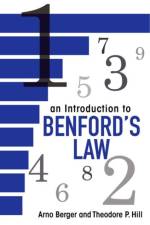
This book provides the first comprehensive treatment of Benford's law, the surprising logarithmic distribution of significant digits discovered in the late nineteenth century. Establishing the mathematical and statistical principles that underpin this intriguing phenomenon, the text combines up-to-date theoretical results with overviews of the law's colorful history, rapidly growing body of empirical evidence, and wide range of applications.An Introduction to Benford's Law begins with basic facts about significant digits, Benford functions, sequences, and random variables, including tools from the theory of uniform distribution. After introducing the scale-, base-, and sum-invariance characterizations of the law, the book develops the significant-digit properties of both deterministic and stochastic processes, such as iterations of functions, powers of matrices, differential equations, and products, powers, and mixtures of random variables. Two concluding chapters survey the finitely additive theory and the flourishing applications of Benford's law.Carefully selected diagrams, tables, and close to 150 examples illuminate the main concepts throughout. The text includes many open problems, in addition to dozens of new basic theorems and all the main references. A distinguishing feature is the emphasis on the surprising ubiquity and robustness of the significant-digit law. This text can serve as both a primary reference and a basis for seminars and courses.
Abonner på vårt nyhetsbrev og få rabatter og inspirasjon til din neste leseopplevelse.
Ved å abonnere godtar du vår personvernerklæring.