




















Gjør som tusenvis av andre bokelskere
Abonner på vårt nyhetsbrev og få rabatter og inspirasjon til din neste leseopplevelse.
Ved å abonnere godtar du vår personvernerklæring.Du kan når som helst melde deg av våre nyhetsbrev.

With Wind Wizard, Siobhan Roberts brings us the story of Alan Davenport (1932-2009), the father of modern wind engineering, who investigated how wind navigates the obstacle course of the earth's natural and built environments--and how, when not properly heeded, wind causes buildings and bridges to teeter unduly, sway with abandon, and even collapse. In 1964, Davenport received a confidential telephone call from two engineers requesting tests on a pair of towers that promised to be the tallest in the world. His resulting wind studies on New York's World Trade Center advanced the art and science of wind engineering with one pioneering innovation after another. Establishing the first dedicated "e;boundary layer"e; wind tunnel laboratory for civil engineering structures, Davenport enabled the study of the atmospheric region from the earth's surface to three thousand feet, where the air churns with turbulent eddies, the average wind speed increasing with height. The boundary layer wind tunnel mimics these windy marbled striations in order to test models of buildings and bridges that inevitably face the wind when built. Over the years, Davenport's revolutionary lab investigated and improved the wind-worthiness of the world's greatest structures, including the Sears Tower, the John Hancock Tower, Shanghai's World Financial Center, the CN Tower, the iconic Golden Gate Bridge, the Bronx-Whitestone Bridge, the Sunshine Skyway, and the proposed crossing for the Strait of Messina, linking Sicily with mainland Italy. Chronicling Davenport's innovations by analyzing select projects, this popular-science book gives an illuminating behind-the-scenes view into the practice of wind engineering, and insight into Davenport's steadfast belief that there is neither a structure too tall nor too long, as long as it is supported by sound wind science.Some images inside the book are unavailable due to digital copyright restrictions.
This is the second collection from a Brooklyn poet whose work many readers will know from the New Yorker. Jessica Greenbaum's narrative poems, in which objects and metaphor share highest honors, attempt revelation through close observation of the everyday. Written in "e;plain American that cats and dogs can read,"e; as Marianne Moore phrased it, these contemporary lyrics bring forward the challenges of Wislawa Szymborska, the reportage of Yehuda Amichai, and the formal forays of Marilyn Hacker. The book asks at heart: how does life present itself to us, and how do we create value from our delights and losses? Riding on Kenneth Koch's instruction to "e;find one true feeling and hang on,"e; The Two Yvonnes overtakes the present with candor, meditation, and the classic aspiration to shape lyric into a lasting force. Moving from 1960s Long Island, to 1980s Houston, to today's Brooklyn, the poems range in subject from the pages of the Talmud to a squirrel trapped in a kitchen. One tells the story of young lovers "e;warmed by the rays / Their pelvic bones sent over the horizon of their belts,"e; while another describes the Bronx Zoo in winter, where the giraffes pad about "e;like nurses walking quietly / outside a sick room."e; Another poem defines the speaker via a "e;packing slip"e; of her parts--"e;brown eyes, brown hair, from hirsute tribes in Poland and Russia."e; The title poem, in which the speaker and friends stumble through a series of flawed memories about each other, unearths the human vulnerabilities that shape so much of the collection.______ From The Two Yvonnes:WHEN MY DAUGHTER GOT SICK Jessica Greenbaum ? Her cries impersonated all the world;The fountain's bubbling speech was just a trickBut still I turned and looked, as she implored,Or leaned toward muffled noises through the bricks:Just radio, whose waves might be her wav-ering, whose pitch might be her quavering,I turned toward, where, the sirens might be "e;Save Me,"e; "e;Help me,"e; "e;Mommy, Mommy"e;--everythingShe, too, had said, since sloughing off the world.She took to bed, and now her voice stays fusedTo air like outlines of a bygone girl;The streets, the lake, the room--just places bruisedWithout her form, the way your sheets still holdRough echoes of the risen sleeper, cold.
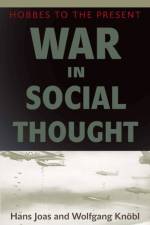
This book, the first of its kind, provides a sweeping critical history of social theories about war and peace from Hobbes to the present. Distinguished social theorists Hans Joas and Wolfgang Knobl present both a broad intellectual history and an original argument as they trace the development of thinking about war over more than 350 years--from the premodern era to the period of German idealism and the Scottish and French enlightenments, and then from the birth of sociology in the nineteenth century through the twentieth century. While focusing on social thought, the book draws on many disciplines, including philosophy, anthropology, and political science. Joas and Knobl demonstrate the profound difficulties most social thinkers--including liberals, socialists, and those intellectuals who could be regarded as the first sociologists--had in coming to terms with the phenomenon of war, the most obvious form of large-scale social violence. With only a few exceptions, these thinkers, who believed deeply in social progress, were unable to account for war because they regarded it as marginal or archaic, and on the verge of disappearing. This overly optimistic picture of the modern world persisted in social theory even in the twentieth century, as most sociologists and social theorists either ignored war and violence in their theoretical work or tried to explain it away. The failure of the social sciences and especially sociology to understand war, Joas and Knobl argue, must be seen as one of the greatest weaknesses of disciplines that claim to give a convincing diagnosis of our times.
The Japan Teachers' Union, which represents 500,000 elementary and lower secondary school teachers, is an important interest group in Japanese politics. It is especially significant as a radical group operating both within and outside the political system and in direct conflict with conservative government policies in education and other areas of domestic and foreign policy.Donald R. Thurston's descriptive and analytic study of this most controversial labor union reveals a great deal about Japan's educational and political systems, and about the teaching profession in Japan and its relations with government and the community. It will therefore be of great interest both to political scientists and to those interested in comparative education.The purpose of this broad cross-sectional case study of the Japan Teachers' Union was to find out how much influence it has had on its own members and on the formulation and implementation of educational policies. The conclusion is that the union is much more influential at the local level where educational policies are implemented, and changed in the process of implementation, than at the national level where policy is formulated. It also shows that the Japan Teachers' Union has changed teachers' attitudes towards their roles, and that although the JTU is attached to the left-wing Japan Socialist Party, it is much more autonomous than has been thought.Originally published in 1973.The Princeton Legacy Library uses the latest print-on-demand technology to again make available previously out-of-print books from the distinguished backlist of Princeton University Press. These editions preserve the original texts of these important books while presenting them in durable paperback and hardcover editions. The goal of the Princeton Legacy Library is to vastly increase access to the rich scholarly heritage found in the thousands of books published by Princeton University Press since its founding in 1905.
From the Arctic Ocean and ice sheets of Greenland, to the glaciers of the Andes and Himalayas, to the great frozen desert of Antarctica, The White Planet takes readers on a spellbinding scientific journey through the shrinking world of ice and snow to tell the story of the expeditions and discoveries that have transformed our understanding of global climate. Written by three internationally renowned scientists at the center of many breakthroughs in ice core and climate science, this book provides an unparalleled firsthand account of how the "e;white planet"e; affects global climate--and how, in turn, global warming is changing the frozen world. Jean Jouzel, Claude Lorius, and Dominique Raynaud chronicle the daunting scientific, technical, and human hurdles that they and other scientists have had to overcome in order to unravel the mysteries of past and present climate change, as revealed by the cryosphere--the dynamic frozen regions of our planet. Scientifically impeccable, up-to-date, and accessible, The White Planet brings cutting-edge climate research to general readers through a vivid narrative. This is an essential book for anyone who wants to understand the inextricable link between climate and our planet's icy regions.
This illustrated edition of Walden features 66 photographs by Herbert W. Gleason, one of the great American landscape photographers of the nineteenth and early twentieth century. Gleason, who had a special love for what he called "e;the simple beauty of New England,"e; became interested in Thoreau's work when commissioned in 1906 by the Houghton Mifflin Company to illustrate their edition of The Writings of Henry David Thoreau. With the help of the few surviving people who had known Thoreau, Gleason searched out the exact places Thoreau had described-all of them still looking much as they had when Thoreau knew them-and photographed them. Gleason became so interested in the project that he continued to photograph Thoreau country for more than forty years. Most of the photographs reproduced here were chosen by Gleason himself for an edition of Walden he planned but never published.Originally published in 1973.The Princeton Legacy Library uses the latest print-on-demand technology to again make available previously out-of-print books from the distinguished backlist of Princeton University Press. These editions preserve the original texts of these important books while presenting them in durable paperback and hardcover editions. The goal of the Princeton Legacy Library is to vastly increase access to the rich scholarly heritage found in the thousands of books published by Princeton University Press since its founding in 1905.
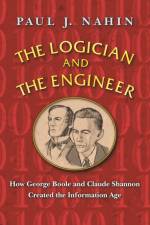
Boolean algebra, also called Boolean logic, is at the heart of the electronic circuitry in everything we use-from our computers and cars, to home appliances. How did a system of mathematics established in the Victorian era become the basis for such incredible technological achievements a century later? In The Logician and the Engineer, Paul Nahin combines engaging problems and a colorful historical narrative to tell the remarkable story of how two men in different eras-mathematician and philosopher George Boole and electrical engineer and pioneering information theorist Claude Shannon-advanced Boolean logic and became founding fathers of the electronic communications age. Nahin takes readers from fundamental concepts to a deeper and more sophisticated understanding of modern digital machines, in order to explore computing and its possible limitations in the twenty-first century and beyond.
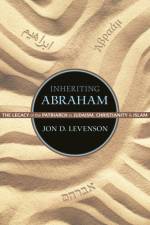
Jews, Christians, and Muslims supposedly share a common religious heritage in the patriarch Abraham, and the idea that he should serve only as a source of unity among the three traditions has become widespread in both scholarly and popular circles. But in Inheriting Abraham, Jon Levenson reveals how the increasingly conventional notion of the three equally "e;Abrahamic"e; religions derives from a dangerous misunderstanding of key biblical and Qur'anic texts, fails to do full justice to any of the traditions, and is often biased against Judaism in subtle and pernicious ways.
Of all the natural disasters that could befall us, only an Earth impact by a large comet or asteroid has the potential to end civilization in a single blow. Yet these near-Earth objects also offer tantalizing clues to our solar system's origins, and someday could even serve as stepping-stones for space exploration. In this book, Donald Yeomans introduces readers to the science of near-Earth objects--its history, applications, and ongoing quest to find near-Earth objects before they find us. In its course around the sun, the Earth passes through a veritable shooting gallery of millions of nearby comets and asteroids. One such asteroid is thought to have plunged into our planet sixty-five million years ago, triggering a global catastrophe that killed off the dinosaurs. Yeomans provides an up-to-date and accessible guide for understanding the threats posed by near-Earth objects, and also explains how early collisions with them delivered the ingredients that made life on Earth possible. He shows how later impacts spurred evolution, allowing only the most adaptable species to thrive--in fact, we humans may owe our very existence to objects that struck our planet. Yeomans takes readers behind the scenes of today's efforts to find, track, and study near-Earth objects. He shows how the same comets and asteroids most likely to collide with us could also be mined for precious natural resources like water and oxygen, and used as watering holes and fueling stations for expeditions to Mars and the outermost reaches of our solar system.
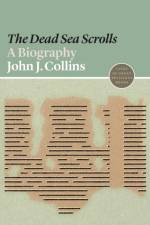
Since they were first discovered in the caves at Qumran in 1947, the Dead Sea Scrolls have aroused more fascination--and more controversy--than perhaps any other archaeological find. They appear to have been hidden in the Judean desert by the Essenes, a Jewish sect that existed around the time of Jesus, and they continue to inspire veneration and conspiracy theories to this day. John Collins tells the story of the bitter conflicts that have swirled around the scrolls since their startling discovery, and sheds light on their true significance for Jewish and Christian history. Collins vividly recounts how a Bedouin shepherd went searching for a lost goat and found the scrolls instead. He offers insight into debates over whether the Essenes were an authentic Jewish sect and explains why such questions are critical to our understanding of ancient Judaism and to Jewish identity. Collins explores whether the scrolls were indeed the property of an isolated, quasi-monastic community living at Qumran, or whether they more broadly reflect the Judaism of their time. And he unravels the impassioned disputes surrounding the scrolls and Christianity. Do they anticipate the early church? Do they undermine the credibility of the Christian faith? Collins also looks at attempts to "e;reclaim"e; the scrolls for Judaism after the full corpus became available in the 1990s, and at how the decades-long delay in publishing the scrolls gave rise to sensational claims and conspiracy theories.
During its 2,500-year life, the book of Genesis has been the keystone to almost every important claim about reality, humanity, and God in Judaism and Christianity. And it continues to play a central role in debates about science, politics, and human rights. With clarity and skill, acclaimed biblical scholar Ronald Hendel provides a panoramic history of this iconic book, exploring its impact on Western religion, philosophy, science, politics, literature, and more. Hendel traces how Genesis has shaped views of reality, and how changing views of reality have shaped interpretations of Genesis. Literal and figurative readings have long competed with each other. Hendel tells how Luther's criticisms of traditional figurative accounts of Genesis undermined the Catholic Church; how Galileo made the radical argument that the cosmology of Genesis wasn't scientific evidence; and how Spinoza made the equally radical argument that the scientific method should be applied to Genesis itself. Indeed, Hendel shows how many high points of Western thought and art have taken the form of encounters with Genesis--from Paul and Augustine to Darwin, Emily Dickinson, and Kafka. From debates about slavery, gender, and sexuality to the struggles over creationism and evolution, Genesis has shaped our world and continues to do so today. This wide-ranging account tells the remarkable story of the life of Genesis like no other book.
The 5 Elements of Effective Thinking presents practical, lively, and inspiring ways for you to become more successful through better thinking. The idea is simple: You can learn how to think far better by adopting specific strategies. Brilliant people aren't a special breed--they just use their minds differently. By using the straightforward and thought-provoking techniques in The 5 Elements of Effective Thinking, you will regularly find imaginative solutions to difficult challenges, and you will discover new ways of looking at your world and yourself--revealing previously hidden opportunities. The book offers real-life stories, explicit action items, and concrete methods that allow you to attain a deeper understanding of any issue, exploit the power of failure as a step toward success, develop a habit of creating probing questions, see the world of ideas as an ever-flowing stream of thought, and embrace the uplifting reality that we are all capable of change. No matter who you are, the practical mind-sets introduced in the book will empower you to realize any goal in a more creative, intelligent, and effective manner. Filled with engaging examples that unlock truths about thinking in every walk of life, The 5 Elements of Effective Thinking is written for all who want to reach their fullest potential--including students, parents, teachers, businesspeople, professionals, athletes, artists, leaders, and lifelong learners. Whenever you are stuck, need a new idea, or want to learn and grow, The 5 Elements of Effective Thinking will inspire and guide you on your way. To share thinking stories, go to: http://5elementsofthinking.wordpress.com
What is the best education for exceptionally able and high-achieving youngsters? Can the United States strengthen its future intellectual leadership, economic vitality, and scientific prowess without sacrificing equal opportunity? There are no easy answers but, as Chester Finn and Jessica Hockett show, for more than 100,000 students each year, the solution is to enroll in an academically selective public high school. Exam Schools is the first-ever close-up look at this small, sometimes controversial, yet crucial segment of American public education. This groundbreaking book discusses how these schools work--and their critical role in nurturing the country's brightest students. The 165 schools identified by Finn and Hockett are located in thirty states, plus the District of Columbia. While some are world renowned, such as Boston Latin and Bronx Science, others are known only in their own communities. The authors survey the schools on issues ranging from admissions and student diversity to teacher selection. They probe sources of political support, curriculum, instructional styles, educational effectiveness, and institutional autonomy. Some of their findings are surprising: Los Angeles, for example, has no "e;exam schools"e; while New York City has dozens. Asian-American students are overrepresented--but so are African-American pupils. Culminating with in-depth profiles of eleven exam schools and thoughtful reflection on policy implications, Finn and Hockett ultimately consider whether the country would be better off with more such schools. At a time of keen attention to the faltering education system, Exam Schools sheds positive light on a group of schools that could well provide a transformative roadmap for many of America's children.
In The Story of America, Harvard historian and New Yorker staff writer Jill Lepore investigates American origin stories--from John Smith's account of the founding of Jamestown in 1607 to Barack Obama's 2009 inaugural address--to show how American democracy is bound up with the history of print. Over the centuries, Americans have read and written their way into a political culture of ink and type. Part civics primer, part cultural history, The Story of America excavates the origins of everything from the paper ballot and the Constitution to the I.O.U. and the dictionary. Along the way it presents fresh readings of Benjamin Franklin's Way to Wealth, Thomas Paine's Common Sense, "e;The Raven"e; by Edgar Allan Poe, and "e;Paul Revere's Ride"e; by Henry Wadsworth Longfellow, as well as histories of lesser-known genres, including biographies of presidents, novels of immigrants, and accounts of the Depression. From past to present, Lepore argues, Americans have wrestled with the idea of democracy by telling stories. In this thoughtful and provocative book, Lepore offers at once a history of origin stories and a meditation on storytelling itself.
Fit is a book about architecture and society that seeks to fundamentally change how architects and the public think about the task of design. Distinguished architect and urbanist Robert Geddes argues that buildings, landscapes, and cities should be designed to fit: fit the purpose, fit the place, fit future possibilities. Fit replaces old paradigms, such as form follows function, and less is more, by recognizing that the relationship between architecture and society is a true dialogue--dynamic, complex, and, if carried out with knowledge and skill, richly rewarding. With a tip of the hat to John Dewey, Fit explores architecture as we experience it. Geddes starts with questions: Why do we design where we live and work? Why do we not just live in nature, or in chaos? Why does society care about architecture? Why does it really matter? Fit answers these questions through a fresh examination of the basic purposes and elements of architecture--beginning in nature, combining function and expression, and leaving a legacy of form. Lively, charming, and gently persuasive, the book shows brilliant examples of fit: from Thomas Jefferson's University of Virginia and Louis Kahn's Exeter Library to contemporary triumphs such as the Apple Store on New York's Fifth Avenue, Chicago's Millennium Park, and Seattle's Pike Place. Fit is a book for everyone, because we all live in constructions--buildings, landscapes, and, increasingly, cities. It provokes architects and planners, humanists and scientists, civic leaders and citizens to reconsider what is at stake in architecture--and why it delights us.
Jesus taught his followers that it is easier for a camel to go through the eye of a needle than for a rich man to enter heaven. Yet by the fall of Rome, the church was becoming rich beyond measure. Through the Eye of a Needle is a sweeping intellectual and social history of the vexing problem of wealth in Christianity in the waning days of the Roman Empire, written by the world's foremost scholar of late antiquity. Peter Brown examines the rise of the church through the lens of money and the challenges it posed to an institution that espoused the virtue of poverty and called avarice the root of all evil. Drawing on the writings of major Christian thinkers such as Augustine, Ambrose, and Jerome, Brown examines the controversies and changing attitudes toward money caused by the influx of new wealth into church coffers, and describes the spectacular acts of divestment by rich donors and their growing influence in an empire beset with crisis. He shows how the use of wealth for the care of the poor competed with older forms of philanthropy deeply rooted in the Roman world, and sheds light on the ordinary people who gave away their money in hopes of treasure in heaven. Through the Eye of a Needle challenges the widely held notion that Christianity's growing wealth sapped Rome of its ability to resist the barbarian invasions, and offers a fresh perspective on the social history of the church in late antiquity.
This book builds upon the revolutionary discovery made in 1974 that when one passes from function f to a function J of paths joining two points A1=A1 the connectivities R1 of the domain of f can be replaced by connectivities R1 over Q, common to the pathwise components of a basic Frechet space of classes of equivalent curves joining A1 to A1. The connectivities R1, termed "e;Frechet numbers,"e; are proved independent of the choice of A1 = A1, and of a replacement of Mn by any differential manifold homeomorphic to Mn.Originally published in 1976.The Princeton Legacy Library uses the latest print-on-demand technology to again make available previously out-of-print books from the distinguished backlist of Princeton University Press. These editions preserve the original texts of these important books while presenting them in durable paperback and hardcover editions. The goal of the Princeton Legacy Library is to vastly increase access to the rich scholarly heritage found in the thousands of books published by Princeton University Press since its founding in 1905.
In the 1880s, fashionable Londoners left their elegant homes and clubs in Mayfair and Belgravia and crowded into omnibuses bound for midnight tours of the slums of East London. A new word burst into popular usage to describe these descents into the precincts of poverty to see how the poor lived: slumming. In this captivating book, Seth Koven paints a vivid portrait of the practitioners of slumming and their world: who they were, why they went, what they claimed to have found, how it changed them, and how slumming, in turn, powerfully shaped both Victorian and twentieth-century understandings of poverty and social welfare, gender relations, and sexuality. The slums of late-Victorian London became synonymous with all that was wrong with industrial capitalist society. But for philanthropic men and women eager to free themselves from the starched conventions of bourgeois respectability and domesticity, slums were also places of personal liberation and experimentation. Slumming allowed them to act on their irresistible "e;attraction of repulsion"e; for the poor and permitted them, with society's approval, to get dirty and express their own "e;dirty"e; desires for intimacy with slum dwellers and, sometimes, with one another. Slumming elucidates the histories of a wide range of preoccupations about poverty and urban life, altruism and sexuality that remain central in Anglo-American culture, including the ethics of undercover investigative reporting, the connections between cross-class sympathy and same-sex desire, and the intermingling of the wish to rescue the poor with the impulse to eroticize and sexually exploit them. By revealing the extent to which politics and erotics, social and sexual categories overflowed their boundaries and transformed one another, Koven recaptures the ethical dilemmas that men and women confronted--and continue to confront--in trying to "e;love thy neighbor as thyself."e;
The Neanderthals populated western Europe from nearly 250,000 to 30,000 years ago when they disappeared from the archaeological record. In turn, populations of anatomically modern humans, Homo sapiens, came to dominate the area. Seeking to understand the nature of this replacement, which has become a hotly debated issue, Paul Mellars brings together an unprecedented amount of information on the behavior of Neanderthals. His comprehensive overview ranges from the evidence of tool manufacture and related patterns of lithic technology, through the issues of subsistence and settlement patterns, to the more controversial evidence for social organization, cognition, and intelligence. Mellars argues that previous attempts to characterize Neanderthal behavior as either "e;modern"e; or "e;ape-like"e; are both overstatements. We can better comprehend the replacement of Neanderthals, he maintains, by concentrating on the social and demographic structure of Neanderthal populations and on their specific adaptations to the harsh ecological conditions of the last glaciation. Mellars's approach to these issues is grounded firmly in his archaeological evidence. He illustrates the implications of these findings by drawing from the methods of comparative socioecology, primate studies, and Pleistocene paleoecology. The book provides a detailed review of the climatic and environmental background to Neanderthal occupation in Europe, and of the currently topical issues of the behavioral and biological transition from Neanderthal to fully "e;modern"e; populations.
Ten years ago, most scholars and students relied on bulky card catalogs, printed bibliographic indices, and hardcopy books and journals. Today, much content is available electronically or online. This book examines the history of one of the first, and most successful, digital resources for scholarly communication, JSTOR. Beginning as a grant-funded project of the Andrew W. Mellon Foundation at the University of Michigan, JSTOR has grown to become a major archive of the backfiles of academic journals, and its own nonprofit organization. Roger Schonfeld begins this history by looking at JSTOR's original mission of saving storage space and thereby storage costs, a mission that expanded immediately to improving access to the literature. What role did the University play? Could JSTOR have been built without the active involvement of a foundation? Why was it seen as necessary to "e;spin off"e; the project? This case study proceeds as an organizational history of the birth and maturation of this nonprofit, which had to emerge from the original university partnership to carve its own identity. How did the grant project evolve into a successful marketplace enterprise? How was JSTOR able to serve its twofold mission of archiving its journals while also providing access to them? What has accounted for its growth? Finally, Schonfeld considers implications of the economic and organizational aspects of archiving as well as the system-wide savings that JSTOR ensures by broadly distributing costs.
In the 1930s C. G. Jung embarked upon a bold investigation into childhood dreams as remembered by adults to better understand their significance to the lives of the dreamers. Jung presented his findings in a four-year seminar series at the Swiss Federal Institute of Technology in Zurich. Children's Dreams marks their first publication in English, and fills a critical gap in Jung's collected works. Here we witness Jung the clinician more vividly than ever before--and he is witty, impatient, sometimes authoritarian, always wise and intellectually daring, but also a teacher who, though brilliant, could be vulnerable, uncertain, and humbled by life's great mysteries. These seminars represent the most penetrating account of Jung's insights into children's dreams and the psychology of childhood. At the same time they offer the best example of group supervision by Jung, presenting his most detailed and thorough exposition of Jungian dream analysis and providing a picture of how he taught others to interpret dreams. Presented here in an inspired English translation commissioned by the Philemon Foundation, these seminars reveal Jung as an impassioned educator in dialogue with his students and developing the practice of analytical psychology. An invaluable document of perhaps the most important psychologist of the twentieth century at work, this splendid volume is the fullest representation of Jung's views on the interpretation of children's dreams, and signals a new wave in the publication of Jung's collected works as well as a renaissance in contemporary Jung studies.
More than 100,000 Ulster Presbyterians of Scottish origin migrated to the American colonies in the six decades prior to the American Revolution, the largest movement of any group from the British Isles to British North America in the eighteenth century. Drawing on a vast store of archival materials, The People with No Name is the first book to tell this fascinating story in its full, transatlantic context. It explores how these people--whom one visitor to their Pennsylvania enclaves referred to as ''a spurious race of mortals known by the appellation Scotch-Irish''--drew upon both Old and New World experiences to adapt to staggering religious, economic, and cultural change. In remarkably crisp, lucid prose, Patrick Griffin uncovers the ways in which migrants from Ulster--and thousands like them--forged new identities and how they conceived the wider transatlantic community. The book moves from a vivid depiction of Ulster and its Presbyterian community in and after the Glorious Revolution to a brilliant account of religion and identity in early modern Ireland. Griffin then deftly weaves together religion and economics in the origins of the transatlantic migration, and examines how this traumatic and enlivening experience shaped patterns of settlement and adaptation in colonial America. In the American side of his story, he breaks new critical ground for our understanding of colonial identity formation and of the place of the frontier in a larger empire. The People with No Name will be indispensable reading for anyone interested in transatlantic history, American Colonial history, and the history of Irish and British migration.
In Hadamard Matrices and Their Applications, K. J. Horadam provides the first unified account of cocyclic Hadamard matrices and their applications in signal and data processing. This original work is based on the development of an algebraic link between Hadamard matrices and the cohomology of finite groups that was discovered fifteen years ago. The book translates physical applications into terms a pure mathematician will appreciate, and theoretical structures into ones an applied mathematician, computer scientist, or communications engineer can adapt and use. The first half of the book explains the state of our knowledge of Hadamard matrices and two important generalizations: matrices with group entries and multidimensional Hadamard arrays. It focuses on their applications in engineering and computer science, as signal transforms, spreading sequences, error-correcting codes, and cryptographic primitives. The book's second half presents the new results in cocyclic Hadamard matrices and their applications. Full expression of this theory has been realized only recently, in the Five-fold Constellation. This identifies cocyclic generalized Hadamard matrices with particular "e;stars"e; in four other areas of mathematics and engineering: group cohomology, incidence structures, combinatorics, and signal correlation. Pointing the way to possible new developments in a field ripe for further research, this book formulates and discusses ninety open questions.
Fertility in Belgium declined early and remained low compared with that in other European countries. For this reason, and because of the nation's heterogeneity, study of its demographic transition illuminates the relationship between fertility behavior and socioeconomic development. Professor Lesthaeghe first describes the Belgian experience in a way that permits direct comparison with that of other European nations. He then tests the several explanatory hypotheses for the European fertility decline against his data.Belgium's heterogeneity in the nineteenth-century and in the first half of the twentieth was economic, social, and cultural. Some areas of the country underwent industrialization as early as 1800-1830, while others shifted away from agriculture and artisanal modes of production only between 1880 and 1910. Between 1890 and 1900, regional fertility levels differed drastically, as did regional infant mortality rates and life expectancies at birth. In addition, wide variation occurred in the process of secularization, linguistic characteristics, demographic trends, and other cultural indicators. By describing and analyzing these data in relation to Belgium's fertility decline, Professor Lesthaeghe makes a major contribution to the theory of the demographic transition that occurred throughout Europe.Originally published in 1978.The Princeton Legacy Library uses the latest print-on-demand technology to again make available previously out-of-print books from the distinguished backlist of Princeton University Press. These editions preserve the original texts of these important books while presenting them in durable paperback and hardcover editions. The goal of the Princeton Legacy Library is to vastly increase access to the rich scholarly heritage found in the thousands of books published by Princeton University Press since its founding in 1905.
Why were Prometheus and Loki envisioned as chained to rocks? What was the Golden Calf? Why are mirrors believed to carry bad luck? How could anyone think that mortals like Perseus, Beowulf, and St. George actually fought dragons, since dragons don't exist? Strange though they sound, however, these "e;myths"e; did not begin as fiction. This absorbing book shows that myths originally transmitted real information about real events and observations, preserving the information sometimes for millennia within nonliterate societies. Geologists' interpretations of how a volcanic cataclysm long ago created Oregon's Crater Lake, for example, is echoed point for point in the local myth of its origin. The Klamath tribe saw it happen and passed down the story--for nearly 8,000 years. We, however, have been literate so long that we've forgotten how myths encode reality. Recent studies of how our brains work, applied to a wide range of data from the Pacific Northwest to ancient Egypt to modern stories reported in newspapers, have helped the Barbers deduce the characteristic principles by which such tales both develop and degrade through time. Myth is in fact a quite reasonable way to convey important messages orally over many generations--although reasoning back to the original events is possible only under rather specific conditions. Our oldest written records date to 5,200 years ago, but we have been speaking and mythmaking for perhaps 100,000. This groundbreaking book points the way to restoring some of that lost history and teaching us about human storytelling.
The world's oceans account for roughly 71 percent of the planet's surface and 99 percent of its livable volume. Any study of this huge habitat requires a solid foundation in the principles that underlie marine biology and physical and chemical oceanography, yet until now undergraduate textbooks have largely presented compilations of facts rather than explanations of principles. How the Ocean Works fills this gap, providing a concise and accessible college-level introduction to marine science that is also ideal for general readers. How are winds and currents driven? What is the dilemma of the two-layered ocean? Mark Denny explains key concepts like these in rich and fascinating detail. He explores early scientific knowledge of oceans, photosynthesis, trophic interactions and energy flow, and the impacts of human activities on marine and atmospheric systems. Focusing each chapter on a major topic and carefully explaining the principles and theory involved, Denny gives readers the conceptual building blocks needed to develop a coherent picture of the living ocean. How the Ocean Works is an indispensable resource that teaches readers how to think about the ocean--its biology, mechanics, and conservation. Provides a concise, up-to-date introduction to marine science Develops the conceptual basis needed to understand how the ocean works Explains fundamental principles and theory Includes color illustrations and informative diagrams Serves as a college textbook and a reference for general readers Some images inside the book are unavailable due to digital copyright restrictions.
Michael Ignatieff draws on his extensive experience as a writer and commentator on world affairs to present a penetrating account of the successes, failures, and prospects of the human rights revolution. Since the United Nations adopted the Universal Declaration of Human Rights in 1948, this revolution has brought the world moral progress and broken the nation-state's monopoly on the conduct of international affairs. But it has also faced challenges. Ignatieff argues that human rights activists have rightly drawn criticism from Asia, the Islamic world, and within the West itself for being overambitious and unwilling to accept limits. It is now time, he writes, for activists to embrace a more modest agenda and to reestablish the balance between the rights of states and the rights of citizens. Ignatieff begins by examining the politics of human rights, assessing when it is appropriate to use the fact of human rights abuse to justify intervention in other countries. He then explores the ideas that underpin human rights, warning that human rights must not become an idolatry. In the spirit of Isaiah Berlin, he argues that human rights can command universal assent only if they are designed to protect and enhance the capacity of individuals to lead the lives they wish. By embracing this approach and recognizing that state sovereignty is the best guarantee against chaos, Ignatieff concludes, Western nations will have a better chance of extending the real progress of the past fifty years. Throughout, Ignatieff balances idealism with a sure sense of practical reality earned from his years of travel in zones of war and political turmoil around the globe. Based on the Tanner Lectures that Ignatieff delivered at Princeton University's Center for Human Values in 2000, the book includes two chapters by Ignatieff, an introduction by Amy Gutmann, comments by four leading scholars--K. Anthony Appiah, David A. Hollinger, Thomas W. Laqueur, and Diane F. Orentlicher--and a response by Ignatieff.
This book considers the so-called Unlikely Intersections, a topic that embraces well-known issues, such as Lang's and Manin-Mumford's, concerning torsion points in subvarieties of tori or abelian varieties. More generally, the book considers algebraic subgroups that meet a given subvariety in a set of unlikely dimension. The book is an expansion of the Hermann Weyl Lectures delivered by Umberto Zannier at the Institute for Advanced Study in Princeton in May 2010. The book consists of four chapters and seven brief appendixes, the last six by David Masser. The first chapter considers multiplicative algebraic groups, presenting proofs of several developments, ranging from the origins to recent results, and discussing many applications and relations with other contexts. The second chapter considers an analogue in arithmetic and several applications of this. The third chapter introduces a new method for approaching some of these questions, and presents a detailed application of this (by Masser and the author) to a relative case of the Manin-Mumford issue. The fourth chapter focuses on the Andre-Oort conjecture (outlining work by Pila).
This is the second in a series of monographs on the historic decline of European fertility to be issued by the Office of Population Research at Princeton University. It is a detailed statistical description and analysis of the transition from high to low birth rates which took place in Germany between Unification and the beginning of World War II. It assembles an exceptionally comprehensive amount of evidence that will be of great importance to social historians as well as sociologists and demographers. John E. Knodel relies on modern yet simple methods of measuring the main demographic trends in Germany and uses straightforward methods to test the plausibility of the many hypotheses that have been advanced to explain the great falls in fertility that occurred throughout the western world in the late nineteenth century.Originally published in 1974.The Princeton Legacy Library uses the latest print-on-demand technology to again make available previously out-of-print books from the distinguished backlist of Princeton University Press. These editions preserve the original texts of these important books while presenting them in durable paperback and hardcover editions. The goal of the Princeton Legacy Library is to vastly increase access to the rich scholarly heritage found in the thousands of books published by Princeton University Press since its founding in 1905.
Numerical Methods provides a clear and concise exploration of standard numerical analysis topics, as well as nontraditional ones, including mathematical modeling, Monte Carlo methods, Markov chains, and fractals. Filled with appealing examples that will motivate students, the textbook considers modern application areas, such as information retrieval and animation, and classical topics from physics and engineering. Exercises use MATLAB and promote understanding of computational results. The book gives instructors the flexibility to emphasize different aspects--design, analysis, or computer implementation--of numerical algorithms, depending on the background and interests of students. Designed for upper-division undergraduates in mathematics or computer science classes, the textbook assumes that students have prior knowledge of linear algebra and calculus, although these topics are reviewed in the text. Short discussions of the history of numerical methods are interspersed throughout the chapters. The book also includes polynomial interpolation at Chebyshev points, use of the MATLAB package Chebfun, and a section on the fast Fourier transform. Supplementary materials are available online. Clear and concise exposition of standard numerical analysis topics Explores nontraditional topics, such as mathematical modeling and Monte Carlo methods Covers modern applications, including information retrieval and animation, and classical applications from physics and engineering Promotes understanding of computational results through MATLAB exercises Provides flexibility so instructors can emphasize mathematical or applied/computational aspects of numerical methods or a combination Includes recent results on polynomial interpolation at Chebyshev points and use of the MATLAB package Chebfun Short discussions of the history of numerical methods interspersed throughout Supplementary materials available online
Abonner på vårt nyhetsbrev og få rabatter og inspirasjon til din neste leseopplevelse.
Ved å abonnere godtar du vår personvernerklæring.