



















Gjør som tusenvis av andre bokelskere
Abonner på vårt nyhetsbrev og få rabatter og inspirasjon til din neste leseopplevelse.
Ved å abonnere godtar du vår personvernerklæring.Du kan når som helst melde deg av våre nyhetsbrev.

The important role of liberal ecumenical Protestantism in American historyThe role of liberalized, ecumenical Protestantism in American history has too often been obscured by the more flamboyant and orthodox versions of the faith that oppose evolution, embrace narrow conceptions of family values, and continue to insist that the United States should be understood as a Christian nation. In this book, one of our preeminent scholars of American intellectual history examines how liberal Protestant thinkers struggled to embrace modernity, even at the cost of yielding much of the symbolic capital of Christianity to more conservative, evangelical communities of faith.If religion is not simply a private concern, but a potential basis for public policy and a national culture, does this mean that religious ideas can be subject to the same kind of robust public debate normally given to ideas about race, gender, and the economy? Or is there something special about religious ideas that invites a suspension of critical discussion? These essays, collected here for the first time, demonstrate that the critical discussion of religious ideas has been central to the process by which Protestantism has been liberalized throughout the history of the United States, and shed light on the complex relationship between religion and politics in contemporary American life.After Cloven Tongues of Fire brings together in one volume David Hollinger's most influential writings on ecumenical Protestantism. The book features an informative general introduction as well as concise introductions to each essay.
Aboutness has been studied from any number of angles. Brentano made it the defining feature of the mental. Phenomenologists try to pin down the aboutness-features of particular mental states. Materialists sometimes claim to have grounded aboutness in natural regularities. Attempts have even been made, in library science and information theory, to operationalize the notion. But it has played no real role in philosophical semantics. This is surprising; sentences have aboutness-properties if anything does. Aboutness is the first book to examine through a philosophical lens the role of subject matter in meaning. A long-standing tradition sees meaning as truth-conditions, to be specified by listing the scenarios in which a sentence is true. Nothing is said about the principle of selection--about what in a scenario gets it onto the list. Subject matter is the missing link here. A sentence is true because of how matters stand where its subject matter is concerned. Stephen Yablo maintains that this is not just a feature of subject matter, but its essence. One indicates what a sentence is about by mapping out logical space according to its changing ways of being true or false. The notion of content that results--directed content--is brought to bear on a range of philosophical topics, including ontology, verisimilitude, knowledge, loose talk, assertive content, and philosophical methodology. Written by one of today's leading philosophers, Aboutness represents a major advance in semantics and the philosophy of language.
Perhaps no economist was more vindicated by the global financial crisis than Hyman P. Minsky (1919-96). Although a handful of economists raised alarms as early as 2000, Minsky's warnings began a half-century earlier, with writings that set out a compelling theory of financial instability. Yet even today he remains largely outside mainstream economics; few people have a good grasp of his writings, and fewer still understand their full importance. Why Minsky Matters makes the maverick economist's critically valuable insights accessible to general readers for the first time. L. Randall Wray shows that by understanding Minsky we will not only see the next crisis coming but we might be able to act quickly enough to prevent it.As Wray explains, Minsky's most important idea is that "e;stability is destabilizing"e;: to the degree that the economy achieves what looks to be robust and stable growth, it is setting up the conditions in which a crash becomes ever more likely. Before the financial crisis, mainstream economists pointed to much evidence that the economy was more stable, but their predictions were completely wrong because they disregarded Minsky's insight. Wray also introduces Minsky's significant work on money and banking, poverty and unemployment, and the evolution of capitalism, as well as his proposals for reforming the financial system and promoting economic stability.A much-needed introduction to an economist whose ideas are more relevant than ever, Why Minsky Matters is essential reading for anyone who wants to understand why economic crises are becoming more frequent and severe-and what we can do about it.
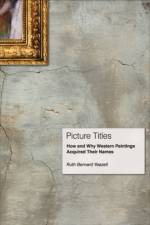
How the practice of titling paintings has shaped their reception throughout modern historyA picture's title is often our first guide to understanding the image. Yet paintings didn't always have titles, and many canvases acquired their names from curators, dealers, and printmakers-not the artists. Taking an original, historical look at how Western paintings were named, Picture Titles shows how the practice developed in response to the conditions of the modern art world and how titles have shaped the reception of artwork from the time of Bruegel and Rembrandt to the present.Ruth Bernard Yeazell begins the story with the decline of patronage and the rise of the art market in the seventeenth and eighteenth centuries, as the increasing circulation of pictures and the democratization of the viewing public generated the need for a shorthand by which to identify works at a far remove from their creation. The spread of literacy both encouraged the practice of titling pictures and aroused new anxieties about relations between word and image, including fears that reading was taking the place of looking. Yeazell demonstrates that most titles composed before the nineteenth century were the work of middlemen, and even today many artists rely on others to name their pictures. A painter who wants a title to stick, Yeazell argues, must engage in an act of aggressive authorship. She investigates prominent cases, such as David's Oath of the Horatii and works by Turner, Courbet, Whistler, Magritte, and Jasper Johns.Examining Western painting from the Renaissance to the present day, Picture Titles sheds new light on the ways that we interpret and appreciate visual art.
A lyrical collection that explores the interplay between poetry and historyIn her new collection, Fiona Sze-Lorrain offers a nuanced yet dynamic vision of humanity marked by perils, surprises, and the transcendence of a "e;ruined elegance."e; Through an intercultural journey that traces lives, encounters, exiles, and memories from France, America, and Asia, the poet explores a rich array of historical and literary allusions to European masters, Asian sources, and American influences. With candor and humor, each lyrical foray is sensitive to silence and experience: "e;I want to honor / the invisible. I'll use the fog to see white peaches."e; There are haunting narratives from a World War II concentration camp, the Stalinist Terror, and a persecuted Tibet during the Cultural Revolution. There are also poems that take as their point of departure writings, paintings, sketches, photographs, and music by Gu Cheng, Giorgio Caproni, Bonnard, Hiroshige, Gao Xingjian, Kertesz, and Debussy, among others. Grounded in the sensual, these poems probe existential questionings through inspirations from nature and the impermanent earth. Described by the Los Angeles Review of Books as "e;a high lyricist who refuses to resort to mere lyricism in order to articulate her experience,"e; Sze-Lorrain renews her faith in music and poetic language by addressing the opposing aesthetics of "e;ruins"e; and "e;elegance,"e; and how the experience of both defies judgment.
A major new account of one of the leading philosopher-statesmen of the eighteenth centuryEdmund Burke (1730-97) lived during one of the most extraordinary periods of world history. He grappled with the significance of the British Empire in India, fought for reconciliation with the American colonies, and was a vocal critic of national policy during three European wars. He also advocated reform in Britain and became a central protagonist in the great debate on the French Revolution. Drawing on the complete range of printed and manuscript sources, Empire and Revolution offers a vivid reconstruction of the major concerns of this outstanding statesman, orator, and philosopher. In restoring Burke to his original political and intellectual context, this book overturns the conventional picture of a partisan of tradition against progress and presents a multifaceted portrait of one of the most captivating figures in eighteenth-century life and thought. A boldly ambitious work of scholarship, this book challenges us to rethink the legacy of Burke and the turbulent era in which he played so pivotal a role.
A comprehensive and concise history of capitalism from its origins to todayIn this authoritative and accessible book, one of the world's most renowned historians provides a concise and comprehensive history of capitalism within a global perspective from its medieval origins to the 2008 financial crisis and beyond. From early commercial capitalism in the Arab world, China, and Europe, to nineteenth- and twentieth-century industrialization, to today's globalized financial capitalism, Jurgen Kocka offers an unmatched account of capitalism, one that weighs its great achievements against its great costs, crises, and failures. Based on intensive research, the book puts the rise of capitalist economies in social, political, and cultural context, and shows how their current problems and foreseeable future are connected to a long history.Sweeping in scope, the book describes how capitalist expansion was connected to colonialism; how industrialism brought unprecedented innovation, growth, and prosperity but also increasing inequality; and how managerialism, financialization, and globalization later changed the face of capitalism. The book also addresses the idea of capitalism in the work of thinkers such as Marx, Weber, and Schumpeter, and chronicles how criticism of capitalism is as old as capitalism itself, fed by its persistent contradictions and recurrent emergencies.Authoritative and accessible, Capitalism is an enlightening account of a force that has shaped the modern world like few others.
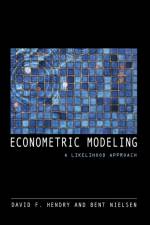
Econometric Modeling provides a new and stimulating introduction to econometrics, focusing on modeling. The key issue confronting empirical economics is to establish sustainable relationships that are both supported by data and interpretable from economic theory. The unified likelihood-based approach of this book gives students the required statistical foundations of estimation and inference, and leads to a thorough understanding of econometric techniques. David Hendry and Bent Nielsen introduce modeling for a range of situations, including binary data sets, multiple regression, and cointegrated systems. In each setting, a statistical model is constructed to explain the observed variation in the data, with estimation and inference based on the likelihood function. Substantive issues are always addressed, showing how both statistical and economic assumptions can be tested and empirical results interpreted. Important empirical problems such as structural breaks, forecasting, and model selection are covered, and Monte Carlo simulation is explained and applied. Econometric Modeling is a self-contained introduction for advanced undergraduate or graduate students. Throughout, data illustrate and motivate the approach, and are available for computer-based teaching. Technical issues from probability theory and statistical theory are introduced only as needed. Nevertheless, the approach is rigorous, emphasizing the coherent formulation, estimation, and evaluation of econometric models relevant for empirical research.
From 1995 to 2013, Stanley Fish's provocative New York Times columns consistently generated passionate discussion and debate. In Think Again, he has assembled almost one hundred of his best columns into a thematically arranged collection with a substantial new introduction that explains his intention in writing these pieces and offers an analysis of why they provoked so much reaction.Some readers reported being frustrated when they couldn't figure out where Fish, one of America's most influential thinkers, stood on the controversies he addressed in the essays-from atheism and affirmative action to plagiarism and postmodernism. But, as Fish says, that is the point. Opinions are cheap; you can get them anywhere. Instead of offering just another set of them, Fish analyzes and dissects the arguments put forth by different sides-in debates over free speech, identity politics, the gun lobby, and other hot-button topics-in order to explain how their arguments work or don't work. In short, these are essays that teach you not what to think but how to think more clearly.Brief and accessible yet challenging, these essays provide all the hard-edged intellectual, cultural, and political analysis one expects from Fish. At the same time, the collection includes a number of revealing and even poignant autobiographical essays in which, as Fish says, "e;readers will learn about my anxieties, my aspirations, my eccentricities, my foibles, my father, and my obsessions-Frank Sinatra, Ted Williams, basketball, and Jews."e; Reflecting the wide-ranging interests of one of today's leading critics, this is Fish's broadest and most engaging book to date.
The love of God is perhaps the most essential element in Judaism-but also one of the most confounding. In biblical and rabbinic literature, the obligation to love God appears as a formal commandment. Yet most people today think of love as a feeling. How can an emotion be commanded? How could one ever fulfill such a requirement? The Love of God places these scholarly and existential questions in a new light.Jon Levenson traces the origins of the concept to the ancient institution of covenant, showing how covenantal love is a matter neither of sentiment nor of dry legalism. The love of God is instead a deeply personal two-way relationship that finds expression in God's mysterious love for the people of Israel, who in turn observe God's laws out of profound gratitude for his acts of deliverance. Levenson explores how this bond has survived episodes in which God's love appears to be painfully absent-as in the brutal persecutions of Talmudic times-and describes the intensely erotic portrayals of the relationship by biblical prophets and rabbinic interpreters of the Song of Songs. He examines the love of God as a spiritual discipline in the Middle Ages as well as efforts by two influential modern Jewish thinkers-Martin Buber and Franz Rosenzweig-to recover this vital but endangered aspect of their tradition.A breathtaking work of scholarship and spirituality alike that is certain to provoke debate, The Love of God develops fascinating insights into the foundations of religious life in the classical Jewish tradition.
Adair Turner became chairman of Britain's Financial Services Authority just as the global financial crisis struck in 2008, and he played a leading role in redesigning global financial regulation. In this eye-opening book, he sets the record straight about what really caused the crisis. It didnt happen because banks are too big to failour addiction to private debt is to blame.Between Debt and the Devil challenges the belief that we need credit growth to fuel economic growth, and that rising debt is okay as long as inflation remains low. In fact, most credit is not needed for economic growthbut it drives real estate booms and busts and leads to financial crisis and depression. Turner explains why public policy needs to manage the growth and allocation of credit creation, and why debt needs to be taxed as a form of economic pollution. Banks need far more capital, real estate lending must be restricted, and we need to tackle inequality and mitigate the relentless rise of real estate prices. Turner also debunks the big myth about fiat moneythe erroneous notion that printing money will lead to harmful inflation. To escape the mess created by past policy errors, we sometimes need to monetize government debt and finance fiscal deficits with central-bank money.Between Debt and the Devil shows why we need to reject the assumptions that private credit is essential to growth and fiat money is inevitably dangerous. Each has its advantages, and each creates risks that public policy must consciously balance.
From the family to the workplace to the marketplace, every facet of our lives is shaped by cooperative interactions. Yet everywhere we look, we are confronted by proof of how difficult cooperation can be--snarled traffic, polarized politics, overexploited resources, social problems that go ignored. The benefits to oneself of a free ride on the efforts of others mean that collective goals often are not met. But compared to most other species, people actually cooperate a great deal. Why is this? Meeting at Grand Central brings together insights from evolutionary biology, political science, economics, anthropology, and other fields to explain how the interactions between our evolved selves and the institutional structures we have created make cooperation possible. The book begins with a look at the ideas of Mancur Olson and George Williams, who shifted the question of why cooperation happens from an emphasis on group benefits to individual costs. It then explores how these ideas have influenced our thinking about cooperation, coordination, and collective action. The book persuasively argues that cooperation and its failures are best explained by evolutionary and social theories working together. Selection sometimes favors cooperative tendencies, while institutions, norms, and incentives encourage and make possible actual cooperation. Meeting at Grand Central will inspire researchers from different disciplines and intellectual traditions to share ideas and advance our understanding of cooperative behavior in a world that is more complex than ever before.
A fascinating exploration of our past, present, and future relationship with foodFor the first time in human history, there is food in abundance throughout the world. More people than ever before are now freed of the struggle for daily survival, yet few of us are aware of how food lands on our plates. Behind every meal you eat, there is a story. Hamburgers in Paradise explains how.In this wise and passionate book, Louise Fresco takes readers on an enticing cultural journey to show how science has enabled us to overcome past scarcities-and why we have every reason to be optimistic about the future. Using hamburgers in the Garden of Eden as a metaphor for the confusion surrounding food today, she looks at everything from the dominance of supermarkets and the decrease of biodiversity to organic foods and GMOs. She casts doubt on many popular claims about sustainability, and takes issue with naive rejections of globalization and the idealization of "e;true and honest"e; food. Fresco explores topics such as agriculture in human history, poverty and development, and surplus and obesity. She provides insightful discussions of basic foods such as bread, fish, and meat, and intertwines them with social topics like slow food and other gastronomy movements, the fear of technology and risk, food and climate change, the agricultural landscape, urban food systems, and food in art.The culmination of decades of research, Hamburgers in Paradise provides valuable insights into how our food is produced, how it is consumed, and how we can use the lessons of the past to design food systems to feed all humankind in the future.
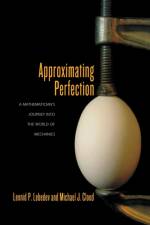
This is a book for those who enjoy thinking about how and why Nature can be described using mathematical tools. Approximating Perfection considers the background behind mechanics as well as the mathematical ideas that play key roles in mechanical applications. Concentrating on the models of applied mechanics, the book engages the reader in the types of nuts-and-bolts considerations that are normally avoided in formal engineering courses: how and why models remain imperfect, and the factors that motivated their development. The opening chapter reviews and reconsiders the basics of calculus from a fully applied point of view; subsequent chapters explore selected topics from solid mechanics, hydrodynamics, and the natural sciences. Emphasis is placed on the logic that underlies modeling in mechanics and the many surprising parallels that exist between seemingly diverse areas. The mathematical demands on the reader are kept to a minimum, so the book will appeal to a wide technical audience.
From the author of the #1 New York Times bestseller On Bullshit, the case for worrying less about the rich and more about the poorEconomic inequality is one of the most divisive issues of our time. Yet few would argue that inequality is a greater evil than poverty. The poor suffer because they don't have enough, not because others have more, and some have far too much. So why do many people appear to be more distressed by the rich than by the poor?In this provocative book, the #1 New York Times bestselling author of On Bullshit presents a compelling and unsettling response to those who believe that the goal of social justice should be economic equality or less inequality. Harry Frankfurt, one of the most influential moral philosophers in the world, argues that we are morally obligated to eliminate poverty-not achieve equality or reduce inequality. Our focus should be on making sure everyone has a sufficient amount to live a decent life. To focus instead on inequality is distracting and alienating.At the same time, Frankfurt argues that the conjunction of vast wealth and poverty is offensive. If we dedicate ourselves to making sure everyone has enough, we may reduce inequality as a side effect. But it's essential to see that the ultimate goal of justice is to end poverty, not inequality.A serious challenge to cherished beliefs on both the political left and right, On Inequality promises to have a profound impact on one of the great debates of our time.
As most econometricians will readily agree, the data used in applied econometrics seldom provide accurate measurements for the pertinent theory's variables. Here, Bernt Stigum offers the first systematic and theoretically sound way of accounting for such inaccuracies. He and a distinguished group of contributors bridge econometrics and the philosophy of economics--two topics that seem worlds apart. They ask: How is a science of economics possible? The answer is elusive. Economic theory seems to be about abstract ideas or, it might be said, about toys in a toy community. How can a researcher with such tools learn anything about the social reality in which he or she lives? This book shows that an econometrician with the proper understanding of economic theory and the right kind of questions can gain knowledge about characteristic features of the social world. It addresses varied topics in both classical and Bayesian econometrics, offering ample evidence that its answer to the fundamental question is sound. The first book to comprehensively explore economic theory and econometrics simultaneously, Econometrics and the Philosophy of Economics represents an authoritative account of contemporary economic methodology. About a third of the chapters are authored or coauthored by Heather Anderson, Erik Biorn, Christophe Bontemps, Jeffrey A. Dubin, Harald E. Goldstein, Clive W.J. Granger, David F. Hendry, Herman Ruge-Jervell, Dale W. Jorgenson, Hans-Martin Krolzig, Nils Lid Hjort, Daniel L. McFadden, Grayham E. Mizon, Tore Schweder, Geir Storvik, and Herman K. van Dijk.
This book explores previously unexamined links between the arbitrary as articulated in linguistic theories on the one hand, and in political discourse about power on the other. In particular, Willam Keach shows how Enlightenment conceptions of the arbitrary were contested and extended in British Romantic writing. In doing so, he offers a new paradigm for understanding the recurrent problem of verbal representation in Romantic writing and the disputes over stylistic performance during this period. With clarity and force, Keach reads these phenomena in relation to a rapidly shifting literary marketplace and to the social pressures in Britain generated by the French Revolution, the Napoleonic Wars, and the class antagonisms that culminated in the Peterloo Massacre. The question of what it means to think of language or politics as arbitrary persists through postmodern thinking, and this book advances an unfinished dialogue between Romantic culture and the critical techniques we currently use to analyze it. Keach's intertwined linguistic and political account of arbitrary power culminates in a detailed textual analysis of the language of revolutionary violence. Including substantial sections on Blake, Wollstonecraft, Wordsworth, Coleridge, Byron, P. B. Shelley, Keats, and Anna Jameson, Arbitrary Power will engage not only students and scholars of eighteenth- and nineteenth-century literature but also those interested in critical and linguistic theory and in social and political history.
The events of September 11 and the subsequent war on terrorism have provoked widespread discussion about the possibility of democracy in the Islamic world. Such topics as the meaning of jihad, the role of clerics as authoritative interpreters, and the place of human rights and toleration in Islam have become subjects of urgent public debate around the world. With few exceptions, however, this debate has proceeded in isolation from the vibrant traditions of argument within Islamic theology, philosophy, and law. Islam and the Challenge of Democracy aims to correct this deficiency. The book engages the reader in a rich discourse on the challenges of democracy in contemporary Islam. The collection begins with a lead essay by Khaled Abou El Fadl, who argues that democracy, especially a constitutional democracy that protects basic individual rights, is the form of government best suited to promoting a set of social and political values central to Islam. Because Islam is about submission to God and about each individual's responsibility to serve as His agent on Earth, Abou El Fadl argues, there is no place for the subjugation to human authority demanded by authoritarian regimes. The lead essay is followed by eleven others from internationally respected specialists in democracy and religion. They address, challenge, and engage Abou El Fadl's work. The contributors include John Esposito, Muhammad Fadel, Noah Feldman, Nader Hashemi, Bernard Haykel, Muqtedar Khan, Saba Mahmood, David Novak, William Quandt, Kevin Reinhart, and Jeremy Waldron.
In the post-Cold War era, why has democratization been slow to arrive in the Arab world? This book argues that to understand support for the authoritarian status quo in parts of this region--and the willingness of its citizens to compromise on core democratic principles--one must factor in how a strong U.S. presence and popular anti-Americanism weakens democratic voices. Examining such countries as Jordan, Kuwait, Morocco, Palestine, and Saudi Arabia, Amaney Jamal explores how Arab citizens decide whether to back existing regimes, regime transitions, and democratization projects, and how the global position of Arab states shapes people's attitudes toward their governments. While the Cold War's end reduced superpower hegemony in much of the developing world, the Arab region witnessed an increased security and economic dependence on the United States. As a result, the preferences of the United States matter greatly to middle-class Arab citizens, not just the elite, and citizens will restrain their pursuit of democratization, rationalizing their backing for the status quo because of U.S. geostrategic priorities. Demonstrating how the preferences of an international patron serve as a constraint or an opportunity to push for democracy, Jamal questions bottom-up approaches to democratization, which assume that states are autonomous units in the world order. Jamal contends that even now, with the overthrow of some autocratic Arab regimes, the future course of Arab democratization will be influenced by the perception of American reactions. Concurrently, the United States must address the troubling sources of the region's rising anti-Americanism.
The Speaker of the House of Representatives is the most powerful partisan figure in the contemporary U.S. Congress. How this came to be, and how the majority party in the House has made control of the speakership a routine matter, is far from straightforward. Fighting for the Speakership provides a comprehensive history of how Speakers have been elected in the U.S. House since 1789, arguing that the organizational politics of these elections were critical to the construction of mass political parties in America and laid the groundwork for the role they play in setting the agenda of Congress today. Jeffery Jenkins and Charles Stewart show how the speakership began as a relatively weak office, and how votes for Speaker prior to the Civil War often favored regional interests over party loyalty. While struggle, contention, and deadlock over House organization were common in the antebellum era, such instability vanished with the outbreak of war, as the majority party became an "e;organizational cartel"e; capable of controlling with certainty the selection of the Speaker and other key House officers. This organizational cartel has survived Gilded Age partisan strife, Progressive Era challenge, and conservative coalition politics to guide speakership elections through the present day. Fighting for the Speakership reveals how struggles over House organization prior to the Civil War were among the most consequential turning points in American political history.
Successful democracies throughout history--from ancient Athens to Britain on the cusp of the industrial age--have used the technology of their time to gather information for better governance. Our challenge is no different today, but it is more urgent because the accelerating pace of technological change creates potentially enormous dangers as well as benefits. Accelerating Democracy shows how to adapt democracy to new information technologies that can enhance political decision making and enable us to navigate the social rapids ahead. John O. McGinnis demonstrates how these new technologies combine to address a problem as old as democracy itself--how to help citizens better evaluate the consequences of their political choices. As society became more complex in the nineteenth century, social planning became a top-down enterprise delegated to experts and bureaucrats. Today, technology increasingly permits information to bubble up from below and filter through more dispersed and competitive sources. McGinnis explains how to use fast-evolving information technologies to more effectively analyze past public policy, bring unprecedented intensity of scrutiny to current policy proposals, and more accurately predict the results of future policy. But he argues that we can do so only if government keeps pace with technological change. For instance, it must revive federalism to permit different jurisdictions to test different policies so that their results can be evaluated, and it must legalize information markets to permit people to bet on what the consequences of a policy will be even before that policy is implemented. Accelerating Democracy reveals how we can achieve a democracy that is informed by expertise and social-scientific knowledge while shedding the arrogance and insularity of a technocracy.
Nasser's Gamble draws on declassified documents from six countries and original material in Arabic, German, Hebrew, and Russian to present a new understanding of Egypt's disastrous five-year intervention in Yemen, which Egyptian president Gamal Abdel Nasser later referred to as "e;my Vietnam."e; Jesse Ferris argues that Nasser's attempt to export the Egyptian revolution to Yemen played a decisive role in destabilizing Egypt's relations with the Cold War powers, tarnishing its image in the Arab world, ruining its economy, and driving its rulers to instigate the fatal series of missteps that led to war with Israel in 1967. Viewing the Six Day War as an unintended consequence of the Saudi-Egyptian struggle over Yemen, Ferris demonstrates that the most important Cold War conflict in the Middle East was not the clash between Israel and its neighbors. It was the inter-Arab struggle between monarchies and republics over power and legitimacy. Egypt's defeat in the "e;Arab Cold War"e; set the stage for the rise of Saudi Arabia and political Islam. Bold and provocative, Nasser's Gamble brings to life a critical phase in the modern history of the Middle East. Its compelling analysis of Egypt's fall from power in the 1960s offers new insights into the decline of Arab nationalism, exposing the deep historical roots of the Arab Spring of 2011.
Some in the social sciences argue that the same logic applies to both qualitative and quantitative methods. In A Tale of Two Cultures, Gary Goertz and James Mahoney demonstrate that these two paradigms constitute different cultures, each internally coherent yet marked by contrasting norms, practices, and toolkits. They identify and discuss major differences between these two traditions that touch nearly every aspect of social science research, including design, goals, causal effects and models, concepts and measurement, data analysis, and case selection. Although focused on the differences between qualitative and quantitative research, Goertz and Mahoney also seek to promote toleration, exchange, and learning by enabling scholars to think beyond their own culture and see an alternative scientific worldview. This book is written in an easily accessible style and features a host of real-world examples to illustrate methodological points.
This volume explores the political, cultural, and ecclesiastical forces that linked the metropolis of Byzantium to the margins of its far-flung empire. Focusing on the provincial region of Hellas and Peloponnesos in central and southern Greece, Judith Herrin shows how the prestige of Constantinople was reflected in the military, civilian, and ecclesiastical officials sent out to govern the provinces. She evokes the ideology and culture of the center by examining different aspects of the imperial court, including diplomacy, ceremony, intellectual life, and relations with the church. Particular topics treat the transmission of mathematical manuscripts, the burning of offensive material, and the church's role in distributing philanthropy. Herrin contrasts life in the capital with provincial life, tracing the adaptation of a largely rural population to rule by Constantinople from the early medieval period onward. The letters of Michael Choniates, archbishop of Athens from 1182 to 1205, offer a detailed account of how this highly educated cleric coped with life in an imperial backwater, and demonstrate a synthesis of ancient Greek culture and medieval Christianity that was characteristic of the Byzantine elite. This collection of essays spans the entirety of Herrin's influential career and draws together a significant body of scholarship on problems of empire. It features a general introduction, two previously unpublished essays, and a concise introduction to each essay that describes how it came to be written and how it fits into her broader analysis of the unusual brilliance and longevity of Byzantium.
Unrivalled Influence explores the exceptional roles that women played in the vibrant cultural and political life of medieval Byzantium. Written by one of the world's foremost historians of the Byzantine millennium, this landmark book evokes the complex and exotic world of Byzantium's women, from empresses and saints to uneducated rural widows. Drawing on a diverse range of sources, Judith Herrin sheds light on the importance of marriage in imperial statecraft, the tense coexistence of empresses in the imperial court, and the critical relationships of mothers and daughters. She looks at women's interactions with eunuchs, the in-between gender in Byzantine society, and shows how women defended their rights to hold land. Herrin describes how they controlled their inheritances, participated in urban crowds demanding the dismissal of corrupt officials, followed the processions of holy icons and relics, and marked religious feasts with liturgical celebrations, market activity, and holiday pleasures. The vivid portraits that emerge here reveal how women exerted an unrivalled influence on the patriarchal society of Byzantium, and remained active participants in the many changes that occurred throughout the empire's millennial history. Unrivalled Influence brings together Herrin's finest essays on women and gender written throughout the long span of her esteemed career. This volume includes three new essays published here for the very first time and a new general introduction by Herrin. She also provides a concise introduction to each essay that describes how it came to be written and how it fits into her broader views about women and Byzantium.
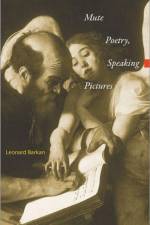
Why do painters sometimes wish they were poets--and why do poets sometimes wish they were painters? What happens when Rembrandt spells out Hebrew in the sky or Poussin spells out Latin on a tombstone? What happens when Virgil, Ovid, or Shakespeare suspend their plots to describe a fictitious painting? In Mute Poetry, Speaking Pictures, Leonard Barkan explores such questions as he examines the deliciously ambiguous history of the relationship between words and pictures, focusing on the period from antiquity to the Renaissance but offering insights that also have much to say about modern art and literature. The idea that a poem is like a picture has been a commonplace since at least ancient Greece, and writers and artists have frequently discussed poetry by discussing painting, and vice versa, but their efforts raise more questions than they answer. From Plutarch ("e;painting is mute poetry, poetry a speaking picture"e;) to Horace ("e;as a picture, so a poem"e;), apparent clarity quickly leads to confusion about, for example, what qualities of pictures are being urged upon poets or how pictorial properties can be converted into poetical ones. The history of comparing and contrasting painting and poetry turns out to be partly a story of attempts to promote one medium at the expense of the other. At the same time, analogies between word and image have enabled writers and painters to think about and practice their craft. Ultimately, Barkan argues, this dialogue is an expression of desire: the painter longs for the rich signification of language while the poet yearns for the direct sensuousness of painting.
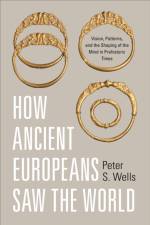
The peoples who inhabited Europe during the two millennia before the Roman conquests had established urban centers, large-scale production of goods such as pottery and iron tools, a money economy, and elaborate rituals and ceremonies. Yet as Peter Wells argues here, the visual world of these late prehistoric communities was profoundly different from those of ancient Rome's literate civilization and today's industrialized societies. Drawing on startling new research in neuroscience and cognitive psychology, Wells reconstructs how the peoples of pre-Roman Europe saw the world and their place in it. He sheds new light on how they communicated their thoughts, feelings, and visual perceptions through the everyday tools they shaped, the pottery and metal ornaments they decorated, and the arrangements of objects they made in their ritual places--and how these forms and patterns in turn shaped their experience. How Ancient Europeans Saw the World offers a completely new approach to the study of Bronze Age and Iron Age Europe, and represents a major challenge to existing views about prehistoric cultures. The book demonstrates why we cannot interpret the structures that Europe's pre-Roman inhabitants built in the landscape, the ways they arranged their settlements and burial sites, or the complex patterning of their art on the basis of what these things look like to us. Rather, we must view these objects and visual patterns as they were meant to be seen by the ancient peoples who fashioned them.
Europe and the Islamic World sheds much-needed light on the shared roots of Islamic and Western cultures and on the richness of their inextricably intertwined histories, refuting once and for all the misguided notion of a "e;clash of civilizations"e; between the Muslim world and Europe. In this landmark book, three eminent historians bring to life the complex and tumultuous relations between Genoans and Tunisians, Alexandrians and the people of Constantinople, Catalans and Maghrebis--the myriad groups and individuals whose stories reflect the common cultural, intellectual, and religious heritage of Europe and Islam. Since the seventh century, when the armies of Constantinople and Medina fought for control of Syria and Palestine, there has been ongoing contact between the Muslim world and the West. This sweeping history vividly recounts the wars and the crusades, the alliances and diplomacy, commerce and the slave trade, technology transfers, and the intellectual and artistic exchanges. Here readers are given an unparalleled introduction to key periods and events, including the Muslim conquests, the collapse of the Byzantine Empire, the commercial revolution of the medieval Mediterranean, the intellectual and cultural achievements of Muslim Spain, the crusades and Spanish reconquest, the rise of the Ottomans and their conquest of a third of Europe, European colonization and decolonization, and the challenges and promise of this entwined legacy today. As provocative as it is groundbreaking, this book describes this shared history in all its richness and diversity, revealing how ongoing encounters between Europe and Islam have profoundly shaped both.
Frequent instances of intervention in current world affairs have threatened the status of nonintervention as a rule of international relations. Gathering evidence from history, law, sociology, and political science, R. J. Vincent concludes that the principle of nonintervention can and must remain viable.The author approaches the question from several angles, seeking to discover why the principle of nonintervention has been asserted as part of the law of nations; whether states in the past and present have conducted their foreign relations according to the principle of nonintervention; and what function the principle performs in the society formed between states.The author examines the principle of nonintervention through examples taken from contemporary world politics, focusing on its role in the doctrine and practice of the Soviet Union, the United States, and the United Nations. He argues that, despite the erosion of the order of sovereign states, the arrival of nuclear response weapons, all-enveloping ideological conflict, and transnational relationships that diminish the significance of state frontiers, the principle of nonintervention continues to contribute to the international order.Originally published in 1974.The Princeton Legacy Library uses the latest print-on-demand technology to again make available previously out-of-print books from the distinguished backlist of Princeton University Press. These editions preserve the original texts of these important books while presenting them in durable paperback and hardcover editions. The goal of the Princeton Legacy Library is to vastly increase access to the rich scholarly heritage found in the thousands of books published by Princeton University Press since its founding in 1905.
In analyzing the social and economic factors underlying the decline of fertility in nineteenth-century France. Etienne van de Walle found that official statistics for the period were incomplete and inaccurate. He thus undertook a full reconstruction. In this volume, he presents a detailed discussion of the methodology used to correct and to supplement these official statistics, along with the results of the reconstruction of 82 French departements, and French and English summaries of his findings. By computing standardized indices of fertility and nuptiality for each of the 82 departements, the author extends the period for which standardized demographic indices are available. His methodology, which evaluates and corrects the biases and defects of the official statistics, provides a model for similar background studies in the future.Originally published in 1974.The Princeton Legacy Library uses the latest print-on-demand technology to again make available previously out-of-print books from the distinguished backlist of Princeton University Press. These editions preserve the original texts of these important books while presenting them in durable paperback and hardcover editions. The goal of the Princeton Legacy Library is to vastly increase access to the rich scholarly heritage found in the thousands of books published by Princeton University Press since its founding in 1905.
Abonner på vårt nyhetsbrev og få rabatter og inspirasjon til din neste leseopplevelse.
Ved å abonnere godtar du vår personvernerklæring.