





















Gjør som tusenvis av andre bokelskere
Abonner på vårt nyhetsbrev og få rabatter og inspirasjon til din neste leseopplevelse.
Ved å abonnere godtar du vår personvernerklæring.Du kan når som helst melde deg av våre nyhetsbrev.

This edition replaces the earlier translation by Walter Lowrie that appeared under the title The Concept of Dread. Along with The Sickness unto Death, the work reflects from a psychological point of view Soren Kierkegaard's longstanding concern with the Socratic maxim, "e;Know yourself."e; His ontological view of the self as a synthesis of body, soul, and spirit has influenced philosophers such as Heidegger and Sartre, theologians such as Jaspers and Tillich, and psychologists such as Rollo May. In The Concept of Anxiety, Kierkegaard describes the nature and forms of anxiety, placing the domain of anxiety within the mental-emotional states of human existence that precede the qualitative leap of faith to the spiritual state of Christianity. It is through anxiety that the self becomes aware of its dialectical relation between the finite and the infinite, the temporal and the eternal.
A first look at gunpowder's revolutionary impact on China's role in global historyThe Chinese invented gunpowder and began exploring its military uses as early as the 900s, four centuries before the technology passed to the West. But by the early 1800s, China had fallen so far behind the West in gunpowder warfare that it was easily defeated by Britain in the Opium War of 1839-42. What happened? In The Gunpowder Age, Tonio Andrade offers a compelling new answer, opening a fresh perspective on a key question of world history: why did the countries of western Europe surge to global importance starting in the 1500s while China slipped behind?Historians have long argued that gunpowder weapons helped Europeans establish global hegemony. Yet the inhabitants of what is today China not only invented guns and bombs but also, as Andrade shows, continued to innovate in gunpowder technology through the early 1700s-much longer than previously thought. Why, then, did China become so vulnerable? Andrade argues that one significant reason is that it was out of practice fighting wars, having enjoyed nearly a century of relative peace, since 1760. Indeed, he demonstrates that China-like Europe-was a powerful military innovator, particularly during times of great warfare, such as the violent century starting after the Opium War, when the Chinese once again quickly modernized their forces. Today, China is simply returning to its old position as one of the world's great military powers.By showing that China's military dynamism was deeper, longer lasting, and more quickly recovered than previously understood, The Gunpowder Age challenges long-standing explanations of the so-called Great Divergence between the West and Asia.
The meaning of our concern for mortal remains-from antiquity through the twentieth centuryThe Greek philosopher Diogenes said that when he died his body should be tossed over the city walls for beasts to scavenge. Why should he or anyone else care what became of his corpse? In The Work of the Dead, acclaimed cultural historian Thomas Laqueur examines why humanity has universally rejected Diogenes's argument. No culture has been indifferent to mortal remains. Even in our supposedly disenchanted scientific age, the dead body still matters-for individuals, communities, and nations. A remarkably ambitious history, The Work of the Dead offers a compelling and richly detailed account of how and why the living have cared for the dead, from antiquity to the twentieth century.The book draws on a vast range of sources-from mortuary archaeology, medical tracts, letters, songs, poems, and novels to painting and landscapes in order to recover the work that the dead do for the living: making human communities that connect the past and the future. Laqueur shows how the churchyard became the dominant resting place of the dead during the Middle Ages and why the cemetery largely supplanted it during the modern period. He traces how and why since the nineteenth century we have come to gather the names of the dead on great lists and memorials and why being buried without a name has become so disturbing. And finally, he tells how modern cremation, begun as a fantasy of stripping death of its history, ultimately failed-and how even the ashes of the victims of the Holocaust have been preserved in culture.A fascinating chronicle of how we shape the dead and are in turn shaped by them, this is a landmark work of cultural history.
Most Americans believe that the Second World War ended because the two atomic bombs dropped on Japan forced it to surrender. Five Days in August boldly presents a different interpretation: that the military did not clearly understand the atomic bomb's revolutionary strategic potential, that the Allies were almost as stunned by the surrender as the Japanese were by the attack, and that not only had experts planned and fully anticipated the need for a third bomb, they were skeptical about whether the atomic bomb would work at all. With these ideas, Michael Gordin reorients the historical and contemporary conversation about the A-bomb and World War II.Five Days in August explores these and countless other legacies of the atomic bomb in a glaring new light. Daring and iconoclastic, it will result in far-reaching discussions about the significance of the A-bomb, about World War II, and about the moral issues they have spawned.
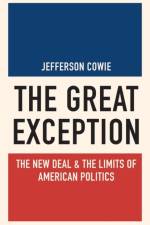
How the New Deal was a unique historical moment and what this reveals about U.S. politics, economics, and cultureWhere does the New Deal fit in the big picture of American history? What does it mean for us today? What happened to the economic equality it once engendered? In The Great Exception, Jefferson Cowie provides new answers to these important questions. In the period between the Great Depression and the 1970s, he argues, the United States government achieved a unique level of equality, using its considerable resources on behalf of working Americans in ways that it had not before and has not since. If there is to be a comparable battle for collective economic rights today, Cowie argues, it needs to build on an understanding of the unique political foundation for the New Deal. Anyone who wants to come to terms with the politics of inequality in the United States will need to read The Great Exception.
Since the early 1960s, scholarly thinking on the power of U.S. presidents has rested on these words: "e;Presidential power is the power to persuade."e; Power, in this formulation, is strictly about bargaining and convincing other political actors to do things the president cannot accomplish alone. Power without Persuasion argues otherwise. Focusing on presidents' ability to act unilaterally, William Howell provides the most theoretically substantial and far-reaching reevaluation of presidential power in many years. He argues that presidents regularly set public policies over vocal objections by Congress, interest groups, and the bureaucracy. Throughout U.S. history, going back to the Louisiana Purchase and the Emancipation Proclamation, presidents have set landmark policies on their own. More recently, Roosevelt interned Japanese Americans during World War II, Kennedy established the Peace Corps, Johnson got affirmative action underway, Reagan greatly expanded the president's powers of regulatory review, and Clinton extended protections to millions of acres of public lands. Since September 11, Bush has created a new cabinet post and constructed a parallel judicial system to try suspected terrorists. Howell not only presents numerous new empirical findings but goes well beyond the theoretical scope of previous studies. Drawing richly on game theory and the new institutionalism, he examines the political conditions under which presidents can change policy without congressional or judicial consent. Clearly written, Power without Persuasion asserts a compelling new formulation of presidential power, one whose implications will resound.
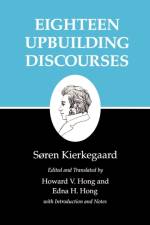
There is much to be learned philosophically from this volume, but philosophical instruction was not Kierkegaard's aim here, except in the broad sense of self-knowledge and deepened awareness. Indicating the intention of the discourses, the titles include "e;The Expectancy of Faith,"e; "e;Love Will Hide a Multitude of Sins,"e; "e;Strengthening in the Inner Being,"e; "e;To Gain One's Soul in Patience,"e; "e;Patience in Expectancy,"e; and "e;Against Cowardliness."e; In tone and substance these works are in accord with the concluding words of encouragement in Either/Or, which was paired with the first volume of discourses: "e;Ask yourself and keep on asking until you find the answer, for one may have known something many times, acknowledged it; one may have willed something many times, attempted it--and yet, only the deep inner motion, only the heart's indescribable emotion, only that will convince you that what you have acknowledged belongs to you, that no power can take it from you--for only the truth that builds up is truth for you."e;
In less than a decade, the Internet went from being a series of loosely connected networks used by universities and the military to the powerful commercial engine it is today. This book describes how many of the key innovations that made this possible came from entrepreneurs and iconoclasts who were outside the mainstream-and how the commercialization of the Internet was by no means a foregone conclusion at its outset.Shane Greenstein traces the evolution of the Internet from government ownership to privatization to the commercial Internet we know today. This is a story of innovation from the edges. Greenstein shows how mainstream service providers that had traditionally been leaders in the old-market economy became threatened by innovations from industry outsiders who saw economic opportunities where others didn't-and how these mainstream firms had no choice but to innovate themselves. New models were tried: some succeeded, some failed. Commercial markets turned innovations into valuable products and services as the Internet evolved in those markets. New business processes had to be created from scratch as a network originally intended for research and military defense had to deal with network interconnectivity, the needs of commercial users, and a host of challenges with implementing innovative new services.How the Internet Became Commercial demonstrates how, without any central authority, a unique and vibrant interplay between government and private industry transformed the Internet.
The astonishing new story of human originsWas Darwin wrong when he traced our origins to Africa? The Real Planet of the Apes makes the explosive claim that it was in Europe, not Africa, where apes evolved the most important hallmarks of our human lineage-such as dexterous hands and larger brains. In this compelling and accessible book, David Begun, one of the world's leading paleoanthropologists, transports readers to an epoch in the remote past when the Earth was home to many migratory populations of ape species.Drawing on the latest astonishing discoveries in the fossil record as well as his own experiences conducting field expeditions across Europe and Asia, Begun provides a sweeping evolutionary history of great apes and humans. He tells the story of how one of the earliest members of our evolutionary group-a new kind of primate called Proconsul-evolved from lemur-like monkeys in the primeval forests of Africa. Begun vividly describes how, over the next 10 million years, these hominoids expanded into Europe and Asia and evolved climbing and hanging adaptations, longer maturation times, and larger brains, setting the stage for the emergence of humans. As the climate deteriorated in Europe around 10 million years ago, these apes either died out or migrated south, reinvading the African continent and giving rise to the lineages of the gorilla, chimpanzee, and, ultimately, the human.Presenting startling new insights about our fossil ape ancestors, The Real Planet of the Apes is a book that fundamentally alters our understanding of human origins.
A leading astronomer takes readers behind the scenes of the thrilling science of stellar archaeologyAstronomers study the oldest observable stars in the universe in much the same way archaeologists study ancient artifacts on Earth. Anna Frebel takes readers into the far-flung depths of space and time to provide a gripping firsthand account of the cutting-edge science of stellar archaeology. Weaving the latest findings in astronomy with her own compelling insights as one of the world's leading researchers in the field, she explains how sections of the night sky are "e;excavated"e; in the hunt for these extremely rare, 13-billion-year-old relic stars and how this astonishing quest is revealing tantalizing new details about the origins and evolution of the cosmos. Along the way, Frebel recounts her own stories of discovery, offering an insider's perspective on this exciting frontier of science.
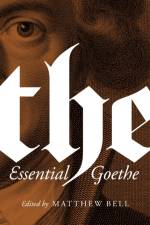
The most comprehensive one-volume collection of Goethe's writings ever published in EnglishThe Essential Goethe is the most comprehensive and representative one-volume collection of Goethe's writings ever published in English. It provides English-language readers easier access than ever before to the widest range of work by one of the greatest writers in world history. Goethe's work as playwright, poet, novelist, and autobiographer is fully represented. In addition to the works for which he is most famous, including Faust Part I and the lyric poems, the volume features important literary works that are rarely published in English-including the dramas Egmont, Iphigenia in Tauris, and Torquato Tasso and the bildungsroman Wilhelm Meister's Apprenticeship, a foundational work in the history of the novel. The volume also offers a selection of Goethe's essays on the arts, philosophy, and science, which give access to the thought of a polymath unrivalled in the modern world. Primarily drawn from Princeton's authoritative twelve-volume Goethe edition, the translations are highly readable and reliable modern versions by scholars of Goethe. The volume also features an extensive introduction to Goethe's life and works by volume editor Matthew Bell.Includes:Selected poemsFour complete dramas: Faust Part I, Egmont, Iphigenia in Tauris, and Torquato TassoThe complete novel Wilhelm Meister's ApprenticeshipA selection from the travel journal Italian JourneySelected essays on art and literatureSelected essays on philosophy and scienceAn extensive introduction to Goethe's life and worksA chronology of Goethe's life and timesA note on the texts and translations
Unraveling the mystery of the catastrophic age of extinctionsTwo hundred sixty million years ago, life on Earth suffered wave after wave of cataclysmic extinctions, with the worst wiping out nearly every species on the planet. The Worst of Times delves into the mystery behind these extinctions and sheds light on the fateful role the primeval supercontinent, known as Pangea, might have played in causing these global catastrophes. Drawing on the latest discoveries as well as his own firsthand experiences conducting field expeditions to remote corners of the world, Paul Wignall reveals what scientists are only now beginning to understand about the most prolonged and calamitous period of environmental crisis in Earth's history. Wignall shows how these series of unprecedented extinction events swept across the planet, killing life on a scale more devastating than the dinosaur extinctions that would follow. The Worst of Times unravels one of the great enigmas of ancient Earth and shows how this ushered in a new age of vibrant and more resilient life on our planet.
It's a familiar story: a beautiful woman is abducted and her husband journeys to recover her. This story's best-known incarnation is also a central Greek myth-the abduction of Helen that led to the Trojan War. Stealing Helen surveys a vast range of folktales and texts exhibiting the story pattern of the abducted beautiful wife and makes a detailed comparison with the Helen of Troy myth. Lowell Edmunds shows that certain Sanskrit, Welsh, and Old Irish texts suggest there was an Indo-European story of the abducted wife before the Helen myth of the Iliad became known.Investigating Helen's status in ancient Greek sources, Edmunds argues that if Helen was just one trope of the abducted wife, the quest for Helen's origin in Spartan cult can be abandoned, as can the quest for an Indo-European goddess who grew into the Helen myth. He explains that Helen was not a divine essence but a narrative figure that could replicate itself as needed, at various times or places in ancient Greece. Edmunds recovers some of these narrative Helens, such as those of the Pythagoreans and of Simon Magus, which then inspired the Helens of the Faust legend and Goethe.Stealing Helen offers a detailed critique of prevailing views behind the "e;real"e; Helen and presents an eye-opening exploration of the many sources for this international mythical and literary icon.
The first chronicle of Stalin's inner political and social circle-from a leading Soviet historianStalin was the unchallenged dictator of the Soviet Union for so long that most historians have dismissed the officials surrounding him as mere yes-men and political window dressing. On Stalin's Team overturns this view, revealing that behind Stalin was a group of loyal men who formed a remarkably effective team with him from the late 1920s until his death in 1953. Drawing on extensive original research, Sheila Fitzpatrick provides the first in-depth account of this inner circle and their families. She vividly describes how these dedicated comrades-in-arms not only worked closely with Stalin, but also constituted his social circle. Stalin's team included the wily security chief Beria; Andreev, who traveled to provincial purges while listening to Beethoven on a portable gramophone; and Khrushchev, who finally disbanded the team four years after Stalin's death. Taking readers from the cataclysms of the Great Purges and World War II to the paranoia of Stalin's final years, On Stalin's Team paints an entirely new picture of Stalin within his milieu-one that transforms our understanding of how the Soviet Union was ruled during much of its existence.
The P-NP problem is the most important open problem in computer science, if not all of mathematics. Simply stated, it asks whether every problem whose solution can be quickly checked by computer can also be quickly solved by computer. The Golden Ticket provides a nontechnical introduction to P-NP, its rich history, and its algorithmic implications for everything we do with computers and beyond. Lance Fortnow traces the history and development of P-NP, giving examples from a variety of disciplines, including economics, physics, and biology. He explores problems that capture the full difficulty of the P-NP dilemma, from discovering the shortest route through all the rides at Disney World to finding large groups of friends on Facebook. The Golden Ticket explores what we truly can and cannot achieve computationally, describing the benefits and unexpected challenges of this compelling problem.
In the eighteenth and nineteenth centuries, as German Jews struggled for legal emancipation and social acceptance, they also embarked on a program of cultural renewal, two key dimensions of which were distancing themselves from their fellow Ashkenazim in Poland and giving a special place to the Sephardim of medieval Spain. Where they saw Ashkenazic Jewry as insular and backward, a result of Christian persecution, they depicted the Sephardim as worldly, morally and intellectually superior, and beautiful, products of the tolerant Muslim environment in which they lived. In this elegantly written book, John Efron looks in depth at the special allure Sephardic aesthetics held for German Jewry.Efron examines how German Jews idealized the sound of Sephardic Hebrew and the Sephardim's physical and moral beauty, and shows how the allure of the Sephardic found expression in neo-Moorish synagogue architecture, historical novels, and romanticized depictions of Sephardic history. He argues that the shapers of German-Jewish culture imagined medieval Iberian Jewry as an exemplary Jewish community, bound by tradition yet fully at home in the dominant culture of Muslim Spain. Efron argues that the myth of Sephardic superiority was actually an expression of withering self-critique by German Jews who, by seeking to transform Ashkenazic culture and win the acceptance of German society, hoped to enter their own golden age.Stimulating and provocative, this book demonstrates how the goal of this aesthetic self-refashioning was not assimilation but rather the creation of a new form of German-Jewish identity inspired by Sephardic beauty.
The definitive field guide to the birds of BotswanaHere is the ultimate field guide to Botswana's stunningly diverse birdlife. Covering all 597 species recorded to date, Birds of Botswana features more than 1,200 superb color illustrations, detailed species accounts, seasonality and breeding bars, and a color distribution map for each species. Drawing on the latest regional and national data, the book highlights the best birding areas in Botswana, provides helpful tips on where and when to see key species, and depicts special races and morphs specific to Botswana. This is the first birding guide written by a Botswana-based ornithologist and the only one dedicated specifically to Botswana.Portable and easy to use, Birds of Botswana is the essential travel companion for anyone visiting this remarkable country.Covers all 597 species of birds found in Botswana, including subspecies and color variants specific to BotswanaFeatures more than 1,200 color illustrations-with more than one illustration for species where the sexes and ages differIncludes detailed species accounts, seasonality and breeding bars, and color distribution mapsDraws on the latest bird data and the expertise of leading birders in Botswana
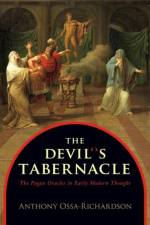
The Devil's Tabernacle is the first book to examine in depth the intellectual and cultural impact of the oracles of pagan antiquity on modern European thought. Anthony Ossa-Richardson shows how the study of the oracles influenced, and was influenced by, some of the most significant developments in early modernity, such as the Christian humanist recovery of ancient religion, confessional polemics, Deist and libertine challenges to religion, antiquarianism and early archaeology, Romantic historiography, and spiritualism. Ossa-Richardson examines the different views of the oracles since the Renaissance--that they were the work of the devil, or natural causes, or the fraud of priests, or finally an organic element of ancient Greek society. The range of discussion on the subject, as he demonstrates, is considerably more complex than has been realized before: hundreds of scholars, theologians, and critics commented on the oracles, drawing on a huge variety of intellectual contexts to frame their beliefs. In a central chapter, Ossa-Richardson interrogates the landmark dispute on the oracles between Bernard de Fontenelle and Jean-Francois Baltus, challenging Whiggish assumptions about the mechanics of debate on the cusp of the Enlightenment. With erudition and an eye for detail, he argues that, on both sides of the controversy, to speak of the ancient oracles in early modernity was to speak of one's own historical identity as a Christian.
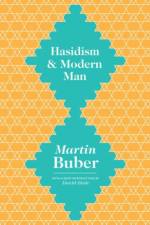
Hasidism, a controversial, mystical-religious movement of Eastern European origin, has posed a serious challenge to mainstream Judaism from its earliest beginnings in the middle of the eighteenth century. Decimated by the Holocaust, it has risen like a phoenix from the ashes and has reconstituted itself as a major force in the world of ultra-Orthodox Judaism. Philosopher Martin Buber found inspiration in its original tenets and devoted much of his career to making its insights known to a wide readership.First published in 1958, Hasidism and Modern Man examines the life and religious experiences of Hasidic Jews, as well as Buber's personal response to them. From the autobiographical "e;My Way to Hasidism,"e; to "e;Hasidism and Modern Man,"e; and "e;Love of God and Love of Neighbor,"e; the essays span nearly half a century and reflect the evolution of Buber's religious philosophy in relation to the Hasidic movement. Hasidism and Modern Man remains prescient in its portrayal of a spiritual movement that brings God down to earth and makes possible a modern philosophy in which the human being becomes sacred.
Why do Internet, financial service, and beer commercials dominate Super Bowl advertising? How do political ceremonies establish authority? Why does repetition characterize anthems and ritual speech? Why were circular forms favored for public festivals during the French Revolution? This book answers these questions using a single concept: common knowledge. Game theory shows that in order to coordinate its actions, a group of people must form "e;common knowledge."e; Each person wants to participate only if others also participate. Members must have knowledge of each other, knowledge of that knowledge, knowledge of the knowledge of that knowledge, and so on. Michael Chwe applies this insight, with striking erudition, to analyze a range of rituals across history and cultures. He shows that public ceremonies are powerful not simply because they transmit meaning from a central source to each audience member but because they let audience members know what other members know. For instance, people watching the Super Bowl know that many others are seeing precisely what they see and that those people know in turn that many others are also watching. This creates common knowledge, and advertisers selling products that depend on consensus are willing to pay large sums to gain access to it. Remarkably, a great variety of rituals and ceremonies, such as formal inaugurations, work in much the same way. By using a rational-choice argument to explain diverse cultural practices, Chwe argues for a close reciprocal relationship between the perspectives of rationality and culture. He illustrates how game theory can be applied to an unexpectedly broad spectrum of problems, while showing in an admirably clear way what game theory might hold for scholars in the social sciences and humanities who are not yet acquainted with it. In a new afterword, Chwe delves into new applications of common knowledge, both in the real world and in experiments, and considers how generating common knowledge has become easier in the digital age.
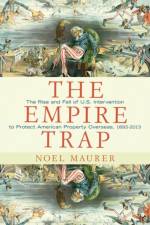
How the United States became an imperial power by bowing to pressure to defend its citizens' overseas investmentsThroughout the twentieth century, the U.S. government willingly deployed power, hard and soft, to protect American investments all around the globe. Why did the United States get into the business of defending its citizens' property rights abroad? The Empire Trap looks at how modern U.S. involvement in the empire business began, how American foreign policy became increasingly tied to the sway of private financial interests, and how postwar administrations finally extricated the United States from economic interventionism, even though the government had the will and power to continue.Noel Maurer examines the ways that American investors initially influenced their government to intercede to protect investments in locations such as Central America and the Caribbean. Costs were small-at least at the outset-but with each incremental step, American policy became increasingly entangled with the goals of those they were backing, making disengagement more difficult. Maurer discusses how, all the way through the 1970s, the United States not only failed to resist pressure to defend American investments, but also remained unsuccessful at altering internal institutions of other countries in order to make property rights secure in the absence of active American involvement. Foreign nations expropriated American investments, but in almost every case the U.S. government's employment of economic sanctions or covert action obtained market value or more in compensation-despite the growing strategic risks. The advent of institutions focusing on international arbitration finally gave the executive branch a credible political excuse not to act. Maurer cautions that these institutions are now under strain and that a collapse might open the empire trap once more.With shrewd and timely analysis, this book considers American patterns of foreign intervention and the nation's changing role as an imperial power.
The untold story of Albert Einstein's role as the father of quantum theoryEinstein and the Quantum reveals for the first time the full significance of Albert Einstein's contributions to quantum theory. Einstein famously rejected quantum mechanics, observing that God does not play dice. But, in fact, he thought more about the nature of atoms, molecules, and the emission and absorption of light-the core of what we now know as quantum theory-than he did about relativity.A compelling blend of physics, biography, and the history of science, Einstein and the Quantum shares the untold story of how Einstein-not Max Planck or Niels Bohr-was the driving force behind early quantum theory. It paints a vivid portrait of the iconic physicist as he grappled with the apparently contradictory nature of the atomic world, in which its invisible constituents defy the categories of classical physics, behaving simultaneously as both particle and wave. And it demonstrates how Einstein's later work on the emission and absorption of light, and on atomic gases, led directly to Erwin Schrodinger's breakthrough to the modern form of quantum mechanics. The book sheds light on why Einstein ultimately renounced his own brilliant work on quantum theory, due to his deep belief in science as something objective and eternal.
The pivotal and troubling role of progressive-era economics in the shaping of modern American liberalismIn Illiberal Reformers, Thomas Leonard reexamines the economic progressives whose ideas and reform agenda underwrote the Progressive Era dismantling of laissez-faire and the creation of the regulatory welfare state, which, they believed, would humanize and rationalize industrial capitalism. But not for all. Academic social scientists such as Richard T. Ely, John R. Commons, and Edward A. Ross, together with their reform allies in social work, charity, journalism, and law, played a pivotal role in establishing minimum-wage and maximum-hours laws, workmen's compensation, antitrust regulation, and other hallmarks of the regulatory welfare state. But even as they offered uplift to some, economic progressives advocated exclusion for others, and did both in the name of progress. Leonard meticulously reconstructs the influence of Darwinism, racial science, and eugenics on scholars and activists of the late nineteenth and early twentieth centuries, revealing a reform community deeply ambivalent about America's poor. Illiberal Reformers shows that the intellectual champions of the regulatory welfare state proposed using it not to help those they portrayed as hereditary inferiors but to exclude them.
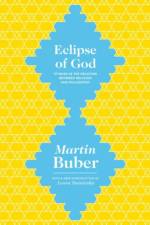
Biblical in origin, the expression "e;eclipse of God"e; refers to the Jewish concept of hester panim, the act of God concealing his face as a way of punishing his disobedient subjects. Though this idea is deeply troubling for many people, in this book Martin Buber uses the expression hopefully-for a hiding God is also a God who can be found.First published in 1952, Eclipse of God is a collection of nine essays concerning the relationship between religion and philosophy. The book features Buber's critique of the thematically interconnected-yet diverse-perspectives of Soren Kierkegaard, Hermann Cohen, C.G. Jung, Martin Heidegger, and other prominent modern thinkers. Buber deconstructs their philosophical conceptions of God and explains why religion needs philosophy to interpret what is authentic in spiritual encounters. He elucidates the religious implications of the I-Thou, or dialogical relationship, and explains how the exclusive focus on scientific knowledge in the modern world blocks the possibility of a personal relationship with God.Featuring a new introduction by Leora Batnitzky, Eclipse of God offers a glimpse into the mind of one of the modern world's greatest Jewish thinkers.
The first compact field guide to offshore sea life of the East CoastTwo-thirds of our planet lies out of sight of land, just offshore beyond the horizon. What wildlife might you see out there? This handy guide, designed for quick use on day trips off the East Coast, helps you put a name to what you find, from whales and dolphins to shearwaters, turtles, and even flying fish. Carefully crafted color plates show species as they typically appear at sea, and expert text highlights identification features. Essential for anyone heading out on a whale-watching or birding trip, this guidebook provides a handy gateway to the wonders of the ocean.Over 100 color photos and composite platesIncludes whales, dolphins, birds, sharks, turtles, flying fish, and moreAccessible and informative text reveals what to look forGreat for beginners and experts alike
In the earlier monograph Pseudo-reductive Groups, Brian Conrad, Ofer Gabber, and Gopal Prasad explored the general structure of pseudo-reductive groups. In this new book, Classification of Pseudo-reductive Groups, Conrad and Prasad go further to study the classification over an arbitrary field. An isomorphism theorem proved here determines the automorphism schemes of these groups. The book also gives a Tits-Witt type classification of isotropic groups and displays a cohomological obstruction to the existence of pseudo-split forms. Constructions based on regular degenerate quadratic forms and new techniques with central extensions provide insight into new phenomena in characteristic 2, which also leads to simplifications of the earlier work. A generalized standard construction is shown to account for all possibilities up to mild central extensions.The results and methods developed in Classification of Pseudo-reductive Groups will interest mathematicians and graduate students who work with algebraic groups in number theory and algebraic geometry in positive characteristic.
Descent in Buildings begins with the resolution of a major open question about the local structure of Bruhat-Tits buildings. The authors then put their algebraic solution into a geometric context by developing a general fixed point theory for groups acting on buildings of arbitrary type, giving necessary and sufficient conditions for the residues fixed by a group to form a kind of subbuilding or "e;form"e; of the original building. At the center of this theory is the notion of a Tits index, a combinatorial version of the notion of an index in the relative theory of algebraic groups. These results are combined at the end to show that every exceptional Bruhat-Tits building arises as a form of a "e;residually pseudo-split"e; Bruhat-Tits building. The book concludes with a display of the Tits indices associated with each of these exceptional forms.This is the third and final volume of a trilogy that began with Richard Weiss' The Structure of Spherical Buildings and The Structure of Affine Buildings.
This book presents an authoritative and in-depth treatment of potential energy landscape theory, a powerful analytical approach to describing the atomic and molecular interactions in condensed-matter phenomena. Drawing on the latest developments in the computational modeling of many-body systems, Frank Stillinger applies this approach to a diverse range of substances and systems, including crystals, liquids, glasses and other amorphous solids, polymers, and solvent-suspended biomolecules.Stillinger focuses on the topography of the multidimensional potential energy hypersurface created when a large number of atoms or molecules simultaneously interact with one another. He explains how the complex landscape topography separates uniquely into individual "e;basins,"e; each containing a local potential energy minimum or "e;inherent structure,"e; and he shows how to identify interbasin transition states-saddle points-that reside in shared basin boundaries. Stillinger describes how inherent structures and their basins can be classified and enumerated by depth, curvatures, and other attributes, and how those enumerations lead logically from vastly complicated multidimensional landscapes to properties observed in the real three-dimensional world.Essential for practitioners and students across a variety of fields, the book illustrates how this approach applies equally to systems whose nuclear motions are intrinsically quantum mechanical or classical, and provides novel strategies for numerical simulation computations directed toward diverse condensed-matter systems.
An authoritative primer on the cutting-edge science of planet huntingAlien worlds have long been a staple of science fiction. But today, thanks to modern astronomical instrumentation and the achievements of many enterprising observational astronomers, the existence of planets outside our solar system-also known as exoplanets-has moved into the realm of science fact. With planet hunters finding ever smaller, more Earth-like worlds, our understanding of the cosmos is forever changed, yet the question of how astronomers make these discoveries often goes unanswered.How Do You Find an Exoplanet? is an authoritative primer on the four key techniques that today's planet hunters use to detect the feeble signals of planets orbiting distant stars. John Johnson provides you with an insider's perspective on this exciting cutting-edge science, showing how astronomers detect the wobble of stars caused by the gravitational tug of an orbiting planet, the slight diminution of light caused by a planet eclipsing its star, and the bending of space-time by stars and their planets, and how astronomers even directly take pictures of planets next to their bright central stars.Accessible to anyone with a basic foundation in college-level physics, How Do You Find an Exoplanet? sheds new light on the prospect of finding life outside our solar system, how surprising new observations suggest that we may not fully understand how planets form, and much more.
Abonner på vårt nyhetsbrev og få rabatter og inspirasjon til din neste leseopplevelse.
Ved å abonnere godtar du vår personvernerklæring.