









Gjør som tusenvis av andre bokelskere
Abonner på vårt nyhetsbrev og få rabatter og inspirasjon til din neste leseopplevelse.
Ved å abonnere godtar du vår personvernerklæring.Du kan når som helst melde deg av våre nyhetsbrev.

A comprehensive and integrated approach to economic forecasting problemsEconomic forecasting involves choosing simple yet robust models to best approximate highly complex and evolving data-generating processes. This poses unique challenges for researchers in a host of practical forecasting situations, from forecasting budget deficits and assessing financial risk to predicting inflation and stock market returns. Economic Forecasting presents a comprehensive, unified approach to assessing the costs and benefits of different methods currently available to forecasters.This text approaches forecasting problems from the perspective of decision theory and estimation, and demonstrates the profound implications of this approach for how we understand variable selection, estimation, and combination methods for forecasting models, and how we evaluate the resulting forecasts. Both Bayesian and non-Bayesian methods are covered in depth, as are a range of cutting-edge techniques for producing point, interval, and density forecasts. The book features detailed presentations and empirical examples of a range of forecasting methods and shows how to generate forecasts in the presence of large-dimensional sets of predictor variables. The authors pay special attention to how estimation error, model uncertainty, and model instability affect forecasting performance.Presents a comprehensive and integrated approach to assessing the strengths and weaknesses of different forecasting methodsApproaches forecasting from a decision theoretic and estimation perspectiveCovers Bayesian modeling, including methods for generating density forecastsDiscusses model selection methods as well as forecast combinationsCovers a large range of nonlinear prediction models, including regime switching models, threshold autoregressions, and models with time-varying volatilityFeatures numerous empirical examplesExamines the latest advances in forecast evaluationEssential for practitioners and students alike
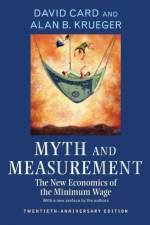
David Card and Alan B. Krueger have already made national news with their pathbreaking research on the minimum wage. Here they present a powerful new challenge to the conventional view that higher minimum wages reduce jobs for low-wage workers. In a work that has important implications for public policy as well as for the direction of economic research, the authors put standard economic theory to the test, using data from a series of recent episodes, including the 1992 increase in New Jersey's minimum wage, the 1988 rise in California's minimum wage, and the 1990-91 increases in the federal minimum wage. In each case they present a battery of evidence showing that increases in the minimum wage lead to increases in pay, but no loss in jobs. A distinctive feature of Card and Krueger's research is the use of empirical methods borrowed from the natural sciences, including comparisons between the "e;treatment"e; and "e;control"e; groups formed when the minimum wage rises for some workers but not for others. In addition, the authors critically reexamine the previous literature on the minimum wage and find that it, too, lacks support for the claim that a higher minimum wage cuts jobs. Finally, the effects of the minimum wage on family earnings, poverty outcomes, and the stock market valuation of low-wage employers are documented. Overall, this book calls into question the standard model of the labor market that has dominated economists' thinking on the minimum wage. In addition, it will shift the terms of the debate on the minimum wage in Washington and in state legislatures throughout the country.With a new preface discussing new data, Myth and Measurement continues to shift the terms of the debate on the minimum wage.
A reevaluation of what money is-and what it might beQuestions about the nature of money have gained a new urgency in the aftermath of the global financial crisis. Even as many people have less of it, there are more forms and systems of money, from local currencies and social lending to mobile money and Bitcoin. Yet our understanding of what money is-and what it might be-hasn't kept pace. In The Social Life of Money, Nigel Dodd, one of today's leading sociologists of money, reformulates the theory of the subject for a postcrisis world in which new kinds of money are proliferating.What counts as legitimate action by central banks that issue currency and set policy? What underpins the right of nongovernmental actors to create new currencies? And how might new forms of money surpass or subvert government-sanctioned currencies? To answer such questions, The Social Life of Money takes a fresh and wide-ranging look at modern theories of money.One of the book's central concerns is how money can be wrested from the domination and mismanagement of banks and governments and restored to its fundamental position as the "e;claim upon society"e; described by Georg Simmel. But rather than advancing yet another critique of the state-based monetary system, The Social Life of Money draws out the utopian aspects of money and the ways in which its transformation could in turn transform society, politics, and economics. The book also identifies the contributions of thinkers who have not previously been thought of as monetary theorists-including Nietzsche, Benjamin, Bataille, Deleuze and Guattari, Baudrillard, Derrida, and Hardt and Negri. The result provides new ways of thinking about money that seek not only to understand it but to change it.Complete with a new preface that discusses recent developments in the evolution of money, the book draws out the ways in which its transformation could in turn radically alter society, politics, and economics.
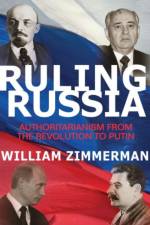
The first book to trace the evolution of Russian politics from the Bolsheviks to PutinWhen the Soviet Union collapsed, many hoped that Russia's centuries-long history of autocratic rule might finally end. Yet today's Russia appears to be retreating from democracy, not progressing toward it. Ruling Russia is the only book of its kind to trace the history of modern Russian politics from the Bolshevik Revolution to the presidency of Vladimir Putin. It examines the complex evolution of communist and post-Soviet leadership in light of the latest research in political science, explaining why the democratization of Russia has all but failed.William Zimmerman argues that in the 1930s the USSR was totalitarian but gradually evolved into a normal authoritarian system, while the post-Soviet Russian Federation evolved from a competitive authoritarian to a normal authoritarian system in the first decade of the twenty-first century. He traces how the selectorate-those empowered to choose the decision makers-has changed across different regimes since the end of tsarist rule. The selectorate was limited in the period after the revolution, and contracted still further during Joseph Stalin's dictatorship, only to expand somewhat after his death. Zimmerman also assesses Russia's political prospects in future elections. He predicts that while a return to totalitarianism in the coming decade is unlikely, so too is democracy.Rich in historical detail, Ruling Russia is the first book to cover the entire period of the regime changes from the Bolsheviks to Putin, and is essential reading for anyone seeking to understand why Russia still struggles to implement lasting democratic reforms.
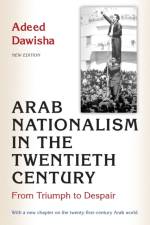
Like a great dynasty that falls to ruin and is eventually remembered more for its faults than its feats, Arab nationalism is remembered mostly for its humiliating rout in the 1967 Six Day War, for inter-Arab divisions, and for words and actions distinguished by their meagerness. But people tend to forget the majesty that Arab nationalism once was. In this elegantly narrated and richly documented book, Adeed Dawisha brings this majesty to life through a sweeping historical account of its dramatic rise and fall. Dawisha argues that Arab nationalism--which, he says, was inspired by nineteenth-century German Romantic nationalism--really took root after World War I and not in the nineteenth century, as many believe, and that it blossomed only in the 1950s and 1960s under the charismatic leadership of Egypt's Gamal 'Abd al-Nasir. He traces the ideology's passage from the collapse of the Ottoman Empire through its triumphant ascendancy in the late 1950s with the unity of Egypt and Syria and with the nationalist revolution of Iraq, to the mortal blow it received in the 1967 Arab defeat by Israel, and its eventual eclipse. Dawisha criticizes the common failure to distinguish between the broader, cultural phenomenon of "e;Arabism"e; and the political, secular desire for a united Arab state that defined Arab nationalism. In recent decades competitive ideologies--not least, Islamic militancy--have inexorably supplanted the latter, he contends. Dawisha, who grew up in Iraq during the heyday of Arab nationalism, infuses his work with rare personal insight and extraordinary historical breadth. In addition to Western sources, he draws on an unprecedented wealth of Arab political memoirs and studies to tell the fascinating story of one of the most colorful and significant periods of the contemporary Arab world. In doing so, he also gives us the means to more fully understand trends in the region today.Complete with a hard-hitting new and expanded section that surveys recent nationalism and events in the Middle East, Arab Nationalism in the Twentieth Century tells the fascinating story of one of the most colorful and significant periods in twentieth-century Middle Eastern history.
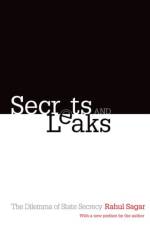
Secrets and Leaks examines the complex relationships among executive power, national security, and secrecy. State secrecy is vital for national security, but it can also be used to conceal wrongdoing. How then can we ensure that this power is used responsibly? Typically, the onus is put on lawmakers and judges, who are expected to oversee the executive. Yet because these actors lack access to the relevant information and the ability to determine the harm likely to be caused by its disclosure, they often defer to the executive's claims about the need for secrecy. As a result, potential abuses are more often exposed by unauthorized disclosures published in the press. But should such disclosures, which violate the law, be condoned? Drawing on several cases, Rahul Sagar argues that though whistleblowing can be morally justified, the fear of retaliation usually prompts officials to act anonymously--that is, to "e;leak"e; information. As a result, it becomes difficult for the public to discern when an unauthorized disclosure is intended to further partisan interests. Because such disclosures are the only credible means of checking the executive, Sagar writes, they must be tolerated, and, at times, even celebrated. However, the public should treat such disclosures skeptically and subject irresponsible journalism to concerted criticism.
A major reappraisal of crime and punishment in AmericaThe huge prison buildup of the past four decades has few defenders, yet reforms to reduce the numbers of those incarcerated have been remarkably modest. Meanwhile, an ever-widening carceral state has sprouted in the shadows, extending its reach far beyond the prison gate. It sunders families and communities and reworks conceptions of democracy, rights, and citizenship-posing a formidable political and social challenge. In Caught, Marie Gottschalk examines why the carceral state remains so tenacious in the United States. She analyzes the shortcomings of the two dominant penal reform strategies-one focused on addressing racial disparities, the other on seeking bipartisan, race-neutral solutions centered on reentry, justice reinvestment, and reducing recidivism.With a new preface evaluating the effectiveness of recent proposals to reform mass incarceration, Caught offers a bracing appraisal of the politics of penal reform.
At the beginning of the 1990s, a massive speculative asset bubble burst in Japan, leaving the nation's banks with an enormous burden of nonperforming loans. Banking crises have become increasingly common across the globe, but what was distinctive about the Japanese case was the unusually long delay before the government intervened to aggressively address the bad debt problem. The postponed response by Japanese authorities to the nation's banking crisis has had enormous political and economic consequences for Japan as well as for the rest of the world. This book helps us understand the nature of the Japanese government's response while also providing important insights into why Japan seems unable to get its financial system back on track 13 years later. The book focuses on the role of policy networks in Japanese finance, showing with nuance and detail how Japan's Finance Ministry was embedded within the political and financial worlds, how that structure was similar to and different from that of its counterparts in other countries, and how the distinctive nature of Japan's institutional arrangements affected the capacity of the government to manage change. The book focuses in particular on two intervening variables that bring about a functional shift in the Finance Ministry's policy networks: domestic political change under coalition government and a dramatic rise in information requirements for effective regulation. As a result of change in these variables, networks that once enhanced policymaking capacity in Japanese finance became "e;paralyzing networks"e;--with disastrous results.
Between Heaven and Earth explores the relationships men, women, and children have formed with the Virgin Mary and the saints in twentieth-century American Catholic history, and reflects, more broadly, on how people live in the company of sacred figures and how these relationships shape the ties between people on earth. In this boldly argued and beautifully written book, Robert Orsi also considers how scholars of religion occupy the ground in between belief and analysis, faith and scholarship. Orsi infuses his analysis with an autobiographical voice steeped in his own Italian-American Catholic background--from the devotion of his uncle Sal, who had cerebral palsy, to a "e;crippled saint,"e; Margaret of Castello; to the bond of his Tuscan grandmother with Saint Gemma Galgani. Religion exists not as a medium of making meanings, Orsi maintains, but as a network of relationships between heaven and earth involving people of all ages as well as the many sacred figures they hold dear. Orsi argues that modern academic theorizing about religion has long sanctioned dubious distinctions between "e;good"e; or "e;real"e; religious expression on the one hand and "e;bad"e; or "e;bogus"e; religion on the other, which marginalize these everyday relationships with sacred figures. This book is a brilliant critical inquiry into the lives that people make, for better or worse, between heaven and earth, and into the ways scholars of religion could better study of these worlds.
The City at Stake tells the dramatic story of how the nation's second-largest city completed a major reform of its government in the face of a deeply threatening movement for secession by the San Fernando Valley. How did Los Angeles, a diverse city with an image of unstructured politics and fragmented government, find a way to unify itself around a controversial set of reforms? Los Angeles government nearly collapsed in political bickering over charter reform, which generated the remarkable phenomenon of two competing charter reform commissions. Out of this nearly impossible tangle, reformers managed to knit a new city charter that greatly expanded institutions for citizen participation and addressed long-standing weaknesses in the role of the mayor. The new charter, pursued by a Republican mayor, won its greatest support from liberal whites who had long favored reform measures. Written by an urban scholar who played a key role in the charter reform process, the book offers both a theoretical perspective on the process of institutional reform in an age of diversity, and a firsthand, inside-the-box look at how major reform works. The new afterword by the author analyzes the 2005 election of Los Angeles's first modern Latino mayor, Antonio Villaraigosa, a milestone in the development of urban reform coalitions in an age of immigration and ethnic diversity.
This is a comprehensive and accessible overview of what is known about the structure and mechanics of bone, bones, and teeth. In it, John Currey incorporates critical new concepts and findings from the two decades of research since the publication of his highly regarded The Mechanical Adaptations of Bones. Crucially, Currey shows how bone structure and bone's mechanical properties are intimately bound up with each other and how the mechanical properties of the material interact with the structure of whole bones to produce an adapted structure. For bone tissue, the book discusses stiffness, strength, viscoelasticity, fatigue, and fracture mechanics properties. For whole bones, subjects dealt with include buckling, the optimum hollowness of long bones, impact fracture, and properties of cancellous bone. The effects of mineralization on stiffness and toughness and the role of microcracking in the fracture process receive particular attention. As a zoologist, Currey views bone and bones as solutions to the design problems that vertebrates have faced during their evolution and throughout the book considers what bones have been adapted to do. He covers the full range of bones and bony tissues, as well as dentin and enamel, and uses both human and non-human examples. Copiously illustrated, engagingly written, and assuming little in the way of prior knowledge or mathematical background, Bones is both an ideal introduction to the field and also a reference sure to be frequently consulted by practicing researchers.
From the Baltic to the South China Sea, newly assertive authoritarian states sense an opportunity to resurrect old empires or build new ones at America's expense. Hoping that U.S. decline is real, nations such as Russia, Iran, and China are testing Washington's resolve by targeting vulnerable allies at the frontiers of American power. The Unquiet Frontier explains why the United States needs a new grand strategy that uses strong frontier alliance networks to raise the costs of military aggression in the new century.Jakub Grygiel and Wess Mitchell describe the aggressive methods rival nations are using to test U.S. power in strategically critical regions throughout the world. They show how rising and revisionist powers are putting pressure on our frontier alliescountries like Poland, Israel, and Taiwanto gauge our leaders' commitment to upholding the U.S.-led global order. To cope with these dangerous dynamics, nervous U.S. allies are diversifying their national-security "e;menu cards"e; by beefing up their militaries or even aligning with their aggressors. Grygiel and Mitchell reveal how numerous would-be great powers use an arsenal of asymmetric techniques to probe and sift American strength across several regions simultaneously, and how rivals and allies alike are learning from America's management of increasingly interlinked global crises to hone effective strategies of their own.The Unquiet Frontier demonstrates why the United States must strengthen the international order that has provided greater benefits to the world than any in history.
The first in-depth look at Stael's political life and writingsGermaine de Stael (1766-1817) is perhaps best known today as a novelist, literary critic, and outspoken and independent thinker. Yet she was also a prominent figure in politics during the French Revolution. Biancamaria Fontana sheds new light on this often overlooked aspect of Stael's life and work, bringing vividly to life her unique experience as a political actor in a world where women had no place.The banker's daughter who became one of Europe's best-connected intellectuals, Stael was an exceptionally talented woman who achieved a degree of public influence to which not even her wealth and privilege would normally have entitled her. During the Revolution, when the lives of so many around her were destroyed, she succeeded in carving out a unique path for herself and making her views heard, first by the powerful men around her, later by the European public at large. Fontana provides the first in-depth look at her substantial output of writings on the theory and practice of the exercise of power, setting in sharp relief the dimension of Stael's life that she cared most about-politics. She was fascinated by the nature of public opinion, and believed that viable political regimes were founded on public trust and popular consensus. Fontana shows how Stael's ideas were shaped by the remarkable times in which she lived, and argues that it is only through a consideration of her political insights that we can fully understand Stael's legacy and its enduring relevance for us today.
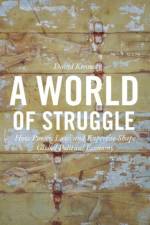
A World of Struggle reveals the role of expert knowledge in our political and economic life. As politicians, citizens, and experts engage one another on a technocratic terrain of irresolvable argument and uncertain knowledge, a world of astonishing inequality and injustice is born.In this provocative book, David Kennedy draws on his experience working with international lawyers, human rights advocates, policy professionals, economic development specialists, military lawyers, and humanitarian strategists to provide a unique insider's perspective on the complexities of global governance. He describes the conflicts, unexamined assumptions, and assertions of power and entitlement that lie at the center of expert rule. Kennedy explores the history of intellectual innovation by which experts developed a sophisticated legal vocabulary for global management strangely detached from its distributive consequences. At the center of expert rule is struggle: myriad everyday disputes in which expertise drifts free of its moorings in analytic rigor and observable fact. He proposes tools to model and contest expert work and concludes with an in-depth examination of modern law in warfare as an example of sophisticated expertise in action.Charting a major new direction in global governance at a moment when the international order is ready for change, this critically important book explains how we can harness expert knowledge to remake an unjust world.
An incisive account of the foreign policy beliefs of American Jews from the nineteenth century to the presentHow do American Jews envision their role in the world? Are they tribal-a people whose obligations extend solely to their own? Or are they prophetic-a light unto nations, working to repair the world? The Star and the Stripes is an original, provocative interpretation of the effects of these worldviews on the foreign policy beliefs of American Jews since the nineteenth century. Michael Barnett argues that it all begins with the political identity of American Jews. As Jews, they are committed to their people's survival. As Americans, they identify with, and believe their survival depends on, the American principles of liberalism, religious freedom, and pluralism. This identity and search for inclusion form a political theology of prophetic Judaism that emphasizes the historic mission of Jews to help create a world of peace and justice.The political theology of prophetic Judaism accounts for two enduring features of the foreign policy beliefs of American Jews. They exhibit a cosmopolitan sensibility, advocating on behalf of human rights, humanitarianism, and international law and organizations. They also are suspicious of nationalism-including their own. Contrary to the conventional wisdom that American Jews are natural-born Jewish nationalists, Barnett charts a long history of ambivalence; this ambivalence connects their early rejection of Zionism with the current debate regarding their attachment to Israel. And, Barnett contends, this growing ambivalence also explains the rising popularity of humanitarian and social justice movements among American Jews.Rooted in the understanding of how history shapes a political community's sense of the world, The Star and the Stripes is a bold reading of the past, present, and possible future foreign policies of American Jews.
The power and properties of numbers, from basic addition and sums of squares to cutting-edge theoryWe use addition on a daily basis-yet how many of us stop to truly consider the enormous and remarkable ramifications of this mathematical activity? Summing It Up uses addition as a springboard to present a fascinating and accessible look at numbers and number theory, and how we apply beautiful numerical properties to answer math problems. Mathematicians Avner Ash and Robert Gross explore addition's most basic characteristics as well as the addition of squares and other powers before moving onward to infinite series, modular forms, and issues at the forefront of current mathematical research.Ash and Gross tailor their succinct and engaging investigations for math enthusiasts of all backgrounds. Employing college algebra, the first part of the book examines such questions as, can all positive numbers be written as a sum of four perfect squares? The second section of the book incorporates calculus and examines infinite series-long sums that can only be defined by the concept of limit, as in the example of 1+1/2+1/4+. . .=? With the help of some group theory and geometry, the third section ties together the first two parts of the book through a discussion of modular forms-the analytic functions on the upper half-plane of the complex numbers that have growth and transformation properties. Ash and Gross show how modular forms are indispensable in modern number theory, for example in the proof of Fermat's Last Theorem.Appropriate for numbers novices as well as college math majors, Summing It Up delves into mathematics that will enlighten anyone fascinated by numbers.
The fascinating science and history of radiationMore than ever before, radiation is a part of our modern daily lives. We own radiation-emitting phones, regularly get diagnostic x-rays, such as mammograms, and submit to full-body security scans at airports. We worry and debate about the proliferation of nuclear weapons and the safety of nuclear power plants. But how much do we really know about radiation? And what are its actual dangers? An accessible blend of narrative history and science, Strange Glow describes mankind's extraordinary, thorny relationship with radiation, including the hard-won lessons of how radiation helps and harms our health. Timothy Jorgensen explores how our knowledge of and experiences with radiation in the last century can lead us to smarter personal decisions about radiation exposures today.Jorgensen introduces key figures in the story of radiation-from Wilhelm Roentgen, the discoverer of x-rays, and pioneering radioactivity researchers Marie and Pierre Curie, to Thomas Edison and the victims of the recent Fukushima Daiichi nuclear power plant accident. Tracing the most important events in the evolution of radiation, Jorgensen explains exactly what radiation is, how it produces certain health consequences, and how we can protect ourselves from harm. He also considers a range of practical scenarios such as the risks of radon in our basements, radiation levels in the fish we eat, questions about cell-phone use, and radiation's link to cancer. Jorgensen empowers us to make informed choices while offering a clearer understanding of broader societal issues.Investigating radiation's benefits and risks, Strange Glow takes a remarkable look at how, for better or worse, radiation has transformed our society.
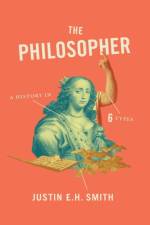
How the role of the philosopher has changed over time and across cultures-and what it reveals about philosophy todayWhat would the global history of philosophy look like if it were told not as a story of ideas but as a series of job descriptions-ones that might have been used to fill the position of philosopher at different times and places over the past 2,500 years? The Philosopher does just that, providing a new way of looking at the history of philosophy by bringing to life six kinds of figures who have occupied the role of philosopher in a wide range of societies around the world over the millennia-the Natural Philosopher, the Sage, the Gadfly, the Ascetic, the Mandarin, and the Courtier. The result is at once an unconventional introduction to the global history of philosophy and an original exploration of what philosophy has been-and perhaps could be again.By uncovering forgotten or neglected philosophical job descriptions, the book reveals that philosophy is a universal activity, much broader-and more gender inclusive-than we normally think today. In doing so, The Philosopher challenges us to reconsider our idea of what philosophers can do and what counts as philosophy.
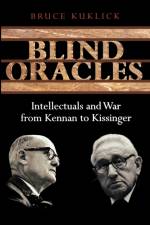
In this trenchant analysis, historian Bruce Kuklick examines the role of intellectuals in foreign policymaking. He recounts the history of the development of ideas about strategy and foreign policy during a critical period in American history: the era of the nuclear standoff between the United States and the Soviet Union. The book looks at how the country's foremost thinkers advanced their ideas during this time of United States expansionism, a period that culminated in the Vietnam War and detente with the Soviets. Beginning with George Kennan after World War II, and concluding with Henry Kissinger and the Vietnam War, Kuklick examines the role of both institutional policymakers such as those at The Rand Corporation and Harvard's Kennedy School, and individual thinkers including Paul Nitze, McGeorge Bundy, and Walt Rostow. Kuklick contends that the figures having the most influence on American strategy--Kissinger, for example--clearly understood the way politics and the exercise of power affects policymaking. Other brilliant thinkers, on the other hand, often played a minor role, providing, at best, a rationale for policies adopted for political reasons. At a time when the role of the neoconservatives' influence over American foreign policy is a subject of intense debate, this book offers important insight into the function of intellectuals in foreign policymaking.
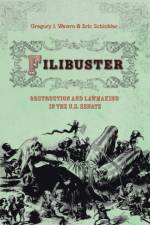
Parliamentary obstruction, popularly known as the "e;filibuster,"e; has been a defining feature of the U.S. Senate throughout its history. In this book, Gregory J. Wawro and Eric Schickler explain how the Senate managed to satisfy its lawmaking role during the nineteenth and early twentieth century, when it lacked seemingly essential formal rules for governing debate. What prevented the Senate from self-destructing during this time? The authors argue that in a system where filibusters played out as wars of attrition, the threat of rule changes prevented the institution from devolving into parliamentary chaos. They show that institutional patterns of behavior induced by inherited rules did not render Senate rules immune from fundamental changes. The authors' theoretical arguments are supported through a combination of extensive quantitative and case-study analysis, which spans a broad swath of history. They consider how changes in the larger institutional and political context--such as the expansion of the country and the move to direct election of senators--led to changes in the Senate regarding debate rules. They further investigate the impact these changes had on the functioning of the Senate. The book concludes with a discussion relating battles over obstruction in the Senate's past to recent conflicts over judicial nominations.
Memory is perhaps the most extraordinary phenomenon in the natural world. Every person's brain holds millions of bits of information in long-term storage. This vast memory store includes our extensive vocabulary and knowledge of language; the tremendous and unique variety of facts we've amassed; all the skills we've learned, from walking and talking to musical and athletic performance; many of the emotions we feel; and the continuous sensations, feelings, and understandings of the world we term consciousness. Without memory there can be no mind as we understand it. Focusing on cutting-edge research in behavioral science and neuroscience, Memory is a primer of our current scientific understanding of the mechanics of memory and learning. Over the past two decades, memory research has accelerated and we have seen an explosion of new knowledge about the brain. For example, there now exists a wide-ranging and successful applied science devoted exclusively to the study of memory that has yielded better procedures for eliciting valid recollections in legal settings and improved the diagnosis and treatment of memory disorders. Everyone fascinated by the scope and power of the human brain will find this book unforgettable.
A deeply personal look at death, mourning, and the afterlife in Jewish traditionAfter One-Hundred-and-Twenty provides a richly nuanced and deeply personal look at Jewish attitudes and practices regarding death, mourning, and the afterlife as they have existed and evolved from biblical times to today. Taking its title from the Hebrew and Yiddish blessing to live to a ripe old age-Moses is said to have been 120 years old when he died-the book explores how the Bible's original reticence about an afterlife gave way to views about personal judgment and reward after death, the resurrection of the body, and even reincarnation. It examines Talmudic perspectives on grief, burial, and the afterlife, shows how Jewish approaches to death changed in the Middle Ages with thinkers like Maimonides and in the mystical writings of the Zohar, and delves into such things as the origins of the custom of reciting Kaddish for the deceased and beliefs about encountering the dead in visions and dreams.After One-Hundred-and-Twenty is also Hillel Halkin's eloquent and disarmingly candid reflection on his own mortality, the deaths of those he has known and loved, and the comfort he has and has not derived from Jewish tradition.
A definitive new edition of one of the greatest philosophical poems in the English languageVoltaire called it "e;the most sublime didactic poem ever written in any language."e; Rousseau rhapsodized about its intellectual consolations. Kant recited long passages of it from memory during his lectures. And Adam Smith and David Hume drew inspiration from it in their writings. This was Alexander Pope's Essay on Man (1733-34), a masterpiece of philosophical poetry, one of the most important and controversial works of the Enlightenment, and one of the most widely read, imitated, and discussed poems of eighteenth-century Europe and America. This volume, which presents the first major new edition of the poem in more than fifty years, introduces this essential work to a new generation of readers, recapturing the excitement and illuminating the debates it provoked from the moment of its publication.Echoing Milton's purpose in Paradise Lost, Pope says his aim in An Essay on Man is to "e;vindicate the ways of God to man"e;-to explain the existence of evil and explore man's place in the universe. In a comprehensive introduction, Tom Jones describes the poem as an investigation of the fundamental question of how people should behave in a world they experience as chaotic, but which they suspect to be orderly from some higher point of view. The introduction provides a thorough discussion of the poem's attitudes, themes, composition, context, and reception, and reassesses the work's place in history. Extensive annotations to the text explain references and allusions.The result is the most accessible, informative, and reader-friendly edition of the poem in decades and an invaluable book for students and scholars of eighteenth-century literature and thought.
Why are countries often able to communicate critical information using diplomacy? Why do countries typically use diplomacy honestly, despite incentives to bluff? Why are they often able to deter attacks using merely verbal threats? International relations theory is largely pessimistic about the prospects for effective diplomacy, yet leaders nevertheless expend much time and energy trying to resolve conflicts through verbal negotiations and public statements. Deterrence by Diplomacy challenges standard understandings of deterrence by analyzing it as a form of talk and reaches conclusions about the effectiveness of diplomacy that are much more optimistic. Anne Sartori argues that diplomacy works precisely because it is so valuable. States take pains to use diplomacy honestly most of the time because doing so allows them to maintain reputations for honesty, which in turn enhance their ability to resolve future disputes using diplomacy rather than force. So, to maintain the effectiveness of their diplomacy, states sometimes acquiesce to others' demands when they might have been able to attain their goals through bluffs. Sartori theorizes that countries obtain a "e;trade"e; of issues over time; they get their way more often when they deem the issues more important, and concede more often when they deem the issues less important. Departing from traditional theory, this book shows that rather than always fighting over small issues to show resolve, states can make their threats more credible by sometimes honestly acquiescing over lesser issues--by not crying "e;wolf."e;
The first major biography of the 1972 U.S. presidential candidate and unsung champion of American liberalismThe Rise of a Prairie Statesman is the first volume of a major biography of the 1972 Democratic presidential candidate who became America's most eloquent and prescient critic of the Vietnam War. In this masterful book, Thomas Knock traces George McGovern's life from his rustic boyhood in a South Dakota prairie town during the Depression to his rise to the pinnacle of politics at the 1968 Democratic National Convention in Chicago where police and antiwar demonstrators clashed in the city's streets.Drawing extensively on McGovern's private papers and scores of in-depth interviews, Knock shows how McGovern's importance to the Democratic Party and American liberalism extended far beyond his 1972 presidential campaign, and how the story of postwar American politics is about more than just the rise of the New Right. He vividly describes McGovern's harrowing missions over Nazi Germany as a B-24 bomber pilot, and reveals how McGovern's combat experiences motivated him to earn a PhD in history and stoked his ambition to run for Congress. When President Kennedy appointed him director of Food for Peace in 1961, McGovern engineered a vast expansion of the program's school lunch initiative that soon was feeding tens of millions of hungry children around the world. As a senator, he delivered his courageous and unrelenting critique of Lyndon Johnson's escalation in Vietnam-a conflict that brought their party to disaster and caused a new generation of Democrats to turn to McGovern for leadership.A stunning achievement, The Rise of a Prairie Statesman ends in 1968, in the wake of the assassinations of Martin Luther King and Robert Kennedy, when the "e;Draft McGovern"e; movement thrust him into the national spotlight and the contest for the presidential nomination, culminating in his triumphal reelection to the Senate and his emergence as one of the most likely prospects for the Democratic nomination in 1972..
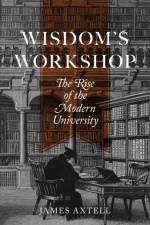
An essential history of the modern research universityWhen universities began in the Middle Ages, Pope Gregory IX described them as "e;wisdom's special workshop."e; He could not have foreseen how far these institutions would travel and develop. Tracing the eight-hundred-year evolution of the elite research university from its roots in medieval Europe to its remarkable incarnation today, Wisdom's Workshop places this durable institution in sweeping historical perspective. In particular, James Axtell focuses on the ways that the best American universities took on Continental influences, developing into the finest expressions of the modern university and enviable models for kindred institutions worldwide. Despite hand-wringing reports to the contrary, the venerable university continues to renew itself, becoming ever more indispensable to society in the United States and beyond.Born in Europe, the university did not mature in America until the late nineteenth century. Once its heirs proliferated from coast to coast, their national role expanded greatly during World War II and the Cold War. Axtell links the legacies of European universities and Tudor-Stuart Oxbridge to nine colonial and hundreds of pre-Civil War colleges, and delves into how U.S. universities were shaped by Americans who studied in German universities and adapted their discoveries to domestic conditions and goals. The graduate school, the PhD, and the research imperative became and remain the hallmarks of the American university system and higher education institutions around the globe.A rich exploration of the historical lineage of today's research universities, Wisdom's Workshop explains the reasons for their ascendancy in America and their continued international preeminence.
How American childhood and parenting have changed from the nation's founding to the presentThe End of American Childhood takes a sweeping look at the history of American childhood and parenting, from the nation's founding to the present day. Renowned historian Paula Fass shows how, since the beginning of the American republic, independence, self-definition, and individual success have informed Americans' attitudes toward children. But as parents today hover over every detail of their children's lives, are the qualities that once made American childhood special still desired or possible? Placing the experiences of children and parents against the backdrop of social, political, and cultural shifts, Fass challenges Americans to reconnect with the beliefs that set the American understanding of childhood apart from the rest of the world.Fass examines how freer relationships between American children and parents transformed the national culture, altered generational relationships among immigrants, helped create a new science of child development, and promoted a revolution in modern schooling. She looks at the childhoods of icons including Margaret Mead and Ulysses S. Grant-who, as an eleven-year-old, was in charge of his father's fields and explored his rural Ohio countryside. Fass also features less well-known children like ten-year-old Rose Cohen, who worked in the drudgery of nineteenth-century factories. Bringing readers into the present, Fass argues that current American conditions and policies have made adolescence socially irrelevant and altered children's road to maturity, while parental oversight threatens children's competence and initiative.Showing how American parenting has been firmly linked to historical changes, The End of American Childhood considers what implications this might hold for the nation's future.
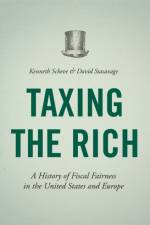
A groundbreaking history of why governments do-and don't-tax the richIn today's social climate of acknowledged and growing inequality, why are there not greater efforts to tax the rich? In this wide-ranging and provocative book, Kenneth Scheve and David Stasavage ask when and why countries tax their wealthiest citizens-and their answers may surprise you.Taxing the Rich draws on unparalleled evidence from twenty countries over the last two centuries to provide the broadest and most in-depth history of progressive taxation available. Scheve and Stasavage explore the intellectual and political debates surrounding the taxation of the wealthy while also providing the most detailed examination to date of when taxes have been levied against the rich and when they haven't. Fairness in debates about taxing the rich has depended on different views of what it means to treat people as equals and whether taxing the rich advances or undermines this norm. Scheve and Stasavage argue that governments don't tax the rich just because inequality is high or rising-they do it when people believe that such taxes compensate for the state unfairly privileging the wealthy. Progressive taxation saw its heyday in the twentieth century, when compensatory arguments for taxing the rich focused on unequal sacrifice in mass warfare. Today, as technology gives rise to wars of more limited mobilization, such arguments are no longer persuasive.Taxing the Rich shows how the future of tax reform will depend on whether political and economic conditions allow for new compensatory arguments to be made.
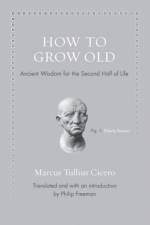
Timeless wisdom on growing old gracefully from one of ancient Rome's greatest philosophersWorried that old age will inevitably mean losing your libido, your health, and possibly your marbles too? Well, Cicero has some good news for you. In How to Grow Old, the great Roman orator and statesman eloquently describes how you can make the second half of life the best part of all-and why you might discover that reading and gardening are actually far more pleasurable than sex ever was.Filled with timeless wisdom and practical guidance, Cicero's brief, charming classic-written in 44 BC and originally titled On Old Age-has delighted and inspired readers, from Saint Augustine to Thomas Jefferson, for more than two thousand years. Presented here in a lively new translation with an informative new introduction and the original Latin on facing pages, the book directly addresses the greatest fears of growing older and persuasively argues why these worries are greatly exaggerated-or altogether mistaken.Montaigne said Cicero's book "e;gives one an appetite for growing old."e; The American founding father John Adams read it repeatedly in his later years. And today its lessons are more relevant than ever in a world obsessed with the futile pursuit of youth.
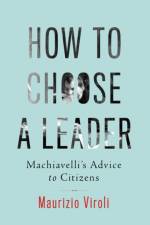
Twenty essential tips for picking great leaders from the father of modern politicsOne of the greatest political advisers of all time, Niccolo Machiavelli thought long and hard about how citizens could identify great leaders-ones capable of defending and enhancing the liberty, honor, and prosperity of their countries. Drawing on the full range of the Florentine's writings, acclaimed Machiavelli biographer Maurizio Viroli gathers and interprets Machiavelli's timeless wisdom about choosing leaders. The brief and engaging result is a new kind of Prince-one addressed to citizens rather than rulers and designed to make you a better voter.Demolishing popular misconceptions that Machiavelli is a cynical realist, the book shows that he believes republics can't survive, let alone thrive, without leaders who are virtuous as well as effective. Among much other valuable advice, Machiavelli says that voters should pick leaders who put the common good above narrower interests and who make fighting corruption a priority, and he explains why the best way to recognize true leaders is to carefully examine their past actions and words. On display throughout are the special insights that Machiavelli gained from long, direct knowledge of real political life, the study of history, and reflection on the political thinkers of antiquity.Recognizing the difference between great and mediocre political leaders is difficult but not at all impossible-with Machiavelli's help. So do your country a favor. Read this book, then vote like Machiavelli would.
Abonner på vårt nyhetsbrev og få rabatter og inspirasjon til din neste leseopplevelse.
Ved å abonnere godtar du vår personvernerklæring.