



















Gjør som tusenvis av andre bokelskere
Abonner på vårt nyhetsbrev og få rabatter og inspirasjon til din neste leseopplevelse.
Ved å abonnere godtar du vår personvernerklæring.Du kan når som helst melde deg av våre nyhetsbrev.

In this classic of statistical mathematical theory, Harald Cramer joins the two major lines of development in the field: while British and American statisticians were developing the science of statistical inference, French and Russian probabilitists transformed the classical calculus of probability into a rigorous and pure mathematical theory. The result of Cramer's work is a masterly exposition of the mathematical methods of modern statistics that set the standard that others have since sought to follow. For anyone with a working knowledge of undergraduate mathematics the book is self contained. The first part is an introduction to the fundamental concept of a distribution and of integration with respect to a distribution. The second part contains the general theory of random variables and probability distributions while the third is devoted to the theory of sampling, statistical estimation, and tests of significance.
Nearly a century after it was first published in 1925, Medieval Cities remains one of the most provocative works of medieval history ever written. Here, Henri Pirenne argues that it was not the invasion of the Germanic tribes that destroyed the civilization of antiquity, but rather the closing of Mediterranean trade by Arab conquest in the seventh century. The consequent interruption of long-distance commerce accelerated the decline of the ancient cities of Europe. Pirenne challenges conventional wisdom by attributing the origins of medieval cities to the revival of trade, tracing their growth from the tenth century to the twelfth. He also describes the important role the middle class played in the development of the modern economic system and modern culture.Featuring a new introduction by Michael McCormick, this Princeton Classics edition of Medieval Cities is essential reading for all students of medieval European history.
Once America's "e;arsenal of democracy,"e; Detroit is now the symbol of the American urban crisis. In this reappraisal of America's racial and economic inequalities, Thomas Sugrue asks why Detroit and other industrial cities have become the sites of persistent racialized poverty. He challenges the conventional wisdom that urban decline is the product of the social programs and racial fissures of the 1960s. Weaving together the history of workplaces, unions, civil rights groups, political organizations, and real estate agencies, Sugrue finds the roots of today's urban poverty in a hidden history of racial violence, discrimination, and deindustrialization that reshaped the American urban landscape after World War II.This Princeton Classics edition includes a new preface by Sugrue, discussing the lasting impact of the postwar transformation on urban America and the chronic issues leading to Detroit's bankruptcy.
When this book was written, methods of algebraic topology had caused revolutions in the world of pure algebra. To clarify the advances that had been made, Cartan and Eilenberg tried to unify the fields and to construct the framework of a fully fledged theory. The invasion of algebra had occurred on three fronts through the construction of cohomology theories for groups, Lie algebras, and associative algebras. This book presents a single homology (and also cohomology) theory that embodies all three; a large number of results is thus established in a general framework. Subsequently, each of the three theories is singled out by a suitable specialization, and its specific properties are studied. The starting point is the notion of a module over a ring. The primary operations are the tensor product of two modules and the groups of all homomorphisms of one module into another. From these, "e;higher order"e; derived of operations are obtained, which enjoy all the properties usually attributed to homology theories. This leads in a natural way to the study of "e;functors"e; and of their "e;derived functors."e; This mathematical masterpiece will appeal to all mathematicians working in algebraic topology.
Why do some leaders and segments of the public display remarkable persistence in confrontations in international politics, while others cut and run? The answer given by policymakers, pundits, and political scientists usually relates to issues of resolve. Yet, though we rely on resolve to explain almost every phenomenon in international politics-from prevailing at the bargaining table to winning on the battlefield-we don't understand what it is, how it works, or where it comes from. Resolve in International Politics draws on a growing body of research in psychology and behavioral economics to explore the foundations of this important idea.Joshua Kertzer argues that political will is more than just a metaphor or figure of speech: the same traits social scientists and decision-making scholars use to comprehend willpower in our daily lives also shape how we respond to the costs of war and conflict. Combining laboratory and survey experiments with studies of great power military interventions in the postwar era from 1946 to 2003, Kertzer shows how time and risk preferences, honor orientation, and self-control help explain the ways leaders and members of the public define the situations they face and weigh the trade-offs between the costs of fighting and the costs of backing down.Offering a novel in-depth look at how willpower functions in international relations, Resolve in International Politics has critical implications for understanding political psychology, public opinion about foreign policy, leaders in military interventions, and international security.
Since German reunification in 1990, there has been widespread concern about marginalized young people who, faced with bleak prospects for their future, have embraced increasingly violent forms of racist nationalism that glorify the country's Nazi past. The Management of Hate, Nitzan Shoshan's riveting account of the year and a half he spent with these young right-wing extremists in East Berlin, reveals how they contest contemporary notions of national identity and defy the cliches that others use to represent them.Shoshan situates them within what he calls the governance of affect, a broad body of discourses and practices aimed at orchestrating their attitudes toward cultural difference-from legal codes and penal norms to rehabilitative techniques and pedagogical strategies. Governance has conventionally been viewed as rational administration, while emotions have ordinarily been conceived of as individual states. Shoshan, however, convincingly questions both assumptions. Instead, he offers a fresh view of governance as pregnant with affect and of hate as publicly mediated and politically administered. Shoshan argues that the state's policies push these youths into a right-extremist corner instead of integrating them in ways that could curb their nationalist racism. His point is certain to resonate across European and non-European contexts where, amid robust xenophobic nationalisms, hate becomes precisely the object of public dispute.Powerful and compelling, The Management of Hate provides a rare and disturbing look inside Germany's right-wing extremist world, and shines critical light on a German nationhood haunted by its own historical contradictions.
Although congressional investigations have provided some of the most dramatic moments in American political history, they have often been dismissed as mere political theater. But these investigations are far more than grandstanding. Investigating the President shows that congressional investigations are a powerful tool for members of Congress to counter presidential aggrandizement. By shining a light on alleged executive wrongdoing, investigations can exert significant pressure on the president and materially affect policy outcomes.Douglas Kriner and Eric Schickler construct the most comprehensive overview of congressional investigative oversight to date, analyzing nearly thirteen thousand days of hearings, spanning more than a century, from 1898 through 2014. The authors examine the forces driving investigative power over time and across chambers, identify how hearings might influence the president's strategic calculations through the erosion of the president's public approval rating, and uncover the pathways through which investigations have shaped public policy. Put simply, by bringing significant political pressure to bear on the president, investigations often afford Congress a blunt, but effective check on presidential power-without the need to worry about veto threats or other hurdles such as Senate filibusters.In an era of intense partisan polarization and institutional dysfunction, Investigating the President delves into the dynamics of congressional investigations and how Congress leverages this tool to counterbalance presidential power.
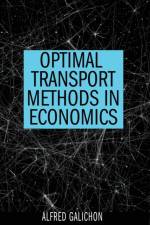
Optimal Transport Methods in Economics is the first textbook on the subject written especially for students and researchers in economics. Optimal transport theory is used widely to solve problems in mathematics and some areas of the sciences, but it can also be used to understand a range of problems in applied economics, such as the matching between job seekers and jobs, the determinants of real estate prices, and the formation of matrimonial unions. This is the first text to develop clear applications of optimal transport to economic modeling, statistics, and econometrics. It covers the basic results of the theory as well as their relations to linear programming, network flow problems, convex analysis, and computational geometry. Emphasizing computational methods, it also includes programming examples that provide details on implementation. Applications include discrete choice models, models of differential demand, and quantile-based statistical estimation methods, as well as asset pricing models.Authoritative and accessible, Optimal Transport Methods in Economics also features numerous exercises throughout that help you develop your mathematical agility, deepen your computational skills, and strengthen your economic intuition.The first introduction to the subject written especially for economistsIncludes programming examplesFeatures numerous exercises throughoutIdeal for students and researchers alike
How American Jesuits helped forge modern Catholicism around the worldAt the start of the nineteenth century, the Jesuits seemed fated for oblivion. Dissolved as a religious order in 1773 by one pope, they were restored in 1814 by another, but with only six hundred aged members. Yet a century later, the Jesuits numbered seventeen thousand men and were at the vanguard of the Catholic Church's expansion around the world. In the United States especially, foreign-born Jesuits built universities and schools, aided Catholic immigrants, and served as missionaries. This book traces this nineteenth-century resurgence, showing how Jesuits nurtured a Catholic modernity through a disciplined counterculture of parishes, schools, and associations.Drawing on archival materials from three continents, American Jesuits and the World tracks Jesuits who left Europe for America and Jesuits who left the United States for missionary ventures across the Pacific. Each chapter tells the story of a revealing or controversial event, including the tarring and feathering of an exiled Swiss Jesuit in Maine, the efforts of French Jesuits in Louisiana to obtain Vatican approval of a miraculous healing, and the educational efforts of American Jesuits in Manila. These stories place the Jesuits at the center of the worldwide clash between Catholics and liberal nationalists, and reveal how the Jesuits not only revived their own order but made modern Catholicism more global.The result is a major contribution to modern global history and an invaluable examination of the meaning of religious liberty in a pluralistic age.
Many continue to believe that the United States is a nation of political moderates. In fact, it is a nation divided. It has been so for some time and has grown more so. This book provides a new and historically grounded perspective on the polarization of America, systematically documenting how and why it happened.Polarized presents commonsense benchmarks to measure polarization, draws data from a wide range of historical sources, and carefully assesses the quality of the evidence. Through an innovative and insightful use of circumstantial evidence, it provides a much-needed reality check to claims about polarization. This rigorous yet engaging and accessible book examines how polarization displaced pluralism and how this affected American democracy and civil society.Polarized challenges the widely held belief that polarization is the product of party and media elites, revealing instead how the American public in the 1960s set in motion the increase of polarization. American politics became highly polarized from the bottom up, not the top down, and this began much earlier than often thought. The Democrats and the Republicans are now ideologically distant from each other and about equally distant from the political center. Polarized also explains why the parties are polarized at all, despite their battle for the decisive median voter. No subject is more central to understanding American politics than political polarization, and no other book offers a more in-depth and comprehensive analysis of the subject than this one.
How individuals and the government are changing life in China's polluted citiesOver the past thirty years, even as China's economy has grown by leaps and bounds, the environmental quality of its urban centers has precipitously declined due to heavy industrial output and coal consumption. The country is currently the world's largest greenhouse-gas emitter and several of the most polluted cities in the world are in China. Yet, millions of people continue moving to its cities seeking opportunities. Blue Skies over Beijing investigates the ways that China's urban development impacts local and global environmental challenges. Focusing on day-to-day choices made by the nation's citizens, families, and government, Matthew Kahn and Siqi Zheng examine how Chinese urbanites are increasingly demanding cleaner living conditions and consider where China might be headed in terms of sustainable urban growth.Kahn and Zheng delve into life in China's cities from the personal perspectives of the rich, middle class, and poor, and how they cope with the stresses of pollution. Urban parents in China have a strong desire to protect their children from environmental risk, and calls for a better quality of life from the rising middle class places pressure on government officials to support greener policies. Using the historical evolution of American cities as a comparison, the authors predict that as China's economy moves away from heavy manufacturing toward cleaner sectors, many of China's cities should experience environmental progress in upcoming decades.Looking at pressing economic and environmental issues in urban China, Blue Skies over Beijing shows that a cleaner China will mean more social stability for the nation and the world.
An inside look at the complex and controversial debates surrounding foie grasWho cares about foie gras? As it turns out, many do. In the last decade, this French delicacy-the fattened liver of ducks or geese that have been force-fed through a tube-has been at the center of contentious battles between animal rights activists, artisanal farmers, industry groups, politicians, chefs, and foodies. In Contested Tastes, Michaela DeSoucey takes us to farms, restaurants, protests, and political hearings in both the United States and France to reveal why people care so passionately about foie gras--and why we should care too.Bringing together fieldwork, interviews, and materials from archives and the media on both sides of the Atlantic, DeSoucey offers a compelling look at the moral arguments and provocative actions of pro- and anti-foie gras forces. She combines personal stories with fair-minded analysis of the social contexts within which foie gras is loved and loathed. From the barns of rural southwest France and the headquarters of the European Union in Brussels, to exclusive New York City kitchens and the government offices of Chicago, DeSoucey demonstrates that the debates over foie gras involve heated and controversial politics. Her rich and nuanced account draws our attention to the cultural dynamics of markets, the multivocal nature of "e;gastropolitics,"e; and the complexities of what it means to identify as a "e;moral"e; eater in today's food world.Investigating the causes and consequences of the foie gras wars, Contested Tastes illuminates the social significance of food and taste in the twenty-first century.
Graduate students in the natural sciences-including not only geophysics and space physics but also atmospheric and planetary physics, ocean sciences, and astronomy-need a broad-based mathematical toolbox to facilitate their research. In addition, they need to survey a wider array of mathematical methods that, while outside their particular areas of expertise, are important in related ones. While it is unrealistic to expect them to develop an encyclopedic knowledge of all the methods that are out there, they need to know how and where to obtain reliable and effective insights into these broader areas. Here at last is a graduate textbook that provides these students with the mathematical skills they need to succeed in today's highly interdisciplinary research environment.This authoritative and accessible book covers everything from the elements of vector and tensor analysis to ordinary differential equations, special functions, and chaos and fractals. Other topics include integral transforms, complex analysis, and inverse theory; partial differential equations of mathematical geophysics; probability, statistics, and computational methods; and much more.Proven in the classroom, Mathematical Methods for Geophysics and Space Physics features numerous exercises throughout as well as suggestions for further reading.Provides an authoritative and accessible introduction to the subjectCovers vector and tensor analysis, ordinary differential equations, integrals and approximations, Fourier transforms, diffusion and dispersion, sound waves and perturbation theory, randomness in data, and a host of other topicsFeatures numerous exercises throughoutIdeal for students and researchers alikeAn online illustration package is available to professors
Published originally in 1809-1810, The Friend was revised in 1812, by public demand. In 1818, a three-volume rifacimento appeared in which Coleridge attempted to dispel obscurity, tie up loose threads of reasoning, and provide more mature apercus. Now, in the Collected Works, The Friend has been re-edited to return to Coleridge's 1818 text. His emendations, cuts, and marginal comments noted in six copies of the work, as well as manuscript additions and deletions, have been included as footnotes. The editor's footnotes also elucidate sources and themes and provide translations of the many Latin and Greek passages. The entire periodical Friend is given as an appendix, with the 1812 revisions.Originally published in 1969.The Princeton Legacy Library uses the latest print-on-demand technology to again make available previously out-of-print books from the distinguished backlist of Princeton University Press. These editions preserve the original texts of these important books while presenting them in durable paperback and hardcover editions. The goal of the Princeton Legacy Library is to vastly increase access to the rich scholarly heritage found in the thousands of books published by Princeton University Press since its founding in 1905.
Since Einstein first described them nearly a century ago, gravitational waves have been the subject of more sustained controversy than perhaps any other phenomenon in physics. These as yet undetected fluctuations in the shape of space-time were first predicted by Einstein's general theory of relativity, but only now, at the dawn of the twenty-first century, are we on the brink of finally observing them. Daniel Kennefick's landmark book takes readers through the theoretical controversies and thorny debates that raged around the subject of gravitational waves after the publication of Einstein's theory. The previously untold story of how we arrived at a settled theory of gravitational waves includes a stellar cast from the front ranks of twentieth-century physics, including Richard Feynman, Hermann Bondi, John Wheeler, Kip Thorne, and Einstein himself, who on two occasions avowed that gravitational waves do not exist, changing his mind both times. The book derives its title from a famously skeptical comment made by Arthur Stanley Eddington in 1922--namely, that "e;gravitational waves propagate at the speed of thought."e; Kennefick uses the title metaphorically to contrast the individual brilliance of each of the physicists grappling with gravitational-wave theory against the frustratingly slow progression of the field as a whole. Accessibly written and impeccably researched, this book sheds new light on the trials and conflicts that have led to the extraordinary position in which we find ourselves today--poised to bring the story of gravitational waves full circle by directly confirming their existence for the very first time.
These two new collections, numbers 28 and 29 respectively in the Annals of Mathematics Studies, continue the high standard set by the earlier Annals Studies 20 and 24 by bringing together important contributions to the theories of games and of nonlinear differential equations.
The description for this book, Contributions to the Theory of Nonlinear Oscillations (AM-20), Volume I, will be forthcoming.
The description for this book, Elementary Differential Topology. (AM-54), Volume 54, will be forthcoming.
The description for this book, Composition Methods in Homotopy Groups of Spheres. (AM-49), Volume 49, will be forthcoming.
In the first two chapters of this book, the reader will find a complete and systematic exposition of the theory of hyperfunctions on totally real submanifolds of multidimensional complex space, in particular of hyperfunction theory in real space. The book provides precise definitions of the hypo-analytic wave-front set and of the Fourier-Bros-Iagolnitzer transform of a hyperfunction. These are used to prove a very general version of the famed Theorem of the Edge of the Wedge. The last two chapters define the hyperfunction solutions on a general (smooth) hypo-analytic manifold, of which particular examples are the real analytic manifolds and the embedded CR manifolds. The main results here are the invariance of the spaces of hyperfunction solutions and the transversal smoothness of every hyperfunction solution. From this follows the uniqueness of solutions in the Cauchy problem with initial data on a maximally real submanifold, and the fact that the support of any solution is the union of orbits of the structure.
In this monograph p-adic period domains are associated to arbitrary reductive groups. Using the concept of rigid-analytic period maps the relation of p-adic period domains to moduli space of p-divisible groups is investigated. In addition, non-archimedean uniformization theorems for general Shimura varieties are established. The exposition includes background material on Grothendieck's "e;mysterious functor"e; (Fontaine theory), on moduli problems of p-divisible groups, on rigid analytic spaces, and on the theory of Shimura varieties, as well as an exposition of some aspects of Drinfelds' original construction. In addition, the material is illustrated throughout the book with numerous examples.
The aim of this book is to study harmonic maps, minimal and parallel mean curvature immersions in the presence of symmetry. In several instances, the latter permits reduction of the original elliptic variational problem to the qualitative study of certain ordinary differential equations: the authors' primary objective is to provide representative examples to illustrate these reduction methods and their associated analysis with geometric and topological applications. The material covered by the book displays a solid interplay involving geometry, analysis and topology: in particular, it includes a basic presentation of 1-cohomogeneous equivariant differential geometry and of the theory of harmonic maps between spheres.
Research into the lives of animals in their natural environments has revealed a rich tapestry of complex social relationships and previously unsuspected social and mating systems. The evolution of this behavior is increasingly well understood. At the same time, laboratory scientists have made significant discoveries about how steroid and peptide hormones act on the nervous system to shape behavior. An exciting and rapidly progressing hybrid zone has developed in which these two fields are integrated, providing a fuller understanding of social behavior and the adaptive functions of hormones. This book is a guide to these fascinating connections between animal social behavior and steroid and peptide hormones--a synthesis designed to make it easier for graduate students and researchers to appreciate the excitement, engage in such integrative thinking, and understand the primary literature. Throughout, Elizabeth Adkins-Regan emphasizes concepts and principles, hypothesis testing, and critical thinking. She raises unanswered questions, providing an unparalleled source of ideas for future research. The chapter sequence is by levels of biological organization, beginning with the behavior and hormones of individuals, proceeding to social relationships and systems, and from there to development, behavioral evolution over relatively short time scales, life histories and their evolution, and finally evolution over longer time scales. The book features studies of a wide variety of wild and domestic vertebrates along with some of the most important invertebrate discoveries.
Addressing researchers and graduate students in the active meeting ground of analysis, geometry, and dynamics, this book presents a study of renormalization of quadratic polynomials and a rapid introduction to techniques in complex dynamics. Its central concern is the structure of an infinitely renormalizable quadratic polynomial f(z) = z2 + c. As discovered by Feigenbaum, such a mapping exhibits a repetition of form at infinitely many scales. Drawing on universal estimates in hyperbolic geometry, this work gives an analysis of the limiting forms that can occur and develops a rigidity criterion for the polynomial f. This criterion supports general conjectures about the behavior of rational maps and the structure of the Mandelbrot set. The course of the main argument entails many facets of modern complex dynamics. Included are foundational results in geometric function theory, quasiconformal mappings, and hyperbolic geometry. Most of the tools are discussed in the setting of general polynomials and rational maps.
How can we make better sense of animal behavior by using what we know about the brain? This is the first book that attempts to answer this important question by applying neural network theory. Scientists create Artificial Neural Networks (ANNs) to make models of the brain. These networks mimic the architecture of a nervous system by connecting elementary neuron-like units into networks in which they stimulate or inhibit each other's activity in much the same way neurons do. This book shows how scientists can employ ANNs to analyze animal behavior, explore the general principles of the nervous systems, and test potential generalizations among species. The authors focus on simple neural networks to show how ANNs can be investigated by math and by computers. They demonstrate intuitive concepts that make the operation of neural networks more accessible to nonspecialists. The first chapter introduces various approaches to animal behavior and provides an informal introduction to neural networks, their history, and their potential advantages. The second chapter reviews artificial neural networks, including biological foundations, techniques, and applications. The following three chapters apply neural networks to such topics as learning and development, classical instrumental condition, and the role of genes in building brain networks. The book concludes by comparing neural networks to other approaches. It will appeal to students of animal behavior in many disciplines. It will also interest neurobiologists, cognitive scientists, and those from other fields who wish to learn more about animal behavior.
Measured geodesic laminations are a natural generalization of simple closed curves in surfaces, and they play a decisive role in various developments in two-and three-dimensional topology, geometry, and dynamical systems. This book presents a self-contained and comprehensive treatment of the rich combinatorial structure of the space of measured geodesic laminations in a fixed surface. Families of measured geodesic laminations are described by specifying a train track in the surface, and the space of measured geodesic laminations is analyzed by studying properties of train tracks in the surface. The material is developed from first principles, the techniques employed are essentially combinatorial, and only a minimal background is required on the part of the reader. Specifically, familiarity with elementary differential topology and hyperbolic geometry is assumed. The first chapter treats the basic theory of train tracks as discovered by W. P. Thurston, including recurrence, transverse recurrence, and the explicit construction of a measured geodesic lamination from a measured train track. The subsequent chapters develop certain material from R. C. Penner's thesis, including a natural equivalence relation on measured train tracks and standard models for the equivalence classes (which are used to analyze the topology and geometry of the space of measured geodesic laminations), a duality between transverse and tangential structures on a train track, and the explicit computation of the action of the mapping class group on the space of measured geodesic laminations in the surface.
Nilpotence and Periodicity in Stable Homotopy Theory describes some major advances made in algebraic topology in recent years, centering on the nilpotence and periodicity theorems, which were conjectured by the author in 1977 and proved by Devinatz, Hopkins, and Smith in 1985. During the last ten years a number of significant advances have been made in homotopy theory, and this book fills a real need for an up-to-date text on that topic. Ravenel's first few chapters are written with a general mathematical audience in mind. They survey both the ideas that lead up to the theorems and their applications to homotopy theory. The book begins with some elementary concepts of homotopy theory that are needed to state the problem. This includes such notions as homotopy, homotopy equivalence, CW-complex, and suspension. Next the machinery of complex cobordism, Morava K-theory, and formal group laws in characteristic p are introduced. The latter portion of the book provides specialists with a coherent and rigorous account of the proofs. It includes hitherto unpublished material on the smash product and chromatic convergence theorems and on modular representations of the symmetric group.
This book describes an invariant, l, of oriented rational homology 3-spheres which is a generalization of work of Andrew Casson in the integer homology sphere case. Let R(X) denote the space of conjugacy classes of representations of p(X) into SU(2). Let (W,W,F) be a Heegaard splitting of a rational homology sphere M. Then l(M) is declared to be an appropriately defined intersection number of R(W) and R(W) inside R(F). The definition of this intersection number is a delicate task, as the spaces involved have singularities. A formula describing how l transforms under Dehn surgery is proved. The formula involves Alexander polynomials and Dedekind sums, and can be used to give a rather elementary proof of the existence of l. It is also shown that when M is a Z-homology sphere, l(M) determines the Rochlin invariant of M.
The arithmetic Riemann-Roch Theorem has been shown recently by Bismut-Gillet-Soul. The proof mixes algebra, arithmetic, and analysis. The purpose of this book is to give a concise introduction to the necessary techniques, and to present a simplified and extended version of the proof. It should enable mathematicians with a background in arithmetic algebraic geometry to understand some basic techniques in the rapidly evolving field of Arakelov-theory.
The purpose of this book is to develop the stable trace formula for unitary groups in three variables. The stable trace formula is then applied to obtain a classification of automorphic representations. This work represents the first case in which the stable trace formula has been worked out beyond the case of SL (2) and related groups. Many phenomena which will appear in the general case present themselves already for these unitary groups.
Abonner på vårt nyhetsbrev og få rabatter og inspirasjon til din neste leseopplevelse.
Ved å abonnere godtar du vår personvernerklæring.