


























Gjør som tusenvis av andre bokelskere
Abonner på vårt nyhetsbrev og få rabatter og inspirasjon til din neste leseopplevelse.
Ved å abonnere godtar du vår personvernerklæring.Du kan når som helst melde deg av våre nyhetsbrev.

Post-Petrarchism offers a theoretical study of lyric poetry through one of its most long-lived and widely practiced models: the lyric sequence, originated by Francis Petrarch in his Canzoniere of the late fourteenth century. A framework in which poems are suspended according to some organizing or unifying principle, the lyric sequence emerges from European humanist culture as a poetic discourse that represents personal experience and operates as a kind of fiction. Here Roland Greene proposes that since Petrarch the lyric sequence has survived in European and American literatures--from Shakespeare's Sonnets to The Waste Land to Trilce--as a complex in which formal, generic, and cultural designs intersect, and as an embodiment of lyric discourse at its most extensive, inclusive, and ambitious. Enabled by a theoretical introduction to the genre at large, the book treats the founding and elaboration of the vernacular sequence in six major texts by Petrarch, Philip Sidney, Edward Taylor, Walt Whitman, W. B. Yeats, Pablo Neruda, and Martin Adan. Throughout Greene shows how Petrarchism has evolved as lyric discourse through its exposure to such events as the Reformation and Puritanism, the settlement of the New World, and the various modernisms of Europe and the Americas.Originally published in 1991.The Princeton Legacy Library uses the latest print-on-demand technology to again make available previously out-of-print books from the distinguished backlist of Princeton University Press. These editions preserve the original texts of these important books while presenting them in durable paperback and hardcover editions. The goal of the Princeton Legacy Library is to vastly increase access to the rich scholarly heritage found in the thousands of books published by Princeton University Press since its founding in 1905.
Glauco Cambon asserts the independent significance of Michelangelo's poetry vis-a-vis his overwhelming contribution to the visual arts, while also investigating the formal and thematic relations of his writing to his sculpture and paintings.Originally published in 1986.The Princeton Legacy Library uses the latest print-on-demand technology to again make available previously out-of-print books from the distinguished backlist of Princeton University Press. These editions preserve the original texts of these important books while presenting them in durable paperback and hardcover editions. The goal of the Princeton Legacy Library is to vastly increase access to the rich scholarly heritage found in the thousands of books published by Princeton University Press since its founding in 1905.
Glauco Cambon draws on twenty-five years of commitment to Montale's poetry and prose for this extended critical analysis.Originally published in 1983.The Princeton Legacy Library uses the latest print-on-demand technology to again make available previously out-of-print books from the distinguished backlist of Princeton University Press. These editions preserve the original texts of these important books while presenting them in durable paperback and hardcover editions. The goal of the Princeton Legacy Library is to vastly increase access to the rich scholarly heritage found in the thousands of books published by Princeton University Press since its founding in 1905.
Contemporary with the Romantic generation, peer of Keats, Holderlin, and Goethe, and forerunner of Valery and Pound, Ugo Foscolo is nevertheless little known outside Italy. In an endeavor to "e;discover"e; this exemplary European poet for English-speaking readers, and to "e;rediscover"e; him for Italian readers, Glauco Cambon examines both textually and contextually Foscolo's major works and their inextricable connection with his life, his philosophy, and his aesthetic principles.Originally published in 1980.The Princeton Legacy Library uses the latest print-on-demand technology to again make available previously out-of-print books from the distinguished backlist of Princeton University Press. These editions preserve the original texts of these important books while presenting them in durable paperback and hardcover editions. The goal of the Princeton Legacy Library is to vastly increase access to the rich scholarly heritage found in the thousands of books published by Princeton University Press since its founding in 1905.
An exquisite visual celebration of the 2,500-year history of geometryIf you've ever thought that mathematics and art don't mix, this stunning visual history of geometry will change your mind. As much a work of art as a book about mathematics, Beautiful Geometry presents more than sixty exquisite color plates illustrating a wide range of geometric patterns and theorems, accompanied by brief accounts of the fascinating history and people behind each. With artwork by Swiss artist Eugen Jost and text by math historian Eli Maor, this unique celebration of geometry covers numerous subjects, from straightedge-and-compass constructions to intriguing configurations involving infinity. The result is a delightful and informative illustrated tour through the 2,500-year-old history of one of the most important branches of mathematics.
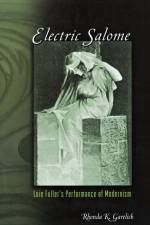
Loie Fuller was the most famous American in Europe throughout the late nineteenth and early twentieth centuries. Rising from a small-time vaudeville career in the States, she attained international celebrity as a dancer, inventor, impresario, and one of the first women filmmakers in the world. Fuller befriended royalty and inspired artists such as Mallarme, Toulouse-Lautrec, Rodin, Sarah Bernhardt, and Isadora Duncan. Today, though, she is remembered mainly as an untutored "e;pioneer"e; of modern dance and stage technology, the "e;electricity fairy"e; who created a sensation onstage whirling under colored spotlights. But in Rhonda Garelick's Electric Salome, Fuller finally receives her due as a major artist whose work helped lay a foundation for all modernist performance to come. The book demonstrates that Fuller was not a mere entertainer or precursor, but an artist of great psychological, emotional, and sexual expressiveness whose work illuminates the centrality of dance to modernism. Electric Salome places Fuller in the context of classical and modern ballet, Art Nouveau, Orientalism, surrealism, the birth of cinema, American modern dance, and European drama. It offers detailed close readings of texts and performances, situated within broader historical, cultural, and theoretical frameworks. Accessibly written, the book also recounts the human story of how an obscure, uneducated woman from the dustbowl of the American Midwest moved to Paris, became a star, and lived openly for decades as a lesbian.
Events in Russia since the late 1980s have created a rare opportunity to watch the birth of democratic institutions close at hand. Here Steven Smith and Thomas Remington provide the first intensive, theoretically grounded examination of the early development of the State Duma, the lower house of the Russian Federation's parliament created by the 1993 constitution. They offer an integrated account of the choices made by the newly elected members of the Duma in establishing basic operating arrangements: an agenda-setting governing body, a standing committee system, an electoral law, and a party system. Not only do these decisions promise to have lasting consequences for the post-communist Russian regime, but they also enable the authors to test assumptions about politicians' goals from the standpoint of institutional theory. Smith and Remington challenge in particular the notion, derived from American contexts, that politicians pursue a single, overarching goal in the creation of institutions. They argue that politicians have multiple political goals--career, policy, and partisan--that drive their choices. Among Duma members, the authors detect many cross currents of interests, generated by the mixed electoral system, which combines both single-member districts and proportional representation, and by sharp policy divisions and an emerging party system. Elected officials may shift from concentrating on one goal to emphasizing another, but political contexts can help determine their behavior. This book brings a fresh perspective to numerous theories by incorporating first-hand accounts of major institutional choices and placing developments in their actual context.
Contents: Poems and Verse Plays; Plays and Libretti; Hofmannsthal's Debt to the English-speaking WorldOriginally published in 1973.The Princeton Legacy Library uses the latest print-on-demand technology to again make available previously out-of-print books from the distinguished backlist of Princeton University Press. These editions preserve the original texts of these important books while presenting them in durable paperback and hardcover editions. The goal of the Princeton Legacy Library is to vastly increase access to the rich scholarly heritage found in the thousands of books published by Princeton University Press since its founding in 1905.
Contents: I. Eidos. II. Demon and Eros. III. Beyond Being. IV. The Academy. V. The Written Work. VI. Socrates in Plato. VII. Irony. VIII. Dialogue. IX. Myth. X. Intuition and Construction. XI. Alethcia. XII. Dialogue and Existence. XIII. Plato's Letters. XIV. Plato as Physicist. XV. Plato as Geographer. XVI. Plato as Jurist. XVII. Plato as City Planner. XVIII. Socrates Enters Rome. Index.Originally published in 1970.The Princeton Legacy Library uses the latest print-on-demand technology to again make available previously out-of-print books from the distinguished backlist of Princeton University Press. These editions preserve the original texts of these important books while presenting them in durable paperback and hardcover editions. The goal of the Princeton Legacy Library is to vastly increase access to the rich scholarly heritage found in the thousands of books published by Princeton University Press since its founding in 1905.
Contents: I. "e;Crises of Political Development,"e; Leonard Binder. II. "e;The Development Syndrome: Differentiation- Equality-Capacity,"e; James S. Colcman. III. "e;Identity and the Political Culture,"e; Lucian W. Pye. IV. "e;The Legitimacy Crisis,"e; Lucian W. Pye. V. "e;Political Participation: Crisis of the Political Process,"e; Myron Weiner. VI. "e;Penetration: A Crisis of Governmental Capacity,"e; Joseph LaPalombara. VII. "e;Distribution: A Crisis of Resource Management,"e; Joseph LaPalombara. VIII. "e;Sequences and Development,"e; Sidney Verba. Index.Originally published in 1971.The Princeton Legacy Library uses the latest print-on-demand technology to again make available previously out-of-print books from the distinguished backlist of Princeton University Press. These editions preserve the original texts of these important books while presenting them in durable paperback and hardcover editions. The goal of the Princeton Legacy Library is to vastly increase access to the rich scholarly heritage found in the thousands of books published by Princeton University Press since its founding in 1905.
Ben Belitt writes, "e;This volume-my fifth-extends and deepens a preoccupation I have had with the visible and invisible manifestations of people, places, and things. It offers a variety of poems of formal and textural density and, in addition, a system of 'doublings' and 'solitudes' whose oppositions express the drama of reality and appearance."e;Originally published in 1978.The Princeton Legacy Library uses the latest print-on-demand technology to again make available previously out-of-print books from the distinguished backlist of Princeton University Press. These editions preserve the original texts of these important books while presenting them in durable paperback and hardcover editions. The goal of the Princeton Legacy Library is to vastly increase access to the rich scholarly heritage found in the thousands of books published by Princeton University Press since its founding in 1905.
Art as we know it is dramatically changing, but popular and critical responses lag behind. In this trenchant illustrated essay, David Joselit describes how art and architecture are being transformed in the age of Google. Under the dual pressures of digital technology, which allows images to be reformatted and disseminated effortlessly, and the exponential acceleration of cultural exchange enabled by globalization, artists and architects are emphasizing networks as never before. Some of the most interesting contemporary work in both fields is now based on visualizing patterns of dissemination after objects and structures are produced, and after they enter into, and even establish, diverse networks. Behaving like human search engines, artists and architects sort, capture, and reformat existing content. Works of art crystallize out of populations of images, and buildings emerge out of the dynamics of the circulation patterns they will house. Examining the work of architectural firms such as OMA, Reiser + Umemoto, and Foreign Office, as well as the art of Matthew Barney, Ai Weiwei, Sherrie Levine, and many others, After Art provides a compelling and original theory of art and architecture in the age of global networks.
Prefaces was the last of four books by Soren Kierkegaard to appear within two weeks in June 1844. Three Upbuilding Discourses and Philosophical Fragments were published first, followed by The Concept of Anxiety and its companion--published on the same day--the comically ironic Prefaces. Presented as a set of prefaces without a book to follow, this work is a satire on literary life in nineteenth-century Copenhagen, a lampoon of Danish Hegelianism, and a prefiguring of Kierkegaard's final collision with Danish Christendom. Shortly after publishing Prefaces, Kierkegaard began to prepare Writing Sampler as a sequel. Writing Sampler considers the same themes taken up in Prefaces but in yet a more ironical and satirical vein. Although Writing Sampler remained unpublished during his lifetime, it is presented here as Kierkegaard originally envisioned it, in the company of Prefaces.
Innumerable studies have appeared in recent decades about practically every aspect of women's lives in Western societies. The few such works on Buddhism have been quite limited in scope. In The Power of Denial, Bernard Faure takes an important step toward redressing this situation by boldly asking: does Buddhism offer women liberation or limitation? Continuing the innovative exploration of sexuality in Buddhism he began in The Red Thread, here he moves from his earlier focus on male monastic sexuality to Buddhist conceptions of women and constructions of gender. Faure argues that Buddhism is neither as sexist nor as egalitarian as is usually thought. Above all, he asserts, the study of Buddhism through the gender lens leads us to question what we uncritically call Buddhism, in the singular. Faure challenges the conventional view that the history of women in Buddhism is a linear narrative of progress from oppression to liberation. Examining Buddhist discourse on gender in traditions such as that of Japan, he shows that patriarchy--indeed, misogyny--has long been central to Buddhism. But women were not always silent, passive victims. Faure points to the central role not only of nuns and mothers (and wives) of monks but of female mediums and courtesans, whose colorful relations with Buddhist monks he considers in particular. Ultimately, Faure concludes that while Buddhism is, in practice, relentlessly misogynist, as far as misogynist discourses go it is one of the most flexible and open to contradiction. And, he suggests, unyielding in-depth examination can help revitalize Buddhism's deeper, more ancient egalitarianism and thus subvert its existing gender hierarchy. This groundbreaking book offers a fresh, comprehensive understanding of what Buddhism has to say about gender, and of what this really says about Buddhism, singular or plural.
Is there a Buddhist discourse on sex? In this innovative study, Bernard Faure reveals Buddhism's paradoxical attitudes toward sexuality. His remarkably broad range covers the entire geography of this religion, and its long evolution from the time of its founder, Xvkyamuni, to the premodern age. The author's anthropological approach uncovers the inherent discrepancies between the normative teachings of Buddhism and what its followers practice. Framing his discussion on some of the most prominent Western thinkers of sexuality--Georges Bataille and Michel Foucault--Faure draws from different reservoirs of writings, such as the orthodox and heterodox "e;doctrines"e; of Buddhism, and its monastic codes. Virtually untapped mythological as well as legal sources are also used. The dialectics inherent in Mahvyvna Buddhism, in particular in the Tantric and Chan/Zen traditions, seemed to allow for greater laxity and even encouraged breaking of taboos. Faure also offers a history of Buddhist monastic life, which has been buffeted by anticlerical attitudes, and by attempts to regulate sexual behavior from both within and beyond the monastery. In two chapters devoted to Buddhist homosexuality, he examines the way in which this sexual behavior was simultaneously condemned and idealized in medieval Japan. This book will appeal especially to those interested in the cultural history of Buddhism and in premodern Japanese culture. But the story of how one of the world's oldest religions has faced one of life's greatest problems makes fascinating reading for all.
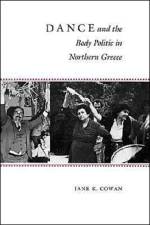
Valued for their sensual and social intensity, Greek dance-events are often also problematical for participants, giving rise to struggles over position, prestige, and reputation. Here Jane Cowan explores how the politics of gender is articulated through the body at these culturally central, yet until now ethnographically neglected, celebrations in a class-divided northern Greek town. Portraying the dance-event as both a highly structured and dynamic social arena, she approaches the human body not only as a sign to be deciphered but as a site of experience and an agent of practice. In describing the multiple ideologies of person, gender, and community that townspeople embody and explore as they dance, Cowan presents three different settings: the traditional wedding procession, the "e;Europeanized"e; formal evening dance of local civic associations, and the private party. She examines the practices of eating, drinking, talking, gifting, and dancing, and the verbal discourse through which celebrants make sense of each other's actions. Paying particular attention to points of tension and moments of misunderstanding, she analyzes in what ways these social situations pose different problems for men and women.
By developing the scale that bears his name, Charles Richter not only invented the concept of magnitude as a measure of earthquake size, he turned himself into nothing less than a household word. He remains the only seismologist whose name anyone outside of narrow scientific circles would likely recognize. Yet few understand the Richter scale itself, and even fewer have ever understood the man. Drawing on the wealth of papers Richter left behind, as well as dozens of interviews with his family and colleagues, Susan Hough takes the reader deep into Richter's complex life story, setting it in the context of his family and interpersonal attachments, his academic career, and the history of seismology. Among his colleagues Richter was known as intensely private, passionately interested in earthquakes, and iconoclastic. He was an avid nudist, seismologists tell each other with a grin; he dabbled in poetry. He was a publicity hound, some suggest, and more famous than he deserved to be. But even his closest associates were unaware that he struggled to reconcile an intense and abiding need for artistic expression with his scientific interests, or that his apparently strained relationship with his wife was more unconventional but also stronger than they knew. Moreover, they never realized that his well-known foibles might even have been the consequence of a profound neurological disorder. In this biography, Susan Hough artfully interweaves the stories of Richter's life with the history of earthquake exploration and seismology. In doing so, she illuminates the world of earth science for the lay reader, much as Sylvia Nasar brought the world of mathematics alive in A Beautiful Mind.
In a Different Place offers a richly textured account of a modern pilgrimage, combining ethnographic detail, theory, and personal reflection. Visited by thousands of pilgrims yearly, the Church of the Madonna of the Annunciation on the Aegean island of Tinos is a site where different interests--sacred and secular, local and national, personal and official--all come together. Exploring the shrine and its surrounding town, Jill Dubisch shares her insights into the intersection of social, religious, and political life in Greece. Along the way she develops the idea of pilgrimage-journeying away from home in search of the miraculous--as a metaphor for anthropological fieldwork. This highly readable work offers us the opportunity to share one anthropologist's personal and professional journey and to see in a "e;different place"e; the inadequacy of such conventional anthropological categories as theory versus data, rationality versus emotion, and the observer versus the observed. Dubisch examines in detail the process of pilgrimage itself, its relationship to Orthodox belief and practice, the motivations and behavior of pilgrims, the relationship between religion and Greek national identity, and the gendered nature of religious roles. Seeking to evoke rather than simply describe, her book presents readers with a sense of the emotion, color, and power of pilgrimage at this Greek island shrine.
Greek film director Theo Angelopoulos is one of the most influential and widely respected filmmakers in the world today, yet his films are still largely unknown to the American public. In the first book in English to focus on Angelopoulos's unique cinematic vision, Andrew Horton provides an illuminating contextual study that attempts to demonstrate the quintessentially Greek nature of the director's work. Horton situates the director in the context of over 3,000 years of Greek culture and history. Somewhat like Andrei Tarkovsky in Russia or Antonioni in Italy, Angelopoulos has used cinema to explore the history and individual identities of his culture. With such far-reaching influences as Greek myth, ancient tragedy and epic, Byzantine iconography and ceremony, Greek and Balkan history, modern Greek pop culture including bouzouki music, shadow puppet theater, and the Greek music hall tradition, Angelopoulos emerges as an original "e;thinker"e; with the camera, and a distinctive director who is bound to make a lasting contribution to the art form. In a series of films including The Travelling Players, Voyage to Cythera, Landscape in the Mist, The Suspended Step of the Stork, and most recently in Ulysses' Gaze starring Harvey Keitel (winner of the 1995 Cannes Film Festival Grand Prix), Angelopoulos has developed a remarkable cinematic style, characterized by carefully composed scenes and an enormous number of extended long shots. In an age of ever decreasing attention spans, Angelopoulos offers a cinema of contemplation.
Maps and borders notwithstanding, some places are best described as "e;gaps"e;--places with repeatedly contested boundaries that are wedged in between other places that have clear boundaries. This book explores an iconic example of this in the contemporary Western imagination: the Balkans. Drawing on richly detailed ethnographic research around the Greek-Albanian border, Sarah Green focuses her groundbreaking analysis on the ambiguities of never quite resolving where or what places are. One consequence for some Greek peoples in this border area is a seeming lack of distinction--but in a distinctly "e;Balkan"e; way. In gaps (which are never empty), marginality is, in contrast with conventional understandings, not a matter of difference and separation--it is a lack thereof. Notes from the Balkans represents the first ethnographic approach to exploring "e;the Balkans"e; as an ideological concept. Green argues that, rather than representing a tension between "e;West"e; and "e;East,"e; the Balkans makes such oppositions ambiguous. This kind of marginality means that such places and peoples can hardly engage with "e;multiculturalism."e; Moreover, the region's ambiguity threatens clear, modernist distinctions. The violence so closely associated with the region can therefore be seen as part of continual attempts to resolve the ambiguities by imposing fixed separations. And every time this fails, the region is once again defined as a place that will continually proliferate such dangerous ambiguity, and could spread it somewhere else.
"e;If the Saint calls you, if you have an open road, then you don't feel the fire as if it were your enemy,"e; says one of the participants in the Anastenaria. This compelling work evokes and contrasts two forms of firewalking and religious healing: first, the Anastenaria, a northern Greek ritual in which people who are possessed by Saint Constantine dance dramatically over red-hot coals, and, second, American firewalking, one of the more spectacular activities of New Age psychology. Loring Danforth not only analyzes these rituals in light of the most recent work in medical and symbolic anthropology but also describes in detail the lives of individual firewalkers, involving the reader personally in their experiences: he views ritual therapy as a process of transformation and empowerment through which people are metaphorically moved from a state of illness to a state of health. Danforth shows that the Anastenaria and the songs accompanying it allow people to express and resolve conflict-laden family relationships that may lead to certain kinds of illnesses. He also demonstrates how women use the ritual to gain a sense of power and control over their lives without actually challenging the ideology of male dominance that pervades Greek culture. Comparing the Anastenaria with American firewalking, Danforth includes a gripping account of his own participation in a firewalk in rural Maine. Finally he examines the place of anthropology in a postmodern world in which the boundaries between cultures are becoming increasingly blurred.
A compelling history of atheism in American public lifeA much-maligned minority throughout American history, atheists have been cast as a threat to the nation's moral fabric, barred from holding public office, and branded as irreligious misfits in a nation chosen by God. Yet, village atheists-as these godless freethinkers came to be known by the close of the nineteenth century-were also hailed for their gutsy dissent from stultifying pieties and for posing a necessary secularist challenge to majoritarian entanglements of church and state. Village Atheists explores the complex cultural terrain that unbelievers have long had to navigate in their fight to secure equal rights and liberties in American public life.Leigh Eric Schmidt rebuilds the history of American secularism from the ground up, giving flesh and blood to these outspoken infidels, including itinerant lecturer Samuel Porter Putnam; rough-edged cartoonist Watson Heston; convicted blasphemer Charles B. Reynolds; and atheist sex reformer Elmina D. Slenker. He describes their everyday confrontations with devout neighbors and evangelical ministers, their strained efforts at civility alongside their urge to ridicule and offend their Christian compatriots. Schmidt examines the multilayered world of social exclusion, legal jeopardy, yet also civic acceptance in which American atheists and secularists lived. He shows how it was only in the middle decades of the twentieth century that nonbelievers attained a measure of legal vindication, yet even then they often found themselves marginalized on the edges of a God-trusting, Bible-believing nation.Village Atheists reveals how the secularist vision for the United States proved to be anything but triumphant and age-defining for a country where faith and citizenship were-and still are-routinely interwoven.
Scott's Shadow is the first comprehensive account of the flowering of Scottish fiction between 1802 and 1832, when post-Enlightenment Edinburgh rivaled London as a center for literary and cultural innovation. Ian Duncan shows how Walter Scott became the central figure in these developments, and how he helped redefine the novel as the principal modern genre for the representation of national historical life. Duncan traces the rise of a cultural nationalist ideology and the ascendancy of Scott's Waverley novels in the years after Waterloo. He argues that the key to Scott's achievement and its unprecedented impact was the actualization of a realist aesthetic of fiction, one that offered a socializing model of the imagination as first theorized by Scottish philosopher and historian David Hume. This aesthetic, Duncan contends, provides a powerful novelistic alternative to the Kantian-Coleridgean account of the imagination that has been taken as normative for British Romanticism since the early twentieth century. Duncan goes on to examine in detail how other Scottish writers inspired by Scott's innovations--James Hogg and John Galt in particular--produced in their own novels and tales rival accounts of regional, national, and imperial history. Scott's Shadow illuminates a major but neglected episode of British Romanticism as well as a pivotal moment in the history and development of the novel.
Rabinowitz's classical global bifurcation theory, which concerns the study in-the-large of parameter-dependent families of nonlinear equations, uses topological methods that address the problem of continuous parameter dependence of solutions by showing that there are connected sets of solutions of global extent. Even when the operators are infinitely differentiable in all the variables and parameters, connectedness here cannot in general be replaced by path-connectedness. However, in the context of real-analyticity there is an alternative theory of global bifurcation due to Dancer, which offers a much stronger notion of parameter dependence. This book aims to develop from first principles Dancer's global bifurcation theory for one-parameter families of real-analytic operators in Banach spaces. It shows that there are globally defined continuous and locally real-analytic curves of solutions. In particular, in the real-analytic setting, local analysis can lead to global consequences--for example, as explained in detail here, those resulting from bifurcation from a simple eigenvalue. Included are accounts of analyticity and implicit function theorems in Banach spaces, classical results from the theory of finite-dimensional analytic varieties, and the links between these two and global existence theory. Laying the foundations for more extensive studies of real-analyticity in infinite-dimensional problems and illustrating the theory with examples, Analytic Theory of Global Bifurcation is intended for graduate students and researchers in pure and applied analysis.
Ruth Padel explores Greek conceptions of human innerness and the way in which Greek tragedy shaped European notions of mind and self. Arguing that Greek poetic language connects images of consciousness, even male consciousness, with the darkness attributed to Hades and to women, Padel analyzes tragedy's biological and daemonological metaphors for what is within.
Long before "e;the one percent"e; became a protest slogan, American founding father John Adams feared the power of a class he called simply "e;the few"e;-the wellborn, the beautiful, and especially the rich. In John Adams and the Fear of American Oligarchy, Luke Mayville presents the first extended exploration of Adams's preoccupation with a problem that has a renewed urgency today: the way in which inequality threatens to corrode democracy and empower a small elite. By revisiting Adams's political writings, Mayville draws out the statesman's fears about the danger of oligarchy in America and his unique understanding of the political power of wealth-a surprising and largely forgotten theory that promises to illuminate today's debates about inequality and its political consequences.Adams believed that wealth is politically powerful in modern societies not merely because money buys influence, but also because citizens admire and even sympathize with the rich. He thought wealth is powerful in the same way that beauty is powerful-it distinguishes its possessor and prompts reactions of approval and veneration. Citizens vote for-and with-the rich not because, as is often said, they hope to be rich one day, but because they esteem the rich and submit to their wishes. Mayville explores Adams's theory of wealth and power in the context of his broader concern about social and economic inequality, and also examines his ideas about how oligarchy might be countered.A compelling work of intellectual history, John Adams and the Fear of American Oligarchy also has important lessons for today's world of increasing inequality.
The Extravagant Universe tells the story of a remarkable adventure of scientific discovery. One of the world's leading astronomers, Robert Kirshner, takes readers inside a lively research team on the quest that led them to an extraordinary cosmological discovery: the expansion of the universe is accelerating under the influence of a dark energy that makes space itself expand. In addition to sharing the story of this exciting discovery, Kirshner also brings the science up-to-date in a new epilogue. He explains how the idea of an accelerating universe--once a daring interpretation of sketchy data--is now the standard assumption in cosmology today. This measurement of dark energy--a quality of space itself that causes cosmic acceleration--points to a gaping hole in our understanding of fundamental physics. In 1917, Einstein proposed the "e;cosmological constant"e; to explain a static universe. When observations proved that the universe was expanding, he cast this early form of dark energy aside. But recent observations described first-hand in this book show that the cosmological constant--or something just like it--dominates the universe's mass and energy budget and determines its fate and shape. Warned by Einstein's blunder, and contradicted by the initial results of a competing research team, Kirshner and his colleagues were reluctant to accept their own result. But, convinced by evidence built on their hard-earned understanding of exploding stars, they announced their conclusion that the universe is accelerating in February 1998. Other lines of inquiry and parallel supernova research now support a new synthesis of a cosmos dominated by dark energy but also containing several forms of dark matter. We live in an extravagant universe with a surprising number of essential ingredients: the real universe we measure is not the simplest one we could imagine.
A comparative look at how discrimination is experienced by stigmatized groups in the United States, Brazil, and IsraelRacism is a common occurrence for members of marginalized groups around the world. Getting Respect illuminates their experiences by comparing three countries with enduring group boundaries: the United States, Brazil and Israel. The authors delve into what kinds of stigmatizing or discriminatory incidents individuals encounter in each country, how they respond to these occurrences, and what they view as the best strategy-whether individually, collectively, through confrontation, or through self-improvement-for dealing with such events.This deeply collaborative and integrated study draws on more than four hundred in-depth interviews with middle- and working-class men and women residing in and around multiethnic cities-New York City, Rio de Janeiro, and Tel Aviv-to compare the discriminatory experiences of African Americans, black Brazilians, and Arab Palestinian citizens of Israel, as well as Israeli Ethiopian Jews and Mizrahi (Sephardic) Jews. Detailed analysis reveals significant differences in group behavior: Arab Palestinians frequently remain silent due to resignation and cynicism while black Brazilians see more stigmatization by class than by race, and African Americans confront situations with less hesitation than do Ethiopian Jews and Mizrahim, who tend to downplay their exclusion. The authors account for these patterns by considering the extent to which each group is actually a group, the sociohistorical context of intergroup conflict, and the national ideologies and other cultural repertoires that group members rely on.Getting Respect is a rich and daring book that opens many new perspectives into, and sets a new global agenda for, the comparative analysis of race and ethnicity.
New York City witnessed unparalleled growth in the first half of the nineteenth century, its population rising from thirty thousand people to nearly a million in a matter of decades. Feeding Gotham looks at how America's first metropolis grappled with the challenge of provisioning its inhabitants. It tells the story of how access to food, once a public good, became a private matter left to free and unregulated markets-and of the profound consequences this had for American living standards and urban development.Taking readers from the early republic to the Civil War, Gergely Baics explores the changing dynamics of urban governance, market forces, and the built environment that defined New Yorkers' experiences of supplying their households. He paints a vibrant portrait of the public debates that propelled New York from a tightly regulated public market to a free-market system of provisioning, and shows how deregulation had its social costs and benefits. Baics uses cutting-edge GIS mapping techniques to reconstruct New York's changing food landscapes over half a century, following residents into neighborhood public markets, meat shops, and groceries across the city's expanding territory. He lays bare how unequal access to adequate and healthy food supplies led to an increasingly differentiated urban environment.A masterful blend of economic, social, and geographic history, Feeding Gotham traces how this highly fragmented geography of food access became a defining and enduring feature of the American city.
Politics and Vision is a landmark work by one of the great thinkers of the twentieth century. This is a significantly expanded edition of one of the greatest works of modern political theory. Sheldon Wolin's Politics and Vision inspired and instructed two generations of political theorists after its appearance in 1960. Substantially expanded for republication in 2004, it is both a sweeping survey of Western political thought and a powerful account of contemporary predicaments of power and democracy. In lucid and compelling prose, Sheldon Wolin offers original, subtle, and often surprising interpretations of political theorists from Plato to Rawls. Situating them historically while sounding their depths, he critically engages their diverse accounts of politics, theory, power, justice, citizenship, and institutions. The new chapters, which show how thinkers have grappled with the immense possibilities and dangers of modern power, are themselves a major theoretical statement. They culminate in Wolin's remarkable argument that the United States has invented a new political form, "e;inverted totalitarianism,"e; in which economic rather than political power is dangerously dominant. In this expanded edition, the book that helped to define political theory in the late twentieth century should energize, enlighten, and provoke generations of scholars to come. Wolin originally wrote Politics and Vision to challenge the idea that political analysis should consist simply of the neutral observation of objective reality. He argues that political thinkers must also rely on creative vision. Wolin shows that great theorists have been driven to shape politics to some vision of the Good that lies outside the existing political order. As he tells it, the history of theory is thus, in part, the story of changing assumptions about the Good. Acclaimed as a tour de force when it was first published, and a major scholarly event when the expanded edition appeared, Politics and Vision will instruct, inspire, and provoke for generations to come.
Abonner på vårt nyhetsbrev og få rabatter og inspirasjon til din neste leseopplevelse.
Ved å abonnere godtar du vår personvernerklæring.