














Gjør som tusenvis av andre bokelskere
Abonner på vårt nyhetsbrev og få rabatter og inspirasjon til din neste leseopplevelse.
Ved å abonnere godtar du vår personvernerklæring.Du kan når som helst melde deg av våre nyhetsbrev.

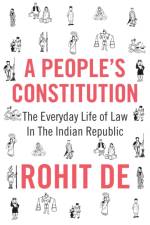
It has long been contended that the Indian Constitution of 1950, a document in English created by elite consensus, has had little influence on India's greater population. Drawing upon the previously unexplored records of the Supreme Court of India, A People's Constitution upends this narrative and shows how the Constitution actually transformed the daily lives of citizens in profound and lasting ways. This remarkable legal process was led by individuals on the margins of society, and Rohit De looks at how drinkers, smugglers, petty vendors, butchers, and prostitutes-all despised minorities-shaped the constitutional culture.The Constitution came alive in the popular imagination so much that ordinary people attributed meaning to its existence, took recourse to it, and argued with it. Focusing on the use of constitutional remedies by citizens against new state regulations seeking to reshape the society and economy, De illustrates how laws and policies were frequently undone or renegotiated from below using the state's own procedures. De examines four important cases that set legal precedents: a Parsi journalist's contestation of new alcohol prohibition laws, Marwari petty traders' challenge to the system of commodity control, Muslim butchers' petition against cow protection laws, and sex workers' battle to protect their right to practice prostitution.Exploring how the Indian Constitution of 1950 enfranchised the largest population in the world, A People's Constitution considers the ways that ordinary citizens produced, through litigation, alternative ethical models of citizenship.
The moral and political role of German journalists before, during, and after the Nazi dictatorshipJournalists between Hitler and Adenauer takes an in-depth look at German journalism from the late Weimar period through the postwar decades. Illuminating the roles played by journalists in the media metropolis of Hamburg, Volker Berghahn focuses on the lives and work of three remarkable individuals: Marion Countess Donhoff, distinguished editor of Die Zeit; Paul Sethe, "e;the grand old man of West German journalism"e;; and Hans Zehrer, editor in chief of Die Welt.All born before 1914, Donhoff, Sethe, and Zehrer witnessed the Weimar Republic's end and opposed Hitler. When the latter seized power in 1933, they were, like their fellow Germans, confronted with the difficult choice of entering exile, becoming part of the active resistance, or joining the Nazi Party. Instead, they followed a fourth path-"e;inner emigration"e;-psychologically distancing themselves from the regime, their writing falling into a gray zone between grudging collaboration and active resistance. During the war, Donhoff and Sethe had links to the 1944 conspiracy to kill Hitler, while Zehrer remained out of sight on a North Sea island. In the decades after 1945, all three became major figures in the West German media. Berghahn considers how these journalists and those who chose inner emigration interpreted Germany's horrific past and how they helped to morally and politically shape the reconstruction of the country.With fresh archival materials, Journalists between Hitler and Adenauer sheds essential light on the influential position of the German media in the mid-twentieth century and raises questions about modern journalism that remain topical today.
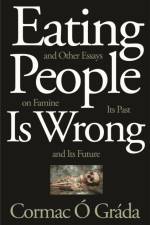
New perspectives on the history of famine-and the possibility of a famine-free worldFamines are becoming smaller and rarer, but optimism about the possibility of a famine-free future must be tempered by the threat of global warming. That is just one of the arguments that Cormac O Grada, one of the world's leading authorities on the history and economics of famine, develops in this wide-ranging book, which provides crucial new perspectives on key questions raised by famines around the globe between the seventeenth and twenty-first centuries.The book begins with a taboo topic. O Grada argues that cannibalism, while by no means a universal feature of famines and never responsible for more than a tiny proportion of famine deaths, has probably been more common during very severe famines than previously thought. The book goes on to offer new interpretations of two of the twentieth century's most notorious and controversial famines, the Great Bengal Famine and the Chinese Great Leap Forward Famine. O Grada questions the standard view of the Bengal Famine as a perfect example of market failure, arguing instead that the primary cause was the unwillingness of colonial rulers to divert food from their war effort. The book also addresses the role played by traders and speculators during famines more generally, invoking evidence from famines in France, Ireland, Finland, Malawi, Niger, and Somalia since the 1600s, and overturning Adam Smith's claim that government attempts to solve food shortages always cause famines.Thought-provoking and important, this is essential reading for historians, economists, demographers, and anyone else who is interested in the history and possible future of famine.
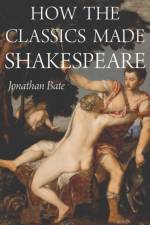
"This book grew from the inaugural E. H. Gombrich Lectures in the Classical Tradition that I delivered in the autumn of 2013 at the Warburg Institute of the University of London, under the title, "Ancient Strength: Shakespeare and the Classical Tradition"--Preface, page ix.
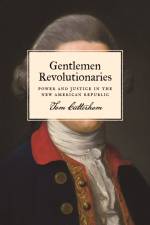
In the years between the Revolutionary War and the drafting of the Constitution, American gentlemen-the merchants, lawyers, planters, and landowners who comprised the independent republic's elite-worked hard to maintain their positions of power. Gentlemen Revolutionaries shows how their struggles over status, hierarchy, property, and control shaped the ideologies and institutions of the fledgling nation.Tom Cutterham examines how, facing pressure from populist movements as well as the threat of foreign empires, these gentlemen argued among themselves to find new ways of justifying economic and political inequality in a republican society. At the heart of their ideology was a regime of property and contract rights derived from the norms of international commerce and eighteenth-century jurisprudence. But these gentlemen were not concerned with property alone. They also sought personal prestige and cultural preeminence. Cutterham describes how, painting the egalitarian freedom of the republic's "e;lower sort"e; as dangerous licentiousness, they constructed a vision of proper social order around their own fantasies of power and justice. In pamphlets, speeches, letters, and poetry, they argued that the survival of the republican experiment in the United States depended on the leadership of worthy gentlemen and the obedience of everyone else.Lively and elegantly written, Gentlemen Revolutionaries demonstrates how these elites, far from giving up their attachment to gentility and privilege, recast the new republic in their own image.
Constance Markievicz (1868-1927), born to the privileged Protestant upper class in Ireland, embraced suffrage before scandalously leaving for a bohemian life in London and then Paris. She would become known for her roles as politician and Irish revolutionary nationalist. Her husband, Casimir Dunin Markievicz (1874-1932), a painter, playwright, and theater director, was a Polish noble who would eventually join the Russian imperial army to fight on behalf of Polish freedom during World War I. Revolutionary Lives offers the first dual biography of these two prominent European activists and artists. Tracing the Markieviczes' entwined and impassioned trajectories, biographer Lauren Arrington sheds light on the avant-garde cultures of London, Paris, and Dublin, and the rise of anti-imperialism at the turn of the twentieth century.Drawing from new archival material, including previously untranslated newspaper articles, Arrington explores the interests and concerns of Europeans invested in suffrage, socialism, and nationhood. Unlike previous works, Arrington's book brings Casimir Markievicz into the foreground of the story and explains how his liberal imperialism and his wife's socialist republicanism arose from shared experiences, even as their politics remained distinct. Arrington also shows how Constance did not convert suddenly to Irish nationalism, but was gradually radicalized by the Irish Revival. Correcting previous depictions of Constance as hero or hysteric, Arrington presents her as a serious thinker influenced by political and cultural contemporaries.Revolutionary Lives places the exciting biographies of two uniquely creative and political individuals and spouses in the wider context of early twentieth-century European history.
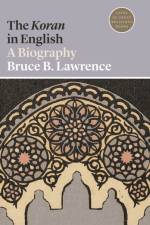
The untold story of how the Arabic Qur'an became the English KoranFor millions of Muslims, the Qur'an is sacred only in Arabic, the original Arabic in which it was revealed to the Prophet Muhammad in the seventh century; to many Arab and non-Arab believers alike, the book literally defies translation. Yet English translations exist and are growing, in both number and importance. Bruce Lawrence tells the remarkable story of the ongoing struggle to render the Qur'an's lyrical verses into English-and to make English itself an Islamic language.The "e;Koran"e; in English revisits the life of Muhammad and the origins of the Qur'an before recounting the first translation of the book into Latin by a non-Muslim: Robert of Ketton's twelfth-century version paved the way for later ones in German and French, but it was not until the eighteenth century that George Sale's influential English version appeared. Lawrence explains how many of these early translations, while part of a Christian agenda to "e;know the enemy,"e; often revealed grudging respect for their Abrahamic rival. British expansion in the modern era produced an anomaly: fresh English translations-from the original Arabic-not by Arabs or non-Muslims but by South Asian Muslim scholars.The first book to explore the complexities of this translation saga, The "e;Koran"e; in English also looks at cyber Korans, versions by feminist translators, and now a graphic Koran, the American Qur'an created by the acclaimed visual artist Sandow Birk.
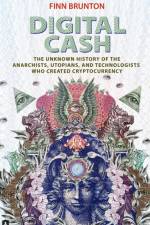
"The fascinating untold story of digital cash and its creators, from experiments in the 1970s to the mania over Bitcoin and other cryptocurrencies."--Provided by publisher.
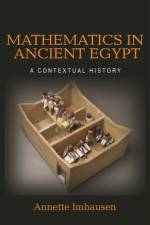
A survey of ancient Egyptian mathematics across three thousand yearsMathematics in Ancient Egypt traces the development of Egyptian mathematics, from the end of the fourth millennium BC-and the earliest hints of writing and number notation-to the end of the pharaonic period in Greco-Roman times. Drawing from mathematical texts, architectural drawings, administrative documents, and other sources, Annette Imhausen surveys three thousand years of Egyptian history to present an integrated picture of theoretical mathematics in relation to the daily practices of Egyptian life and social structures.Imhausen shows that from the earliest beginnings, pharaonic civilization used numerical techniques to efficiently control and use their material resources and labor. Even during the Old Kingdom, a variety of metrological systems had already been devised. By the Middle Kingdom, procedures had been established to teach mathematical techniques to scribes in order to make them proficient administrators for their king. Imhausen looks at counterparts to the notation of zero, suggests an explanation for the evolution of unit fractions, and analyzes concepts of arithmetic techniques. She draws connections and comparisons to Mesopotamian mathematics, examines which individuals in Egyptian society held mathematical knowledge, and considers which scribes were trained in mathematical ideas and why.Of interest to historians of mathematics, mathematicians, Egyptologists, and all those curious about Egyptian culture, Mathematics in Ancient Egypt sheds new light on a civilization's unique mathematical evolution.
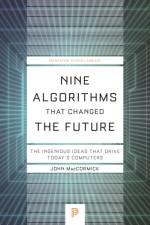
Every day, we use our computers to perform remarkable feats. A simple web search picks out a handful of relevant needles from the world's biggest haystack: the billions of pages on the World Wide Web. Uploading a photo to Facebook transmits millions of pieces of information over numerous error-prone network links, yet somehow a perfect copy of the photo arrives intact. Without even knowing it, we use public-key cryptography to transmit secret information like credit card numbers; and we use digital signatures to verify the identity of the websites we visit. How do our computers perform these tasks with such ease? This is the first book to answer that question in language anyone can understand, revealing the extraordinary ideas that power our PCs, laptops, and smartphones. Using vivid examples, John MacCormick explains the fundamental "e;tricks"e; behind nine types of computer algorithms, including artificial intelligence (where we learn about the "e;nearest neighbor trick"e; and "e;twenty questions trick"e;), Google's famous PageRank algorithm (which uses the "e;random surfer trick"e;), data compression, error correction, and much more. These revolutionary algorithms have changed our world: this book unlocks their secrets, and lays bare the incredible ideas that our computers use every day.
Global Production is the first book to provide a fully comprehensive overview of the complicated issues facing multinational companies and their global sourcing strategies. Few international trade transactions today are based on the exchange of finished goods; rather, the majority of transactions are dominated by sales of individual components and intermediary services. Many firms organize global production around offshoring parts, components, and services to producers in distant countries, and contracts are drawn up specific to the parties and distinct legal systems involved. Pol Antras examines the contractual frictions that arise in the international system of production and how these frictions influence the world economy.Antras discusses the inevitable complications that develop in contract negotiation and execution. He provides a unified framework that sheds light on the factors helping global firms determine production locations and other organizational choices. Antras also implements a series of systematic empirical tests, based on recent data from the U.S. Customs and Census Offices, which demonstrate the relevance of contractual factors in global production decisions.Using an integrated approach, Global Production is an excellent resource for researchers, graduate students, and advanced undergraduates interested in the inner workings of international economics and trade.
Arab Patriotism presents the essential backstory to the formation of the modern nation-state and mass nationalism in the Middle East. While standard histories claim that the roots of Arab nationalism emerged in opposition to the Ottoman milieu, Adam Mestyan points to the patriotic sentiment that grew in the Egyptian province of the Ottoman Empire during the nineteenth century, arguing that it served as a pivotal way station on the path to the birth of Arab nationhood.Through extensive archival research, Mestyan examines the collusion of various Ottoman elites in creating this nascent sense of national belonging and finds that learned culture played a central role in this development. Mestyan investigates the experience of community during this period, engendered through participation in public rituals and being part of a theater audience. He describes the embodied and textual ways these experiences were produced through urban spaces, poetry, performances, and journals. From the Khedivial Opera House's staging of Verdi's Aida and the first Arabic magazine to the 'Urabi revolution and the restoration of the authority of Ottoman viceroys under British occupation, Mestyan illuminates the cultural dynamics of a regime that served as the precondition for nation-building in the Middle East.A wholly original exploration of Egypt in the context of the Ottoman Empire, Arab Patriotism sheds fresh light on the evolving sense of political belonging in the Arab world.
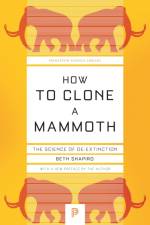
An insider's view on bringing extinct species back to lifeCould extinct species, like mammoths and passenger pigeons, be brought back to life? The science says yes. In How to Clone a Mammoth, Beth Shapiro, evolutionary biologist and pioneer in "e;ancient DNA"e; research, walks readers through the astonishing and controversial process of de-extinction. From deciding which species should be restored, to sequencing their genomes, to anticipating how revived populations might be overseen in the wild, Shapiro vividly explores the extraordinary cutting-edge science that is being used-today-to resurrect the past. Journeying to far-flung Siberian locales in search of ice age bones and delving into her own research-as well as those of fellow experts such as Svante Paabo, George Church, and Craig Venter-Shapiro considers de-extinction's practical benefits and ethical challenges. Would de-extinction change the way we live? Is this really cloning? What are the costs and risks? And what is the ultimate goal?Using DNA collected from remains as a genetic blueprint, scientists aim to engineer extinct traits--traits that evolved by natural selection over thousands of years-into living organisms. But rather than viewing de-extinction as a way to restore one particular species, Shapiro argues that the overarching goal should be the revitalization and stabilization of contemporary ecosystems. For example, elephants with genes modified to express mammoth traits could expand into the Arctic, re-establishing lost productivity to the tundra ecosystem.Looking at the very real and compelling science behind an idea once seen as science fiction, How to Clone a Mammoth demonstrates how de-extinction will redefine conservation's future.
A plethora of different theories, models, and concepts make up the field of community ecology. Amid this vast body of work, is it possible to build one general theory of ecological communities? What other scientific areas might serve as a guiding framework? As it turns out, the core focus of community ecology-understanding patterns of diversity and composition of biological variants across space and time-is shared by evolutionary biology and its very coherent conceptual framework, population genetics theory. The Theory of Ecological Communities takes this as a starting point to pull together community ecology's various perspectives into a more unified whole.Mark Vellend builds a theory of ecological communities based on four overarching processes: selection among species, drift, dispersal, and speciation. These are analogues of the four central processes in population genetics theory-selection within species, drift, gene flow, and mutation-and together they subsume almost all of the many dozens of more specific models built to describe the dynamics of communities of interacting species. The result is a theory that allows the effects of many low-level processes, such as competition, facilitation, predation, disturbance, stress, succession, colonization, and local extinction to be understood as the underpinnings of high-level processes with widely applicable consequences for ecological communities.Reframing the numerous existing ideas in community ecology, The Theory of Ecological Communities provides a new way for thinking about biological composition and diversity.
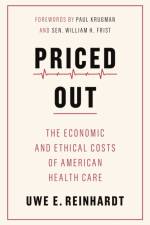
Spurred by court rulings requiring states to increase public-school funding, the United States now spends more per student on K-12 education than almost any other country. Yet American students still achieve less than their foreign counterparts, their performance has been flat for decades, millions of them are failing, and poor and minority students remain far behind their more advantaged peers. In this book, Eric Hanushek and Alfred Lindseth trace the history of reform efforts and conclude that the principal focus of both courts and legislatures on ever-increasing funding has done little to improve student achievement. Instead, Hanushek and Lindseth propose a new approach: a performance-based system that directly links funding to success in raising student achievement. This system would empower and motivate educators to make better, more cost-effective decisions about how to run their schools, ultimately leading to improved student performance. Hanushek and Lindseth have been important participants in the school funding debate for three decades. Here, they draw on their experience, as well as the best available research and data, to show why improving schools will require overhauling the way financing, incentives, and accountability work in public education.
This investigation of the overwhelming appeal of quantification in the modern world discusses the development of cultural meanings of objectivity over two centuries. How are we to account for the current prestige and power of quantitative methods? The usual answer is that quantification is seen as desirable in social and economic investigation as a result of its successes in the study of nature. Theodore Porter is not content with this. Why should the kind of success achieved in the study of stars, molecules, or cells be an attractive model for research on human societies? he asks. And, indeed, how should we understand the pervasiveness of quantification in the sciences of nature? In his view, we should look in the reverse direction: comprehending the attractions of quantification in business, government, and social research will teach us something new about its role in psychology, physics, and medicine. Drawing on a wide range of examples from the laboratory and from the worlds of accounting, insurance, cost-benefit analysis, and civil engineering, Porter shows that it is "e;exactly wrong"e; to interpret the drive for quantitative rigor as inherent somehow in the activity of science except where political and social pressures force compromise. Instead, quantification grows from attempts to develop a strategy of impersonality in response to pressures from outside. Objectivity derives its impetus from cultural contexts, quantification becoming most important where elites are weak, where private negotiation is suspect, and where trust is in short supply.
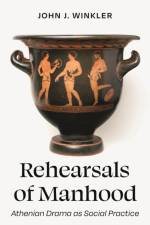
"When John J. Winkler died in 1990, he left a substantially complete manuscript containing the final version of the project he had undertaken in the last decade of his life: an original interpretation of the development and meaning of ancient Greek drama. That manuscript was based on The Martin Classical Lectures at Oberlin College, which Winkler delivered in September of 1988. The present text has been edited and updated by classicists David Halperin, Winkler's literary executor, and Kirk Ormand, Winkler's student and an expert on Greek drama. Rehearsals of Manhood, the final work of a widely recognized and celebrated classical scholar, proposes an entirely new account of Greek drama providing an explanation of the social place of Greek drama and its relation to the gendered organization of Athenian social life. Winkler interprets drama as a secular manhood ritual, a public aesthetic undertaking focused on the initiation of boys into manhood and, specifically, on the training, the display, and the representation of young male warriors. According to Winkler, the chorus of both tragedy and comedy was composed of young Athenian men of citizen status, about eighteen to twenty years of age, who were undergoing military training in order to prepare themselves for the task of warfare; they danced on a rectangular dance floor in a rectangular formation that recalled the arrangement of the infantry phalanx; they accompanied plays that often highlighted scenarios of risk faced by young men on the verge of adulthood; and they performed in a theater whose seating was arranged to display the corporate body of the male citizenry as a whole, both its democratic equality and its hierarchical ranking according to degrees of excellence. Winkler does not offer new interpretations of the texts of Greek plays but a new account of how the very practice of dramatic performance fit into the social life and gender politics of the Athenian state"--
Abonner på vårt nyhetsbrev og få rabatter og inspirasjon til din neste leseopplevelse.
Ved å abonnere godtar du vår personvernerklæring.