
























Gjør som tusenvis av andre bokelskere
Abonner på vårt nyhetsbrev og få rabatter og inspirasjon til din neste leseopplevelse.
Ved å abonnere godtar du vår personvernerklæring.Du kan når som helst melde deg av våre nyhetsbrev.

Features seventy poems that are among the largest and most representative offering of Wislawa Szymborska's work with particular emphasis on the period since 1967. Describing Szymborka's poetry, this book shows that her verse is marked by high seriousness, delightful inventiveness, a prodigal imagination, and enormous technical skill.
The odes of Horace are the cornerstone of lyric poetry in the Western world. This work aims to bring all 103 odes into English in a series of translations while also illuminating the imagination of one of literary history's towering figures.
Includes the story of all that the ancients accomplished on the sea from the earliest times to the end of the Roman Empire. This title explains how they perfected trading vessels from mere rowboats into huge freighters that could carry over a thousand tons and how they transformed warships from simple oared transports into complex rowing machines.
Explores the complex problem of mental life. This book argues that the roots of creativity for lie not in consciousness, but in the long unconscious work of incubation, and in the unconscious aesthetic selection of ideas that thereby pass into consciousness.
Serves as a text for mathematics students at the intermediate graduate level. This book aims to acquaint readers with the fundamental classical results of partial differential equations and to guide them into some aspects of the modern theory to the point where they will be equipped to read advanced treatises and research papers.
Outlining the competing theories in the history of political and moral philosophy, this work attempts to understand and solve the ancient problem of political obligation.
Originally published in 1854, Walden, or Life in the Woods, is a vivid account of the time that Henry D. Thoreau lived alone in a secluded cabin at Walden Pond. It is one of the most influential and compelling books in American literature. This new paperback edition--introduced by noted American writer John Updike--celebrates the 150th anniversary of this classic work. Much of Walden's material is derived from Thoreau's journals and contains such engaging pieces as "e;Reading"e; and "e;The Pond in the Winter."e; Other famous sections involve Thoreau's visits with a Canadian woodcutter and with an Irish family, a trip to Concord, and a description of his bean field. This is the complete and authoritative text of Walden--as close to Thoreau's original intention as all available evidence allows. For the student and for the general reader, this is the ideal presentation of Thoreau's great document of social criticism and dissent.
An exciting collection of mythology about heroes, heroines, villains, and monsters in the intriguing world of the nomad warriors of the Caucasus The Nart sagas are to the Caucasus what Greek mythology is to Western civilization. Tales of the Narts expands the canon of this precious body of lore by presenting a wide selection of fascinating tales that are part of a living tradition among the peoples of Ossetia in southern Russia. A mythical tribe of nomad warriors, the Narts are courageous, bold, and good-hearted, but also capable of envy, cruelty, and violence. In this wonderfully vivid and accessible collection, colorful and exciting heroes, heroines, villains, and monsters pursue their destinies though a series of exploits, often with the intervention of ancient gods.
Originally published as Le monde est clos et le desir infini by Albin Michel, Paris, France, and is copyright Editions Albin Michel--Paris 2015.
A distinguished economist examines competition, regulation, and stability in today's global banksDoes too much competition in banking hurt society? What policies can best protect and stabilize banking without stifling it? Institutional responses to such questions have evolved over time, from interventionist regulatory control after the Great Depression to the liberalization policies that started in the United States in the 1970s. The global financial crisis of 2007-2009, which originated from an oversupply of credit, once again raised questions about excessive banking competition and what should be done about it. Competition and Stability in Banking addresses the critical relationships between competition, regulation, and stability, and the implications of coordinating banking regulations with competition policies.Xavier Vives argues that while competition is not responsible for fragility in banking, there are trade-offs between competition and stability. Well-designed regulations would alleviate these trade-offs but not eliminate them, and the specificity of competition in banking should be accounted for. Vives argues that regulation and competition policy should be coordinated, with tighter prudential requirements in more competitive situations, but he also shows that supervisory and competition authorities should stand separate from each other, each pursuing its own objective. Vives reviews the theory and empirics of banking competition, drawing on up-to-date analysis that incorporates the characteristics of modern market-based banking, and he looks at regulation, competition policies, and crisis interventions in Europe and the United States, as well as in emerging economies.Focusing on why banking competition policies are necessary, Competition and Stability in Banking examines regulation's impact on the industry's efficiency and effectiveness.
Should governments save people from themselves? Do governments have the right to influence citizens' behavior related to smoking tobacco, eating too much, not saving enough, drinking alcohol, or taking marijuana-or does this create a nanny state, leading to infantilization, demotivation, and breaches in individual autonomy? Looking at examples from both sides of the Atlantic and around the world, Government Paternalism examines the justifications for, and the prevalence of, government involvement and considers when intervention might or might not be acceptable. Building on developments in philosophy, behavioral economics, and psychology, Julian Le Grand and Bill New explore the roles, boundaries, and responsibilities of the government and its citizens.Le Grand and New investigate specific policy areas, including smoking, saving for pensions, and assisted suicide. They discuss legal restrictions on risky behavior, taxation of harmful activities, and subsidies for beneficial activities. And they pay particular attention to "e;nudge"e; or libertarian paternalist proposals that try to change the context in which individuals make decisions so that they make the right ones. Le Grand and New argue that individuals often display "e;reasoning failure"e;: an inability to achieve the ends that they set themselves. Such instances are ideal for paternalistic interventions-for though such interventions might impinge on autonomy, the impact can be outweighed by an improvement in well-being.Government Paternalism rigorously considers whether the state should guide citizen decision making in positive ways and if so, how this should be achieved.
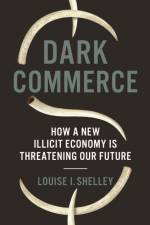
A comprehensive look at the world of illicit trade.
How digital technology is upending the traditional creative industries-and why that might be a good thingThe digital revolution poses a mortal threat to the major creative industries-music, publishing, television, and the movies. The ease with which digital files can be copied and distributed has unleashed a wave of piracy with disastrous effects on revenue. Cheap, easy self-publishing is eroding the position of these gatekeepers and guardians of culture. Does this revolution herald the collapse of culture, as some commentators claim? Far from it. In Digital Renaissance, Joel Waldfogel argues that digital technology is enabling a new golden age of popular culture, a veritable digital renaissance.By reducing the costs of production, distribution, and promotion, digital technology is democratizing access to the cultural marketplace. More books, songs, television shows, and movies are being produced than ever before. Nor does this mean a tidal wave of derivative, poorly produced kitsch; analyzing decades of production and sales data, as well as bestseller and best-of lists, Waldfogel finds that the new digital model is just as successful at producing high-quality, successful work as the old industry model, and in many cases more so. The vaunted gatekeeper role of the creative industries proves to have been largely mythical. The high costs of production have stifled creativity in industries that require ever-bigger blockbusters to cover the losses on ever-more-expensive failures.Are we drowning in a tide of cultural silt, or living in a golden age for culture? The answers in Digital Renaissance may surprise you.
Abonner på vårt nyhetsbrev og få rabatter og inspirasjon til din neste leseopplevelse.
Ved å abonnere godtar du vår personvernerklæring.