

















Gjør som tusenvis av andre bokelskere
Abonner på vårt nyhetsbrev og få rabatter og inspirasjon til din neste leseopplevelse.
Ved å abonnere godtar du vår personvernerklæring.Du kan når som helst melde deg av våre nyhetsbrev.

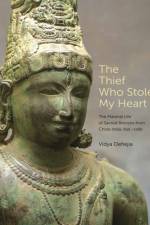
The first book to put the sacred and sensuous bronze statues from India's Chola dynasty in social context From the ninth through the thirteenth century, the Chola dynasty of southern India produced thousands of statues of Hindu deities, whose physical perfection was meant to reflect spiritual beauty and divine transcendence. During festivals, these bronze sculptures--including Shiva, referred to in a saintly vision as "the thief who stole my heart"--were adorned with jewels and flowers and paraded through towns as active participants in Chola worship. In this richly illustrated book, leading art historian Vidya Dehejia introduces the bronzes within the full context of Chola history, culture, and religion. In doing so, she brings the bronzes and Chola society to life before our very eyes. Dehejia presents the bronzes as material objects that interacted in meaningful ways with the people and practices of their era. Describing the role of the statues in everyday activities, she reveals not only the importance of the bronzes for the empire, but also little-known facets of Chola life. She considers the source of the copper and jewels used for the deities, proposing that the need for such resources may have influenced the Chola empire's political engagement with Sri Lanka. She also investigates the role of women patrons in bronze commissions and discusses the vast public records, many appearing here in translation for the first time, inscribed on temple walls. From the Cholas' religious customs to their agriculture, politics, and even food, The Thief Who Stole My Heart offers an expansive and complete immersion in a community still accessible to us through its exquisite sacred art. Published in association with the Center for Advanced Study in the Visual Arts, National Gallery of Art, Washington, DC
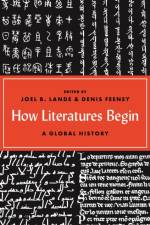
"The emergence of a literature in any language is an improbable and complex historical achievement. In fact, many known languages throughout history did not develop writing, let alone a literature. This book, a collectively written early history of different literary traditions across the globe and through time, presents a global, comparative account of literary origins spanning the Mediterranean, Asia, Europe, Africa, and the Americas. Seventeen chapters, each written by a scholar with expertise in a particular language and literature, trace the creation of writing and its interaction with oral practices, the rise of print circulation, the passage from sacred to secular writing and reading practices, the use of cultural models, the role of translation, and related issues as they apply to the emergence of literature. The contributions explore the historical context as well as the practices, technologies, and institutions that encouraged the emergence of distinct literatures, from classical Chinese and the resultant establishment of Japanese and Korean traditions, to the advent of Greek, Hebrew, Arabic, and other literatures of the Mediterranean; the birth of European vernaculars against the cosmopolitan backdrop of post-classical Latin; and the later development of African American and Latin American literatures under conditions of colonial expansion and racial oppression. The volume is designed to enable readers to better understand the similarities as well as the differences in the origins of major and enduring literatures across time"--
"A complete facing-page translation of the Tarjuman, which consists of sixty-one poems composed between 1202 and 1215 CE and published in 1215 at the earliest. The first word of the title can refer to a translator, interpreter, or biographer, on the one hand, and to a translation, interpretation, or biography on the other"--
Taking readers into the remarkable world of cosmology, Hooper describes many of the extraordinary and perplexing questions that scientists are asking about the origin and nature of the world.
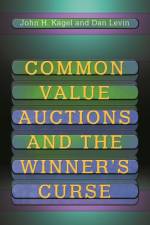
Few forms of market exchange intrigue economists as do auctions, whose theoretical and practical implications are enormous. John Kagel and Dan Levin, complementing their own distinguished research with papers written with other specialists, provide a new focus on common value auctions and the "e;winner's curse."e; In such auctions the value of each item is about the same to all bidders, but different bidders have different information about the underlying value. Virtually all auctions have a common value element; among the burgeoning modern-day examples are those organized by Internet companies such as eBay. Winners end up cursing when they realize that they won because their estimates were overly optimistic, which led them to bid too much and lose money as a result. The authors first unveil a fresh survey of experimental data on the winner's curse. Melding theory with the econometric analysis of field data, they assess the design of government auctions, such as the spectrum rights (air wave) auctions that continue to be conducted around the world. The remaining chapters gauge the impact on sellers' revenue of the type of auction used and of inside information, show how bidders learn to avoid the winner's curse, and present comparisons of sophisticated bidders with college sophomores, the usual guinea pigs used in laboratory experiments. Appendixes refine theoretical arguments and, in some cases, present entirely new data. This book is an invaluable, impeccably up-to-date resource on how auctions work--and how to make them work.
In It's About Time, N. David Mermin asserts that relativity ought to be an important part of everyone's education--after all, it is largely about time, a subject with which all are familiar. The book reveals that some of our most intuitive notions about time are shockingly wrong, and that the real nature of time discovered by Einstein can be rigorously explained without advanced mathematics. This readable exposition of the nature of time as addressed in Einstein's theory of relativity is accessible to anyone who remembers a little high school algebra and elementary plane geometry. The book evolved as Mermin taught the subject to diverse groups of undergraduates at Cornell University, none of them science majors, over three and a half decades. Mermin's approach is imaginative, yet accurate and complete. Clear, lively, and informal, the book will appeal to intellectually curious readers of all kinds, including even professional physicists, who will be intrigued by its highly original approach.
Edward Lear, known as an author of nonsense verse, was also an artist and natural history illustrator.
The Great Divergence brings new insight to one of the classic questions of history: Why did sustained industrial growth begin in Northwest Europe, despite surprising similarities between advanced areas of Europe and East Asia? As Ken Pomeranz shows, as recently as 1750, parallels between these two parts of the world were very high in life expectancy, consumption, product and factor markets, and the strategies of households. Perhaps most surprisingly, Pomeranz demonstrates that the Chinese and Japanese cores were no worse off ecologically than Western Europe. Core areas throughout the eighteenth-century Old World faced comparable local shortages of land-intensive products, shortages that were only partly resolved by trade. Pomeranz argues that Europe's nineteenth-century divergence from the Old World owes much to the fortunate location of coal, which substituted for timber. This made Europe's failure to use its land intensively much less of a problem, while allowing growth in energy-intensive industries. Another crucial difference that he notes has to do with trade. Fortuitous global conjunctures made the Americas a greater source of needed primary products for Europe than any Asian periphery. This allowed Northwest Europe to grow dramatically in population, specialize further in manufactures, and remove labor from the land, using increased imports rather than maximizing yields. Together, coal and the New World allowed Europe to grow along resource-intensive, labor-saving paths. Meanwhile, Asia hit a cul-de-sac. Although the East Asian hinterlands boomed after 1750, both in population and in manufacturing, this growth prevented these peripheral regions from exporting vital resources to the cloth-producing Yangzi Delta. As a result, growth in the core of East Asia's economy essentially stopped, and what growth did exist was forced along labor-intensive, resource-saving paths--paths Europe could have been forced down, too, had it not been for favorable resource stocks from underground and overseas.
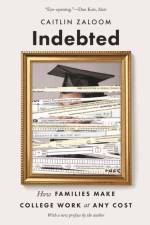
Taking readers into the homes of middle-class families to reveal the hidden consequences of student debt and the ways that financing college has transformed family life, the author describes the profound moral conflicts for parents take on enormous debts and gamble on an investment that might not pay off.
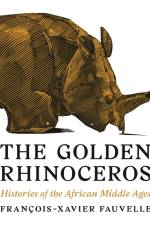
A leading historian reconstructs the forgotten history of medieval AfricaFrom the birth of Islam in the seventh century to the voyages of European exploration in the fifteenth, Africa was at the center of a vibrant exchange of goods and ideas. It was an African golden age in which places like Ghana, Nubia, and Zimbabwe became the crossroads of civilizations, and where African royals, thinkers, and artists played celebrated roles in the globalized world of the Middle Ages. The Golden Rhinoceros brings this unsung era marvelously to life, taking readers from the Sahara and the Nile River Valley to the Ethiopian highlands and southern Africa.Drawing on fragmented written sources as well as his many years of experience as an archaeologist, Francois-Xavier Fauvelle painstakingly reconstructs an African past that is too often denied its place in history-but no longer. He looks at ruined cities found in the mangrove, exquisite pieces of art, rare artifacts like the golden rhinoceros of Mapungubwe, ancient maps, and accounts left by geographers and travelers-remarkable discoveries that shed critical light on political and architectural achievements, trade, religious beliefs, diplomatic episodes, and individual lives.A book that finally recognizes Africa's important role in the Middle Ages, The Golden Rhinoceros also provides a window into the historian's craft. Fauvelle carefully pieces together the written and archaeological evidence to tell an unforgettable story that is at once sensitive to Africa's rich social diversity and alert to the trajectories that connected Africa with the wider Muslim and Christian worlds.
How did Britain transform itself from a nation of workhouses to one that became a model for the modern welfare state? The Winding Road to the Welfare State investigates the evolution of living standards and welfare policies in Britain from the 1830s to 1950 and provides insights into how British working-class households coped with economic insecurity. George Boyer examines the retrenchment in Victorian poor relief, the Liberal Welfare Reforms, and the beginnings of the postwar welfare state, and he describes how workers altered spending and saving methods based on changing government policies.From the cutting back of the Poor Law after 1834 to Parliament's abrupt about-face in 1906 with the adoption of the Liberal Welfare Reforms, Boyer offers new explanations for oscillations in Britain's social policies and how these shaped worker well-being. The Poor Law's increasing stinginess led skilled manual workers to adopt self-help strategies, but this was not a feasible option for low-skilled workers, many of whom continued to rely on the Poor Law into old age. In contrast, the Liberal Welfare Reforms were a major watershed, marking the end of seven decades of declining support for the needy. Concluding with the Beveridge Report and Labour's social policies in the late 1940s, Boyer shows how the Liberal Welfare Reforms laid the foundations for a national social safety net.A sweeping look at economic pressures after the Industrial Revolution, The Winding Road to the Welfare State illustrates how British welfare policy waxed and waned over the course of a century.
A leading environmental thinker explores how people might begin to heal their fractured and contentious relationship with the land and with each other. From the coalfields of Appalachia and the tobacco fields of the Carolinas to the public lands of the West, Purdy shows how the land has always united and divided Americans.
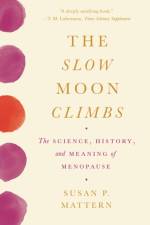
Taking readers from the rainforests of Paraguay to the streets of Tokyo, Mattern draws on historical, scientific, and cultural research to reveal how perceptions of menopause developed from prehistory to today. She goes on to introduce new ways of understanding life beyond fertility.
The Islamic State has stunned the world with its savagery, destructiveness, and military and recruiting successes. What explains the rise of ISIS, and what does it portend for the future of the Middle East? In this book, one of the world's leading authorities on political Islam and jihadism sheds new light on these questions. Moving beyond journalistic accounts, Fawaz Gerges provides a clear and compelling explanation of the deeper conditions that fuel ISIS. This unique history shows how decades of dictatorship, poverty, and rising sectarianism in the Middle East, exacerbated by foreign intervention, led to the rise and growth of ISISand why addressing those problems is the only way to ensure its end. An authoritative introduction to arguably the most important conflict in the world today, this is an essential book for anyone seeking a deeper understanding of the social turmoil and political violence ravaging the Arab-Islamic world.
Abonner på vårt nyhetsbrev og få rabatter og inspirasjon til din neste leseopplevelse.
Ved å abonnere godtar du vår personvernerklæring.