



















Gjør som tusenvis av andre bokelskere
Abonner på vårt nyhetsbrev og få rabatter og inspirasjon til din neste leseopplevelse.
Ved å abonnere godtar du vår personvernerklæring.Du kan når som helst melde deg av våre nyhetsbrev.

Public opinion in recent years has soured on multiculturalism, due in large part to fears of radical Islam. In Multiculturalism without Culture, Anne Phillips contends that critics misrepresent culture as the explanation of everything individuals from minority and non-Western groups do. She puts forward a defense of multiculturalism that dispenses with notions of culture, instead placing individuals themselves at its core. Multiculturalism has been blamed for encouraging the oppression of women--forced marriages, female genital cutting, school girls wearing the hijab. Many critics opportunistically deploy gender equality to justify the retreat from multiculturalism, hijacking the equality agenda to perpetuate cultural stereotypes. Phillips informs her argument with the feminist insistence on recognizing women as agents, and defends her position using an unusually broad range of literature, including political theory, philosophy, feminist theory, law, and anthropology. She argues that critics and proponents alike exaggerate the unity, distinctness, and intractability of cultures, thereby encouraging a perception of men and women as dupes constrained by cultural dictates. Opponents of multiculturalism may think the argument against accommodating cultural difference is over and won, but they are wrong. Phillips believes multiculturalism still has an important role to play in achieving greater social equality. In this book, she offers a new way of addressing dilemmas of justice and equality in multiethnic, multicultural societies, intervening at this critical moment when so many Western countries are poised to abandon multiculturalism.
The presidency of George W. Bush has polarized the church-state debate as never before. The Far Right has been emboldened to use religion to govern, while the Far Left has redoubled its efforts to evict religion from public life entirely. Fewer people on the Right seem to respect the church-state separation, and fewer people on the Left seem to respect religion itself--still less its free exercise in any situation that is not absolutely private. In The Last Freedom, Joseph Viteritti argues that there is a basic tension between religion and democracy because religion often rejects compromise as a matter of principle while democracy requires compromise to thrive. In this readable, original, and provocative book, Viteritti argues that Americans must guard against debasing politics with either antireligious bigotry or religious zealotry. Drawing on politics, history, and law, he defines a new approach to the church-state question that protects the religious and the secular alike. Challenging much conventional opinion, Viteritti argues that the courts have failed to adequately protect religious minorities, that the rights of the religious are under greater threat than those of the secular, and that democracy exacts greater compromises and sacrifices from the religious than it does from the secular. He takes up a wide range of controversies, including the pledge of allegiance, school prayer, school vouchers, evolution, abortion, stem-cell research, gay marriage, and religious displays on public property. A fresh and surprising approach to the church-state question, The Last Freedom is squarely aimed at the wide center of the public that is frustrated with the extremes of both the Left and the Right.
France's New Deal is an in-depth and important look at the remaking of the French state after World War II, a time when the nation was endowed with brand-new institutions for managing its economy and culture. Yet, as Philip Nord reveals, the significant process of state rebuilding did not begin at the Liberation. Rather, it got started earlier, in the waning years of the Third Republic and under the Vichy regime. Tracking the nation's evolution from the 1930s through the postwar years, Nord describes how a variety of political actors--socialists, Christian democrats, technocrats, and Gaullists--had a hand in the construction of modern France. Nord examines the French development of economic planning and a cradle-to-grave social security system; and he explores the nationalization of radio, the creation of a national cinema, and the funding of regional theaters. Nord shows that many of the policymakers of the Liberation era had also served under the Vichy regime, and that a number of postwar institutions and policies were actually holdovers from the Vichy era--minus the authoritarianism and racism of those years. From this perspective, the French state after the war was neither entirely new nor purely social-democratic in inspiration. The state's complex political pedigree appealed to a range of constituencies and made possible the building of a wide base of support that remained in place for decades to come. A nuanced perspective on the French state's postwar origins, France's New Deal chronicles how one modern nation came into being.
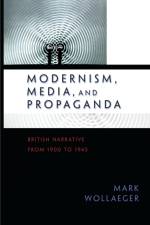
Though often defined as having opposite aims, means, and effects, modernism and modern propaganda developed at the same time and influenced each other in surprising ways. The professional propagandist emerged as one kind of information specialist, the modernist writer as another. Britain was particularly important to this double history. By secretly hiring well-known writers and intellectuals to write for the government and by exploiting their control of new global information systems, the British in World War I invented a new template for the manipulation of information that remains with us to this day. Making a persuasive case for the importance of understanding modernism in the context of the history of modern propaganda, Modernism, Media, and Propaganda also helps explain the origins of today's highly propagandized world. Modernism, Media, and Propaganda integrates new archival research with fresh interpretations of British fiction and film to provide a comprehensive cultural history of the relationship between modernism and propaganda in Britain during the first half of the twentieth century. From works by Joseph Conrad to propaganda films by Alfred Hitchcock and Orson Welles, Mark Wollaeger traces the transition from literary to cinematic propaganda while offering compelling close readings of major fiction by Virginia Woolf, Ford Madox Ford, and James Joyce.
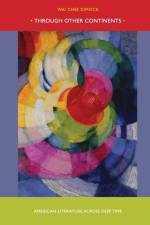
What we call American literature is quite often a shorthand, a simplified name for an extended tangle of relations."e; This is the argument of Through Other Continents, Wai Chee Dimock's sustained effort to read American literature as a subset of world literature. Inspired by an unorthodox archive--ranging from epic traditions in Akkadian and Sanskrit to folk art, paintings by Veronese and Tiepolo, and the music of the Grateful Dead--Dimock constructs a long history of the world, a history she calls "e;deep time."e; The civilizations of Mesopotamia, India, Egypt, China, and West Africa, as well as Europe, leave their mark on American literature, which looks dramatically different when it is removed from a strictly national or English-language context. Key authors such as Thoreau, Margaret Fuller, Ezra Pound, Robert Lowell, Gary Snyder, Leslie Silko, Gloria Naylor, and Gerald Vizenor are transformed in this light. Emerson emerges as a translator of Islamic culture; Henry James's novels become long-distance kin to Gilgamesh; and Black English loses its ungrammaticalness when reclassified as a creole tongue, meshing the input from Africa, Europe, and the Americas. Throughout, Dimock contends that American literature is answerable not to the nation-state, but to the human species as a whole, and that it looks dramatically different when removed from a strictly national or English-language context.
After decades of hand-wringing and well-intentioned efforts to improve inner cities, ghettos remain places of degrading poverty with few jobs, much crime, failing schools, and dilapidated housing. Stepping around fruitless arguments over whether or not ghettos are dysfunctional communities that exacerbate poverty, and beyond modest proposals to ameliorate their problems, one of America's leading experts on civil rights gives us a stunning but commonsensical solution: give residents the means to leave. Inner cities, writes Owen Fiss, are structures of subordination. The only way to end the poverty they transmit across generations is to help people move out of them--and into neighborhoods with higher employment rates and decent schools. Based on programs tried successfully in Chicago and elsewhere, Fiss's proposal is for a provocative national policy initiative that would give inner-city residents rent vouchers so they can move to better neighborhoods. This would end at last the informal segregation, by race and income, of our metropolitan regions. Given the government's role in creating and maintaining segregation, Fiss argues, justice demands no less than such sweeping federal action. To sample the heated controversy that Fiss's ideas will ignite, the book includes ten responses from scholars, journalists, and practicing lawyers. Some endorse Fiss's proposal in general terms but take issue with particulars. Others concur with his diagnosis of the problem but argue that his policy response is wrongheaded. Still others accuse Fiss of underestimating the internal strength of inner-city communities as well as the hostility of white suburbs. Fiss's bold views should set off a debate that will help shape urban social policy into the foreseeable future. It is indispensable reading for anyone interested in social justice, domestic policy, or the fate of our cities.
Combining literary and philosophical analysis, this study defends an utterly innovative reading of the early history of poetics. It is the first to argue that there is a distinctively Socratic view of poetry and the first to connect the Socratic view of poetry with earlier literary tradition. Literary theory is usually said to begin with Plato's famous critique of poetry in the Republic. Grace Ledbetter challenges this entrenched assumption by arguing that Plato's earlier dialogues Ion, Protagoras, and Apology introduce a distinctively Socratic theory of poetry that responds polemically to traditional poets as rival theorists. Ledbetter tracks the sources of this Socratic response by introducing separate readings of the poetics implicit in the poetry of Homer, Hesiod, and Pindar. Examining these poets' theories from a new angle that uncovers their literary, rhetorical, and political aims, she demonstrates their decisive influence on Socratic thinking about poetry. The Socratic poetics Ledbetter elucidates focuses not on censorship, but on the interpretation of poetry as a source of moral wisdom. This philosophical approach to interpreting poetry stands at odds with the poets' own theories--and with the Sophists' treatment of poetry. Unlike the Republic's focus on exposing and banishing poetry's irrational and unavoidably corrupting influence, Socrates' theory includes poetry as subject matter for philosophical inquiry within an examined life. Reaching back into what has too long been considered literary theory's prehistory, Ledbetter advances arguments that will redefine how classicists, philosophers, and literary theorists think about Plato's poetics.
Aristophanes has enjoyed a conspicuous revival in nineteenth- and twentieth-century Greece. Here, Gonda Van Steen provides the first critical analysis of the role of the classical Athenian playwright in modern Greek culture, explaining how the sociopolitical "e;venom"e; of Aristophanes' verses remains relevant and appealing to modern Greek audiences. Deriding or challenging well-known figures and conservative values, Aristophanes' comedies transgress authority and continue to speak to many social groups in Greece who have found in him a witty, pointed, and accessible champion from their "e;native"e; tradition. The book addresses the broader issues reflected in the poet's revival: political and linguistic nationalism, literary and cultural authenticity versus creativity, censorship, and social strife. Van Steen's discussion ranges from attitudes toward Aristophanes before and during Greece's War of Independence in the 1820s to those during the Cold War, from feminist debates to the significance of the popular music integrated into comic revival productions, from the havoc transvestite adaptations wreaked on gender roles to the political protest symbolized by Karolos Koun's directorial choices. Crossing boundaries of classical philology, critical theory, and performance studies, the book encourages us to reassess Aristophanes' comedies as both play-acts and modern methods of communication. Van Steen uses material never before accessible in English as she proves that Aristophanes remains Greece's immortal comic genius and political voice.
Theodor Adorno once wrote an essay to "e;defend Bach against his devotees."e; In this book Dana Villa does the same for Hannah Arendt, whose sweeping reconceptualization of the nature and value of political action, he argues, has been covered over and domesticated by admirers (including critical theorists, communitarians, and participatory democrats) who had hoped to enlist her in their less radical philosophical or political projects. Against the prevailing "e;Aristotelian"e; interpretation of her work, Villa explores Arendt's modernity, and indeed her postmodernity, through the Heideggerian and Nietzschean theme of a break with tradition at the closure of metaphysics. Villa's book, however, is much more than a mere correction of misinterpretations of a major thinker's work. Rather, he makes a persuasive case for Arendt as the postmodern or postmetaphysical political theorist, the first political theorist to think through the nature of political action after Nietzsche's exposition of the death of God (i.e., the collapse of objective correlates to our ideals, ends, and purposes). After giving an account of Arendt's theory of action and Heidegger's influence on it, Villa shows how Arendt did justice to the Heideggerian and Nietzschean criticism of the metaphysical tradition while avoiding the political conclusions they drew from their critiques. The result is a wide-ranging discussion not only of Arendt and Heidegger, but of Aristotle, Kant, Nietzsche, Habermas, and the entire question of politics after metaphysics.
The Quran is a sacred book with profound, and familiar, Old and New Testament resonances. And the message it promulgated, Islam, came of age during an extraordinarily rich era of interaction among monotheists. Jews, Christians, and Muslims not only worshipped the same God, but shared aspirations, operated in the same social and economic environment, and sometimes lived side by side, indistinguishable by language, costume, or manners. Today, of course, little of this commonality is apparent, and Islam is poorly understood by most non-Muslims. Entering Islam through the same biblical door Muhammad did, this book introduces readers with Christian or Jewish backgrounds to one of the world's largest, most active, and--in the West--least understood religions. Frank Peters, one of the world's leading authorities on the monotheistic religions, starts with the central feature of Muslim faith and life: the Quran. Across its pages move Adam, Noah, Abraham, David, Solomon, John the Baptist, Jesus, and the Virgin Mary. The Quran contains remarkably familiar accounts of Genesis, the Flood, Exodus, the Virgin Birth, and other biblical events. But Peters also highlights Muhammad's very different use of Scripture and explains those elements of the Quran most alien to Western readers, from its didactic passages to its remarkable poetry. Peters goes on to cogently explain Islam's defining features--including the significance of Mecca, the manner of Muhammad's revelations, and the creation of the unique community of Muslims, all in relation to the Judeo-Christian tradition. He compares Jesus and Muhammad, describes Islamic commandments and rituals, details the structures of Sunni and Shi'ite communities, and lays out central Islamic beliefs on war, women, mysticism, and martyrdom. The result is a crucial and extremely accomplished book that offers Western readers a professional yet highly accessible understanding of Islam, and at a time when we need it most.
The jali--a member of a hereditary group of Mandinka professional performers--is a charismatic but contradictory figure. He is at once the repository of his people's history, the voice of contemporary political authority, the inspiration for African American dreams of an African homeland, and the chief entertainment for the burgeoning transnational tourist industry. Numerous journalists, scholars, politicians, and culture aficionados have tried to pin him down. This book shows how the jali's talents at performance make him a genius at representation--the ideal figure to tell us about the "e;Africa"e; that the world imagines, which is always a thing of illusion, magic, and contradiction. Africa often enters the global imagination through news accounts of ethnic war, famine, and despotic political regimes. Those interested in countering such dystopic images--be they cultural nationalists in the African diaspora or connoisseurs of "e;global culture"e;--often found their representations of an emancipatory Africa on an enthusiasm for West African popular culture and performance arts. Based on extensive field research in The Gambia and focusing on the figure of the jali, Performing Africa interrogates these representations together with their cultural and political implications. It explores how Africa is produced, circulated, and consumed through performance and how encounters through performance create the place of Africa in the world. Innovative and discerning, Performing Africa is a provocative contribution to debates over cultural nationalism and the construction of identity and history in Africa and elsewhere.
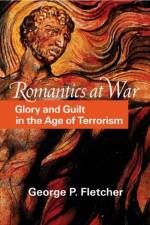
America is at war with terrorism. Terrorists must be brought to justice. We hear these phrases together so often that we rarely pause to reflect on the dramatic differences between the demands of war and the demands of justice, differences so deep that the pursuit of one often comes at the expense of the other. In this book, one of the country's most important legal thinkers brings much-needed clarity to the still unfolding debates about how to pursue war and justice in the age of terrorism. George Fletcher also draws on his rare ability to combine insights from history, philosophy, literature, and law to place these debates in a rich cultural context. He seeks to explain why Americans--for so many years cynical about war--have recently found war so appealing. He finds the answer in a revival of Romanticism, a growing desire in the post-Vietnam era to identify with grand causes and to put nations at the center of ideas about glory and guilt. Fletcher opens with unsettling questions about the nature of terrorism, war, and justice, showing how dangerously slippery the concepts can be. He argues that those sympathetic to war are heirs to the ideals of Byron, Fichte, and other Romantics in their belief that nations--not just individuals--must uphold honor and be held accountable for crimes. Fletcher writes that ideas about collective glory and guilt are far more plausible and widespread than liberal individualists typically recognize. But as he traces the implications of the Romantic mindset for debates about war crimes, treason, military tribunals, and genocide, he also shows that losing oneself in a grand cause can all too easily lead to moral catastrophe. A work of extraordinary intellectual power and relevance, the book will change how we think not only about world events, but about the conflicting individualist and collective impulses that tear at all of us.
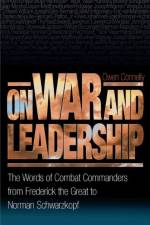
What can we learn about leadership and the experience of war from the best combat leaders the world has ever known? This book takes us behind the scenes and to the front lines of the major wars of the past 250 years through the words of twenty combat commanders. What they have to say--which is remarkably similar across generational, national, and ideological divides--is a fascinating take on military history by those who lived it. It is also worthwhile reading for anyone, from any walk of life, who makes executive decisions. The leaders showcased here range from Frederick the Great to Norman Schwarzkopf. They include such diverse figures as Napoleon Bonaparte, commanders on both sides of the Civil War (William Tecumseh Sherman and Stonewall Jackson), German and American World War II generals (Rommel and Patton), a veteran of the Arab-Israeli wars (Moshe Dayan), and leaders from both sides of the Vietnam War (Vo Nguyen Giap and Harold Moore). What they have had in common is an unrivaled understanding of the art of command and a willingness to lead from the front. All earned the respect and loyalty of those they led--and moved them to risk death. The practices of these commanders apply to any leadership situation, whether military, business, political, athletic, or other. Their words reveal techniques for anticipating the competition, leading through example, taking care of the "e;troops,"e; staying informed, turning bad luck to advantage, improvising, and making bold decisions. Leader after leader emphasizes the importance of up-front "e;muddy boots"e; leadership and reveals what it takes to persevere and win. Identifying a pattern of proven leadership, this book will benefit anyone who aspires to lead a country, a squadron, a company, or a basketball team. It is a unique distillation of two and a half centuries of military wisdom.
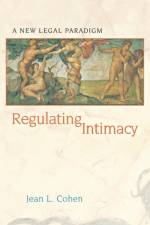
The regulation of intimate relationships has been a key battleground in the culture wars of the past three decades. In this bold and innovative book, Jean Cohen presents a new approach to regulating intimacy that promises to defuse the tensions that have long sparked conflict among legislators, jurists, activists, and scholars. Disputes have typically arisen over questions that apparently set the demands of personal autonomy, justice, and responsibility against each other. Can law stay out of the bedroom without shielding oppression and abuse? Can we protect the pursuit of personal happiness while requiring people to behave responsibly toward others? Can regulation acknowledge a variety of intimate relationships without privileging any? Must regulating intimacy involve a clash between privacy and equality? Cohen argues that these questions have been impossible to resolve because most legislators, activists, and scholars have drawn on an anachronistic conception of privacy, one founded on the idea that privacy involves secrecy and entails a sphere free from legal regulation. In response, Cohen draws on Habermas and other European thinkers to present a robust "e;constructivist"e; defense of privacy, one based on the idea that norms and rights are legally constructed. Cohen roots her arguments in debates over three particularly contentious issues: reproductive rights, sexual orientation, and sexual harassment. She shows how a new legal framework, "e;reflexive law,"e; allows us to build on constructivist insights to approach these debates free from the liberal and welfarist paradigms that usually structure our legal thought. This new legal paradigm finally allows us to dissolve the tensions among autonomy, equality, and community that have beset us. A synthesis of feminist theory, political theory, constitutional jurisprudence, and cutting-edge research in the sociology of law, this powerful work will reshape not only legal and political debates, but how we think about the intimate relationships at the core of our own lives. .
Progressive-era "e;poverty warriors"e; cast poverty in America as a problem of unemployment, low wages, labor exploitation, and political disfranchisement. In the 1990s, policy specialists made "e;dependency"e; the issue and crafted incentives to get people off welfare. Poverty Knowledge gives the first comprehensive historical account of the thinking behind these very different views of "e;the poverty problem,"e; in a century-spanning inquiry into the politics, institutions, ideologies, and social science that shaped poverty research and policy. Alice O'Connor chronicles a transformation in the study of poverty, from a reform-minded inquiry into the political economy of industrial capitalism to a detached, highly technical analysis of the demographic and behavioral characteristics of the poor. Along the way, she uncovers the origins of several controversial concepts, including the "e;culture of poverty"e; and the "e;underclass."e; She shows how such notions emerged not only from trends within the social sciences, but from the central preoccupations of twentieth-century American liberalism: economic growth, the Cold War against communism, the changing fortunes of the welfare state, and the enduring racial divide. The book details important changes in the politics and organization as well as the substance of poverty knowledge. Tracing the genesis of a still-thriving poverty research industry from its roots in the War on Poverty, it demonstrates how research agendas were subsequently influenced by an emerging obsession with welfare reform. Over the course of the twentieth century, O'Connor shows, the study of poverty became more about altering individual behavior and less about addressing structural inequality. The consequences of this steady narrowing of focus came to the fore in the 1990s, when the nation's leading poverty experts helped to end "e;welfare as we know it."e; O'Connor shows just how far they had traveled from their field's original aims.
This book challenges the widely accepted notion that globalization encourages economic convergence--and, by extension, cultural homogenization--across national borders. A systematic comparison of organizational change in Argentina, South Korea, and Spain since 1950 finds that global competition forces countries to exploit their distinctive strengths, resulting in unique development trajectories. Analyzing the social, political, and economic conditions underpinning the rise of various organizational forms, Guillen shows that business groups, small enterprises, and foreign multinationals play different economic roles depending on a country's path to development. Business groups thrive when there is foreign-trade and investment protectionism and are best suited to undertake large-scale, capital-intensive activities such as automobile assembly and construction. Their growth and diversification come at the expense of smaller firms and foreign multinationals. In contrast, small and medium enterprises are best fitted to compete in knowledge-intensive activities such as component manufacturing and branded consumer goods. They prosper in the absence of restrictions on export-oriented multinationals. The book ends on an optimistic note by presenting evidence that it is possible--though not easy--for countries to break through the glass ceiling separating poor from rich. It concludes that globalization encourages economic diversity and that democracy is the form of government best suited to deal with globalization's contingencies. Against those who contend that the transition to markets must come before the transition to ballots, Guillen argues that democratization can and should precede economic modernization. This is applied economic sociology at its best--broad, topical, full of interesting political implications, and critical of the conventional wisdom.
Here Mary Thomas Crane considers the brain as a site where body and culture meet to form the subject and its expression in language. Taking Shakespeare as her case study, she boldly demonstrates the explanatory power of cognitive theory--a theory which argues that language is produced by a reciprocal interaction of body and environment, brain and culture, and which refocuses attention on the role of the author in the making of meaning. Crane reveals in Shakespeare's texts a web of structures and categories through which meaning is created. The approach yields fresh insights into a wide range of his plays, including The Comedy of Errors, As You Like It, Twelfth Night, Hamlet, Measure for Measure, and The Tempest. ? Crane's cognitive reading traces the complex interactions of cultural and cognitive determinants of meaning as they play themselves out in Shakespeare's texts. She shows how each play centers on a word or words conveying multiple meanings (such as "e;act,"e; "e;pinch,"e; "e;pregnant,"e; "e;villain and clown"e;), and how each cluster has been shaped by early modern ideological formations. The book also chronicles the playwright's developing response to the material conditions of subject formation in early modern England. Crane reveals that Shakespeare in his comedies first explored the social spaces within which the subject is formed, such as the home, class hierarchy, and romantic courtship. His later plays reveal a greater preoccupation with how the self is formed within the body, as the embodied mind seeks to make sense of and negotiate its physical and social environment.
What makes wars drag on and why do they end when they do? Here H. E. Goemans brings theoretical rigor and empirical depth to a long-standing question of securities studies. He explores how various government leaders assess the cost of war in terms of domestic politics and their own postwar fates. Goemans first develops the argument that two sides will wage war until both gain sufficient knowledge of the other's strengths and weaknesses so as to agree on the probable outcome of continued war. Yet the incentives that motivate leaders to then terminate war, Goemans maintains, can vary greatly depending on the type of government they represent. The author looks at democracies, dictatorships, and mixed regimes and compares the willingness among leaders to back out of wars or risk the costs of continued warfare. Democracies, according to Goemans, will prefer to withdraw quickly from a war they are not winning in order to appease the populace. Autocracies will do likewise so as not to be overthrown by their internal enemies. Mixed regimes, which are made up of several competing groups and which exclude a substantial proportion of the people from access to power, will likely see little risk in continuing a losing war in the hope of turning the tide. Goemans explores the conditions and the reasoning behind this "e;gamble for resurrection"e; as well as other strategies, using rational choice theory, statistical analysis, and detailed case studies of Germany, Britain, France, and Russia during World War I. In so doing, he offers a new perspective of the Great War that integrates domestic politics, international politics, and battlefield developments.
Hannah Arendt's rich and varied political thought is more influential today than ever before, due in part to the collapse of communism and the need for ideas that move beyond the old ideologies of the Cold War. As Dana Villa shows, however, Arendt's thought is often poorly understood, both because of its complexity and because her fame has made it easy for critics to write about what she is reputed to have said rather than what she actually wrote. Villa sets out to change that here, explaining clearly, carefully, and forcefully Arendt's major contributions to our understanding of politics, modernity, and the nature of political evil in our century. Villa begins by focusing on some of the most controversial aspects of Arendt's political thought. He shows that Arendt's famous idea of the banality of evil--inspired by the trial of Adolf Eichmann--does not, as some have maintained, lessen the guilt of war criminals by suggesting that they are mere cogs in a bureaucratic machine. He examines what she meant when she wrote that terror was the essence of totalitarianism, explaining that she believed Nazi and Soviet terror served above all to reinforce the totalitarian idea that humans are expendable units, subordinate to the all-determining laws of Nature or History. Villa clarifies the personal and philosophical relationship between Arendt and Heidegger, showing how her work drew on his thought while providing a firm repudiation of Heidegger's political idiocy under the Nazis. Less controversially, but as importantly, Villa also engages with Arendt's ideas about the relationship between political thought and political action. He explores her views about the roles of theatricality, philosophical reflection, and public-spiritedness in political life. And he explores what relationship, if any, Arendt saw between totalitarianism and the "e;great tradition"e; of Western political thought. Throughout, Villa shows how Arendt's ideas illuminate contemporary debates about the nature of modernity and democracy and how they deepen our understanding of philosophers ranging from Socrates and Plato to Habermas and Leo Strauss. Direct, lucid, and powerfully argued, this is a much-needed analysis of the central ideas of one of the most influential political theorists of the twentieth century.
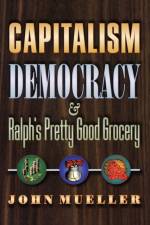
Democracy is overrated. Capitalism, on the other hand, doesn't get enough credit. In this provocative and engaging book, John Mueller argues that these mismatches between image and reality create significant political and economic problems--inspiring instability, inefficiency, and widespread cynicism. We would be far better off, he writes, if we recognized that neither system is ideal or disastrous and accepted instead the humdrum truth that both are "e;pretty good."e; And, to Mueller, that means good enough. He declares that what is true of Garrison Keillor's fictional store "e;Ralph's Pretty Good Grocery"e; is also true of democracy and capitalism: if you can't get what you want there, "e;you can probably get along without it."e; Mueller begins by noting that capitalism is commonly thought to celebrate greed and to require discourtesy, deceit, and callousness. However, with examples that range from car dealerships and corporate boardrooms to the shop of an eighteenth-century silk merchant, Mueller shows that capitalism in fact tends to reward behavior that is honest, fair, civil, and compassionate. He argues that this gap between image and reality hampers economic development by encouraging people to behave dishonestly, unfairly, and discourteously to try to get ahead and to neglect the virtuous behavior that is an important source of efficiency and gain. The problem with democracy's image, by contrast, is that our expectations are too high. We are too often led by theorists, reformers, and romantics to believe that democracy should consist of egalitarianism and avid civic participation. In fact, democracy will always be chaotic, unequal, and marked by apathy. It offers reasonable freedom and security, but not political paradise. To idealize democracy, Mueller writes, is to undermine it, since the inevitable contrast with reality creates public cynicism and can hamper democracy's growth and development. Mueller presents these arguments with sophistication, wit, and erudition. He combines mastery of current political and economic literature with references to figures ranging from Plato to P. T. Barnum, from Immanuel Kant to Ronald Reagan, from Shakespeare to Frank Capra. Broad in scope and rich in detail, the book will provoke debate among economists, political scientists, and anyone interested in the problems (or non-problems) of modern democracy and capitalism.
How does an ethnographer write about violence? How can he make sense of violent acts, for himself and for his readers, without compromising its sheer excess and its meaning-defying core? How can he remain a scholarly observer when the country of his birth is engulfed by terror? These are some of the questions that engage Valentine Daniel in this exploration of life and death in contemporary Sri Lanka. In 1983 Daniel "e;walked into the ashes and mortal residue"e; of the violence that had occurred in his homeland. His planned project--the study of women's folk songs as ethnohistory--was immediately displaced by the responsibility that he felt had been given to him, by surviving family members and friends of victims, to recount beyond Sri Lanka what he had seen and heard there. Trained to do fieldwork by staying in one place and educated to look for coherence and meaning in human behavior, what does an anthropologist do when he is forced by circumstances to keep moving, searching for reasons he never finds? How does he write an ethnography (or an anthropography, to use the author's term) without transforming it into a pornography of violence? In avoiding fattening the anthropography into prurience, how does he avoid flattening it with theory? The ways in which Daniel grapples with these questions, and their answers, instill this groundbreaking book with a rare sense of passion, purpose, and intellect.
This iconoclastic and fundamental work, Eric Nordlinger's last, advocates a new variant of isolationism, a "e;national strategy"e; confining U.S. military actions largely to North America and to neighboring sea-and air- lanes but encouraging international activism and engagement in nonsecurity realms. In Nordlinger's view, disengaging from security commitments on distant shores would liberate the United States to use its resources and decision-making powers to act more effectively abroad in matters of economic policy and human rights. A national strategy would then become a powerful new method of encouraging international ideals of democracy, and isolationism would be freed of its previous associations with appeasement, weakness, economic protectionism, and self-serving nationalism. Nordlinger draws on the recent historical record to show that a national strategy would have lessened the perils of earlier decades, including those of the Cold War. While real dangers did exist during this period, engaged strategies, such as containment, too often exacerbated them. The United States could have effectively and far less expensively helped to deter Communist aggression in Europe and Asia by encouraging other nations to make larger investments in their own protection. Marshaling impressive empirical evidence in defense of a controversial position, this final work by a leading scholar of international affairs is essential reading for scholars, practitioners, and lay readers alike.
This first truly international history of the Korean War argues that by its timing, its course, and its outcome it functioned as a substitute for World War III. Stueck draws on recently available materials from seven countries, plus the archives of the United Nations, presenting a detailed narrative of the diplomacy of the conflict and a broad assessment of its critical role in the Cold War. He emphasizes the contribution of the United Nations, which at several key points in the conflict provided an important institutional framework within which less powerful nations were able to restrain the aggressive tendencies of the United States. In Stueck's view, contributors to the U.N. cause in Korea provided support not out of any abstract commitment to a universal system of collective security but because they saw an opportunity to influence U.S. policy. Chinese intervention in Korea in the fall of 1950 brought with it the threat of world war, but at that time and in other instances prior to the armistice in July 1953, America's NATO allies and Third World neutrals succeeded in curbing American adventurism. While conceding the tragic and brutal nature of the war, Stueck suggests that it helped to prevent the occurrence of an even more destructive conflict in Europe.
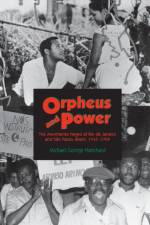
From recent data on disparities between Brazilian whites and non-whites in areas of health, education, and welfare, it is clear that vast racial inequalities do exist in Brazil, contrary to earlier assertions in race relations scholarship that the country is a "e;racial democracy."e; Here Michael George Hanchard explores the implications of this increasingly evident racial inequality, highlighting Afro-Brazilian attempts at mobilizing for civil rights and the powerful efforts of white elites to neutralize such attempts. Within a neo-Gramscian framework, Hanchard shows how racial hegemony in Brazil has hampered ethnic and racial identification among non-whites by simultaneously promoting racial discrimination and false premises of racial equality. Drawing from personal archives of and interviews with participants in the Movimento Negro of Rio de Janeiro and Sao Paulo, Hanchard presents a wealth of empirical evidence about Afro-Brazilian militants, comparing their effectiveness with their counterparts in sub-Saharan Africa, the United States, and the Caribbean in the post-World War II period. He analyzes, in comprehensive detail, the extreme difficulties experienced by Afro-Brazilian activists in identifying and redressing racially specific patterns of violation and discrimination. Hanchard argues that the Afro-American struggle to subvert dominant cultural forms and practices carries the danger of being subsumed by the contradictions that these dominant forms produce.
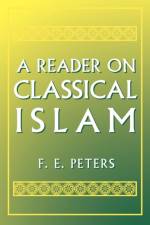
To enable the reader to shape, or perhaps reshape, an understanding of the Islamic tradition, F. E. Peters skillfully combines extensive passages from Islamic texts with a fascinating commentary of his own. In so doing, he presents a substantial body of literary evidence that will enable the reader to grasp the bases of Muslim faith and, more, to get some sense of the breadth and depth of Islamic religious culture as a whole. The voices recorded here are those of Muslims engaged in discourse with their God and with each other--historians, lawyers, mystics, and theologians, from the earliest Companions of the Prophet Muhammad down to Ibn Rushd or "e;Averroes"e; (d. 1198), al-Nawawi (d. 1278), and Ibn Khaldun (d. 1406). These religious seekers lived in what has been called the "e;classical"e; period in the development of Islam, the era when the exemplary works of law and spirituality were written, texts of such universally acknowledged importance that subsequent generations of Muslims gratefully understood themselves as heirs to an enormously broad and rich legacy of meditation on God's Word. "e;Islam"e; is a word that seems simple to understand. It means "e;submission,"e; and, more specifically in the context where it first and most familiarly appears, "e;submission to the will of God."e; That context is the Quran, the Sacred Book of the Muslims, from which flow the patterns of belief and practice that today claim the spiritual allegiance of hundreds of millions around the globe. By drawing on the works of the great masters--Islam in its own words--Peters enriches our understanding of the community of "e;those who have submitted"e; and their imposing religious and political culture, which is becoming ever more important to the West.
What is the best way to photograph a speeding bullet? Why does light move through glass in the least amount of time possible? How can lost hikers find their way out of a forest? What will rainbows look like in the future? Why do soap bubbles have a shape that gives them the least area? By combining the mathematical history of extrema with contemporary examples, Paul J. Nahin answers these intriguing questions and more in this engaging and witty volume. He shows how life often works at the extremes--with values becoming as small (or as large) as possible--and how mathematicians over the centuries have struggled to calculate these problems of minima and maxima. From medieval writings to the development of modern calculus to the current field of optimization, Nahin tells the story of Dido's problem, Fermat and Descartes, Torricelli, Bishop Berkeley, Goldschmidt, and more. Along the way, he explores how to build the shortest bridge possible between two towns, how to shop for garbage bags, how to vary speed during a race, and how to make the perfect basketball shot. Written in a conversational tone and requiring only an early undergraduate level of mathematical knowledge, When Least Is Best is full of fascinating examples and ready-to-try-at-home experiments. This is the first book on optimization written for a wide audience, and math enthusiasts of all backgrounds will delight in its lively topics.
A translation of selected non-English texts included in Volume 16 is available in paperback. Since this supplementary paperback includes only select portions of Volume 16, it is not recommended for purchase without the main volume. Every document in The Collected Papers of Albert Einstein appears in the language in which it was written, and this supplementary paperback volume presents the English translations of select portions of non-English materials in Volume 16. This translation does not include notes or annotations of the documentary volume and is not intended for use without the original language documentary edition, which provides the extensive editorial commentary necessary for a full historical and scientific understanding of the documents.
"The first book to look at naturalized parrots with a global perspective, with a wide range of chapters by 36 leading researchers"--
Abonner på vårt nyhetsbrev og få rabatter og inspirasjon til din neste leseopplevelse.
Ved å abonnere godtar du vår personvernerklæring.