













Gjør som tusenvis av andre bokelskere
Abonner på vårt nyhetsbrev og få rabatter og inspirasjon til din neste leseopplevelse.
Ved å abonnere godtar du vår personvernerklæring.Du kan når som helst melde deg av våre nyhetsbrev.

The freedom to take part in civic life--whether in the exercise of one's right to vote or congregate and protest--has become increasingly less important to Americans than individual rights and liberties. In Public Freedom, renowned political theorist Dana Villa argues that political freedom is essential to both the preservation of constitutional government and the very substance of American democracy itself. Through intense close readings of theorists such as Hegel, Tocqueville, Mill, Adorno, Arendt, and Foucault, Villa diagnoses the key causes of our democratic discontent and offers solutions to preserve at least some of our democratic hopes. He demonstrates how Americans' preoccupation with a market-based conception of freedom--that is, the personal freedom to choose among different material, moral, and vocational goods--has led to the gradual erosion of meaningful public participation in politics as well as diminished interest in the health of the public realm itself. Villa critically examines, among other topics, the promise and limits of civil society and associational life as sources of democratic renewal; the effects of mass media on the public arena; and the problematic but still necessary ideas of civic competence and democratic maturity. Public Freedom is a passionate and insightful defense of political liberties at a moment in America's history when such freedoms are very much at risk.
How can geckoes walk on the ceiling and basilisk lizards run over water? What are the aerodynamic effects that enable small insects to fly? What are the relative merits of squids' jet-propelled swimming and fishes' tail-powered swimming? Why do horses change gait as they increase speed? What determines our own vertical leap? Recent technical advances have greatly increased researchers' ability to answer these questions with certainty and in detail. This text provides an up-to-date overview of how animals run, walk, jump, crawl, swim, soar, hover, and fly. Excluding only the tiny creatures that use cilia, it covers all animals that power their movements with muscle--from roundworms to whales, clams to elephants, and gnats to albatrosses. The introduction sets out the general rules governing all modes of animal locomotion and considers the performance criteria--such as speed, endurance, and economy--that have shaped their selection. It introduces energetics and optimality as basic principles. The text then tackles each of the major modes by which animals move on land, in water, and through air. It explains the mechanisms involved and the physical and biological forces shaping those mechanisms, paying particular attention to energy costs. Focusing on general principles but extensively discussing a wide variety of individual cases, this is a superb synthesis of current knowledge about animal locomotion. It will be enormously useful to advanced undergraduates, graduate students, and a range of professional biologists, physicists, and engineers.
In recent years, considerable progress has been made in studying algebraic cycles using infinitesimal methods. These methods have usually been applied to Hodge-theoretic constructions such as the cycle class and the Abel-Jacobi map. Substantial advances have also occurred in the infinitesimal theory for subvarieties of a given smooth variety, centered around the normal bundle and the obstructions coming from the normal bundle's first cohomology group. Here, Mark Green and Phillip Griffiths set forth the initial stages of an infinitesimal theory for algebraic cycles. The book aims in part to understand the geometric basis and the limitations of Spencer Bloch's beautiful formula for the tangent space to Chow groups. Bloch's formula is motivated by algebraic K-theory and involves differentials over Q. The theory developed here is characterized by the appearance of arithmetic considerations even in the local infinitesimal theory of algebraic cycles. The map from the tangent space to the Hilbert scheme to the tangent space to algebraic cycles passes through a variant of an interesting construction in commutative algebra due to Angeniol and Lejeune-Jalabert. The link between the theory given here and Bloch's formula arises from an interpretation of the Cousin flasque resolution of differentials over Q as the tangent sequence to the Gersten resolution in algebraic K-theory. The case of 0-cycles on a surface is used for illustrative purposes to avoid undue technical complications.
Contemporary law and public policy often treat human beings as selfish creatures who respond only to punishments and rewards. Yet every day we behave unselfishly--few of us mug the elderly or steal the paper from our neighbor's yard, and many of us go out of our way to help strangers. We nevertheless overlook our own good behavior and fixate on the bad things people do and how we can stop them. In this pathbreaking book, acclaimed law and economics scholar Lynn Stout argues that this focus neglects the crucial role our better impulses could play in society. Rather than lean on the power of greed to shape laws and human behavior, Stout contends that we should rely on the force of conscience. Stout makes the compelling case that conscience is neither a rare nor quirky phenomenon, but a vital force woven into our daily lives. Drawing from social psychology, behavioral economics, and evolutionary biology, Stout demonstrates how social cues--instructions from authorities, ideas about others' selfishness and unselfishness, and beliefs about benefits to others--have a powerful role in triggering unselfish behavior. Stout illustrates how our legal system can use these social cues to craft better laws that encourage more unselfish, ethical behavior in many realms, including politics and business. Stout also shows how our current emphasis on self-interest and incentives may have contributed to the catastrophic political missteps and financial scandals of recent memory by encouraging corrupt and selfish actions, and undermining society's collective moral compass. This book proves that if we care about effective laws and civilized society, the powers of conscience are simply too important for us to ignore.
Fought on what to Westerners was a remote peninsula in northeast Asia, the Korean War was a defining moment of the Cold War. It militarized a conflict that previously had been largely political and economic. And it solidified a series of divisions--of Korea into North and South, of Germany and Europe into East and West, and of China into the mainland and Taiwan--which were to persist for at least two generations. Two of these divisions continue to the present, marking two of the most dangerous political hotspots in the post-Cold War world. The Korean War grew out of the Cold War, it exacerbated the Cold War, and its impact transcended the Cold War. William Stueck presents a fresh analysis of the Korean War's major diplomatic and strategic issues. Drawing on a cache of newly available information from archives in the United States, China, and the former Soviet Union, he provides an interpretive synthesis for scholars and general readers alike. Beginning with the decision to divide Korea in 1945, he analyzes first the origins and then the course of the conflict. He takes into account the balance between the international and internal factors that led to the war and examines the difficulty in containing and eventually ending the fighting. This discussion covers the progression toward Chinese intervention as well as factors that both prolonged the war and prevented it from expanding beyond Korea. Stueck goes on to address the impact of the war on Korean-American relations and evaluates the performance and durability of an American political culture confronting a challenge from authoritarianism abroad. Stueck's crisp yet in-depth analysis combines insightful treatment of past events with a suggestive appraisal of their significance for present and future.
An ideal introduction to Einstein's general theory of relativityThis unique textbook provides an accessible introduction to Einstein's general theory of relativity, a subject of breathtaking beauty and supreme importance in physics. With his trademark blend of wit and incisiveness, A. Zee guides readers from the fundamentals of Newtonian mechanics to the most exciting frontiers of research today, including de Sitter and anti-de Sitter spacetimes, Kaluza-Klein theory, and brane worlds. Unlike other books on Einstein gravity, this book emphasizes the action principle and group theory as guides in constructing physical theories. Zee treats various topics in a spiral style that is easy on beginners, and includes anecdotes from the history of physics that will appeal to students and experts alike. He takes a friendly approach to the required mathematics, yet does not shy away from more advanced mathematical topics such as differential forms. The extensive discussion of black holes includes rotating and extremal black holes and Hawking radiation. The ideal textbook for undergraduate and graduate students, Einstein Gravity in a Nutshell also provides an essential resource for professional physicists and is accessible to anyone familiar with classical mechanics and electromagnetism. It features numerous exercises as well as detailed appendices covering a multitude of topics not readily found elsewhere.Provides an accessible introduction to Einstein's general theory of relativityGuides readers from Newtonian mechanics to the frontiers of modern researchEmphasizes symmetry and the Einstein-Hilbert actionCovers topics not found in standard textbooks on Einstein gravityIncludes interesting historical asidesFeatures numerous exercises and detailed appendicesIdeal for students, physicists, and scientifically minded lay readersSolutions manual (available only to teachers)
Today's standard textbooks treat the theoretical structure of electric and magnetic fields, but their emphasis is on electromagnetic radiation and static-electric and magnetic fields. In this book, Eugene Parker provides advanced graduate students and researchers with a much-needed complement to existing texts, one that discusses the dynamic electromagnetism of the cosmos--that is, the vast magnetic fields that are carried bodily in the swirling ionized gases of stars and galaxies and throughout intergalactic space. Parker is arguably the world's leading authority on solar wind and the effects of magnetic fields in the heliosphere, and his originality of thought and distinctive approach to physics are very much in evidence here. Seeking to enrich discussions in standard texts and correct misconceptions about the dynamics of these large-scale fields, Parker engages readers in a series of "e;conversations"e; that are at times anecdotal and even entertaining without ever sacrificing theoretical rigor. The dynamics he describes represents the Maxwell stresses of the magnetic field working against the pressure and inertia of the bulk motion of ionized gases, characterized in terms of the magnetic field and gas velocity. Parker shows how this dynamic interaction cannot be fully expressed in terms of the electric current and electric field. Conversations on Electric and Magnetic Fields in the Cosmos goes back to basics to explain why classical hydrodynamics and magnetohydrodynamics are inescapable, even in the deepest reaches of space.
An argument against treating our bodies as commoditiesNo one wants to be treated like an object, regarded as an item of property, or put up for sale. Yet many people frame personal autonomy in terms of self-ownership, representing themselves as property owners with the right to do as they wish with their bodies. Others do not use the language of property, but are similarly insistent on the rights of free individuals to decide for themselves whether to engage in commercial transactions for sex, reproduction, or organ sales. Drawing on analyses of rape, surrogacy, and markets in human organs, Our Bodies, Whose Property? challenges notions of freedom based on ownership of our bodies and argues against the normalization of markets in bodily services and parts. Anne Phillips explores the risks associated with metaphors of property and the reasons why the commodification of the body remains problematic.What, she asks, is wrong with thinking of oneself as the owner of one's body? What is wrong with making our bodies available for rent or sale? What, if anything, is the difference between markets in sex, reproduction, or human body parts, and the other markets we commonly applaud? Phillips contends that body markets occupy the outer edges of a continuum that is, in some way, a feature of all labor markets. But she also emphasizes that we all have bodies, and considers the implications of this otherwise banal fact for equality. Bodies remind us of shared vulnerability, alerting us to the common experience of living as embodied beings in the same world.Examining the complex issue of body exceptionalism, Our Bodies, Whose Property? demonstrates that treating the body as property makes human equality harder to comprehend.
This volume studies the dynamics of iterated holomorphic mappings from a Riemann surface to itself, concentrating on the classical case of rational maps of the Riemann sphere. This subject is large and rapidly growing. These lectures are intended to introduce some key ideas in the field, and to form a basis for further study. The reader is assumed to be familiar with the rudiments of complex variable theory and of two-dimensional differential geometry, as well as some basic topics from topology. This third edition contains a number of minor additions and improvements: A historical survey has been added, the definition of Lattes map has been made more inclusive, and the ecalle-Voronin theory of parabolic points is described. The residu iteratif is studied, and the material on two complex variables has been expanded. Recent results on effective computability have been added, and the references have been expanded and updated. Written in his usual brilliant style, the author makes difficult mathematics look easy. This book is a very accessible source for much of what has been accomplished in the field.
Writings by early mathematicians feature language and notations that are quite different from what we're familiar with today. Sourcebooks on the history of mathematics provide some guidance, but what has been lacking is a guide tailored to the needs of readers approaching these writings for the first time. How to Read Historical Mathematics fills this gap by introducing readers to the analytical questions historians ask when deciphering historical texts. Sampling actual writings from the history of mathematics, Benjamin Wardhaugh reveals the questions that will unlock the meaning and significance of a given text--Who wrote it, why, and for whom? What was its author's intended meaning? How did it reach its present form? Is it original or a translation? Why is it important today? Wardhaugh teaches readers to think about what the original text might have looked like, to consider where and when it was written, and to formulate questions of their own. Readers pick up new skills with each chapter, and gain the confidence and analytical sophistication needed to tackle virtually any text in the history of mathematics. Introduces readers to the methods of textual analysis used by historians Uses actual source material as examples Features boxed summaries, discussion questions, and suggestions for further reading Supplements all major sourcebooks in mathematics history Designed for easy reference Ideal for students and teachers
Since it was first published, Quantum Field Theory in a Nutshell has quickly established itself as the most accessible and comprehensive introduction to this profound and deeply fascinating area of theoretical physics. Now in this fully revised and expanded edition, A. Zee covers the latest advances while providing a solid conceptual foundation for students to build on, making this the most up-to-date and modern textbook on quantum field theory available. This expanded edition features several additional chapters, as well as an entirely new section describing recent developments in quantum field theory such as gravitational waves, the helicity spinor formalism, on-shell gluon scattering, recursion relations for amplitudes with complex momenta, and the hidden connection between Yang-Mills theory and Einstein gravity. Zee also provides added exercises, explanations, and examples, as well as detailed appendices, solutions to selected exercises, and suggestions for further reading. The most accessible and comprehensive introductory textbook available Features a fully revised, updated, and expanded text Covers the latest exciting advances in the field Includes new exercises Offers a one-of-a-kind resource for students and researchers Leading universities that have adopted this book include: Arizona State University Boston University Brandeis University Brown University California Institute of Technology Carnegie Mellon College of William & Mary Cornell Harvard University Massachusetts Institute of Technology Northwestern University Ohio State University Princeton University Purdue University - Main Campus Rensselaer Polytechnic Institute Rutgers University - New Brunswick Stanford University University of California - Berkeley University of Central Florida University of Chicago University of Michigan University of Montreal University of Notre Dame Vanderbilt University Virginia Tech University
Just as we learn from, influence, and are influenced by others, our social interactions drive economic growth in cities, regions, and nations--determining where households live, how children learn, and what cities and firms produce. From Neighborhoods to Nations synthesizes the recent economics of social interactions for anyone seeking to understand the contributions of this important area. Integrating theory and empirics, Yannis Ioannides explores theoretical and empirical tools that economists use to investigate social interactions, and he shows how a familiarity with these tools is essential for interpreting findings. The book makes work in the economics of social interactions accessible to other social scientists, including sociologists, political scientists, and urban planning and policy researchers. Focusing on individual and household location decisions in the presence of interactions, Ioannides shows how research on cities and neighborhoods can explain communities' composition and spatial form, as well as changes in productivity, industrial specialization, urban expansion, and national growth. The author examines how researchers address the challenge of separating personal, social, and cultural forces from economic ones. Ioannides provides a toolkit for the next generation of inquiry, and he argues that quantifying the impact of social interactions in specific contexts is essential for grasping their scope and use in informing policy. Revealing how empirical work on social interactions enriches our understanding of cities as engines of innovation and economic growth, From Neighborhoods to Nations carries ramifications throughout the social sciences and beyond.
The atmosphere is critical to climate change. It can amplify shifts in the climate system, and also mitigate them. This primer offers a short, reader-friendly introduction to these atmospheric processes and how they work, written by a leading expert on the subject. Giving readers an overview of key atmospheric processes, David Randall looks at how our climate system receives energy from the sun and sheds it by emitting infrared radiation back into space. The atmosphere regulates these radiative energy flows and transports energy through weather systems such as thunderstorms, monsoons, hurricanes, and winter storms. Randall explains how these processes work, and also how precipitation, cloud formation, and other phase changes of water strongly influence weather and climate. He discusses how atmospheric feedbacks affect climate change, how the large-scale atmospheric circulation works, how predicting the weather and the climate are fundamentally different challenges, and much more. This is the ideal introduction for students and nonspecialists. No prior experience in atmospheric science is needed, only basic college physics. Authoritative and concise, Atmosphere, Clouds, and Climate features a glossary of terms, suggestions for further reading, and easy-to-follow explanations of a few key equations. This accessible primer is the essential introduction to atmospheric processes and the vital role they play in our climate system.
This graduate-level physics textbook provides a comprehensive treatment of the basic principles and phenomena of classical electromagnetism. While many electromagnetism texts use the subject to teach mathematical methods of physics, here the emphasis is on the physical ideas themselves. Anupam Garg distinguishes between electromagnetism in vacuum and that in material media, stressing that the core physical questions are different for each. In vacuum, the focus is on the fundamental content of electromagnetic laws, symmetries, conservation laws, and the implications for phenomena such as radiation and light. In material media, the focus is on understanding the response of the media to imposed fields, the attendant constitutive relations, and the phenomena encountered in different types of media such as dielectrics, ferromagnets, and conductors. The text includes applications to many topical subjects, such as magnetic levitation, plasmas, laser beams, and synchrotrons. Classical Electromagnetism in a Nutshell is ideal for a yearlong graduate course and features more than 300 problems, with solutions to many of the advanced ones. Key formulas are given in both SI and Gaussian units; the book includes a discussion of how to convert between them, making it accessible to adherents of both systems. Offers a complete treatment of classical electromagnetism Emphasizes physical ideas Separates the treatment of electromagnetism in vacuum and material media Presents key formulas in both SI and Gaussian units Covers applications to other areas of physics Includes more than 300 problems
Ana reported being blindfolded, doused in cold water. She was tied to a metal frame; electrodes were fastened to her body. Someone cranked a hand-operated generator. One spring more than twenty years ago, David Kennedy visited Ana in an Uruguayan prison as part of the first wave of humanitarian activists to take the fight for human rights to the very sites where atrocities were committed. Kennedy was eager to learn what human rights workers could do, idealistic about changing the world and helping people like Ana. But he also had doubts. What could activists really change? Was there something unseemly about humanitarians from wealthy countries flitting into dictatorships, presenting themselves as white knights, and taking in the tourist sites before flying home? Kennedy wrote up a memoir of his hopes and doubts on that trip to Uruguay and combines it here with reflections on what has happened to the world of international humanitarianism since. Now bureaucratized, naming and shaming from a great height in big-city office towers, human rights workers have achieved positions of formidable power. They have done much good. But the moral ambiguity of their work and questions about whether they can sometimes cause real harm endure. Kennedy tackles those questions here with his trademark combination of narrative drive and unflinching honesty. This is a powerful and disturbing tale of the bright sides and the dark sides of the humanitarian world built by good intentions.
No Enchanted Palace traces the origins and early development of the United Nations, one of the most influential yet perhaps least understood organizations active in the world today. Acclaimed historian Mark Mazower forces us to set aside the popular myth that the UN miraculously rose from the ashes of World War II as the guardian of a new and peaceful global order, offering instead a strikingly original interpretation of the UN's ideological roots, early history, and changing role in world affairs. Mazower brings the founding of the UN brilliantly to life. He shows how the UN's creators envisioned a world organization that would protect the interests of empire, yet how this imperial vision was decisively reshaped by the postwar reaffirmation of national sovereignty and the unanticipated rise of India and other former colonial powers. This is a story told through the clash of personalities, such as South African statesman Jan Smuts, who saw in the UN a means to protect the old imperial and racial order; Raphael Lemkin and Joseph Schechtman, Jewish intellectuals at odds over how the UN should combat genocide and other atrocities; and Jawaharlal Nehru, India's first prime minister, who helped transform the UN from an instrument of empire into a forum for ending it. A much-needed historical reappraisal of the early development of this vital world institution, No Enchanted Palace reveals how the UN outgrew its origins and has exhibited an extraordinary flexibility that has enabled it to endure to the present day.
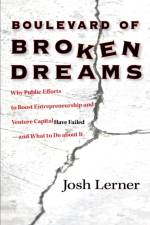
Silicon Valley, Singapore, Tel Aviv--the global hubs of entrepreneurial activity--all bear the marks of government investment. Yet, for every public intervention that spurs entrepreneurial activity, there are many failed efforts that waste untold billions in taxpayer dollars. When has governmental sponsorship succeeded in boosting growth, and when has it fallen terribly short? Should the government be involved in such undertakings at all? Boulevard of Broken Dreams is the first extensive look at the ways governments have supported entrepreneurs and venture capitalists across decades and continents. Josh Lerner, one of the foremost experts in the field, provides valuable insights into why some public initiatives work while others are hobbled by pitfalls, and he offers suggestions for how public ventures should be implemented in the future. Discussing the complex history of Silicon Valley and other pioneering centers of venture capital, Lerner uncovers the extent of government influence in prompting growth. He examines the public strategies used to advance new ventures, points to the challenges of these endeavors, and reveals the common flaws undermining far too many programs--poor design, a lack of understanding for the entrepreneurial process, and implementation problems. Lerner explains why governments cannot dictate how venture markets evolve, and why they must balance their positions as catalysts with an awareness of their limited ability to stimulate the entrepreneurial sector. As governments worldwide seek to spur economic growth in ever more aggressive ways, Boulevard of Broken Dreams offers an important caution. The book argues for a careful approach to government support of entrepreneurial activities, so that the mistakes of earlier efforts are not repeated.
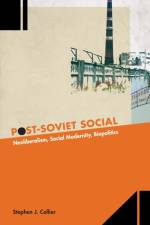
The Soviet Union created a unique form of urban modernity, developing institutions of social provisioning for hundreds of millions of people in small and medium-sized industrial cities spread across a vast territory. After the collapse of socialism these institutions were profoundly shaken--casualties, in the eyes of many observers, of market-oriented reforms associated with neoliberalism and the Washington Consensus. In Post-Soviet Social, Stephen Collier examines reform in Russia beyond the Washington Consensus. He turns attention from the noisy battles over stabilization and privatization during the 1990s to subsequent reforms that grapple with the mundane details of pipes, wires, bureaucratic routines, and budgetary formulas that made up the Soviet social state. Drawing on Michel Foucault's lectures from the late 1970s, Post-Soviet Social uses the Russian case to examine neoliberalism as a central form of political rationality in contemporary societies. The book's basic finding--that neoliberal reforms provide a justification for redistribution and social welfare, and may work to preserve the norms and forms of social modernity--lays the groundwork for a critical revision of conventional understandings of these topics.
The tobacco plant synthesizes nicotine to protect itself from herbivores. The female moth broadcasts sex pheromones to attract a mate, while a soldier ant deploys an alarm pheromone to call for help. The carbon dioxide on a mammal's breath beckons hungry ticks and mosquitoes, while a flower's fragrance speaks to the honey bee. Indeed, much of the communication that occurs within and between various species of organisms is done not by sight, sound, or touch, but with chemicals. From mating to parenting, foraging to self-defense, plant and animal activities are accomplished largely by the secretion or exchange of organic chemicals. The fascinating and fast-developing science that encompasses these diverse phenomena is introduced here, by William Agosta, in a series of remarkable stories absolutely accessible to the general reader yet revelatory to chemists and biologists. Among Agosta's characters are the organisms that steal, counterfeit, or interpret the chemical signals of other species for their own ends. We learn of seeds that mimic ant odors to facilitate their own dispersion and flies that follow the scent of truffles to lay their eggs. We read about pit vipers that react in terror when their flicking tongues detect a king snake, and slave-making ants incapable of finding their own food. And we meet ice-age people who ate birch fungus to relieve whipworms and early human hunters who used the urine of wolves to maneuver deer to favorable sites. Agosta also chronicles the rapid development of the applied science that makes use of chemical ecology. As researchers deepen our understanding of the biological world, they are making economically significant discoveries (such as enzymes that remain stable in extreme heat), finding ways to reduce our reliance on manufactured pesticides, identifying new uses for traditional medicines, and developing sophisticated new pharmaceuticals effective in treating malaria and several cancers. On the horizon are antiviral agents derived from the chemical defenses of marine species. From the exploits of flies to the high-stakes effort to cure human disease, Agosta's tour of chemical ecology grants any reader entrance to the invisible realm where chemistry determines life and death.
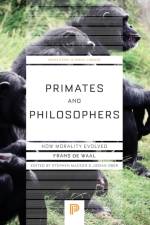
Can virtuous behavior be explained by nature, and not by human rational choice? "e;It's the animal in us,"e; we often hear when we've been bad. But why not when we're good? Primates and Philosophers tackles this question by exploring the biological foundations of one of humanity's most valued traits: morality. In this provocative book, renowned primatologist Frans de Waal argues that modern-day evolutionary biology takes far too dim a view of the natural world, emphasizing our "e;selfish"e; genes and reinforcing our habit of labeling ethical behavior as humane and the less civilized as animalistic. Seeking the origin of human morality not in evolution but in human culture, science insists that we are moral by choice, not by nature. Citing remarkable evidence based on his extensive research of primate behavior, de Waal attacks "e;Veneer Theory,"e; which posits morality as a thin overlay on an otherwise nasty nature. He explains how we evolved from a long line of animals that care for the weak and build cooperation with reciprocal transactions. Drawing on Darwin, recent scientific advances, and his extensive research of primate behavior, de Waal demonstrates a strong continuity between human and animal behavior. He probes issues such as anthropomorphism and human responsibilities toward animals. His compelling account of how human morality evolved out of mammalian society will fascinate anyone who has ever wondered about the origins and reach of human goodness. Based on the Tanner Lectures de Waal delivered at Princeton University's Center for Human Values in 2004, Primates and Philosophers includes responses by the philosophers Peter Singer, Christine M. Korsgaard, and Philip Kitcher and the science writer Robert Wright. They press de Waal to clarify the differences between humans and other animals, yielding a lively debate that will fascinate all those who wonder about the origins and reach of human goodness.
The Future of Assisted Suicide and Euthanasia provides the most thorough overview of the ethical and legal issues raised by assisted suicide and euthanasia--as well as the most comprehensive argument against their legalization--ever published. In clear terms accessible to the general reader, Neil Gorsuch thoroughly assesses the strengths and weaknesses of leading contemporary ethical arguments for assisted suicide and euthanasia. He explores evidence and case histories from the Netherlands and Oregon, where the practices have been legalized. He analyzes libertarian and autonomy-based arguments for legalization as well as the impact of key U.S. Supreme Court decisions on the debate. And he examines the history and evolution of laws and attitudes regarding assisted suicide and euthanasia in American society. After assessing the strengths and weaknesses of arguments for assisted suicide and euthanasia, Gorsuch builds a nuanced, novel, and powerful moral and legal argument against legalization, one based on a principle that, surprisingly, has largely been overlooked in the debate--the idea that human life is intrinsically valuable and that intentional killing is always wrong. At the same time, the argument Gorsuch develops leaves wide latitude for individual patient autonomy and the refusal of unwanted medical treatment and life-sustaining care, permitting intervention only in cases where an intention to kill is present. Those on both sides of the assisted suicide question will find Gorsuch's analysis to be a thoughtful and stimulating contribution to the debate about one of the most controversial public policy issues of our day.
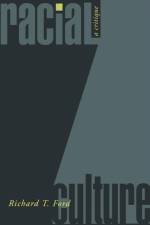
What is black culture? Does it have an essence? What do we lose and gain by assuming that it does, and by building our laws accordingly? This bold and provocative book questions the common presumption of political multiculturalism that social categories such as race, ethnicity, gender, and sexuality are defined by distinctive cultural practices. Richard Ford argues against law reform proposals that would attempt to apply civil rights protections to "e;cultural difference."e; Unlike many criticisms of multiculturalism, which worry about "e;reverse discrimination"e; or the erosion of core Western cultural values, the book's argument is primarily focused on the adverse effects of multicultural rhetoric and multicultural rights on their supposed beneficiaries. In clear and compelling prose, Ford argues that multicultural accounts of cultural difference do not accurately describe the practices of social groups. Instead these accounts are prescriptive: they attempt to canonize a narrow, parochial, and contestable set of ideas about appropriate group culture and to discredit more cosmopolitan lifestyles, commitments, and values. The book argues that far from remedying discrimination and status hierarchy, "e;cultural rights"e; share the ideological presuppositions, and participate in the discursive and institutional practices, of racism, sexism, and homophobia. Ford offers specific examples in support of this thesis, in diverse contexts such as employment discrimination, affirmative action, and transracial adoption. This is a major contribution to our understanding of today's politics of race, by one of the most distinctive and important young voices in America's legal academy.
More than any other advanced industrial democracy, the United States is besieged by firearms violence. Each year, some 30,000 people die by gunfire. Over the course of its history, the nation has witnessed the murders of beloved public figures; massacres in workplaces and schools; and epidemics of gun violence that terrorize neighborhoods and claim tens of thousands of lives. Commanding majorities of Americans voice support for stricter controls on firearms. Yet they have never mounted a true national movement for gun control. Why? Disarmed unravels this paradox. Based on historical archives, interviews, and original survey evidence, Kristin Goss suggests that the gun control campaign has been stymied by a combination of factors, including the inability to secure patronage resources, the difficulties in articulating a message that would resonate with supporters, and strategic decisions made in the name of effective policy. The power of the so-called gun lobby has played an important role in hobbling the gun-control campaign, but that is not the entire story. Instead of pursuing a strategy of incremental change on the local and state levels, gun control advocates have sought national policies. Some 40% of state gun control laws predate the 1970s, and the gun lobby has systematically weakened even these longstanding restrictions. A compelling and engagingly written look at one of America's most divisive political issues, Disarmed illuminates the organizational, historical, and policy-related factors that constrain mass mobilization, and brings into sharp relief the agonizing dilemmas faced by advocates of gun control and other issues in the United States.
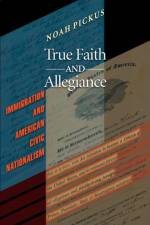
True Faith and Allegiance is a provocative account of nationalism and the politics of turning immigrants into citizens and Americans. Noah Pickus offers an alternative to the wild swings between emotionally fraught positions on immigration and citizenship of the past two decades. Drawing on political theory, history, and law, he argues for a renewed civic nationalism that melds principles and peoplehood. This tradition of civic nationalism held sway at America's founding and in the Progressive Era. Pickus explores how, from James Madison to Teddy Roosevelt, its proponents sought to combine reason and reverence and to balance inclusion and exclusion. He takes us through controversies over citizenship for blacks and the rights of aliens at the nation's founding, examines the interplay of ideas and institutions in the Americanization movement in the 1910s and 1920s, and charts how both left and right promoted a policy of neglect toward immigrants and toward citizenship in the second half of the twentieth century. True Faith and Allegiance shows that contemporary debates over a range of immigration and citizenship policies cannot be resolved by appeals to fixed notions of creed or culture, but require a supple civic nationalism that bridges the gap between immigrants' needs and American principles and practices. It is critical reading for scholars, policy makers, and all who care about immigrants and about America.
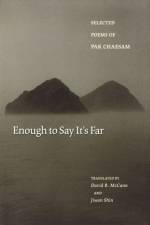
This is the first English translation of selected poems by one of the most important and unusual modern poets of South Korea. In contrast to the strident political protests found in the poetry of many of his contemporaries, Pak Chaesam's work is characterized by intimate portraits of place, nature, childhood, and human relationships, and by indirection, nostalgia, and reflectiveness. Often focused upon the border of this world and some other, Pak writes with a spareness of presentation but a cornucopia of imagery, meticulously exploring objective and subjective realms of existence and memory. Encouraging the reader to see and listen, and to allow the sensory to reshape the analytical, Pak's poetry opens up new realms of experience. A fellow Korean poet described Pak's poetry as being "e;the most exquisite expression of the Korean sense of han,"e; or melancholy.
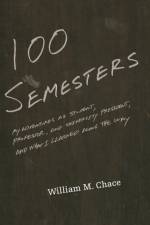
In One Hundred Semesters, William Chace mixes incisive analysis with memoir to create an illuminating picture of the evolution of American higher education over the past half century. Chace follows his own journey from undergraduate education at Haverford College to teaching at Stillman, a traditionally African-American college in Alabama, in the 1960s, to his days as a professor at Stanford and his appointment as president of two very different institutions--Wesleyan University and Emory University. Chace takes us with him through his decades in education--his expulsion from college, his boredom and confusion as a graduate student during the Free Speech movement at Berkeley, and his involvement in three contentious cases at Stanford: on tenure, curriculum, and academic freedom. When readers follow Chace on his trip to jail after he joins Stillman students in a civil rights protest, it is clear that the ideas he presents are born of experience, not preached from an ivory tower. The book brings the reader into both the classroom and the administrative office, portraying the unique importance of the former and the peculiar rituals, rewards, and difficulties of the latter. Although Chace sees much to lament about American higher education--spiraling costs, increased consumerism, overly aggressive institutional self-promotion and marketing, the corruption of intercollegiate sports, and the melancholy state of the humanities--he finds more to praise. He points in particular to its strength and vitality, suggesting that this can be sustained if higher education remains true to its purpose: providing a humane and necessary education, inside the classroom and out, for America's future generations.
Is it time to take a break from feminism? In this pathbreaking book, Janet Halley reassesses the place of feminism in the law and politics of sexuality. She argues that sexuality involves deeply contested and clashing realities and interests, and that feminism helps us understand only some of them. To see crucial dimensions of sexuality that feminism does not reveal--the interests of gays and lesbians to be sure, but also those of men, and of constituencies and values beyond the realm of sex and gender--we might need to take a break from feminism. Halley also invites feminism to abandon its uncritical relationship to its own power. Feminists are, in many areas of social and political life, partners in governance. To govern responsibly, even on behalf of women, Halley urges, feminists should try taking a break from their own presuppositions. Halley offers a genealogy of various feminisms and of gay, queer, and trans theories as they split from each other in the United States during the 1980s and 1990s. All these incommensurate theories, she argues, enrich thinking on the left not despite their break from each other but because of it. She concludes by examining legal cases to show how taking a break from feminism can change your very perceptions of what's at stake in a decision and liberate you to decide it anew.
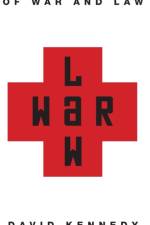
Modern war is law pursued by other means. Once a bit player in military conflict, law now shapes the institutional, logistical, and physical landscape of war. At the same time, law has become a political and ethical vocabulary for marking legitimate power and justifiable death. As a result, the battlespace is as legally regulated as the rest of modern life. In Of War and Law, David Kennedy examines this important development, retelling the history of modern war and statecraft as a tale of the changing role of law and the dramatic growth of law's power. Not only a restraint and an ethical yardstick, law can also be a weapon--a strategic partner, a force multiplier, and an excuse for terrifying violence. Kennedy focuses on what can go wrong when humanitarian and military planners speak the same legal language--wrong for humanitarianism, and wrong for warfare. He argues that law has beaten ploughshares into swords while encouraging the bureaucratization of strategy and leadership. A culture of rules has eroded the experience of personal decision-making and responsibility among soldiers and statesmen alike. Kennedy urges those inside and outside the military who wish to reduce the ferocity of battle to understand the new roles--and the limits--of law. Only then will we be able to revitalize our responsibility for war.
What is jihad? Does it mean violence, as many non-Muslims assume? Or does it mean peace, as some Muslims insist? Because jihad is closely associated with the early spread of Islam, today's debate about the origin and meaning of jihad is nothing less than a struggle over Islam itself. In Jihad in Islamic History, Michael Bonner provides the first study in English that focuses on the early history of jihad, shedding much-needed light on the most recent controversies over jihad. To some, jihad is the essence of radical Islamist ideology, a synonym for terrorism, and even proof of Islam's innate violence. To others, jihad means a peaceful, individual, and internal spiritual striving. Bonner, however, shows that those who argue that jihad means only violence or only peace are both wrong. Jihad is a complex set of doctrines and practices that have changed over time and continue to evolve today. The Quran's messages about fighting and jihad are inseparable from its requirements of generosity and care for the poor. Jihad has often been a constructive and creative force, the key to building new Islamic societies and states. Jihad has regulated relations between Muslims and non-Muslims, in peace as well as in war. And while today's "e;jihadists"e; are in some ways following the "e;classical"e; jihad tradition, they have in other ways completely broken with it. Written for general readers who want to understand jihad and its controversies, Jihad in Islamic History will also interest specialists because of its original arguments.
The lives of Catullus and Horace overlap by a dozen years in the first century BC. Yet, though they are the undisputed masters of the lyric voice in Roman poetry, Horace directly mentions his great predecessor, Catullus, only once, and this reference has often been taken as mocking. In fact, Horace's allusion, far from disparaging Catullus, pays him a discreet compliment by suggesting the challenge that his accomplishment presented to his successors, including Horace himself. In Poetic Interplay, the first book-length study of Catullus's influence on Horace, Michael Putnam shows that the earlier poet was probably the single most important source of inspiration for Horace's Odes, the later author's magnum opus. Except in some half-dozen poems, Catullus is not, technically, writing lyric because his favored meters do not fall into that category. Nonetheless, however disparate their preferred genres and their stylistic usage, Horace found in the poetry of Catullus, whatever its mode of presentation, a constant stimulus for his imagination. And, despite the differences between the two poets, Putnam's close readings reveal that many of Horace's poems echo Catullus verbally, thematically, or both. By illustrating how Horace often found his own voice even as he acknowledged Catullus's genius, Putnam guides us to a deeper appreciation of the earlier poet as well.
Abonner på vårt nyhetsbrev og få rabatter og inspirasjon til din neste leseopplevelse.
Ved å abonnere godtar du vår personvernerklæring.