

Gjør som tusenvis av andre bokelskere
Abonner på vårt nyhetsbrev og få rabatter og inspirasjon til din neste leseopplevelse.
Ved å abonnere godtar du vår personvernerklæring.Du kan når som helst melde deg av våre nyhetsbrev.

Develops a general theory to explain the facts of island biogeography which builds on the first principles of population ecology and genetics to explain how distance and area combine to regulate the balance between immigration and extinction in island populations.
Examines the mutual impact of Britain's colonization of India on Indian and British culture. This title shows that national culture in both India and Britain developed in relation to their shared colonial experience and that notions of religion and secularity were crucial in imagining the modern nation in both countries.
Offers an overview of the filmmaking of postcolonial, Third World, and other displaced individuals living in the West. This book offers global coverage of the genre of Accented cinema while presenting a framework in which to understand its intricacies.
Cinema is a sensuous object, but in our presence it becomes also a sensing, sensual, sense-making subject. This title challenges basic assumptions of current film theory that reduce film to an object of vision and the spectator to a victim of a deterministic cinematic apparatus.
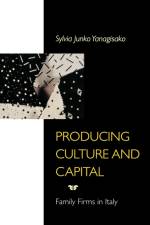
Illuminates the cultural processes through which sentiments, desires, and commitments motivate and shape capitalist family firms. This book shows how flexible specialization is produced through the cultural dynamics of capital accumulation, management succession, firm expansion and diversification, and the reproduction and division of firms.
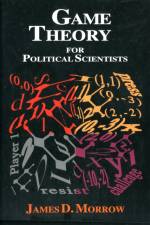
Adapting game theory to political analysis, this book uses a minimum of mathematics to teach the essentials of game theory and contains problems and their solutions suitable for graduate students in various branches of political science. It focuses on noncooperative game theory and its application to international relations.
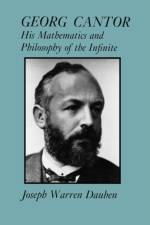
One of the greatest revolutions in mathematics occurred when Georg Cantor promulgated his theory of transfinite sets. His religious beliefs led him to expect paradoxes in any concept of the infinite. This work shows that these played an integral part in his understanding and defense of set theory.
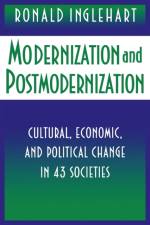
Argues that economic development, cultural change, and political change go together in coherent and even, to some extent, predictable patterns. This title provides information from societies representing 70 percent of the world's population.
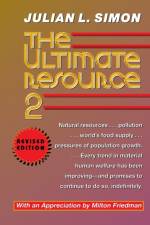
Presents a concise theory for the observed trends: population growth and increased income put pressure on supplies of resources. This book tackles issues such as the supposed rate of species extinction, the 'vanishing farmland crisis,' and the wastefulness of coercive recycling.
Popular Hinduism is shaped, above all, by worship of a multitude of powerful divine beings - a superabundance indicated by the proverbial total of 330 million gods and goddesses. This title combines ethnographic case studies with comparative anthropological analysis and draws on textual and historical scholarship as well.
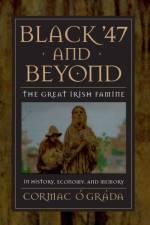
The Irish famine peaked in Black '47, but it brought misery and increased mortality to Ireland for several years. This title presents the Great Irish Famine from a variety of perspectives. It concentrates on fresh insights available through interdisciplinary and comparative methods. It highlights several economic and sociological features.
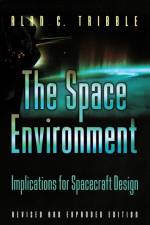
The breakup of the Space Shuttle Columbia as it reentered Earth's atmosphere on February 1, 2003, reminded the public - and NASA - of the grave risks posed to spacecraft by everything from insulating foam to space debris. This title presents an account of environmental effects that can damage or cause poor performance of orbiting spacecraft.
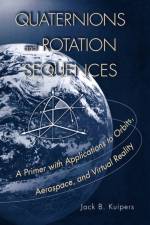
Introduces quaternions for scientists and engineers, and shows how they can be used in a variety of practical situations. This book is primarily an exposition of the quaternion, a 4-tuple, and its primary application in a rotation operator. It also presents the conventional and familiar 3 x 3 (9-element) matrix rotation operator.
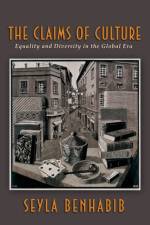
Maintaining that cultures are themselves torn by conflicts about their own boundaries, this book challenges the assumption shared by many theorists and activists that cultures are clearly defined wholes. It offers insight to those who strive to bridge the gap between the theory and practice of cultural politics in the twenty-first century.
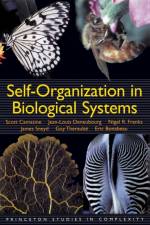
A primer on self-organization in biological systems for students and other enthusiasts, this book introduces readers to the basic concepts and tools for studying self-organization and then examines numerous examples of self-organization in the natural world.
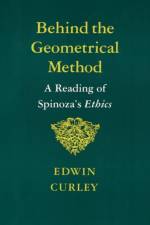
Based on three lectures delivered at the Hebrew University of Jerusalem in 1984, this work provides a useful focal point for continued discussion of the relationship between Descartes and Spinoza, while also serving as a readable and relatively brief but substantial introduction to the Ethics for students.
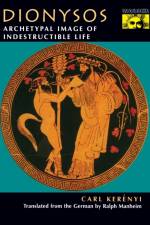
No other god of the Greeks is as widely present in the monuments and nature of Greece and Italy, in the tradition of antiquity, as Dionysos. This work presents a historical account of the religion of Dionysos from its beginnings in the Minoan culture to its transition to a cosmic and cosmopolitan religion of late antiquity under the Roman Empire.
Exploring the relationship between politics and economics, this book demonstrates the close ties between politics and economics in international relations, outlining the key role played by the creative use of power in the support of an institutional framework that created a world economy.
The interplay between analysis on Lie groups and the theory of special functions is well known. This book deals with the case of the Heisenberg group and the related expansions in terms of Hermite, special Hermite, and Laguerre functions. It develops Littlewood-Paley-Stein theory for the expansions and uses the theory to prove multiplier theorems.
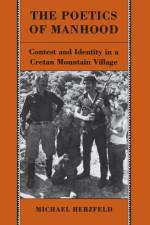
The description for this book, The Poetics of Manhood: Contest and Identity in a Cretan Mountain Village, will be forthcoming.
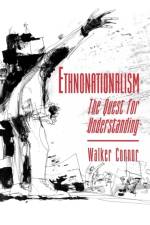
A collection of essays, which examine 19th-and early 20th-century debate among British scholars on the viability and desirability of the multinational state, the American "nation-building" school of thought that dominated the literature on political development in the post-World War II era, and the explosion of literature on ethnonationalism.
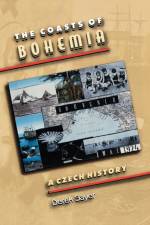
Presents a comprehensive history of the Czech people that is a remarkably original history of modern Europe. This book describes how Bohemia's ambiguities and contradictions are those of Europe itself, and it considers the ironies of viewing Europe, the West, and modernity from the vantage point of a country that has been too often ignored.
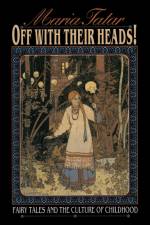
Exploring how adults mistreat children, this book focuses on adults not only as hostile characters in fairy tales themselves but also as real people who use frightening stories to discipline young listeners.
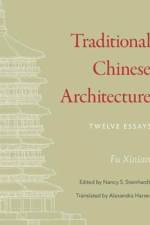
A groundbreaking book by one of the world's leading historians of Chinese architectureTranslated by Alexandra Harrer.Fu Xinian is considered by many to be the world's leading historian of Chinese architecture. He is an expert on every type of Chinese architecture from every period through the nineteenth century, and his work is at the cutting edge of the field. Traditional Chinese Architecture gathers together, for the first time in English, twelve seminal essays by Fu Xinian. This wide-ranging book pays special attention to the technical aspects of the building tradition since the first millennium BC, and Fu Xinian's signature drawings abundantly illustrate its nuances.The essays delve into the modular basis for individual structures, complexes, and cities; lateral and longitudinal building frames; the unity of sculpture and building to create viewing angles; the influence of Chinese construction on Japanese architecture; and the reliability of images to inform us about architecture. Organized chronologically, the book also examines such topics as the representation of architecture on vessels in the Warring States period, early Buddhist architecture, and the evolution of imperial architecture from the Tang to Ming dynasty. A biography of Fu Xinian and a detailed Chinese-English glossary are included.Bringing together some of the most groundbreaking scholarship in Chinese architectural history, Traditional Chinese Architecture showcases an uncontested master of the discipline.
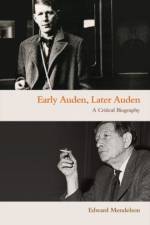
Presented in one volume for the very first time, and updated with new archival discoveries, Early Auden, Later Auden reintroduces Edward Mendelson's acclaimed, two-part biography of W. H. Auden (1907-73), one of the greatest literary figures of the twentieth century. This book offers a detailed history and interpretation of Auden's oeuvre, spanning the duration of his career from juvenilia to his final works in poetry as well as theatre, film, radio, opera, essays, and lectures.Early Auden, Later Auden follows the evolution of the poet's thought, offering a comparison of Auden's views at various junctures over a lifetime. With penetrating insight, Mendelson examines Auden's early ideas, methods, and personal transitions as reflected in poems, manuscripts, and private papers. The book then links changes in Auden's intellectual, emotional, and religious experience with his shifting public role-showing the depth of his personal struggles with self and with fame, and the means by which these internal conflicts were reflected in his art in later years.Featuring a new preface by the author, Early Auden, Later Auden is an engaging and timeless work that demonstrates Auden's remarkable range and complexity, paying homage to his enduring legacy.
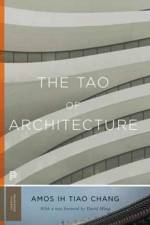
Frank Lloyd Wright first noted the affinity between modern Western architecture and the philosophy of the ancient Chinese writer Laotzu. In this classic work, Amos Ih Tiao Chang expands on that idea, developing the parallel with the aid of architectural drawings and Chinese paintings. Now with a new foreword by David Wang, this book reveals the vitality of intangible, or negative, elements. Chang writes that these qualities make architectonic forms "e;come alive, become human, naturally harmonize with one another, and enable us to experience them with human sensibility."e; The Tao of Architecture continues to be essential reading for understanding the intersection between architecture and philosophy.
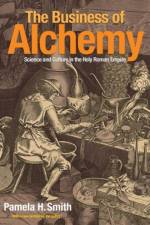
In The Business of Alchemy, Pamela Smith explores the relationships among alchemy, the court, and commerce in order to illuminate the cultural history of the Holy Roman Empire in the sixteenth and seventeenth centuries. In showing how an overriding concern with religious salvation was transformed into a concentration on material increase and economic policies, Smith depicts the rise of modern science and early capitalism. In pursuing this narrative, she focuses on that ideal prey of the cultural historian, an intellectual of the second rank whose career and ideas typify those of a generation. Smith follows the career of Johann Joachim Becher (1635-1682) from university to court, his projects from New World colonies to an old-world Pansophic Panopticon, and his ideas from alchemy to economics. Teasing out the many meanings of alchemy for Becher and his contemporaries, she argues that it provided Becher with not only a direct key to power over nature but also a language by which he could convince his princely patrons that their power too must rest on liquid wealth. Agrarian society regarded merchants with suspicion as the nonproductive exploiters of others' labor; however, territorial princes turned to commerce for revenue as the cost of maintaining the state increased. Placing Becher's career in its social and intellectual context, Smith shows how he attempted to help his patrons assimilate commercial values into noble court culture and to understand the production of surplus capital as natural and legitimate. With emphasis on the practices of natural philosophy and extensive use of archival materials, Smith brings alive the moment of cultural transformation in which science and the modern state emerged.
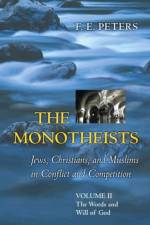
The world's three great monotheistic religions have spent most of their historical careers in conflict or competition with each other. And yet in fact they sprung from the same spiritual roots and have been nurtured in the same historical soil. This book--an extraordinarily comprehensive and approachable comparative introduction to these religions--seeks not so much to demonstrate the truth of this thesis as to illustrate it. Frank Peters, one of the world's foremost experts on the monotheistic faiths, takes Judaism, Christianity, and Islam, and after briefly tracing the roots of each, places them side by side to show both their similarities and their differences. Volume I, The Peoples of God, tells the story of the foundation and formation of the three monotheistic communities, of their visible, historical presence. Volume II, The Words and Will of God, is devoted to their inner life, the spirit that animates and regulates them. Peters takes us to where these religions live: their scriptures, laws, institutions, and intentions; how each seeks to worship God and achieve salvation; and how they deal with their own (orthodox and heterodox) and with others (the goyim, the pagans, the infidels). Throughout, he measures--but never judges--one religion against the other. The prose is supple, the method rigorous. This is a remarkably cohesive, informative, and accessible narrative reflecting a lifetime of study by a single recognized authority in all three fields. The Monotheists is a magisterial comparison, for students and general readers as well as scholars, of the parties to one of the most troubling issues of today--the fierce, sometimes productive and often destructive, competition among the world's monotheists, the siblings called Jews, Christians, and Muslims.
Abonner på vårt nyhetsbrev og få rabatter og inspirasjon til din neste leseopplevelse.
Ved å abonnere godtar du vår personvernerklæring.