


















Gjør som tusenvis av andre bokelskere
Abonner på vårt nyhetsbrev og få rabatter og inspirasjon til din neste leseopplevelse.
Ved å abonnere godtar du vår personvernerklæring.Du kan når som helst melde deg av våre nyhetsbrev.

Designed as a text for students studying Social Work and Welfare. Offers differing methods of dealing with Welfare policies in different societies of the world.
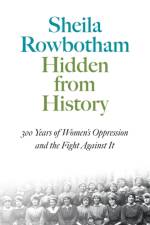
How class and sex, work and the family, personal life and social pressures have shaped and hindered women's struggles for equality
The Dayton Accords brought the Bosnian war to an end in November 1995, establishing a detailed framework for the reconstitution of the Bosnian state and its consolidation through a process of democratisation. *BR**BR*In Bosnia David Chandler makes the first in-depth critical analysis of the policies and impact of post-Dayton democratisation. Drawing on interviews with key officials within the OSCE in Bosnia and extensive original research exploring the impact of policies designed to further political pluralism, develop multi-ethnic administrations, protect human rights and support civil society, *BR**BR*Chandler reveals that the process has done virtually nothing to develop democracy in this troubled country. Political autonomy and accountability are now further away than at any time since the outbreak of the Bosnian war.
Through the words of sex workers and their clients, Jeremy Seabrook reconsiders the popular conception of sex tourism in Asia. Through its examination of the many paradoxes surrounding this controversial subject, Travels in the Skin Trade also sheds new light on the wider and problematic relationship between the North and the South. *BR**BR*Press coverage of the sex trade routinely consists of ill-informed, moralising and sensationalist denunciations of the 'industry'. Through the words of sex workers and their clients, Seabrook reconsiders the popular conception of the sex industry and explores the complex relationship between sex and tourism. In so doing he presents an objective, sensitive view of the industry. *BR**BR*Through its examination of the many paradoxes surrounding this controversial subject, Travels in the Skin Trade also sheds new light on the wider and problematic relationship between the North and the South.
Ancient, medieval and modern, this book is a critical account of the historical, political and cultural roots of Zionism. *BR**BR*Scrutinising the roots of the myths of Zionism and mobilising recent scholarship, John Rose shows how many of these stories, as with other mythologies, have no basis in fact. However, because Zionism is a living political force and these myths have been used to justify very real and political ends - namely, the expulsion and continuing persecution of the Palestinians. John Rose separates fact from fiction presenting a detailed analysis of their origins and development. This includes a challenge to Zionism's biblical claims using very recent and very startling Israeli archaeological conclusions.*BR**BR*This book shows clearly how Zionism makes many false claims on Jewish religion and history.
A full understanding of Black and Asian history within the British context is integral to achieving a truly multicultural Britain. In this landmark book, Ron Ramdin offer the first complete history of both the Black and Asian experience in Britain*BR**BR*Blacks and Asians have a long history in the British Isles. Ramdin illustrates this by covering a 500-year period, from 1500 to the present day. He recounts the major historical episodes and covers all the major figures, including Ottobah Cugoano, William Cuffay, William Davidson, George Padmore, Mary Seacole, C.L.R. James, V.S. Naipaul, Sam Selvon, Walter Tull, Shirley Bassey, Bill Morris, Salman Rushdie, Hanif Kureshi and Bernie Grant.*BR**BR*In bringing the largely hidden histories of these immigrant communities to the fore, Ron Ramdin's wide-ranging study challenges conventional histories of the British Isles. Reimaging Britain will lead to a reappraisal of how 'British' history is written in the future.
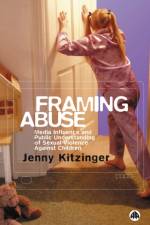
How does the media shape the way we think about child sexual abuse? Combining in-depth analysis of media representations of the crimes, with focus group discussions and interviews with around 500 journalists, campaigners and a cross-section of 'the public', Jenny Kitzinger reveals the media's role in contemporary society. *BR**BR*Which stories attract attention and why? Answering this and other questions, Kitzinger demonstrates how media reporting can impact on people's knowledge of the 'facts', perceptions of risk, sense of appropriate policy responses and even how we interpret our own experiences. Looking at feminist initiatives to challenge sexual violence, the emergence of incest as a social problem and the development of new survivor identities. She also explores stereotypes around sex offenders,interrogates protests against 'paedophiles-in-the-community' and presents a detailed analysis of the impact of scandals about disputed abuse accusations. *BR**BR*This book is essential reading for anyone interested in theories of media influence, identity and social change or who wishes to encourage responsible journalism. It is also a key resource for anyone concerned about sexual violence and the protection of children or who is attempting to design intervention strategies.
A critique of mercenary involvement in post Cold-War African conflicts
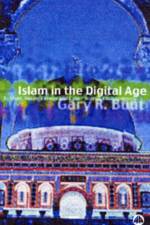
The Internet is an increasingly important source of information for many people in the Muslim world. Many Muslims in majority and minority contexts rely on the Internet as a primary source of news, information and communication about Islam. As a result, a new media culture is emerging which is having a significant impact on areas of global Muslim consciousness. Post-September 11th, this phenomenon has grown more rapidly than ever.*BR**BR*Gary R. Bunt provides a fascinating account of the issues at stake, identifying two radical new concepts: *BR**BR*Firstly, the emergence of e-jihad ('Electronic Jihad') originating from diverse Muslim perspectives - this is described in its many forms relating to the different definitions of 'jihad', including on-line activism (ranging from promoting militaristic activities to hacking, to co-ordinating peaceful protests) and Muslim expression post 9/11. *BR**BR*Secondly, he discusses religious authority on the Internet - including the concept of on-line fatwas and their influence in diverse settings, and the complexities of conflicting notions of religious authority.
Essential services are being privatised the world over. Whether it's water, gas, electricity or the phone network, everywhere from Sao Paulo in Brazil to Leeds in the UK is following the US economic model and handing public services over to private companies whose principal interest is raising prices. Yet it's one of the world's best kept secrets that Americans pay astonishingly little for high quality public services. Uniquely in the world, every aspect of US regulation is wide open to the public. How is this done and why has this process not taken root elsewhere? How is regulation threatened even in the US? And what power does the public have to ensure that services are regulated along these US lines?This book, based on work for the United Nations International Labour Organisation and written by experts with unrivalled practical experience in utility regulation, is the first step-by-step guide to the way that public services are regulated in the United States. It explains how decisions are made by public debate in a public forum. Profits and investments of private companies are capped, and companies are forced to reduce prices for the poor, fund environmental investments and open themselves to financial inspection. In a world where privatisation has so often led to economic disaster -- in Peru, telephone charges increased by 3000%; in Rio de Janeiro, 40% of electricity workers lost their jobs; in Britain water prices rose by 58% -- this book is essential reading. Palast, Oppenheim and MacGregor examine what's right with the traditional American system, why regulation elsewhere has failed, and -- most importantly -- what can be done to fix it.
An introduction to the issues surrounding the emergence of the Irish Novel since the eighteenth century
If the supposedly disaffected young provide the subtext to so many of our social anxieties, then the young homeless loom larger here than most: our most vivid reminder of social exclusion, and exemplars too of what the tabloid press like to describe as the feckless, wilful poor.*BR**BR*This book explores what life is really like for Britain's young homeless: estranged from their families, out of work and making do on the fringes of social security. The result is a vivid portrait of a pressing social problem.*BR**BR*Based on extended fieldwork study - the author spent twelve months in the company of young people moving between hostel accommodation, rented bed-sit tenancies and episodes of street-sleeping - Better Times Than This is Britain's first full ethnographic study of youth homelessness.
Continues to investigate the relationship between various versions of Capital and explains the reasons for Marx's successive reworkings.
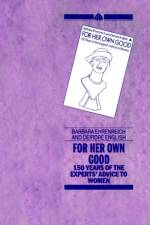
A fascinating perspective on female history in this brilliant account of pundits and their victims over the last century and a half
Rudolf Rocker's classic survey of anarcho-syndicalism was written during the Spanish Civil War to explain to the wider reading public the ideology which inspired the social revolution in Spain. It remains unsurpassed as a general introduction to anarchist thought and an authoritative account of the early history of international anarchism by one of the movement's leading figures.*BR**BR*The present edition is unique in giving a complete facsimile reproduction of the 1938 edition as well as the corrected transcript of the epilogue to the Indian edition of 1947. It has the addition of a new biographical introduction by Nicolas Walter, in which he quotes from previously unpublished manuscript sources.
What if development agencies and researchers are not driven by policy? Suppose that the things that make for 'good policy' - policy that legitimises and mobilises political support - in reality make it impossible to implement?*BR**BR*By focusing in detail on the unfolding activities of a development project in western India over more than ten years, as it falls under different policy regimes, this book takes a close look at the relationship between policy and practice in development. David Mosse shows how the actions of development workers are shaped by the exigencies of organisations and the need to maintain relationships rather than by policy; but also that development actors work hardest of all to maintain coherent representations of their actions as instances of authorised policy. Raising unfamiliar questions, Mosse provides a rare self-critical reflection on practice, while refusing to endorse current post-modern dismissal of development.
Unmasks the expansionist reality of Israeli foreign and nuclear policy and analyses its effect on the future of Middle Eastern politics
This book is a collection of essays from some of the world's leading Marxist economists on the problems of globalisation and the evolution of modern capitalism. *BR**BR*With contributions from Suzanne de Brunhoff, Ellen Meiksins Wood, Ben Fine, Simon Clarke, John Holloway and John Weeks among others, it provides a cohesive critique of the weaknesses of the existing system and puts forward a new agenda for anti-capitalist thought and action. *BR**BR*Covering key issues such as globalisation, the nation state, money and finance, conflict and war, technological change, the environment, class struggle, economic crisis, capitalism in the Third World, the collapse of the USSR, and the transcendence of capitalism, this is an ideal introduction to some of the most pressing problems of our time.
The media has told us for over twenty five years that the conflict in Northern Ireland is irrational and has 'no objective social basis'. The role of the British Army in Northern Ireland is still described as a peacekeeping one: the cause of the 'troubles' as 'terrorism'. Yet, even in the light of the peace initiatives, many people in Britain and abroad know little about the war that has not been called a war. Why is this so? *BR**BR*Don't Mention the War explains some of the fundamental reasons why there is such a dearth of knowledge and concern about Northern Ireland and how the problem has been defined both publicly and politically. Miller argues that the central strategy of the British state since 1969 has been to contain the troubles and bring about a return to 'normal'. In pursuing this argument, Miller examines the strategies and tactics used by the British government, the nationalists, the unionists and others to influence perceptions and ideas about the conflict through press statements and other information management activities.*BR**BR*This is a unique and timely work, based on over 100 interviews with journalists, government officials, political activists and politicians, which lays bare the lies of the propagandists and paints a disturbing picture of the success of the media managers in manipulating our perception of the conflict in Northern Ireland.
Examines the historiography of the Irish Famine and its relevance now, in the context of the longer-term relationship between England and Ireland.
Acclaimed author tells story of General Pinochet's trial as a suspense-thriller. 'An excellent, quick and powerful read, accessible to everyone.' Publishers Weekly
An innovative study of human rights from an anthropological standpoint
Debating cultural studies, media studies, criminology and sociology on the relationship between the media and crime in a postmodern society
Abonner på vårt nyhetsbrev og få rabatter og inspirasjon til din neste leseopplevelse.
Ved å abonnere godtar du vår personvernerklæring.