



Gjør som tusenvis av andre bokelskere
Abonner på vårt nyhetsbrev og få rabatter og inspirasjon til din neste leseopplevelse.
Ved å abonnere godtar du vår personvernerklæring.Du kan når som helst melde deg av våre nyhetsbrev.

How theories of human nature must be related to their intellectual, historical and social roots
A collection of Marxist writings covering political economy, historical materialism, dialectics, state theory, class, and fetishism
A collection of Marxist writings covering political economy, historical materialism, dialectics, state theory, class, and fetishism
A reader that gathers a diverse range of writers like Aristotle, Rousseau, Kant, Marx and Jefferson to examine the nature of 'citizenship'
Cynthia's classic study of the remaking of man through the impact of technological change.
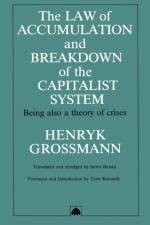
Henryk Grossmann's influential work provides the key to a fuller understanding of Marx's theory of crisis.
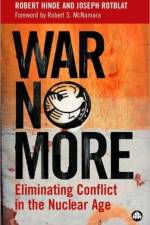
At a time when terrorism is opening the way for new forms of warfare worldwide, this book provides a much-needed account of the real dangers we face, and argues that the elimination of weapons of mass destruction and of war are attainable and necessary goals.*BR**BR*Written by Nobel Peace prize winner and former nuclear physicist Joseph Rotblat, who was involved in the creation of the first atom bomb, and biologist/ psychologist Robert Hinde, War No More provides expert insight into the nature of modern warfare - including weapons of mass destruction. Examining the key factors that contribute to conflict, the authors explain how best to approach a peaceful future. *BR**BR*If war is ever to be eliminated, we must address key issues such as the gap between rich and poor; have fully effective arms controls, and above all we must have better education. The authors emphasise the United Nations - as well as NGOs, religious groups, and grassroots movements - also have important parts to play.
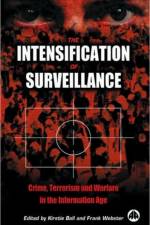
A shocking expose of surveillance methods
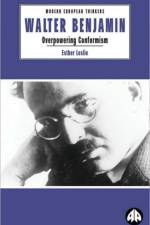
Esther Leslie's path-breaking study of Walter Benjamin is unlike any other book presently available in English on Benjamin, in seeking to make a case for a more politicised reading of Benjamin's oeuvre. In looking at the entirety of Benjamin's work - rather than the four or five essays available in English which tend to form the Benjamin 'canon' - Leslie offers powerful new insights into a key twentieth-century political thinker, correcting the post-structuralist bias that has characterised so much Benjamin scholarship, and repositioning Benjamin's work in its historical and political context. *BR**BR*In her examination of Benjamin's commentary on the politics and aesthetics of technology - from Benjamin's work on nineteenth-century industrial culture to his analyses of the Nazi deployment of the bomber - Esther Leslie re-contextualises Benjamin's writings in a lucid and cogently argued new study.
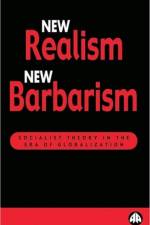
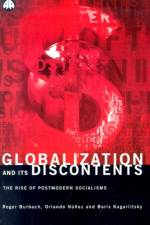
In this radical and controversial overview of the post-communist world, Boris Kagarlitsky argues that the very success of neoliberal capitalism has made traditional socialism all the more necessary and feasible. *BR**BR*Kagarlitsky argues that leftists exaggerate the importance of the 'objective' aspects of the 'new reality' - globalisation - and the weakening of the state, while underestimating the importance of the hegemony of neoliberalism. As long as neoliberalism retains its ideological hegemony, despite its economic failure, the consequence is a 'new barbarism' - already a reality in Eastern Europe, and now also emerging in the West.*BR**BR*Kagarlitsky challenges the political neurosis of the left and prevailing assumptions of Marxism to argue that Marx's theories are now more timely than they were in the mid-twentieth century. He analyses theories of the 'end of the proletariat' and the 'end of work', and assesses the potential of the new technologies - such as the Internet - which create fresh challenges for capitalism and new arenas for struggle.
'One of the most remarkable books to emerge from the Northern conflict. I can't recall any other book which gives the reader the same accessibility to the streets of Belfast.' Irish Post*BR**BR*'A thrilling people's history of Belfast's most famous housing estate which will be remembered as one of the classic books to emerge from the Troubles.' Andersonstown News
A range of distinguished anthropologists and sociologists re-examine the concept of risk in contemporary societies.
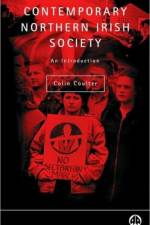
This is a critical overview of the various sources of social and political identity in Northern Ireland. The book examines the key variables of sociology - status, class and gender and, in this case, ethno-religion - and explains why ethno-religious sentiment has become the principle source of political identity. *BR**BR*A range of themes are covered: the role and status of women; the representations of the conflict and peace process in the media; sport; and the importance of popular music.*BR*
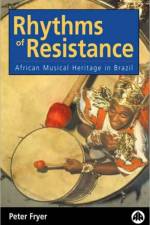
African rhythms are at the heart of contemporary black Brazilian music. Surveying a musical legacy that encompasses over 400 years, Rhythms of Resistance traces the development of this rich cultural heritage. *BR**BR*Acclaimed author Peter Fryer describes how slaves, mariners and merchants brought African music from Angola and the ports of East Africa to Latin America. In particular, they brought it to Brazil - today the country with the largest black population of any outside Africa. Fryer examines how the rhythms and beats of Africa were combined with European popular music to create a unique sound and dance tradition. Fryer focuses on the political nature of this musical crossover and the role of an African heritage in the cultural identity of Brazilian blacks today.*BR**BR*Rhythms of Resistance is an absorbing account of a theme in global music and is rich in fascinating historical detail.
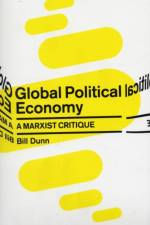
This is an ambitious survey of the history and state of the world economy, covering the major upheavals of the capitalist system over the last 100 years.*BR**BR*Bill Dunn provides an original and enlightening explanation of the state of the world economy. He covers all the main aspects of global political economy explaining the theories behind production, trade, finance and relations between rich and poor countries. He also tackles the question of the origin of capitalism, a debate that always proves popular among students and academics. Dunn also includes a critique of alternative perspectives, showing that Marxism still provides the best analytical tools for understanding the global economy.*BR**BR*This comprehensive text is a must for students of politics and economics who are keen to understand how the economy reached its current stage and what the future is likely to bring.
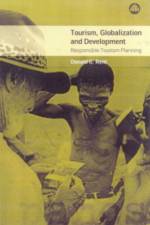
Tourism is booming world wide - it makes up a massive part of the global economy. Donald G. Reid's book focuses on tourism in developing and less-developed countries. He examines its social and environmental impact and offers a timely critical analysis of the part it plays in globalisation.*BR**BR*Many of the world's poorest countries rely on the tourist trade for the major part of their income. However, all too often, the local communities involved do not reap the benefits of this trade. Developers often exclude local communities from the initial planning and decision-making process, viewing them either as a benign resource to be exploited, or as an impediment. *BR**BR*This is a rigourous critique of corporate-led tourism development, which lays out alternatives for planning and control to the local communities. It argues that only in this way can the vastly differing requirements of each community be addressed, and social and environmental issues can be dealt with properly. The book includes a discussion of macro planning theory, and offers three case studies of locally controlled projects that show clearly how communities developing a tourist trade can benefit.
American, Australian and British scholars examine the significance of the use of landscape for studies of identity
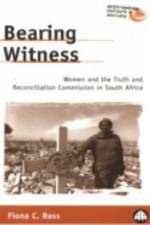
People who witness acts of terror and violence are often called after the event to bear witness to what they saw. In cases where this violence is inflicted by the state upon its own people, the process of bearing witness is both politically complex and traumatic for the individual involved. Independent trials and commissions have become important mechanisms through which the truth of past violence is sought in democratising states, but to date there has been little close attention to the processes and complexity of the work of such institutions.*BR**BR*Fiona Ross's fascinating study of the process of bearing witness is the first book to examine the gendered dimensions of this topic from an anthropological and ethnographic viewpoint. Taking as a key example the Truth and Reconciliation Commission in South Africa, Ross explores women's relationships to testimony, particularly the extent to which women avoid talking about or are silent about certain forms of violence and suffering. *BR**BR*Offering a wealth of first hand examples, Ross approaches a more subtle understanding of the achievements and the limitations of testimony as a measure of suffering and recovery generally. Is it, she asks, the panacea it is usually seen as? Or do conventional discourses on human rights, suffering and reconciliation oversimplify an altogether more complex and problematic process?
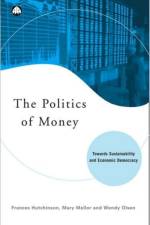
Classical and radical economists have marginalised the role of money, most particularly the role of credit, in driving the machinery of accumulation and exclusion. Although critiques of capitalism from Marxist, feminist and ecological perspectives abound, The Politics of Money is unique in gathering the strengths of these differing critiques into a coherent whole. *BR**BR*The book reviews the role of money in current society through an overview of the history of money creation and a critique of the main theoretical developments in economic thought. Alternative perspectives on money are then presented through a review of a number of radical perspectives but focusing mainly on the work of Marx, Veblen and the social credit perspective of Douglas and the guild socialists.*BR**BR*The authors have drawn upon their varied expertise in economics and the social sciences to produce the foundations of a new political economy that will enable communities to reconstruct their socio-economic fabric through social and political control of money systems.
Is Irish economic development sustainable in the moderately near future?
A critical view of globalisation which analyses the devastating impact of neoliberalism in the post-communist world
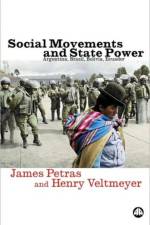
The 2003 electoral victory of Lucio Gutierrez in Ecuador was met with the same sense of optimism that greeted the election of Ignacio 'Lula' da Silva in Brazil, and Hugo Chavez in Venezuela. Gutierrez's victory was viewed as a major advance for the country in its 500 year-long struggle for freedom and democracy. *BR**BR*In Bolivia, Evo Morales similarly came within an electoral whisker of achieving state power in 2002, and in 2003 Nestor Kirchner became President of Argentina. *BR**BR*Many journalists , academics and politicians speak of a "e;left-turn"e; in Latin America, characterizing these regimes as "e;center -left"e;. They came to power on the promise of delivering a fundamental change of direction that would steer their countries away from neo-liberal economic policies, and towards greater social equity. Their success awakened major hopes on the Left for a new dawn in Latin American politics. *BR**BR*This book challenges these assumptions. It critically examines their agreements with the IMF, their social and economic policies, and the economic ties of leading policy makers, as well as the beneficiaries and losers under these regimes. *BR**BR*Latin America is unique in that it has experienced two decades of popular resistance to neo-liberal policies: each of the four countries examined here has a rich history of diverse indigenous and working class movements coming together to promote radical political change. *BR**BR*The authors examine the political dynamics between the state and its agenda, and the strategy of mass mobilisation taken by the mass movements. They explore the intensifying conflicts between the movements and their former allies in the state.
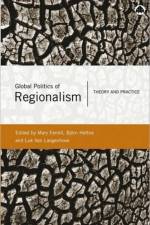
Textbook on regionalism and its role in a global marketplace, ideal for students of IR and globalisation.
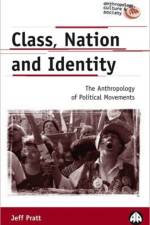
Political movements across the world have such diverse characteristics and aims that it is difficult to examine them as a collective group. Movements that are class-based are usually portrayed as formed by economic categories of people driven by material interests. By contrast the study of ethnic or nationalist movements has concentrated on the complexities of identity formation within culturally defined groups driven by strong passions. *BR**BR*Jeff Pratt argues for the need to set up a new analytical framework that extends the study of identity formation, and the ethnographic analysis of economic and social processes, to all political movements. Setting up a new analytical framework, he argues that political processes involve two linked components: a 'discourse' (an identity narrative which positions us within social history) and a 'movement' (the process of organisation whereby local social divisions are transformed by their incorporation into a wider movement). *BR**BR*He illustrates his arguments with a vivid mix of case studies from across the last century including Basque nationalism, Andalusian anarchism, Italian communism, the break-up of Yugoslavia, to the 'newer' political movements in Europe, in French Occitania and the Italian Lega Nord.
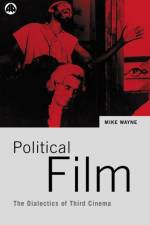
Third Cinema is a cinema committed to social and cultural emancipation. In this book, Mike Wayne argues that Third Cinema is absolutely central to key debates concerning contemporary film practices and cultures.*BR**BR*As a body of films, Third Cinema expands our horizons of the medium and its possibilities. Wayne develops Third Cinema theory by exploring its dialectical relations with First Cinema (dominant,commercial) and Second Cinema (arthouse, auteur). Discussing an eclectic range of films, from Evita to Dollar Mambo, The Big Lebowski to The Journey, Amistad to Camp de Thiaroye, Political Film explores the affinities and crucial political differences between First and Third Cinema. *BR**BR*Third Cinema's relationship with Second Cinema is explored via the cinematic figure of the bandit (Bandit Queen, The General, Eskiya). The continuities and differences with European precursors such as Eisenstein, Vertov, Lukacs, Brecht and Walter Benjamin are also assessed. The book is a polemical call for a film criticism that is politically engaged with the life of the masses.
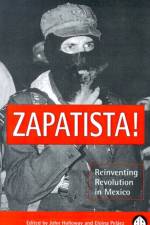
Examines the importance and relevance of the Zapatista movement in the late twentieth century
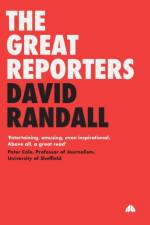
Who are the greatest reporters in history? This unique book is the first to try and answer this question. David Randall searched nearly two centuries of newspapers and magazines, consulted editors and journalism experts worldwide, and the result is The Great Reporters - 13 in-depth profiles of the best journalists who ever lived.*BR**BR*Each profile tells of the reporter's life and his or her major stories, how they were obtained, and their impact. Packed with anecdotes, and inspiring accounts of difficulties overcome, the book quotes extensively from each reporter's work. It also includes an essay on the history of reporting, charting the technologies, economics, and attitudes that made it the way it is - from the invention of the telegraph to the Internet. The Great Reporters is not just the story of 13 remarkable people, it is the story of how society's information hunter-gatherers succeed in bringing us all what we need to know.
'When I read Ian Parker's manuscript, I experienced an underlying solidarity: despite obvious differences, we share the same basic political concerns and visions. And this makes his critical remarks always pertinent!' Slavoj Zizek*BR**BR*'This is not simply the best critical introduction to Zizek - in a much more radical sense, this is the only critical introduction to Zizek. Parker's study is much more than an important contribution to the ongoing debate: it redefines its very terms.' Yannis Stavrakakis, author of 'Lacan and the Political'*BR**BR*'A sharp, clear and radical analysis.' Christian Ingo Lenz Dunker, Professor of Psychoanalytic Theory and Lacanian Psychoanalyst, Sao Paulo, Brazil.*BR**BR*Since the publication of his first book in English in 1989, Slavoj Zizek has quickly become one of the most widely read and contentious intellectuals alive today. With dazzling wit and tremendous creativity he has produced innovative and challenging explorations of Lacan, Hegel and Marx, and used his insights to exhilarating effect in analyses of popular culture.*BR**BR*While Zizek is always engaging, he is also elusive and even contradictory. It can be very hard to finally determine where he stands on a particular issue. Is Zizek Marxist or Post-Marxist? How seriously should we take his recent turn to Christianity?*BR**BR*Slavoj Zizek: A Critical Introduction shows the reader a clear path through the twists and turns of Zizek's writings. Ian Parker takes Zizek's treatment of Hegel, Lacan and Marx in turn and outlines and assesses Zizek's interpretation and extension of these thinkers' theories. While Parker is never hastily dismissive of Zizek's innovations, he remains critical throughout, aware that the energy of Zizek's writing can be bewitching and beguiling as well as engaging and profound.
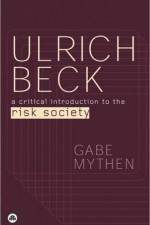
Ulrich Beck has emerged as one of the leading thinkers of the age. His principal claim to fame is as author of the widely acclaimed 'Risk Society', first published in 1986. Since this time, Beck's work has had a profound effect on the trajectory of social theory, leading to him being hailed as a zietgeist sociologist. The risk society thesis has gained credence within the academic community and across the disciplines as a means of explaining the large-scale changes that have enveloped contemporary society.*BR**BR*Despite its continued popularity as a touchstone for debate, the risk society perspective is yet to be systematically unravelled. Gabe Mythen provides both an introduction to and a critique of Beck's work that places his contribution within the context of other theorists of risk, such as Giddens, Douglas and Foucault. Key areas of analysis include risk and the environment, lifestyles and risk, public perceptions, media representations of danger and the changing nature of political engagement.
Abonner på vårt nyhetsbrev og få rabatter og inspirasjon til din neste leseopplevelse.
Ved å abonnere godtar du vår personvernerklæring.