
Gjør som tusenvis av andre bokelskere
Abonner på vårt nyhetsbrev og få rabatter og inspirasjon til din neste leseopplevelse.
Ved å abonnere godtar du vår personvernerklæring.Du kan når som helst melde deg av våre nyhetsbrev.

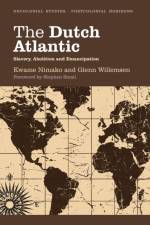
This book interrogates the Dutch involvement in Atlantic slavery and assesses the historical consequences of this for contemporary European society.*BR**BR*Kwame Nimako and Glenn Willemsen show how the slave trade and slavery intertwined economic, social and cultural elements, including nation-state formation in the Netherlands and across Europe. They explore the mobilisation of European populations in the implementation of policies that facilitated Atlantic slavery and examine how European countries created and expanded laws that perpetuated colonisation. *BR**BR*Addressing key themes such as the incorporation of the formerly enslaved into post-slavery states and contemporary collective efforts to forget and/or remember slavery and its legacy in the Netherlands, this is an essential text for students of European history and postcolonial studies.
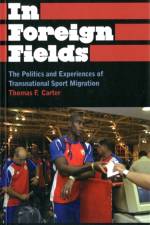
This book examines the lives, decisions and challenges faced by transnational sport migrants - those professionals working in the sports industry who cross borders as part of their professional lives. *BR**BR*Despite a great deal of romance surrounding international celebrity athletes, the vast majority of transnational sport migrants - players, journalists, coaches, administrators and medical personnel - toil far away from the limelight. Thomas F. Carter traces their lives, routes and experiences, documenting their travels and travails. *BR**BR*He argues that far from the ease of mobility that celebrity sports stars enjoy, the vast majority of transnational sports migrants make huge sacrifices and labour under political restrictions, often enforced by sport's governing bodies.
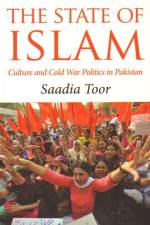
This book tells the story of Pakistan through the lens of the Cold War, and more recently the War on Terror, to shed light on the domestic and international processes behind the global rise of militant Islam. *BR**BR*Unlike existing scholarship on nationalism, Islam and the state in Pakistan, which tends to privilege events in a narrowly defined 'political' realm, Saadia Toor highlights the significance of cultural politics in Pakistan from its origins to the contemporary period. This extra dimension allows Toor to explain how the struggle between Marxists and liberal nationalists was influenced and eventually engulfed by the agenda of the religious right.
For billions across the world, the daily challenge is to find enough to eat to survive. Hunger is on the rise globally with more than 1.2 billion people suffering from food insecurity and poverty and rising food prices increasingly jeopardising access to food. But what are the causes for global hunger? And as the global population soars, what are the key food challenges? *BR**BR*In this deeply informative study, Majda Bne Saad identifies the causes for global hunger which are embedded in the current economic system, apportioning blame for global hunger on the West's continuing support for and subsidies to biofuels, which have created persistent and formidable new demands for food commodities. Saad proposes we fight-back, arguing for a 'second green revolution' to grow more food and by analysing the factors constraining low-income nations from achieving food security, she considers policies which could generate income and enhance individuals' entitlement to food. *BR**BR*
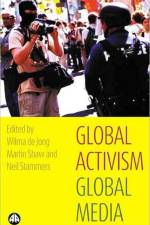
Activists and academics explain the dynamic relationship between activism and TV and news media.
*Shortlisted for the Bread and Roses Prize, 2016* *BR**BR**Shortlisted for the Green Carnation Prize, 2015**BR**BR** Shortlisted for the Academy of British Cover Design Awards, 2015**BR**BR*Artwash is an intervention into the unsavoury role of the Big Oil company's sponsorship of the arts in Britain. Based on the high profile campaign 'Liberate Tate', Mel Evans targets Chevron, ExxonMobil, BP and Shell's collaboration with institutions such as the Tate in an attempt to end the poisonous relationship forever. *BR**BR*Based on years of undercover research, grassroots investigation and activism as well as performance and cultural interventions, Mel Evans draws together the story of the campaign and its journey which has gone from strength to strength. Artwash shows how corporate sponsorship of the arts erases unsightly environmental destruction and obscures the strategies of oil company PR executives who rely on cultural philanthropy.*BR**BR*The conclusion sounds a note of hope: major institutions (such as the Southbank Centre) have already agreed to cut sponsorship, and tribunals are happening which are taking these relationships to task. Artists and employees are developing new methods of work which publicly confront the oil companies. Like the anti-tobacco campaign before it, this will be an important cultural and political turn for years to come.
The second volume of The Political Economy of Human Rights remains one of the most controversial works produced by Chomsky to date. In a much discussed chapter on Cambodia, Chomsky and Herman questioned official Western narratives on the Khmer Rouge and suggested that the evidence available did not match up to the assertions being made at that time. These claims would resurface in a recent controversy with the Continental philosopher Slavoj Zizek and readers will now be able to judge for themselves the veracity of Zizek's claims. The work also contains important analysis of Western interventions across Indochina, including Vietnam and Laos, and provides a searing critique of American imperial aspirations in the region.
Exploring 'the great work of subjugation and conquest' which began with Columbus, in Year 501 Chomsky surveys the history of American imperial power in the ensuing 500 years that followed. *BR**BR*Touching on everything from the British in India to the Americans in Beirut, Year 501 is a searing condemnation of the excesses of Western colonial and neo-colonial politics. For those seeking to understand the nature and structure of the imperial project as it reaches down to us today this work is a vital resource.
An collection of powerful exposes which reveal corruption in different arms of the British state and call for fundamental political change.
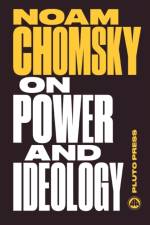
In the late 1980s, in the midst of Reagan's interventions in Central America, Chomsky travelled to Nicaragua and gave the lectures that became On Power and Ideology. *BR**BR*The lectures provide a master class in foreign policy analysis from an intellectual at the height of his powers, covering everything from the US domestic basis of its overseas actions, to the pernicious concept of 'National Security' and its destabilising effect, to the broad framework of global imperial order which the United States seeks to maintain. A defining moment in the Cold War meets a defining moment in the career of one of its most important critics.
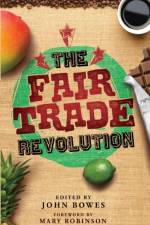
A lively survey of Fair Trade and the challenges facing it, written by some of the leading lights in the Fair Trade movement.
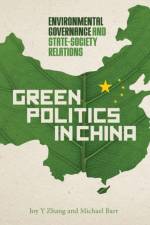
Provides an in-depth and engaging account of the novel ways in which Chinese society is responding to its environmental crisis.
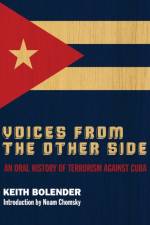
Since the early 1960s, few other countries have endured more acts of terrorism against civilian targets than Cuba, and the US has had its hand in much of it. This book gives a voice to the victims. *BR**BR*Keith Bolender reveals the enormous impact of terrorism on Cuba's civilian population, with over 1,000 documented incidents resulting in more than 3,000 deaths and 2,000 injuries. Bolender allows the victims to articulate the atrocities the Cuban people have suffered - which largely originate from Cuban counter-revolutionaries based in the US, often with the active help of the CIA.*BR**BR*With first-person interviews from more than 75 Cuban citizens who have been victims of these terrorist acts, or have had family members or close friends die from the attacks, this is a unique resource for activists, journalists and students interested in Cuba's tumultuous relationship with the US.
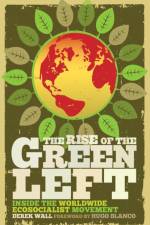
Climate change and other ecological ills are driving the creation of a grassroots global movement for change. From Latin America to Europe, Australia and China a militant movement merging red and green is taking shape.*BR* *BR*Ecosocialists argue that capitalism threatens the future of humanity and the rest of nature. From indigenous protest in the Peruvian Amazon to the green transition in Cuba to the creation of red-green parties in Europe, ecosocialism is defining the future of left and green politics globally. Latin American leaders such as Morales and Chavez are increasingly calling for an ecosocialist transition.*BR* *BR*Drawing on the work of key thinkers such as Joel Kovel and John Bellamy Foster, Derek Wall provides an unique insider view of how ecosocialism has developed and a practical guide to focused ecosocialist action. A great handbook for activists and engaged students of politics.
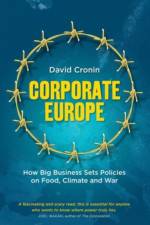
During the chaos of the eurozone crisis, few mainstream commentators have stopped to question the purpose of the European Union itself, and whose interests it serves. Corporate Europe goes beyond the divisions between nation-states, focusing instead on the division between the corporate elite and the peoples of Europe. *BR* *BR*David Cronin spent a year investigating the privileged access that big business enjoys in Brussels. In this book, he reveals how the EU's policies on health, climate change, armaments and food safety have been tailored to please an unaccountable elite. Making extensive use of previously unpublished documents, he explores how ideologically blinkered lobbyists have seized on the financial crisis of recent years to entrench the casino capitalism that caused the crisis in the first place.*BR* *BR*What emerges is a powerful expose of how vested interests in the EU have manipulated opportunities to introduce ideologically-driven reforms.
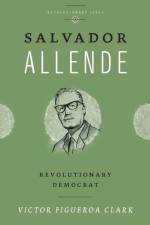
This is a political biography of one of the 20th century's most emblematic left-wing figures - Salvador Allende, who was president of Chile until he was ousted by General Pinochet in a US-supported coup in 1973.*BR**BR*Victor Figueroa Clark guides us through Allende's life and political project, answering some of the most frequently asked questions. Was he a revolutionary or a reformist? A bureaucrat or inspirational democrat? Figueroa Clark argues that Allende and the Popular Unity Party created a unique fusion which was both revolutionary and democratic.*BR**BR*The process led by Allende was a symbol of hope for the left during his short time in power. Forty years on, and with left governments back in power across Latin America, this book looks back at the man and the process in order to draw vital lessons for the left in Latin America and around the world today.
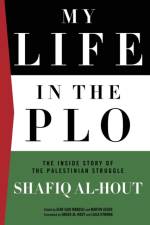
This is the inside story of the Palestine Liberation Organisation (PLO), from its beginnings in 1964 to the signing of the Oslo agreement in 1993.*BR**BR*For over three decades, the main goal of the PLO was to achieve a just peace in the Arab-Israeli conflict, and to build a democratic state in Palestine for all its citizens. Shafiq Al-Hout, a high ranking PLO official until his resignation in 1993, provides previously unavailable details on the key events in its history such as its recognition by the UN and the Oslo peace negotiations. Analysing and criticising decisions and individuals, including Yasser Arafat, we are taken right to the heart of the decision making processes; our eyes opened to the personalities and internal politics that shaped the PLO's actions and the Palestinian experience of the twentieth century.*BR**BR*An essential piece of history that sheds new light on the significance of the PLO in the Palestinian struggle for justice.
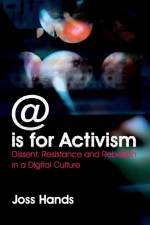
How have politics and activism been transformed by digital media, including digital television, online social networking and mobile computing?*BR**BR*Since the emergence of new technologies, new modes of cooperation, deliberation and representation have risen to the fore, @ is for Activism maps out how political relationships have been reconfigured and new have emerged through the use of new technologies. A host of critical thinkers populate the study, from Martin Heidegger and Herbert Marcuse criticism of technology's close relation to capitalism, to media networks' actualising the Habermasian ideal of collective communicative action, Hands delineates the potentials and the pitfalls of a technologised politics. *BR**BR*From anti-war activism, to global justice movements, peer production and 'Twitter' activism, we see how politics is being shaped by the new technological environment.
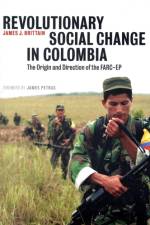
Although they are one of the most powerful military forces in Latin American history, little is known about the Revolutionary Armed Forces of Colombia-People's Army (FARC-EP). This book explains why this political military movement came into existence and assesses whether the methods employed by the insurgency have the potential to free those marginalised in Colombia.*BR**BR*By evaluating the FARC-EP's actions, ideological construction, and their theoretical placement, the book gauges how this guerrilla movement relates to revolutionary theory and practice and through what tangible mechanisms, if any, they are creating a new Colombia.
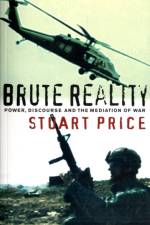
Brute Reality provides an authoritative analysis of those formal attempts, made by prominent social actors, to present a rationale for the existence and exercise of coercive power. The 'War on Terror' and its associated campaigns are presented as an aggressive attempt to assert the contradictory interests of a trans-national elite.*BR**BR*The period chosen to illustrate the key characteristics of this enterprise, extends from the state of 'war' created after the September 11th attacks, to the strategic adjustments begun during the nadir of the Iraq adventure; it also includes reference to the modifications in policy carried out under the auspices of the Obama Presidency. The book provides a critical insight into a number of influential structures that have helped to shape contemporary attitudes to warfare, and contains a wealth of transcripts and media sources, from Channel Four's coverage of September 11th, to the rhetorical pronouncements of leading politicians. *BR**BR*Brute Reality represents a significant addition to the existing literature on representations of the 'War on Terror' in the mass media, and will have a strong appeal to keen students of media, communication, cultural and American studies.
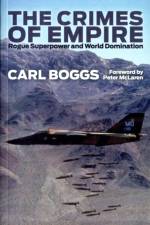
A history of US imperialism that uncovers the ever present exploitation, violence and media control that have marked the last two decades of empire.
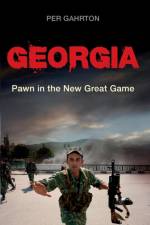
The 2008 Ossetia War underlined the fact that Georgia is caught in a political struggle between East and West. Per Gahrton analyses American and Russian policy towards the country and provides a firsthand account of the Rose Revolution of 2003, its origin and aftermath.*BR**BR*The book traces the increasing US involvement in Georgia and the Russian reaction of anger, sanctions and, eventually, invasion. Gahrton's analysis is based on interviews with key politicians and his experience as the rapporteur of the European Parliament on South Caucasus. At centre stage is the growing opposition against authoritarian aspects of President Mikheil Saakashvili's regime and the mysterious death of Prime Minister Zhvania in 2005. The book also asks if the Rose Revolution was a conspiracy or a genuine popular uprising. *BR**BR*This truly authoritative account of Georgia is a must for students studying international relations in the aftermath of The Cold War.
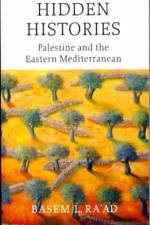
For thousands of years, Palestine and the Eastern Mediterranean have been subject to constant colonial interference, which has disenfranchised the indigenous population from their own history. Basem L. Ra'ad uncovers this history and begins the process of reconnecting it with its rightful owners.*BR**BR*Orientalist ideologies, colonial projects and Zionist cultural takeovers have contributed profoundly to the revisionism of Palestine's history. Drawing upon research in archaeology, linguistics and history, Ra'ad dispels many of the myths relating to religions, languages, peoples and sites. What emerges from this recovery is the presence of native people, a forgotten, submerged and subaltern, who stubbornly endure, from ancient Canaan to contemporary Palestine. Demanding that we 'unlearn' whitewashed, colonial histories, Hidden History is a process of recovery, de-colonization, revision and inclusivity.
Ilan Pappe has long been a controversial figure in Israel, here; he gives a full account of his break with mainstream Israeli scholarship and its consequences. *BR**BR*Growing up in a conventional Israeli community and influenced by the utopian visions of Theodor Herzl, Pappe was barely aware of the Nakba in his high school years. This intellectual biography traces his journey of discovery, from the whispers of Palestinian classmates, to his realisation that the 'enemy's' narrative of 1948 was correct, and his vow to protect the memory of the Nakba. For the first time he gives the details of the formidable opposition he faced in Israel, including death threats fed by the media, denunciations by the Knesset and calls for him to be sacked from his post at Haifa university.*BR**BR*This revealing work, written with dignity and humour, highlights Israel's difficulty in facing up to its past and forging a peaceful, inclusive future in Palestine.
Tracing the evolution of social capital since his highly acclaimed contribution of 2001 (Social Capital Versus Social Theory), Ben Fine consolidates his position as the world's leading critic of the concept. *BR**BR*Fine forcibly demonstrates how social capital has expanded across the social sciences only by degrading the different disciplines and topics that it touches: a McDonaldisation of social theory. The rise and fall of social capital at the World Bank is critically explained as is social capital's growing presence in disciplines, such as management studies, and its relative absence in others, such as social history.*BR**BR*Writing with a sharp critical edge, Fine not only deconstructs the roller-coaster presence of social capital across the social sciences but also draws out lessons on how (and how not) to do research.
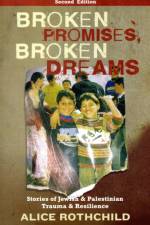
New edition of this unique and honest account of the conflict seen through the eyes of a doctor, with personal accounts that bring the trauma to life.
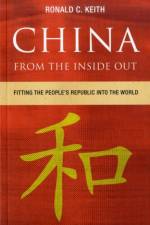
This book champions China's domestic politics, which will be essential in shaping the country's role in the world.*BR**BR*Many books claim to aid our understanding of China. They assume that it is destined to follow the model of the US; war, empire and unilateralism. However, China From the Inside Out highlights the China's domestic perception of it's own 'rise'. *BR**BR*Critically analysing Chinese policy which straddles the paradox between 'socialism' versus 'capitalism with Chinese characteristics', this book looks at the struggle to create a rule of law and foster human rights through a new stage of democratic reform.
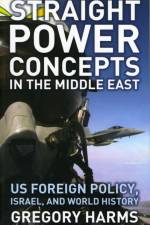
How did the US become a world power? How did it become involved in the Middle East? What is the history and nature of its 'special relationship' with Israel?*BR**BR*Given the increase in tensions in the Middle East, and the United States' involvement in them, news coverage is in abundance. Yet, the reportage and discussion of American foreign policy is often narrow in scope, offering little background or context. And yet, the historical record sharply contrasts with reportage. Guiding the reader through a panoramic sweep of world and American history, we see how the US became a world power, how the Middle East became 'modern' and how Israel became an American 'strategic asset.' Disavowing the rhetoric commonly used by heads of state, press secretaries, news media, and commentators, we see how recent turmoil is closer to business-as-usual.
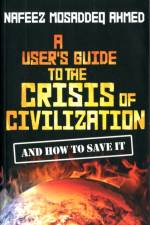
It often seems that different crises are competing to devastate civilisation. This book argues that financial meltdown, dwindling oil reserves, terrorism and food shortages need to be considered as part of the same ailing system.*BR**BR*Most accounts of our contemporary global crises focus on one area, such as climate change, or the threat of terrorism, to the exclusion of others. Nafeez Mosaddeq Ahmed argues that the unwillingness of experts to consider crises from an interdisciplinary perspective, has resulted in their failure to understand historical events. From ecology and the environment, to political governance, the global economy and international relations, Ahmed investigates contemporary crises, not as isolated events, but as trends and processes that belong to a single global system. Ahmed posits that we are therefore not dealing with a 'clash of civilisations', as Samuel P. Huntington argued. Rather, we are dealing with a fundamental crisis of civilisation itself.
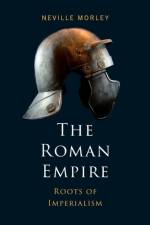
Over a millennium after the end of its unrivalled dominance, the spectre of Rome figures highly in western culture. This book explores what the empire meant to its subjects.*BR**BR*The idea of Rome has long outlived the physical empire that gave it form, and now holds sway over vastly more people and a far greater geographical area than the Romans ever ruled. It continues to shape our understanding of the nature of imperialism and influence the workings of the world. It is through the lens of Rome that we answer questions such as: How do empires grow? How are empires ruled? Do empires exploit their subjects or civilise them? Rejecting the simplistic narrative of military triumph followed by decline and fall, the books analyses the origins of Roman imperialism, its wide-ranging impact on the regions it conquered, and its continuing influence in debates about modern imperialism.
Abonner på vårt nyhetsbrev og få rabatter og inspirasjon til din neste leseopplevelse.
Ved å abonnere godtar du vår personvernerklæring.