











Gjør som tusenvis av andre bokelskere
Abonner på vårt nyhetsbrev og få rabatter og inspirasjon til din neste leseopplevelse.
Ved å abonnere godtar du vår personvernerklæring.Du kan når som helst melde deg av våre nyhetsbrev.

* Shortlisted for the Palestine Book Awards 2016**BR**BR*Modern warfare has a new form. The days of international combat are fading. So how do major world powers maintain control over their people today?*BR**BR*This book is a disturbing insight into the new ways world powers such as the US, Israel, Britain and China forge war today. It is a subliminal war of surveillance and whitewashed terror, conducted through new, high-tech military apparatuses, designed and first used in Israel against the Palestinian population. Including nano-technology, hidden camera systems, information databases on civilian activity, automated targeting systems and unmanned drones, it is used to control the very people the nation's leaders profess to serve.*BR**BR*Jeff Halper reveals that this practice is much more insidious than was previously thought. As Western governments claw back individual liberties, War Against the People is a reminder that fundamental human rights are being compromised for vast sections of the world, and that this is a subject that should concern everyone.
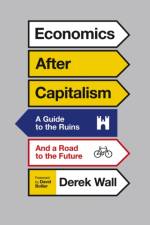
'There is no alternative' has been the unofficial mantra of the neoliberal order since its utterance by Margaret Thatcher in the 1980s. However, there is an alternative to our crisis-ridden, austerity-inflicted world - and not just one alternative, but many.*BR**BR*Challenging the arguments for markets, mainstream economics and capitalism from Adam Smith onwards, Economics After Capitalism provides a step-by-step guide to various writers, movements and schools of thought, critical of neoliberal globalisation. These range from Keynesian-inspired reformists such as Geroge Soros and Joseph Stiglitz, critics of inequality like Thomas Piketty and Amaitya Sen, to more radical voices including Naomi Klein, Marxists such as David Harvey, anarchists, and autonomists including Toni Negri and Michael Hardt.*BR**BR*By providing a clear and accessible guide to the economics of anti-capitalism, Derek Wall successfully demonstrates that an open source eco-socialist alternative to rampant climate change, elite rule and financial chaos is not just necessary, but possible.
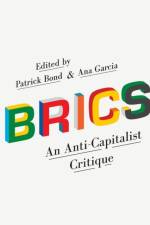
An edited collection which critiques mainstream economic analysis of the BRICS nations from an anti-capitalist viewpoint.
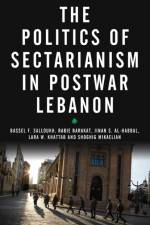
The wave of popular uprisings that swept across the Arab world starting in December 2010 rattled regimes from Morocco to Oman. However, Lebanon's sectarian system proved immune to the domestic and regional pressures unleashed by the Arab Spring. How can this be explained? How has the country's political elite dealt with challenges to the system? And, finally, what lessons can other Arab states draw from Lebanon's sectarian experience?*BR**BR*This book looks at the mix of institutional, clientelist, and discursive practices that sustain the sectarian nature of Lebanon. It exposes snapshots of an ever-expanding sectarian web that occupies substantial areas of everyday life and surveys struggles waged by opponents of the system - by women, teachers, public sector employees, students or coalitions across NGOs - and how their efforts are often sabotaged or contained by numerous systematic forces.
Exploring the tension between Queerness and Islamophobia, and how the elite reinforce the politics of homonationalism.
Analysing the relationship between economic thought and capitalism from 1750 to the present, Douglas Dowd examines the dynamic interaction of two processes: the historical realities of capitalism and the evolution of economic theory. He demonstrates that the study of economics celebrates capitalism in ways that make it necessary to classify economic science as pure ideology. A thoroughly modern history, this book shows how economics has become ideology. A radical critic of capitalism, Dowd surveys its detrimental impact across the globe and throughout history. *BR**BR*The book includes biographical sketches and brief analyses of the major proponents and critics of capitalism throughout history, including Adam Smith, Thomas Malthus, Jeremy Bentham, John Stuart Mill, Karl Marx, Thorstein Veblen, Rosa Luxemburg, John Maynard Keynes, Paul Samuelson, Milton Friedman, and Eric Hobsbawm. This new edition includes a new preface and an additional chapter by the author.
--A highly readable guide to how the economy really works--Economics is too important to be left to the economists. This brilliantly concise and readable book provides non-specialist readers with all the information they need to understand how capitalism works (and how it doesn't).Jim Stanford's book is an antidote to the abstract and ideological way that economics is normally taught and reported. Key concepts such as finance, competition and wage labour are explored, and their importance to everyday life is revealed. Stanford answers questions such as "e;Do workers need capitalists?"e;, "e;Why does capitalism harm the environment?"e;, and "e;What really happens on the stock market?"e; He offers both a realistic assessment of capitalism's strengths, and a robust critique of its many failures.This book will appeal to those working for a fairer world, and students of social sciences who need to engage with economics. The book is illustrated with humorous and educational cartoons by Tony Biddle, and is supported with a comprehensive set of web-based course materials for popular economics courses.
A completely revised third edition of a classic development studies textbook
An unsparing analysis of class power and computerisation, Cyber-Proletariat shows us the dark-side of the information revolution. From Coltan mines in the Congo; electronics factories in China and devastated neighbourhoods in Detroit, this book reveals how technology facilitates growing polarisation between wealthy elites and precarious workers. *BR**BR*Nick Dyer-Witheford reveals the class domination behind everything from expanding online surveillance to intensifying robotisation. At the same time, he looks at possibilities for information technology within radical movements; contemporary struggles are cast in the blue glow of the computer screen.*BR**BR*This book brings heterodox Marxist analysis to bear on modern technological developments. This is essential reading for anyone who wants to understand how Silicon Valley shapes the way we live today.
This book takes the long-view by analysing Islamic State's beginnings in Iraq to their involvement in the Arab Spring and through to the present day.*BR**BR*The world is watching IS's advance through the Middle East. The US risks being drawn into another war in the region despite its experiences in Afghanistan and Iraq. IS are creating catastrophic waves across the region, but it is still unclear what lies behind its success. *BR**BR*Michael Griffin uncovers the nature of IS through investigating the myriad of regional players engaged in a seemingly endless power game: Saudi Arabia, Qatar, Turkey and Iraq, which have all contributed to the success of IS by supplying arms and funds. *BR**BR*He foregrounds the story of the uprising against President Assad of Syria, the role played by the Free Syrian Army, Islamist groups, Iran, Hezbollah and Russia, the chemical weapons attacks in 2013 and the House of Commons vote not to impose a no-fly zone over the country.
The site of industrial struggle is shifting. Across the Global South, peasant communities are forced off the land to live and work in harsh and impoverished conditions. Inevitably, new methods of combating the spread of industrial capitalism are evolving in ambitious, militant and creative ways. This is the first book to theorise and examine the present and future shape of global class struggles.*BR**BR*Immanuel Ness looks at three key countries: China, India and South Africa. In each case he considers the broader historical forces at play - the effects of imperialism, the decline of the trade union movement, the class struggle and the effects of the growing reserve army of labour. For each case study, he narrows his focus to reveal the specifics of each grassroots insurgency: export promotion and the rise of worker insurgency in China, the new labour organisations in India, and the militancy of the miners in South Africa. *BR**BR*This is a study about the nature of the new industrial worker in the Global South; about people living a terrifying, precarious existence - but also one of experimentation, solidarity and struggle.
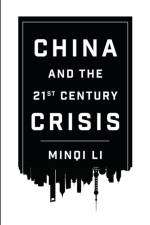
The USA is widely seen as the country at the centre of the recent economic crash. But will this be the case the next time the system goes into shock? This book analyses how the political and economic imbalances in China will exacerbate system collapse, and how this could happen much sooner than we imagine, possibly within a decade.*BR**BR*By looking at the big questions of class struggle, global economic imbalances, peak oil, climate change and political power play, Minqi Li argues that by the time of the next crisis, China will be at the epicentre of these contradictions.*BR**BR*China is the last large region, and source of cheap labour, into which capital could expand: the system is at its limits. By combining this argument with issues surrounding the planet's ecological limits and the internal politics of the Chinese Communist Party, Li commands a narrative of China at a pivotal, and possibly apocalyptic stage.
Percy Shelley (1792-1822) was one of the major English Romantic poets. This biography emphasises the political, revolutionary side of his dramatic life. *BR**BR*Shelley has long been revered for his poems To A Skylark and The Mask of Anarchy, but this was not always the case. During his short and tragic life he was regarded with loathing as an immoral atheist and his work received damning reviews as a result.*BR**BR*His was a story of extremes - his radical ideas were unusual as he was the son of a wealthy landowner and set to become a Whig MP. Today, a focus on his belief in sexual freedom and vegetarianism often eclipses his informed internationalist and revolutionary politics.*BR**BR*Admired by Oscar Wilde, Thomas Hardy, W. B. Yeats and Karl Marx, Shelley's legacy remains with us today - his words have been used by popular movements from the Chartists and the Suffragettes to Tiananmen Square, the Poll Tax protesters and modern Greek solidarity movements.
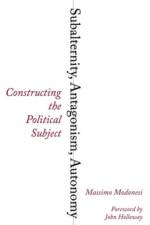
In this bold and innovative book, Massimo Modonesi weaves together theory and political practice by relating the concepts of subalternity, antagonism and autonomy to contemporary movements in Latin America and elsewhere.*BR**BR*In a sophisticated account, Modonesi reconstructs the debates between Marxist authors and schools of thought in order to sketch out informed strategies of resistance. He reviews the works of Gramsci, Negri, Castoriadis and Lefort, and engages with the arguments made by E. P. Thompson, Spivak, Laclau and Mouffe.*BR**BR*Subalternity, Antagonism, Autonomy firmly roots key theoretical arguments from a range of critical thinkers within specific political movements in order to recover these concepts as analytical instruments which can help to guide contemporary struggles.
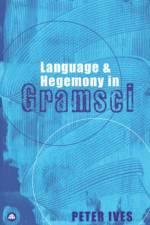
Language and Hegemony in Gramsci introduces Gramsci's social and political thought through his writings on language. It shows how his focus on language illuminates his central ideas such as hegemony, organic and traditional intellectuals, passive revolution, civil society and subalternity. Peter Ives explores Gramsci's concern with language from his university studies in linguistics to his last prison notebook. Hegemony has been seen as Gramsci's most important contribution, but without knowledge of its linguistic roots, it is often misunderstood.*BR**BR*This book places Gramsci's ideas within the linguistically influenced social theory of the twentieth century. It summarizes some of the major ideas of Ferdinand de Saussure, Ludwig Wittgenstein, language philosophy and post-structuralism in relation to Gramsci's position. By paying great attention to the linguistic underpinnings of Gramsci's Marxism, Language and Hegemony in Gramsci shows how his theorization of power, language and politics address issues raised by post-modernism and the work of Michel Foucault, Jacques Derrida, Chantal Mouffe, and Ernesto Laclau.
This book tells the remarkable story of Birzeit University, Palestine's oldest university in the Occupied Territories. *BR**BR*Founded against the backdrop of occupation, it is open to all students, regardless of income. Putting the study of democracy and tolerance at the heart of its curriculum, Birzeit continues to produce idealistic young people who can work to bring about a peaceful future. *BR**BR*Gabi Baramki explains how the University has survived against shocking odds, including direct attacks where Israeli soldiers have shot unarmed students. Baramki himself has been dragged from his home at night, beaten and arrested. Yet Birzeit continues to thrive, putting peace at the heart of its teaching, and offering Palestinians the opportunities that only education can bring.
Examines the influence of McCarthyism and the CIA on anthropology in the cold war era.
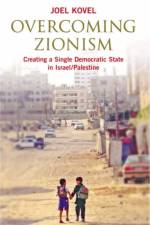
Israel is an incorrigible human rights offender because, by discriminating against Arabs, it is guilty of 'state-sponsored racism' argues Joel Kovel. Like apartheid South Africa, the best hope for peace in Israel is to return to the idea of a one-state solution, where Jews and Palestinians can co-exist in a secular democracy.*BR**BR*Kovel is well-known writer on the Middle East conflict. This book draws on his detailed knowledge to show that Zionism and democracy are essentially incompatible. He offers a thoughtful account of the emotional and psychological aspects of Zionism that helps us understand the relationship between ideology, culture and political processes. *BR**BR*Ultimately, Kovel argues, a two-state solution is essentially hopeless as it concedes too much to the regressive forces of nationalism, wherein lie the roots of continued conflict.
Capital Volume I is essential reading on many undergraduate courses, but the structure and style of the book can be confusing for students, leading them to abandon the text. This book is a clear guide to reading Marx's classic text, which explains the reasoning behind the book's structure and provides help with the more technical aspects that non-economists may find taxing.*BR**BR*Students are urged to think for themselves and engage with Marx's powerful methods of argument and explanation. Shapiro shows that Capital is key to understanding critical theory and cultural production.*BR**BR*This highly focused book will prove invaluable to students of politics, cultural studies and literary theory.
This is a comprehensive account of the momentous events which shaped the political landscape not only of Palestine and Israel but of the entire Middle East region. *BR**BR*Addressing the most controversial issues, including the alarming escalation in suicide bombings, and the construction of the Separation Wall, he reports on the huge rate of unemployment and hunger in the Occupied Territories - statistics so critical that NGOs compare their magnitude to African nations such as the Congo. From the brutality of the Israeli army to the ever-compromising nature of the Palestinian Authority, few are spared Ramzy Baroud's thoughtful critique.*BR**BR*The book is clear and concise, with one chapter dedicated to the major events of each year, and includes a comprehensive timeline.
Leading Marxist thinkers re-evaluate Trotsky's key theories
Today is a difficult time to be both Arab and American. Since 9/11 there has been a lot of criticism of America's involvement in the middle east. Yet there has been little analysis of how America treats citizens of Arab or middle eastern origin within its own borders. *BR**BR*Steven Salaita explores the reality of Anti-Arab racism in America. He blends personal narrative, theory and polemics to show how this deep-rooted racism affects everything from legislation to cultural life, shining a light on the consequences of Anti-Arab racism both at home and abroad.*BR**BR*The book shows how ingrained racist attitudes can be found within the progressive movements on the political left, as well as the right. Salaita argues that, under the guise of patriotism, Anti-Arab racism fuels support for policies such as the Patriot Act.
'Remarkable ... a major contribution to our understanding and handling of one of the crucial contemporary issues that acquires more gravity by the day.' Zygmunt Bauman *BR**BR*This is an in-depth sociological study of the phenomenon of anti-racism, as both political discourse and social movement practice in western Europe.*BR**BR*Lentin develops a comparative study of anti-racism in Britain, France, Italy and Ireland. While 'race' and racism have been submitted to many profound analyses, anti-racism has often been dealt with as either the mere opposite of racism or as a theme for prescriptives or polemics by those concerned with the persistence of racist discrimination. *BR**BR*By contrast, this book views anti-racism as a variety of discourses that are central to the understanding of the politics of modern states. Examining anti-racism gives us insights not only into current debates on citizenship, immigration and Europeanisation, but it also crucially assists us in understanding the nature of race, racism and racialisation themselves. *BR**BR*At a time of mounting state racism against asylum seekers, migrants and refugees throughout Europe and beyond, this book provides a much-needed exploration of the discourse of anti-racism that shapes policy and public opinion today.
A look at the networks of the hidden lives of the internally displaced
Critique of current corporate practice that offers practical proposals for the creation of a more responsible and accountable form of capitalism
This is the history of colonialism as seen though the architecture of Israel/Palestine. Tel Aviv is the 'White City', said to have risen from the sands of the desert, acclaimed worldwide for its architectural heritage and gleaming Bauhaus-inspired Modernism.*BR**BR*Jaffa is the 'Black City', the Palestinian city that was largely obliterated to make way for a new European-style architecture at the heart of a newly-formed Israel. *BR**BR*Both a gripping narrative and a unique architectural record, this book shows how any city in the world is made not only of stones and concrete but also of stories and histories - victors and losers, predator and prey. In this way, the legend of the Black City and the White City, architecture and war, is our story too.
We live in the twilight of neoliberalism: the ruling classes can no longer rule as before, and ordinary people are no longer willing to be ruled in the old way. Pursued by global elites since the 1970s, neoliberalism is defined by dispossession and ever-increasing inequality. The refusal to continue to be ruled like this - 'ya basta!' - appears in an arc of resistance stretching from rural India to the cities of the global North. *BR**BR*From this network of movements, new visions are emerging of a future beyond neoliberalism. We Make Our Own History responds to these visions by reclaiming Marxism as a theory born from activist experience and practice. *BR**BR*This book marks a break both with established social movement theory, and with those forms of Marxism which treat the practice of social movement organising as an unproblematic process. It shows how movements can develop from local conflicts to global struggles; how neoliberalism operates as a social movement from above, and how popular struggles can create new worlds from below.
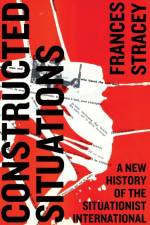
A ground-breaking rethink of the radical Situationist art movement drawn from a life's worth of research.
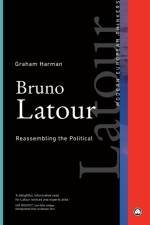
Bruno Latour, the French sociologist, anthropologist and long-established superstar in the social sciences is revisited in this pioneering account of his ever-evolving political philosophy. Breaking from the traditional focus on his metaphysics, most recently seen in Harman's book Prince of Networks, the author instead begins with the Hobbesian and even Machiavellian underpinnings of Latour's early period encountering his shift towards Carl Schmitt then finishing with his final development into the Lippmann / Dewey debate. Harman brings these twists and turns into sharp focus in terms of Latour's personal political thinking. *BR**BR*Along with Latour's most important articles on political themes, the book chooses three works as exemplary of the distinct periods in Latour's thinking: The Pasteurization of France, Politics of Nature, and the recently published An Inquiry Into Modes of Existence, as his conception of politics evolves from a global power struggle between individuals, to the fabrication of fragile parliamentary networks, to just one mode of existence among many others.
Abonner på vårt nyhetsbrev og få rabatter og inspirasjon til din neste leseopplevelse.
Ved å abonnere godtar du vår personvernerklæring.