






Gjør som tusenvis av andre bokelskere
Abonner på vårt nyhetsbrev og få rabatter og inspirasjon til din neste leseopplevelse.
Ved å abonnere godtar du vår personvernerklæring.Du kan når som helst melde deg av våre nyhetsbrev.

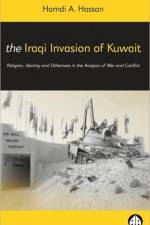
Focusing on the 1990 Iraqi invasion of Kuwait, Hamdi Hassan offers a balanced examination of the motivation of the Iraqi polity and the conditions which accelerated and facilitated the decision to invade. *BR**BR*Critical of the traditional approach of most Middle East studies, The Iraqi Invasion of Kuwait offers a counterpoint to Western interpretations of this key event in the contemporary history of the Middle East.*BR**BR*Hassan examines how Saddam Hussein assessed and responded to American and Israeli intentions after the invasion, the reaction of other Arab states, and the unprecedented grassroots support for the Iraqi leadership. In this context, the author examines the social structure of Iraqi society - families, clans and regional alliances - and the importance of Ba'athism. Hassan also examines the political structure of the country, relating the identity of Arabism - the religion and language which is associated closely with the Pan Arabist ideals - to Iraqi foreign policy.
A comprehensive introductory guide for students, teachers, volunteers and NGO workers in development, World Development examines the issues surrounding development, industrialisation and globalisation.
Recent debates surrounding human security have focused on the satisfaction of human needs as the vital goal for global development. Peter Wilkin highlights the limitations of this view and argues that unless we incorporate an account of human autonomy into human security then the concept is flawed. *BR**BR*He reveals how human security is a concern with social relations that connect people in local, national and global networks of power, structured through capitalism and hierarchical inter-state systems. *BR**BR*Autonomy, as an aspect of human security, depends upon the ability of citizens to gain information about the processes that shape their lives. In this respect autonomy and communication are inherently linked and are prerequisites for the establishment of meaningful democratic systems.
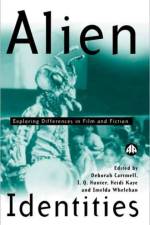
A lively re-examination of the 'alien' as metaphor in film and fiction
This book is a detailed analysis of policing in Northern Ireland. Tracing its history from 1922, Ellison and Smyth portray the Royal Ulster Constabulary (RUC) as an organisation burdened by its past as a colonial police force. *BR**BR*They analyse its perceived close relationship with unionism and why, for many nationalists, the RUC embodied the problem of the legitimacy of Northern Ireland, arguing that decisions made on the organisation, composition and ideology of policing in the early years of the state had consequences which went beyond the everyday practice of policing. *BR**BR*Examining the reorganisations of the RUC in the 1970s and 1980s, Ellison and Smyth focus on the various structural, legal and ideological components, the professionalisation of the force and the development of a coherent, if contradictory, ideology.
More than 40,000 children die daily in the developing world from avoidable sickness and disease. Tens of millions of children labour in mines, mills and sweatshops, or scavenge for a living on city streets and dumps. In the so-called developed world, children's lives are similarly blighted by drugs, alcohol, sexual abuse and violence. *BR**BR*Children of the rich are unhealthily obsessed with consumerist desires while children of the poor suffer from lack of opportunity. The global market is responsible for both of these ills.*BR**BR*In Children of Other Worlds Jeremy Seabrook examines the international exploitation of children and exposes the hypocrisy, piety and moral blindness that have informed so much of the debate in the West on the rights of the child. Seabrook insists that the whole question of protecting children's rights must take into consideration the structural abuses of humanity that are inherent in globalisation.
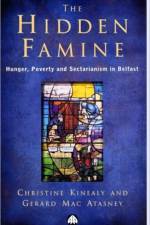
Between 1845 and 1852, Ireland was devastated by the 'Great Hunger' - the most severe famine in modern European history. The view widely held by historians is that the impact of the Famine on the northern province of Ulster, in particular the largely Protestant city of Belfast, was minimal. In the first book on the Famine to focus specifically on Belfast, Christine Kinealy, one of Ireland's leading historians of the period, and Gerard MacAtasney, challenge this view and offer a new interpretation.*BR**BR*Drawing on a wealth of original research, Kinealy and MacAtasney begin with an examination of society and social behaviour in Belfast prior to 1845. They then assess the official response to the crisis by the British government, the response by the Church in both England and Ireland, and the part played by the local administration in Ulster. The authors examine the impact of the cholera epidemic on Belfast in 1849-50, the city's recovery after the Famine, and the beginnings of open sectarianism among the business and landed classes of the province.
A critical guide to contemporary theories on urban regeneration
This book assesses competing modes of nation-building and nationalism through a critical reappraisal of the works of key theorists such as Benedict Anderson and Eric Hobsbawm. Exploring the processes of nation building from a variety of ethnic and social class contexts, it focuses on the contested terrain within which nationalist ideologies are often rooted. *BR**BR*Mac Laughlin offers a theoretical and empirical analysis of nation building, taking as a case study the historical connections between Ireland and Great Britain in the clash between 'big nation' historic British nationalism on the one hand, and minority Irish nationalism on the other. Locating the origins of the historic nation in the seventeenth and eighteenth centuries, Mac Laughlin emphasises the difficulties, and specificity, of minority nationalism in the nineteenth century. *BR**BR*In so doing he calls for a place-centred approach which recognises the symbolic and socio-economic significance of territory to the different scales of nation-building. Exploring the evolution of Irish Nationalism, Reimaging the Nation State also shows how minority nations can challenge the hegemony of dominant states and threaten the territorial integrity of historic nations.
Can the peoples of the Brazilian Forest survive in the modern era?
A free press is the cornerstone of democracy. Does this then give the press the right to print inaccurate material with relative impunity? Should the public have a statutory right of reply to inaccuracy in the press? And how free is the press in a world of converging technologies and crossmedia ownership? *BR**BR*Clive Soley and Tom O'Malley set the issues of press regulation in their historical context, focusing on the period after 1945. They specifically look at the history and record of the Press Council and assess the performance of the Press Complaints Commission. The book analyses the arguments surrounding attempts to improve standards by introducing statutory rights for the public, and the reasons for the failure of these initiatives. *BR**BR*Focusing on issues of principle such as accuracy, misrepresentation and privacy, the authors re-examine the ways in which debates over press freedom versus regulation illuminate the fundamental conflicts between a fully accountable press and the economic imperatives of the free market economy.*BR*
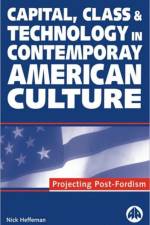
Puts the question of class and class agency back at the centre of the critical agenda
In the first accessible introduction to his work in English, Lodziak and Tatman trace the development of Gorz's political theory
An original and radically revised view of British and US foreign policy, exposing the extent to which Anglo-American interests have shaped and damaged the current world order.
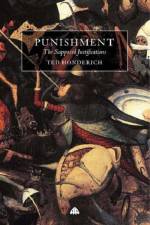
Ted Honderich's Punishment is the best-known book on the justifications put forward for state punishment. *BR**BR*This enlarged and developed edition brings his writing to a new audience. With new chapters on determinism and responsibility, plus a new conclusion, the book also remains true to its original realism about almost all talk of retribution and proportionality. Honderich investigates all the commonsensical notions of why and when punishment is morally necessary, engaging with the language of public debate by politicians and other public figures. Honderich then puts forward his own argument that punishment is legitimate when it is in accord with the principle of humanity.*BR**BR*Written in a clear, sharp style and seasoned with a dry wit, this is the most important work on the reasoning behind our penal systems. It is a pleasure to read for philosophers and non-philosophers alike.
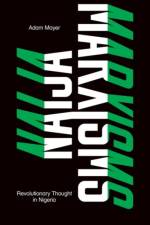
Since the 1940s, Marxist thought has blossomed in Nigeria. The history of 'Naija Marxism' is also that of the country's labour movement, its feminist movement, its social thought and political economy. It has been the mainstay of party politics in the case of illegal Marxist party formations and legal anti-feudalist forces and in the NGO sector. Long gone are the days when Marxism meant imported pamphlets and a disconnected ideology.*BR**BR*Drawn from years of research in Nigeria and elsewhere, Naija Marxisms breaks new ground in tracing the historical trajectories that leftist movements underwent since the 1940s, whilst arguing that Marxism is alive and well in Nigeria. The book brings together Nigeria's pre-eminent radical thinkers, from Usman Tar and Edwin Madunagu, who are currently espousing a Marxian political economy and providing a class-based approach in the country's mainstream media channels, to the international reach of key Nigerian Marxists, such as Mokwugo Okoye, Ikenna Nzimiro and Eskor Toyo. *BR*
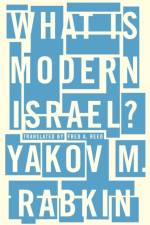
Few countries provoke as much passion and controversy as Israel. What is Modern Israel? convincingly demonstrates that its founding ideology - Zionism - is anything but a simple reaction to antisemitism. Dispelling the notion that every Jew is a Zionist and therefore a natural advocate for the state of Israel, Yakov Rabkin points to the Protestant roots of Zionism, in order to explain the particular support Israel musters in the United States. *BR**BR*Drawing on many overlooked pages of history, including English, French, Hebrew, Yiddish and Russian sources, Yakov Rabkin shows that Zionism was conceived as a sharp break with Judaism and Jewish continuity. Israel's past and present must be seen in the context of European ethnic nationalism, colonial expansion and geopolitical interests, rather than as an incarnation of Biblical prophecies or a culmination of Jewish history.
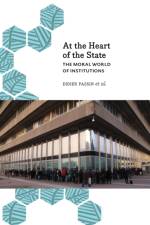
The state is often regarded as an abstract and neutral bureaucratic entity. Against this common sense idea, At the Heart of the State argues that it is also a concrete reality with a morality, embodied in the work of its agents and inscribed in the issues of its time. *BR**BR*A political and moral anthropology, this book is the result of a five-year investigation conducted by ten scholars, based in France. It analyses, amongst other topics, the police, the court system, the prison apparatus, the social services and mental health facilities. Combining genealogy and ethnography, its authors show that these state institutions do not simply implement laws, rules and procedures: they mobilise values and affects, judgements and emotions. In other words, they reflect the morality of the state.
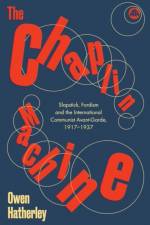
The tragic-comedic story of the cinema, art and architecture of the early 20th Century, highlighting the unlikely intersections of East and West
Shows how corruption operates through informal rules, personal connections and wider social contexts.
This is the best-selling biography of the IRA resistance fighter and hunger-striker, Bobby Sands. In this updated, new edition, Denis O'Hearn draws from a wealth of interviews with friends, comrades, fellow prisoners and prison wardens, to provide a faithful and shocking insight into life in Northern Ireland's H-Block prisons, an exploration of the motivations and thoughts of the Republican strikers and the story of one of the world's most radical, inspirational figures. *BR**BR*Following his journey from its very beginnings - an ordinary boy from a working-class background in Belfast to a highly politicised, articulate revolutionary whose death in HM Prison Maze sent reverberations around the world, Bobby Sands: Nothing But An Unfinished Song captures the atmosphere of the time and the vibrancy of the man: a militant anti-imperialist who held on to his humanity despite living through a bitter, ugly struggle.*BR*
Frantz Fanon (1925-1961) was a Caribbean and African psychiatrist, philosopher and revolutionary whose works, including Black Skin, White Masks and The Wretched of the Earth are hugely influential in the fields of post-colonial studies, critical theory, and post-Marxism. His legacy remains with us today, having inspired movements in Palestine, Sri Lanka, the US and South Africa.*BR**BR*This is a critical biography of his extraordinary life. Peter Hudis draws on the expanse of his life and work - from his upbringing in Martinique and early intellectual influences to his mature efforts to fuse psychoanalysis and philosophy and contributions to the anti-colonial struggle in Algeria - to counter the monolithic assumption that Fanon's contribution to modern thought is defined by the advocacy of violence.*BR**BR*He was a political activist who brought his interests in psychology and philosophy directly to bear on such issues as mutual recognition, democratic participation and political sovereignty. Hudis shows that, as a result, Fanon emerges as neither armchair intellectual nor intransigent militant.
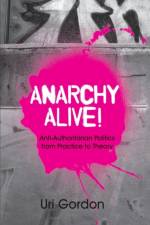
Anarchist politics are at the heart of today's most vibrant and radical social movements. From squatted social centres and community gardens to acts of sabotage and raucous summit blockades, anarchist groups and networks are spreading an ethos of direct action, non-hierarchical organizing and self-liberation that has redefined revolutionary struggle for the 21st century.*BR**BR*Anarchy Alive! is a fascinating, in-depth look at the practice and theory of contemporary anarchism. Uri Gordon draws on his activist experience and on interviews, discussions and a vast selection of recent literature to explore the activities, cultures and agendas shaping today's explosive anti-authoritarian revival. Anarchy Alive! also addresses some of the most tense debates in the contemporary movement, using a theory based on practice to provocatively reshape anarchist discussions of leadership, violence, technology and nationalism. *BR**BR*This is the ideal book for anyone looking for a fresh, informed and critical engagement with anarchism, as a mature and dynamic political force in the age of globalisation.
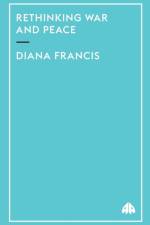
Is war ever a just way to resolve conflict? Diana Francis argues that it is not. With passion and eloquence, she mounts a head-on challenge to the belief that war as an institution is either necessary or effective for good.*BR**BR*Refuting the notion that human nature condemns us to perpetual carnage, she argues that we can change the ways we think and the systems we live by. In a tightly reasoned discussion of the ethics of war and peace she asserts that war is a gross denial of the core values on which peace depends, and that the Just War Theory has failed and deceived us.*BR**BR*The book explores alternative ways of confronting aggression and injustice, showing that these are neglected but well proven. Francis argues that our security can be enhanced by recognition of our shared responsibility for each other and our planet. Practical solutions require a new level of participation in public affairs. Recent events have shown that this is possible. Francis outlines the steps we must take to bring about the radical shift so urgently needed.
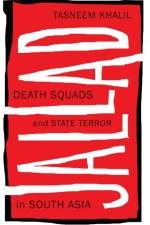
Extrajudicial execution, enforced disappearance and torture - these are the tools used by death squads across South Asia. Across the region, human rights abuses are perpetrated behind the closed doors by the 'jallad', or hangmen, of secret detention facilities, while death squads roam the streets with impunity.*BR**BR*By using first-hand experience and newly discovered sources, Tasneem Khalil connects these abuses to a disturbing fact - that Bangladesh, India, Nepal, Pakistan and Sri Lanka are national security states connected to an international system of state terror, patronised by sponsors like the United States, the United Kingdom, China and Israel.*BR**BR*Looking at infamous 'enforcers' such as The Rapid Action Battalion of Bangladesh, the 'encounter specialists' of India, army units of Nepal, the Frontier Corps of Pakistan and 'the men in white vans' of Sri Lanka, Khalil reveals a huge system of specialists in violence deployed by the state in campaigns of state terror, a bloody logic of domination and repression that lies at the very core of statecraft in South Asia.
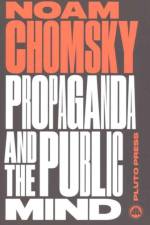
First published in 2001, Propaganda and the Public Mind constitutes a series of discussions with the journalist David Barsamian and is the perfect complement to Chomsky's major works of media study such as Manufacturing Consent and Necessary llusions. Events discussed in detail are the so-called 'Battle of Seattle' protests against the World Trade Organisation, US involvement in East Timor, and the beginning of the movement towards a second Iraq War - as well as timeless explorations of Chomsky's political friends and influences such as the Pakistani scholar Eqbal Ahmad. This book is an invitation to take part in a conversation with one of the great minds of our time.
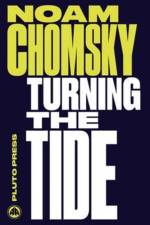
For decades, Noam Chomsky has been considered one of the most important critics of American's foreign policy in Central and Latin America and yet Turning the Tide is one of his only written works which makes that region its sole focus. *BR**BR*At last back in print after almost thirty years, Turning the Tide explores such neglected but vital issues as Jimmy Carter's interventions in El Salvador, the violation of human rights in Nicaragua and Guatemala, and American involvement with death squads in many countries including Bolivia and El Salvador. For all activists and scholars whose work focuses on Central and Latin America, Turning the Tide remains essential.
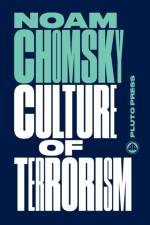
With a detailed critique of Irangate, Culture of Terrorism demonstrates how America's ruling elite perpetrates a particularly vile form of cultural imperialism - accusing America's enemies of precisely those 'terrorist' attributes that might more accurately describe the actions of America itself.
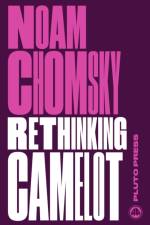
In a potent act of myth busting, Noam Chomsky turns his critical gaze upon the Kennedy Administration and draws controversial parallels between the Presidency of JFK and that of Ronald Reagan, with particular focus on the Vietnam War. For anyone persuaded that changing the world is simply a question of changing its leading figures this work will act both as a bitter pill and a powerful stimulant to action.
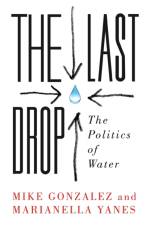
Indispensable for human existence yet increasingly owned and controlled by private capital; the last decade has witnessed an intensifying battle for water. The Last Drop is a wake-up call to everyone who takes for granted what comes out of their kitchen tap.*BR**BR*This book traces a path through the arguments that surround the question of water, setting out to make the scientific arguments more accessible and the political questions more urgent. The exploding profits of the multinational companies which dominate the water industry are testimony to how high the stakes are - by 2012 it had become a worth a trillion dollars. *BR**BR*Against the market fundamentalists, the authors argue that it is both possible and necessary that considerations of equity and social justice prevail. They call for our water supply to be saved from subordination to the whims of the multinationals and placed under direct democratic public control.
Abonner på vårt nyhetsbrev og få rabatter og inspirasjon til din neste leseopplevelse.
Ved å abonnere godtar du vår personvernerklæring.