












Gjør som tusenvis av andre bokelskere
Abonner på vårt nyhetsbrev og få rabatter og inspirasjon til din neste leseopplevelse.
Ved å abonnere godtar du vår personvernerklæring.Du kan når som helst melde deg av våre nyhetsbrev.

Seit das »Ende des Kommunismus« auf 1990 festgeschrieben und der »Unrechtsstaat DDR« der Justiz übergeben wurde, inszenieren neue Institutionen, Stiftungen und Behörden auf Bundesebene den ökonomischen, kulturellen und moralischen Erfolg des Rechtsstaates. Dabei wird die Mehrheit der Neubürger mit Schockereignissen des krassen sozialen Wandels und der gesellschaftlichen Stigmatisierung konfrontiert. Konzepte wie »Transformation«, »Modernisierung« und »Demokratisierung« treten als Euphemismen auf, die über eine neoliberale Annexion der »Neuländer« hinwegtäuschen. Das Investmentprojekt »Aufschwung Ost« ist ein Laborfall der Globalisierung. Über eine Aufarbeitung der DDR im Totalitarismus- und Diktaturenvergleich hinaus ist eine politische Soziologie der Landnahme, des Gesellschaftsumbaus und des strukturellen Kolonialismus in Ostdeutschland längst überfällig. Das Forschungsprogramm »Entkoppelte Gesellschaft. Liberalisierung und Widerstand in Ostdeutschland seit 1989/90. Ein soziologisches Laboratorium« will im dreißigsten Jahr der »Einheit« diesem Thema mit einer mehrbändigen Publikation Rechnung tragen. Der Band »Zeugnisse/Fotografie« thematisiert Arbeits-, Kultur- und Lebenswelten in der DDR und deren Verschwinden in Folge der »Wiedervereinigung«. Anhand von Fotografie und Reportage werden drei zeithistorische Phasen rekonstruiert: A/ Aufbau und Aufbruch in der DDR; B/ Formen des Überlebens im Umbruch; C/ Entheimatung und Kampf um Sichtbarkeit im Neuland/Exil. Der Band stellt 18 Positionen der Visuellen Soziologie vor, mit Fotografien von Christian Borchert, Ralf Anders, Evelyn Richter, Harald Kirschner, Eva Mahn, Roger und Renate Rössing, Thomas Uhlemann, Maria Notbohm, Jens Rötzsch, Yana Milev, Barbara Klemm, Maix Mayer, Andreas Rost, Philipp Beckert, Marcel Noack und Jürgen Matschie sowie mit Texten von Heinz Czechowski, Matthias Flügge, Hans-Joachim Lauck, Paul Dessau, Wolfgang Kil, Eva Mahn, Hans-Georg-Sehrt, Andreas Raabe, Kurt Schneider, Jörg Roesler, Christoph Tannert, Die Redaktion, Renate Rauch, Bertram Kaschek, Peter Gosztony, Christina Bogusz, Die Herausgeber sowie einem Grusswort von Peter Weibel und Silke Wagler.
Juvenile Justice Systems outlines options for shaping the juvenile liability models: welfare, justice, rehabilitative treatment, restorative justice, and mixed models. This comparative work contains descriptions of general issues of juvenile criminal liability and characteristic of mixed models: the Polish, the Brazilian and the Portuguese.
Territorial autonomy does not contradict the constitutional order of Romania. There are political and not legal obstacle to the creation of an autonomous Szeklerland. A pluralistic interpretation of the Romanian constitution can be adopted that is open to accommodate minority claims on regional power-sharing.
This book tries to modify well-worn view by altering the dualist position to incorporate the very object within the sense-making activity. Interpretation rather becomes the creative making of something different, and this explains why it is deemed unfinished.
The monograph presents research-based findings on the conceptualisation of critical thinking and the relevance of critical thinking education in higher education for the labour market. The research methodology is based on the triangulation principle, combining various methods of data collection, analysis and interpretation.
This book offers new readings of recent Irish plays. Following C. Morash's historiographic metaphor of Babel, it combines this and other appropriations of the Biblical theme of building found in the plays by such authors as M. McKenna, D. Bolger, S. Gregg, R. Dormer or S. Barry.
Boosting food production in Africa requires investments in vocational training, agricultural research, digitization, mechanization, sustainable land use and small-scale irrigation. Access to capital and markets must be improved, political stability ensured, farmers' associations supported and development assistance expanded.
The book offers five studies tackling the issue(s) of explanation and prediction in linguistics from different perspectives. The studies were conducted by internationally renowned experts in generative linguistics, biolinguistics, language philosophy, and functional linguistics.
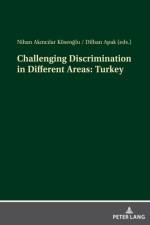
Although legal arrangements have been made against discrimination, discrimination is both explicitly and implicitly active in different parts of society and in different areas. In order to recognize, understand, and oppose these forms of discrimination, it is necessary to be a defender of human rights and to know what discrimination means.
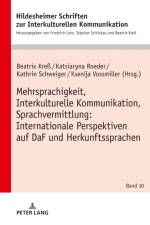
Der Band stellt zwei Themenbereiche der Mehrsprachigkeitsforschung in den Vordergrund: das Deutsche als Fremd- und Zweitsprache sowie die Besonderheiten des herkunftssprachlichen Erwerbs. Unterschiedliche Bildungskonstellationen werden betrachtet. Eine verbindende Linie stellt die Berucksichtigung der interkulturellen Perspektive dar.
This volume addresses human communication as a phenomenon, with a particular focus on "intersubjective plateaus'. It explores the ecological aspect of intersubjectivity as a facet of communication. It will appeal to linguists, philosophers, practitioners and teachers of intercultural communication, and sign language practitioners and ethnographers.
The book by Monika Talarczyk is devoted to the life and work of Wanda Jakubowska (1907-1998), Polish film director, author of The Last Stage (1948), who is said to be the Mother of All Holocaust Films. She is also considered a pioneer of women's cinema and recognized as the first Polish woman film director who gained worldwide renown.
The book presents capacity of states and international institutions in preventing mass human-rights violations and atrocity crimes. The preventive international instruments, such as early warning, diplomacy, as well as legal, economic and military measures are included. Cases studies involve Chechnya, Rwanda, Cote d'Ivoire and Libya.
Abonner på vårt nyhetsbrev og få rabatter og inspirasjon til din neste leseopplevelse.
Ved å abonnere godtar du vår personvernerklæring.